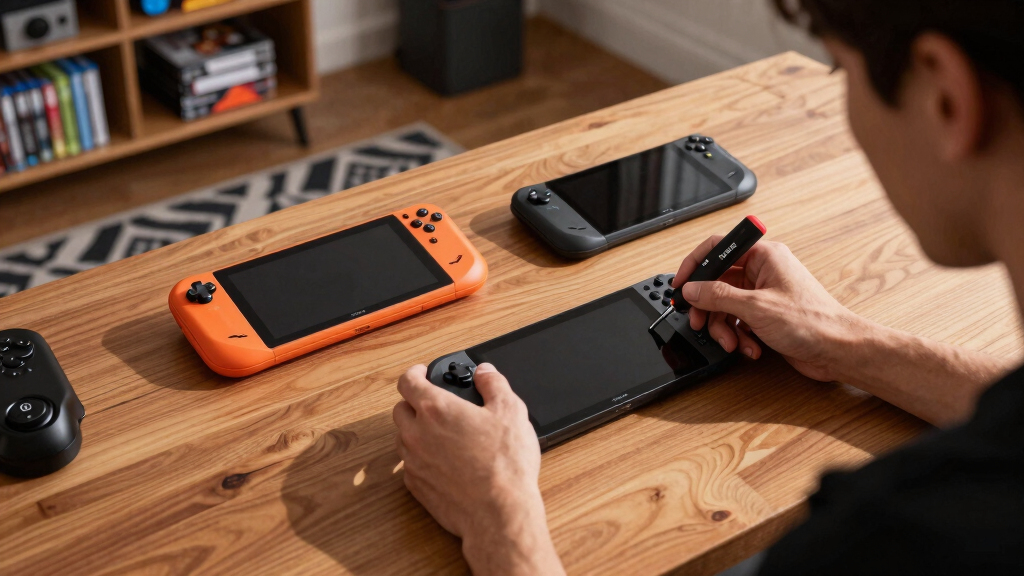

For this shortlist, I treat Steam Deck alternatives as upgrades or substitutes for the older LCD Steam Deck and for Windows handhelds when Steam games come first. If I were choosing a handheld mainly for Steam games in 2026, I would start with the Valve Steam Deck OLED 1TB for the best balance of screen, storage, and travel polish. The Valve Steam Deck OLED 512GB is the value play, since it keeps the Steam-first feel while asking for more storage discipline.

Play games on Amazon Luna for your game nights, included with Prime
- A rotating selection of games, no download needed
- Play on TV, laptop or phone
- Fast, free delivery for your gear, too
The odd pick is the Steam Deck OLED 512GB International Version. It may appeal to buyers who want a clearly listed 16GB RAM and AMD APU spec sheet, but the UK/international label creates more purchase friction for US shoppers. My ranking weighs Steam library comfort, regional buying risk, and how much storage modern Steam games can take before the device starts feeling cramped.
Key Takeaways
- The 1TB Steam Deck OLED ranks first because its larger SSD reduces library juggling for modern Steam games.
- The standard 512GB OLED is the best value if you play a mix of AAA games, indies, and older PC titles.
- The international 512GB version has clearer RAM and APU details, but regional accessory and support questions hurt its rank for US buyers.
- All three picks share the same core Steam-first advantage: SteamOS, gamepad controls, and an OLED 800p target that suits handheld play.
- Battery life is not fixed; demanding games can shrink runtime across every model.
| Valve Steam Deck OLED 1TB Handheld Gaming Console |  | Best Overall For A Steam-First Library | Storage: 1TB NVMe SSD | Display: 7.4-inch HDR OLED, 1280 x 800, up to 90Hz | Battery: 50Whr, 3-12 hours gameplay | VIEW LATEST PRICE | See Our Full Breakdown |
| Valve Steam Deck OLED 512GB Handheld Gaming Console |  | Best Value For Most Steam Libraries | Platform: Linux | Display: OLED HDR, 1280 x 800 | Storage: 512GB | VIEW LATEST PRICE | See Our Full Breakdown |
| Valve Steam Deck OLED 512GB SSD + 16GB RAM (International Version) – Handheld Gaming Console |  | Best For Spec-Focused Import Buyers | Display: 7.4-inch HDR OLED, 1280 x 800, 90Hz | Storage: 512GB NVMe SSD | RAM: 16GB LPDDR5 | VIEW LATEST PRICE | See Our Full Breakdown |
More Details on Our Top Picks
Valve Steam Deck OLED 1TB Handheld Gaming Console
I rank the Valve Steam Deck OLED 1TB first because it gives Steam players the cleanest mix of storage headroom, OLED image quality, and a travel-ready package. Compared with the 512GB models below, the larger SSD matters when a few modern Steam games can eat a large chunk of storage before shader data, updates, and DLC. The anti-glare etched glass also makes this the more polished pick if handheld play is not limited to one lighting setup.
The tradeoff is price. This model makes less sense if the Steam library is mostly indies, older PC games, or cloud-backed titles, because the cheaper 512GB picks can deliver the same core SteamOS experience. Against the international 512GB model, this is the safer premium choice for buyers who want fewer accessory questions and more internal space, but it still shares the same handheld limits: demanding games can drain the battery quickly, and microSD expansion is slower than the built-in SSD.
Pros:- 1TB NVMe SSD leaves more room for large Steam installs
- 7.4-inch HDR OLED screen with anti-glare glass improves contrast and glare control
- Wi-Fi 6E helps with large downloads when the network supports it
- Lighter body and larger fan make handheld sessions more comfortable than the older LCD model
Cons:- Higher price weakens the case for casual Steam libraries
- Battery range still depends heavily on game load and settings
- microSD expansion cannot match internal NVMe speed
Best for: Steam players with large modern libraries who want the most storage and the least install juggling.
Not ideal for: Casual players, budget buyers, or anyone who mostly plays smaller Steam games.
- Storage:1TB NVMe SSD
- Display:7.4-inch HDR OLED, 1280 x 800, up to 90Hz
- Battery:50Whr, 3-12 hours gameplay
- Connectivity:Wi-Fi 6E
- Touchscreen:180Hz polling rate
- Weight:30g lighter than LCD model
- Cooling:Larger fan, improved thermals
- Included Case:Carrying case with removable liner
Bottom line: The 1TB OLED is the strongest pick here because it solves the storage problem that Steam handheld buyers feel fastest.
Valve Steam Deck OLED 512GB Handheld Gaming Console
The Valve Steam Deck OLED 512GB is my value pick because it keeps the part that changes the Steam experience most, the 7.4-inch HDR OLED screen, while trimming the cost by halving internal storage. Compared with the 1TB model, it asks buyers to manage big installs more deliberately, but the same 1280 x 800 handheld target, SteamOS-style interface, and gamepad-first layout keep the day-to-day feel familiar.
This is the smarter choice if the library mixes big AAA games with smaller Steam favorites, and if deleting or moving games to microSD is acceptable. It beats the international 512GB listing for most US buyers because it avoids the extra friction around regional accessories and listing clarity. The drawback is that the provided listing gives fewer hardware details than the international model, so detail-oriented buyers may prefer a listing with clearer processor and RAM specs before paying.
Pros:- OLED HDR screen gives Steam games stronger contrast than an LCD handheld
- 512GB storage is enough for mixed libraries with some install management
- Fast download support improves the setup flow for large games
- Lower likely cost makes it easier to justify than the 1TB model
Cons:- Storage can feel tight with several large games installed
- Supplied listing gives limited hardware performance detail
- No clear mention of included accessories or expansion details
Best for: Buyers who want OLED Steam gaming at a lower price and do not mind managing installed games.
Not ideal for: Players who keep many large AAA games installed at once or want the fullest spec sheet before buying.
- Platform:Linux
- Display:OLED HDR, 1280 x 800
- Storage:512GB
- Input Device:Gamepad
- Connectivity Technology:Wi-Fi
- Wireless Communication:Wi-Fi
- Color:Black
- Performance Detail:Limited in supplied listing
Bottom line: The 512GB OLED is the sensible middle pick: less roomy than the 1TB model, but strong enough for most Steam-first buyers.
Valve Steam Deck OLED 512GB SSD + 16GB RAM (International Version) – Handheld Gaming Console
The Valve Steam Deck OLED 512GB International Version sits third, not because the hardware is weak, but because the buying risk is less tidy for US shoppers. It lists the key Steam-friendly internals clearly: 16GB LPDDR5 RAM, an AMD Zen 2/RDNA 2 APU, Wi-Fi 6E, Bluetooth 5.3, and USB-C with DisplayPort. Compared with the standard 512GB listing, it gives more spec confidence on paper.
The reason I do not rank it above the other 512GB pick is the International UK version angle. A buyer may need to check plug type, regional packaging, seller support, and warranty expectations before purchase, which weakens the value story. Compared with the 1TB model, it saves storage cost but gives up both internal room and the simpler premium bundle, so this pick makes sense only for buyers who are comfortable trading purchase simplicity for detailed hardware disclosure.
Pros:- Clearly lists 16GB LPDDR5 RAM and AMD APU details
- 7.4-inch HDR OLED 90Hz display matches the key handheld screen advantage
- Wi-Fi 6E, Bluetooth 5.3, and USB-C DisplayPort add useful connectivity
- 512GB NVMe SSD keeps performance-oriented storage without the 1TB price jump
Cons:- International UK version may create accessory or support friction for US buyers
- 512GB storage can still require install management
- Premium pricing may reduce its value advantage
Best for: Buyers who want clearly stated RAM, CPU, GPU, and connectivity specs and are comfortable with an international listing.
Not ideal for: US buyers who want the least friction around accessories, warranty support, and seller expectations.
- Display:7.4-inch HDR OLED, 1280 x 800, 90Hz
- Storage:512GB NVMe SSD
- RAM:16GB LPDDR5
- Processor:AMD APU Zen 2, 4 cores/8 threads, 2.4-3.5GHz
- GPU:8 RDNA 2 CUs, 1.6GHz
- Battery:50Whr, 3-12 hours gameplay
- Connectivity:Wi-Fi 6E, Bluetooth 5.3, USB-C with DisplayPort
- Operating System:SteamOS 3.0
- Version:International (UK)
Bottom line: The international 512GB model is best for spec-focused buyers, but its regional caveats keep it behind the cleaner US-friendly picks.
How We Picked
I judged these picks around one narrow promise: Steam games on a handheld. That means I gave more weight to SteamOS fit, screen quality, storage room, download speed, battery expectations, and listing clarity than to broad PC flexibility. A handheld can have flashy numbers and still be a weaker buy for Steam if it adds setup friction or makes library management annoying.
I ranked the 1TB OLED first because it reduces the biggest everyday compromise, storage. The standard 512GB OLED takes second as the better value for buyers who manage installs, while the international 512GB version lands third because its specs are clearer but its regional purchase questions make it less easy to recommend in the United States.
Factors to Consider When Choosing Best Steam Deck Alternatives For Steam Games
My buying logic is simple: the best Steam handheld is the one that makes a real Steam library feel easy to carry. I put storage, screen quality, SteamOS fit, and purchase clarity ahead of spec bragging, because those are the details that change daily use fastest.
Storage Changes Daily Use
1TB storage is the biggest reason the top pick sits ahead of both 512GB models. Modern Steam installs can be large, and a smaller SSD pushes buyers toward deleting games, moving titles to microSD, or keeping fewer favorites ready. The 512GB models still make sense for disciplined libraries, but the 1TB OLED better suits players who rotate between big RPGs, shooters, and indies without constant cleanup.
The tradeoff is paying for space that some buyers may not need. If the library leans toward indie games, emulation-style workloads, or older PC releases, the 512GB standard OLED can feel more rational, especially since the visual and SteamOS experience stays close.
OLED Is The Shared Upgrade
The OLED panel matters because Steam games often run at handheld settings where contrast, motion, and readability do more for enjoyment than chasing higher resolution. The 7.4-inch HDR OLED display and up to 90Hz refresh rate give all three picks a richer handheld feel than the older LCD Deck.
The 1TB model pulls ahead with anti-glare etched glass, which matters if play happens near windows, lamps, or travel lighting. That does not make the 512GB models weak; it means the premium model is better for buyers who want fewer screen compromises outside a controlled room.
SteamOS Fit Beats Spec Chasing
For Steam games, I value SteamOS simplicity over raw spec sheet ambition. A Windows handheld may offer broader launcher access, but it can also add keyboard, driver, update, and sleep-mode friction. These picks stay focused on Steam library access, controller layouts, and a handheld interface that fits couch, bed, and travel play.
That focus has limits. Some anti-cheat systems, launchers, and non-Steam games can still be awkward on Linux, so none of these devices is a perfect PC replacement. The buyer who wants wide storefront flexibility may prefer a Windows handheld, while the buyer who wants Steam-first convenience will likely find the OLED Deck family easier to live with.
Import Listings Need Caution
The international model is not ranked last for performance. It lists 16GB LPDDR5 RAM, an AMD Zen 2 processor, RDNA 2 graphics, and modern wireless specs, which makes the hardware story easy to parse. Its weakness is the purchase path.
For a US buyer, International UK version can mean extra checks around plug adapters, included accessories, seller support, and warranty handling. Those details may be manageable, but they reduce the advantage over the standard 512GB OLED, which is the cleaner middle pick for most people.
Battery Depends On The Game
Battery ranges from 3 to 12 hours across the OLED listings, and that spread is the real story. Lightweight Steam games can stretch a session, while demanding AAA titles with high brightness, Wi-Fi, and uncapped frame rates can drain any of these models much faster.
I would not buy the 1TB model expecting magic battery life; I would buy it for storage comfort, screen polish, and the same improved thermals listed for the OLED hardware. The 512GB picks can last just as well in similar games, so storage and buying clarity should drive the final choice.
Frequently Asked Questions
Are these really Steam Deck alternatives?
For this article, yes, but in a narrow way: I am treating Steam Deck OLED models as alternatives to the older LCD Steam Deck and to less Steam-centered handheld PCs. If the buyer wants a totally different platform, none of these will scratch that itch. If the goal is Steam games with less setup friction, the OLED Deck options are relevant because they keep the same Steam-first software while improving screen, battery, wireless, and storage choices.
Is the 1TB Steam Deck OLED worth it over 512GB?
The 1TB Steam Deck OLED is worth the jump for buyers with large modern Steam libraries or anyone who dislikes deleting games to make room. The 512GB models can play the same kinds of games, so the performance case is not the main reason to pay more. The stronger argument is library comfort: more internal SSD space, anti-glare glass on the 1TB listing, and a premium bundle that feels less compromised for travel.
Does the international Steam Deck OLED work for Steam games?
The 512GB International Version can still be a strong Steam gaming handheld on paper, especially because its listing clearly names 16GB RAM, the AMD APU, Wi-Fi 6E, Bluetooth 5.3, and USB-C DisplayPort. I rank it lower because regional buying details matter: a US buyer may need to verify the included plug, packaging, seller support, and warranty route before treating it like the standard 512GB option.
How much storage do I need for Steam games?
For Steam games, 512GB is workable if the library includes indies, older games, and only a few large releases installed at once. 1TB is the calmer choice for buyers who jump between big AAA titles or keep multiplayer games installed permanently. microSD expansion helps, but internal NVMe storage is still the cleaner place for huge games and frequent updates.
Should I buy a Steam Deck OLED instead of a Windows handheld for Steam?
I would choose a Steam Deck OLED over a Windows handheld if Steam is the main storefront and quick suspend, controller mapping, and a console-like library view matter more than maximum launcher flexibility. A Windows handheld may suit buyers who use Game Pass, Epic, Battle.net, or many mods, but for a Steam-first setup, the SteamOS experience is the reason these picks remain hard to beat.
Conclusion
My recommendation is straightforward: choose the Valve Steam Deck OLED 1TB if the Steam library is large, modern, and storage-hungry. Pick the Valve Steam Deck OLED 512GB if value matters more and the buyer is comfortable managing installs. Choose the 512GB International Version only if the listing price is attractive enough to offset regional accessory, support, and warranty questions.
For most Steam-first buyers, I would keep the ranking in that order. The 1TB model removes the most daily friction, the standard 512GB model keeps the best price-to-experience balance, and the international model is a more selective buy for people who care about clear hardware specs and are willing to handle purchase details.
Fall Picks
fall essentials
As an affiliate, we earn on qualifying purchases.