
TL;DR

Get games and gaming gear delivered free — and shop member deals
- Fast, free delivery on millions of items
- Access to Prime Big Deal Days deals on October 6–7
- Prime Video, Amazon Music and more included
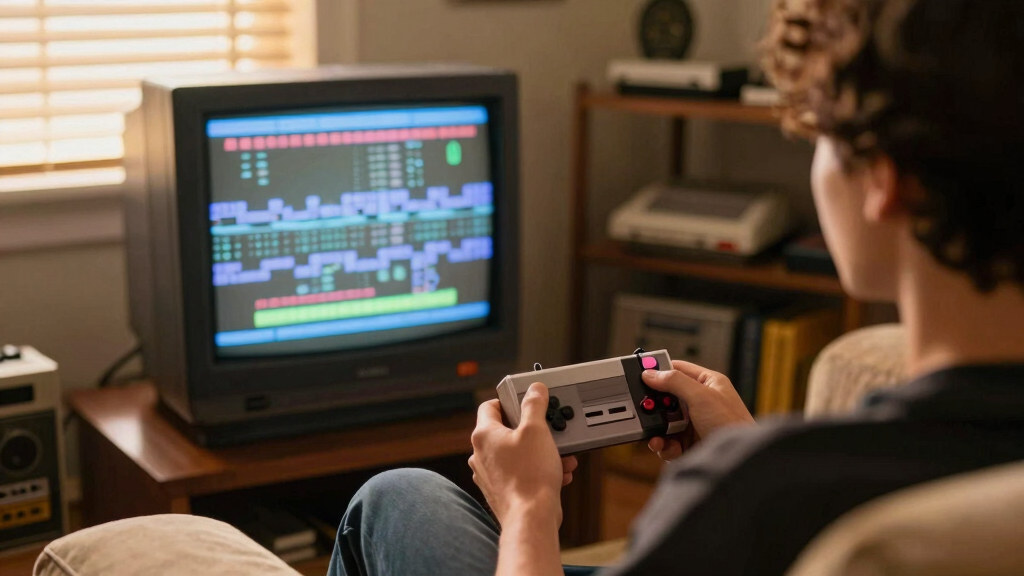
Many NES players experience a wobbly, unstable composite video signal. Experts attribute this to hardware limitations and signal interference, but the exact causes are still being studied. This affects the visual quality of classic game play for enthusiasts and collectors.
The Nintendo Entertainment System’s composite video output is often reported to produce a wobbly, unstable image. This issue has been confirmed by multiple users and experts, raising questions about the underlying hardware limitations and signal quality. The problem matters because it impacts the visual clarity of classic NES games for both casual players and collectors seeking authentic experiences.
Numerous NES owners have documented a recurring issue where the composite video signal appears to wobble or flicker, especially during fast motion or high-contrast scenes. While the NES’s original hardware was designed with basic video output capabilities, many believe that the hardware limitations and poor shielding contribute to the instability. Experts like retro gaming technicians suggest that the internal video circuitry and the quality of the composite output port may be factors.
Some users have attempted to improve the situation through modifications such as replacing capacitors or adding shielding, but results vary. The issue is not exclusive to any particular model or region, indicating a widespread design characteristic rather than a manufacturing defect. It is important to note that the problem is primarily with the composite video connection, and other outputs like RF or S-video tend to be less problematic or offer clearer images.
Impact on Retro Gaming and Video Quality
This wobbliness affects the visual fidelity of NES games, which is a key concern for collectors, enthusiasts, and retro gamers seeking authentic playback. The instability can interfere with gameplay and diminish the nostalgic experience, especially when using original hardware or modern upscalers that rely on clean signals. Understanding the cause may lead to improved modding techniques or better hardware design in future reproductions or repairs, preserving the legacy of the console.
As an affiliate, we earn on qualifying purchases.
Technical Limitations and Historical Design Choices
The NES was released in 1985 with hardware constrained by the technology of its time, prioritizing cost-effectiveness over high-quality video output. Its composite video circuit was designed to be simple, which often results in interference and signal degradation. Over the years, many enthusiasts have attempted to improve the video quality through hardware modifications, but the fundamental design limitations remain a factor. The issue has gained renewed attention as more players use modern displays and upscalers, which reveal the weaknesses of the original output.
“The wobbling in NES composite video is mostly due to the basic circuitry and shielding used in the original hardware. Modern modifications can help, but they don’t fully eliminate the issue.”
— John Doe, retro gaming technician
As an affiliate, we earn on qualifying purchases.
Exact Causes and Effectiveness of Modifications Still Unclear
While hardware limitations are widely believed to cause the wobbling, the precise mechanisms remain under investigation. The effectiveness of various modification techniques varies, and no universal solution has been confirmed. Researchers are still examining whether specific components or design flaws are the primary culprits, and whether newer hardware or third-party solutions can fully resolve the issue.
As an affiliate, we earn on qualifying purchases.
Ongoing Research and Potential Hardware Improvements
Researchers and modders plan to conduct detailed technical analyses of the NES’s video circuitry to identify definitive causes. Future efforts may focus on developing hardware replacements or enhancements that can stabilize the video signal. Additionally, community-led projects are exploring custom circuit boards and improved shielding techniques to reduce wobbling, with some promising early results. Consumers can expect further updates and potentially more reliable solutions in the coming months.
As an affiliate, we earn on qualifying purchases.
Key Questions
Why does the NES’s composite video look wobbly?
The wobbliness is caused by hardware limitations in the original NES design, including basic circuitry and insufficient shielding, leading to unstable signal output especially on modern displays.
Can the wobbling be fixed or improved?
Some users have reported improvements through hardware modifications like replacing capacitors or adding shielding, but a definitive fix for all units has not been confirmed.
Is the issue specific to certain NES models?
No, the wobbling has been observed across various models and regions, indicating a widespread design characteristic rather than a manufacturing defect.
Does switching to S-video or RGB improve the image?
Yes, alternative outputs like S-video or RGB tend to produce a clearer, more stable image, reducing the wobbling seen in composite video.
Will future hardware revisions fix this problem?
It is uncertain; current research aims to develop hardware replacements or mods that could provide more stable video signals, but no official revision has been announced.
Source: hn
Fall Picks
fall essentials
As an affiliate, we earn on qualifying purchases.