
TL;DR
Play games included with Prime
Start a Prime free trial and play with Amazon Luna on your devices.
As an affiliate, we earn on qualifying purchases.
Dante Leoncini successfully runs Half-Life at 30 FPS on a Nokia N95, a 2007 Symbian phone, with added mouse and keyboard support. Some slowdowns remain as he works on fixes, marking a notable tech achievement.
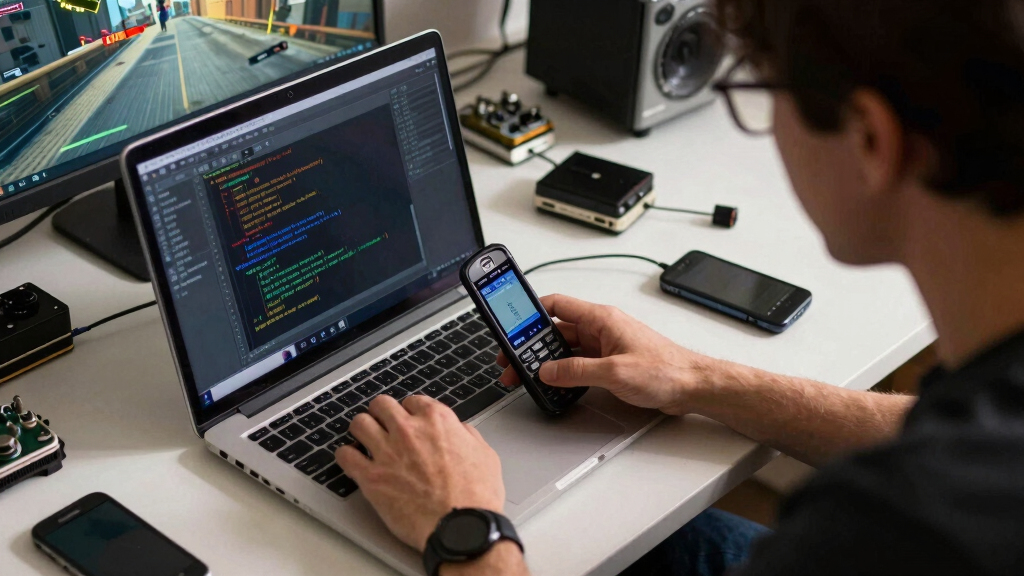
Argentine developer Dante Leoncini has successfully run Half-Life at 30 FPS on a Nokia N95, a Symbian-based phone released in 2007, and has added mouse and keyboard support, according to a recent post on X (formerly Twitter).
Leoncini reports that while some slowdowns persist, he has identified the cause and is actively working on a fix. This achievement is part of his broader effort to run heavyweight software on the Nokia N95, which features a dual-core 332 MHz ARM11 processor and 64MB of RAM.
The Nokia N95, known for its multimedia capabilities, was not designed for gaming, but Leoncini has previously managed to run titles like Quake 3, Crash Bandicoot, and emulators for Sega, NES, and ScummVM on the device. His recent work suggests that porting classic PC games to such hardware is increasingly feasible with custom builds and optimization.
He indicates that the port of Half-Life is likely a native Symbian build rather than an emulation, though it’s not confirmed whether he used an open-source engine like Xash3D or a different method. The device’s hardware, including the PowerVR MBX 3D accelerator, contributes to the ability to run the game at playable frame rates.
Potential for Retro Gaming on Obsolete Hardware
This development demonstrates that even aging mobile hardware like the Nokia N95 can run complex, historically significant PC games, expanding possibilities for retro gaming and hardware hacking. It highlights the potential for enthusiasts to push legacy devices beyond their original capabilities, fostering innovation and preservation of gaming history.
Nokia N95 smartphone accessories
As an affiliate, we earn on qualifying purchases.
As an affiliate, we earn on qualifying purchases.
Legacy Devices and Mobile Gaming Experiments
Since the late 2000s, enthusiasts have explored running classic games on phones and other legacy hardware, often through emulation or porting. The Nokia N95, with its Symbian OS and ARM-based architecture, has been a target for such projects, including running Quake 3 in 2008. Leoncini’s recent success with Half-Life continues this trend, showing that even early smartphones can serve as platforms for demanding titles with proper optimization.
This effort builds on prior work where developers ported or emulated titles like Quake 3, sometimes with multiplayer support, on similar hardware. Leoncini’s achievement marks a significant milestone in this ongoing exploration of legacy device capabilities.
“While some slowdowns remain, I’ve already identified the cause and am working on a fix.”
— an anonymous researcher
mobile game controller for legacy phones
As an affiliate, we earn on qualifying purchases.
As an affiliate, we earn on qualifying purchases.
Unconfirmed Details About the Porting Method
It is not yet clear whether Leoncini used a specific open-source engine like Xash3D or developed a custom port. The exact technical approach and whether the port is fully native or relies on emulation remain unconfirmed.
USB mouse and keyboard for mobile devices
As an affiliate, we earn on qualifying purchases.
As an affiliate, we earn on qualifying purchases.
Next Steps in Performance Optimization
Leoncini plans to address the remaining slowdowns and bugs, aiming for a more stable, consistent experience. Further testing and potential release of the port or source code could follow, showcasing the limits of legacy hardware for modern gaming.
retro gaming emulators for Android
As an affiliate, we earn on qualifying purchases.
As an affiliate, we earn on qualifying purchases.
Key Questions
How is it possible to run Half-Life on a 2007 phone?
Through custom porting and optimization, leveraging the device’s ARM processor and specific software techniques, it’s possible to run lightweight versions or ports of PC games on legacy hardware.
Will this port be available for download?
There is no official release announced yet. Leoncini is still working on fixing bugs and performance issues before considering distribution.
Does this mean other classic games can run on old phones?
Potentially, yes. With enough technical effort, other demanding titles might be ported or emulated on legacy devices, though performance and stability vary.
What hardware limitations affect this project?
The Nokia N95’s limited CPU speed, RAM, and graphics capabilities restrict performance. Optimizations are crucial to achieving playable frame rates.
Is this port usable for gaming or just a tech demo?
Currently, it is more of a proof of concept with some slowdowns. Further work is needed to make it a fully playable experience.
Source: Hacker News
Fall Picks
fall essentials
As an affiliate, we earn on qualifying purchases.