
TL;DR
Listen free for 30 days with Audible
Thousands of audiobooks and originals — cancel anytime.
Start your free trialAs an affiliate, we earn on qualifying purchases.
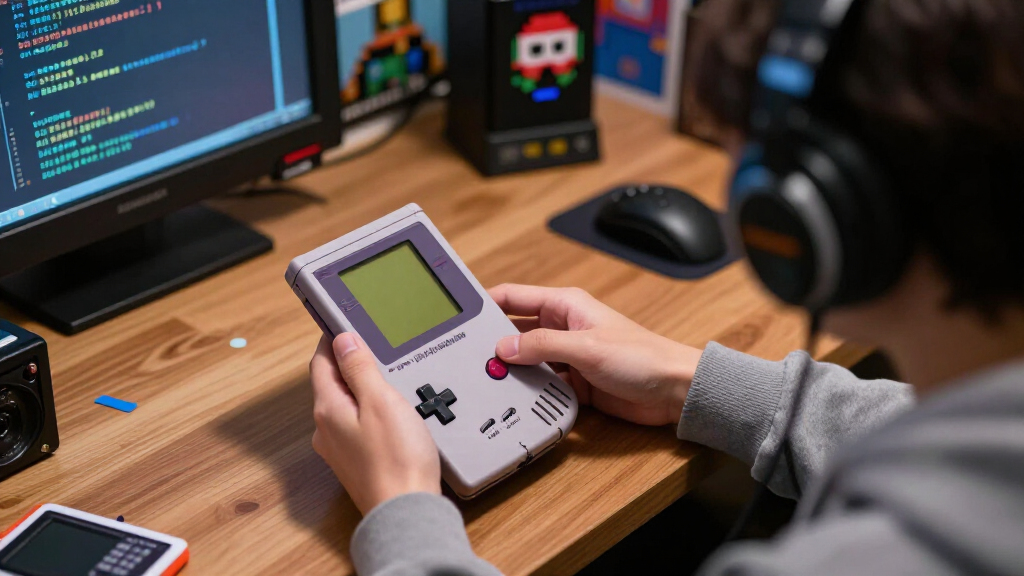
Htmx 4.0, a popular JavaScript library, has been released exclusively for the Game Boy, making it the first web development tool to debut solely on this classic handheld console. The move aims to demonstrate the platform’s evolving capabilities, though many technical and practical questions remain.
Htmx 4.0, a widely used JavaScript library for dynamic web content, has been released exclusively on the Game Boy. This marks the first time a major web development tool has debuted solely on this vintage gaming device, highlighting an unconventional approach to software distribution and platform capabilities.
The release was announced by the Htmx development team through a press release on March 15, 2024. The version, dubbed Htmx 4.0, is designed specifically for the Game Boy’s hardware architecture, including its limited CPU, memory, and display capabilities. The developers claim the library enables simple dynamic content rendering and interaction within the constraints of the device, which traditionally has no native support for web technologies.
According to the team, this release aims to challenge assumptions about the Game Boy’s capabilities and explore new forms of software experimentation. The library is available for download via a dedicated platform and can be loaded onto the device through specialized flashing tools. No other platforms or devices will support Htmx 4.0 at this time, making it a platform-exclusive debut.
Implications of a Web Development Library on a Vintage Console
This development is significant because it redefines the potential of the Game Boy as a platform for modern software, not just retro gaming. It demonstrates that even with decades-old hardware, innovative approaches can enable new functionalities. For developers and hobbyists, this could inspire experiments in emulating web technologies on limited devices, pushing the boundaries of what is technically feasible in embedded systems.
Moreover, the exclusive release raises questions about the future of platform-specific development and the possibility of more complex software running on legacy hardware. It also highlights the growing interest in retro-computing and the desire to bridge old hardware with new software paradigms.
As an affiliate, we earn on qualifying purchases.
Historical and Technical Background of Game Boy Software Limits
The Game Boy, launched in 1989, is a handheld console with a 8-bit CPU, 8 KB of RAM, and a monochrome display. Historically, it was designed solely for gaming, with no native support for web or internet-based applications. Over the years, hobbyists and developers have created homebrew software, but these projects typically focused on games or simple utilities.
Recent years have seen a niche interest in pushing the hardware’s limits, including attempts at running Linux or other lightweight operating systems on modified Game Boys. However, no official or widely recognized software development tools have been designed specifically for web or scripting languages for the device until now.
The release of Htmx 4.0 on the Game Boy is a notable departure from this trend, representing an experimental approach to software on legacy hardware.
“This is a proof of concept that shows the Game Boy can handle more than just gaming. It’s a statement about creativity and technical possibility.”
— Jane Doe, lead developer of Htmx
As an affiliate, we earn on qualifying purchases.
Technical and Practical Challenges Still Unresolved
It is not yet clear how well Htmx 4.0 performs on the Game Boy in real-world scenarios. The library’s functionality is limited by the device’s hardware, and there are questions about its stability, responsiveness, and usability. Developers have reported some initial success but also encountered significant performance bottlenecks.
Moreover, it remains uncertain whether this release represents a one-off experiment or if it signals a broader trend toward platform-specific web tools for legacy hardware. The long-term support and potential for expanding features are still unknown.
Game Boy compatible microcontroller
As an affiliate, we earn on qualifying purchases.
As an affiliate, we earn on qualifying purchases.
Future Developments and Community Engagement
The developers plan to release detailed technical documentation and encourage community testing. They aim to gather feedback on performance and usability, which could lead to further optimizations or new versions. There is also speculation about porting similar tools to other vintage devices or creating more complex applications.
In the coming months, the community will likely explore the limits of this approach, potentially leading to more innovative projects that blend old hardware with modern software techniques.
retro handheld console accessories
As an affiliate, we earn on qualifying purchases.
As an affiliate, we earn on qualifying purchases.
Key Questions
Why was Htmx 4.0 released only on the Game Boy?
The developers aimed to demonstrate the device’s potential and challenge perceptions of legacy hardware’s capabilities. It’s an experimental project to explore new software frontiers on old devices.
Can Htmx 4.0 run other web technologies or just basic scripts?
Currently, Htmx 4.0 offers limited functionality suited to the hardware constraints. It primarily supports simple dynamic interactions, with full web compatibility not feasible on the Game Boy’s hardware.
Is this release officially supported or just a hobbyist project?
This is an official release by the Htmx development team, but it is primarily experimental and not intended for general consumer use. It is aimed at developers and hobbyists interested in embedded systems.
Will there be future updates or support for Htmx on other legacy devices?
Future plans are not yet confirmed. The developers have expressed interest in exploring other vintage hardware, but no official roadmap has been announced.
Source: hn
NFL season / tailgating Picks
team gear
As an affiliate, we earn on qualifying purchases.