
TL;DR

Get games and gaming gear delivered free — and shop member deals
- Fast, free delivery on millions of items
- Access to Prime Big Deal Days deals on October 6–7
- Prime Video, Amazon Music and more included
An AMD engineer has collaborated with a 3D printing enthusiast to create a Steam Machine-like PC with diagonal motherboard mounting. The project is available as open-source files, showing a promising DIY alternative to commercial compact gaming PCs.
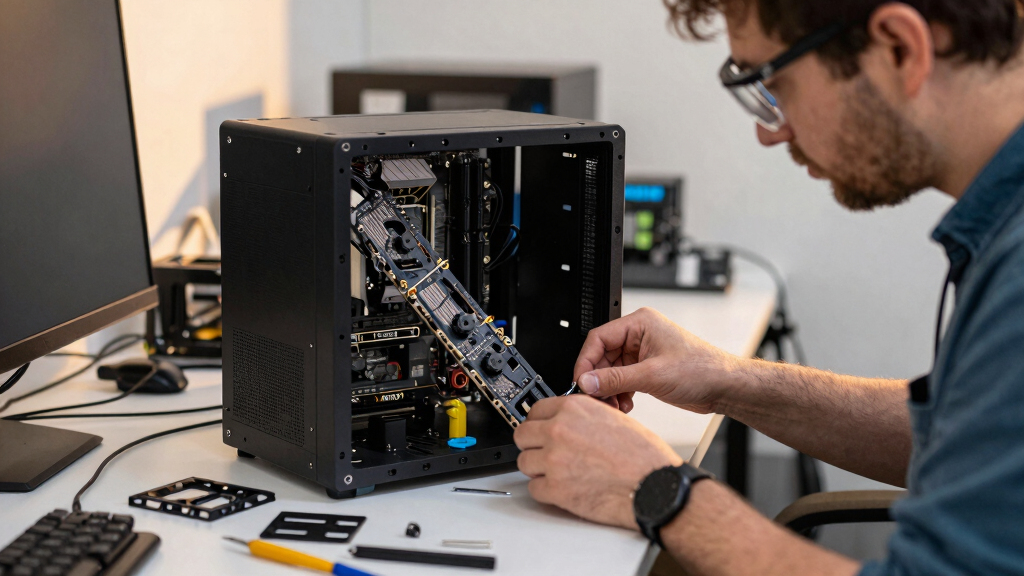
An AMD engineer has collaborated with a 3D printing enthusiast to develop a custom PC case inspired by Valve’s Steam Machine, featuring a diagonal motherboard mounting. The project, now available as open-source files, aims to offer a DIY alternative for enthusiasts interested in compact gaming PCs, reflecting ongoing interest in personalized, small-form-factor builds.
The project was spearheaded by Jacob Terkelsen, an AMD employee, in partnership with a 3D printing enthusiast known as 3DCatt. They released the Terk Box v1.1 design on Printables.com, including source files under a Creative Commons license, allowing hobbyists to print and assemble their own systems. The case measures 167 x 168 x 225mm, slightly larger than Valve’s original Steam Machine, but designed to accommodate specific components like the RTX 5060 LP graphics card and a front 140mm fan.
Key features include a diagonal motherboard mount and a layout that avoids the typical cubic form, aiming for a more practical and customizable build. Some users reported fitting issues with certain GPUs and riser cables, with the maximum GPU length recommended at about 180mm. The design also considers airflow and cooling, with recent modifications adding more ventilation at the back.
Both Terkelsen and 3DCatt have indicated plans for future revisions, with hints at improvements in component fit and overall layout, moving toward version 1.2. While the project is still in development, it demonstrates a tangible effort to revive the spirit of Valve’s original Steam Machine through open-source, 3D-printed solutions.
Implications for DIY PC Enthusiasts and Small-Form-Factor Builds
This project highlights a growing interest among PC hobbyists in custom, compact gaming systems that are more affordable and tailored than commercial options. By sharing detailed source files and encouraging community contributions, the initiative could inspire further innovations in 3D-printed PC cases and DIY gaming PCs. It also underscores the potential for open-source hardware design to challenge traditional manufacturing, especially for niche markets like small-form-factor and portable gaming setups.
Mini ITX motherboard for gaming PC
As an affiliate, we earn on qualifying purchases.
As an affiliate, we earn on qualifying purchases.
Background on Valve’s Steam Machine and DIY PC Trends
Valve’s Steam Machine initiative, launched in the early 2010s, aimed to bring console-like gaming to PCs but faced limited success due to high costs and limited availability. Since then, enthusiasts have sought alternatives, often building custom small-form-factor PCs or repurposing existing hardware. Recent years have seen a surge in 3D-printed PC cases and open-source projects, driven by hobbyists eager to create personalized gaming solutions. This latest project by an AMD engineer and a community creator exemplifies this trend, blending professional expertise with grassroots innovation to revive the concept of a compact, gaming-focused PC.
“The collaboration demonstrates how open-source hardware can empower enthusiasts to create highly customized, small-footprint gaming PCs.”
— an anonymous researcher
As an affiliate, we earn on qualifying purchases.
Unresolved Design Challenges and Future Revisions
It is not yet clear how well the final revisions will address component fit issues, such as GPU size limitations and riser cable compatibility. The overall cost-effectiveness of building such a case, given the need for 3D printing and specific components, remains uncertain. Additionally, the project’s long-term viability and community adoption are still developing, with no official timeline for version 1.2 or further updates.
As an affiliate, we earn on qualifying purchases.
Upcoming Revisions and Community Engagement Opportunities
Developers plan to release version 1.2 with improvements in component fit and airflow. Enthusiasts are encouraged to contribute suggestions, remixes, and modifications through community platforms. Future testing will focus on the performance and compatibility of various components within the case, with potential for broader adoption if the design proves practical and affordable.
As an affiliate, we earn on qualifying purchases.
Key Questions
Can I build this case myself?
Yes, the source files and parts list are publicly available on Printables.com, allowing hobbyists with 3D printers to attempt assembly.
What components are compatible with the case?
The case is designed to fit components like the RTX 5060 LP graphics card and a standard ATX power supply, but some GPU sizes and riser cables may require adjustments.
How much will it cost to build?
The total cost depends on the components chosen and 3D printing expenses. The project is primarily aimed at enthusiasts willing to invest time and resources into customization.
Is this design officially endorsed by AMD or Valve?
No, this is a community-driven project involving an AMD engineer and hobbyists, not an official product from AMD or Valve.
Will this case be suitable for gaming performance?
Performance depends on the chosen components, but the case design aims to support gaming hardware with adequate cooling and space for high-performance parts.
Source: Tom’s Hardware: For The Hardcore PC Enthusiast
Halloween Picks
halloween
As an affiliate, we earn on qualifying purchases.