
TL;DR

Play games on Amazon Luna for your game nights, included with Prime
- A rotating selection of games, no download needed
- Play on TV, laptop or phone
- Fast, free delivery for your gear, too
An MSX emulation project on the ESP32-S3 has been significantly optimized, enabling VGA output and multi-model support. This demonstrates the platform’s potential for retro gaming hardware development.
An MSX emulator has been highly optimized for the ESP32-S3 microcontroller, enabling VGA output and multi-model support, marking a significant step in retro gaming hardware development.
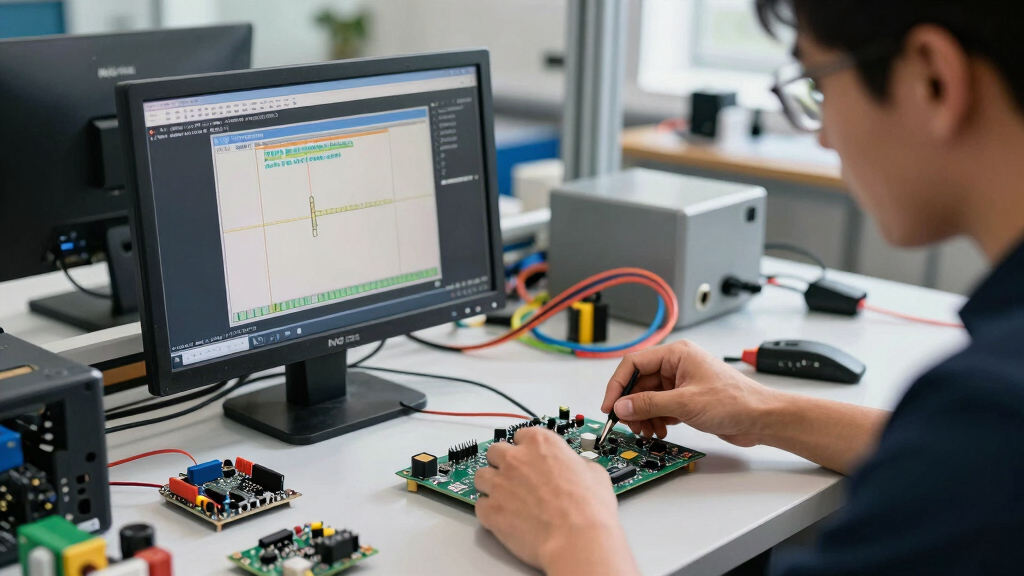
The project involves using an ESP32-S3 microcontroller with at least 8 MB of PSRAM, supporting MSX1, MSX2, and MSX2+ systems. It leverages the Xtensa Lx7 CPU cores, with software loaded into PSRAM for execution. The VGA output is achieved through a 2-bit R-2R RGB222 DAC, while audio output requires custom wiring for PDM filters connected to GPIO pins. Input is via USB keyboard, with software added through a web interface or SD card.
The emulation core is based on a modified version of the original fMSX, with targeted optimizations for the ESP32-S3’s cache and pipeline, including aligned memory accesses and data migration from Flash to RAM. These changes improve performance and reduce bottlenecks, enabling more accurate and smooth emulation. The project is part of the Retro-Go ecosystem, which supports a variety of retro gaming consoles and systems, making it accessible for hobbyists and developers interested in portable, low-cost emulation hardware.
Potential Impact on Retro Gaming Hardware Development
This development demonstrates that the ESP32-S3, a relatively affordable and widely available microcontroller, can effectively emulate complex systems like the MSX with high performance. It opens the door for hobbyists and small-scale developers to build portable, low-cost retro gaming devices with VGA output and multi-system support, reducing reliance on more expensive single-board computers like the Raspberry Pi. Additionally, the optimized software techniques highlight the capabilities of the ESP32-S3’s architecture for real-time emulation tasks, potentially influencing future projects in embedded gaming hardware.
VGA output for ESP32 development board
As an affiliate, we earn on qualifying purchases.
As an affiliate, we earn on qualifying purchases.
Advances in ESP32-S3 Emulation Capabilities
The ESP32-S3 has gained attention for its processing power and integrated features, making it suitable for emulating retro consoles. Previous efforts focused on general emulation, but recent projects have pushed performance boundaries by optimizing software at the core level. The Retro-Go project, which supports multiple classic systems, has served as a foundation for these improvements, with the MSX emulation being a notable example of targeted hardware and software tuning. The use of VGA output via a simple DAC demonstrates how accessible hardware modifications can enhance display quality for portable emulators.
Earlier, the challenge was balancing performance with limited resources, especially for systems based on the Z80 CPU like the MSX. The recent optimizations have addressed these issues by aligning memory access and reducing pipeline stalls, resulting in smoother emulation experiences on a microcontroller platform.
“The modifications to the fMSX core for the ESP32-S3’s architecture have significantly improved emulation performance, making it feasible to run MSX systems with VGA output on such a small device.”
— an anonymous researcher
As an affiliate, we earn on qualifying purchases.
Remaining Challenges in Emulation Accuracy and Compatibility
While performance improvements are confirmed, it is still unclear how fully compatible the emulation is across all MSX titles and peripherals. The extent of accuracy compared to original hardware has not been fully tested or documented, and some features may still require refinement. Additionally, the stability of the VGA output and audio quality under various conditions remains to be verified through broader testing.
retro gaming microcontroller project
As an affiliate, we earn on qualifying purchases.
As an affiliate, we earn on qualifying purchases.
Next Steps for Broader Testing and Hardware Refinement
Developers plan to conduct comprehensive compatibility testing across a wider library of MSX titles and peripherals. Further hardware refinements, such as improved audio output filtering and more robust VGA circuitry, are expected. Community engagement and open-source sharing of designs and software updates will likely accelerate development, with potential for commercial or hobbyist portable MSX emulators based on the ESP32-S3.
USB keyboard for embedded systems
As an affiliate, we earn on qualifying purchases.
As an affiliate, we earn on qualifying purchases.
Key Questions
How does the performance of this emulation compare to other platforms?
Preliminary tests suggest that with the current optimizations, the ESP32-S3 can emulate MSX systems smoothly, comparable to some Raspberry Pi setups, but with significantly lower power consumption and cost.
What hardware is required to replicate this project?
An ESP32-S3 microcontroller with at least 8 MB of PSRAM, a simple R-2R DAC for VGA output, and basic wiring for audio PDM filters are needed. Additional peripherals include a USB keyboard and an SD card for software loading.
Is this project suitable for beginners?
While the hardware setup is relatively straightforward, the software modifications require some familiarity with embedded development and emulation concepts. It is best suited for hobbyists with intermediate experience.
Will this support other systems besides MSX?
The Retro-Go ecosystem supports multiple consoles, and similar optimization techniques could be applied to emulate other systems. However, specific adaptations are needed for each platform.
Source: Hackaday
Evergreen bestsellers Picks
bestsellers
As an affiliate, we earn on qualifying purchases.