
TL;DR

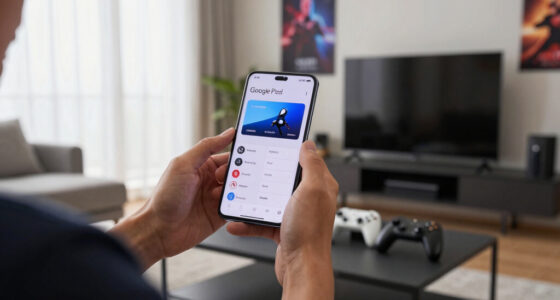
Play games on Amazon Luna for your game nights, included with Prime
- A rotating selection of games, no download needed
- Play on TV, laptop or phone
- Fast, free delivery for your gear, too
HTC Vive has introduced the new Base Station 2.0, replacing the original 1.0 model. The update offers improved tracking and compatibility, but some features remain unclear. This impacts VR setup flexibility and future upgrades.
HTC Vive has launched the Base Station 2.0, replacing the original 1.0 model, with confirmed improvements in tracking range and compatibility. This development matters for VR enthusiasts and current users planning upgrades, as it influences setup options and future-proofing.
The HTC Vive Base Station 2.0 was officially introduced in late 2023, replacing the earlier 1.0 version. The new model features a wider tracking range, improved synchronization capabilities, and enhanced compatibility with newer Vive headsets.
According to reports from r/Vive, the 2.0 base stations support a larger tracking volume and can be used in multi-room setups more effectively. The 2.0 units are backward compatible with Vive Cosmos and Vive Pro models, but require specific mounting and power configurations.
While the core function—tracking the Vive headset and controllers—remains consistent, the 2.0 version introduces a new design that supports daisy-chaining multiple stations via a single power source, reducing cable clutter and simplifying installation. The 1.0 stations, by contrast, require individual power sources and have a narrower tracking range.
Implications for VR Setup and Future Upgrades
The release of HTC Vive Base Station 2.0 marks a significant step toward more flexible and scalable VR setups. Its improved tracking range and multi-station compatibility enable larger, more immersive virtual environments, which is crucial for both gaming and professional applications.
For current Vive users, understanding the differences affects upgrade decisions. The 2.0’s backward compatibility means that existing setups can be enhanced without replacing all hardware, but some limitations remain, such as the need for specific mounting options and power supplies.
This development also signals HTC’s commitment to advancing VR hardware standards, potentially influencing other manufacturers and ecosystem compatibility in the future.
As an affiliate, we earn on qualifying purchases.
Evolution of HTC Vive Base Stations and User Expectations
The original HTC Vive Base Station 1.0 was released in 2016, establishing a standard for room-scale VR tracking. Over the years, users faced limitations in tracking range and setup complexity, prompting HTC to develop the 2.0 version.
Prior to this update, HTC and other manufacturers faced criticism over the rigidity of early VR tracking setups. The 2.0 model aims to address these issues by offering a more scalable and user-friendly solution, aligning with industry trends toward larger, more seamless VR environments.
Based on community feedback from r/Vive, the new model is seen as a positive step, but questions about full compatibility and installation specifics are still emerging as the product rolls out.
“The 2.0 base stations support daisy-chaining, which simplifies multi-room setups and reduces cable clutter. This is a major improvement over the 1.0 models.”
— an anonymous researcher from r/Vive
As an affiliate, we earn on qualifying purchases.
Remaining Questions About Compatibility and Installation
It is not yet clear whether all existing Vive hardware can be upgraded to work seamlessly with the 2.0 stations without additional accessories. Details about mounting options, power requirements, and full compatibility with older models are still emerging. Additionally, some users report uncertainty about the availability and pricing of the new units, and whether future firmware updates will further enhance compatibility.
As an affiliate, we earn on qualifying purchases.
Expected Firmware Updates and User Guidance
HTC is expected to release firmware updates to improve the integration of 2.0 stations with existing Vive headsets and controllers. Manufacturers and community forums will likely clarify installation procedures and compatibility details over the coming weeks. Users should monitor official HTC announcements and community feedback to plan their upgrades accordingly.
As an affiliate, we earn on qualifying purchases.
Key Questions
Can I use HTC Vive Base Station 2.0 with my existing Vive headset?
Yes, the 2.0 stations are backward compatible with Vive Cosmos and Vive Pro models, but specific mounting and power requirements apply. Compatibility with older models like the original Vive may be limited or require additional accessories.
What are the main advantages of the 2.0 base stations over 1.0?
The 2.0 models support larger tracking volumes, daisy-chaining for multi-room setups, and easier installation with reduced cable clutter. They also offer improved synchronization capabilities for more precise tracking.
Are there any drawbacks or limitations to the new 2.0 stations?
Some users report uncertainty about full compatibility with all older hardware and the need for specific mounting options. Availability and pricing are still being clarified, and some may require additional accessories for optimal setup.
Will HTC release firmware updates to improve compatibility?
HTC is expected to issue firmware updates that enhance compatibility and performance, but specific timelines have not been confirmed. Users should stay tuned to official HTC channels for updates.
Source: r/Vive
Halloween Picks
halloween
As an affiliate, we earn on qualifying purchases.