
TL;DR

Play games on Amazon Luna for your game nights, included with Prime
- A rotating selection of games, no download needed
- Play on TV, laptop or phone
- Fast, free delivery for your gear, too
Footage shared by HKEPC shows large numbers of GeForce RTX 5090 cards in a Chinese workshop, with technicians reportedly removing their GPU dies and GDDR7 memory for installation on custom boards. The video documents a reported conversion process, but does not establish the cards’ origin, scale of the operation, or NVIDIA’s role.
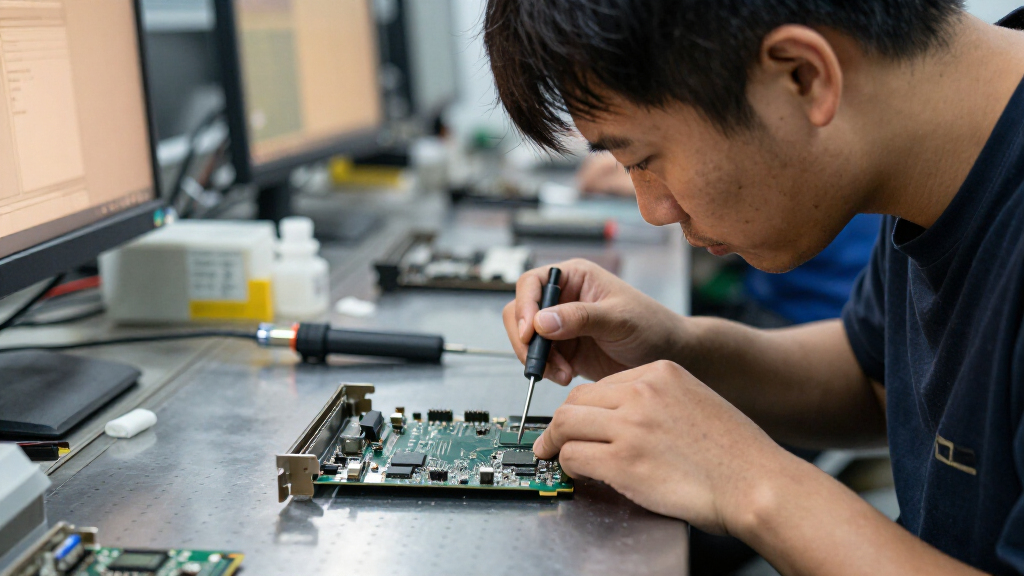
Video shared by HKEPC on October 23, 2026, shows a Chinese workshop with shelves holding numerous GeForce RTX 5090 cards; technicians reportedly remove the GPUs’ dies and memory chips and install them on custom boards designed for AI servers. The footage offers a view of one reported route by which high-end consumer graphics hardware is being repurposed, but it does not establish how many cards are involved or where they came from.
The footage, posted by HKEPC on X, shows cards from multiple manufacturers, according to the report. Among those visible is an Asus ROG Astral RTX 5090. Wccftech also reports that Founders Edition cards are present, although the available account does not provide an independent inventory or identify each model in the video.
In the reported process, technicians remove the GPU die and GDDR7 memory from the original card and fit those components to a custom printed circuit board. The rebuilt card uses a dual-slot blower-style cooler, rather than the larger cooling assembly on many gaming models. That format is described as better suited to fitting multiple cards in space-constrained AI server systems.
The RTX 5090 has 32 GB of GDDR7 memory, a capacity and hardware configuration that can make it useful for AI workloads as well as gaming. The video shows hardware and workshop activity, but it does not document the cards’ testing, final destinations, buyers, or the commercial terms of the operation. Those details remain unverified.
Hardware Watch · Reported Workshop Conversion
The RTX 5090 Isn’t Gone. Its Chips Are Being Reworked for AI
Footage shared by HKEPC shows numerous GeForce RTX 5090 cards in a Chinese workshop. Technicians reportedly remove the GPU dies and GDDR7 memory for installation on compact custom boards. The video documents a reported process, while leaving its scale and supply chain unclear.
From retail card to custom board
According to the report’s account of the footage, the valuable GPU and memory components are reused while the original card assembly is replaced.
Source cards appear
Shelves show multiple RTX 5090 cards. The report identifies several manufacturers, including an Asus ROG Astral model.
Remove core components
Technicians reportedly lift the GPU die and GDDR7 memory chips from the original graphics card.
Fit a custom PCB
The components are reportedly installed on a purpose-built printed circuit board for a different form factor.
Use compact cooling
A dual-slot blower-style cooler is described as better suited to dense, space-constrained AI server systems.
Repurposed parts
The RTX 5090’s GPU and 32 GB of memory can support AI workloads as well as gaming. Once those components are rebuilt onto a custom board, the result is no longer a standard retail graphics card. The video does not show performance tests, reliability results, or where the finished boards go.
A market tension, not a measured shortage
The footage suggests competing uses for powerful consumer hardware, but it provides no market data to measure the effect.
For AI builders
Compact configuration
A lower-profile blower design may make it easier to fit multiple cards in server systems. The video does not establish performance or buyer demand.
For gamers
Availability remains unknown
If substantial volumes were diverted, retail supply could matter. No shipment totals, price comparisons, or availability data are included.
For the market
Scale is unverified
Numerous cards appear in the workshop, but footage alone cannot show whether this is routine production or a limited batch.
Claims that need independent evidence
Wccftech describes earlier reports of similar Blackwell GPU conversions and discusses NVIDIA and supply restrictions. The account does not independently resolve those claims.
Production and supply chain
The footage does not identify the workshop operator, establish where each card came from, or document the route into China. It also does not confirm the number of cards converted or the final buyers.
Wccftech says NVIDIA recently rejected rumors that the RTX 5090 had been discontinued. The provided account includes no production figures to establish manufacturing levels or how supply is divided among markets.
Restrictions and company role
The report raises questions about cross-border supply and speculates about NVIDIA’s awareness and commercial incentives. No customs records or evidence of the company’s intentions are presented.
What is shown—and what remains open
Keep the observed workshop activity separate from conclusions about production, retail effects, or corporate decisions.
in workshop
removed
reported
unverified
The narrow supported conclusion: RTX 5090 cards are shown in a Chinese workshop, where their main chips are reportedly reused on custom boards.
Key questions, answered
What the available report can—and cannot—tell us.
Does the video prove the RTX 5090 is discontinued?
No. Workshop footage does not establish production status. Wccftech says NVIDIA recently refuted discontinuation rumors.
What happens to the cards?
Technicians reportedly remove the GPU die and GDDR7 memory, then fit them to a custom board with a dual-slot blower cooler.
Why rebuild gaming cards for AI?
The compact design may suit server use, and the GPU and 32 GB of memory can support AI workloads. No tests or buyer rationale are shown.
Will this make cards harder to buy?
The report contains no retail availability or pricing data, so any effect on supply for gamers remains unknown.
Gaming Cards Reworked for AI
The footage highlights a tension between the RTX 5090’s role as a premium gaming product and its value as a source of powerful GPU and memory components for AI systems. When cards are stripped and rebuilt, the finished product is no longer a standard retail graphics card, even though it relies on chips originally assembled for that market.
For gamers, this could matter if a meaningful share of available cards is diverted from ordinary retail channels. However, the video supplies no shipment totals, market data, or comparison with overall RTX 5090 production. It cannot show whether this activity has affected consumer availability or prices. The process may also appeal to AI system builders seeking a compact card configuration, but the footage does not establish its performance, reliability, or legality.
NVIDIA GeForce RTX 5090 graphics card 32GB
As an affiliate, we earn on qualifying purchases.
As an affiliate, we earn on qualifying purchases.
Reports of Earlier RTX Conversions
Wccftech says similar conversions of high-end Blackwell GPUs into AI hardware were reported in China last year. The new footage therefore appears to show a recurring practice rather than a wholly new use for consumer cards. The report describes the RTX 5090 as continuing to enter China despite restrictions on the GPU, but does not provide customs records or other independent evidence detailing how particular cards reached the workshop.
Questions about RTX 5090 production have also circulated. Wccftech says NVIDIA recently rejected rumors that the model had been discontinued. The article nevertheless suggests that production may be focused on demand from AI servers. No production figures or company statement in the provided account substantiates that suggestion, so the status of manufacturing and the split between customer markets should not be treated as settled.
“Wccftech reports that NVIDIA recently refuted rumors that the RTX 5090 had been discontinued.”
— Wccftech
As an affiliate, we earn on qualifying purchases.
Supply, Scale and NVIDIA’s Role
The available footage does not establish how many RTX 5090s are being converted, how long the workshop has operated, or whether the cards shown represent a routine production line or a limited batch. The video also does not verify the cards’ origins, the identity of the workshop’s operator, or who buys the rebuilt boards.
Wccftech speculates that NVIDIA is aware of such facilities and that selling into AI demand may be more profitable than supplying gamers. The report provides no evidence for the company’s awareness, intentions, or financial calculations. It is also unclear how the reported cross-border supply relates to applicable export restrictions. The footage alone does not settle those questions.
As an affiliate, we earn on qualifying purchases.
More Evidence Needed on Supply
Further reporting would be needed to confirm the workshop’s location and operator, the number and origin of the cards, and whether the custom boards are being sold or installed in AI servers. Statements or records from NVIDIA, distributors, buyers, or relevant authorities could clarify the supply chain and the company’s production plans. Until then, the video supports a narrow conclusion: RTX 5090 cards are being shown in a Chinese workshop, and the reported conversion process removes their main chips for reuse on custom boards.
The footage does not establish a change to the RTX 5090’s official product status, nor does it show that consumer availability has been affected. Those outcomes would require separate evidence, such as updated company information, retail supply data, or documentation of the rebuilt cards’ deployment.
Source: Wccftech
As an affiliate, we earn on qualifying purchases.
Key Questions
Does the video prove the RTX 5090 has been discontinued?
No. The footage shows RTX 5090 cards at a workshop, but it does not establish the model’s production status. Wccftech says NVIDIA recently refuted discontinuation rumors.
What happens to the cards in the workshop?
According to Wccftech’s account of the footage, technicians remove the GPU die and GDDR7 memory and place those components on a custom board with a dual-slot blower cooler.
Why rebuild gaming cards for AI systems?
The reported rebuilt design is more compact for server use, while the RTX 5090’s GPU and 32 GB of memory can support AI workloads. The video does not provide performance tests or explain the buyers’ reasons.
Will this make RTX 5090 cards harder to buy?
The report provides no retail availability or pricing data, so it is not possible to determine whether the conversions affect supply for gamers.
Source: Wccftech
Halloween Picks
halloween
As an affiliate, we earn on qualifying purchases.