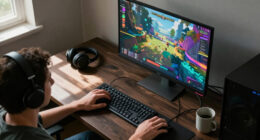
The best high refresh rate gaming monitors balance motion clarity, resolution, panel quality, and the frame rates your PC can actually deliver. My best overall pick is the LG UltraGear 27G640A-B, whose QHD resolution and 300Hz refresh rate make it a strong fit for fast competitive play without dropping to Full HD. The Alienware AW3426DW stands out for premium ultrawide OLED gaming, while the Dell SE2426HG offers a simpler 240Hz IPS option for players who want a smaller screen. The main tradeoffs are resolution versus refresh rate, OLED contrast versus cost and care, and screen size versus desk space and graphics-card load. Continue reading for my full comparison and advice on choosing the right panel for your setup.

Play games on Amazon Luna for your game nights, included with Prime
- A rotating selection of games, no download needed
- Play on TV, laptop or phone
- Fast, free delivery for your gear, too
Complete the kit

Key Takeaways
- QHD at 300Hz is the roundup’s strongest all-around balance: the LG UltraGear 27G640A-B pairs a sharp 27-inch image with a very high refresh rate, while asking less of a graphics card than 4K.
- OLED separates premium image quality from practical value: the Acer Predator X27U W1 and LG 27GX700A-B bring OLED contrast to QHD, while the Alienware AW3426DW adds an immersive 34-inch ultrawide format.
- 240Hz is available across several distinct formats: the LG 27GR83Q-B and AOC Q27G41ZE favor QHD, the Dell SE2426HG keeps things compact at Full HD, and the SANSUI 32-inch model prioritizes screen size at Full HD.
- Not every monitor in the list is a high-refresh specialist: the Samsung Odyssey G55C emphasizes its large curved QHD screen, and the ARZOPA Z1FC trades peak speed for portable 144Hz gaming.
- Choose resolution and screen size alongside refresh rate: a fast panel only pays off when your PC can produce enough frames and your preferred games suit the display’s resolution and shape.


| high refresh rate gaming monitor | Screen size | Resolution | Response time | Refresh rate |
|---|---|---|---|---|
| LG UltraGear 27G640A-B 27-Inch | 27 inches | 2560 × 1440 (QHD) | 1ms (GtG) | 300Hz |
| GTek 27-Inch Curved FHD Gaming | 27 inches | 1920 × 1080 (FHD) | 1ms MPRT | Up to 280Hz via DisplayPort |
| Acer Predator X27U W1 26.5-Inc | 26.5 inches | 2560 × 1440 (QHD) | 0.03ms | 240Hz |
| MSI MAG 272URDFA E16 27-Inch U | 27 inches | 3840 × 2160 (4K UHD) | 0.5ms (GtG, minimum) | — |
| LG UltraGear 27GR83Q-B 27-Inch | 27 inches | 2560 × 1440 (QHD) | 1ms (GtG) | 240Hz |
| AOC Q27G41ZE 27-Inch QHD 240Hz | 27 inches | 2560 × 1440 (QHD) | 0.3ms MPRT | 240Hz native; up to 260Hz overclocked |
| Dell SE2426HG 23.8-Inch FHD 24 | 23.8 inches | 1920 × 1080 (FHD) | 0.5ms | 240Hz |
| Samsung Odyssey G55C 32-Inch Q | 32 inches | 2560 × 1440 (QHD) | 1ms MPRT | 165Hz |
| SANSUI 32-Inch Curved 240Hz FH | 32 inches | 1920 × 1080 (Full HD) | 1ms MPRT | 240Hz |
| ARZOPA Z1FC 16.1-Inch 144Hz Po | 16.1 inches | 1920 × 1080 | 1ms | 144Hz |
| LG 27-Inch QHD 300Hz IPS Gamin | 27 inches | 2560 x 1440 (QHD) | 1ms | 300Hz |
| LG UltraGear 27GX700A-B 27-Inc | 27 inches | QHD (2560 x 1440) | 0.03ms | Up to 280Hz |
| Alienware AW3426DW 34-Inch Cur | 34 inches | 3440 x 1440 | 0.03ms | 280Hz |
More Details on Our Top Picks
LG UltraGear 27G640A-B 27-Inch QHD IPS Gaming Monitor, 300Hz, 1ms, G-SYNC Compatible, FreeSync Premium, DisplayHDR 400
I’d put the LG UltraGear 27G640A-B first for players who want a very high refresh rate without giving up QHD detail. Its 300Hz IPS panel pairs fast motion with wide viewing angles, while FreeSync Premium and G-SYNC compatibility suit either major GPU camp. Compared with the LG UltraGear 27GR83Q-B, it raises the ceiling from 240Hz to 300Hz and adds a USB-C connection, making it the stronger fit for competitive play and flexible desk setups. That extra speed is most useful to players whose PC can sustain high frame rates; it won’t transform gameplay if a system falls well short of 300 fps. The 15W USB-C power delivery is also too limited to replace a laptop charger, and reaching the top refresh rate depends on a suitable DisplayPort 1.4 or HDMI 2.1 connection.
Pros:- 300Hz refresh rate combines unusually fluid motion with QHD resolution.
- IPS panel offers wide viewing angles and up to 95% DCI-P3 color gamut.
- Supports both AMD FreeSync Premium and NVIDIA G-SYNC Compatible.
- Height, swivel, tilt, and pivot adjustments plus USB-C and HDMI 2.1.
Cons:- The full 300Hz capability requires a compatible DisplayPort 1.4 or HDMI 2.1 setup.
- USB-C power delivery is limited to 15W.
- A system that cannot drive high frame rates may not make full use of the refresh rate.
Best for: PC players with a high-end graphics card who want QHD detail, very high refresh, and compatibility with either AMD or NVIDIA adaptive sync.
Not ideal for: Laptop users expecting USB-C to power their computer, or players whose systems cannot produce frame rates near the monitor’s 300Hz ceiling.
- Screen size:27 inches
- Resolution:2560 × 1440 (QHD)
- Panel:IPS
- Refresh rate:300Hz
- Response time:1ms (GtG)
- Adaptive sync:AMD FreeSync Premium; NVIDIA G-SYNC Compatible
- HDR:VESA DisplayHDR 400; HDR10
- Connections:USB-C (15W power delivery), 2 HDMI 2.1, DisplayPort 1.4
Our verdict“Choose this LG if you want QHD clarity and 300Hz speed in one flexible monitor, and have a PC capable of feeding it high frame rates.”
GTek 27-Inch Curved FHD Gaming Monitor, 280Hz, 1500R, FreeSync, HDR
The GTek F2740C puts its emphasis on high-speed Full HD play and an enveloping curve, rather than pixel density. Its 280Hz refresh rate over DisplayPort is a strong match for competitive games where responsiveness matters more than fine detail, and the VA panel’s 4000:1 contrast ratio gives dark scenes more depth than the IPS LG UltraGear 27GR83Q-B’s listed 1000:1 ratio. The tradeoff is clear: at 27 inches, 1920 × 1080 looks less sharp than the QHD alternatives in this group. Its 1500R curve, FreeSync, and tilt-only stand make a straightforward gaming setup, but the glossy finish may reflect room light. I’d also verify connection and warranty details with the seller, since the supplied information conflicts on both HDMI port count and warranty duration.
Pros:- Up to 280Hz over DisplayPort supports fluid competitive gameplay.
- VA panel’s 4000:1 contrast ratio helps dark scenes appear deeper.
- 1500R curve, FreeSync, and VESA mounting support.
- Anti-flicker and anti-glare features are included.
Cons:- Full HD resolution is less sharp than the QHD monitors in this roundup.
- Stand adjustment is limited to tilt.
- Source information conflicts on HDMI port count and warranty duration.
Best for: Competitive gamers who prioritize high frame rates, a curved screen, and strong dark-scene contrast over QHD sharpness.
Not ideal for: Players who want crisp text and detail at 27 inches, need a fully adjustable stand, or rely on confirmed port and warranty specifications.
- Screen size:27 inches
- Resolution:1920 × 1080 (FHD)
- Panel:VA
- Curvature:1500R
- Refresh rate:Up to 280Hz via DisplayPort
- Response time:1ms MPRT
- Contrast ratio:4000:1
- Connections:DisplayPort 1.4, HDMI, audio output
Our verdict“Pick the GTek if you want a curved, high-refresh Full HD monitor with strong contrast and can accept lower sharpness and uncertain listing details.”
Acer Predator X27U W1 26.5-Inch QHD QD-OLED 240Hz Gaming Monitor
The Acer Predator X27U W1 is the image-quality choice in this group: QD-OLED brings deep contrast and vibrant color to QHD gaming, while its 0.03ms response time is specified far below the listed response times of the IPS LG UltraGear 27GR83Q-B and 27G640A-B. Its 240Hz refresh rate is still fast enough for competitive play, though it gives up the 300Hz ceiling of the 27G640A-B and the 320Hz FHD mode on MSI’s MAG 272URDFA E16. I’d favor the Acer for players who value contrast, color, and exceptionally quick pixel response more than chasing the highest refresh number. The matte finish may disappoint anyone who prefers a glossy OLED presentation, and the supplied connectivity details don’t identify specific port versions or list USB ports.
Pros:- QD-OLED panel provides high contrast and vibrant color.
- 0.03ms response time supports exceptionally quick pixel transitions.
- 240Hz refresh rate suits fast-paced games.
- Stand adjusts for height, pivot, swivel, and tilt.
Cons:- 240Hz is below the 300Hz LG 27G640A-B and MSI’s 320Hz FHD mode.
- Matte finish may not suit buyers who prefer a glossy OLED screen.
- Listed connectivity omits port versions and does not specify USB ports.
Best for: PC gamers who want QHD OLED contrast, vivid color, and very fast pixel response for both competitive and visually rich games.
Not ideal for: Players whose main goal is the highest possible refresh rate, or buyers who need clearly specified USB connectivity and port versions.
- Screen size:26.5 inches
- Resolution:2560 × 1440 (QHD)
- Panel:QD-OLED
- Refresh rate:240Hz
- Response time:0.03ms
- Color gamut:99% DCI-P3
- HDR:HDR10
- Adaptive sync:AMD FreeSync Premium
Our verdict“Choose the Acer for QHD OLED contrast and rapid response rather than the highest refresh-rate figure in this lineup.”
MSI MAG 272URDFA E16 27-Inch UHD Gaming Monitor
The MSI MAG 272URDFA E16 stands apart by letting the buyer choose between two priorities: 4K at 160Hz for sharper detail or Full HD at 320Hz for faster competitive play. That flexibility makes it a more adaptable pick than the fixed-QHD 300Hz LG UltraGear 27G640A-B, although the LG keeps QHD resolution at its higher refresh rate. MSI’s 0.5ms minimum response time, FreeSync Premium, and console mode round out a setup aimed at both PC and compatible console gaming. The central compromise is that 320Hz is only available at FHD, where detail is lower than at 4K or QHD. The listed connections are also unusually sparse—HDMI and VGA—so I’d check that they fit the intended devices before choosing this over the better-specified LG options.
Pros:- Dual mode offers 4K UHD at 160Hz or FHD at 320Hz.
- Rapid IPS panel and 0.5ms minimum response time target responsive gameplay.
- FreeSync Premium and VESA DisplayHDR 400 support.
- Console mode is designed for PS5 and Xbox Series X|S compatibility.
Cons:- The maximum 320Hz refresh rate is limited to FHD resolution.
- Listed connectivity is limited to HDMI and VGA.
- The 4K 160Hz mode has a lower refresh ceiling than the LG 27G640A-B’s QHD 300Hz.
Best for: Players who switch between detail-focused 4K games and high-frame-rate FHD esports, or want one monitor for PC and compatible consoles.
Not ideal for: Buyers who want QHD at the highest refresh setting or need a broad, clearly documented range of modern connections.
- Screen size:27 inches
- Resolution:3840 × 2160 (4K UHD)
- Panel:Rapid IPS
- Refresh modes:UHD at 160Hz; FHD at 320Hz
- Response time:0.5ms (GtG, minimum)
- Adaptive sync:AMD FreeSync Premium
- HDR:VESA DisplayHDR 400
- Connections:HDMI, VGA
Our verdict“Pick the MSI if switching between 4K detail and 320Hz FHD matters more than keeping high refresh and high resolution together.”
LG UltraGear 27GR83Q-B 27-Inch QHD 240Hz IPS Gaming Monitor
The LG UltraGear 27GR83Q-B is a balanced QHD option for players who want a fast IPS screen without prioritizing the very highest refresh rate. Its 240Hz refresh rate, 1ms GtG response time, and support for both G-SYNC Compatible and FreeSync Premium cover the core needs of responsive PC gaming. Compared with the LG 27G640A-B, it gives up 60Hz and USB-C, but retains QHD resolution and HDMI 2.1; that makes it a sensible fit for gamers who don’t expect to use a 300Hz ceiling. The adjustable stand and DTS Headphone:X headphone output add useful setup flexibility. The main image tradeoff is the listed 1000:1 contrast ratio, which is below the GTek F2740C’s VA contrast figure, and its 27-inch screen may feel small to buyers seeking a more expansive view.
Pros:- QHD IPS resolution paired with a 240Hz refresh rate.
- 1ms GtG response time and support for both G-SYNC Compatible and FreeSync Premium.
- HDMI 2.1 and DisplayPort 1.4 connectivity.
- Stand adjusts for tilt, height, and pivot, with DTS Headphone:X via headphone jack.
Cons:- 240Hz is lower than the LG 27G640A-B’s 300Hz.
- Listed 1000:1 contrast ratio is below the GTek F2740C’s VA contrast figure.
- The 27-inch screen may be too small for buyers wanting a more expansive display.
Best for: QHD PC and console gamers who want 240Hz, broad adaptive-sync support, and an adjustable stand without aiming for 300Hz.
Not ideal for: Players seeking the highest refresh rate, deep VA-style contrast, or a larger screen than 27 inches.
- Screen size:27 inches
- Resolution:2560 × 1440 (QHD)
- Panel:IPS
- Refresh rate:240Hz
- Response time:1ms (GtG)
- Adaptive sync:NVIDIA G-SYNC Compatible; AMD FreeSync Premium
- HDR:VESA DisplayHDR 400
- Connections:HDMI 2.1, DisplayPort 1.4, USB Type-C
Our verdict“Choose this LG for a well-rounded QHD 240Hz setup if you don’t need the 300Hz speed or USB-C of its higher-refresh sibling.”
AOC Q27G41ZE 27-Inch QHD 240Hz Gaming Monitor
The AOC Q27G41ZE pairs QHD detail with a 240Hz native refresh rate, making it a stronger fit for sharp, fast PC gaming than the Dell SE2426HG, which trades resolution for Full HD on a smaller screen. Its IPS panel and Adaptive-Sync support suit players who want smooth motion without giving up broad viewing angles. An optional overclock pushes the panel to 260Hz, but I would treat that as extra headroom rather than its defining advantage: the standard 240Hz mode is already fast, and the LG UltraGear 27G640A-B goes higher at 300Hz. The compromises are limited stand movement—tilt only—and the need to overclock for 260Hz. Choose this AOC for the balance of resolution and speed, not for the most adjustable stand or highest refresh ceiling.
Pros:- QHD resolution gives games more detail than the Full HD Dell SE2426HG.
- Native 240Hz refresh rate with an optional overclock up to 260Hz.
- IPS panel and Adaptive-Sync support smooth gameplay with wide viewing angles.
- Three-sided frameless design and gaming tools including Shadow Control.
Cons:- Reaching 260Hz requires overclocking; 240Hz is the native maximum.
- The stand offers tilt adjustment only.
- The glossy finish can be less forgiving in rooms with strong reflections.
Best for: PC gamers who want QHD sharpness and a high 240Hz refresh rate on a 27-inch IPS screen.
Not ideal for: Players who need height or swivel adjustment, or who specifically want a native refresh rate above 240Hz.
- Screen size:27 inches
- Resolution:2560 × 1440 (QHD)
- Panel:IPS
- Refresh rate:240Hz native; up to 260Hz overclocked
- Response time:0.3ms MPRT
- Adaptive sync:Supported
- Ports:1 × DisplayPort 1.4, 2 × HDMI 2.0, audio out
- Stand adjustment:Tilt from -3° to +21°
Our verdict“Choose the AOC if you want QHD clarity with fast 240Hz IPS gameplay and can live with a tilt-only stand.”
Dell SE2426HG 23.8-Inch FHD 240Hz IPS Gaming Monitor
The Dell SE2426HG keeps the setup focused: a 23.8-inch Full HD screen, 240Hz refresh rate, and IPS panel put responsive play ahead of extra pixels. Compared with the AOC Q27G41ZE, it gives up QHD detail and screen space, but its smaller 1080p canvas can be a practical match for competitive players who want to prioritize high frame rates. AMD FreeSync Premium and HDMI VRR help reduce tearing, while the matte screen and eye-comfort certification add useful support for long sessions. Its 99% sRGB coverage also makes it more versatile for everyday viewing than a purely speed-focused screen. The tradeoffs are modest resolution and a stand that only tilts. Skip it if you want a larger, sharper game world rather than a compact high-refresh display.
Pros:- 240Hz refresh rate and 0.5ms response time support fast-moving gameplay.
- IPS panel provides wide viewing angles and 99% sRGB color coverage.
- FreeSync Premium and HDMI VRR help reduce screen tearing.
- Matte finish and TÜV Rheinland 3-star eye-comfort certification suit extended viewing.
Cons:- Full HD resolution shows less detail than the AOC Q27G41ZE’s QHD panel.
- The 23.8-inch size offers less room for games and multitasking than 27-inch options.
- Stand adjustment is limited to tilt.
Best for: Competitive players with limited desk space who prefer a compact 1080p screen and a 240Hz refresh rate.
Not ideal for: Gamers seeking QHD detail, a larger display, or height and swivel adjustments.
- Screen size:23.8 inches
- Resolution:1920 × 1080 (FHD)
- Panel:IPS
- Refresh rate:240Hz
- Response time:0.5ms
- Adaptive sync:AMD FreeSync Premium; HDMI VRR
- Color gamut:99% sRGB
- Ports:2 × HDMI, DisplayPort 1.4
Our verdict“Pick the Dell for a compact competitive setup where 240Hz matters more than QHD resolution or a larger screen.”
Samsung Odyssey G55C 32-Inch QHD 1000R Curved Gaming Monitor
The Odyssey G55C favors screen size and immersion over maximum speed. Its 32-inch QHD panel wraps around the viewer with a 1000R curve, while 165Hz delivers smoother motion than a standard 60Hz display. That makes it a different proposition from the 240Hz AOC Q27G41ZE: Samsung gives you a larger, more enveloping view, but the AOC is the better match for high-frame-rate competitive play. The G55C’s 2500:1 contrast ratio and HDR10 support add visual depth, though HDR support alone does not make it a high-brightness display; listed brightness is 300 cd/m². Connectivity is another limitation, with only one HDMI port listed. Choose this model for curved single-player gaming and broad screen presence, not for chasing the highest refresh rate in this group.
Pros:- 32-inch QHD screen combines generous viewing area with detailed resolution.
- 1000R curvature creates a pronounced wraparound viewing shape.
- 165Hz refresh rate and FreeSync support smoother gameplay.
- 2500:1 contrast ratio, HDR10, Eye Saver Mode, and reduced flicker support varied viewing needs.
Cons:- 165Hz is slower than the 240Hz AOC Q27G41ZE and Dell SE2426HG.
- Only one HDMI port is listed, limiting connection flexibility.
- Glossy finish may show reflections in bright rooms.
Best for: Players who want a large, curved QHD display for immersive single-player games and general gaming.
Not ideal for: Competitive players prioritizing 240Hz or higher, or setups that need multiple listed video inputs.
- Screen size:32 inches
- Resolution:2560 × 1440 (QHD)
- Curvature:1000R
- Refresh rate:165Hz
- Response time:1ms MPRT
- Contrast ratio:2500:1
- HDR:HDR10
- Ports:1 × HDMI
Our verdict“Choose the Odyssey G55C if a large curved QHD view matters more to you than a 240Hz-plus refresh rate.”
SANSUI 32-Inch Curved 240Hz FHD Gaming Monitor
The SANSUI ES-G32C1F brings a 240Hz refresh rate to a 32-inch curved screen, a combination aimed at players who want a large view without giving up fast motion. Its 1500R curve and 3500:1 contrast ratio favor a more enveloping, high-contrast presentation than the smaller Dell SE2426HG. But the SANSUI runs at Full HD on 32 inches, so image detail is less refined than on the QHD Samsung Odyssey G55C, which also offers a larger-resolution curved screen at 165Hz. FreeSync, HDR, and low-blue-light features round out the package, and DisplayPort plus HDMI provide a choice of connections. There are no built-in speakers, and the listed 1ms figure is MPRT rather than a guarantee of every kind of motion performance. It suits large-screen speed seekers more than buyers focused on crisp text or fine detail.
Pros:- 240Hz refresh rate and 1ms MPRT response time support fast gameplay.
- 32-inch 1500R curved screen provides a large, enveloping view.
- 3500:1 contrast ratio and 125% sRGB gamut support punchy-looking visuals.
- FreeSync, HDMI, DisplayPort 1.4, and 100 × 100 mm VESA compatibility.
Cons:- Full HD resolution on a 32-inch panel is less detailed than the QHD Samsung Odyssey G55C.
- Built-in speakers are not included.
- HDR is listed, but peak brightness is 300 cd/m².
Best for: Gamers who want a large curved display with 240Hz motion and are comfortable with Full HD detail at 32 inches.
Not ideal for: Players who prioritize sharp text and detailed QHD imagery, or who expect sound from built-in monitor speakers.
- Screen size:32 inches
- Resolution:1920 × 1080 (Full HD)
- Curvature:1500R
- Refresh rate:240Hz
- Response time:1ms MPRT
- Contrast ratio:3500:1
- Adaptive sync:FreeSync
- Ports:1 × HDMI, DisplayPort 1.4, 3.5mm headphone jack
Our verdict“Pick the SANSUI if you want 240Hz on a large curved screen and accept the lower pixel density of Full HD.”
ARZOPA Z1FC 16.1-Inch 144Hz Portable Gaming Monitor
The ARZOPA Z1FC takes high refresh gaming beyond the desk: this 16.1-inch portable IPS monitor runs at 144Hz and weighs 1.42kg, making it a flexible companion screen for compatible laptops, computers, and consoles. Compared with the Dell SE2426HG, it is far easier to move and can switch between landscape and portrait orientations, but its smaller Full HD screen and lower 144Hz ceiling make it less suited to a fixed competitive gaming station. The built-in kickstand and USB-C and Mini HDMI connections simplify temporary setups, while 106% sRGB coverage gives the IPS panel a broad color range. The main gaming compromise is the lack of Adaptive-Sync or FreeSync, which removes a useful way to reduce tearing. Choose it for portability and a second-screen role rather than as a replacement for a faster desktop monitor.
Pros:- 144Hz refresh rate and 1ms response time suit portable gaming and fast-moving content.
- IPS panel offers 106% sRGB color gamut and 178-degree viewing angles.
- Built-in adjustable kickstand supports landscape and portrait orientations.
- USB-C and Mini HDMI connections support compatible computers and consoles.
Cons:- 144Hz is below the 240Hz Dell SE2426HG and other desktop options in this roundup.
- No Adaptive-Sync or FreeSync support.
- A 16.1-inch Full HD screen is less suitable as a primary desktop gaming display.
Best for: Laptop and handheld-console gamers who need a portable second screen with a refresh rate above 60Hz.
Not ideal for: Desktop competitive players seeking 240Hz or higher, or gamers who rely on variable refresh rate to reduce tearing.
- Screen size:16.1 inches
- Resolution:1920 × 1080
- Panel:IPS LCD
- Refresh rate:144Hz
- Response time:1ms
- Color gamut:106% sRGB
- Ports:2 × USB Type-C, 1 × Mini HDMI
- Weight:1.42kg
Our verdict“Choose the Z1FC when portability and a 144Hz second screen matter more than variable refresh rate or desktop-class speed.”
LG 27-Inch QHD 300Hz IPS Gaming Monitor with USB-C
I’d pick this LG for players who want a very fast screen without giving up QHD resolution or IPS viewing angles. Its 300Hz refresh rate and 1ms response time suit competitive games, while the 2560 x 1440 panel keeps detail sharper than the FHD options in this roundup. Compared with the LG UltraGear 27GX700A-B, it trades OLED contrast and near-instant response for an IPS panel, broad connectivity, and a slightly higher refresh ceiling. The two HDMI 2.1 ports and USB-C add flexibility for a mixed gaming and work setup, though 15W USB-C power delivery is modest. The 300Hz mode also depends on a compatible graphics card, so buyers without a capable PC may not benefit from its main speed advantage.
Pros:- 300Hz refresh rate and 1ms response time target highly responsive competitive play.
- QHD IPS panel combines sharper detail than FHD monitors with wide viewing angles.
- HDMI 2.1, DisplayPort 1.4, and USB-C support varied gaming and desk setups.
- Stand adjusts for height, tilt, swivel, and pivot.
Cons:- A compatible graphics card is needed to reach 300Hz.
- USB-C power delivery is limited to 15W.
- IPS contrast is less suited to dark-room viewing than the OLED alternatives.
Best for: PC gamers with a powerful graphics card who want QHD detail, a 300Hz refresh rate, and adjustable ergonomics on an IPS screen.
Not ideal for: Players prioritizing OLED-level blacks or strong USB-C laptop charging; the OLED LG UltraGear 27GX700A-B better fits the former, while this model supplies only 15W over USB-C.
- Screen size:27 inches
- Resolution:2560 x 1440 (QHD)
- Display technology:IPS
- Refresh rate:300Hz
- Response time:1ms
- Adaptive sync:NVIDIA G-SYNC Compatible; AMD FreeSync Premium
- HDR:VESA DisplayHDR 400
- Ports:2 x HDMI 2.1; DisplayPort 1.4; USB-C with 15W power delivery
Our verdict“Choose this LG if you want a versatile QHD IPS monitor at 300Hz and have a PC capable of driving it.”
LG UltraGear 27GX700A-B 27-Inch QHD OLED Gaming Monitor
This LG is the pick for players who want OLED contrast and exceptionally quick pixel response alongside a high refresh rate. Its 280Hz ceiling is a little below the 300Hz offered by the LG 27-Inch QHD 300Hz IPS Gaming Monitor with USB-C, but the 0.03ms response time and OLED panel make motion and dark-scene detail its strongest arguments. DisplayHDR True Black 500 and up to 99.5% DCI-P3 coverage also suit games where rich contrast and color matter as much as speed. Adaptive sync supports both major GPU ecosystems, and the stand offers a full set of adjustments. I’d favor the IPS LG for broader connectivity and a higher refresh ceiling; this model’s listed ports are less extensive, and its 27-inch size won’t deliver the expansive view of the Alienware ultrawide.
Pros:- 280Hz refresh rate and 0.03ms response time support crisp, responsive motion.
- OLED panel and DisplayHDR True Black 500 deliver deep blacks and strong contrast.
- Up to 99.5% DCI-P3 color coverage supports vivid game imagery.
- G-SYNC compatibility and FreeSync Premium Pro cover both major GPU ecosystems.
Cons:- Refresh rate is lower than the 300Hz LG IPS alternative.
- The listed connection options are less extensive than those on the LG 300Hz IPS model.
- A 27-inch 16:9 screen provides less peripheral width than the Alienware 34-inch ultrawide.
Best for: Competitive and single-player gamers who want QHD OLED contrast, fast pixel response, and a standard 27-inch 16:9 screen.
Not ideal for: Buyers who need a 300Hz ceiling, more listed connection options, or a wide ultrawide view; the IPS LG is faster on refresh rate and the Alienware provides more screen width.
- Screen size:27 inches
- Resolution:QHD (2560 x 1440)
- Display technology:OLED
- Refresh rate:Up to 280Hz
- Response time:0.03ms
- Peak brightness:Up to 1500 nits
- HDR:VESA DisplayHDR True Black 500
- Adaptive sync:NVIDIA G-SYNC Compatible; AMD FreeSync Premium Pro
- Stand adjustments:Height, tilt, swivel, and pivot
Our verdict“Choose this LG if OLED contrast and 0.03ms response matter more to you than reaching 300Hz or having an ultrawide screen.”
Alienware AW3426DW 34-Inch Curved QD-OLED Gaming Monitor, 3440 × 1440, 280Hz
The Alienware stands apart by pairing a 280Hz refresh rate with a 34-inch, 21:9 curved QD-OLED screen. Its 3440 x 1440 resolution gives compatible games more horizontal space than either 27-inch LG, making it the strongest fit here for immersive worlds and multitasking alongside fast play. The 0.03ms response time, 99% DCI-P3 coverage, Dolby Vision, and DisplayHDR True Black 500 round out a spec set aimed at vivid motion and contrast. Unlike the LG 27GX700A-B, this model adds a wider view and a stated three-year warranty that includes OLED burn-in coverage. That breadth comes with a practical tradeoff: some games and setups favor standard 16:9, and USB-C supplies only 15W. Its 280Hz maximum also falls short of the LG IPS monitor’s 300Hz.
Pros:- 34-inch 21:9 curved screen gives compatible games a wider field of view.
- 280Hz refresh rate and 0.03ms response time deliver high-speed OLED gaming.
- QD-OLED, Dolby Vision, and DisplayHDR True Black 500 support rich contrast and color.
- Three-year warranty includes OLED burn-in coverage, according to the product data.
Cons:- Ultrawide aspect ratio may not suit games or setups designed around 16:9.
- Its 280Hz ceiling is below the 300Hz LG IPS option.
- USB-C power delivery is limited to 15W.
Best for: PC gamers with desk space who play ultrawide-compatible titles and want a curved QD-OLED screen for both immersion and high-refresh competitive play.
Not ideal for: Players who need standard 16:9 compatibility, prefer a compact monitor, or want the highest refresh rate in this group; the 27-inch LG IPS reaches 300Hz.
- Screen size:34 inches
- Aspect ratio:21:9
- Resolution:3440 x 1440
- Display technology:QD-OLED Penta Tandem
- Refresh rate:280Hz
- Response time:0.03ms
- Curve:1800R
- HDR:Dolby Vision; VESA DisplayHDR True Black 500
- Ports:2 x HDMI 2.1; DisplayPort 1.4; USB-C with 15W power delivery; 3 x USB
Our verdict“Choose the Alienware if you want a fast, curved ultrawide OLED and your games and desk setup suit a 21:9 screen.”
How We Picked
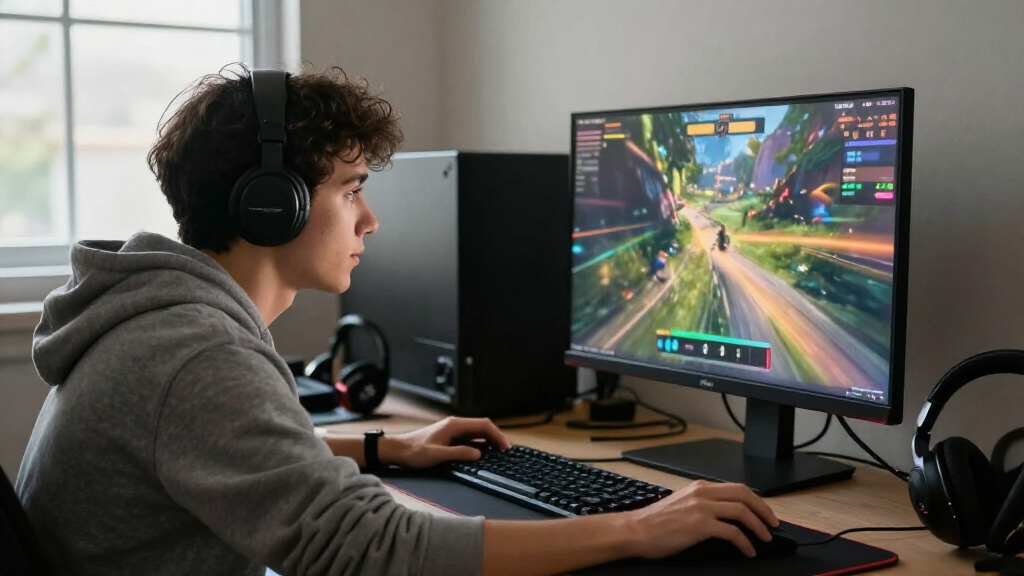
I ranked these monitors by how well their refresh rate, resolution, panel type, and screen format fit real gaming needs. High refresh rate matters most when the display can show the frames a gaming PC produces, so I weighed speed alongside the graphics workload of Full HD, QHD, and UHD. I also considered whether the panel and format suit a specific use, from competitive play to immersive single-player games or gaming away from a desk.
The order favors versatility and a clear buyer benefit, not the highest number on a spec sheet. The LG UltraGear 27G640A-B leads for its mix of QHD detail and 300Hz speed; more specialized OLED, ultrawide, curved, and portable picks follow according to their strengths and tradeoffs. Models with lower refresh rates or less direct relevance to fast-paced gaming sit lower, even when their larger screens or distinctive formats may suit particular buyers.
| high refresh rate gaming monitor | Panel | HDR |
|---|---|---|
| LG UltraGear 27G640A-B 27-Inch | IPS | VESA DisplayHDR 400; HDR10 |
| GTek 27-Inch Curved FHD Gaming | VA | — |
| Acer Predator X27U W1 26.5-Inc | QD-OLED | HDR10 |
| MSI MAG 272URDFA E16 27-Inch U | Rapid IPS | VESA DisplayHDR 400 |
| LG UltraGear 27GR83Q-B 27-Inch | IPS | VESA DisplayHDR 400 |
| AOC Q27G41ZE 27-Inch QHD 240Hz | IPS | — |
| Dell SE2426HG 23.8-Inch FHD 24 | IPS | — |
| Samsung Odyssey G55C 32-Inch Q | — | HDR10 |
| SANSUI 32-Inch Curved 240Hz FH | — | — |
| ARZOPA Z1FC 16.1-Inch 144Hz Po | IPS LCD | — |
| LG 27-Inch QHD 300Hz IPS Gamin | — | VESA DisplayHDR 400 |
| LG UltraGear 27GX700A-B 27-Inc | — | VESA DisplayHDR True Black 500 |
| Alienware AW3426DW 34-Inch Cur | — | Dolby Vision; VESA DisplayHDR True Black 500 |
Factors to Consider When Choosing Best High Refresh Rate Gaming Monitors
Refresh rate is only one part of choosing a gaming display. I would match the monitor to the games you play, the graphics card you own, and the space available before treating a higher number as an automatic upgrade.
Match Refresh Rate to Your PC and Games
A 240Hz or 300Hz display can show more frames per second than a standard gaming monitor, but your PC must render those frames to make the difference visible. Competitive games are often easier to run at high frame rates than demanding, visually rich releases, so the same monitor may feel very different across your library. Check the games you actually play and the performance your graphics card can sustain at your chosen resolution. Variable refresh support can help reduce visible tearing when frame rates fluctuate, but it does not turn a low frame rate into a high one. If you mostly play slower-paced titles, a sharper image or more immersive panel may matter more than moving from 240Hz to 300Hz.
Choose Resolution With Frame Rate in Mind
Full HD is less demanding on a graphics card, which can make it easier to reach high frame rates, but it looks less detailed than QHD at comparable screen sizes. QHD is a practical middle ground for many 27-inch gaming monitors: it adds image detail without placing the same rendering burden as UHD. UHD can look sharper still, but sustaining high frame rates at that resolution may call for a more capable PC or reduced graphics settings. A common mistake is buying a high-resolution display for competitive play and then discovering the computer cannot drive it at the intended speed. Decide which matters more for your games: higher frame rates, finer detail, or a workable balance.
Think About OLED Beyond Its Contrast
OLED and QD-OLED panels are appealing when rich contrast and dark-scene detail matter, especially in games with dramatic lighting. They can be a good fit for a player who wants image quality alongside responsive gaming, but the panel type alone should not settle the choice. Consider how much time you spend on static desktop elements, how you use the monitor outside games, and whether you are comfortable following the maker’s care guidance for the panel. IPS alternatives in this lineup can suit buyers who want a fast gaming display without making OLED their priority. Compare total use, not just the most eye-catching panel specification.
Size and Shape Should Fit Your Desk
A larger curved screen can make games feel more enveloping, but it also takes up more desk space and places more of the display within your field of view. Ultrawide formats add horizontal space that suits compatible games and multitasking, though some titles and video content may not use the full screen. At the other end, a 23.8-inch monitor can fit a compact desk and keep the image easy to scan during competitive play. Portable screens serve a different purpose: they are useful when you need gaming on the move, but their size and refresh rate make them a poor stand-in for every desktop setup. Measure your desk and viewing distance before choosing a screen by diagonal size alone.
Check Connectivity and Everyday Setup Needs
Before buying, check the monitor’s inputs against your PC, console, dock, or laptop, and confirm which connection supports the resolution and refresh rate you want. This avoids a common mismatch where a screen is capable of high-speed gaming but the chosen cable or port limits its output. USB-C can simplify laptop connections on models that include it, but do not assume every USB-C port carries video or power; verify the specific functions. Also think about whether you need to switch between several devices or use the screen for work as well as games. A little connection planning can matter more day to day than a small refresh-rate increase.
Pay for the Upgrade You Will Notice
Spending more makes sense when it buys a benefit that fits your priorities, such as OLED contrast, an ultrawide canvas, or a useful resolution-and-refresh combination. It makes less sense to pay for a speed your PC rarely reaches or a screen size your desk cannot accommodate. Entry-level and value-oriented models can be sensible choices when a straightforward high-refresh display matters more than premium panel features. Beginners should also leave room in their decision for the graphics card and connection setup needed to drive the screen. Write down your must-haves first, then treat extra features as reasons to upgrade only when they solve a real problem.
Frequently Asked Questions
Is QHD at 300Hz a better choice than QHD at 240Hz?
It depends on whether your PC and games can make use of the extra refresh headroom. The LG UltraGear 27G640A-B combines QHD and 300Hz, while the LG 27GR83Q-B and AOC Q27G41ZE offer QHD at 240Hz. If your system regularly produces very high frame rates in competitive games, the faster option may suit you better. If not, the difference in resolution, panel behavior, connections, or overall fit may matter more than the refresh-rate gap. I would compare the full display and your typical frame rates rather than choosing by the largest number.
Should I choose an OLED monitor for competitive gaming?
OLED is worth considering if you want its contrast and dark-scene image quality alongside fast gaming performance. The Acer Predator X27U W1 and LG 27GX700A-B offer QHD OLED options, while the Alienware AW3426DW pairs QD-OLED with a wide ultrawide format. Think about your mix of games and desktop use, since a monitor used for long periods with static interface elements calls for attention to the manufacturer’s panel-care guidance. If OLED image characteristics are not a priority, a fast IPS monitor may be a more direct match. Compare the panel benefits against your habits rather than treating OLED as a requirement for competitive play.
Can a Full HD monitor still make sense at 240Hz?
Yes, especially if your priority is responsive competitive gaming and your PC can produce high frame rates more easily at Full HD. The Dell SE2426HG offers a compact 23.8-inch format, while the SANSUI 32-inch model pairs Full HD with a much larger curved screen. Those sizes make resolution a particularly important part of the decision: Full HD looks less detailed as the display gets larger. A smaller screen may make more sense when you sit close and value speed, while buyers wanting a sharper large-screen image should look toward QHD options. Pick the format and viewing distance together, not just the refresh rate.
Will a 280Hz or 300Hz monitor work well if my PC gets fewer frames?
It will still display games, but you may not benefit from its full refresh capability when your PC produces substantially fewer frames. Variable refresh support, when available and configured correctly, can help the screen respond more smoothly to changing frame rates. You can also lower demanding graphics settings or use a lower resolution to raise performance, though that changes the image quality tradeoff. For a system that rarely reaches high frame rates, a strong balance of resolution and panel quality may be more useful than buying for a theoretical peak. Match the monitor to likely performance now, and factor in any planned PC upgrade separately.
Is an ultrawide monitor a good choice for games that are not competitive?
An ultrawide can suit story-driven games that support its wider aspect ratio, giving more horizontal view and a more enveloping screen shape. The Alienware AW3426DW is the roundup’s QD-OLED ultrawide option, so it also appeals to buyers who value contrast and a high refresh rate. Not every game handles ultrawide equally well, and some titles may show side borders or require adjustments. The wider display also needs more desk space than a standard 27-inch monitor. If you mainly play competitive games that favor a compact view, a conventional 27-inch screen may be easier to place and scan.
Conclusion
For the best overall balance, I recommend the LG UltraGear 27G640A-B: QHD and 300Hz give it a strong case for players who want detail and speed together. The best value direction is the AOC Q27G41ZE if QHD at 240Hz meets your needs without requiring the higher refresh tier. For a premium OLED experience, choose the Alienware AW3426DW if you want an ultrawide screen, or look to the Acer Predator X27U W1 for a more conventional QHD OLED format. Beginners who want a straightforward, compact high-refresh option can start with the Dell SE2426HG, while buyers with a laptop-focused setup should consider the portable ARZOPA Z1FC. If none of those roles matches your setup, prioritize the resolution your PC can drive and the screen size your desk can handle before chasing the highest refresh rate.