

Among the best NVIDIA graphics cards in this roundup, I’d choose the ASUS TUF Gaming GeForce RTX 5070 as the best overall balance of current-generation performance and substantial cooling. The ASUS Dual RTX 5060 Ti 16GB is a more measured choice for buyers who want a newer card with generous memory, while the ASUS TUF RTX 5080 is aimed at demanding high-resolution gaming and creative workloads. The main tradeoffs are performance headroom versus power, card size, and how much memory your games or applications need. Older RTX 3060 and RTX 3050 models can suit tighter builds or less demanding use, but they sit well below the newer options in this lineup. Read on for the full breakdown and guidance on matching a GPU to your system.

Play games on Amazon Luna for your game nights, included with Prime
- A rotating selection of games, no download needed
- Play on TV, laptop or phone
- Fast, free delivery for your gear, too
Complete the kit

Key Takeaways
- The RTX 5070 is the roundup’s balance point: it offers a current-generation step up without moving into the larger, more demanding RTX 5080 tier.
- RTX 5080 models serve a different buyer: the ASUS TUF, NVIDIA Founders Edition, and MSI Ventus 3X are premium-performance choices, with cooler design and card fit helping separate them.
- Memory capacity changes the value equation: the RTX 5070 Ti and RTX 5080 cards carry 16GB, while the RTX 5070 models have 12GB; the ASUS Dual RTX 5060 Ti also offers 16GB at a lower performance tier.
- Board-partner versions are not interchangeable: ASUS TUF, ASUS Prime, PNY EPIC-X RGB, and MSI Ventus designs differ in cooling, dimensions, and styling, so check case clearance and power support.
- The RTX 3060 and RTX 3050 remain specialized picks: the 12GB RTX 3060 cards offer more memory than the 6GB RTX 3050, while the newer RTX 50-series cards are the stronger fit for buyers seeking current-generation performance.
| GIGABYTE GeForce RTX 3060 Gaming OC 12G (REV2.0) Graphics Card, 3X WINDFORCE Fans, 12GB GDDR6 |  | Best for 12GB on an Older GPU | GPU: NVIDIA GeForce RTX 3060 | Architecture: Ampere | Memory: 12GB GDDR6 | VIEW LATEST PRICE | See Our Full Breakdown |
| ASUS TUF Gaming GeForce RTX 5070 12GB GDDR7 OC Edition Graphics Card |  | Best for Rugged Cooling and Construction | GPU: NVIDIA GeForce RTX 5070 | Architecture: NVIDIA Blackwell | Memory: 12GB GDDR7 | VIEW LATEST PRICE | See Our Full Breakdown |
| ASUS TUF Gaming GeForce RTX 5080 16GB GDDR7 OC Edition Graphics Card | 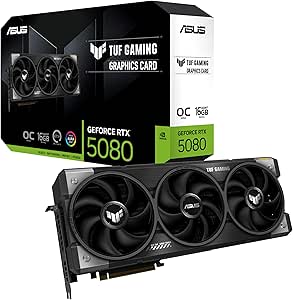 | Best Premium Performance Pick | GPU: NVIDIA GeForce RTX 5080 | Architecture: NVIDIA Blackwell | Memory: 16GB GDDR7 | VIEW LATEST PRICE | See Our Full Breakdown |
| ASUS Prime GeForce RTX 5070 12GB GDDR7 OC Edition Gaming Graphics Card |  | Best Compact RTX 5070 | GPU: NVIDIA GeForce RTX 5070 | Memory: 12GB GDDR7 | GPU clock: 2587 MHz | VIEW LATEST PRICE | See Our Full Breakdown |
| NVIDIA GeForce RTX 5070 12GB GDDR7 Graphics Card – Graphite Grey |  | Best for a Straightforward NVIDIA Card | GPU: NVIDIA GeForce RTX 5070 | Architecture: NVIDIA Blackwell | Memory: 12GB GDDR7 | VIEW LATEST PRICE | See Our Full Breakdown |
| PNY NVIDIA GeForce RTX 5070 EPIC-X RGB OC Triple-Fan Graphics Card |  | Best RTX 5070 for Airflow and RGB | GPU: NVIDIA GeForce RTX 5070 | Memory: 12GB GDDR7 | GPU clock speed: 2325 MHz | VIEW LATEST PRICE | See Our Full Breakdown |
| ASUS Prime NVIDIA GeForce RTX 5070 Ti 16GB GDDR7 OC Edition Gaming Graphics Card |  | Best RTX 5070 Ti for Compact Builds | GPU: NVIDIA GeForce RTX 5070 Ti | Memory: 16GB GDDR7 | GPU clock speed: 2452 MHz | VIEW LATEST PRICE | See Our Full Breakdown |
| PNY NVIDIA GeForce RTX 5070 Ti Epic-X RGB OC Triple-Fan Graphics Card |  | Best RTX 5070 Ti for RGB Builds | GPU: NVIDIA GeForce RTX 5070 Ti | Memory: 16GB GDDR7 | GPU clock speed: 2295 MHz | VIEW LATEST PRICE | See Our Full Breakdown |
| NVIDIA GeForce RTX 5080 Founders Edition |  | Best Premium NVIDIA GPU | GPU: NVIDIA GeForce RTX 5080 | Memory: 16GB GDDR7 | GPU clock speed: 2806 MHz | VIEW LATEST PRICE | See Our Full Breakdown |
| MSI Gaming RTX 3050 Ventus 2X 6G OC Graphics Card |  | Best Entry-Level NVIDIA Card | GPU: NVIDIA GeForce RTX 3050 | Architecture: Ampere | Memory: 6GB GDDR6 | VIEW LATEST PRICE | See Our Full Breakdown |
| MSI Gaming GeForce RTX 3060 Ventus 2X 12G OC V1 Graphics Card |  | Best for 12GB on the Ampere Generation | Chipset: NVIDIA GeForce RTX 3060 | Architecture: NVIDIA Ampere | Video memory: 12GB GDDR6 | VIEW LATEST PRICE | See Our Full Breakdown |
| ASUS Dual GeForce RTX 5060 Ti 16GB GDDR7 OC Edition Gaming Graphics Card |  | Best Compact Blackwell Pick | Architecture: NVIDIA Blackwell | Memory: 16GB GDDR7 | Clock speed: 2632 MHz OC mode; 2602 MHz default mode | VIEW LATEST PRICE | See Our Full Breakdown |
| MSI Gaming RTX 5080 16G Ventus 3X OC Black Graphics Card |  | Best for High-End Gaming and Workloads | Chipset: NVIDIA GeForce RTX 5080 | Architecture: NVIDIA Blackwell | Video memory: 16GB GDDR7 | VIEW LATEST PRICE | See Our Full Breakdown |
| NVIDIA graphics card | Memory | GPU | Architecture | Video outputs |
|---|---|---|---|---|
| GIGABYTE GeForce RTX 3060 Gami | 12GB GDDR6 | NVIDIA GeForce RTX 3060 | Ampere | DisplayPort, HDMI |
| ASUS TUF Gaming GeForce RTX 50 | 12GB GDDR7 | NVIDIA GeForce RTX 5070 | NVIDIA Blackwell | 3 × DisplayPort 2.1a, 2 × HDMI 2.1b |
| ASUS TUF Gaming GeForce RTX 50 | 16GB GDDR7 | NVIDIA GeForce RTX 5080 | NVIDIA Blackwell | — |
| ASUS Prime GeForce RTX 5070 12 | 12GB GDDR7 | NVIDIA GeForce RTX 5070 | — | DisplayPort, HDMI |
| NVIDIA GeForce RTX 5070 12GB G | 12GB GDDR7 | NVIDIA GeForce RTX 5070 | NVIDIA Blackwell | — |
| PNY NVIDIA GeForce RTX 5070 EP | 12GB GDDR7 | NVIDIA GeForce RTX 5070 | — | DisplayPort, HDMI |
| ASUS Prime NVIDIA GeForce RTX | 16GB GDDR7 | NVIDIA GeForce RTX 5070 Ti | — | 3 × DisplayPort 1.4a, 2 × HDMI 2.1b |
| PNY NVIDIA GeForce RTX 5070 Ti | 16GB GDDR7 | NVIDIA GeForce RTX 5070 Ti | — | — |
| NVIDIA GeForce RTX 5080 Founde | 16GB GDDR7 | NVIDIA GeForce RTX 5080 | Blackwell | HDMI, DisplayPort |
| MSI Gaming RTX 3050 Ventus 2X | 6GB GDDR6 | NVIDIA GeForce RTX 3050 | Ampere | 1 × DisplayPort 1.4a, 2 × HDMI 2.1a |
| MSI Gaming GeForce RTX 3060 Ve | — | — | NVIDIA Ampere | 3 x DisplayPort 1.4a, 1 x HDMI 2.1 |
| ASUS Dual GeForce RTX 5060 Ti | 16GB GDDR7 | — | NVIDIA Blackwell | — |
| MSI Gaming RTX 5080 16G Ventus | — | — | NVIDIA Blackwell | 3 x DisplayPort 2.1a, 1 x HDMI 2.1b |
More Details on Our Top Picks
GIGABYTE GeForce RTX 3060 Gaming OC 12G (REV2.0) Graphics Card, 3X WINDFORCE Fans, 12GB GDDR6
I’d choose this RTX 3060 when 12GB of GDDR6 matters more than owning a newer-generation card. Its generous memory capacity can suit games and creative projects that benefit from extra VRAM, while the triple WINDFORCE fans provide a substantial cooling setup. Compared with the ASUS TUF Gaming GeForce RTX 5070, though, this is a much older Ampere option rather than a Blackwell card, so it gives up newer-generation features and performance potential. Its 1837 MHz clock and 8K display-output capability are useful context, but a maximum resolution figure does not mean every game will run smoothly at that resolution. The 11.1-inch card also needs room in the case, and buyers should check their power supply and available PCIe x16 slot before choosing it.
Pros:- 12GB of GDDR6 memory
- Triple-fan WINDFORCE cooling design
- 1837 MHz GPU clock speed
- Three-year warranty
Cons:- Ampere generation is older than the RTX 5070 and RTX 5080 options in this roundup
- 11.1-inch length may limit case compatibility
- Requires a suitable PCIe x16 slot and power supply
Best for: PC builders seeking an NVIDIA card with 12GB of VRAM for gaming or creative workloads, who are comfortable choosing an older generation.
Not ideal for: Buyers seeking newer Blackwell features, higher-generation performance, or a compact graphics card for a small case.
- GPU:NVIDIA GeForce RTX 3060
- Architecture:Ampere
- Memory:12GB GDDR6
- GPU clock:1837 MHz
- Memory clock:15000 MHz
- Cooling:3 WINDFORCE fans
- Video outputs:DisplayPort, HDMI
- Dimensions:11.1 × 4.6 inches
- Warranty:3 years
Our verdict“Choose this RTX 3060 if 12GB of memory and triple-fan cooling matter more to you than newer-generation NVIDIA features.”
ASUS TUF Gaming GeForce RTX 5070 12GB GDDR7 OC Edition Graphics Card
This ASUS TUF RTX 5070 is my pick for buyers who want a current-generation card with a durable, cooling-focused build. Its Blackwell GPU, 12GB of GDDR7, and 2640 MHz listed clock put it in a newer class than the GIGABYTE RTX 3060, while three Axial-tech fans and protective PCB coating add emphasis on heat management and board protection. Compared with the ASUS Prime RTX 5070, the TUF’s military-grade component positioning and larger 3.125-slot design favor a sturdier, more substantial card over easier fit in a constrained build. That size is its clearest compromise: at 13 inches long and 3.4 pounds, it calls for careful case and support checks. It also makes less sense if you want a compact RTX 5070 rather than this heavier cooling-oriented version.
Pros:- Blackwell architecture with 12GB of GDDR7
- Three Axial-tech fans and protective PCB coating
- 2640 MHz listed GPU clock
- Three-year warranty
Cons:- Large 13-inch, 3.125-slot design can restrict case fit
- At 3.4 pounds, it may need careful support in the case
- Its size prioritizes cooling and construction over compactness
Best for: Gamers building a full-size desktop who want an RTX 5070 with triple-fan cooling and a durability-focused component design.
Not ideal for: Small-form-factor builders or anyone whose case cannot accommodate a 13-inch, 3.125-slot card.
- GPU:NVIDIA GeForce RTX 5070
- Architecture:NVIDIA Blackwell
- Memory:12GB GDDR7
- GPU clock:2640 MHz
- Video outputs:3 × DisplayPort 2.1a, 2 × HDMI 2.1b
- Interface:PCI-Express x16
- Cooling:3 Axial-tech fans
- Dimensions:13 × 5.5 inches
- Warranty:3 years
Our verdict“Pick the TUF RTX 5070 if you want a rugged, triple-fan Blackwell card and have room for its large cooler.”
ASUS TUF Gaming GeForce RTX 5080 16GB GDDR7 OC Edition Graphics Card
I’d reserve this ASUS TUF RTX 5080 for demanding gaming or creative workloads where a higher-tier GPU and 16GB of GDDR7 are the priority. Blackwell architecture and DLSS 4 support set it apart from the RTX 5070 cards in this group; the extra memory also gives more headroom than their 12GB configurations. Its 2730 MHz boost clock, fin array, and phase-change thermal pads support a performance-focused design, while GPU Tweak III offers performance-setting customization. The cost of that headroom is physical and electrical: this card measures 348mm, occupies 3.6 slots, weighs 4.3 pounds, and calls for an 850W PSU with a 16-pin 12V-2×6 connector. Compared with the ASUS TUF RTX 5070, it asks for a substantially more capable build, so I wouldn’t choose it for a space- or power-limited system.
Pros:- 16GB of GDDR7 on NVIDIA Blackwell architecture
- DLSS 4 support
- 2730 MHz boost clock and customizable settings through GPU Tweak III
- Phase-change thermal pads and fin-array cooling design
Cons:- Requires an 850W PSU and 16-pin 12V-2×6 connector
- 348mm length and 3.6-slot thickness restrict case compatibility
- At 4.3 pounds, it is a heavy card
Best for: Enthusiasts and creators with a spacious desktop, an 850W power supply, and workloads that benefit from a higher-tier GPU and 16GB of VRAM.
Not ideal for: Builders with compact cases, lower-wattage power supplies, or gaming needs that do not call for an RTX 5080-class card.
- GPU:NVIDIA GeForce RTX 5080
- Architecture:NVIDIA Blackwell
- Memory:16GB GDDR7
- Boost clock:2730 MHz
- Power supply requirement:850W
- Power connector:16-pin 12V-2×6
- Dimensions:348mm long, 3.6 slots
- Weight:4.3 pounds
Our verdict“Choose this TUF RTX 5080 for a roomy, high-power build where its 16GB memory and higher-tier GPU justify the size and system demands.”
ASUS Prime GeForce RTX 5070 12GB GDDR7 OC Edition Gaming Graphics Card
The ASUS Prime RTX 5070 is the more space-conscious choice among the two ASUS RTX 5070 models here. Its 2.5-slot design and three Axial-tech fans aim to bring RTX 5070 performance to builds that can’t accommodate the TUF model’s 3.125-slot cooler. The phase-change GPU thermal pad is another practical cooling feature, and 12GB of GDDR7 pairs with a listed 2587 MHz clock. Compared with the TUF RTX 5070, the Prime has a lower listed clock and a slimmer format; that makes it a better fit for tighter builds, not necessarily the better pick for buyers who prioritize the TUF’s military-grade components. It is still 12 inches long, so “compact” applies mainly to thickness. Its stated maximum resolution is 3840 × 2160, and the listing provides limited detail about noise or included software.
Pros:- 2.5-slot profile is slimmer than the ASUS TUF RTX 5070
- 12GB of GDDR7 memory
- Three Axial-tech fans and phase-change GPU thermal pad
- Supports a listed maximum resolution of 3840 × 2160
Cons:- 12-inch length may still be too much for some compact cases
- 2587 MHz listed clock is lower than the TUF RTX 5070’s 2640 MHz
- Product details do not specify noise levels or overclocking software
Best for: Small-form-factor and compact-desktop builders who want an RTX 5070 but need a slimmer card than the ASUS TUF RTX 5070.
Not ideal for: Buyers with very short cases, or those who prioritize a higher listed clock and the TUF model’s durability-focused construction.
- GPU:NVIDIA GeForce RTX 5070
- Memory:12GB GDDR7
- GPU clock:2587 MHz
- Video outputs:DisplayPort, HDMI
- Interface:PCI-Express x16
- Cooling:3 Axial-tech fans
- Slot design:2.5 slots
- Maximum resolution:3840 × 2160
- Warranty:3 years
Our verdict“Pick the Prime RTX 5070 if your build needs a slimmer 2.5-slot card and can fit its 12-inch length.”
NVIDIA GeForce RTX 5070 12GB GDDR7 Graphics Card – Graphite Grey
This NVIDIA RTX 5070 makes the most sense for buyers who prefer a card presented as a direct NVIDIA model rather than an ASUS board-partner design. The listing identifies Blackwell architecture, 12GB of GDDR7, and DLSS 4, giving it the same broad generation and memory capacity as the ASUS Prime and TUF RTX 5070 options. Its stated 4K maximum resolution also suits a 4K display setup, though that number alone says nothing about performance in a particular game. The tradeoff is sparse product information: cooling details are absent, and the listed HDMI output does not clarify the full port configuration. Compared with the ASUS Prime RTX 5070, there’s less detail here about fan design and thermal features, plus a shorter one-year warranty rather than three years. I’d check case fit, PCIe compatibility, cooling, and power requirements before committing.
Pros:- NVIDIA Blackwell architecture with 12GB GDDR7
- Supports DLSS 4
- Listed maximum resolution of 3840 × 2160
- NVIDIA-branded model rather than an ASUS TUF or Prime variant
Cons:- Cooling solution is not specified in the provided product details
- Listed video output is HDMI only, with no full port configuration provided
- One-year warranty is shorter than the three-year warranties listed for the ASUS RTX 5070 cards
Best for: Buyers who want an NVIDIA-branded Blackwell RTX 5070 with 12GB GDDR7 and DLSS 4 for a 4K-capable desktop setup.
Not ideal for: Shoppers who need clear information about cooler design, complete port selection, or a longer warranty before choosing a card.
- GPU:NVIDIA GeForce RTX 5070
- Architecture:NVIDIA Blackwell
- Memory:12GB GDDR7
- GPU clock:2.51 GHz
- Video output listed:HDMI
- Maximum resolution:3840 × 2160
- Dimensions:2.36 × 4.41 inches
- Weight:1000 g
- Warranty:1 year
Our verdict“Choose this NVIDIA RTX 5070 if you want its Blackwell and DLSS 4 feature set, and are willing to verify the cooler and port details before buying.”
PNY NVIDIA GeForce RTX 5070 EPIC-X RGB OC Triple-Fan Graphics Card
I’d choose this PNY RTX 5070 for a gaming build where cooling and visible lighting matter as much as a factory-tuned card. Its triple-fan cooler, dense heatsink, and aluminum backplate are aimed at managing heat under sustained loads, while the listed boost speed of up to 2685 MHz gives it a modest factory overclock. Compared with the ASUS Prime RTX 5070 Ti, it has 12GB rather than 16GB of memory and belongs to the lower GPU tier, so it’s the more restrained choice for demanding high-resolution workloads. The tradeoff is physical fit: at 11.8 inches long, it may not suit very small cases despite its SFF-ready designation. I’d also verify the case clearance, power supply, and slot compatibility before buying.
Pros:- Factory overclocked to a listed boost speed of up to 2685 MHz.
- Triple-fan cooling, dense heatsink, and open aluminum backplate support heat management.
- Customizable RGB lighting lets builders coordinate the card with a lit system.
- Supports DisplayPort and HDMI output.
Cons:- 12GB of memory is less headroom than the 16GB ASUS and PNY RTX 5070 Ti options.
- The 11.8-inch card may not fit especially compact cases.
- The product description calls for a compatible PCIe 5.0 slot and power supply, so existing systems may need a compatibility check.
Best for: PC builders who want an RTX 5070 with a factory overclock, triple-fan cooling, and customizable lighting for a roomy gaming case.
Not ideal for: Buyers targeting the most demanding high-resolution workloads or compact cases with limited GPU clearance; its 12GB memory and 11.8-inch length may be limiting.
- GPU:NVIDIA GeForce RTX 5070
- Memory:12GB GDDR7
- GPU clock speed:2325 MHz
- Factory overclock:Up to 2685 MHz
- Cooling:Three fans
- Interface:PCI-Express x16
- Video outputs:DisplayPort, HDMI
- Dimensions:11.8 × 4.7 inches
Our verdict“Choose this PNY RTX 5070 if you want triple-fan cooling and RGB in a mid-to-high-end gaming build and can accommodate its length.”
ASUS Prime NVIDIA GeForce RTX 5070 Ti 16GB GDDR7 OC Edition Gaming Graphics Card
The ASUS Prime RTX 5070 Ti is the lineup’s clearest fit for a builder who wants 16GB of GDDR7 and a 2.5-slot card without moving to the higher-tier RTX 5080 Founders Edition. That extra memory over the PNY RTX 5070 gives more room for demanding games and creative projects, while the thinner stated slot profile can help with case and expansion-slot planning. ASUS lists axial-tech fans and support for displays up to 7680 × 4320, though resolution support alone does not promise a particular gaming frame rate. The compromises are a 12-inch length and a 750W minimum PSU with a 16-pin connector, which can rule it out for smaller or older systems. I’d check the case dimensions and power connections before choosing it for a compact build.
Pros:- 16GB GDDR7 provides more memory headroom than the 12GB RTX 5070 options.
- 2.5-slot design can ease expansion-slot planning compared with thicker cards.
- Axial-tech fans are designed for thermal performance under load.
- Three-year warranty is specified.
Cons:- Requires a minimum 750W power supply and a 16-pin connector.
- Its 12-inch length may exceed clearance in many small-form-factor cases.
- The RTX 5070 Ti tier is more than some buyers need for less demanding gaming.
Best for: Small-form-factor builders with a case that can fit a 12-inch, 2.5-slot GPU and a power supply rated at least 750W with a 16-pin connector.
Not ideal for: Owners of compact cases with short GPU clearance or systems lacking the required power supply; the slim slot profile does not make the card short.
- GPU:NVIDIA GeForce RTX 5070 Ti
- Memory:16GB GDDR7
- GPU clock speed:2452 MHz
- Form factor:2.5-slot
- Video outputs:3 × DisplayPort 1.4a, 2 × HDMI 2.1b
- Dimensions:12 × 5 inches
- Weight:2.6 lb
- Warranty:3 years
Our verdict“Pick the ASUS Prime RTX 5070 Ti if you need 16GB of memory in a relatively slim-slot card and your case and power supply meet its requirements.”
PNY NVIDIA GeForce RTX 5070 Ti Epic-X RGB OC Triple-Fan Graphics Card
For a 16GB RTX 5070 Ti build where lighting and cooling are part of the brief, this PNY Epic-X pairs customizable ARGB with three axial fans and a Stealth Mode. It offers the same broad GPU tier and memory capacity as the ASUS Prime RTX 5070 Ti, but its appeal is the lighting-forward design and stated tuning options rather than the ASUS card’s 2.5-slot profile. PNY lists a 2295 MHz GPU clock and 28 GHz memory clock; the supplied data does not give a factory boost figure, so I wouldn’t assume it outruns competing 5070 Ti models. Its 11.8-inch length calls for a case-clearance check, and the tuning software may take extra setup for buyers who want simple plug-and-play operation. This is a specialized aesthetic pick, not the most understated option.
Pros:- 16GB GDDR7 and RTX 5070 Ti GPU suit demanding gaming and creative workloads.
- Three axial fans and a stated Stealth Mode offer cooling and quieter-operation options.
- Customizable ARGB lighting supports themed builds.
- Provides DisplayPort and HDMI video output.
Cons:- At 11.8 inches long, it needs substantial case clearance.
- Software tuning options may add setup complexity for less experienced builders.
- The provided specifications do not list a factory boost clock, making clock-speed comparisons harder.
Best for: Gaming PC builders who want RTX 5070 Ti-class 16GB memory, triple-fan cooling, customizable ARGB, and the option to tune card behavior.
Not ideal for: Buyers seeking a short card, a low-maintenance setup, or a clear factory-overclock advantage; the card is 11.8 inches long and the listed clock data does not establish one.
- GPU:NVIDIA GeForce RTX 5070 Ti
- Memory:16GB GDDR7
- GPU clock speed:2295 MHz
- Memory clock speed:28 GHz
- Cooling:Three fans
- Interface:PCI-Express x16
- Maximum resolution:7680 × 4320
- Dimensions:11.8 × 4.7 inches
Our verdict“Choose this PNY RTX 5070 Ti if you want 16GB performance with prominent ARGB and have room for a long triple-fan card.”
NVIDIA GeForce RTX 5080 Founders Edition
The RTX 5080 Founders Edition is the premium choice in this group for buyers prioritizing a higher GPU tier over the value or case flexibility of the RTX 5070 cards. Its 16GB GDDR7, Blackwell architecture, ray tracing, and AI features target demanding gaming and creative work; the listed maximum display resolution is 3840 × 2160. Against the ASUS Prime RTX 5070 Ti, this card is positioned above the 5070 Ti, while sharing the same stated memory capacity, so the decision hinges on the need for that higher tier rather than a larger VRAM pool. The tradeoff is a demanding system fit: the supplied details flag weight and power-supply needs but don’t give dimensions or a power recommendation. I’d check system requirements and availability before settling on this Founders Edition.
Pros:- RTX 5080 GPU targets demanding gaming and creative workloads.
- 16GB GDDR7 supports memory-intensive applications.
- Supports ray tracing and AI features on Blackwell architecture.
- HDMI and DisplayPort outputs are listed.
Cons:- A higher-tier GPU may be unnecessary for buyers whose workloads suit the RTX 5070 Ti.
- Product details flag a need for a robust power supply but provide no specific PSU requirement.
- Availability may be limited, and the supplied data does not include card dimensions.
Best for: Enthusiasts and creative users building a high-end desktop who want an RTX 5080-class GPU and have room and power capacity for a premium card.
Not ideal for: Buyers focused on value, compact builds, or a clearly specified power and fit plan; the supplied product data omits dimensions and a PSU recommendation.
- GPU:NVIDIA GeForce RTX 5080
- Memory:16GB GDDR7
- GPU clock speed:2806 MHz
- Architecture:Blackwell
- Interface:PCI Express 4.0
- Video outputs:HDMI, DisplayPort
- Maximum display resolution:3840 × 2160
- Warranty:Product warranty available
Our verdict“Choose the RTX 5080 Founders Edition for a premium RTX 5080 build, provided your case, power supply, and workload justify stepping above the RTX 5070 Ti.”
MSI Gaming RTX 3050 Ventus 2X 6G OC Graphics Card
The MSI RTX 3050 Ventus 2X is the entry-level pick here, aimed at buyers who need a compact discrete NVIDIA card rather than the newer RTX 50-series performance of the PNY RTX 5070 or RTX 5070 Ti options. Its 7.4-inch length and dual-fan layout make it easier to fit in smaller desktops than those longer triple-fan cards. The Ampere GPU includes ray tracing and AI cores, but the key limitation is its 6GB of GDDR6 across a 96-bit interface: demanding games and graphics workloads have less memory headroom than on the 12GB and 16GB alternatives. Its 8K display support describes output capability, not an assurance that games will run well at that resolution. I’d choose it for a modest system, not as a substitute for a high-end gaming GPU.
Pros:- Compact 7.4-inch length suits more cases than the 11.8-inch PNY RTX 5070 cards.
- Dual-fan cooling fits a smaller card layout.
- Includes Ampere-generation ray tracing and AI cores.
- Three-year warranty is specified.
Cons:- 6GB of GDDR6 and a 96-bit memory interface limit headroom for demanding workloads.
- Older RTX 3050 tier is substantially less suited to high-performance gaming than the RTX 5070-series choices.
- The listed 8K output capability should not be mistaken for strong gaming performance at that resolution.
Best for: Budget-minded desktop builders seeking a short, dual-fan NVIDIA card for lighter gaming, everyday graphics, or a compact system.
Not ideal for: Players targeting demanding modern games, heavy creative workloads, or high-resolution gaming; 6GB of VRAM and the RTX 3050 tier offer less headroom than the RTX 5070 and 5070 Ti cards.
- GPU:NVIDIA GeForce RTX 3050
- Architecture:Ampere
- Memory:6GB GDDR6
- Memory interface:96-bit
- Boost clock:1492 MHz
- Cooling:Two fans
- Video outputs:1 × DisplayPort 1.4a, 2 × HDMI 2.1a
- Dimensions:7.4 × 4.3 inches
Our verdict“Pick the MSI RTX 3050 Ventus 2X for a compact, entry-level NVIDIA build, but choose an RTX 5070-series card for demanding gaming or more memory headroom.”
MSI Gaming GeForce RTX 3060 Ventus 2X 12G OC V1 Graphics Card
I’d pick the MSI RTX 3060 Ventus 2X for a build that needs 12GB of graphics memory without stepping into the newer Blackwell cards. That capacity can help with memory-heavy games and creative workloads, while the Ampere architecture supplies NVIDIA ray-tracing and Tensor Core features. Compared with the newer ASUS Dual RTX 5060 Ti 16GB, this card has less memory and an older architecture, so it is the more conservative fit for buyers prioritizing those newer-generation capabilities. Its twin-fan design keeps the cooler relatively straightforward, but the product data does not establish performance against current games or workloads. The listed 8K maximum resolution describes supported output, not a promise of smooth 8K gaming. I’d also check case clearance and power-supply capacity before choosing it.
Pros:- 12GB GDDR6 memory suits workloads that benefit from a larger memory capacity.
- Ampere architecture includes NVIDIA Ray Tracing and Tensor Cores.
- Twin-fan cooler offers a straightforward cooling design.
- Three DisplayPort 1.4a outputs and one HDMI 2.1 output support multiple display connections.
Cons:- Uses the older Ampere architecture rather than the Blackwell architecture in the RTX 5060 Ti and RTX 5080 options.
- Power requirements are not specified here, so buyers must check compatibility with their supply.
- The 8K output specification does not indicate 8K gaming performance.
Best for: PC builders seeking an Ampere-based NVIDIA card with 12GB of GDDR6 for gaming and creative work, and who do not need the newer Blackwell generation.
Not ideal for: Buyers prioritizing the newer architecture and GDDR7 memory of the ASUS Dual RTX 5060 Ti 16GB, or anyone seeking a portable graphics solution.
- Chipset:NVIDIA GeForce RTX 3060
- Architecture:NVIDIA Ampere
- Video memory:12GB GDDR6
- Memory interface:192-bit
- Boost clock:1807 MHz
- Interface:PCIe 4.0 x16
- Video outputs:3 x DisplayPort 1.4a, 1 x HDMI 2.1
- Maximum resolution:7680 x 4320
- Warranty:3 years
Our verdict“Choose this Ventus 2X if you want 12GB on an Ampere NVIDIA card and do not need the newer architecture of the RTX 5060 Ti or RTX 5080.”
ASUS Dual GeForce RTX 5060 Ti 16GB GDDR7 OC Edition Gaming Graphics Card
The ASUS Dual RTX 5060 Ti 16GB is the lineup’s compact-minded Blackwell choice: its 2.5-slot design is intended for smaller chassis, while 16GB of GDDR7 gives it more memory capacity than the MSI RTX 3060 Ventus 2X. Dual BIOS lets builders choose between profiles, and the Axial-tech fan with 0dB operation is designed to keep cooling adaptable and quiet. Compared with the substantially more ambitious MSI RTX 5080 Ventus 3X OC, this card is the more sensible match for a space-conscious build rather than a high-end configuration. The tradeoff is that the supplied specifications do not include power draw, output connections, or a detailed performance comparison, so I would verify case, PSU, and display compatibility before buying. Its newer generation may also be more than casual gaming requires.
Pros:- Blackwell architecture paired with 16GB GDDR7 memory.
- 2.5-slot design is specified as compatible with small chassis.
- Axial-tech fan and 0dB technology are designed for cooling with quiet operation.
- Dual BIOS provides customizable performance profiles.
Cons:- Power consumption is not listed, making PSU planning less certain.
- The supplied product details omit video outputs and maximum resolution.
- Its newer 16GB configuration may be unnecessary for casual gaming.
Best for: Small-form-factor PC builders who want a Blackwell NVIDIA card with 16GB GDDR7, dual BIOS profiles, and a 2.5-slot cooler.
Not ideal for: Casual gamers who do not need a newer 16GB card, or buyers who need confirmed output connections and power requirements before selecting components.
- Architecture:NVIDIA Blackwell
- Memory:16GB GDDR7
- Clock speed:2632 MHz OC mode; 2602 MHz default mode
- Design:2.5-slot
- Cooling:Axial-tech fan with 0dB technology
- Fan bearings:Dual ball bearings
- BIOS:Dual BIOS
- Chassis compatibility:Specified as compatible with small chassis
Our verdict“Pick the ASUS Dual RTX 5060 Ti if you want a compact Blackwell card with 16GB of GDDR7 rather than the larger, higher-end MSI RTX 5080.”
MSI Gaming RTX 5080 16G Ventus 3X OC Black Graphics Card
For buyers seeking a high-end NVIDIA card, the MSI RTX 5080 Ventus 3X OC brings Blackwell architecture, 16GB of GDDR7, and a listed 2640 MHz clock speed. Its three DisplayPort 2.1a outputs plus HDMI 2.1b offer useful display flexibility for high-resolution setups. Compared with the more compact ASUS Dual RTX 5060 Ti 16GB, this is the more ambitious option, but its larger cooler and stated high power-supply needs call for a roomier, well-planned build. The 16GB capacity is shared with the ASUS card, so memory size alone does not distinguish them; generation, clock specification, and the intended system tier matter more. I’d skip this card if you are building in a small case or do not need its high-end positioning, since the supplied details do not quantify performance gains for particular applications.
Pros:- NVIDIA Blackwell RTX 5080 chipset with 16GB GDDR7 memory.
- 2640 MHz GPU clock speed is specified for this OC model.
- Three DisplayPort 2.1a outputs and HDMI 2.1b provide multiple display options.
- Three-fan thermal design is intended for cooling a high-end card.
Cons:- Requires a compatible high-power supply, but no specific wattage is provided.
- Large size may rule it out for compact cases.
- Its high-end positioning may exceed the needs of casual gamers.
Best for: Enthusiasts and creators building a spacious desktop who want a Blackwell RTX 5080, GDDR7 memory, and several modern display outputs.
Not ideal for: Small-case builders, buyers with limited power-supply capacity, or users whose needs are better matched to the more compact ASUS Dual RTX 5060 Ti.
- Chipset:NVIDIA GeForce RTX 5080
- Architecture:NVIDIA Blackwell
- Video memory:16GB GDDR7
- Memory interface:256-bit
- GPU clock speed:2640 MHz
- Video outputs:3 x DisplayPort 2.1a, 1 x HDMI 2.1b
- Maximum resolution:7680 x 4320
- Cooling design:Ventus 3X triple-fan thermal design
- Warranty:3 years
Our verdict“Choose the MSI RTX 5080 if your spacious desktop and power supply can accommodate a high-end Blackwell card; opt for the ASUS RTX 5060 Ti for a more compact build.”

How We Picked
I compared the 13 cards by their place in NVIDIA’s product tiers, memory capacity, intended workload, and the practical differences among board-partner versions. Performance tier matters most: a faster GPU can sustain higher settings and resolutions, while memory can affect whether demanding games and creative projects fit comfortably. I also looked at cooling format, card size cues, and feature details supplied for each model, since a high-tier GPU is only a sensible choice if it fits the case and power setup.
The ranking favors cards that make a clear case for their target buyer, rather than treating every model in the same GPU family as equal. The RTX 5070 earns the lead as a balanced current-generation option; the RTX 5080 models rank higher for buyers who prioritize performance and accept greater system demands. The RTX 5060 Ti 16GB and RTX 5070 Ti fill distinct middle and upper-middle roles, while older RTX 3060 and RTX 3050 cards are retained for buyers whose needs are less demanding. Where models share a GPU, I give weight to their stated cooling and design differences without claiming unverified performance gains.
| NVIDIA graphics card | GPU | Architecture |
|---|---|---|
| GIGABYTE GeForce RTX 3060 Gami | NVIDIA GeForce RTX 3060 | Ampere |
| ASUS TUF Gaming GeForce RTX 50 | NVIDIA GeForce RTX 5070 | NVIDIA Blackwell |
| ASUS TUF Gaming GeForce RTX 50 | NVIDIA GeForce RTX 5080 | NVIDIA Blackwell |
| ASUS Prime GeForce RTX 5070 12 | NVIDIA GeForce RTX 5070 | — |
| NVIDIA GeForce RTX 5070 12GB G | NVIDIA GeForce RTX 5070 | NVIDIA Blackwell |
| PNY NVIDIA GeForce RTX 5070 EP | NVIDIA GeForce RTX 5070 | — |
| ASUS Prime NVIDIA GeForce RTX | NVIDIA GeForce RTX 5070 Ti | — |
| PNY NVIDIA GeForce RTX 5070 Ti | NVIDIA GeForce RTX 5070 Ti | — |
| NVIDIA GeForce RTX 5080 Founde | NVIDIA GeForce RTX 5080 | Blackwell |
| MSI Gaming RTX 3050 Ventus 2X | NVIDIA GeForce RTX 3050 | Ampere |
| MSI Gaming GeForce RTX 3060 Ve | — | NVIDIA Ampere |
| ASUS Dual GeForce RTX 5060 Ti | — | NVIDIA Blackwell |
| MSI Gaming RTX 5080 16G Ventus | — | NVIDIA Blackwell |
Factors to Consider When Choosing Best NVIDIA Graphics Cards
Choosing among these cards is not just a matter of picking the highest number in the model name. I’d start with your display, workload, and PC limits, then decide which performance tier and memory capacity make sense. These broader checks can prevent an expensive mismatch before you settle on a specific model.
Match GPU Tier to Your Display and Workload
Your screen’s resolution and refresh rate set a useful target for GPU performance. A card aimed at demanding high-resolution gaming can be wasted on a modest display, while a lower-tier model may struggle to sustain the settings you want on a high-resolution monitor. Creative applications also vary: some lean heavily on GPU compute, while others benefit more from memory capacity or other system components. Decide which games and applications matter most, then compare expected performance for those tasks rather than relying on a model name alone. This helps distinguish a balanced RTX 5070-class build from a premium RTX 5080 setup. If your needs may grow, allow some headroom, but avoid paying for performance your screen and workload cannot use.
Choose Memory for the Work You Actually Do
Graphics memory affects how much data a card can keep ready for games and creative projects, but more memory does not automatically make a GPU faster. In this lineup, the 16GB RTX 5070 Ti and RTX 5080 models contrast with the 12GB RTX 5070 cards, and the RTX 5060 Ti pairs 16GB with a lower GPU tier. That makes the 5060 Ti an example of why capacity and processing performance need to be judged together. Check the memory requirements of the games, rendering tools, or video workflows you use, especially if you work with large assets or high-resolution textures. Do not choose a lower performance tier solely for a larger memory figure if your primary task needs more GPU throughput. Conversely, buyers working with memory-heavy projects may value capacity more than a small gain in gaming performance.
Check Case Clearance and Power Before Ordering
Graphics cards can differ in length, thickness, and cooling layout even when they use the same GPU. Triple-fan models such as several PNY and ASUS options may occupy more room than a dual-fan design, while a larger cooler can affect neighboring slots and airflow. Measure the available card length and expansion-slot space in your case, then compare those figures with the exact model’s specifications. Check the manufacturer’s power-supply guidance and connector requirements rather than assuming an older PSU will support a newer card. Leave room for cables to bend without pressing against the side panel or card fans. These checks are particularly valuable when moving from a compact older card to a high-tier RTX 5080.
Separate GPU Performance from Board-Partner Features
Cards built around the same NVIDIA GPU share a performance class, but their coolers, dimensions, appearance, and factory settings can vary. The ASUS TUF and Prime lines, PNY EPIC-X RGB models, and MSI Ventus cards give buyers different design approaches, not entirely different GPU capabilities. A larger cooler may be attractive for a build where cooling and fan behavior matter, while a simpler design may suit a less conspicuous system. RGB lighting is a style feature, not a reason to expect a major increase in frame rates. Compare exact specifications and warranty terms for the specific card instead of treating a brand name as a performance guarantee. Paying more for a board-partner design makes sense only when its fit, cooling, or features solve a real need.
Decide Whether an Older Generation Fits Your Priorities
The RTX 3060 and RTX 3050 options can be reasonable when your games, display, or budget do not call for the newer tiers, but their age should shape expectations. The two RTX 3060 models here have 12GB of memory, compared with 6GB on the MSI RTX 3050, yet memory alone does not erase the performance gap between GPU tiers. Newer RTX 50-series models are the more natural starting point for buyers seeking current-generation features and higher performance. Older cards can still make sense for less demanding play, an existing system with limited power or space, or a targeted upgrade where a full platform change is not planned. Compare the whole system cost and your actual workload before deciding that an older card is the bargain choice. If the card would force an early upgrade, a newer tier may be the more practical long-term purchase.
Pay for Headroom Only When You Can Use It
A premium GPU can offer room for higher settings, more demanding creative tasks, and a longer period before performance feels limiting. That headroom has system costs: a more powerful card can call for a stronger power supply, better case airflow, and enough space for its cooler. It may also be a poor fit if the rest of the PC cannot keep pace or the display cannot show the difference. Before stepping from an RTX 5070 to an RTX 5080, identify the specific game or workload that benefits from the extra tier. Buyers who need that capacity can justify the larger system commitment; others may get a more balanced build by spending on memory, storage, or a display instead. Treat future-proofing as a workload-based choice, not an automatic reason to buy the most powerful card.
Frequently Asked Questions
Should I choose an RTX 5070 or an RTX 5070 Ti for my gaming PC?
I’d start with the resolution, settings, and games you plan to run rather than choosing by name alone. The RTX 5070 Ti models in this lineup have 16GB of memory, compared with 12GB on the RTX 5070 cards, and sit in a higher performance tier. That difference is more compelling for demanding games, higher-resolution play, or workloads that benefit from extra GPU capacity. For a more balanced build, the RTX 5070 can be the better fit if it meets your display target and leaves room in the system for other upgrades. Check case clearance and power requirements for the exact card before deciding.
Is the RTX 5060 Ti 16GB a better choice than an RTX 5070 12GB?
Not for every buyer: the two cards trade GPU tier against memory capacity. The RTX 5060 Ti has 16GB, which may help with memory-heavy games or creative projects, while the RTX 5070 is positioned higher in the performance lineup and has 12GB. If your priority is gaming performance, compare results for the games and resolution you use; do not assume the larger memory figure means higher frame rates. If your applications routinely use more memory, the 5060 Ti may suit your workload better. The right choice depends on whether your bottleneck is GPU throughput or memory capacity.
Can I use an RTX 5080 in an older PC without replacing other parts?
Possibly, but I would verify the power supply, connectors, case dimensions, and cooling before buying. The three RTX 5080 options here use different board designs, so the card’s exact length and slot thickness matter. An older PSU may lack the required power capacity or connector support, even if it has run a lower-tier card successfully. Check the card maker’s specifications and compare them with your PC, then allow space for power cables and airflow. If the system needs several upgrades to support the GPU, include those changes in your decision rather than treating the graphics card as a standalone swap.
Is an RTX 3060 still a sensible upgrade over an RTX 3050?
The RTX 3060 options in this roundup offer 12GB of memory, while the listed RTX 3050 has 6GB, and the 3060 occupies a higher GPU tier. That makes the 3060 a stronger candidate for buyers who need more performance or memory capacity without moving to the RTX 50 series. Still, the best choice depends on the games, display, and system you already own. If you mainly play less demanding titles, the 3050 may cover your needs, while buyers seeking a larger step forward should compare newer cards. Confirm the exact model, power needs, and case fit before treating either card as a drop-in upgrade.
How do I choose between Founders Edition and a partner-brand version of the same GPU?
I’d compare the exact card dimensions, cooling layout, power connectors, and warranty terms rather than expecting the GPU name to tell the whole story. The NVIDIA RTX 5080 Founders Edition and partner RTX 5080 models share the same broad GPU tier, but their physical designs differ. A partner card may offer a particular cooler, appearance, or factory setting, while the Founders Edition may suit buyers who prefer NVIDIA’s own design. Neither name alone proves that a card will fit your case or run better for your specific use. Match the model’s specifications to your build and choose the design whose practical features matter to you.
Conclusion
For most buyers seeking a current-generation balance, I’d start with the ASUS TUF RTX 5070 as my best overall pick. The best value depends on your workload: choose the ASUS Dual RTX 5060 Ti 16GB when memory capacity matters more than stepping up a GPU tier, or consider an RTX 3060 if your needs are modest and the exact card fits your system. For best premium, compare the ASUS TUF, NVIDIA Founders Edition, and MSI Ventus 3X RTX 5080 by case fit and cooling design. Beginners should first match a card to their monitor and check the PSU and case before choosing a tier; the RTX 5070 is a straightforward starting point for a balanced new build. For specific needs, choose an RTX 5070 Ti or RTX 5080 for higher performance and 16GB of memory, an RTX 5060 Ti for a lower-tier 16GB option, or an RTX 3060 for less demanding systems. That leaves the right choice tied to your actual workload, not just the newest or highest model number.
Halloween Picks
halloween
As an affiliate, we earn on qualifying purchases.