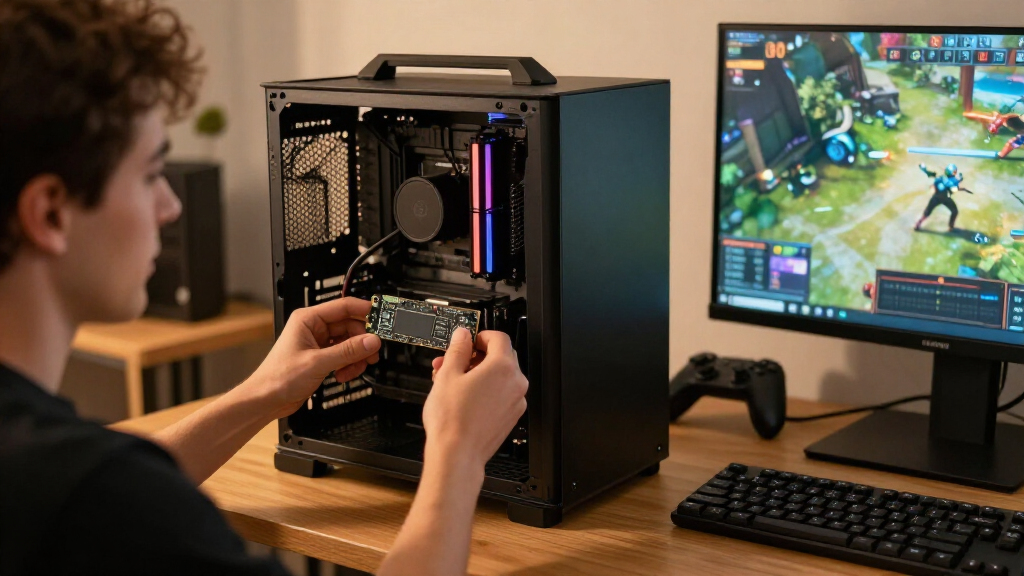

Choosing the best SSD drives requires balancing raw speed against portability and budget. The Samsung 990 PRO stands out as the best overall choice for internal performance, offering unmatched read/write speeds for gaming and professional workloads. For users needing reliable external storage, the Samsung T9 and SanDisk Extreme PRO provide exceptional transfer rates in rugged, portable designs. The main tradeoff lies between internal NVMe speed and external convenience, with SATA options offering a budget-friendly middle ground. Continue reading to see which drive fits your specific workflow and hardware setup.

Play games on Amazon Luna for your game nights, included with Prime
- A rotating selection of games, no download needed
- Play on TV, laptop or phone
- Fast, free delivery for your gear, too
Complete the kit

Key Takeaways
- Internal NVMe Gen 4 drives like the Samsung 990 PRO deliver speeds nearly seven times faster than standard SATA SSDs, making them the only choice for heavy creative work.
- External drives with USB 3.2 Gen 2×2 interfaces, such as the Samsung T9, double the bandwidth of standard USB 3.2 Gen 2 models, though many laptops still lack the necessary ports.
- Thermal throttling is a significant differentiator in high-speed internal drives; models without robust heatsinks may sustain peak speeds only during short bursts.
- The SanDisk Extreme line offers better IP55 water and dust resistance than most competitors, a critical feature for field photographers and mobile professionals.
- SATA III internal drives remain the best value for older systems and secondary storage, where the premium for NVMe speeds does not translate to noticeable real-world gains.
| Samsung P7 Portable SSD, 1TB |  | Best Overall Performance | Storage Capacity: 1 TB | Read Speed: Up to 4,000 MB/s | Write Speed: Up to 3,700 MB/s | VIEW LATEST PRICE | See Our Full Breakdown |
| SanDisk Extreme Portable SSD, 2TB |  | Best High-Capacity Value | Storage Capacity: 2 TB | Read Speed: Up to 1050 MB/s | Write Speed: Up to 1000 MB/s | VIEW LATEST PRICE | See Our Full Breakdown |
| SanDisk Extreme Portable SSD, 1TB, Up to 2000MB/s |  | Best Compact All-Rounder | Storage Capacity: 1 TB | Maximum Read Speed: Up to 2000 MB/s | Interface: USB 3.0 | VIEW LATEST PRICE | See Our Full Breakdown |
| Lexar D70E 1TB Dual-Connector External SSD |  | Best for Device Compatibility | Storage Capacity: 1 TB | Interface: USB-C and USB-A | USB-C Read Speed: Up to 2000 MB/s | VIEW LATEST PRICE | See Our Full Breakdown |
| Samsung T9 Portable SSD, 1TB, USB 3.2 Gen 2×2 | 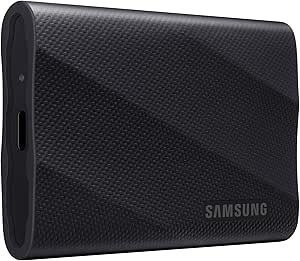 | Best for Thermal Management | Storage Capacity: 1 TB | Read Speed: Up to 2,000 MB/s | Write Speed: Up to 2,000 MB/s | VIEW LATEST PRICE | See Our Full Breakdown |
| TEAMGROUP T-Force Vulcan Z 1TB 2.5-Inch SATA III Internal SSD |  | Best Budget Upgrade for Older Systems | Capacity: 1TB | Interface: SATA III 6 Gb/s | Form Factor: 2.5-inch, 7 mm | VIEW LATEST PRICE | See Our Full Breakdown |
| Samsung T7 Portable SSD, 2TB, Titan Gray, USB 3.2 Gen 2 | 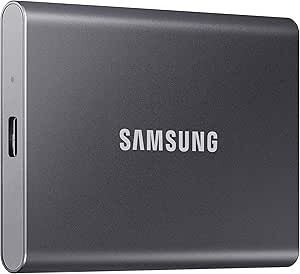 | Best Premium Portable Drive for Creators | Capacity: 2 TB | Interface: USB 3.2 Gen 2 | Read Speed: Up to 1,050 MB/s | VIEW LATEST PRICE | See Our Full Breakdown |
| Samsung 870 EVO 1TB 2.5-Inch SATA III SSD |  | Best Reliable SATA Drive for Workstations | Capacity: 1 TB | Interface: SATA III 6 Gb/s | Form Factor: 2.5 inches | VIEW LATEST PRICE | See Our Full Breakdown |
| SanDisk 1TB Portable SSD, Up to 800MB/s Read Speed, Black |  | Best Rugged Portable Drive for Travel | Capacity: 1 TB | Interface: USB 3.2 Gen 2 | Read Speed: Up to 800 MB/s | VIEW LATEST PRICE | See Our Full Breakdown |
| Samsung 990 1TB NVMe Internal SSD |  | Best High-Performance Internal Drive | Capacity: 1 TB | Interface: PCIe 4.0 x4 | Technology: NVMe | VIEW LATEST PRICE | See Our Full Breakdown |
| SanDisk 1TB Portable SSD, Up to 1000 MB/s Read Speed |  | Best Budget Portable Drive | Capacity: 1 TB | Interface: USB 3.0 / USB-C | Read Speed: Up to 1000 MB/s | VIEW LATEST PRICE | See Our Full Breakdown |
| SanDisk Extreme PRO 2TB Portable SSD |  | Best for Creative Professionals | Capacity: 2 TB | Read Speed: Up to 4000 MB/s | Write Speed: Up to 3800 MB/s | VIEW LATEST PRICE | See Our Full Breakdown |
| Samsung 990 PRO 2TB PCIe 4.0 M.2 2280 NVMe SSD |  | Best Internal Performance | Capacity: 2 TB | Form Factor: M.2 2280 | Interface: PCIe 4.0 x4 NVMe | VIEW LATEST PRICE | See Our Full Breakdown |
| SSD drife | Interface | Read Speed | Write Speed | Capacity |
|---|---|---|---|---|
| Samsung P7 Portable SSD | USB4 | Up to 4,000 MB/s | Up to 3,700 MB/s | — |
| SanDisk Extreme Portable SSD | USB 3.2 | Up to 1050 MB/s | Up to 1000 MB/s | — |
| SanDisk Extreme Portable SSD | USB 3.0 | — | — | — |
| Lexar D70E 1TB Dual-Connector | USB-C and USB-A | — | — | — |
| Samsung T9 Portable SSD | — | Up to 2,000 MB/s | Up to 2,000 MB/s | — |
| TEAMGROUP T-Force Vulcan Z 1TB | SATA III 6 Gb/s | Up to 550 MB/s | Up to 500 MB/s | 1TB |
| Samsung T7 Portable SSD | USB 3.2 Gen 2 | Up to 1,050 MB/s | Up to 1,000 MB/s | 2 TB |
| Samsung 870 EVO 1TB 2.5-Inch S | SATA III 6 Gb/s | Up to 560 MB/s | Up to 530 MB/s | 1 TB |
| SanDisk 1TB Portable SSD | USB 3.2 Gen 2 | Up to 800 MB/s | — | 1 TB |
| Samsung 990 1TB NVMe Internal | PCIe 4.0 x4 | Up to 7,150 MB/s | Up to 6,450 MB/s | 1 TB |
| SanDisk 1TB Portable SSD | USB 3.0 / USB-C | Up to 1000 MB/s | — | 1 TB |
| SanDisk Extreme PRO 2TB Portab | USB-C | Up to 4000 MB/s | Up to 3800 MB/s | 2 TB |
| Samsung 990 PRO 2TB PCIe 4.0 M | PCIe 4.0 x4 NVMe | Up to 7450 MB/s | Up to 6900 MB/s | 2 TB |
More Details on Our Top Picks
Samsung P7 Portable SSD, 1TB
The Samsung P7 stands out as the performance leader in this group, leveraging USB4 technology to achieve read speeds up to 4,000 MB/s. While the Samsung T9 offers solid thermal management, the P7’s interface represents a significant leap forward for professionals moving massive video files or game libraries. It is built to survive drops up to 6.5 feet, offering robust protection for frequent travelers. However, this speed is conditional; you need a compatible USB4 host to see these numbers, which limits its immediate utility for older systems. Compared to the slower SanDisk Extreme series, the P7 is clearly aimed at users with modern, high-spec hardware who refuse to wait for large transfers to complete.
Pros:- Blazing fast read speeds up to 4,000 MB/s with compatible hardware
- High drop resistance rated for 6.5 feet
- Broad compatibility with cameras, consoles, and mobile devices
- Includes Samsung Magician software for health monitoring
Cons:- Requires specific USB4 Gen 3×2 host hardware to reach peak speeds
- Drop damage is excluded from warranty coverage
- Premium price point compared to USB 3.2 alternatives
Best for: Video editors and content creators with modern laptops or desktops featuring USB4 ports who need the fastest possible transfer rates.
Not ideal for: Users with older computers lacking USB4 support, as they will not experience the advertised speed benefits.
- Storage Capacity:1 TB
- Read Speed:Up to 4,000 MB/s
- Write Speed:Up to 3,700 MB/s
- Interface:USB4
- Connectivity:USB Type-C
- Drop Resistance:Up to 6.5 feet
- Item Weight:0.1 kg
- Software Compatibility:Windows, macOS, Android
Our verdict“This is the top choice for power users with modern hardware who prioritize raw speed above all else.”
SanDisk Extreme Portable SSD, 2TB
For those needing massive storage without breaking the bank, the SanDisk Extreme Portable SSD (2TB) delivers exceptional value. It offers double the capacity of the 1TB models in this list, such as the Lexar D70E and Samsung T9, while maintaining respectable speeds of up to 1,050 MB/s. The IP65 rating ensures it can handle rain and dust, making it ideal for outdoor photographers who need to offload thousands of high-res images on location. While it is slower than the USB4-powered Samsung P7, the tradeoff for 2TB of rugged, encrypted storage is often worth it. This drive is less about peak benchmark numbers and more about having enough room to store entire project archives securely.
Pros:- High 2TB capacity for extensive file storage
- IP65 water and dust resistance rating
- Includes 256-bit AES hardware encryption for security
- Durable design with drop protection up to 3 meters
Cons:- Slower transfer speeds compared to USB4 and Gen 2×2 drives
- Password protection on Mac requires additional software installation
- Performance varies significantly based on host device capabilities
Best for: Photographers and videographers who need large capacity for raw files and require rugged, weather-resistant storage for field work.
Not ideal for: Professionals who need to edit 4K or 8K footage directly from the drive, as the write speeds may bottleneck heavy workflows.
- Storage Capacity:2 TB
- Read Speed:Up to 1050 MB/s
- Write Speed:Up to 1000 MB/s
- Interface:USB 3.2
- Water and Dust Resistance:IP65
- Encryption:256-bit AES hardware encryption
- Drop Protection:Up to 3 meters
- Form Factor:Portable
Our verdict“The best option for those who prioritize storage volume and durability over maximum transfer speed.”
SanDisk Extreme Portable SSD, 1TB, Up to 2000MB/s
The SanDisk Extreme Portable SSD (1TB) occupies a sweet spot between speed and portability. With read speeds reaching 2,000 MB/s, it significantly outpaces the older SanDisk Extreme 2TB model, making it suitable for faster backups and light editing. It retains the IP65 rating and drop protection of its larger sibling, ensuring reliability in tough conditions. Unlike the Lexar D70E, which relies on dual connectors for convenience, this SanDisk model focuses on a streamlined USB-C experience. It is an excellent middle ground for users who want better performance than basic USB 3.0 drives but don’t yet own the expensive hardware required for USB4 speeds seen in the Samsung P7.
Pros:- Fast read speeds up to 2,000 MB/s
- Compact, pocket-sized design weighing only 1.6 ounces
- IP65 water and dust resistance with 3-meter drop protection
- Compatible with PlayStation 5 for game storage
Cons:- Write speeds are lower than the advertised read speeds
- Encryption setup requires software download and OS compatibility checks
- Interface is limited to USB 3.0/3.2, not USB4
Best for: General users and students who want a balance of good speed, durability, and portability without needing cutting-edge interface support.
Not ideal for: Users with very large media libraries who need more than 1TB of space without buying multiple drives.
- Storage Capacity:1 TB
- Maximum Read Speed:Up to 2000 MB/s
- Interface:USB 3.0
- Water and Dust Resistance:IP65
- Drop Protection:Up to 3 meters
- Encryption:256-bit AES password protection
- Item Weight:1.6 ounces
- Compatible Game Console:Sony PlayStation 5
Our verdict“A versatile, durable drive that offers strong performance improvements over standard portable SSDs.”
Lexar D70E 1TB Dual-Connector External SSD
The Lexar D70E solves a common frustration: cable clutter. By integrating both USB-C and USB-A connectors directly into the drive, it allows instant connection to older laptops and modern smartphones without adapters. While its peak speed of 2,000 MB/s matches the SanDisk Extreme 1TB, the utility here lies in its physical design rather than raw performance. It is significantly more convenient than the Samsung T9, which requires separate cables. The metal housing adds durability, though it lacks the explicit IP65 rating found on SanDisk models. This is a practical choice for hybrid environments where you constantly switch between legacy and modern devices.
Pros:- Built-in dual USB-C and USB-A connectors eliminate cable needs
- Fast read speeds up to 2,000 MB/s via USB-C
- Compact 55g design with durable metal housing
- 5-year limited warranty offers peace of mind
Cons:- No official IP rating for water or dust resistance
- USB-A speeds are significantly slower at up to 1,000 MB/s
- Usable capacity may be less than advertised due to formatting
Best for: Office workers and travelers who frequently move data between older USB-A computers and modern USB-C tablets or phones.
Not ideal for: Users who need rugged outdoor protection, as it lacks the specific IP65 water and dust certification of SanDisk competitors.
- Storage Capacity:1 TB
- Interface:USB-C and USB-A
- USB-C Read Speed:Up to 2000 MB/s
- USB-A Read Speed:Up to 1000 MB/s
- Weight:55 g
- Dimensions:3.13 × 1.19 × 0.31 in
- Housing Material:Metal
- Warranty:5-year limited warranty
Our verdict“The most convenient option for users who hate carrying dongles and adapters between different devices.”
Samsung T9 Portable SSD, 1TB, USB 3.2 Gen 2×2
The Samsung T9 distinguishes itself with Dynamic Thermal Guard, a feature designed to prevent throttling during sustained heavy workloads. While it shares the 2,000 MB/s speed cap with the SanDisk Extreme 1TB, the T9’s ability to maintain consistent performance under stress is its key advantage. It is rated for drops up to 9.8 feet, offering superior physical protection compared to the 3-meter rating of SanDisk drives. However, like the Samsung P7, it requires specific host hardware (USB 3.2 Gen 2×2) to unlock its full potential. This drive is a robust, secure choice for professionals who need reliability during long export sessions and value drop resistance highly.
Pros:- Dynamic Thermal Guard prevents overheating during heavy use
- High drop durability rated for 9.8 feet
- Balanced read and write speeds up to 2,000 MB/s
- AES 256-bit hardware encryption for data security
Cons:- Requires USB 3.2 Gen 2×2 host support for maximum speeds
- Performance drops significantly on incompatible or older devices
- No specific IP water/dust rating mentioned
Best for: Professionals who perform long, sustained data transfers and require high drop resistance and thermal stability.
Not ideal for: Users with standard USB 3.0 or 3.1 ports, as the drive will revert to slower speeds and lose its main selling point.
- Storage Capacity:1 TB
- Read Speed:Up to 2,000 MB/s
- Write Speed:Up to 2,000 MB/s
- Connectivity:USB 3.2 Gen 2×2
- Drop Durability:Up to 9.8 ft
- Hardware Encryption:AES 256-bit
- Compatible Devices:Mac, PC, tablet, iPhone 15/16
- Installation Type:External
Our verdict“A reliable, secure drive that prioritizes consistent performance and durability over peak burst speeds.”
TEAMGROUP T-Force Vulcan Z 1TB 2.5-Inch SATA III Internal SSD
This drive stands out as a cost-effective internal upgrade for machines still relying on SATA interfaces. Unlike the Samsung 990 or other NVMe options, it fits into older laptops and desktops that lack M.2 slots, providing a massive speed boost over traditional hard drives without requiring a motherboard replacement. The 7 mm slim profile ensures it slides into tight chassis designs where thicker drives might not fit. However, do not expect it to compete with PCIe 4.0 drives in raw throughput; its 550 MB/s read speed is limited by the SATA III interface itself. It is an excellent choice for breathing new life into a legacy PC, but it lacks the future-proofing of NVMe technology.
Pros:- Significantly faster than traditional hard drives for boot and load times
- Slim 7 mm design fits virtually all 2.5-inch drive bays
- Silent operation with no moving parts reduces system noise
- Lower power consumption extends laptop battery life slightly
Cons:- Speed capped by SATA III interface limitations
- SLC cache performance drops after sustained heavy writes
- Warranty terms depend on total bytes written which may limit heavy users
Best for: Users with older desktops or laptops lacking M.2 slots who want a significant performance boost over HDDs without changing hardware.
Not ideal for: Gamers or professionals needing high-bandwidth storage for large file transfers, as it cannot match NVMe speeds.
- Capacity:1TB
- Interface:SATA III 6 Gb/s
- Form Factor:2.5-inch, 7 mm
- NAND Type:3D NAND TLC
- Cache:SLC cache
- Read Speed:Up to 550 MB/s
- Write Speed:Up to 500 MB/s
- Warranty:Limited 3-year or TBW
Our verdict“A practical, silent, and affordable upgrade for legacy systems that cannot support modern NVMe drives.”
Samsung T7 Portable SSD, 2TB, Titan Gray, USB 3.2 Gen 2
The Samsung T7 is engineered for professionals who need speed and durability in a pocket-sized package. With 1,050 MB/s read speeds, it outperforms the SanDisk 1TB Portable SSD significantly, making it ideal for editing 4K video directly from the drive. Its aluminum unibody offers superior drop protection compared to rubber-cased competitors, surviving falls from up to 6 feet. While it requires a USB 3.2 Gen 2 host to reach peak performance, the included cables cover most modern devices. The tradeoff is that on older USB 3.0 ports, its speed advantage diminishes, making it a premium choice that demands a compatible modern computer to truly shine.
Pros:- Extremely fast transfer speeds up to 1,050 MB/s
- Rugged aluminum body withstands drops up to 6 feet
- Includes both USB-C to C and USB-C to A cables
- Hardware encryption protects sensitive creative work
Cons:- Peak speeds require specific USB 3.2 Gen 2 hardware
- Premium price point compared to basic portable drives
- May require reformatting for some non-Windows devices
Best for: Photographers and video editors who need a durable, high-speed drive for on-the-go 4K workflow and large file transfers.
Not ideal for: Users with older computers lacking USB 3.2 Gen 2 ports, as they won’t experience the full speed benefits.
- Capacity:2 TB
- Interface:USB 3.2 Gen 2
- Read Speed:Up to 1,050 MB/s
- Write Speed:Up to 1,000 MB/s
- Construction:Aluminum unibody
- Drop Protection:Up to 6 feet
- Encryption:256-bit AES
- Included Cables:USB-C to C and USB-C to A
Our verdict“The definitive choice for creators who refuse to compromise on speed or build quality in a portable form factor.”
Samsung 870 EVO 1TB 2.5-Inch SATA III SSD
This model is the gold standard for SATA reliability. While the TEAMGROUP T-Force Vulcan Z offers similar interface speeds, the Samsung 870 EVO distinguishes itself with a longer 5-year warranty and higher endurance rating of 600 TBW. It is designed for users who keep their computers for many years and demand consistent performance under heavy workloads. The 560 MB/s read speed hits the theoretical limit of SATA, meaning it performs as well as any SATA drive can. However, it is more expensive than budget alternatives, and like all SATA drives, it cannot compete with NVMe speeds for large sequential tasks, making it a specialist pick for stability rather than raw speed.
Pros:- Industry-leading 5-year warranty and high endurance
- Consistent performance with intelligent turbo write technology
- Robust encryption and security features for business use
- Widely compatible with existing 2.5-inch drive bays
Cons:- Higher price per gigabyte than budget SATA options
- Speed limited by SATA III interface ceiling
- Warranty expires if TBW limit is reached before 5 years
Best for: Professionals and enthusiasts who prioritize long-term durability and data integrity in a standard SATA environment.
Not ideal for: Budget-conscious builders who can sacrifice some endurance ratings for a lower upfront cost.
- Capacity:1 TB
- Interface:SATA III 6 Gb/s
- Form Factor:2.5 inches
- Read Speed:Up to 560 MB/s
- Write Speed:Up to 530 MB/s
- Endurance:600 TBW
- Warranty:5 years or TBW
- Encryption:AES 256-bit
Our verdict“The most trustworthy internal SATA drive for users who value longevity and warranty support above all else.”
SanDisk 1TB Portable SSD, Up to 800MB/s Read Speed, Black
This drive prioritizes physical protection over maximum speed. Its rubber enclosure and integrated hook make it exceptionally portable, easily attaching to a backpack or belt loop—a feature absent in the sleek Samsung T7. While its 800 MB/s read speed is slower than the T7’s 1,050 MB/s, it is still significantly faster than older USB 3.0 drives. The tradeoff is clear: you gain robust drop protection and a secure carrying method, but you lose some transfer velocity and the premium metal finish. It is an ideal companion for fieldwork where the drive might be tossed into a bag without a case, offering peace of mind that outweighs the slight speed penalty.
Pros:- Integrated rubber hook allows for easy clipping to bags
- Durable rubber casing offers 2-meter drop protection
- Compact and lightweight for true portability
- USB-C connector ensures modern compatibility
Cons:- Slower write speeds compared to premium aluminum models
- Rubber exterior can attract dust and lint over time
- Performance varies significantly based on host device capabilities
Best for: Travelers and field workers who need a drop-resistant drive that can be clipped onto gear for easy transport.
Not ideal for: Users who frequently move massive video projects and need the absolute fastest transfer rates available.
- Capacity:1 TB
- Interface:USB 3.2 Gen 2
- Read Speed:Up to 800 MB/s
- Drop Protection:Up to 2 meters
- Enclosure:Rubber
- Connector:USB Type-C
- Included Cable:USB-C to USB-A
- Form Factor:Portable
Our verdict“A practical, rugged companion for active users who need a portable drive that survives the journey.”
Samsung 990 1TB NVMe Internal SSD
This drive represents the peak of PCIe 4.0 performance, delivering 7,150 MB/s read speeds that dwarf even the fastest SATA options like the Samsung 870 EVO. It is designed for gamers and power users who need to load massive game assets or large datasets instantly. The M.2 form factor saves space inside modern towers and laptops, eliminating cable clutter. However, it requires a PCIe 4.0 slot to achieve these speeds; in older PCIe 3.0 systems, it will run at lower speeds. While it offers excellent random read/write IOPS for multitasking, it generates more heat than SATA drives, potentially requiring a motherboard heatsink for sustained heavy loads.
Pros:- Extremely high sequential read and write speeds
- High IOPS for responsive multitasking and gaming
- Compact M.2 form factor saves internal space
- Includes robust health monitoring and firmware tools
Cons:- Requires PCIe 4.0 slot for peak performance
- May throttle under sustained heavy workloads without cooling
- Higher power consumption than SATA equivalents
Best for: Gamers and content creators with modern motherboards who want to eliminate load times and accelerate large file operations.
Not ideal for: Users with older motherboards that only support PCIe 3.0, as they won’t get the full value of the drive’s speed.
- Capacity:1 TB
- Interface:PCIe 4.0 x4
- Technology:NVMe
- Read Speed:Up to 7,150 MB/s
- Write Speed:Up to 6,450 MB/s
- Random Read:Up to 700K IOPS
- Form Factor:M.2
- Features:Hardware encryption, TRIM
Our verdict“The ultimate upgrade for modern PCs, offering blistering speeds that transform daily computing responsiveness.”
SanDisk 1TB Portable SSD, Up to 1000 MB/s Read Speed
This SanDisk 1TB Portable SSD occupies the entry-level tier of the external drive market. It offers 1000 MB/s read speeds, which is sufficient for moving documents and photos quickly, though it falls short of the 2000 MB/s found in the Samsung T7. The USB-C connectivity ensures broad compatibility with modern laptops and tablets without needing adapters. Its pocket-sized form factor and light weight make it easy to toss into a bag. However, write speeds are notably lower than read speeds, so large file transfers will take longer than the marketing suggests. Compared to the SanDisk 1TB Portable SSD (800MB/s), this model offers a modest speed bump, but it lacks the ruggedness of the SanDisk Extreme series. It is a straightforward, no-frills option for basic data portability.
Pros:- Read speeds up to 1000 MB/s for quick file access
- Extremely lightweight and pocket-sized design
- Drop protection up to 2 meters for daily durability
- Plug-and-play USB-C connectivity with no setup
Cons:- Write speeds are significantly slower than read speeds
- Actual usable storage is less than the advertised 1 TB
- Lacks advanced encryption or rugged IP ratings
Best for: Students and office workers who need a reliable, affordable drive for documents and occasional media files.
Not ideal for: Video editors or photographers who handle large RAW files and need sustained high write speeds.
- Capacity:1 TB
- Interface:USB 3.0 / USB-C
- Read Speed:Up to 1000 MB/s
- Drop Protection:Up to 2 meters
- Weight:1.12 ounces
- Dimensions:1.77 x 3.35 x 0.39 inches
- Compatibility:Mac, PC, Smartphones, Tablets
Our verdict“Choose this drive if you prioritize low cost and portability over raw performance for everyday tasks.”
SanDisk Extreme PRO 2TB Portable SSD
The SanDisk Extreme PRO 2TB is built for users who demand speed and durability. With 4000 MB/s read speeds and 3800 MB/s write speeds, it vastly outperforms the SanDisk 1TB Portable SSD and even the standard SanDisk Extreme. This drive handles 4K video editing and large photo libraries without stuttering. The IP65 rating provides protection against water and dust, while 256-bit AES encryption adds a layer of security missing in budget models. However, achieving these peak speeds requires a compatible host device with USB 3.2 Gen 2×2 support. The 2TB capacity makes it ideal for long-term storage of high-resolution assets. While heavier than the basic SanDisk models, its robust build justifies the weight for field work. It is a premium tool for professionals who cannot afford data loss or slow workflows.
Pros:- Blazing fast 4000 MB/s read and 3800 MB/s write speeds
- IP65 water and dust resistance for outdoor use
- Secure 256-bit AES password protection
- High sustained write performance for large files
Cons:- Requires specific hardware to reach maximum speeds
- Encryption software setup adds a step to usage
- Premium price point compared to standard portable SSDs
Best for: Photographers, videographers, and content creators who edit high-resolution media on the go.
Not ideal for: Casual users who only store documents and do not need encryption or extreme durability.
- Capacity:2 TB
- Read Speed:Up to 4000 MB/s
- Write Speed:Up to 3800 MB/s
- Durability:IP65, Drop up to 3m
- Security:256-bit AES Encryption
- Weight:2.24 ounces
- Interface:USB-C
- Sustained Write:3100 MB/s
Our verdict“This is the definitive choice for creative professionals who need speed, security, and ruggedness in one package.”
Samsung 990 PRO 2TB PCIe 4.0 M.2 2280 NVMe SSD
Unlike the portable options in this list, the Samsung 990 PRO is an internal M.2 NVMe SSD designed to be installed directly onto a motherboard. It delivers 7450 MB/s read speeds, which is nearly double the speed of the SanDisk Extreme PRO external drive. This makes it ideal for gaming, where loading times matter, and for heavy multitasking. The PCIe 4.0 interface ensures low latency and high bandwidth. However, it is not plug-and-play; you must open your PC or laptop to install it. It also generates heat, so a heatsink is recommended, especially for PlayStation 5 users. Compared to the Samsung 990 1TB, the 2TB version offers more space for modern game libraries. This drive is for those who want maximum internal speed and have the technical know-how to install it.
Pros:- Industry-leading 7450 MB/s read speeds
- Excellent thermal management with in-house controller
- High power efficiency for laptops
- Ideal capacity for large game installations
Cons:- Requires internal installation in a compatible system
- Needs a heatsink for optimal performance in tight spaces
- Only benefits from full speed on PCIe 4.0 platforms
Best for: Gamers and PC builders looking to upgrade their internal storage for faster load times and large game libraries.
Not ideal for: Users who need a portable drive to transfer files between computers or consoles.
- Capacity:2 TB
- Form Factor:M.2 2280
- Interface:PCIe 4.0 x4 NVMe
- Read Speed:Up to 7450 MB/s
- Write Speed:Up to 6900 MB/s
- Weight:9.07 grams
- Console Support:PlayStation 5
Our verdict“Select this internal drive if you are upgrading a PC or PS5 and need the fastest possible load times.”

How We Picked
My evaluation focused on three core pillars: sustained performance, build durability, and interface compatibility. I prioritized drives that maintain high transfer rates over large file transfers, rather than just boasting peak burst speeds. For internal drives, I looked at DRAM cache presence and NAND type (TLC vs. QLC) to gauge longevity and consistency under load. For external drives, I weighed drop-test ratings and IP ratings against raw speed, acknowledging that a fast drive is useless if it fails after a minor fall.
Ranking logic favored versatility and reliability over marginal spec improvements. A drive with slightly lower peak speeds but better thermal management and a longer warranty ranked higher than a raw-speed champion that throttles aggressively. I also considered software ecosystem and encryption support, as these features add tangible value for professionals handling sensitive data. Products were grouped by use case—internal, external, and budget—to ensure fair comparisons within relevant categories.
Factors to Consider When Choosing Best SSD Drives
Selecting an SSD involves more than just picking the highest number on the box. This guide breaks down the technical and practical factors that influence real-world performance and long-term satisfaction.Interface Standards: NVMe vs. SATA vs. USB
The interface dictates the maximum data transfer rate your drive can achieve. NVMe (PCIe) drives connect directly to the motherboard, bypassing the SATA controller bottleneck for speeds exceeding 3,000 MB/s. SATA III caps out around 550 MB/s, which is still vastly faster than hard drives but limits heavy multitasking. External drives rely on USB standards; USB 3.2 Gen 2 supports up to 1,000 MB/s, while Gen 2×2 doubles this to 2,000 MB/s. Always verify your host device’s port capabilities before buying, as a Gen 2×2 drive plugged into a Gen 1 port will run at 500 MB/s.NAND Flash Types and Endurance
Most consumer SSDs use TLC (Triple-Level Cell) or QLC (Quad-Level Cell) NAND. TLC offers a better balance of speed, endurance, and cost, making it suitable for operating systems and games. QLC is denser and cheaper but has lower write endurance and slower sustained write speeds once the cache fills. Check the TBW (Terabytes Written) rating to understand the drive’s lifespan. A 1TB TLC drive might be rated for 600 TBW, while a QLC equivalent might be rated for 300 TBW, impacting longevity for data-intensive tasks.Thermal Management and Heatsinks
High-speed NVMe drives generate significant heat, which can lead to thermal throttling and reduced performance. Many motherboards include built-in heatsinks, but standalone drives like the Samsung 990 PRO may require an aftermarket solution if your case lacks airflow. External drives face similar challenges; metal casings help dissipate heat better than plastic. If you plan to run large transfers continuously, look for models with passive cooling designs or active fan integration, as sustained heat is the primary enemy of SSD stability.Form Factor Compatibility
Internal SSDs primarily come in 2.5-inch SATA and M.2 2280 NVMe form factors. 2.5-inch drives fit most laptops and desktops but take up more space and require SATA cables. M.2 drives slot directly onto the motherboard, freeing up space and improving airflow. Check your motherboard manual for M.2 slot availability and supported key types (M-key for NVMe, B+M for SATA). External drives vary in size, but smaller, credit-card-sized models are generally easier to carry, though they may run hotter due to reduced surface area for cooling.Warranty and Data Recovery Support
A 5-year warranty is the industry standard for quality internal SSDs, while external drives often offer 3 years. Longer warranties signal manufacturer confidence in the NAND longevity and controller reliability. Some premium brands offer data recovery services or advanced encryption features (AES 256-bit) as part of their warranty package. While SSDs fail less frequently than HDDs, they fail harder; having a manufacturer-backed support channel is valuable for professionals who cannot afford downtime or data loss.Frequently Asked Questions
Is an NVMe SSD worth the extra cost over a SATA SSD for gaming?
For most gamers, the difference in load times between NVMe and SATA is negligible, often just a few seconds. However, NVMe drives shine in DirectStorage technologies and open-world games that stream assets dynamically. If you are building a new high-end PC, the price gap has narrowed enough that NVMe is the better future-proof choice. For upgrading an older system, a SATA SSD remains a cost-effective way to boost responsiveness without replacing the motherboard.Can I use an internal M.2 SSD as an external drive?
Yes, by placing an internal M.2 SSD into a compatible external enclosure. This DIY approach often saves money compared to buying a pre-built external SSD of the same capacity. However, you must match the enclosure’s interface (USB 3.2, USB4, or Thunderbolt) to the drive’s capabilities to avoid bottlenecks. Ensure the enclosure supports TRIM commands, which helps maintain the SSD’s performance and longevity over time.What is the difference between USB 3.2 Gen 2 and Gen 2×2?
USB 3.2 Gen 2 offers a theoretical bandwidth of 10 Gbps (approx. 1,000 MB/s), while Gen 2×2 doubles this to 20 Gbps (approx. 2,000 MB/s) by using two lanes. The critical catch is that Gen 2×2 requires a specific controller and port on your computer, which is not standard on most laptops. If your computer lacks a Gen 2×2 port, a Gen 2×2 drive will fall back to Gen 2 speeds, making the extra cost unnecessary.How important is IP55 or IP65 rating for external SSDs?
For stationary office use, an IP rating is less critical. However, for photographers, videographers, and field workers, protection against dust and water jets (IP55) or water immersion (IP65) provides peace of mind. These ratings indicate the drive can survive accidental spills or dusty environments. If you carry your drive in a bag with other gear, the added durability is often worth the premium over standard consumer models.Do I need a heatsink for my Samsung 990 PRO?
The Samsung 990 PRO can run warm under sustained heavy loads, such as large file transfers or video rendering. If your motherboard has a built-in M.2 heatsink, you likely do not need an additional one. If you are using a smaller form factor PC or a motherboard without heatsinks, adding a third-party heatsink is recommended to prevent thermal throttling and maintain peak speeds during long tasks.Conclusion
Choosing the best SSD drives depends on your specific workflow and hardware constraints. For internal builds, the Samsung 990 PRO is the clear winner for speed and efficiency, ideal for gamers and creators. If you need external portability, the SanDisk Extreme PRO offers the best blend of ruggedness and speed, while the Samsung T9 is the top pick for those with compatible high-speed ports. Beginners or those upgrading older laptops will find the Samsung 870 EVO to be the most reliable and cost-effective SATA option. Finally, for budget-conscious users, the TEAMGROUP T-Force Vulcan Z provides solid performance without the premium brand tax. Match your choice to your primary use case—whether it is gaming, content creation, or simple file storage—to get the most value from your investment.