
A good gaming headset with surround sound should help me place footsteps, reloads, vehicles, and voice cues without making every game sound artificial. My best overall pick is the Logitech G Pro X Wired because it combines DTS 7.1 processing, a strong USB DAC, and better mic control than most wired rivals here. The HyperX Cloud II is the safer comfort-first choice, while the Razer BlackShark V3 X HyperSpeed makes the most sense if wireless freedom matters more than plug-and-play simplicity. The main tradeoffs are wired accuracy versus wireless convenience, software-based surround versus basic virtual 7.1, and premium mic tuning versus lower prices. Keep reading for the full breakdown of which headset fits each player type.

Play games on Amazon Luna for your game nights, included with Prime
- A rotating selection of games, no download needed
- Play on TV, laptop or phone
- Fast, free delivery for your gear, too
Key Takeaways
- The Logitech G Pro X Wired earns the top spot because its DTS 7.1 support, USB DAC, detachable mic, and Blue VO!CE controls make it the most balanced surround-focused pick in this lineup.
- The HyperX Cloud II and Cloud III are better comfort bets than many budget 7.1 models, but they trade some software flexibility for simpler setup and long-session wearability.
- The Razer BlackShark V3 X HyperSpeed is the strongest wireless choice, though buyers who want the lowest latency and easiest console support may still prefer wired models.
- Budget models such as Ozeino, BENGOO G9000, FIFINE H13BP, and Senzer SG500 compete on price and extras, but their surround processing and mic refinement are less convincing than the Logitech, Razer, and HyperX options.
- Some headsets in this list advertise surround sound more clearly than they deliver it, so I rank higher the models that pair spatial processing with strong drivers, usable controls, and broad platform compatibility.
| Logitech G Pro X Wired Gaming Headset |  | Best Overall | Sound Technology: DTS 7.1 surround sound, object-based surround | Drivers: 50 mm PRO-G drivers | Microphone: Detachable pro-grade mic with Blue VO!CE technology | VIEW LATEST PRICE | See Our Full Breakdown |
| Ozeino Gaming Headset |  | Best Budget Surround Pick | Sound Technology: 7.1 surround sound | Microphone: 360-degree noise-canceling microphone | Lighting: RGB LED lights | VIEW LATEST PRICE | See Our Full Breakdown |
| Razer BlackShark V3 X HyperSpeed Wireless Gaming Headset |  | Best Wireless Surround Pick | Sound: 7.1 surround sound | Drivers: 50mm TRIFORCE Gen-2 drivers | Microphone: Detachable HyperClear Cardioid 9.9mm mic | VIEW LATEST PRICE | See Our Full Breakdown |
| Logitech G432 Wired Gaming Headset |  | Best Entry-Level DTS Headset | Driver Size: 50 mm | Surround Sound: DTS Headphone:X 2.0 | Connectivity: USB and 3.5 mm jack | VIEW LATEST PRICE | See Our Full Breakdown |
| HyperX Cloud Alpha Gaming Headset |  | Best for Clean Stereo Imaging | Frequency Response: 15Hz-25,000Hz | Microphone Frequency Response: 50Hz-18,000Hz | Headphone Fit Type: Over-ear | VIEW LATEST PRICE | See Our Full Breakdown |
| HyperX Cloud II Gaming Headset |  | Best Durable All-Rounder | Frequency Response: 15Hz-25kHz | Fit: Over-ear | Drivers: 53mm | VIEW LATEST PRICE | See Our Full Breakdown |
| FIFINE H13BP Wired Gaming Headset |  | Best RGB USB Pick | Driver Size: 50mm | Sound Technology: 7.1 surround sound | Lighting: Customizable RGB with 11 modes | VIEW LATEST PRICE | See Our Full Breakdown |
| FIFINE H9 Wired Gaming Headset |  | Best Flexible Wired Value | Model: H9 | Connectivity: USB and 3.5mm jack | Driver Size: 50mm | VIEW LATEST PRICE | See Our Full Breakdown |
| Logitech G733 Lightspeed Wireless Gaming Headset |  | Best Wireless Comfort Pick | Wireless Range: 20 meters | Battery Life: Up to 29 hours | Connectivity: Lightspeed wireless | VIEW LATEST PRICE | See Our Full Breakdown |
| Razer BlackShark V2 X Gaming Headset |  | Best Lightweight Competitive Pick | Driver Size: 50mm | Sound Technology: 7.1 surround sound | Noise Cancellation: Passive noise isolation | VIEW LATEST PRICE | See Our Full Breakdown |
| HyperX Cloud III Wired Gaming Headset |  | Best Comfort-Focused Wired Pick | Drivers: 53mm angled drivers | Audio Technology: DTS Headphone:X Spatial Audio | Connectivity: USB-C, USB-A, 3.5mm | VIEW LATEST PRICE | See Our Full Breakdown |
| BENGOO G9000 Stereo Gaming Headset |  | Best Budget Multiplatform Pick | Compatibility: PS4, PS5, Xbox One, Xbox Series X|S, PC, Nintendo Switch, mobile devices | Sound Technology: 7.1 Surround Sound | Driver Size: 40mm | VIEW LATEST PRICE | See Our Full Breakdown |
| Razer Kraken V3 X Wired USB Gaming Headset |  | Best Lightweight PC Pick | Weight: 285g | Drivers: Razer TriForce 40mm | Microphone: HyperClear cardioid mic | VIEW LATEST PRICE | See Our Full Breakdown |
| Senzer SG500 Surround Sound Pro Gaming Headset | 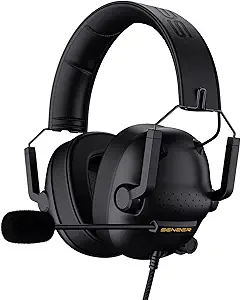 | Best Portable Surround Pick | Weight: 0.66 lbs | Connectivity: 3.5mm wired jack | Platform Compatibility: PC, PS4, PS5, Xbox One, Switch, Mac, mobile | VIEW LATEST PRICE | See Our Full Breakdown |
More Details on Our Top Picks
Logitech G Pro X Wired Gaming Headset
I’d rank the Logitech G Pro X highest because it balances DTS 7.1 positional audio, stronger voice tools, and sturdier hardware better than the rest of this group. Compared with the Logitech G432, it feels aimed at players who care more about team comms and tuning control than plug-and-play simplicity, thanks to Blue VO!CE, EQ profiles, and the included USB DAC. Against the Razer BlackShark V3 X HyperSpeed, it gives up wireless freedom, but its wired setup is better suited to desks, tournaments, and players who prefer stable latency. The tradeoff is setup: the best surround and mic processing depend on Logitech software and the USB sound card, so console-first buyers may not get the full package.
Pros:- DTS 7.1 surround helps with positional awareness in competitive games
- Blue VO!CE microphone processing is stronger than the simpler mics in this batch
- USB DAC and EQ profiles give PC players more tuning control
- Steel and aluminum build feels more serious than budget headsets
Cons:- Full feature set requires Logitech software and the USB sound card
- Wired design limits movement compared with the Razer BlackShark V3 X HyperSpeed
- Costs more than simpler surround headsets like the Logitech G432
Best for: PC players who want strong surround cues, clear squad communication, and a more durable wired headset for ranked play or tournaments.
Not ideal for: Console players who want every feature over a simple 3.5mm connection, since the best audio and mic tools depend on USB and software.
- Sound Technology:DTS 7.1 surround sound, object-based surround
- Drivers:50 mm PRO-G drivers
- Microphone:Detachable pro-grade mic with Blue VO!CE technology
- Connectivity:USB and 3.5mm aux
- Ear Pads:Memory foam with leatherette or velour options
- Impedance:35 Ohm
- Included Accessories:USB external sound card, mobile cable with inline mic, carrying bag
- Build Material:Steel headband and aluminum fork
- Warranty:2-year limited hardware warranty
Bottom line: This is the pick I’d choose for PC gamers who want the best mix of surround accuracy, mic quality, and build strength in this batch.
Ozeino Gaming Headset
The Ozeino Gaming Headset makes sense lower in the ranking because it chases 7.1 surround sound, RGB style, and broad device support at a more accessible level. Compared with the Logitech G Pro X, it is less refined for mic processing and PC audio tuning, but it gives casual players the main surround-style experience without paying for a tournament-grade build. It also looks flashier than the HyperX Cloud Alpha, though the Alpha is the cleaner choice for audio clarity. The main compromise is platform fuss: the 3.5mm connection may require splitters or adapters, and surround behavior can depend on the device. I’d view it as a value-first headset, not a precision tool for serious competitive play.
Pros:- Affordable way to get 7.1 surround-style gaming audio
- Works with PC, PlayStation, Xbox, Switch, mobile, and laptops
- Breathable over-ear pads are better suited to long casual sessions than barebones headsets
- RGB lighting adds a gaming look for players who want visual flair
Cons:- May need a splitter for PC and some Xbox controller setups
- Surround support can vary by platform and adapter setup
- Less durable and less tunable than premium options in this lineup
Best for: Budget-focused players who want an over-ear headset with surround-style gaming audio, RGB lighting, and broad console and PC compatibility.
Not ideal for: PC gamers who want polished software tuning or premium mic processing, since this is simpler than the Logitech G Pro X.
- Sound Technology:7.1 surround sound
- Microphone:360-degree noise-canceling microphone
- Lighting:RGB LED lights
- Ear Pads:Breathable protein over-ear pads
- Compatibility:PC, PS4, PS5, Xbox Series X/S, Switch, mobile, laptop
- Connector:3.5mm jack
- Adapter Needs:Splitter may be required for PC and Xbox One
Bottom line: This is the headset I’d pick for buyers who want low-cost surround-style sound and platform flexibility more than premium finish.
Razer BlackShark V3 X HyperSpeed Wireless Gaming Headset
The Razer BlackShark V3 X HyperSpeed earns its role for buyers who want 7.1 surround sound without being tied to the desk. Its 2.4 GHz HyperSpeed wireless and Bluetooth make it more flexible than the wired Logitech G Pro X or Logitech G432, especially for players who switch between PC, console, and mobile. The 70-hour battery is the big practical advantage, since fewer charging breaks matter during long weeks of play. Still, wireless convenience comes with tradeoffs: it is pricier than the Ozeino, and the lighter 270g design may not feel as tough as metal-framed headsets. I’d rank it behind the G Pro X for pure competitive desk use, but ahead for cable-free surround gaming.
Pros:- 2.4 GHz wireless and Bluetooth give it more flexibility than wired picks
- 70-hour battery life reduces charging interruptions
- 50mm TRIFORCE Gen-2 drivers are built for clear game audio separation
- Detachable cardioid mic keeps voice chat focused
Cons:- Costs more than basic wired surround headsets
- Lightweight build may feel less rugged than the Logitech G Pro X
- Best surround support is most appealing to PC-focused players
Best for: Players who want surround gaming audio, long battery life, and quick switching between wireless PC play and Bluetooth devices.
Not ideal for: Buyers who mainly play at a fixed PC setup and want a heavier, more durable wired build for the money.
- Sound:7.1 surround sound
- Drivers:50mm TRIFORCE Gen-2 drivers
- Microphone:Detachable HyperClear Cardioid 9.9mm mic
- Wireless:2.4 GHz HyperSpeed and Bluetooth
- Connectivity Modes:Dual wireless and USB wired
- Battery Life:Up to 70 hours
- Weight:270g
Bottom line: This is the best match here for gamers who want surround cues and wireless freedom in the same headset.
Logitech G432 Wired Gaming Headset
The Logitech G432 is the easier Logitech pick for buyers who want DTS Headphone:X 2.0 without stepping up to the G Pro X. Compared with the Logitech G Pro X, it strips away Blue VO!CE, the sturdier metal feel, and deeper mic tools, but keeps the core appeal: 7.1 positional audio through large 50 mm drivers. That makes it a sensible middle ground above the Ozeino for PC players who want a known software ecosystem, yet below the Razer BlackShark V3 X HyperSpeed for anyone who wants wireless play. The flip-to-mute mic is convenient, but mic quality is less compelling than the Pro X. Its build also feels more practical than premium, so I’d treat it as a value-minded DTS option.
Pros:- DTS Headphone:X 2.0 gives PC players directional audio cues
- 50 mm drivers create a bigger sound than many basic headsets
- USB and 3.5mm connections support several platforms
- Flip-to-mute mic is simple and quick during matches
Cons:- DTS features require Logitech G HUB software
- Build feels less premium than the Logitech G Pro X
- Microphone is serviceable but not a standout for voice-heavy play
Best for: PC and console players who want DTS surround features from a known gaming brand without paying for the G Pro X.
Not ideal for: Streamers or competitive team players who need stronger mic processing and a more premium frame.
- Driver Size:50 mm
- Surround Sound:DTS Headphone:X 2.0
- Connectivity:USB and 3.5 mm jack
- Microphone:Flip-to-mute 6 mm boom mic
- Compatibility:PC, Mac, PlayStation 4/5, Nintendo Switch docked, mobile devices
- Design:Lightweight over-ear design
- Ear Cups:Leatherette ear cups with 90-degree rotation
Bottom line: This is the practical DTS pick for gamers who want surround features at a lower price than Logitech’s Pro model.
HyperX Cloud Alpha Gaming Headset
The HyperX Cloud Alpha sits in this surround-focused roundup for a different reason: it is the best choice here if I care about clean driver separation more than built-in 7.1 processing. Unlike the Logitech G432 or Logitech G Pro X, it does not advertise native DTS or 7.1 surround, so buyers relying on headset-based virtual surround should skip it. Where it fights back is clarity. The dual chamber drivers are designed to reduce muddiness, which can make PC or console spatial audio processing easier to read. Compared with the Ozeino, it is less flashy and lacks RGB, but the aluminum frame and memory foam design feel better matched to long-term use. The bulky ear cups and detachable mic fit need attention, though.
Pros:- Dual chamber drivers help separate bass from mids and highs
- Durable aluminum frame is a strength for long-term use
- Memory foam and leatherette design support long sessions
- Broad compatibility across PC, PlayStation, Xbox, Switch, and mobile
Cons:- No listed native 7.1 or DTS surround processing
- Ear cups may feel bulky for smaller heads or travel use
- Microphone connection needs proper attachment to avoid issues
Best for: Players who already use PC, console, or game-based spatial audio and want a durable headset with cleaner stereo separation.
Not ideal for: Buyers who want headset-native 7.1 surround or DTS processing built into the package.
- Frequency Response:15Hz-25,000Hz
- Microphone Frequency Response:50Hz-18,000Hz
- Headphone Fit Type:Over-ear
- Platform Compatibility:PC, PS4, PS5, Xbox One, Xbox Series X|S, Nintendo Switch, mobile
- Cable Type:Detachable braided cable
- Material:Memory foam, leatherette, aluminum frame
- Color:Red
- Warranty:2 years
Bottom line: This is the headset I’d choose for clean stereo foundations, but not for buyers who specifically want built-in surround processing.
HyperX Cloud II Gaming Headset
I rank the HyperX Cloud II highly because it balances 7.1 virtual surround on PC and Mac, big 53mm drivers, and a tougher aluminum frame better than most wired picks here. Compared with the FIFINE H9, it feels less focused on connection flexibility and more focused on long-session comfort and build quality. That makes it a safer choice for players who want positional cues without a flashy USB-only setup. The main tradeoff is platform behavior: consoles get stereo, so it loses some surround-sound appeal next to PC use. It is also bulkier than the Razer BlackShark V2 X, which is much lighter. I see this as the dependable middle ground: strong comfort, clear team chat, and surround that pays off most on desktop.
Pros:- 7.1 virtual surround helps with directional cues on PC and Mac
- 53mm drivers give game audio more weight than many budget wired options
- Memory foam ear pads and padded headband suit longer sessions
- Aluminum frame feels more durable than lighter plastic-heavy designs
Cons:- Surround support is limited outside PC and Mac
- Bulkier than the Razer BlackShark V2 X
- Best sound depends on getting a secure over-ear fit
Best for: PC and Mac players who want a sturdy wired headset with comfortable padding and convincing virtual surround for long multiplayer sessions.
Not ideal for: Console-first buyers who expect full 7.1 surround everywhere, since this model drops to stereo on several console setups.
- Frequency Response:15Hz-25kHz
- Fit:Over-ear
- Drivers:53mm
- Surround Sound:7.1 virtual surround on PC and Mac; stereo on consoles
- Microphone:Detachable noise-cancelling mic
- Build:Aluminum frame
- Compatibility:PC, Mac, PS4, Xbox One, Switch, and mobile
Bottom line: This is the pick I would choose for reliable wired surround on PC with comfort and durability as the main priorities.
FIFINE H13BP Wired Gaming Headset
The FIFINE H13BP earns its place for players who want 7.1 surround sound and a more visible desk or streaming look without jumping into premium pricing. Its 11 RGB lighting modes make it stand apart from the quieter HyperX Cloud II, while the 50mm drivers keep it in the same general performance class for positional game audio. The catch is that it is less flexible: USB-A means it works best with PC, Mac, PS4, and PS5, but Xbox controller users are left out. At 390 grams, it is also much heavier than the Razer BlackShark V2 X, so comfort may depend on how tolerant a buyer is of headset weight. I would place it below the Cloud II for pure durability, but above plainer budget models for visual style and simple controls.
Pros:- 7.1 surround sound gives better positional awareness than basic stereo headsets
- Customizable RGB lighting adds a stronger streaming presence
- In-line controls make volume, mute, and sound mode changes quick
- Detachable noise-canceling mic keeps the setup cleaner when chat is not needed
Cons:- USB-A connection limits device compatibility
- No Xbox controller support
- Heavier than several competing wired headsets
Best for: PC, Mac, PS4, or PS5 players who stream or play on camera and want surround audio with bold RGB styling.
Not ideal for: Xbox players or anyone who needs a headset that works through a 3.5mm controller jack.
- Driver Size:50mm
- Sound Technology:7.1 surround sound
- Lighting:Customizable RGB with 11 modes
- Connectivity:USB-A
- Cable Length:7.55 ft braided cable
- Microphone:Detachable noise-canceling mic
- Weight:390 grams
- Compatibility:PC, Mac, PS4, and PS5
- Color:Black and purple
Bottom line: This is the right pick when I want USB surround, RGB style, and quick controls more than broad platform support.
FIFINE H9 Wired Gaming Headset
The FIFINE H9 is the value pick I would single out for buyers who need USB and 3.5mm connectivity in one headset. That flexibility matters because it can handle surround-friendly USB use while still working with devices that need an analog jack. Compared with the FIFINE H13BP, it gives up RGB flair but gains easier device matching and a longer 10 ft braided cable. It is also lighter at 329 grams, which makes it less tiring than the H13BP during longer sessions. Against the HyperX Cloud II, the H9 feels more budget-minded and less confidence-inspiring in build. The detachable mic is handy, but chat quality may not satisfy players who record, stream, or play ranked team games every night. I would buy this for flexibility before polish.
Pros:- USB and 3.5mm connections make it more adaptable than USB-only headsets
- 7.1 surround sound supports better directional audio on compatible setups
- Long 10 ft braided cable works well for desk and couch layouts
- Lighter than the FIFINE H13BP
Cons:- Wired design limits movement
- Build quality may feel less refined than the HyperX Cloud II
- Microphone performance may be too basic for serious streaming
Best for: Budget-conscious players who switch between USB surround on a computer and 3.5mm wired use on other gaming devices.
Not ideal for: Competitive players or streamers who place microphone quality and long-term build consistency above price and connection flexibility.
- Model:H9
- Connectivity:USB and 3.5mm jack
- Driver Size:50mm
- Sound Technology:7.1 surround sound
- Microphone:Detachable mic, -42dB sensitivity
- Cable Length:10 ft braided cable
- Weight:329 grams
Bottom line: This is the best fit when I want affordable surround audio with more connection options than most budget headsets provide.
Logitech G733 Lightspeed Wireless Gaming Headset
The Logitech G733 belongs in this surround-sound roundup as the wireless comfort choice, but I would rank it differently from the wired 7.1-first models. Its strengths are Lightspeed wireless, up to 29 hours of battery life, a soft suspension headband, and Blue VO!CE mic processing, which makes it more living-room and streaming friendly than the HyperX Cloud II. Compared with the Razer BlackShark V2 X, it trades low weight and wired simplicity for freedom from the cable and richer software-style personalization. The surround angle is weaker from the supplied data than on dedicated 7.1 wired picks, and PS4 use is limited to stereo. I would choose it for comfort, wireless range, and RGB personality, not as the purest positional-audio buy in this group.
Pros:- Lightspeed wireless range gives more freedom than wired models
- Up to 29 hours of battery life supports long play sessions
- Suspension headband reduces pressure compared with heavier clamp-style designs
- Blue VO!CE mic processing helps clean up voice chat
Cons:- Surround-sound case is less direct than dedicated 7.1 wired models
- PS4 support is limited to stereo
- Wireless design depends on charging
Best for: Players who want a cable-free headset for PC, PS5, PS4, or Switch and care about comfort, battery life, and mic processing.
Not ideal for: Buyers who want guaranteed wired 7.1 surround behavior across every platform, especially PS4 users who want more than stereo.
- Wireless Range:20 meters
- Battery Life:Up to 29 hours
- Connectivity:Lightspeed wireless
- Lighting:16.8M customizable RGB colors
- Microphone:Blue VO!CE with noise filtering
- Compatibility:PC, PS5, PS4, and Switch
- Drivers:PRO-G audio drivers
- Headband:Reversible suspension headband
Bottom line: This is the one I would pick for wireless comfort and chat features, as long as surround precision is not the only priority.
Razer BlackShark V2 X Gaming Headset
The Razer BlackShark V2 X makes the most sense for players who want 7.1 surround sound in a headset that stays light during long competitive sessions. At 240g, it is far easier to wear for hours than the FIFINE H13BP, and its passive isolation helps keep match audio clearer without needing active noise cancellation. Compared with the HyperX Cloud II, it feels less tank-like, but its lower weight and 3.5mm connection make it simpler across PC, console, and Switch setups. The tradeoff is that Xbox One may need an adapter, and the HyperClear cardioid mic is not as flexible as some detachable options in this lineup. I would rank it above bulkier budget models for competitive comfort, but below richer builds if durability is the main concern.
Pros:- Very light 240g design is easier to wear than heavier RGB models
- 7.1 surround sound supports directional awareness on compatible systems
- Passive noise isolation helps keep game audio focused
- 3.5mm cable works with many consoles and devices
Cons:- Xbox One users may need a stereo adapter
- Microphone is less adjustable than some detachable boom designs
- Wired-only design lacks the freedom of the Logitech G733
Best for: Competitive players who want a light wired headset with virtual surround support, passive isolation, and broad console compatibility.
Not ideal for: Buyers who prefer wireless freedom, detachable microphones, or a heavier metal frame for a more rugged feel.
- Driver Size:50mm
- Sound Technology:7.1 surround sound
- Noise Cancellation:Passive noise isolation
- Microphone:HyperClear cardioid mic
- Weight:240g
- Compatibility:PC, Mac, PS4, PS5, Switch, and Xbox One
- Cable:3.5mm audio jack
- Additional Features:Memory foam cushions and titanium-coated diaphragms
Bottom line: This is the headset I would choose for lightweight competitive play when positional audio and comfort matter more than wireless features.
HyperX Cloud III Wired Gaming Headset
I’d rank the HyperX Cloud III highest in this batch for players who want surround sound without giving up long-session comfort. Its DTS Headphone:X spatial audio and angled 53mm drivers give it a more positional, game-first sound profile than the BENGOO G9000, while the aluminum frame feels more serious than the Senzer SG500’s travel-friendly build. Compared with the Razer Kraken V3 X, it also has broader platform support thanks to USB-C, USB-A, and 3.5mm connections. The tradeoff is that it stays firmly wired, and the DTS feature needs activation, so it is less plug-and-play than simpler stereo-style headsets. This pick makes the most sense when comfort, durability, and directional audio matter more than RGB flair or wireless freedom.
Pros:- DTS Headphone:X spatial audio helps with directional awareness
- Angled 53mm drivers give game effects more space and impact
- Aluminum frame is more durable than many budget plastic builds
- Noise-cancelling mic with LED mute indicator is useful for team chat
Cons:- Wired design limits movement compared with wireless headsets
- DTS spatial audio requires activation before buyers get the full feature set
- Black and red styling may feel too gamer-focused for some setups
Best for: PC and console players who want a durable wired headset with spatial audio for long multiplayer sessions
Not ideal for: Players who want wireless movement or instant surround setup without software activation
- Drivers:53mm angled drivers
- Audio Technology:DTS Headphone:X Spatial Audio
- Connectivity:USB-C, USB-A, 3.5mm
- Microphone:Noise-cancelling mic with built-in mesh filter
- Frame Material:Aluminum
- Color:Black/Red
Bottom line: Choose this if comfort and dependable surround positioning matter more to you than wireless convenience.
BENGOO G9000 Stereo Gaming Headset
The BENGOO G9000 earns its place as the value play because it covers a long list of platforms while still offering 7.1 surround sound, LED styling, onboard volume, and mic mute controls. Compared with the HyperX Cloud III, it is less refined in build and microphone consistency, but it gives budget buyers a broader feature set for casual play. Against the Razer Kraken V3 X, its platform support is the bigger advantage, since the Razer is mostly a Windows PC headset. The 40mm drivers will not feel as expansive as HyperX’s 53mm setup, and older Xbox controllers may need an adapter. I’d treat this as a practical entry point: wide compatibility and simple controls come first, while premium audio polish takes a back seat.
Pros:- Broad compatibility across consoles, PC, Switch, and mobile devices
- 7.1 surround support gives budget buyers directional audio cues
- Inline volume and mute controls are easy to reach during play
- Memory foam and leather-style padding help with casual comfort
Cons:- Older Xbox controllers may require a separate Microsoft adapter
- Microphone positioning can be less reliable than fixed or higher-end boom mics
- 40mm drivers are less spacious than larger-driver alternatives
Best for: Budget-conscious households that need one affordable headset for several consoles, PC, Switch, and mobile devices
Not ideal for: Competitive players who want a sturdier frame, cleaner mic positioning, or more precise spatial imaging
- Compatibility:PS4, PS5, Xbox One, Xbox Series X|S, PC, Nintendo Switch, mobile devices
- Sound Technology:7.1 Surround Sound
- Driver Size:40mm
- Microphone:Omni-directional noise-cancelling mic
- Cable Length:49 inches
- Controls:Rotary volume control and microphone mute button
- Lighting:LED earcup lighting
- Warranty:2 years
Bottom line: Pick this when price and platform flexibility matter more than premium materials or tournament-grade chat clarity.
Razer Kraken V3 X Wired USB Gaming Headset
The Razer Kraken V3 X is the most focused option here: it is built for Windows players who want a light USB headset with 7.1 surround sound, clear voice pickup, and Chroma RGB. At 285g, it is easier to wear for long PC sessions than bulkier wired models, and the HyperClear cardioid mic is a better match for Discord-heavy play than the more basic BENGOO G9000 mic. The catch is platform lock-in. Unlike the HyperX Cloud III or Senzer SG500, this model is not the smart choice for console rotation, and its surround feature depends on Windows 10. The Razer pick wins on PC comfort and style, but loses badly if your headset needs to move between a desktop, Switch, and PlayStation.
Pros:- Light 285g build is comfortable for longer PC sessions
- 7.1 surround sound supports directional cues on Windows 10
- HyperClear cardioid mic is well suited to team chat
- Chroma RGB adds customization for Razer-centered setups
Cons:- Surround sound support is limited to Windows 10
- Wired USB-A connection is not flexible for consoles or mobile devices
- Less useful for buyers who split time across multiple gaming platforms
Best for: Windows PC gamers who want a lightweight USB headset with surround audio, RGB lighting, and clear voice chat
Not ideal for: Console or mobile players, since the USB-A design and Windows-only surround support limit where it makes sense
- Weight:285g
- Drivers:Razer TriForce 40mm
- Microphone:HyperClear cardioid mic
- Sound:7.1 surround sound on Windows 10
- Lighting:Razer Chroma RGB
- Connectivity:Wired USB-A
- Compatibility:Windows PCs and laptops
Bottom line: Buy this for a dedicated Windows gaming desk, not for a shared console-and-PC setup.
Senzer SG500 Surround Sound Pro Gaming Headset
The Senzer SG500 stands out because it brings surround sound into a foldable, lightweight design that is easier to pack than the HyperX Cloud III or BENGOO G9000. Its 0.66 lb build and 3.5mm connection make it appealing for players who bounce between PC, PlayStation, Switch, Mac, and mobile devices. Compared with the Razer Kraken V3 X, it gives up RGB and PC-specific polish but gains far better travel flexibility. The biggest compromise is sound weight: buyers who like heavy bass may prefer a larger headset, and older Xbox One setups can still need an adapter. I’d place it below the HyperX for pure audio confidence, but above bulkier budget picks when portability and multi-device use are the real buying reasons.
Pros:- Foldable design is easier to store and travel with
- Light 0.66 lb build reduces fatigue during longer sessions
- 3.5mm wired connection works across many platforms
- Noise-cancelling bendable mic keeps chat usable in shared spaces
Cons:- Bass response may feel light for action-heavy games
- Older Xbox One controllers may require an adapter
- No wireless mode for couch gaming or room-to-room movement
Best for: Students, travelers, and shared-device gamers who want a foldable wired headset for several platforms
Not ideal for: Bass-focused players or buyers who want a more substantial home-only headset with a stronger frame
- Weight:0.66 lbs
- Connectivity:3.5mm wired jack
- Platform Compatibility:PC, PS4, PS5, Xbox One, Switch, Mac, mobile
- Microphone:Noise-cancelling bendable mic
- Foldable:Yes
- Ear Cushions:Memory foam
- Battery Life:Up to 8 hours
Bottom line: Choose this if you want surround sound in a headset that packs down easily and works across several devices.
How We Picked
I ranked these headsets around the promise of surround sound for gaming, not around specs alone. The first filter was how each model is positioned for positional audio: DTS Headphone:X support, virtual 7.1 processing, USB audio control, driver quality, and whether the headset is likely to help with directional cues rather than simply sounding louder. I also weighed platform flexibility, since a headset that works well on PC but loses its surround features on console is a different buy than one that keeps setup simple across PS5, Xbox, Switch, and mobile.
After that, I looked at the day-to-day parts that shape ownership: comfort for long sessions, mic clarity, build quality, software dependence, cable or wireless convenience, and price. The highest-ranked models are not always the flashiest; they are the ones that make the strongest case for spatial awareness, voice chat, and reliability at their price. Budget picks sit lower when they lean on RGB, aggressive styling, or broad compatibility claims while giving buyers less confidence in surround processing and microphone control.
Factors to Consider When Choosing Gaming Headset With Surround Sound
Choosing a gaming headset with surround sound is less about chasing the biggest feature list and more about matching the headset to how and where I play. The right pick depends on platform, competitive needs, comfort tolerance, and whether the surround effect comes from a real software ecosystem or a simple USB sound mode.
Virtual Surround Is Only As Good As The Tuning
7.1 surround on a spec sheet does not guarantee better awareness. In many headsets, the effect is virtual processing that tries to widen stereo cues, and poor tuning can make explosions boomy while footsteps blur together. That is why models like the Logitech G Pro X Wired and Logitech G432 have an advantage: their DTS support gives buyers a clearer software path than the basic surround modes on cheaper headsets. For competitive shooters, I would rather have clean separation and restrained bass than a dramatic surround effect that smears the mix. Players who mostly enjoy RPGs, racing games, and action titles may prefer a bigger cinematic sound even if it is less precise. The mistake is buying the loudest headset and assuming it will reveal more detail.
Wired Headsets Still Make Sense For Positional Play
Wired gaming headsets remain the easiest recommendation for players who care about low-latency directional audio. Models such as the HyperX Cloud II, Razer BlackShark V2 X, and Logitech G Pro X Wired avoid battery management and usually make console setup less fussy. Wireless options like the Razer BlackShark V3 X HyperSpeed and Logitech G733 Lightspeed are better for clean desks and couch play, but they cost more and can depend on dongles, charging habits, or PC software. If I played ranked shooters most nights, I would lean wired unless wireless comfort is a real priority. If I split time between Discord, casual games, and media, wireless becomes easier to justify. The right choice is less about old versus new tech and more about how much friction I am willing to accept.
Comfort Beats Flashy Extras Over Long Sessions
Memory foam ear pads, clamp force, headset weight, and headband design matter more after two hours than RGB lighting ever will. The HyperX Cloud Alpha, Cloud II, and Cloud III stand out in this comparison because their core appeal is comfort and durability, not only surround branding. By contrast, some budget models add LED lighting and aggressive styling while giving less evidence of refined fit. A heavy headset can make good surround sound feel like a bad purchase if it creates pressure around the jaw or crown. Glasses wearers should be especially careful with stiff ear pads and tight clamp. My bias is toward headsets that disappear during play, because spatial audio only helps if I can keep wearing the headset.
Mic Quality Can Separate Similar-Sounding Picks
For multiplayer games, microphone quality can be the feature that separates two otherwise similar headsets. The Logitech G Pro X Wired has an edge here because Blue VO!CE controls give more room to shape voice chat than basic flip-to-mute or fixed boom mics. A detachable mic, as seen on several models here, is useful if I also want the headset for music, travel, or single-player sessions. Noise cancellation claims should be read carefully, since many gaming headset mics reduce background sound only modestly. If voice chat is central to my play, I would rank mic control ahead of RGB, foldability, or extra cables. If I mainly play solo, a simpler mic on a cheaper headset may be enough.
Platform Support Changes The Value Equation
A headset can be a great PC pick and a weaker console pick if its surround features depend on USB software. PC players get the most from headsets with companion apps, EQ profiles, DTS modes, and USB DACs, which helps explain the strong placement of the Logitech models. Console players should check whether the headset connects through 3.5 mm, USB, or a wireless dongle, because Xbox, PlayStation, Switch, and mobile support can vary. A model like the HyperX Cloud II is appealing because it keeps the setup simple across platforms, even if some advanced control is PC-focused. Cheaper multi-platform headsets can be tempting, but broad compatibility does not always mean every feature works everywhere. I would rather buy the headset that fits my main system than pay for features that sit unused.
Pay More When The Whole Package Improves
The best reason to spend more is not a single feature; it is when audio, mic, comfort, and build all move up together. That is why the Logitech G Pro X Wired sits above many cheaper 7.1 options, and why the Razer BlackShark V3 X HyperSpeed earns attention as a wireless pick rather than just another headset with surround claims. Budget choices such as the Ozeino, BENGOO G9000, and FIFINE H13BP can make sense for occasional play, younger users, or tight budgets. The tradeoff is that lower prices often mean less convincing spatial processing, less polished microphones, and more reliance on styling. I would pay more if I played competitive games often or needed a headset for both gaming and calls. I would spend less if the headset is a backup, a first gaming setup, or mainly for casual console use.
Frequently Asked Questions
Is A 7.1 Gaming Headset Always Better Than A Stereo Headset?
No, 7.1 gaming audio is not automatically better than stereo. Many headsets use virtual surround processing, so the result depends on tuning, drivers, and software rather than the number alone. A strong stereo headset can place sounds more cleanly than a cheap headset with an exaggerated surround mode. In this roundup, I give more weight to headsets that pair surround processing with clear directional cues, such as the Logitech G Pro X Wired and G432. If a game already has excellent spatial audio, a clean stereo headset may still perform very well.
Which Headset Should I Pick If I Play Mostly On Console?
For console play, I would prioritize simple connection and reliable compatibility over the most advanced PC software. The HyperX Cloud II and HyperX Cloud III are strong fits because they keep comfort and everyday usability high without making the setup feel complicated. Some USB surround features may work best on PC, so console buyers should be realistic about which features they will actually use. Budget models like the BENGOO G9000 or Senzer SG500 can work for casual console play, but they are weaker picks if mic clarity and spatial precision matter. If PlayStation or Xbox is the main platform, I would check the exact connection path before choosing a wireless model.
Is Wireless Worth Paying Extra For In A Surround Sound Gaming Headset?
Wireless is worth paying for if cable freedom, couch play, or a cleaner desk matters more than the lowest price. The Razer BlackShark V3 X HyperSpeed is the standout wireless choice here because it fits competitive PC play better than many lifestyle-focused wireless headsets. The Logitech G733 Lightspeed is more style-forward and comfortable, but it may appeal less to buyers who want the most direct surround-focused value. Wired headsets still make more sense for players who dislike charging or want fewer compatibility questions. I would pay extra for wireless only if I know the convenience will matter every session.
Which Pick Makes The Most Sense For A Beginner Gaming Setup?
For a beginner setup, I would avoid overpaying for software features that may go unused at first. The Logitech G432 is a smart starter pick because it offers recognizable DTS Headphone:X support, 50 mm drivers, and both USB and 3.5 mm options at a more approachable price. The HyperX Cloud II is the better step-up if comfort and durability matter more than saving money. Very cheap 7.1 models can be fine for learning what matters, but they may make surround sound feel less precise than it should. A beginner should buy for comfort, platform fit, and clear voice chat before chasing RGB or the longest feature list.
Should I Choose Logitech, HyperX, Razer, Or A Budget Brand?
I would choose Logitech if surround processing and mic controls are the main draw, especially with the G Pro X Wired. I would choose HyperX if comfort, durability, and easy long-session use matter more than software depth. Razer makes the most sense for lightweight competitive designs or wireless flexibility, depending on the model. Budget brands such as Ozeino, FIFINE, BENGOO, and Senzer are better for occasional players, younger gamers, or backup headsets. The brand choice should follow the use case rather than the logo.
Conclusion
For most buyers, I would start with the Logitech G Pro X Wired as the best overall gaming headset with surround sound because it balances DTS 7.1, mic tuning, build quality, and PC-focused control better than the rest of this lineup. The Logitech G432 is my best value pick for buyers who want recognizable surround support without paying premium prices, while the Razer BlackShark V3 X HyperSpeed is the best wireless choice for players who want fewer cables. For comfort-first buyers, I would choose the HyperX Cloud II or Cloud III; for beginners, the G432 is the cleaner entry point. Budget shoppers can look at the Ozeino, BENGOO G9000, or FIFINE options, but I would treat them as price-first picks rather than the strongest surround performers. If the goal is better competitive awareness, I would prioritize positional clarity, mic quality, and platform fit over lighting, loud bass, or broad feature claims.
Fall Picks
fall essentials
As an affiliate, we earn on qualifying purchases.