
The best AI PC for most local AI workloads in this roundup is the GEEKOM A9 Mega, pairing the Ryzen AI Max+ 395 with 128GB of memory and a 2TB SSD. For buyers who want similar high-memory hardware in different configurations, the GMKtec EVO-X3 and MINISFORUM MS-S1 Max stand out; the HP OmniDesk AI is a more conventional business desktop option. The main tradeoff is between the memory and graphics headroom of Ryzen AI Max+ 395 systems and the smaller, more everyday-oriented footprint of PCs with less memory. Operating system, cooling, upgrade options, and the exact workload matter as much as an AI label. Continue reading for my ranking, selection criteria, and advice on choosing the right system.

Play games on Amazon Luna for your game nights, included with Prime
- A rotating selection of games, no download needed
- Play on TV, laptop or phone
- Fast, free delivery for your gear, too
Complete the kit
Key Takeaways
- Ryzen AI Max+ 395 and 128GB configurations dominate this lineup for buyers who want room to run demanding local AI workloads, but their shared core specs make cooling, ports, software, and support important differentiators.
- The GEEKOM A9 Mega ranks first as the most balanced high-memory workstation pick in the supplied lineup; the GMKtec EVO-X3 and MINISFORUM MS-S1 Max offer close alternatives rather than a clear jump in processor class.
- Not every AI PC needs 128GB of memory. The MINISFORUM AI X1 Pro-370 and GEEKOM IT15 offer 32GB configurations suited to everyday work and lighter AI use, with less memory headroom for large local models.
- Windows and Linux versions of AMD Ryzen AI Halo serve different buyers. Confirm the operating system, drivers, and software compatibility you need before choosing between them.
- Several entries are near-duplicates or repeat configurations, including the EVO-X3 and MS-S1 Max listings. Compare the exact SKU and included memory and storage rather than treating similar names as proof of different performance.
| GEEKOM A9 Mega AI Workstation Mini PC, Ryzen AI Max+ 395, 128GB RAM, 2TB SSD |  | Best Overall for Local AI Work | Processor: AMD Ryzen AI Max+ 395, 16 Zen 5 cores | Graphics: AMD Radeon 8060S | Memory: 128GB LPDDR5X, 8000MT/s; up to 96GB allocatable VRAM | VIEW LATEST PRICE | See Our Full Breakdown |
| GEEKOM GT13 MAX Mini PC, Intel Core Ultra 9 185H, 16GB DDR5 RAM, 1TB SSD |  | Best for Upgradeable Intel Flexibility | Processor: Intel Core Ultra 9 185H, 16 cores, 22 threads, up to 5.1GHz | Graphics: Intel Arc Graphics, 8 Xe cores | Memory: 16GB DDR5, expandable up to 96GB | VIEW LATEST PRICE | See Our Full Breakdown |
| GMKtec EVO-X3 Mini PC with AMD Ryzen AI Max+ 395, 128GB LPDDR5X, and 2TB PCIe 4.0 SSD |  | Best for External GPU Expansion | Processor: AMD Ryzen AI Max+ 395, 16 cores, 32 threads, up to 5.1GHz | Graphics: Integrated AMD Radeon RX 8060S, 40 compute units | Memory: 128GB LPDDR5X, up to 8000MT/s | VIEW LATEST PRICE | See Our Full Breakdown |
| GEEKOM IT15 Mini PC, Intel Core Ultra 9 285H, 32GB DDR5 RAM, 1TB SSD |  | Best for Upgradeable Everyday AI Computing | Processor: Intel Core Ultra 9 285H | AI performance: 99 TOPS | Graphics: Intel Arc 140T | VIEW LATEST PRICE | See Our Full Breakdown |
| MINISFORUM MS-S1 Max Mini PC, AMD Ryzen AI Max+ 395, 128GB LPDDR5 RAM, 2TB SSD |  | Best for High-Speed Networked AI Workstations | Processor: AMD Ryzen AI Max+ 395, 16 cores, 32 threads, up to 5.1GHz | Graphics: AMD Radeon 8060S | Memory: 128GB LPDDR5-8000 | VIEW LATEST PRICE | See Our Full Breakdown |
| AMD Ryzen AI Halo Personal AI Desktop Computer, Windows 11 Pro |  | Best for Windows-Based Local AI | Operating system: Windows 11 Pro | Processor: AMD Ryzen AI Max+ 395, 16 cores and 32 threads | Graphics: Integrated AMD Radeon 8060S, 40 RDNA 3.5 compute units | VIEW LATEST PRICE | See Our Full Breakdown |
| AMD Ryzen AI Halo Linux Desktop Computer | | Best for Linux AI Development | Operating system: Linux | Processor: AMD Ryzen AI Max+ 395, 16 cores and 32 threads, up to 5.1GHz | Architecture: AMD Zen 5 | VIEW LATEST PRICE | See Our Full Breakdown |
| GMKtec EVO-X3 AI Mini PC, Ryzen AI Max+ 395, 128GB LPDDR5X, 2TB PCIe 4.0 SSD |  | Best for External GPU Expansion | Processor: AMD Ryzen AI Max+ 395, 16 cores and 32 threads, up to 5.1GHz | AI performance: Up to 126 TOPS total; XDNA 2 NPU up to 50 TOPS | Graphics: AMD Radeon 8060S, 40 compute units, up to 2900MHz | VIEW LATEST PRICE | See Our Full Breakdown |
| BOSGAME M5 Mini PC with AMD Ryzen AI Max+ 395 and 128GB LPDDR5X |  | Best for Multi-Display AI Work | Processor: AMD Ryzen AI Max+ 395, 16 cores and 32 threads, up to 5.1GHz | Memory: 128GB LPDDR5X, 8000MT/s | Graphics: Integrated AMD Radeon 8060S | VIEW LATEST PRICE | See Our Full Breakdown |
| MINISFORUM MS-S1 MAX Mini AI Workstation PC, AMD Ryzen AI Max+ 395, 128GB LPDDR5x RAM, 2TB SSD |  | Best for Expansion and Sustained Workloads | Processor: AMD Ryzen AI Max+ 395, 16 cores and 32 threads, up to 5.1GHz | Graphics: RDNA 3.5 GPU | AI performance: 50 TOPS NPU; 126 TOPS total system output | VIEW LATEST PRICE | See Our Full Breakdown |
| MINISFORUM AI X1 Pro-370 Mini PC with AMD Ryzen AI 9 HX 370, 32GB DDR5 RAM, and 1TB SSD | 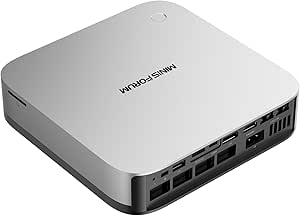 | Best for Expandable Connectivity | Processor: AMD Ryzen AI 9 HX 370, 12 cores / 24 threads, up to 5.1 GHz | Graphics: AMD Radeon 890M | Memory: 32GB 5600MHz DDR5, expandable up to 128GB | VIEW LATEST PRICE | See Our Full Breakdown |
| HP OmniDesk AI Business Desktop, Intel Core Ultra 7 265, 32GB DDR5 RAM, 1TB SSD, Windows 11 Pro |  | Best for Business Desks | Processor: Intel Core Ultra 7 265, 20 cores / 20 threads | Graphics: Integrated Intel Graphics | Memory: 32GB DDR5, 5600MHz | VIEW LATEST PRICE | See Our Full Breakdown |
| GMKtec EVO-X2 AI Mini PC with AMD Ryzen AI Max+ 395, 128GB LPDDR5X, 2TB SSD |  | Best for High-Memory AI Workloads | Processor: AMD Ryzen AI Max+ 395, 16 cores / 32 threads, up to 5.1 GHz | Graphics: AMD Radeon RX 8060S integrated GPU, 40 RDNA 3.5 compute units | Memory: 128GB onboard LPDDR5X, up to 8000 MT/s | VIEW LATEST PRICE | See Our Full Breakdown |
| GEEKOM IT13 Max Mini PC with Intel Core Ultra 9 185H, 16GB DDR5 RAM, and 1TB SSD |  | Best for Linux and Compact Multi-Display Setups | Processor: Intel Core Ultra 9 185H | Graphics: Integrated Intel Arc Graphics | Memory: 16GB DDR5 | VIEW LATEST PRICE | See Our Full Breakdown |
| BOSGAME M5 Mini PC with AMD Ryzen AI Max+ 395, 128GB RAM, 2TB SSD | | Best for Windows 11 Pro AI Workstations | Processor: AMD Ryzen AI Max+ 395, 16 cores / 32 threads, up to 5.1 GHz | Graphics: Integrated AMD Radeon 8060S | Memory: 128GB LPDDR5X-8000 unified memory | VIEW LATEST PRICE | See Our Full Breakdown |
| AI PC | Processor | Graphics | Memory | Storage |
|---|---|---|---|---|
| GEEKOM A9 Mega AI Workstation | AMD Ryzen AI Max+ 395, 16 Zen 5 cores | AMD Radeon 8060S | 128GB LPDDR5X, 8000MT/s; up to 96GB allocatable VRAM | 2TB PCIe Gen4 NVMe SSD, upgradeable to 8TB |
| GEEKOM GT13 MAX Mini PC | Intel Core Ultra 9 185H, 16 cores, 22 threads, up to 5.1GHz | Intel Arc Graphics, 8 Xe cores | 16GB DDR5, expandable up to 96GB | 1TB SSD, expandable up to 6TB |
| GMKtec EVO-X3 Mini PC with AMD | AMD Ryzen AI Max+ 395, 16 cores, 32 threads, up to 5.1GHz | Integrated AMD Radeon RX 8060S, 40 compute units | 128GB LPDDR5X, up to 8000MT/s | 2TB PCIe 4.0 SSD |
| GEEKOM IT15 Mini PC | Intel Core Ultra 9 285H | Intel Arc 140T | 32GB DDR5, upgradeable to 128GB | 1TB NVMe Gen 4 SSD |
| MINISFORUM MS-S1 Max Mini PC | AMD Ryzen AI Max+ 395, 16 cores, 32 threads, up to 5.1GHz | AMD Radeon 8060S | 128GB LPDDR5-8000 | 2TB M.2 PCIe 4.0 SSD |
| AMD Ryzen AI Halo Personal AI | AMD Ryzen AI Max+ 395, 16 cores and 32 threads | Integrated AMD Radeon 8060S, 40 RDNA 3.5 compute units | 128GB LPDDR5x unified memory; maximum 192GB | 2TB M.2 SSD |
| AMD Ryzen AI Halo Linux Deskto | AMD Ryzen AI Max+ 395, 16 cores and 32 threads, up to 5.1GHz | Integrated AMD Radeon 8060S, 40 RDNA 3.5 compute units | 128GB LPDDR5x unified memory; maximum 192GB | 2TB M.2 SSD |
| GMKtec EVO-X3 AI Mini PC | AMD Ryzen AI Max+ 395, 16 cores and 32 threads, up to 5.1GHz | AMD Radeon 8060S, 40 compute units, up to 2900MHz | 128GB LPDDR5X, 8000MT/s | 2TB PCIe 4.0 SSD |
| BOSGAME M5 Mini PC with AMD Ry | AMD Ryzen AI Max+ 395, 16 cores and 32 threads, up to 5.1GHz | Integrated AMD Radeon 8060S | 128GB LPDDR5X, 8000MT/s | — |
| MINISFORUM MS-S1 MAX Mini AI W | AMD Ryzen AI Max+ 395, 16 cores and 32 threads, up to 5.1GHz | RDNA 3.5 GPU | 128GB LPDDR5x-8000MT/s listed; product information also states 64GB | 2TB SSD |
| MINISFORUM AI X1 Pro-370 Mini | AMD Ryzen AI 9 HX 370, 12 cores / 24 threads, up to 5.1 GHz | AMD Radeon 890M | 32GB 5600MHz DDR5, expandable up to 128GB | 1TB PCIe 4.0 SSD; up to 12TB expansion |
| HP OmniDesk AI Business Deskto | Intel Core Ultra 7 265, 20 cores / 20 threads | Integrated Intel Graphics | 32GB DDR5, 5600MHz | 1TB PCIe Gen 4 NVMe SSD |
| GMKtec EVO-X2 AI Mini PC with | AMD Ryzen AI Max+ 395, 16 cores / 32 threads, up to 5.1 GHz | AMD Radeon RX 8060S integrated GPU, 40 RDNA 3.5 compute units | 128GB onboard LPDDR5X, up to 8000 MT/s | 2TB SSD |
| GEEKOM IT13 Max Mini PC with I | Intel Core Ultra 9 185H | Integrated Intel Arc Graphics | 16GB DDR5 | 1TB SSD |
| BOSGAME M5 Mini PC with AMD Ry | AMD Ryzen AI Max+ 395, 16 cores / 32 threads, up to 5.1 GHz | Integrated AMD Radeon 8060S | 128GB LPDDR5X-8000 unified memory | 2TB PCIe 4.0 NVMe SSD; second M.2 slot for expansion |
More Details on Our Top Picks
GEEKOM A9 Mega AI Workstation Mini PC, Ryzen AI Max+ 395, 128GB RAM, 2TB SSD
The A9 Mega is my strongest all-around pick here for buyers who want to run demanding AI workloads locally. Its Ryzen AI Max+ 395, 128GB of memory, and up to 96GB allocatable as VRAM give it considerably more room for large models than the GEEKOM IT15, which has 32GB of upgradeable DDR5 and a different, more conventional setup. The Radeon 8060S and stated 126 TOPS of total AI compute also suit a mix of model work, creative tasks, and multi-display use. Four-display support up to 8K, Wi-Fi 7, and dual 2.5GbE make it unusually versatile for a compact workstation. The tradeoff is that its memory is a fixed, high-capacity configuration, while the included 2TB SSD may be limiting for large datasets. Cooling claims are manufacturer-stated, not independently verified here.
Pros:- 128GB LPDDR5X with up to 96GB allocatable as VRAM for memory-heavy local AI workloads
- Ryzen AI Max+ 395 and Radeon 8060S combine CPU, NPU, and integrated graphics capability
- Supports up to four displays, including 8K output
- Wi-Fi 7, dual 2.5GbE, dual USB4, and a 3-year limited warranty
Cons:- The 2TB SSD may be tight for large model libraries and datasets
- Memory is LPDDR5X, with no memory upgrade path specified
- Cooling and performance claims are not independently verified in the supplied product information
Best for: AI developers and creative professionals who want substantial local-model memory, multiple displays, and fast wired networking in a compact workstation.
Not ideal for: Buyers who need replaceable system memory, a larger drive out of the box, or verified independent evidence of sustained cooling performance.
- Processor:AMD Ryzen AI Max+ 395, 16 Zen 5 cores
- Graphics:AMD Radeon 8060S
- Memory:128GB LPDDR5X, 8000MT/s; up to 96GB allocatable VRAM
- Storage:2TB PCIe Gen4 NVMe SSD, upgradeable to 8TB
- AI compute:126 TOPS total; 50 TOPS NPU
- Display support:Up to four displays and 8K resolution
- Connectivity:Wi-Fi 7, dual 2.5GbE LAN, and dual USB4
- Warranty:3-year limited warranty
Our verdict“Choose the A9 Mega if local AI capacity and broad workstation connectivity matter more than memory upgrades or a larger included SSD.”
GEEKOM GT13 MAX Mini PC, Intel Core Ultra 9 185H, 16GB DDR5 RAM, 1TB SSD
The GT13 MAX is the most approachable Intel-based option in this group for buyers who want a capable compact desktop now and room to expand later. Its Core Ultra 9 185H and Intel Arc graphics are paired with just 16GB of DDR5, but the memory can grow to 96GB and storage to 6TB. That makes its starting configuration less ready for local AI than the GEEKOM A9 Mega, whose 128GB capacity is aimed at larger workloads, while giving the GT13 MAX a more flexible upgrade path. Four-display support, Wi-Fi 7, dual 2.5G LAN, and a 3-year warranty add practical desktop breadth. The included memory is the main constraint: demanding model work or heavy multitasking may call for an upgrade. Product information also lists Windows 11 as pre-installed while naming Ubuntu and VMware ESXi, so buyers should confirm the intended operating system before ordering.
Pros:- Core Ultra 9 185H offers 16 cores and an integrated AI Boost NPU
- DDR5 memory is expandable to 96GB and storage to 6TB
- Supports up to four displays and includes USB4, HDMI, and Mini DisplayPort
- Wi-Fi 7, Bluetooth 5.4, dual 2.5G LAN, and a 3-year limited warranty
Cons:- The included 16GB RAM is restrictive for demanding AI workloads and intensive multitasking
- Operating-system information is inconsistent across the supplied product details
- Intel Arc integrated graphics are a different fit from the Radeon 8060S in the 128GB Ryzen AI Max+ systems
Best for: Buyers who want an Intel mini PC for everyday productivity and lighter AI tasks, with the option to expand memory and storage as needs grow.
Not ideal for: Local-model users who need high memory capacity immediately, or buyers who require unambiguous operating-system details before purchase.
- Processor:Intel Core Ultra 9 185H, 16 cores, 22 threads, up to 5.1GHz
- Graphics:Intel Arc Graphics, 8 Xe cores
- Memory:16GB DDR5, expandable up to 96GB
- Storage:1TB SSD, expandable up to 6TB
- Display outputs:Two USB4, two HDMI 2.0, and Mini DisplayPort 1.4
- Display support:Up to four displays
- Connectivity:Wi-Fi 7, Bluetooth 5.4, and dual 2.5G LAN
- Warranty:3-year limited warranty
Our verdict“Pick the GT13 MAX if you prefer an upgradeable Intel platform and can accept adding memory before taking on heavier AI work.”
GMKtec EVO-X3 Mini PC with AMD Ryzen AI Max+ 395, 128GB LPDDR5X, and 2TB PCIe 4.0 SSD
The EVO-X3 earns its place by pairing the same high-capacity Ryzen AI Max+ 395 and 128GB LPDDR5X foundation found in the GEEKOM A9 Mega with a feature aimed at a different upgrade plan: OCuLink for an external GPU. That port gives users a path to add graphics hardware outside the mini PC, a useful distinction for evolving creative or compute setups. It also has two M.2 PCIe 4.0 slots and lists support for up to 16TB of total storage, making it more adaptable for expanding local model libraries than a fixed single-drive configuration. The tradeoff is that memory is onboard, and OCuLink alone does not provide an eGPU setup; a compatible dock and graphics card are separate requirements. Compared with the A9 Mega, it prioritizes expansion potential rather than emphasizing its four-display and 8K support.
Pros:- 128GB LPDDR5X and Ryzen AI Max+ 395 suit memory-intensive local AI use
- OCuLink provides a connection option for external GPU expansion
- Two M.2 PCIe 4.0 x4 slots support up to 16TB total storage
- Includes Wi-Fi 7, Bluetooth 5.4, and 2.5GbE
Cons:- LPDDR5X memory is onboard and has no stated upgrade path
- Using OCuLink for external graphics requires a separate dock and GPU
- The supplied information does not specify a full display count or resolution range
Best for: AI developers and creators who want 128GB of memory today and plan to add external graphics or substantial internal SSD capacity later.
Not ideal for: Buyers who want an eGPU-ready package without separate hardware, or who need replaceable RAM or clearly specified display capabilities.
- Processor:AMD Ryzen AI Max+ 395, 16 cores, 32 threads, up to 5.1GHz
- Graphics:Integrated AMD Radeon RX 8060S, 40 compute units
- Memory:128GB LPDDR5X, up to 8000MT/s
- Storage:2TB PCIe 4.0 SSD
- Storage expansion:Two M.2 2280 PCIe 4.0 x4 slots; up to 16TB total
- AI performance:Up to 126 TOPS; XDNA 2 NPU with 50+ peak TOPS
- External GPU:OCuLink PCIe 4.0 x4
- Networking:2.5GbE, Wi-Fi 7, and Bluetooth 5.4
Our verdict“Choose the EVO-X3 over the GEEKOM A9 Mega if OCuLink and extensive internal storage expansion matter more than explicitly stated 8K, four-display support.”
GEEKOM IT15 Mini PC, Intel Core Ultra 9 285H, 32GB DDR5 RAM, 1TB SSD
The IT15 is the practical middle ground for buyers who want a modern AI-capable mini PC without paying the space and memory commitment of a 128GB Ryzen AI Max+ machine. Its 32GB of upgradeable DDR5 is a stronger starting point for multitasking than the GT13 MAX’s 16GB, and its memory can grow to 128GB if workloads change. The Core Ultra 9 285H, stated 99 TOPS of AI performance, and Arc 140T graphics cover productivity, coding, and lighter creative work, while support for four displays adds desktop flexibility. Compared with the GEEKOM A9 Mega, the IT15 is less suited to large local models and demanding graphics because it uses integrated graphics and starts with a 1TB SSD. Its appeal is adjustability, not maximum AI memory capacity; the stated quiet-cooling figure is a manufacturer claim.
Pros:- 32GB DDR5 provides a more capable starting configuration than the GT13 MAX’s 16GB
- Memory is upgradeable to 128GB
- Supports up to four displays, including two 8K and two 4K outputs
- Wi-Fi 7, Bluetooth 5.4, 2.5Gbps Ethernet, and eGPU expansion support
Cons:- Integrated Arc 140T graphics are a limitation for demanding gaming and graphics workloads
- The 1TB SSD may need expansion for large AI models and datasets
- Its 99 TOPS AI figure is below the stated total compute of the Ryzen AI Max+ 395 systems
Best for: Developers, office power users, and creators who want an Intel mini PC with 32GB RAM now and a clear path to expand memory later.
Not ideal for: Users running large local models or demanding games who need 128GB-class memory or stronger graphics capability from the outset.
- Processor:Intel Core Ultra 9 285H
- AI performance:99 TOPS
- Graphics:Intel Arc 140T
- Memory:32GB DDR5, upgradeable to 128GB
- Storage:1TB NVMe Gen 4 SSD
- Display support:Up to four displays: two 8K and two 4K
- Connectivity:Wi-Fi 7, Bluetooth 5.4, and 2.5Gbps Ethernet
- Warranty:3 years
Our verdict“Choose the IT15 if you want a well-equipped, upgradeable Intel desktop for general AI-assisted work rather than maximum local-model capacity.”
MINISFORUM MS-S1 Max Mini PC, AMD Ryzen AI Max+ 395, 128GB LPDDR5 RAM, 2TB SSD
The MS-S1 Max is the specialist choice for buyers whose AI PC needs to connect to fast local storage or a high-bandwidth network. Its dual 10GbE ports are a clear step beyond the dual 2.5GbE LAN on the GEEKOM A9 Mega, while the Ryzen AI Max+ 395, 128GB of memory, and Radeon 8060S keep it in the same high-capacity class for local workloads. An extra M.2 slot and internal PCIe x16 slot add expansion options, and five listed video outputs give multi-display users plenty of connection choices. The tradeoffs are less clarity around operating-system inclusion and a fixed 128GB memory configuration with no stated upgrade path. Its listed 160W peak power also makes it a less compelling fit for buyers focused on minimizing system power draw.
Pros:- Ryzen AI Max+ 395, Radeon 8060S, and 128GB memory target demanding local AI work
- Dual 10GbE ports offer faster wired networking than the 2.5GbE ports on the GEEKOM A9 Mega
- Additional M.2 slot and internal PCIe x16 slot provide expansion options
- Five listed video outputs support multi-display configurations
Cons:- Memory is limited to 128GB with no upgrade path stated
- Peak power consumption is listed as 160W
- Operating system is not specified in the supplied product information
Best for: AI practitioners and small teams who need high-capacity local compute plus dual 10GbE connections for a fast workstation or storage network.
Not ideal for: Buyers who need upgradeable system memory, a specified included operating system, or a lower listed peak power draw.
- Processor:AMD Ryzen AI Max+ 395, 16 cores, 32 threads, up to 5.1GHz
- Graphics:AMD Radeon 8060S
- Memory:128GB LPDDR5-8000
- Storage:2TB M.2 PCIe 4.0 SSD
- Expansion:One additional M.2 PCIe 4.0 SSD slot; internal PCIe x16 slot operating at PCIe 4.0 x4
- Video outputs:One HDMI, two USB4, and two USB4 V2
- Networking:Dual 10GbE LAN, Wi-Fi 7, and Bluetooth 5.4
- Peak power:160W
Our verdict“Pick the MS-S1 Max if dual 10GbE is central to your workstation setup and you can accept fixed memory and an unspecified operating system.”
AMD Ryzen AI Halo Personal AI Desktop Computer, Windows 11 Pro
The Ryzen AI Halo Windows desktop is the straightforward choice for developers who want a large local-model memory pool without setting up a Linux workstation. Its 128GB of unified memory and stated support for models up to 200 billion parameters give it a different focus from more conventional mini PCs, while Windows 11 Pro suits buyers who also need familiar desktop software. Compared with the Linux Halo, this version trades preloaded ROCm development tools for a Windows environment. It packs a 2TB SSD, 10GbE and Wi-Fi 7 into a 6-inch-square chassis, but the Radeon graphics are integrated, not a dedicated GPU. That makes it a more contained AI development box than an easy path to graphics-card upgrades; internal expansion is limited by its compact design.
Pros:- 128GB unified memory is suited to memory-intensive local AI workloads
- Advertised support for models up to 200 billion parameters
- Windows 11 Pro, 2TB SSD and modern networking are included
- Compact 6 x 6 x 2-inch chassis
Cons:- Radeon 8060S graphics are integrated rather than a separate graphics card
- Compact construction may limit internal expansion
- One-year limited warranty
Best for: Windows developers and technical teams who want to run large local AI models on a compact desktop without adopting Linux.
Not ideal for: Buyers who need a dedicated graphics card, extensive internal upgrades, or a Linux system with ROCm tools ready to use.
- Operating system:Windows 11 Pro
- Processor:AMD Ryzen AI Max+ 395, 16 cores and 32 threads
- Graphics:Integrated AMD Radeon 8060S, 40 RDNA 3.5 compute units
- NPU:AMD XDNA 2, up to 50 TOPS
- Memory:128GB LPDDR5x unified memory; maximum 192GB
- Storage:2TB M.2 SSD
- Networking:10GbE LAN, Wi-Fi 7 and Bluetooth 5.4
- Dimensions:6 x 6 x 2 inches
Our verdict“Choose the Windows Ryzen AI Halo if you want a compact, high-memory local AI system in a familiar Windows environment, not a machine built around GPU upgrades.”
AMD Ryzen AI Halo Linux Desktop Computer
For buyers building on AMD’s Linux software stack, the Linux Ryzen AI Halo is the more purpose-built pick than its Windows counterpart. It pairs the same 128GB unified memory and Ryzen AI Max+ 395 platform with ROCm support and preloaded development tools, which can reduce setup work for local inference and experimentation. The compact 6 x 6 x 2-inch body also keeps a capable development machine off a crowded desk, and 10GbE offers fast wired connectivity for shared datasets or networked workflows. Compared with the Windows Halo, its advantage is the supplied Linux-oriented setup, not different core hardware. The tradeoffs are the same integrated Radeon graphics and limited room for internal upgrades; accessory details are also unclear, so I would check what is included before treating it as a complete workstation.
Pros:- ROCm support and preloaded development tools target Linux AI workflows
- 128GB unified memory for local model and compute workloads
- 2TB SSD and 10GbE, Wi-Fi 7 and Bluetooth 5.4 connectivity
- Compact 6 x 6 x 2-inch footprint
Cons:- Integrated graphics do not provide a separate GPU
- Small chassis may restrict internal upgrades
- Included accessories are not clearly specified
Best for: Linux developers who want an AMD ROCm-oriented local AI desktop with substantial shared memory and development tools already loaded.
Not ideal for: Windows-dependent users, buyers who need a dedicated GPU, or anyone expecting extensive internal expansion or clearly specified accessories.
- Operating system:Linux
- Processor:AMD Ryzen AI Max+ 395, 16 cores and 32 threads, up to 5.1GHz
- Architecture:AMD Zen 5
- Graphics:Integrated AMD Radeon 8060S, 40 RDNA 3.5 compute units
- NPU:AMD XDNA 2, up to 50 TOPS
- Memory:128GB LPDDR5x unified memory; maximum 192GB
- Storage:2TB M.2 SSD
- Connectivity:10GbE LAN, Wi-Fi 7 and Bluetooth 5.4
Our verdict“Pick the Linux Ryzen AI Halo if ROCm and a ready-to-use Linux development environment matter more than Windows compatibility or hardware expansion.”
GMKtec EVO-X3 AI Mini PC, Ryzen AI Max+ 395, 128GB LPDDR5X, 2TB PCIe 4.0 SSD
The GMKtec EVO-X3 stands out among these compact AI systems because it pairs high-capacity unified memory with an OCuLink port for external GPU expansion. That gives it a growth option the Windows and Linux Ryzen AI Halo desktops do not list, while its 128GB LPDDR5X pool supports memory-heavy local workloads without a separate graphics card. The triple-fan cooling system and three copper pipes are designed for a stated peak power of up to 140W, making this a more performance-oriented mini PC than a basic small-form-factor desktop. USB4 and dual-display support up to 8K add flexibility for workstation setups. The catch is that its memory is onboard, so it is not a simple upgrade later, and OCuLink devices must be connected or disconnected with the PC powered off.
Pros:- OCuLink PCIe Gen4 x4 supports external GPU expansion
- 128GB LPDDR5X memory for demanding local AI and creative workloads
- Triple-fan cooling with three copper pipes
- USB4, Wi-Fi 7 and dual-display output up to 8K
Cons:- Onboard LPDDR5X memory is not presented as user-upgradable
- OCuLink devices must be connected or disconnected with the PC powered off
- Integrated Radeon graphics are not a substitute for an included dedicated GPU
Best for: AI developers and creators who want a compact high-memory system today and a supported route to external GPU expansion later.
Not ideal for: Buyers who want user-upgradable system memory, hot-pluggable external GPU equipment, or a dedicated GPU inside the chassis.
- Processor:AMD Ryzen AI Max+ 395, 16 cores and 32 threads, up to 5.1GHz
- AI performance:Up to 126 TOPS total; XDNA 2 NPU up to 50 TOPS
- Graphics:AMD Radeon 8060S, 40 compute units, up to 2900MHz
- Memory:128GB LPDDR5X, 8000MT/s
- Storage:2TB PCIe 4.0 SSD
- External GPU interface:OCuLink PCIe Gen4 x4
- Display output:HDMI 2.1 and USB4; supports dual displays up to 8K
- Networking:Wi-Fi 7, Bluetooth 5.4 and 2.5G LAN
- Cooling:Triple-fan system with three copper pipes; peak power up to 140W
Our verdict“Choose the EVO-X3 if you want a compact local AI workstation with an OCuLink upgrade path, and can live with fixed onboard memory and powered-off connections.”
BOSGAME M5 Mini PC with AMD Ryzen AI Max+ 395 and 128GB LPDDR5X
The BOSGAME M5 is the display-flexibility pick in this group: HDMI, DisplayPort and two USB4 ports can drive up to four 8K displays, making it a better fit for a wide desk setup than the Windows Ryzen AI Halo. Its 128GB shared LPDDR5X memory and Ryzen AI Max+ 395 also put local AI, content creation and integrated Radeon graphics on the same platform. Unlike the Linux Halo, it arrives with Windows 11 Pro and supports Linux if your workflow changes. A copper vapor chamber handles cooling, but the listed 240W workload may bring fan noise, so this is not my pick for a silent room. Memory is shared with integrated graphics rather than dedicated to a separate GPU, which limits its appeal for buyers focused on GPU-heavy work.
Pros:- Supports up to four 8K displays through multiple video outputs
- 128GB LPDDR5X shared memory for local AI and graphics workloads
- Windows 11 Pro preinstalled with Linux support
- Wi-Fi 7 and 2.5Gb Ethernet
Cons:- Integrated graphics share system memory rather than using dedicated graphics memory
- Fan noise may be noticeable under the listed 240W workload
- The listed configuration does not specify a dedicated graphics card
Best for: Windows-based AI and creative users who need several high-resolution displays for dashboards, coding, editing or multitasking.
Not ideal for: Quiet-workspace users and buyers whose AI or graphics tasks require a dedicated GPU with its own video memory.
- Processor:AMD Ryzen AI Max+ 395, 16 cores and 32 threads, up to 5.1GHz
- Memory:128GB LPDDR5X, 8000MT/s
- Graphics:Integrated AMD Radeon 8060S
- Display output:HDMI 2.1, DisplayPort 1.4 and two USB4 ports; up to four 8K displays
- Connectivity:Wi-Fi 7, Bluetooth 5.4 and 2.5Gb Ethernet
- Storage interface:PCIe x8 SSD
- Operating system:Windows 11 Pro; Linux supported
- Cooling:Copper vapor chamber and fan
- Warranty:One-year full warranty and three-year hardware parts protection
Our verdict“Choose the BOSGAME M5 if multi-display flexibility and Windows are priorities, but look elsewhere for quieter operation or dedicated graphics memory.”
MINISFORUM MS-S1 MAX Mini AI Workstation PC, AMD Ryzen AI Max+ 395, 128GB LPDDR5x RAM, 2TB SSD
The MINISFORUM MS-S1 MAX is the most workstation-oriented choice here for buyers who need room to build around a compact AI system. Its full-length PCIe x16 slot and two M.2 slots offer more expansion than the EVO-X3’s OCuLink-focused approach, while dual 10GbE and USB4 V2 address fast networking and peripheral needs. A 128GB unified memory pool, Ryzen AI Max+ 395 and listed 126 TOPS system output target demanding local AI and creative workloads. The dual turbine fans, six heat pipes and copper base plate are designed for sustained operation, though that level of hardware is excessive for everyday office use. There is also a configuration detail to resolve before ordering: the product information conflicts on whether installed memory is 64GB or 128GB, despite the title listing 128GB.
Pros:- Full-length PCIe x16 slot provides an expansion option beyond compact mini PC designs
- Dual M.2 PCIe 4.0 slots support storage expansion up to 16TB RAID 0/1
- Dual 10GbE and USB4 V2 up to 80Gbps
- Cooling system is designed for sustained workloads
Cons:- Product information conflicts on whether installed memory is 64GB or 128GB
- Expansion and high-performance features may be unnecessary for everyday computing
- The listed 320W power supply reflects a more demanding system than a basic mini PC
Best for: AI developers and workstation users who need PCIe expansion, multiple storage drives and fast wired networking in a compact system.
Not ideal for: Everyday desktop buyers who do not need expansion, or anyone unwilling to verify the installed memory configuration before purchase.
- Processor:AMD Ryzen AI Max+ 395, 16 cores and 32 threads, up to 5.1GHz
- Graphics:RDNA 3.5 GPU
- AI performance:50 TOPS NPU; 126 TOPS total system output
- Memory:128GB LPDDR5x-8000MT/s listed; product information also states 64GB
- Storage:2TB SSD
- Storage expansion:Dual M.2 PCIe 4.0 slots; up to 16TB RAID 0/1
- Expansion:Full-length PCIe x16 slot
- Ports and networking:USB4 V2 up to 80Gbps, dual 10GbE, HDMI 2.1 and Wi-Fi 7
- Cooling and power:Dual turbine fans, six heat pipes, copper base plate and 320W power supply
Our verdict“Pick the MS-S1 MAX if PCIe, storage and networking expansion matter, but confirm the included memory configuration before committing.”
MINISFORUM AI X1 Pro-370 Mini PC with AMD Ryzen AI 9 HX 370, 32GB DDR5 RAM, and 1TB SSD
The MINISFORUM AI X1 Pro-370 is a flexible AI PC for buyers who need a small system with more connection options than a basic office mini PC. Its Ryzen AI 9 HX 370 and Radeon 890M graphics suit multitasking and moderate graphics work, while OCuLink offers a route to external graphics expansion that the HP OmniDesk does not provide. Two USB4 ports, dual 2.5GbE networking, and support for four displays make it particularly adaptable as a compact workstation or multi-screen hub. The tradeoff is that its included 32GB of memory is far below the 128GB configurations in the GMKtec EVO-X2 and BOSGAME M5, and the listed maximum fan noise reaches 45dB. I’d choose it for flexible expansion, not quiet operation or maximum local-AI memory capacity.
Pros:- Ryzen AI 9 HX 370 processor with Radeon 890M integrated graphics
- OCuLink, dual USB4, and dual 2.5GbE provide unusually flexible expansion and connectivity
- Supports up to four displays, including resolutions up to 7680 × 4320
- Memory and storage can be expanded beyond the included 32GB and 1TB
Cons:- Included 32GB memory is modest beside the 128GB GMKtec EVO-X2 and BOSGAME M5 configurations
- Listed full-load noise reaches 45dB
- The 2.45kg chassis is less portable than the smallest mini PCs
Best for: Developers and home-office users who want a compact Ryzen AI system with multiple displays, fast networking, and the option to add external graphics.
Not ideal for: Users running memory-heavy local AI models who want 128GB onboard, or anyone who needs a very quiet PC under sustained load.
- Processor:AMD Ryzen AI 9 HX 370, 12 cores / 24 threads, up to 5.1 GHz
- Graphics:AMD Radeon 890M
- Memory:32GB 5600MHz DDR5, expandable up to 128GB
- Storage:1TB PCIe 4.0 SSD; up to 12TB expansion
- Display support:Up to four displays; maximum resolution 7680 × 4320
- Ports:2 × USB4, HDMI 2.1, DisplayPort 2.0, OCuLink
- Networking:2.5Gbps Ethernet, Wi-Fi 7, Bluetooth 5.4
- Security and cooling:Fingerprint recognition; separate CPU and SSD fans
- Power and weight:65W maximum power consumption; 2.45 kg
Our verdict“Choose the MINISFORUM AI X1 Pro-370 if broad connectivity and expansion matter more than quiet operation or a very large memory pool.”
HP OmniDesk AI Business Desktop, Intel Core Ultra 7 265, 32GB DDR5 RAM, 1TB SSD, Windows 11 Pro
The HP OmniDesk AI Business Desktop is the straightforward choice here for an office that needs Windows 11 Pro, familiar desktop connections, and a keyboard and mouse in the box. Its Core Ultra 7 265 and 32GB of DDR5 memory are suited to business multitasking, while Ethernet, HDMI, DisplayPort, and Wi-Fi 6 cover common workplace setups. Compared with the compact MINISFORUM AI X1 Pro-370, this is a conventional desktop package rather than an expansion-focused mini PC: it offers no OCuLink and uses integrated Intel Graphics. That makes it a less compelling fit for graphics-heavy creative work or ambitious local AI workloads than the 128GB GMKtec EVO-X2. I’d favor HP for a managed office environment, but the listed weight is inconsistent and its connectivity lacks Wi-Fi 7.
Pros:- Windows 11 Pro is included for business-oriented setups
- 32GB DDR5 memory and a 1TB PCIe Gen 4 NVMe SSD
- Includes a wired keyboard and mouse
- Offers Wi-Fi 6, Bluetooth 5.4, Ethernet, HDMI, and DisplayPort
Cons:- Integrated Intel Graphics are less suited to graphics-intensive work than the Radeon graphics in the GMKtec EVO-X2
- Wi-Fi 6 is an older wireless standard than the Wi-Fi 7 offered by several mini PCs in this lineup
- Product details give conflicting weights of 12.72 and 13.9 pounds
Best for: Small businesses and home-office users who want Windows 11 Pro, 32GB memory, standard display connections, and included wired peripherals.
Not ideal for: Local-AI enthusiasts, graphics-heavy creators, or buyers who want a compact system with Wi-Fi 7 and high-end expansion options.
- Processor:Intel Core Ultra 7 265, 20 cores / 20 threads
- Graphics:Integrated Intel Graphics
- Memory:32GB DDR5, 5600MHz
- Storage:1TB PCIe Gen 4 NVMe SSD
- Operating system:Windows 11 Pro
- Wireless connectivity:Wi-Fi 6 (802.11ax), Bluetooth 5.4
- Ports:USB-A, USB-C, HDMI, DisplayPort 1.4, Ethernet RJ-45, audio
- Included accessories:Wired keyboard and mouse
- Dimensions and weight:13.27 × 12.4 × 6.1 inches; listed weight varies between 12.72 and 13.9 pounds
Our verdict“Pick the HP OmniDesk if you want a ready-to-deploy Windows 11 Pro office desktop, not a compact AI workstation or graphics-focused PC.”
GMKtec EVO-X2 AI Mini PC with AMD Ryzen AI Max+ 395, 128GB LPDDR5X, 2TB SSD
The GMKtec EVO-X2 is the strongest fit in this group for users who want a large memory pool in a mini PC. Its 128GB of onboard LPDDR5X, Ryzen AI Max+ 395, and Radeon RX 8060S put it in a different class from the 32GB MINISFORUM AI X1 Pro-370 for memory-hungry local AI tasks and demanding creative projects. Three selectable power modes let buyers favor quieter, lower-power operation or higher performance, with support for four displays and Wi-Fi 7 adding workstation flexibility. The fixed onboard memory is the major compromise: unlike systems with upgradeable memory, its capacity cannot be increased after purchase. The 140W Performance mode also points to greater cooling demands than the HP OmniDesk. I’d choose this for capacity and integrated graphics performance, not upgrade flexibility.
Pros:- 128GB LPDDR5X memory and a 2TB SSD provide substantial capacity for demanding workloads
- Ryzen AI Max+ 395 processor paired with Radeon RX 8060S integrated graphics
- Three power modes offer a choice between quieter operation and higher performance
- Supports four displays and includes dual USB4, Wi-Fi 7, and 2.5GbE
Cons:- Onboard LPDDR5X memory is not listed as upgradeable
- The 140W Performance mode can place greater demands on cooling and power than lower-wattage systems
- Integrated graphics do not provide the replacement or upgrade path of a separate graphics card
Best for: AI developers and creative professionals who want 128GB of memory, strong integrated graphics, and a compact multi-display workstation.
Not ideal for: Buyers who expect to upgrade memory later, prioritize low power draw, or need a system with a separately replaceable graphics card.
- Processor:AMD Ryzen AI Max+ 395, 16 cores / 32 threads, up to 5.1 GHz
- Graphics:AMD Radeon RX 8060S integrated GPU, 40 RDNA 3.5 compute units
- Memory:128GB onboard LPDDR5X, up to 8000 MT/s
- Storage:2TB SSD
- Display support:Up to four displays
- Display outputs:HDMI 2.1, DisplayPort 1.4, dual USB4
- Networking:2.5GbE Ethernet, Wi-Fi 7, Bluetooth 5.4
- Performance modes:Quiet 54W, Balanced 85W, Performance 140W
- Cooling and card reader:Three fans and three heat pipes; SD/TF 4.0 with UHS-II support
Our verdict“Choose the EVO-X2 for high-memory local AI and creative workloads, provided its fixed 128GB configuration suits your needs.”
GEEKOM IT13 Max Mini PC with Intel Core Ultra 9 185H, 16GB DDR5 RAM, and 1TB SSD
The GEEKOM IT13 Max is the pick for buyers who want a compact Intel mini PC with stated support for Windows and major Linux distributions. Its Core Ultra 9 185H, 1TB SSD, and four-display support suit development desks, everyday productivity, and lighter creative work. The three-year warranty is a useful distinction from the GMKtec EVO-X2’s listed one-year limited warranty, while the EVO-X2 is far better equipped for memory-heavy AI work with 128GB rather than 16GB. That low memory ceiling is the IT13 Max’s clearest limitation: it leaves less room for large projects and demanding local models. Integrated Intel Arc graphics also set a ceiling for graphics-intensive workloads. I’d favor this GEEKOM for compact Linux flexibility and display output, not as a high-capacity AI workstation.
Pros:- Supports Windows and major Linux distributions
- Can drive up to four displays, with resolution up to 7680 × 4320
- IceBlast 3.0 cooling is described as quiet
- Three-year warranty is longer than the one-year limited warranty listed for the GMKtec EVO-X2
Cons:- 16GB of memory is substantially less than the 128GB offered by the GMKtec EVO-X2 and BOSGAME M5
- Integrated Intel Arc graphics are not a substitute for a dedicated graphics card
- The listed configuration provides less headroom for demanding AI and creative workloads
Best for: Linux developers and productivity users who need a compact PC for several displays, everyday workloads, and a longer stated warranty.
Not ideal for: Users running large local AI models, memory-heavy creative applications, or graphics-intensive workloads that need more memory or a dedicated GPU.
- Processor:Intel Core Ultra 9 185H
- Graphics:Integrated Intel Arc Graphics
- Memory:16GB DDR5
- Storage:1TB SSD
- Operating system support:Linux; supports Windows and major Linux distributions
- Display support:Up to four displays; maximum resolution 7680 × 4320
- Video outputs:HDMI, DisplayPort, and USB-C
- Cooling and power:IceBlast 3.0 cooling; 65W power consumption
- Warranty:3 years
Our verdict“Choose the IT13 Max for a compact Linux-capable, multi-display PC, but skip it if your AI workloads need a large memory pool.”
BOSGAME M5 Mini PC with AMD Ryzen AI Max+ 395, 128GB RAM, 2TB SSD
The BOSGAME M5 pairs the Ryzen AI Max+ 395 with 128GB of unified memory, making it a natural choice for buyers who want to run demanding local AI and creative workloads on a compact Windows 11 Pro system. Like the GMKtec EVO-X2, it has Radeon 8060S-class integrated graphics and enough memory to stand apart from 32GB systems such as the MINISFORUM AI X1 Pro-370. The BOSGAME’s useful distinction is its second M.2 slot for storage expansion and Windows 11 Pro included. Its unified memory is still onboard rather than a conventional upgrade path, and the listed 240W power consumption is a substantial tradeoff compared with the lower power modes available on the EVO-X2. At 3.8kg, it is compact by workstation standards, but not especially light.
Pros:- 128GB LPDDR5X unified memory suits memory-intensive local AI and creative workloads
- Ryzen AI Max+ 395 processor with integrated Radeon 8060S graphics
- Second M.2 slot provides a clear path to expand storage
- Windows 11 Pro, Wi-Fi 7, 2.5GbE, and four-display support
Cons:- Listed 240W power consumption is higher than the selectable 54W and 85W modes on the GMKtec EVO-X2
- Integrated graphics are not a separate, replaceable graphics card
- 128GB unified memory is onboard, limiting future memory upgrades
Best for: AI developers and creative professionals who want 128GB unified memory, Windows 11 Pro, and room to add another M.2 drive.
Not ideal for: Buyers seeking a low-power PC, upgradeable memory, a dedicated graphics card, or a lightweight system to move frequently.
- Processor:AMD Ryzen AI Max+ 395, 16 cores / 32 threads, up to 5.1 GHz
- Graphics:Integrated AMD Radeon 8060S
- Memory:128GB LPDDR5X-8000 unified memory
- Storage:2TB PCIe 4.0 NVMe SSD; second M.2 slot for expansion
- Operating system:Windows 11 Pro
- Display support:Up to four displays; up to 8K at 60Hz
- Ports and connectivity:Dual USB4, HDMI 2.1, DisplayPort 1.4, Wi-Fi 7, Bluetooth 5.4, 2.5GbE, SD 4.0
- Power consumption:240W
- Dimensions and weight:7.48 × 2.05 × 8.66 inches; 3.8 kg
Our verdict“Pick the BOSGAME M5 if you want a 128GB Windows 11 Pro mini workstation with storage expansion and can accept its high listed power draw.”
How We Picked
I ranked these systems around what makes an AI PC useful to a buyer: processor capability, memory capacity, storage, form factor, operating system, and how well the configuration fits local AI alongside everyday work. The Ryzen AI Max+ 395 models with 128GB and 2TB earned the strongest placement for buyers who want substantial memory headroom in a compact workstation. Systems with 32GB or 16GB rank lower for intensive local model work, though they may be a better fit for ordinary productivity or lighter AI features.
When products shared a processor and similar memory and storage, I treated them as close alternatives rather than assuming one was faster. I gave weight to clear configuration details and practical distinctions, such as Windows versus Linux, while avoiding unsupported claims about benchmark results, cooling, ports, or upgradeability. The ordering favors broad capability first, then more specialized or lower-headroom choices; buyers should verify the exact configuration and software support before purchase.
Factors to Consider When Choosing Best AI PCs
Choosing an AI PC is less about a badge than matching hardware and software to the work you plan to do. These broader checks can help prevent paying for capacity you will not use—or choosing a compact system that falls short of your workload.
Match Memory Capacity to the Models You Want to Run
For local AI, memory capacity can matter more than a small processor-name difference because model weights, context, and other applications all need space. A 128GB system offers much more room for experimentation than the 16GB configurations in this lineup, but it is not automatically the right choice for everyone. Identify the models and tools you expect to use, then check their memory requirements rather than relying on a general claim that a PC is AI-ready. Leave capacity for the operating system and other applications, particularly if you plan to run several tools together. Buyers who mainly use cloud AI or built-in productivity features may find 32GB a more sensible fit. Also confirm whether the listed memory is user-upgradeable; compact PCs often have different upgrade limits from standard desktops.
Separate AI Acceleration From Overall Workstation Performance
An NPU, integrated graphics, and CPU each handle different kinds of work, so the term AI PC does not guarantee the same performance across applications. Some tools can use an NPU for supported background tasks, while local model software may depend more heavily on memory and graphics capability. Check the software documentation for supported hardware and whether it can use the system’s accelerator. A powerful chip can still be a poor match if the applications you rely on do not support its features. For gaming, video work, or other graphics-heavy tasks, investigate those requirements separately instead of treating AI branding as a substitute for a graphics specification. This distinction helps explain why the Max+ 395 systems target heavier local workloads while lower-memory models can still suit general work.
Check Cooling and Sustained Workload Fit
A mini PC saves desk space, but a small enclosure has less room for airflow than a larger desktop. Short AI tasks and long sessions of model inference or content generation may place very different demands on cooling. Before buying, look for clear manufacturer information about ventilation, power limits, and operating conditions, and plan to keep vents unobstructed. A compact form factor can also mean fan noise becomes more noticeable when the system works hard. Do not infer sustained performance from the processor name alone, especially when comparing small PCs with workstation-style systems. If your work involves long, repeated runs, favor a design with credible thermal details and a support policy you can verify.
Treat Operating System and Software Support as Hardware Decisions
The Windows 11 Pro and Linux Ryzen AI Halo versions are not interchangeable just because their product names share a platform. Driver availability, development tools, model frameworks, and peripheral support can differ by operating system and release. Check the applications you need against the vendor’s current support information before choosing a version. Linux can make sense for developers who already maintain a Linux environment, while Windows may fit buyers who depend on Windows applications or business management tools. Also check whether the listed OS is installed and activated, and whether the hardware vendor provides updates for the version you plan to use. Choosing the wrong software environment can create more friction than a modest difference in processor specifications.
Compare Exact Configurations, Not Similar Product Names
This roundup includes repeated or closely named models, including multiple EVO-X3 and MS-S1 Max listings. That makes it easy to assume two entries are separate hardware revisions when the supplied details show largely matching processor, memory, and storage. Before ordering, confirm the exact model identifier, memory type and capacity, SSD size, included operating system, and port selection on the seller’s listing. A product family name may cover configurations that differ in important ways. Verify warranty coverage and return terms from the actual seller as well, especially for a specialized mini workstation. Comparing SKU-level details is more useful than choosing by a familiar name alone.
Decide Whether You Need a Mini PC or a Conventional Desktop
Mini PCs suit desks where space, portability, or a tidy setup matters, while a conventional desktop may offer easier access and a more familiar path for adding components. The HP OmniDesk AI represents a more conventional business desktop route in this group, whereas most other entries emphasize compact designs. Consider the peripherals you need, the number of external displays you plan to connect, and whether you may want to add storage or replace components later. Confirm those details from the specific model documentation; a small chassis does not tell you which upgrades are supported. If the PC will stay in one place and run demanding workloads, cooling, serviceability, and support may matter more than minimizing its footprint. Choose compactness when it solves a real desk or deployment need, not just because the form factor looks modern.
Frequently Asked Questions
Do I need 128GB of memory for a local AI PC?
No; the right amount depends on the models and applications you plan to run locally. The 128GB Ryzen AI Max+ 395 systems in this lineup offer more headroom for larger workloads and multitasking, while 32GB systems can suit lighter experiments and everyday use. If you rely mostly on cloud-based AI services, extra local memory may bring little benefit. Check the requirements of your intended software and allow room for the operating system and other applications. Also verify whether memory can be expanded later, since compact systems may limit upgrades.
Should I choose a Ryzen AI Max+ 395 mini PC or an Intel Core Ultra model?
Start with the workload and software, not the processor brand. The Ryzen AI Max+ 395 models here are paired with 128GB configurations, making them the stronger fit on paper for buyers prioritizing memory capacity for local AI. Intel Core Ultra options such as the GEEKOM IT15 and HP OmniDesk AI have 32GB configurations in this roundup and may better fit general business or productivity use. Check whether your AI application supports the accelerators and drivers on the system you are considering. Compare the complete configuration, cooling details, and operating system rather than relying on processor names alone.
Are the GMKtec EVO-X3 and MINISFORUM MS-S1 Max listings meaningfully different?
The supplied configurations share a Ryzen AI Max+ 395 processor, 128GB of memory, and 2TB of storage, so their headline specifications do not establish a clear performance gap. The product names and memory descriptions vary, but that alone does not confirm a distinct revision or faster system. Compare the exact model number and seller listing, including ports, operating system, cooling, warranty, and what is included in the box. If those details are also similar, choose based on the support and configuration information you can verify. Do not pay extra based only on a slight variation in naming.
Which operating system should I choose for the AMD Ryzen AI Halo?
Choose the version that matches your software, workflow, and comfort maintaining an operating system. The Windows 11 Pro listing may suit buyers who need Windows applications or an existing Windows business environment, while the Linux listing fits developers who already use Linux tools. Before choosing, confirm current driver and framework support for the specific hardware and Linux distribution or Windows release. Check whether your AI software can use the system’s accelerators under that operating system. If you depend on specialist peripherals or workplace management tools, verify compatibility with your IT team first.
Can a compact AI PC replace a full desktop workstation?
It can replace a desktop for many office tasks and some local AI work, but the answer depends on sustained workload, cooling, connectivity, and upgrade needs. A compact system can be easier to place and deploy, while a conventional desktop may be simpler to service or expand. Confirm supported memory and storage upgrades, external display connections, and the manufacturer’s thermal guidance before treating a mini PC as a workstation replacement. Long model runs may make cooling and fan behavior more relevant than they are during brief tasks. For a fixed, demanding workload, check system support and software compatibility before selecting a smaller chassis.
Conclusion
For the best overall balance of high-end local AI capacity and a clearly specified configuration, I would start with the GEEKOM A9 Mega. For a best value in capability among the high-memory systems, compare the GMKtec EVO-X3 and MINISFORUM MS-S1 Max by exact SKU, support, and included features rather than assuming their similar specs set them apart. The strongest premium workstation-style choices are the 128GB Ryzen AI Max+ 395 models, including the GEEKOM, GMKtec, MINISFORUM, and BOSGAME options. For beginners and everyday productivity, the 32GB GEEKOM IT15 or HP OmniDesk AI may be easier to justify than a 128GB mini workstation. For specific needs, choose the Ryzen AI Halo Windows or Linux version based on software compatibility, and consider the HP when a conventional business desktop fits your setup better. Match the configuration to your intended workload, then verify the exact OS, memory, storage, and support details before buying.
Fall Picks
fall essentials
As an affiliate, we earn on qualifying purchases.