
For the best AMD CPUs for Steam gaming, I would put the AMD Ryzen 7 9800X3D first because its 3D V-Cache, strong single-CCD gaming behavior, and AM5 platform make it the cleanest gaming-first choice in this lineup. The Ryzen 9 9950X3D is the premium pick for players who also stream, edit, or run heavy work on the same PC, while the Ryzen 7 7800X3D remains a smart value choice when priced well. The main tradeoff is simple: extra cores help mixed workloads, but cache and frame-time consistency matter more for many Steam games. AM4 chips such as the Ryzen 5 5500, Ryzen 7 5800XT, and Ryzen 9 5900XT are better for drop-in upgrades than fresh 2026 builds. Read the full breakdown below to see which CPU fits your games, budget, motherboard, and upgrade path.
Play games included with Prime
Start a Prime free trial and play with Amazon Luna on your devices.
Start playingAs an affiliate, we earn on qualifying purchases.
Key Takeaways
- X3D cache shaped the ranking: the Ryzen 7 9800X3D and Ryzen 7 7800X3D are stronger Steam gaming picks than pricier non-X3D Ryzen 9 chips for most players.
- AM5 ranked higher when gaming performance was close because DDR5, PCIe 5.0, and future Ryzen support make the platform easier to keep.
- Ryzen 9 only wins for mixed workloads: the Ryzen 9 9950X3D is worth paying for when gaming shares the PC with streaming, editing, rendering, or heavy multitasking.
- Budget buyers have two paths: the Ryzen 5 9600X is the clean AM5 starter, while the Ryzen 5 5500 is only attractive as an ultra-cheap AM4 rescue.
- AM4 chips are situational: the Ryzen 7 5800XT and Ryzen 9 5900XT make sense for existing boards, but they are weaker starting points than AM5 for a new Steam gaming PC.
| AMD Ryzen 7 9800X3D Desktop Processor |  | Best Overall for Steam Gaming | Cores/Threads: 8 cores, 16 threads | L3 Cache: 96MB | Max Clock Speed: Up to 5.2GHz | VIEW LATEST PRICE | See Our Full Breakdown |
| AMD Ryzen 9 9950X3D 16-Core Processor | 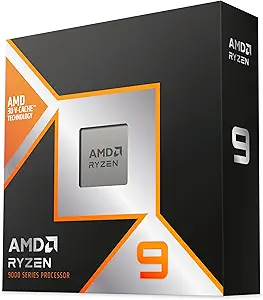 | Best Premium Hybrid Gaming and Creation Pick | Core Count: 16-Core | Max Boost Clock: Up to 5.7GHz | Base Clock: 4.3GHz | VIEW LATEST PRICE | See Our Full Breakdown |
| AMD Ryzen 7 5800XT Desktop Processor |  | Best AM4 Upgrade | Processor Series: Ryzen 7 | Cores/Threads: 8 cores, 16 threads | Architecture: Zen 3 | VIEW LATEST PRICE | See Our Full Breakdown |
| AMD Ryzen 5 9600X 6-Core, 12-Thread Desktop Processor |  | Best Entry AM5 Gaming Pick | Cores/Threads: 6 cores, 12 threads | Architecture: Zen 5 | Max Boost Clock: Up to 5.4GHz | VIEW LATEST PRICE | See Our Full Breakdown |
| AMD Ryzen 9 9900X 12-Core, 24-Thread Desktop Processor |  | Best for Gaming Plus Streaming | Processor Series: Ryzen 9 | Cores/Threads: 12 cores, 24 threads | Architecture: Zen 5 | VIEW LATEST PRICE | See Our Full Breakdown |
| AMD Ryzen™ 9 9950X 16-Core, 32-Thread Unlocked Desktop Processor | | Best Creator-Gaming Hybrid | Architecture: AMD Zen 5 | Cores/Threads: 16 cores / 32 threads | Max Boost Clock: 5.7 GHz | VIEW LATEST PRICE | See Our Full Breakdown |
| AMD Ryzen 7000 Series 7800X3D 8-Core, 16-Thread Desktop Processor with Zen 4 Architecture |  | Best High-FPS Steam Pick | Processor Series: Ryzen 7 7000 Series | Architecture: Zen 4 | Cores/Threads: 8 cores / 16 threads | VIEW LATEST PRICE | See Our Full Breakdown |
| AMD Ryzen 5 5500 6-Core Unlocked Desktop Processor with Wraith Stealth Cooler |  | Best Budget AM4 Upgrade | Cores/Threads: 6 cores / 12 threads | Max Boost Clock: 4.2 GHz | Cache: 19 MB | VIEW LATEST PRICE | See Our Full Breakdown |
| AMD Ryzen 9 5900XT Desktop Processor |  | Best AM4 Multitasking Upgrade | Processor Series: Ryzen 9 | Architecture: Zen 3 | Cores/Threads: 16 cores / 32 threads | VIEW LATEST PRICE | See Our Full Breakdown |
More Details on Our Top Picks
AMD Ryzen 7 9800X3D Desktop Processor
I rank the AMD Ryzen 7 9800X3D first because its 96MB L3 cache is exactly the kind of advantage that helps many Steam games feed the CPU faster, especially high-frame-rate shooters, sims, and strategy titles. Compared with the AMD Ryzen 9 9950X3D, it gives up extra cores for streaming and heavy creation work, but its 8-core layout is cleaner for buyers focused mainly on games. It also feels more gaming-specific than the AMD Ryzen 9 9900X, which spreads more of its value across multitasking. The tradeoff is cost: this is an enthusiast chip, and the missing cooler adds to the build price. Still, for a Steam-first AM5 rig, Zen5 plus 3D V-Cache makes this my most direct recommendation.
Pros:- 96MB L3 cache is well matched to CPU-sensitive games
- Up to 5.2GHz clock speed gives strong single-threaded performance
- 8 cores and 16 threads suit modern gaming without excess platform cost
- AM5 support leaves a cleaner upgrade path than older AM4 chips
Cons:- No stock cooler, so total build cost rises
- High-end pricing is harder to justify for casual Steam libraries
- Fewer cores than Ryzen 9 models for heavy creator workloads
Best for: Steam gamers building a high-FPS AM5 desktop who care more about game performance than workstation throughput.
Not ideal for: Budget builders who still need to buy a motherboard, DDR5 memory, and a separate cooler.
- Cores/Threads:8 cores, 16 threads
- L3 Cache:96MB
- Max Clock Speed:Up to 5.2GHz
- Socket Compatibility:AM5
- Architecture:Zen5
- Cache Technology:Next Gen 3D V-Cache
- Cooler Included:No
Bottom line: This is the AMD CPU I would put first for a Steam-centered gaming build where frame rate matters most.
AMD Ryzen 9 9950X3D 16-Core Processor
The AMD Ryzen 9 9950X3D is the premium choice when Steam gaming is only half the workload. Its 16-core Zen 5 design gives it far more headroom than the AMD Ryzen 7 9800X3D for video editing, rendering, compiling, and running background apps while gaming. For a pure gaming desktop, though, I would still point many buyers toward the 9800X3D because fewer cores and 3D V-Cache focus can make more sense for the money. Against the AMD Ryzen 9 9900X, this model is the higher-ceiling option, with a faster listed boost clock and the X3D gaming angle. The catch is platform cost: it needs AM5, strong cooling, and a buyer who will use its creation power often enough to justify the spend.
Pros:- 16 cores give major multitasking and creator headroom
- Up to 5.7GHz boost clock supports high-end gaming performance
- Zen 5 architecture fits current AM5 gaming builds
- Better suited than 8-core chips for mixed gaming and production use
Cons:- Overkill for many Steam libraries and 1080p gaming setups
- Requires an AM5 motherboard and compatible platform parts
- Likely needs a strong aftermarket cooler to match its class
Best for: PC gamers who also stream, edit video, render, or run heavy background workloads on the same desktop.
Not ideal for: Steam-only buyers who want the best gaming value and will not use a 16-core CPU outside games.
- Core Count:16-Core
- Max Boost Clock:Up to 5.7GHz
- Base Clock:4.3GHz
- Architecture:Zen 5
- Codename:Granite Ridge
- Form Factor:Desktop, boxed
- Socket Requirement:AM5 motherboard
Bottom line: Choose this if one desktop has to handle premium Steam gaming and serious creation work.
AMD Ryzen 7 5800XT Desktop Processor
I see the AMD Ryzen 7 5800XT as the practical pick for Steam players staying on AM4. Compared with the AMD Ryzen 5 9600X, it lacks DDR5 and PCIe 5.0 support, but it can make far more sense if the buyer already owns a compatible AM4 board and DDR4 memory. Its 8 cores and 16 threads are still enough for a wide Steam library, from esports games to heavier open-world titles, and the included Wraith Prism RGB cooler softens the upgrade cost. The drawback is that this is not the forward-looking choice in the lineup. Its 105W rating means heat needs respect, and AM4 has less room to grow than AM5. It is a value-through-reuse pick, not the best foundation for a fresh build.
Pros:- Drop-in appeal for many existing AM4 gaming desktops
- 8 cores and 16 threads remain strong for mainstream Steam gaming
- Includes Wraith Prism RGB cooler
- Supports DDR4-3200 and PCIe 4.0
Cons:- AM4 platform has less future upgrade room than AM5
- 105W TDP can run warm under sustained load
- Included cooler may limit aggressive overclocking
Best for: AM4 desktop owners who want a faster Steam gaming CPU without replacing motherboard and DDR4 memory.
Not ideal for: New PC builders who want DDR5, PCIe 5.0, and a longer AM5 upgrade path.
- Processor Series:Ryzen 7
- Cores/Threads:8 cores, 16 threads
- Architecture:Zen 3
- Base Clock Speed:3.8GHz
- Max Boost Clock:4.8GHz
- Cache Memory:36MB
- Socket Type:AM4
- TDP:105W
- Cooling Included:Wraith Prism RGB Cooler
Bottom line: This is the sensible Steam gaming upgrade when keeping an AM4 system matters more than chasing the newest platform.
AMD Ryzen 5 9600X 6-Core, 12-Thread Desktop Processor
The AMD Ryzen 5 9600X is the most sensible AM5 starting point in this group for buyers who want strong Steam performance without paying Ryzen 9 money. Its 6-core, 12-thread Zen 5 design is enough for popular games, and the 5.4GHz boost clock helps when older or competitive titles lean hard on per-core speed. Compared with the AMD Ryzen 7 9800X3D, it misses the huge cache advantage that can raise frame rates in CPU-bound games. Compared with the AMD Ryzen 7 5800XT, though, it puts the buyer on DDR5 and a newer platform. The main sting is the missing cooler, plus the cost of AM5 boards and DDR5 memory. I would choose it for a clean new build, not for maximum frames at any price.
Pros:- Zen 5 architecture brings modern AM5 platform support
- Up to 5.4GHz boost clock helps game responsiveness
- DDR5-5600 support fits current gaming builds
- Lower core count keeps it more affordable than Ryzen 9 options
Cons:- No stock cooler included
- Lacks the large 3D V-Cache advantage of the Ryzen 7 9800X3D
- Full PCIe 5.0 support depends on motherboard choice
Best for: First-time AM5 builders targeting smooth Steam gaming with room to upgrade later.
Not ideal for: Gamers chasing the highest CPU-bound frame rates in simulators, esports titles, or cache-sensitive games.
- Cores/Threads:6 cores, 12 threads
- Architecture:Zen 5
- Max Boost Clock:Up to 5.4GHz
- Cache:38MB
- Memory Support:DDR5-5600
- Socket Type:AM5
- PCIe Support:PCIe 5.0 on compatible motherboards
- Cooler Included:No
Bottom line: This is my pick for a new AM5 Steam build when budget matters but the platform still needs to feel current.
AMD Ryzen 9 9900X 12-Core, 24-Thread Desktop Processor
The AMD Ryzen 9 9900X sits between the gaming-first and workstation-leaning choices. I like its role for Steam players who stream, record gameplay, keep chat, browser tabs, and capture tools open, and still want a modern Zen 5 chip. Compared with the AMD Ryzen 5 9600X, its 12 cores and 24 threads provide far more breathing room for background work. Compared with the AMD Ryzen 9 9950X3D, it is less extreme and easier to justify for buyers who do not need 16 cores. The gaming tradeoff is that it lacks the 3D V-Cache focus of the Ryzen 7 9800X3D, so frame-rate-first buyers may get better value there. It also ships without a cooler, making the real build cost higher than the CPU price alone.
Pros:- 12 cores and 24 threads are strong for gaming with background apps
- Up to 5.6GHz max boost supports fast game performance
- 76MB cache gives more on-chip memory than mainstream chips
- DDR5-5600 and AM5 support suit a current desktop build
Cons:- No cooler included
- Less gaming-specialized than the Ryzen 7 9800X3D
- 120W rating calls for capable cooling and airflow
Best for: Steam gamers who stream, record, multitask, or run creator apps but do not need a 16-core flagship.
Not ideal for: Buyers who only game and want the best frame-rate-per-dollar from an AMD CPU.
- Processor Series:Ryzen 9
- Cores/Threads:12 cores, 24 threads
- Architecture:Zen 5
- Processor Speed:4.4GHz
- Max Boost Clock:Up to 5.6GHz
- Cache:76MB
- Memory Support:DDR5-5600
- Socket Type:AM5
- TDP:120W
Bottom line: Pick this when Steam gaming shares the desk with streaming and creator work, but a 16-core flagship feels excessive.
AMD Ryzen™ 9 9950X 16-Core, 32-Thread Unlocked Desktop Processor
I rank the AMD Ryzen 9 9950X as the pick for Steam players who also edit, render, compile, or stream from the same PC. Its 16 cores and 32 threads give it far more production headroom than the Ryzen 7 7800X3D, while the 5.7 GHz boost clock keeps it credible for high-refresh gaming. The tradeoff is focus: for Steam gaming alone, an X3D chip such as the 7800X3D usually makes more sense because the extra cache is aimed squarely at frame rates. This model is also less convenient than the Ryzen 5 5500 because it needs an AM5 motherboard, DDR5 memory, and a strong liquid cooler. I would choose it when gaming is only half the job, not when the build is only about cost-per-frame.
Pros:- 16 cores and 32 threads give it major multitasking and creator-workload strength
- 5.7 GHz max boost helps keep gaming performance responsive despite its workstation lean
- AM5 platform support gives access to DDR5 memory and PCIe 5.0 on select boards
- Unlocked design leaves room for tuning with the right cooling setup
Cons:- No cooler included, and liquid cooling is recommended
- Overkill for a Steam-only gaming build
- Requires AM5 and DDR5, raising total platform cost versus AM4 chips
Best for: Steam gamers who also run heavy creator workloads such as video editing, 3D rendering, software builds, or serious livestreaming on the same desktop
Not ideal for: Buyers building a gaming-only PC on a tight budget, since cheaper X3D or Ryzen 5 options can make more sense for frame-rate value
- Architecture:AMD Zen 5
- Cores/Threads:16 cores / 32 threads
- Max Boost Clock:5.7 GHz
- Cache:80 MB
- Socket:AM5
- Memory Support:DDR5-5600
- PCIe Support:PCIe 5.0 on select motherboards
- Cooler Included:No, liquid cooler recommended
Bottom line: Pick the Ryzen 9 9950X when Steam gaming shares the desk with heavy creative work, not when gaming value is the whole goal.
AMD Ryzen 7000 Series 7800X3D 8-Core, 16-Thread Desktop Processor with Zen 4 Architecture
The AMD Ryzen 7 7800X3D earns its place because Steam gaming often rewards cache more than raw core count. Its 96 MB L3 cache helps feed game data quickly, which is why this 8-core chip can be the smarter gaming buy than the Ryzen 9 9950X even though it has half the cores. Compared with the Ryzen 5 5500, it is a much stronger fit for high-end GPUs and high-refresh monitors, but it also costs more and needs an AM5 board with DDR5 memory. The weak spot is mixed workloads: heavy rendering or sustained productivity favors the 9950X or 5900XT. I see this as the cleanest gaming-first choice here, especially for players who care about smooth lows as much as headline FPS.
Pros:- Large 96 MB L3 cache is highly useful for game performance
- 8 cores and 16 threads are enough for modern Steam gaming and everyday multitasking
- AM5 socket gives a newer platform path than AM4 processors
- Integrated Radeon graphics can help with basic display output during setup
Cons:- No stock cooler included
- 120 W TDP means cooling and case airflow matter
- Less suited to heavy creator workloads than 16-core Ryzen 9 chips
Best for: Steam players pairing a strong GPU with a high-refresh 1080p, 1440p, or ultrawide monitor who want gaming performance before creator speed
Not ideal for: Creators who regularly render, encode, or compile large projects, because 8 cores cannot match the Ryzen 9 9950X or 5900XT in heavily threaded work
- Processor Series:Ryzen 7 7000 Series
- Architecture:Zen 4
- Cores/Threads:8 cores / 16 threads
- Clock Speed:4.2 GHz
- Cache:8 MB L2 + 96 MB L3
- Socket:AM5
- TDP:120 W
- Max Operating Temperature:89°C
- Integrated Graphics:AMD Radeon Graphics
Bottom line: Choose the Ryzen 7 7800X3D when Steam frame rates are the main target and creator workloads are secondary.
AMD Ryzen 5 5500 6-Core Unlocked Desktop Processor with Wraith Stealth Cooler
The AMD Ryzen 5 5500 is the value play for Steam gamers keeping an older AM4 system alive. Its 6-core, 12-thread layout is enough for many popular titles, and the included Wraith Stealth cooler lowers the real build cost compared with the Ryzen 9 5900XT or Ryzen 7 7800X3D, both of which need separate cooling. The compromise is ceiling: it lacks integrated graphics, uses DDR4, and sits on an older platform, so it is a weaker long-range base than AM5 chips such as the 7800X3D. It also will not feed a flagship GPU as well in CPU-heavy games. I like it most as a practical drop-in upgrade for budget Steam libraries, esports titles, and mainstream 1080p gaming.
Pros:- Affordable path for AM4 gaming desktops
- 6 cores and 12 threads are still useful for many Steam titles
- Includes a Wraith Stealth cooler to reduce build cost
- Unlocked multiplier allows basic tuning on compatible motherboards
Cons:- Requires a discrete graphics card because it has no integrated GPU
- AM4 and DDR4 limit future upgrade room compared with AM5
- Lower cache and boost headroom than higher-end gaming CPUs
Best for: Budget Steam gamers upgrading an existing AM4 desktop who want playable 1080p performance without buying a new motherboard and memory kit
Not ideal for: High-end GPU owners chasing very high frame rates in CPU-heavy games, since the Ryzen 7 7800X3D has much more gaming headroom
- Cores/Threads:6 cores / 12 threads
- Max Boost Clock:4.2 GHz
- Cache:19 MB
- Socket:AM4
- Memory Support:DDR4-3200
- Cooler Included:Wraith Stealth
- Overclocking:Unlocked
- Graphics Requirement:Discrete graphics card required
Bottom line: Buy the Ryzen 5 5500 when the goal is a low-cost AM4 Steam upgrade, not a flagship gaming platform.
AMD Ryzen 9 5900XT Desktop Processor
The AMD Ryzen 9 5900XT is the AM4 pick for Steam gamers who want more than a budget refresh but do not want to rebuild around AM5. Its 16 cores and 32 threads make it far better for streaming, background tasks, and creator work than the Ryzen 5 5500, while its DDR4 and AM4 support can save money compared with the Ryzen 9 9950X. For pure gaming, though, it is not the sharpest choice in the lineup: the Ryzen 7 7800X3D has game-focused cache and a newer platform. The 5900XT also ships without a cooler, so the upgrade is not as cheap as the socket compatibility suggests. I would treat it as a powerful final AM4 upgrade for mixed use rather than a new-build gaming centerpiece.
Pros:- 16 cores and 32 threads handle heavy multitasking better than budget AM4 chips
- AM4 compatibility can preserve an existing motherboard and DDR4 memory
- 4.8 GHz max boost keeps it relevant for gaming workloads
- PCIe 4.0 support fits many modern GPUs and SSDs
Cons:- No stock cooler included
- AM4 platform has less upgrade runway than AM5
- Not as gaming-specialized as X3D processors
Best for: AM4 desktop owners who play Steam games but also stream, edit, run many background apps, or want a final high-core-count upgrade
Not ideal for: New PC builders focused mainly on gaming longevity, since AM5 options like the Ryzen 7 7800X3D offer a newer platform path
- Processor Series:Ryzen 9
- Architecture:Zen 3
- Cores/Threads:16 cores / 32 threads
- Base Clock:3.3 GHz
- Max Boost Clock:4.8 GHz
- Cache:72 MB L3 + 8 MB L2
- Socket:AM4
- TDP:105 W
- Memory Support:DDR4-3200
Bottom line: Choose the Ryzen 9 5900XT as a strong final AM4 upgrade when Steam gaming shares time with heavy multitasking.
How We Picked
I ranked these CPUs around Steam gaming outcomes, not spec-sheet size alone. I gave the most weight to CPU-bound frame-rate headroom, frame-time stability, 3D V-Cache, platform cost, cooling demand, and whether each chip makes sense for a new build or a drop-in upgrade. I checked official AMD spec pages for the Ryzen 7 9800X3D, Ryzen 9 9950X3D, Ryzen 7 7800X3D, and Ryzen 5 9600X to anchor details such as cores, cache, TDP, socket support, and memory platform. The ranking favors CPUs that turn those traits into a clearer gaming buy, which is why the Ryzen 7 9800X3D lands ahead of pricier non-X3D Ryzen 9 chips for most Steam players.
I also separated pure gaming value from mixed-use appeal. The Ryzen 9 9950X3D ranks high because it adds creator and streaming headroom without giving up X3D gaming strengths, while the Ryzen 9 9950X and Ryzen 9 9900X fall behind for Steam-first buyers because their extra cores do less for frame pacing than extra cache. For AM4, the Ryzen 7 5800XT and Ryzen 9 5900XT pages helped separate platform reuse from new-build appeal. That is also why the Ryzen 7 7800X3D outranks several newer or higher-core models when the purchase is mainly about gaming.
Factors to Consider When Choosing Best AMD CPUs For Steam Gaming
I use this buying guide to sort Steam gaming needs from the spec labels that can pull a build off budget. A buyer choosing between these AMD CPUs is really choosing between X3D gaming focus, Ryzen 9 multitasking power, and AM4 savings. The right answer changes if the PC is a new AM5 build, an old AM4 system getting one last upgrade, or a dual-purpose gaming and creator machine.
Match The CPU To Your Steam Library
Steam libraries vary wildly, so I would start with the games that actually get played every week. Esports titles, city builders, strategy games, MMOs, and simulation-heavy games often reward strong CPU frame pacing, which pushes the Ryzen 7 9800X3D and Ryzen 7 7800X3D higher than their core counts suggest. Big cinematic games at 4K lean harder on the GPU, so a Ryzen 9 9950X3D may feel no different from a cheaper X3D chip once the graphics card becomes the limit. If a buyer mostly plays older Steam favorites, the Ryzen 5 5500 can still make sense as a low-cost AM4 fix. If the library includes heavily modded games or huge late-game simulations, I would move toward 3D V-Cache before paying for a non-X3D 16-core CPU. This is why the ranking favors gaming behavior over raw core count.
Why 3D V-Cache Changes The Ranking
3D V-Cache matters because many games reuse data constantly, and a larger cache can reduce trips out to system memory. That can show up as smoother frame times, not just higher average FPS, which is exactly what makes Steam games feel better during busy scenes. The Ryzen 7 9800X3D beats the Ryzen 9 9950X as a gaming buy because it spends silicon on a benefit many games can use, rather than extra cores that may sit idle. The Ryzen 7 7800X3D follows the same logic against the Ryzen 5 9600X: the newer six-core chip is efficient, but it lacks the cache advantage. The catch is that cache does not speed up every workload, so buyers who render, encode, or compile may still need Ryzen 9 horsepower. For Steam-first gaming, though, I would rather pay for cache before paying for cores beyond eight.
Treat AM5 And AM4 As Different Buying Paths
AM5 costs more at the platform level because it usually means DDR5 memory and a newer motherboard, but it gives a cleaner path for future Ryzen upgrades. That makes Ryzen 7 9800X3D, Ryzen 9 9950X3D, Ryzen 7 7800X3D, and Ryzen 5 9600X stronger choices for a new build. AM4 is different: it is appealing when the buyer already owns the board, cooler, and DDR4 memory. In that case, the Ryzen 7 5800XT and Ryzen 9 5900XT can extend an older PC without a full rebuild. The Ryzen 5 5500 is the cheap rescue option, but its lower cache and older platform make it a poor match for high-refresh ambitions. I would avoid starting a brand-new Steam gaming PC on AM4 unless the total bundle price is extremely low.
Do Not Overbuy Cores For A Game-Only PC
Core count matters, but Steam gaming does not scale neatly from six to sixteen cores. An eight-core X3D chip can be a better gaming purchase than a 16-core non-X3D model because many games care more about fast access to data than having more threads available. The Ryzen 9 9950X3D earns its premium role because it combines cache with sixteen cores, not because sixteen cores alone are magic for games. The Ryzen 9 9900X is more sensible for players who stream, run creative apps, or keep heavy background tasks open. The Ryzen 9 9950X is even more productivity-leaning, which makes it harder to justify for a Steam-only machine. If the PC mainly launches games and Discord, I would spend more on the GPU, monitor, or SSD before chasing a higher core count.
Account For Cooling And Motherboard Cost
The sticker price of a CPU is only part of the real build cost. High-end chips such as the Ryzen 9 9950X3D and Ryzen 9 9950X need stronger cooling and a motherboard that can feed them comfortably, which can erase the value of a sale price. The Ryzen 5 9600X is easier to cool, making it friendlier for smaller budgets and quieter systems. The Ryzen 5 5500 includes a basic cooler in many boxed versions, which helps ultra-budget AM4 builds, but that saving comes with lower gaming ceiling. Before buying an AM4 refresh chip, I would check BIOS support for the exact motherboard model. A cheap CPU becomes less attractive if it also requires a cooler, BIOS service, or power supply change.
Pair The CPU With The GPU And Monitor
The best CPU choice changes with the graphics card and monitor target. At 1080p high refresh, the CPU has more room to shape frame rates, so X3D models move up the list. At 1440p and 4K, the GPU often becomes the limit, which makes the Ryzen 7 7800X3D or Ryzen 5 9600X more attractive if they free money for a stronger graphics card. A buyer with a midrange GPU should be careful with the Ryzen 9 9950X3D because the chip may be waiting on graphics performance much of the time. A buyer with a top-end GPU and a 240Hz monitor can use the Ryzen 7 9800X3D more fully. I rank CPUs higher when they leave the rest of the system balanced instead of turning the processor into the most expensive unused part.
Frequently Asked Questions
Is The Ryzen 7 9800X3D Better Than The Ryzen 9 9950X3D For Steam Gaming?
For a Steam-first PC, I would usually choose the Ryzen 7 9800X3D because it focuses budget on the gaming traits that matter most. The Ryzen 9 9950X3D can be the stronger all-around chip, but its extra cores are more useful for rendering, streaming, editing, and heavy multitasking than for most game loops. Compared with the Ryzen 7 7800X3D, the 9800X3D gives a newer Zen 5 platform feel while keeping the simple single-CCD gaming profile. The 9950X3D makes sense when the same PC has to earn its keep outside Steam. If gaming is the main job, I would keep the money saved for the GPU or monitor.
Should I Stay On AM4 Or Move To AM5 For Steam Gaming?
I would stay on AM4 only if the buyer already has a compatible motherboard, DDR4 memory, and a working cooler. In that situation, the Ryzen 7 5800XT, Ryzen 9 5900XT, or Ryzen 5 5500 can extend the system for much less than a full rebuild. For a fresh PC, AM5 is the better long-term path because it supports newer Ryzen CPUs, DDR5 memory, and stronger platform features. The Ryzen 7 7800X3D is a good bridge between value and modern platform support, while the Ryzen 7 9800X3D is the cleaner gaming-first target. I would not buy into AM4 from scratch unless the total bundle price is far below an AM5 setup.
Is The Ryzen 5 9600X Enough For Steam Games In 2026?
Yes, the Ryzen 5 9600X is enough for many Steam games, especially paired with a midrange GPU and a 1440p monitor. Its six Zen 5 cores and low power draw make it a clean beginner AM5 CPU, and it should feel far more modern than the Ryzen 5 5500 in a new build. The reason it does not rank above the Ryzen 7 7800X3D or Ryzen 7 9800X3D is cache, not basic speed. High-refresh esports, modded games, and late-game simulation loads can expose the limits of a six-core non-X3D chip sooner. I would buy it when budget and AM5 entry matter more than chasing the highest frame-rate ceiling.
Do I Still Need 3D V-Cache If I Play At 1440p Or 4K?
You may not need it, but 3D V-Cache can still be useful outside 1080p. Higher resolutions shift more work to the GPU, which narrows the gap between CPUs in many big-budget games. The cache advantage still helps in CPU-bound scenes, simulation-heavy games, and high-refresh setups where frame-time dips are easy to notice. That is why I keep the Ryzen 7 9800X3D and Ryzen 7 7800X3D ahead of non-X3D Ryzen 9 chips for Steam-first builds. If the choice is between X3D and a much stronger GPU, I would usually buy the stronger GPU first for 4K gaming.
Which Ryzen 9 Makes The Most Sense If I Game, Stream, And Create Content?
The Ryzen 9 9950X3D is the best Ryzen 9 in this lineup for a buyer who wants high-end Steam gaming and serious work on one PC. It keeps the cache advantage missing from the Ryzen 9 9950X and Ryzen 9 9900X, while adding sixteen cores for exports, encoding, and background tasks. The Ryzen 9 9900X is the more restrained mixed-use option if the buyer wants strong multitasking without paying flagship money. The Ryzen 9 9950X is a productivity-first pick, but for Steam gaming it loses the clean logic of the X3D parts. I would pick the 9950X3D for a no-compromise mixed machine and the 9900X only when the premium would be better spent elsewhere.
Conclusion
For most Steam gamers in this lineup, I would start with the AMD Ryzen 7 9800X3D as the best overall pick because it puts cache, high clocks, and AM5 longevity ahead of unused core count. The Ryzen 7 7800X3D is my best value X3D choice when priced below the newer chip, while the Ryzen 5 9600X is the beginner-friendly AM5 route for buyers who want a lower platform cost.
The Ryzen 9 9950X3D is the premium answer for gaming plus streaming, editing, or creator work. The Ryzen 9 9900X fits buyers who need strong multicore speed without flagship pricing, while the Ryzen 9 9950X makes more sense when productivity matters more than Steam frame pacing. I would not choose either non-X3D Ryzen 9 as the main gaming pick unless work apps share equal billing with games.
For existing AM4 systems, the Ryzen 5 5500 is the ultra-budget rescue, the Ryzen 7 5800XT is the simpler 8-core drop-in, and the Ryzen 9 5900XT is better for heavy multitasking on an older board. That leaves the final choice clear: buy X3D for Steam-first gaming, buy Ryzen 9 for mixed workloads, and buy AM4 only when reusing the platform saves enough money to matter.
Evergreen bestsellers Picks
bestsellers
As an affiliate, we earn on qualifying purchases.