
The best HDMI 2.1 TV-style display for PC gaming in this lineup is the ASUS ROG Strix 32” 4K OLED Gaming Monitor, because it pairs a larger 4K canvas with OLED contrast and premium gaming speed. For buyers who want OLED responsiveness in a smaller setup, the LG 27GX704A-B Ultragear QHD OLED is the sharper fit, while the LG 27GR83Q-B makes more sense for fast QHD play without paying OLED prices. The main tradeoff is not just HDMI 2.1 support; it is whether 4K detail, OLED image quality, extreme refresh rate, or price matters most for a PC setup. Some picks are better for desk-based competitive gaming, while others feel closer to a compact TV replacement. Continue reading for my full breakdown of how these HDMI 2.1 displays separate themselves.

Play games on Amazon Luna for your game nights, included with Prime
- A rotating selection of games, no download needed
- Play on TV, laptop or phone
- Fast, free delivery for your gear, too
Key Takeaways
- The ASUS ROG Strix 32” 4K OLED ranks highest because it best matches the TV-like promise of the search: larger screen, 4K resolution, OLED contrast, and premium PC gaming capability.
- The OLED models feel more premium, but they are not automatic wins for every buyer because QHD OLED costs more and may be less practical for static desktop-heavy use.
- The LG 27GR83Q-B is the strongest middle-ground pick because it balances 240Hz speed, HDMI 2.1, adaptive sync support, and a more approachable QHD format.
- Acer’s 300Hz Nitro WQHD is the specialist choice for players who care more about frame rate than cinematic 4K detail, while the 4K Nitro is better for visual clarity.
- The ASUS TUF VG27AQ3A fits beginners and budget-minded buyers, but it sits lower because it lacks the same premium panel appeal and high-end headroom as the top picks.
| Acer Nitro VG270K 27-inch 4K UHD Gaming IPS Monitor |  | Best 4K Value Pick | Screen Size: 27 inches | Resolution: 3840 x 2160 UHD | Refresh Rate: 160Hz at 4K, 320Hz at FHD with DFR | VIEW LATEST PRICE | See Our Full Breakdown |
| LG 27GX704A-B 27-inch Ultragear QHD OLED Gaming Monitor |  | Best OLED Speed Pick | Display Size: 27 inches | Resolution: 2650 x 1440 QHD | Refresh Rate: 240Hz | VIEW LATEST PRICE | See Our Full Breakdown |
| Acer Nitro XV272U 27-inch WQHD IPS Gaming Monitor | 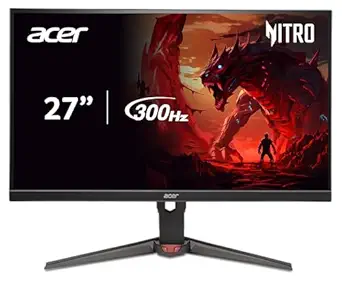 | Best High-Refresh IPS Pick | Display Size: 27 inches | Resolution: 2560 x 1440 WQHD | Panel Type: IPS | VIEW LATEST PRICE | See Our Full Breakdown |
| ASUS TUF Gaming VG27AQ3A 27-inch 1440P HDR Monitor |  | Best Starter QHD Pick | Display Size: 27 inches | Resolution: 2560 x 1440 QHD | Refresh Rate: 180Hz | VIEW LATEST PRICE | See Our Full Breakdown |
| LG 27GR83Q-B 27-inch Ultragear QHD Gaming Monitor |  | Best Balanced QHD Pick | Display Size: 27 inches | Resolution: 2560 x 1440 QHD | Refresh Rate: 240Hz | VIEW LATEST PRICE | See Our Full Breakdown |
| ASUS ROG Strix 32-inch 4K OLED Gaming Monitor (XG32UCWMG) |  | Best Premium Monitor Alternative | Screen Size: 32 inches | Resolution: 3840 x 2160 4K | Refresh Rate: 240Hz at 4K, FHD mode up to 480Hz | VIEW LATEST PRICE | See Our Full Breakdown |
| HDMI 2.1 TVs for PC gaming | Resolution | Refresh Rate | Response Time | HDR |
|---|---|---|---|---|
| Acer Nitro VG270K 27-inch 4K U | 3840 x 2160 UHD | 160Hz at 4K, 320Hz at FHD with DFR | Up to 0.5ms | HDR 10 |
| LG 27GX704A-B 27-inch Ultragea | 2650 x 1440 QHD | 240Hz | 0.03ms | VESA DisplayHDR True Black 400 |
| Acer Nitro XV272U 27-inch WQHD | 2560 x 1440 WQHD | 300Hz | 0.5ms GTG | DisplayHDR 400 |
| ASUS TUF Gaming VG27AQ3A 27-in | 2560 x 1440 QHD | 180Hz | 1ms | HDR-10 |
| LG 27GR83Q-B 27-inch Ultragear | 2560 x 1440 QHD | 240Hz | 1ms GtG | DisplayHDR 400 |
| ASUS ROG Strix 32-inch 4K OLED | 3840 x 2160 4K | 240Hz at 4K, FHD mode up to 480Hz | 0.03 ms | VESA DisplayHDR 400 True Black |
More Details on Our Top Picks
Acer Nitro VG270K 27-inch 4K UHD Gaming IPS Monitor
I would rank the Acer Nitro VG270K highest for PC gamers who want 4K sharpness with HDMI 2.1 without moving into premium OLED pricing. Compared with the LG 27GX704A-B, it trades OLED contrast and 240Hz speed for a denser 3840 x 2160 image, which matters if the same screen handles games, desktop work, and text-heavy apps. The 160Hz refresh rate is still fast enough for responsive play, while the 320Hz FHD mode gives competitive players a lower-resolution escape hatch. The catch is that its HDR 10 support is basic, so it will not deliver the same dark-room impact as the LG OLED. It also stays at 27 inches, which makes 4K crisp but less cinematic than a 32-inch option.
Pros:- 4K UHD resolution makes PC text, menus, and high-detail games look very sharp
- 160Hz at 4K plus 320Hz at FHD gives flexible performance modes
- Two HDMI 2.1 ports are useful for a gaming PC plus a current console
- IPS panel and 90% DCI-P3 coverage suit mixed gaming and content use
Cons:- HDR 10 support is basic compared with OLED and stronger HDR monitors
- 27-inch size limits immersion for buyers expecting a TV-like PC gaming screen
- Connectivity is solid but not as workstation-friendly as models with USB extras
Best for: PC gamers who want crisp 4K detail for mixed gaming, desktop use, and productivity on a 27-inch HDMI 2.1 display.
Not ideal for: Players who mainly want OLED contrast, larger-screen couch-style gaming, or serious HDR presentation.
- Screen Size:27 inches
- Resolution:3840 x 2160 UHD
- Refresh Rate:160Hz at 4K, 320Hz at FHD with DFR
- Response Time:Up to 0.5ms
- Panel Type:IPS
- Color Gamut:90% DCI-P3
- HDR:HDR 10
- Ports:1 x DisplayPort 1.4, 2 x HDMI 2.1
- VESA Mount:100 x 100mm
Our verdict“This is the pick I would choose for sharp 4K PC gaming first, HDR spectacle second.”
LG 27GX704A-B 27-inch Ultragear QHD OLED Gaming Monitor
The LG 27GX704A-B sits near the top of my list because it combines OLED contrast, a 240Hz refresh rate, and a 0.03ms response time in a size that suits a desk-based gaming PC. Against the Acer Nitro VG270K, it gives up 4K resolution, but the payoff is deeper blacks, cleaner motion, and stronger perceived contrast in darker games. Compared with the LG 27GR83Q-B, this is the more visually dramatic choice, especially for players who care about shadow detail and fast pixel response. The tradeoff is ownership discipline: OLED can face image retention risk with static HUDs, browser bars, and desktop taskbars. Its glossy finish can also work against bright rooms, and QHD may feel less crisp than 4K for productivity.
Pros:- OLED panel delivers deep blacks and high contrast for dark games
- 240Hz refresh rate and 0.03ms response time favor fast competitive play
- Supports both NVIDIA G-SYNC and AMD FreeSync Premium Pro
- USB 3.2 and adjustable stand make it friendlier for a full desktop setup
Cons:- QHD resolution is less detailed than the 4K Acer Nitro VG270K
- OLED image retention risk requires more care with static PC elements
- Glossy finish can reflect lamps and windows in bright rooms
Best for: Competitive PC gamers who want OLED motion clarity and contrast more than 4K pixel density.
Not ideal for: Users who leave static desktop apps, HUD-heavy games, or productivity layouts on screen for long sessions.
- Display Size:27 inches
- Resolution:2650 x 1440 QHD
- Refresh Rate:240Hz
- Response Time:0.03ms
- Brightness:275 to 1300 nits
- Contrast Ratio:1.5M:1
- Color Coverage:98.5% DCI-P3
- HDR:VESA DisplayHDR True Black 400
- Connectivity:HDMI 2.1, DisplayPort 1.4, USB 3.2
Our verdict“This is my OLED pick for players who value motion clarity and contrast over 4K sharpness.”
Acer Nitro XV272U 27-inch WQHD IPS Gaming Monitor
The Acer Nitro XV272U earns its place by chasing speed without the OLED care requirements of the LG 27GX704A-B. Its 300Hz WQHD panel is the fastest option in this group, making it a strong fit for esports players who still want a sharper-than-1080p image. Compared with the ASUS TUF VG27AQ3A, it offers a much higher refresh ceiling and a faster 0.5ms GTG response, but it may also cost more. The IPS panel and 99% sRGB coverage make it more practical for creators than a purely gaming-focused budget screen. The compromises are clear: it is still a 27-inch QHD display, HDR400 is modest, and buyers who want 4K clarity should look to the Acer Nitro VG270K instead.
Pros:- 300Hz refresh rate is the fastest in this reviewed group
- 0.5ms GTG response helps reduce blur in fast shooters and racing games
- 99% sRGB coverage supports gaming plus light creative work
- ErgoStand and VESA mounting make desk setup easier to tune
Cons:- QHD resolution cannot match the Acer Nitro VG270K for fine 4K detail
- HDR400 is limited compared with OLED contrast and stronger HDR displays
- Premium speed may be wasted on slower GPUs or mostly cinematic games
Best for: Esports-focused PC gamers who want very high refresh rates on an IPS panel without moving to OLED.
Not ideal for: Single-player players who would rather have 4K resolution, stronger HDR, or a larger display than maximum refresh rate.
- Display Size:27 inches
- Resolution:2560 x 1440 WQHD
- Panel Type:IPS
- Refresh Rate:300Hz
- Response Time:0.5ms GTG
- Color Coverage:99% sRGB
- HDR:DisplayHDR 400
- Inputs:1 x DisplayPort 1.4, 2 x HDMI 2.1
Our verdict“This is the monitor I would pick for high-FPS PC play when OLED upkeep feels like too much hassle.”
ASUS TUF Gaming VG27AQ3A 27-inch 1440P HDR Monitor
The ASUS TUF Gaming VG27AQ3A is the most sensible entry point here for buyers who want QHD, adaptive sync, and fast IPS without chasing every flagship spec. It is slower than the Acer Nitro XV272U and the LG 27GR83Q-B, but 180Hz is still a real upgrade over standard 60Hz or 144Hz screens for PC gaming. Its FreeSync Premium and G-SYNC compatibility help smooth frame-rate swings, which matters more for many midrange PCs than paying for 240Hz or 300Hz. The downside is that this model feels simpler: no built-in speakers, HDR-10 rather than stronger HDR hardware, and fewer premium desk extras than LG’s Ultragear options. I would treat it as the practical QHD choice, not the showcase pick.
Pros:- 180Hz refresh rate is smooth enough for most PC gaming setups
- Fast IPS panel gives better viewing angles than many budget gaming displays
- FreeSync Premium and G-SYNC compatibility support tear-free gameplay
- 130% sRGB coverage gives games a vivid look
Cons:- Slower than the LG 27GR83Q-B and Acer Nitro XV272U
- HDR-10 support is basic and lacks OLED-level contrast
- No built-in speakers, so separate audio is needed
Best for: First-time PC gaming display buyers with midrange GPUs who want QHD sharpness and smooth adaptive sync.
Not ideal for: Competitive players chasing 240Hz or 300Hz, or buyers who want richer HDR and built-in audio.
- Display Size:27 inches
- Resolution:2560 x 1440 QHD
- Refresh Rate:180Hz
- Response Time:1ms
- HDR:HDR-10
- Color Gamut:130% sRGB
- Panel Technology:Fast IPS
- Sync Support:ELMB Sync, FreeSync Premium, G-SYNC Compatible
Our verdict“This is my starter pick for QHD PC gamers who want the core HDMI 2.1 gaming features without paying for extreme speed.”
LG 27GR83Q-B 27-inch Ultragear QHD Gaming Monitor
The LG 27GR83Q-B is the middle path I would point many PC gamers toward: 240Hz QHD performance, HDMI 2.1, G-SYNC, FreeSync Premium, and a more manageable IPS-style ownership profile than the LG 27GX704A-B. It lacks OLED blacks, but it also avoids the same image-retention concerns for static desktop use. Compared with the ASUS TUF VG27AQ3A, the LG gives faster refresh, wider DCI-P3 color coverage, and better ergonomic adjustments, which makes it feel better suited to a long-term gaming desk. Against the Acer Nitro XV272U, it is not as fast on paper, yet 240Hz is easier to feed with more PCs than 300Hz. HDR400 remains a weak point, and 27 inches may still feel small for living-room-style play.
Pros:- 240Hz QHD balance suits both competitive and visually rich games
- Supports G-SYNC and FreeSync Premium for smoother variable frame rates
- 95% DCI-P3 color coverage gives games a richer look than basic sRGB panels
- Height, tilt, and pivot adjustments improve desk ergonomics
Cons:- HDR400 performance is limited and content-dependent
- Not as fast as the 300Hz Acer Nitro XV272U
- 27-inch size may feel small for players shopping for TV-like immersion
Best for: PC gamers with strong midrange or high-end GPUs who want a fast QHD HDMI 2.1 monitor for daily gaming and desktop use.
Not ideal for: Buyers who want either true OLED contrast, 4K detail, or a large-screen setup that feels closer to a TV.
- Display Size:27 inches
- Resolution:2560 x 1440 QHD
- Refresh Rate:240Hz
- Response Time:1ms GtG
- HDR:DisplayHDR 400
- Color Gamut:95% DCI-P3
- Connectivity:HDMI 2.1, DisplayPort 1.4
- Sync Support:G-SYNC, FreeSync Premium
- Audio:DTS Headphone:X, 4-pole headphone jack
Our verdict“This is the safest all-round QHD pick when I want speed, color, and everyday PC practicality in one HDMI 2.1 display.”
ASUS ROG Strix 32-inch 4K OLED Gaming Monitor (XG32UCWMG)
I’d treat the ASUS ROG Strix XG32UCWMG as the premium desk-first pick for PC gamers who want HDMI 2.1 performance without moving up to a full-size TV. Compared with the Acer Nitro 27-inch 4K UHD IPS Monitor, this ASUS brings deeper OLED contrast, a faster 240Hz 4K mode, and an extra FHD 480Hz mode for competitive play. Next to the LG 27GX704A-B QHD OLED, it gives more desktop space and sharper 4K detail, which helps with both games and creator work. The tradeoff is cost and care: OLED burn-in management matters, and the glossy panel plus high brightness may need tuning in bright rooms. This pick makes the most sense when image quality and speed matter more than value.
Pros:- 4K OLED panel delivers strong contrast and sharp detail for PC gaming
- Dual 4K 240Hz and FHD 480Hz modes suit both visual and competitive priorities
- HDMI 2.1, DisplayPort 1.4, and USB-C give flexible PC and console connectivity
- OLED Care Pro with Neo Proximity Sensor helps reduce burn-in risk
Cons:- Premium pricing makes it less appealing than simpler IPS or QHD options
- OLED burn-in risk still requires sensible use and care settings
- Glossy finish and high brightness may need room-specific calibration
Best for: PC gamers with high-end GPUs who want a 32-inch 4K OLED display for both cinematic games and fast competitive play at a desk.
Not ideal for: Budget-focused buyers or users who leave static desktop elements on screen for long workdays, since OLED care and price are real factors.
- Screen Size:32 inches
- Resolution:3840 x 2160 4K
- Refresh Rate:240Hz at 4K, FHD mode up to 480Hz
- Panel Type:OLED with glossy finish
- Response Time:0.03 ms
- HDR:VESA DisplayHDR 400 True Black
- Connectivity:DisplayPort 1.4 DSC, HDMI 2.1, USB-C with 15W power delivery
- Dimensions:10.8 x 28.1 x 22.8 inches
- Weight:16.1 pounds
Our verdict“I’d choose this as the premium monitor-style option for PC gamers who want OLED contrast, 4K sharpness, and very high refresh rates in one screen.”
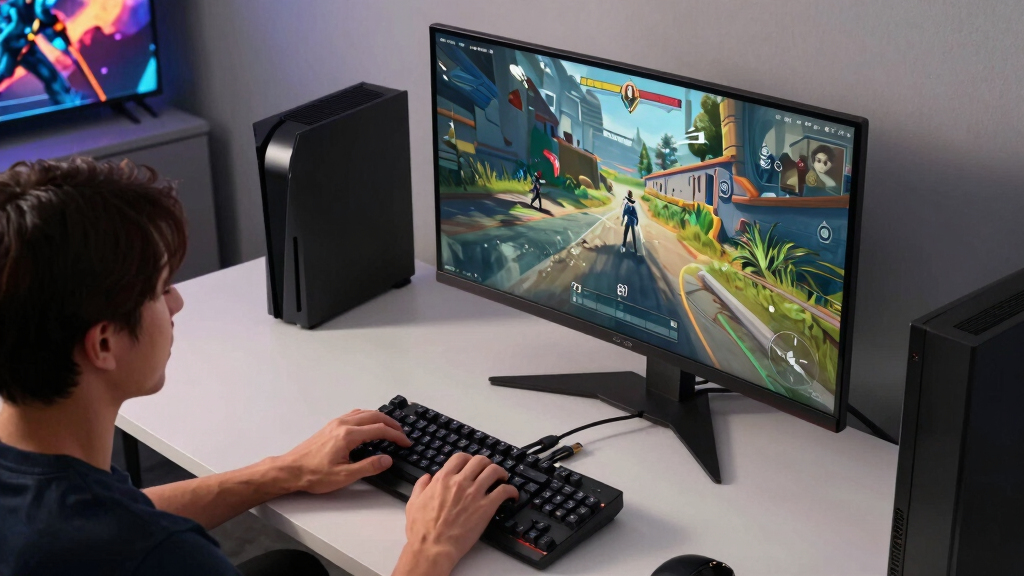
How We Picked
I ranked these picks by asking which displays make the most sense for PC gaming over HDMI 2.1, not by treating every spec as equal. The highest spots went to models that combine useful resolution, fast refresh rates, low response times, adaptive sync support, and enough screen size or panel quality to feel like a meaningful upgrade over a standard desk monitor.
The order also reflects tradeoffs. A 4K OLED 32-inch display earns the top position because it best serves buyers who searched for a TV-like PC gaming screen, while the QHD OLED and high-refresh IPS options rank according to how well they balance speed, image quality, cost, and everyday usability. I placed value and beginner picks lower when they made clear compromises in panel quality, refresh ceiling, or long-term flexibility.
| HDMI 2.1 TVs for PC gaming | Panel Type | HDR | Connectivity |
|---|---|---|---|
| Acer Nitro VG270K 27-inch 4K U | IPS | HDR 10 | — |
| LG 27GX704A-B 27-inch Ultragea | — | VESA DisplayHDR True Black 400 | HDMI 2.1, DisplayPort 1.4, USB 3.2 |
| Acer Nitro XV272U 27-inch WQHD | IPS | DisplayHDR 400 | — |
| ASUS TUF Gaming VG27AQ3A 27-in | — | HDR-10 | — |
| LG 27GR83Q-B 27-inch Ultragear | — | DisplayHDR 400 | HDMI 2.1, DisplayPort 1.4 |
| ASUS ROG Strix 32-inch 4K OLED | OLED with glossy finish | VESA DisplayHDR 400 True Black | DisplayPort 1.4 DSC, HDMI 2.1, USB-C with 15W power delivery |
Factors to Consider When Choosing Best HDMI 2.1 TVs For PC Gaming
Choosing the best HDMI 2.1 display for PC gaming is less about chasing one headline spec and more about matching the screen to the way a PC is actually used. I would separate buyers into three groups: cinematic 4K players, competitive high-frame-rate players, and mixed-use desk gamers who split time between work, browsing, and games.
Resolution Changes The Whole Buying Decision
4K gives PC games sharper textures, cleaner UI elements, and a more TV-like feel, especially on a 32-inch screen like the ASUS ROG Strix XG32UCWMG. The catch is that 4K asks much more from the GPU, so buyers with midrange graphics cards may spend more time lowering settings than enjoying the extra pixels. QHD remains the smarter middle ground for many PC gamers because it is easier to drive at high frame rates. That is why the LG 27GR83Q-B and Acer Nitro WQHD 300Hz feel more practical for competitive play. The common mistake is buying 4K for prestige when the PC cannot feed it well. I would pay for 4K only when image detail, single-player games, and long-term GPU plans all point in that direction.
Refresh Rate Matters More For Some Games Than Others
A higher refresh rate can make mouse movement, camera pans, and fast aiming feel cleaner, but the benefit depends on the games played. 300Hz on the Acer Nitro WQHD is a real advantage for esports-style PC gaming, while 240Hz on the LG 27GR83Q-B already covers a wide range of serious players. For cinematic RPGs, strategy games, and controller-based play, the jump from 160Hz to 300Hz matters less than contrast, size, and resolution. This is why the Acer Nitro 4K 160Hz can still make sense even though it is not the fastest option here. Buyers should match refresh rate to actual frame output, not just the number on the box. A display cannot show frames the PC is not producing.
OLED Is A Premium Choice With Practical Tradeoffs
OLED stands apart because it delivers deep blacks, fast pixel response, and stronger contrast than typical IPS gaming screens. That makes the ASUS ROG Strix 32” 4K OLED and LG 27GX704A-B OLED the most visually rich options in this group. The tradeoff is price, plus the need to think about static desktop elements, taskbars, browser windows, and long work sessions. An IPS model such as the LG 27GR83Q-B is less dramatic, but it is easier to recommend for buyers who use one screen all day for work and games. OLED is best when gaming and media are the main jobs. For spreadsheet-heavy or static UI-heavy use, I would lean toward a strong IPS pick.
HDMI 2.1 Is Only Part Of The PC Setup
HDMI 2.1 matters because it supports higher bandwidth for modern gaming signals, but PC buyers should also check DisplayPort, adaptive sync, GPU outputs, and cable quality. Several picks here include DisplayPort, which may still be the preferred PC connection depending on the graphics card and target refresh rate. HDMI 2.1 is especially helpful if the same screen will be shared with a console, a gaming laptop, or a living-room-style PC. Buyers often focus on the port label and miss the rest of the chain. A weak cable, limited laptop HDMI output, or older GPU can cap the experience. I would treat HDMI 2.1 as a strong starting point, then verify that the full setup can carry the resolution and refresh rate being promised.
Screen Size Affects Comfort As Much As Immersion
A 32-inch 4K screen feels closer to a compact TV, which is why the ASUS ROG Strix earns the premium and overall recommendation here. At a desk, though, 27 inches can be easier to manage for keyboard-and-mouse play because the whole screen stays in view. That gives models like the LG 27GX704A-B, LG 27GR83Q-B, and ASUS TUF VG27AQ3A a comfort advantage for tighter setups. Bigger is not always better if the viewer sits close, plays shooters, or has limited desk depth. The right size depends on seating distance and the mix of controller play versus mouse aiming. I would choose 32 inches for immersion and 27 inches for speed, focus, and desk ergonomics.
Frequently Asked Questions
Should I Buy A 4K HDMI 2.1 Display Or A Faster QHD Model For PC Gaming?
I would choose 4K if the priority is visual detail, single-player games, media use, and a more TV-like screen. The ASUS ROG Strix 32” 4K OLED and Acer Nitro 4K make more sense for that kind of buyer. A faster QHD model is better when frame rate, lower GPU strain, and competitive responsiveness matter more. The LG 27GR83Q-B and Acer Nitro WQHD 300Hz are stronger fits for players who want high refresh rates without forcing the PC to render 4K. The right answer depends less on HDMI 2.1 itself and more on whether the GPU can keep up with the chosen resolution.
Is OLED Worth Paying More For In A PC Gaming Setup?
OLED is worth it when image quality is the main reason for upgrading. The contrast, black levels, and pixel response can make games look cleaner and feel more immediate than typical IPS panels. In this lineup, the ASUS ROG Strix 32” 4K OLED is the premium all-around choice, while the LG 27GX704A-B is the smaller OLED alternative. I would skip OLED for a screen that spends most of its life showing static desktop apps. For mixed work and gaming, a strong IPS display may be the more relaxed long-term buy.
Which Pick Makes The Most Sense For A Beginner PC Gamer?
The ASUS TUF Gaming VG27AQ3A is the easiest beginner recommendation because it avoids the cost and care demands of OLED while still offering a fast 1440p gaming experience. It is not the most advanced display here, and it lacks the premium punch of the LG OLED or ASUS ROG Strix. That lower ceiling is also part of why it works for newer buyers. It lets a beginner focus on smooth gameplay, adaptive sync, and a sensible resolution before paying for niche features. I would place it below the LG 27GR83Q-B for performance, but above more expensive picks for buyers trying to keep the setup simple.
Do I Need HDMI 2.1 If My PC Also Has DisplayPort?
DisplayPort may still be the better default connection for many desktop PCs, especially when chasing high refresh rates on QHD monitors. HDMI 2.1 becomes more valuable when the display will also connect to a console, gaming laptop, or living-room PC. That flexibility is part of the appeal of models like the LG 27GR83Q-B and Acer Nitro WQHD. I would not buy a display only because it says HDMI 2.1 if the panel, stand, refresh rate, or resolution is a poor match. The port matters, but the whole screen still has to fit the job.
Which Display Is Best If I Play Both Competitive And Single-Player Games?
The LG 27GR83Q-B is the best balanced choice for mixed gaming because it combines QHD resolution, 240Hz speed, adaptive sync support, and a more practical price than OLED. It is faster and more gaming-focused than the Acer Nitro 4K for competitive play, while still sharper and more versatile than a basic budget monitor. The ASUS ROG Strix 32” 4K OLED looks better for cinematic games, but it costs more and is less desk-friendly for some players. The Acer Nitro WQHD 300Hz is faster, yet more specialized. For most mixed-game libraries, I would rather have the LG’s balance than chase one extreme.
Conclusion
My best overall pick is the ASUS ROG Strix 32” 4K OLED Gaming Monitor because it comes closest to the HDMI 2.1 TV-for-PC-gaming idea while still feeling purpose-built for a desk setup. The best premium compact OLED choice is the LG 27GX704A-B, while the best value pick is the LG 27GR83Q-B for buyers who want speed, QHD clarity, and broad PC gaming appeal. I would choose the Acer Nitro WQHD 300Hz for competitive players, the Acer Nitro 4K 160Hz for sharper 4K gaming on a tighter budget, and the ASUS TUF VG27AQ3A for beginners who want a sensible first HDMI 2.1 gaming display without paying for premium panel tech.
Halloween Picks
halloween
As an affiliate, we earn on qualifying purchases.