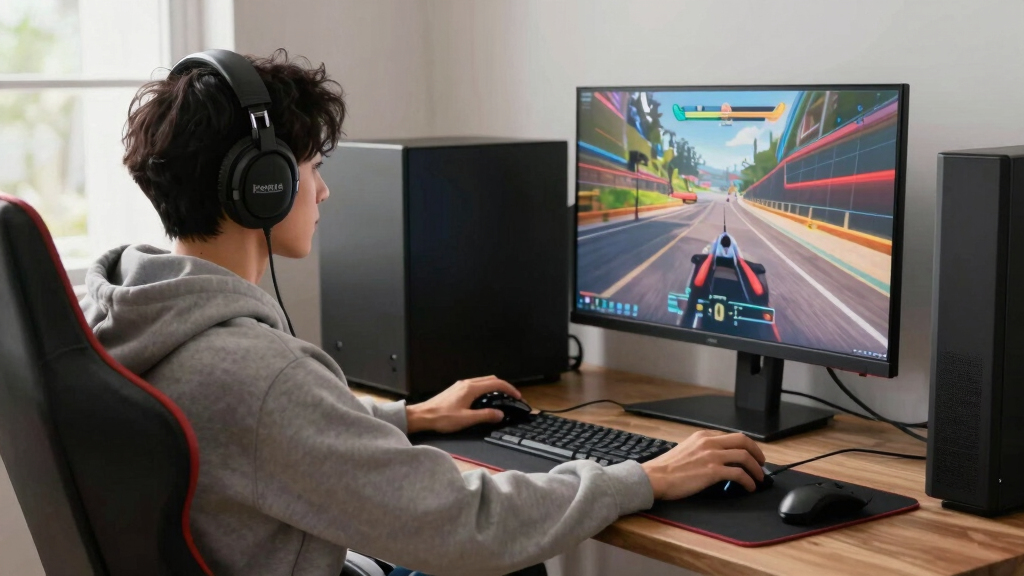

The best haptic accessory depends less on raw vibration strength than on where I want to feel game events. I rank the Next Level Racing HF8 first because its eight-motor seat pad suits the widest mix of PC players, especially sim racers and flight-sim fans. It adds directional feedback without asking the player to wear extra equipment, and its standard model balances coverage, compatibility, and price better than the more forceful HF8 Pro.

Play games on Amazon Luna for your game nights, included with Prime
- A rotating selection of games, no download needed
- Play on TV, laptop or phone
- Fast, free delivery for your gear, too
For wearable feedback, the bHaptics TactSuit Air is my more approachable pick. Its 16 motors provide torso-wide cues while keeping the design lighter than the 32-motor TactSuit Pro. The HF8 Pro is the stronger premium choice for a dedicated cockpit, but its extra power and likely higher price make less sense for casual play.
The main choice is between seat-based and wearable haptics. A pad stays attached to a chair and works well for engine, road, and aircraft cues; a vest maps impacts and environmental effects directly across the torso. Sleeves add localized arm feedback, yet they are narrower in purpose. I also weigh native game support against audio-driven vibration, since broad compatibility does not always provide the same precision as game-specific haptic effects.
Complete the kit


Key Takeaways
- The Next Level Racing HF8 ranks first because its eight-motor chair pad offers the broadest balance of PC compatibility, seated comfort, and useful directional feedback.
- The bHaptics TactSuit Air is the better wearable starting point than the TactSuit Pro when lower weight and a less elaborate setup matter more than maximum motor density.
- The HF8 Pro suits dedicated sim rigs where its claimed 200% torque increase, 400% greater motor power, and faster response can justify the added cost and bulk.
- The TactSuit Pro provides the most detailed torso feedback in this lineup with 32 motors, but its premium positioning is difficult to justify for occasional VR sessions.
- The TactSleeve pair is best treated as a targeted arm-feedback upgrade rather than a complete haptic system because its coverage is much narrower than either vest.
| Next Level Racing HF8 Haptic Feedback Gaming Pad |  | Best Overall | Vibration motors: 8 | Primary platform: PC | Additional compatibility: Gaming consoles through supported audio setups | VIEW LATEST PRICE | See Our Full Breakdown |
| bHaptics TactSuit Air Ash |  | Best Wearable Value | Feedback motors: 16 | Feedback area: Torso | Material: Flexible, lightweight fabric | VIEW LATEST PRICE | See Our Full Breakdown |
| Next Level Racing HF8 Pro Haptic Feedback Gaming Pad |  | Best Premium Sim-Racing Pad | Product type: Haptic gaming pad | Torque increase: 200% | Motor power increase: 400% | VIEW LATEST PRICE | See Our Full Breakdown |
| bHaptics TactSuit Pro |  | Best Premium VR Vest | Feedback motors: 32 | Supported games: 300+ | Compatibility: VR, PC, and native haptic integrations | VIEW LATEST PRICE | See Our Full Breakdown |
| bHaptics TactSleeve Pair |  | Best Arm-Haptic Add-On | Included units: Pair of sleeves | Total motors: 6 | Feedback points: 3 per sleeve | VIEW LATEST PRICE | See Our Full Breakdown |
| haptic feedback accessories for PC gaming | Feedback area |
|---|---|
| Next Level Racing HF8 Haptic F | — |
| bHaptics TactSuit Air Ash | Torso |
| Next Level Racing HF8 Pro Hapt | — |
| bHaptics TactSuit Pro | Torso |
| bHaptics TactSleeve Pair | Arms |
More Details on Our Top Picks
Next Level Racing HF8 Haptic Feedback Gaming Pad
I place the Next Level Racing HF8 first because it offers the most practical route into full-seat haptics. Its eight vibration motors spread feedback across the back and lower body, giving driving and flight events a physical location rather than reducing everything to a single rumble. Since the pad attaches to gaming chairs, racing seats, and flight seats, it also avoids the fit questions that come with a vest.
Compared with the HF8 Pro, the standard HF8 is the more measured purchase. The Pro promises far greater torque, power, and motor speed, but the regular pad already covers the same core seating concept. I would favor this model for mixed gaming or a first cockpit upgrade, while the Pro better serves buyers who already know they want forceful feedback. The standard pad should also feel less excessive during long sessions or quieter games.
PC software can provide more tailored effects, while a 3.5mm audio connection broadens its use with consoles and other sources. That flexibility has a catch: audio-derived vibration reacts to sound rather than understanding every in-game event. Software configuration may also feel involved for players expecting plug-and-play simplicity. Even with those limits, its universal chair-friendly format makes it easier to recommend than a wearable that must be fitted before every session.
Pros:- Eight motors provide separated feedback across the back and seat
- Fits many gaming chairs, racing seats, and flight seats
- PC software supports more tailored haptic behavior
- 3.5mm audio input expands compatibility beyond native PC profiles
Cons:- PC software setup may take time to tune
- Audio-based feedback is less event-specific than native game integration
- Seat-pad positioning may need adjustment on some chair shapes
Best for: PC sim racers, flight-sim players, and seated gamers who want broad haptic coverage without wearing a vest
Not ideal for: Room-scale VR players or buyers who want impact effects mapped directly across the chest
- Vibration motors:8
- Primary platform:PC
- Additional compatibility:Gaming consoles through supported audio setups
- Audio connection:3.5mm jack
- PC control method:Software-configured haptics
- Form factor:Chair-mounted gaming pad
- Seat support:Gaming chairs, sim racing seats, and flight seats
Our verdict“The HF8 is my best overall pick because it combines useful directional feedback, broad chair compatibility, and a more accessible proposition than the high-powered Pro.”
bHaptics TactSuit Air Ash
The bHaptics TactSuit Air is my preferred wearable for buyers who want torso feedback without jumping straight to the most elaborate vest. Its 16 feedback motors can communicate impacts, vibration, and environmental cues across the body. That placement is especially persuasive in VR, where a hit to the torso should feel different from road texture beneath a racing seat.
Its closest rival here is the TactSuit Pro, which doubles the motor count to 32 and lists support for more than 300 games. The Pro can provide denser positional detail, yet the Air’s lighter, flexible construction should make it the friendlier choice for frequent movement. I rank the Air above the Pro because many buyers will gain more from lower wearable burden than from another 16 motors.
Adjustable side straps make the one-size design adaptable, though one size is still a compromise. Very small or very large players may struggle to achieve the snug contact that haptics need. Compatibility is another dividing line: native support can deliver purposeful effects, while unsupported content may require a broader conversion method or may not provide the intended experience. Against the HF8, the Air offers better body-mapped immersion, but it is less convenient for anyone who wants to sit down and play without putting on extra gear.
Pros:- Sixteen motors create torso-wide positional feedback
- Lighter construction is better suited to active VR than the denser Pro vest
- Adjustable side straps accommodate a broad range of body sizes
- Supports PC, VR, sim racing, music, and compatible media
Cons:- One-size construction may not give every player close, even contact
- The best effects depend on compatible software or hardware
- Less detailed than the 32-motor TactSuit Pro
Best for: VR and PC players seeking a lighter torso-haptic vest with more coverage than sleeves
Not ideal for: Buyers at the extremes of the size range or players who dislike wearing gaming accessories
- Feedback motors:16
- Feedback area:Torso
- Material:Flexible, lightweight fabric
- Fit:One size with adjustable side straps
- Color:Ash
- Color range:Two choices
- Supported uses:VR, PC gaming, sim racing, and music
- Integration requirement:Compatible software or hardware for full functionality
Our verdict“The TactSuit Air is the wearable sweet spot, trading some positional detail for a lighter design and a more approachable place in the bHaptics range.”
Next Level Racing HF8 Pro Haptic Feedback Gaming Pad
The Next Level Racing HF8 Pro takes the chair-pad idea toward greater intensity and speed. Its headline claims include 200% more torque, 400% more motor power, and 60% faster motor RPM. Those gains matter most when rapid distinctions between kerbs, gear changes, wheel slip, and impacts are part of the appeal. A listed 75fps haptic response rate also targets players sensitive to lag between screen action and physical response.
I rank it behind the standard HF8 because more force is not automatically better value. For general PC games, the base pad supplies the same broad style of back-and-seat feedback without asking the buyer to pay for performance aimed at dedicated rigs. The Pro makes more sense when the cockpit is already a major hobby investment and weak vibration would be the limiting factor.
The SIMAERO mesh addresses heat during longer sessions, an advantage over less breathable contact surfaces. Powerful hardware may still feel bulkier against a seat, and it will need compatible games or software to earn its premium. Compared with the TactSuit Pro, this model keeps the player free of wearable equipment and channels effects through a fixed seating position. The vest remains better for torso impacts in active VR; the HF8 Pro is the sharper tool for high-energy seated simulation.
Pros:- Claimed torque, power, and motor-speed gains create stronger feedback than the standard HF8
- 75fps response rate is designed for fast, low-latency effects
- SIMAERO mesh helps manage heat during long sessions
- Chair-pad design integrates naturally with a dedicated cockpit
Cons:- Higher price weakens its appeal for general PC gaming
- Powerful hardware may add bulk or feel intense over long sessions
- Compatible software and game support are needed to make full use of its performance
Best for: Enthusiast sim racers and flight-sim players with permanent cockpits who want stronger, faster seat feedback
Not ideal for: Budget buyers, casual players, or room-scale VR users who need body-worn positional effects
- Product type:Haptic gaming pad
- Torque increase:200%
- Motor power increase:400%
- Motor speed increase:60%
- Haptic response rate:75fps
- Latency design:Ultra-low-latency real-time haptics
- Fabric:Breathable SIMAERO mesh
- Primary use:Seated PC gaming and simulation
Our verdict“The HF8 Pro is the premium cockpit pick for players who will notice its extra speed and force, while the regular HF8 remains the smarter all-round purchase.”
bHaptics TactSuit Pro
With 32 feedback motors, the bHaptics TactSuit Pro provides the densest wearable feedback in this comparison. More points allow compatible software to place sensations across the torso with finer separation, which can make directional hits, nearby explosions, and environmental pulses easier to distinguish. Support for more than 300 games gives it a stronger compatibility story than a niche accessory tied to only a handful of titles.
The tradeoff becomes clear beside the TactSuit Air. The Pro doubles the Air’s motor count and adds a premium mesh-lined build, but it can also feel heavier, cost more, and demand a stronger commitment to wearable haptics. I reserve it for buyers who already spend substantial time in supported VR games. The Air ranks higher because its 16-motor layout should be enough for many players while remaining lighter.
Shoulder snaps and side straps help create close body contact, which keeps vibrations from feeling vague. Audio-to-haptics also gives movies, music, and games without native profiles a path to physical feedback, although those reactions are based on sound rather than exact game telemetry. Compared with the HF8 Pro, the TactSuit Pro offers more natural torso mapping for standing play but less appeal for players whose PC time stays behind a wheel or flight stick.
Pros:- Thirty-two motors provide the most detailed torso coverage in this lineup
- Support for more than 300 games expands the pool of native experiences
- Audio-to-haptics works with additional games and media
- Shoulder snaps, side straps, and mesh lining support a close adjustable fit
Cons:- Premium price is difficult to justify for occasional sessions
- Denser hardware may feel heavier or bulkier than the TactSuit Air
- Native effects still depend on compatible games, hardware, and software
Best for: Committed VR players who want dense torso mapping and regularly play games with native bHaptics support
Not ideal for: Casual users, price-sensitive buyers, and seated sim players who would benefit more from a chair pad
- Feedback motors:32
- Supported games:300+
- Compatibility:VR, PC, and native haptic integrations
- Additional mode:Audio-to-haptics
- Feedback area:Torso
- Lining:Breathable mesh
- Shoulder adjustment:Shoulder snaps
- Side adjustment:Adjustable straps
Our verdict“The TactSuit Pro is my choice for maximum VR vest detail, but its price and wearable bulk keep it behind the lighter Air for most buyers.”
bHaptics TactSleeve Pair
The bHaptics TactSleeve pair fills the most specialized role here. Six motors provide feedback through three feedback points per sleeve, placing recoil and action cues along the arms. That can complement motion controllers and weapon-focused VR games more naturally than vibrations delivered only through a chair.
I do not rank the sleeves as a beginner’s substitute for the TactSuit Air. The vest covers a larger body area with 16 motors, while the sleeves concentrate on a smaller set of sensations. This pair makes more sense as an extension to an existing haptic setup or as a deliberate choice for players who care most about arm feedback. Compared with the HF8, it is easier to use while moving around but far less useful for engine, road, or aircraft cues across the back and legs.
The lightweight design supports longer sessions, yet sleeve fit and placement still affect how clearly each motor is felt. Compatibility also shapes the result: recoil is compelling only when software maps it well. Players expecting broad full-body immersion may find six motors too limited, and those satisfied with controller rumble may see little reason to add another wearable. Its focused purpose earns a place in the lineup, but it is the least universal recommendation.
Pros:- Arm placement can make recoil and controller-driven actions feel more localized
- Pair design provides feedback on both arms
- Lightweight construction is suited to active movement
- Can complement a bHaptics vest for wider wearable coverage
Cons:- Six motors cover far less area than either TactSuit vest
- Narrow use case makes it weaker as a first haptic purchase
- Value depends heavily on compatible games and personal preference for arm feedback
Best for: VR players who want localized recoil and arm effects, especially as an addition to a vest or controller setup
Not ideal for: Buyers seeking a first all-purpose haptic accessory or broad torso and seat coverage
- Included units:Pair of sleeves
- Total motors:6
- Feedback points:3 per sleeve
- Feedback area:Arms
- Design:Lightweight wearable
- Primary effect:Localized recoil and action feedback
- Supported uses:VR, PC gaming, sim racing, and music
Our verdict“The TactSleeve pair is a convincing specialist add-on for arm and recoil cues, but it lacks the coverage needed to serve as my main haptic recommendation.”
How We Picked
I ranked these accessories by feedback placement, motor coverage, software support, comfort, and setup demands. Motor count helped distinguish products within the same category, but I did not treat it as a universal measure of quality. Eight motors under a seated player can communicate tire slip or engine pulses more effectively than a higher motor count placed somewhere that does not match the game event.
I gave extra weight to clear PC gaming value. That meant judging whether each accessory fits common play styles, whether it needs native game integration, and how much equipment the buyer must wear or configure. I also separated broad audio-reactive compatibility from native positional haptics: audio conversion can work with more content, while direct game support can produce more deliberate effects.
Comfort affected the order because these products stay in contact with the body or chair for long sessions. I compared breathable materials, adjustable fits, and the possible burden of stronger motors. My final ranking favors the product that makes sense for the largest group, followed by picks with more specialized strengths. Pricing can vary by retailer, so I judge value by each product’s place in its range rather than a temporary sale.
| haptic feedback accessories for PC gaming | Feedback area |
|---|---|
| Next Level Racing HF8 Haptic F | — |
| bHaptics TactSuit Air Ash | Torso |
| Next Level Racing HF8 Pro Hapt | — |
| bHaptics TactSuit Pro | Torso |
| bHaptics TactSleeve Pair | Arms |
Factors to Consider When Choosing Best Haptic Feedback Accessories For PC Gaming
I separate haptic accessories by where they place feedback, how they create it, and how much setup they add. A higher motor count can improve detail, but placement and software mapping often have a larger effect on whether a vibration feels meaningful.Choose the Feedback Location First
I would start with seat feedback for racing and flight simulation and wearable feedback for VR combat or room-scale games. The HF8 models send cues through the back and lower body, which suits engines, road texture, turbulence, and impacts. TactSuit vests put those cues on the torso, while TactSleeves focus on recoil and arm actions. The most useful location should match the events the buyer wants to feel.
Motor Count Versus Motor Placement
More motors can create finer positional separation, particularly when comparing similar products such as the 16-motor TactSuit Air and 32-motor TactSuit Pro. Counts do not translate cleanly between categories, though. The HF8’s eight motors contact a seated player across a large pad, while six sleeve motors cover only the arms. I treat motor count as a category-level comparison, not a universal score.
Native Haptics Versus Audio-Reactive Feedback
Native game support lets software trigger an effect from a specific event, such as a directional hit or tire slip. Audio-reactive modes convert sound energy into vibration and can support more content, but loud music, dialogue, and explosions may create effects without precise positional meaning. I favor native profiles for simulation and competitive play; audio modes are useful for unsupported games, movies, and music.
Comfort, Fit, and Session Length
A vest or sleeve needs snug contact without restricting movement. Loose wear can blur the effect, while heavy equipment can become distracting. The TactSuit Air emphasizes lower weight; the Pro adds denser hardware and mesh lining. Chair pads remove wearable pressure but can alter seat cushioning and posture. I would match the format to the length and physical activity of a normal gaming session.
When Premium Power Pays Off
The HF8 Pro and TactSuit Pro justify their premium positions in different ways. The HF8 Pro prioritizes force, motor speed, and response, while the TactSuit Pro prioritizes motor density and torso detail. Neither upgrade has equal value for every player. A dedicated sim racer may benefit from stronger seat effects; a regular VR player may care more about accurate body mapping. Casual buyers receive a better balance from the standard HF8 or TactSuit Air.
Frequently Asked Questions
What is the best haptic feedback accessory for PC gaming?
I rank the Next Level Racing HF8 as the best overall choice because its eight-motor chair pad works across common seated PC setups and does not require a wearable. It is especially well matched to racing and flight games. VR players who want torso-mapped impacts should choose the bHaptics TactSuit Air instead.
Is a haptic vest better than a haptic gaming pad?
Neither format is better for every game. I prefer a haptic vest for standing VR, directional impacts, and body-centered effects. A gaming pad is better for seated simulation because it can represent engines, surface texture, and turbulence through the chair without adding wearable weight. The player’s main genre should decide the format.
Do haptic accessories work with every PC game?
Compatibility varies. Some games provide native haptic integration, which can map individual events and directions accurately. Other titles may work through audio-to-haptics or a 3.5mm audio signal, producing vibration from sound rather than game data. I would check the manufacturer’s current supported-game list before buying for one particular title.
Does a higher motor count always mean better haptic feedback?
No. A higher count can improve positional detail within the same product category, which gives the 32-motor TactSuit Pro an advantage over the 16-motor Air. Motor placement, contact, power, latency, and software mapping also shape the result. Eight well-mapped seat motors may be more useful in a racing game than 32 torso motors reacting to generic audio.
Are haptic sleeves worth buying without a vest?
The TactSleeves can work alone, but I see them as a specialist purchase rather than a complete system. They suit players who specifically want recoil and arm cues. A vest or chair pad covers more of the body and fits a wider range of games, so either is usually the stronger first purchase for someone new to PC haptics.
Conclusion
For most seated PC players, I would buy the Next Level Racing HF8. It offers the best balance of directional coverage, chair compatibility, and manageable complexity. Dedicated sim-rig owners who want stronger and faster effects should move up to the HF8 Pro, provided its premium price matches the importance of haptics in their setup.
For VR, my default recommendation is the bHaptics TactSuit Air because its 16 motors and lighter build balance immersion with wearability. Buyers who regularly play supported titles and want the most detailed torso mapping should choose the TactSuit Pro. I would reserve the TactSleeve pair for players who specifically want arm and recoil feedback or plan to expand an existing bHaptics system.
Fall Picks
fall essentials
As an affiliate, we earn on qualifying purchases.