
TL;DR

Play games on Amazon Luna for your game nights, included with Prime
- A rotating selection of games, no download needed
- Play on TV, laptop or phone
- Fast, free delivery for your gear, too
A developer has successfully ported Linux to the Sega 32X console, notably without implementing hardware synchronization primitives. This challenges assumptions about hardware requirements for operating system support on retro hardware.
A developer has successfully ported Linux to the Sega 32X console, notably without implementing traditional hardware synchronization primitives. This achievement questions established assumptions about the necessity of such primitives for OS support on constrained hardware, and it could influence future retro hardware projects and hobbyist efforts.
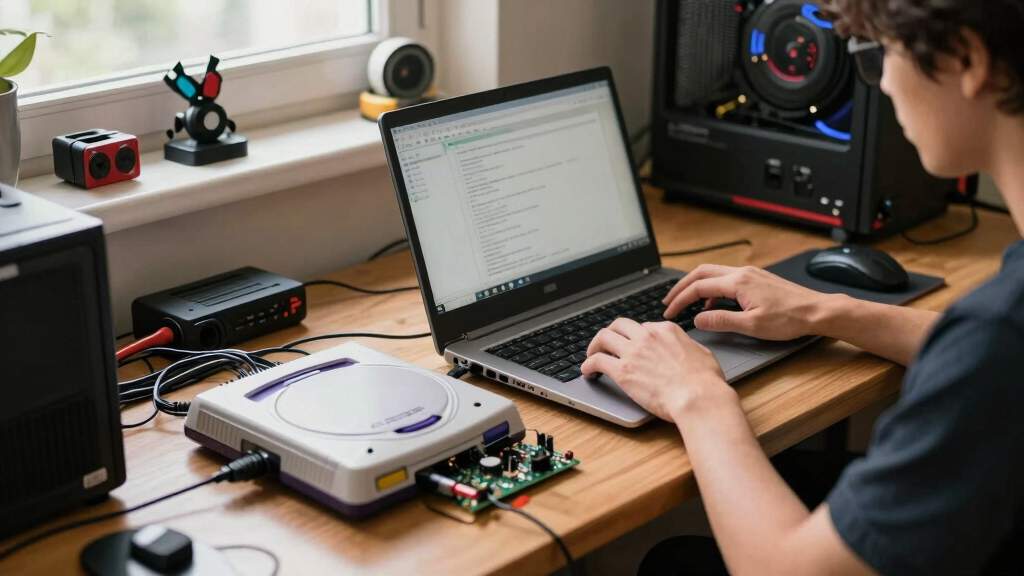
The project was announced by an independent developer known online as ‘RetroCoder’ in late 2023. They managed to run a minimal Linux kernel on the Sega 32X, a peripheral for the Sega Genesis released in the mid-1990s, which is known for its limited processing power and memory. Significantly, the port does not utilize hardware synchronization primitives, which are typically essential for managing concurrent processes and ensuring system stability in multitasking environments.
According to RetroCoder, the Linux kernel was adapted to operate on the 32X by employing software-based synchronization techniques, bypassing the need for hardware primitives like mutexes or semaphores. The developer confirmed that this approach allowed Linux to function without hardware-level thread management, which is usually considered critical for stability. The project is still in early testing stages, but initial boot sequences and basic command-line interfaces have been demonstrated publicly.
Implications for Retro Hardware and OS Development
This development challenges the long-held belief that hardware synchronization primitives are essential for running complex operating systems like Linux on limited hardware. It opens the door for hobbyists to experiment with running modern OSes on vintage or constrained hardware without needing to emulate or implement hardware-level synchronization features. For the broader community, it suggests new avenues for retro computing projects, potentially reducing the hardware complexity and cost associated with OS support.
Moreover, this breakthrough could influence embedded systems design, where hardware resources are limited, by demonstrating that software-based synchronization can sometimes suffice. However, it remains uncertain how scalable or stable this approach is for more demanding applications or multitasking environments.
As an affiliate, we earn on qualifying purchases.
Background of Linux on Limited Hardware
Linux has historically been ported to a range of hardware platforms, but running it on devices with extremely limited processing power and memory, such as the Sega 32X, has been largely impractical. Traditionally, such efforts relied heavily on hardware features like synchronization primitives to manage process concurrency and system stability. The 32X, with its 32-bit RISC processor and limited RAM, was never designed for multitasking or complex OS support, making this recent development notable.
Previous attempts to run Linux on retro consoles or limited hardware often required extensive emulation or hardware modifications. This project stands out because it demonstrates a direct port that sidesteps these hardware dependencies, raising questions about the necessity of certain hardware features for modern OS support.
“By rethinking how synchronization is handled, we can run Linux on hardware that was never meant for it. Hardware primitives aren’t always a must-have.”
— RetroCoder
retro gaming hardware synchronization tools
As an affiliate, we earn on qualifying purchases.
As an affiliate, we earn on qualifying purchases.
Limitations and Stability of Software-Based Synchronization
It is still unclear how stable or scalable this approach is for extended use or more complex multitasking scenarios. The project is in early stages, and comprehensive testing on long-term stability or compatibility with other hardware configurations has not yet been reported.
Additionally, the method’s applicability to other limited hardware platforms remains unconfirmed, and there is no indication yet whether this approach can support more demanding applications beyond basic Linux commands.
As an affiliate, we earn on qualifying purchases.
Next Steps for Development and Community Testing
The developer plans to continue testing stability and expand functionality, including adding support for more hardware peripherals and multitasking features. Community feedback and independent testing will be crucial in assessing the approach’s viability for broader use.
Further development may involve optimizing software synchronization techniques and exploring their limits, potentially leading to new methods for running Linux and other OSes on vintage or resource-constrained hardware.
As an affiliate, we earn on qualifying purchases.
Key Questions
How was Linux able to run without hardware synchronization primitives?
The developer used software-based synchronization techniques, avoiding reliance on hardware primitives like mutexes or semaphores, which are typically required for process management and stability.
Can this approach be used on other limited hardware devices?
It is not yet confirmed whether this method can be generalized to other hardware with similar constraints. Further testing is needed to determine its broader applicability.
Does this mean hardware synchronization is unnecessary for all OSes?
Not necessarily. While this project shows it’s possible on the Sega 32X with Linux, hardware synchronization remains critical for many systems, especially those requiring multitasking and high stability.
What are the limitations of this software-based approach?
Potential limitations include reduced stability, scalability issues, and possible incompatibility with more demanding applications or multitasking environments.
Source: hn
Fall Picks
fall essentials
As an affiliate, we earn on qualifying purchases.