
TL;DR
Open a free Amazon Business account
Business pricing, bulk buying and tax-exempt orders.
Create a free accountAs an affiliate, we earn on qualifying purchases.
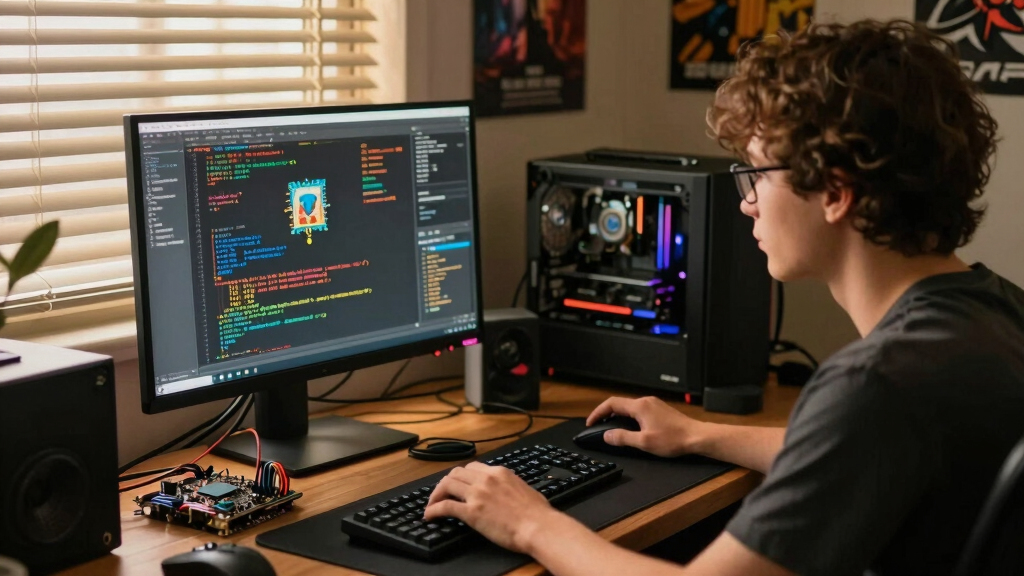
A developer has successfully run the classic game Doom on a custom-built CPU, attracting widespread online attention. The achievement demonstrates innovative hardware programming and sparks interest in retro gaming on new platforms.
A developer has successfully run the classic game Doom on a custom-designed CPU, generating viral interest across social media platforms. This achievement underscores the potential for hardware hacking and retro gaming on unconventional hardware, drawing attention from tech enthusiasts and developers worldwide.
The developer, known online as ‘HardwareHacker’, announced that they managed to port Doom to a self-made CPU built from scratch, using FPGA-based design. The project was shared on social media, quickly gaining thousands of views and shares, with many praising the technical ingenuity involved.
According to the developer, the CPU is a custom architecture designed specifically for this project, and running Doom required significant optimization and low-level programming. The achievement was confirmed through video demonstrations and technical documentation shared online.
Experts in hardware and retro gaming have responded positively, noting that running Doom on a custom CPU showcases both the flexibility of modern FPGA technology and the enduring appeal of classic games. The project has also inspired a wave of similar experiments among hobbyists and developers.
Implications for Hardware Innovation and Retro Gaming
This development highlights the growing capabilities of hobbyist hardware hacking, especially using FPGA technology, which allows for custom CPU design and software porting. It demonstrates that even complex, historically PC-exclusive games like Doom can be adapted to new, self-made hardware, opening avenues for innovation in hardware design and retro gaming.
For the broader tech community, this achievement underscores the potential for custom hardware to run classic software, challenging assumptions about platform limitations and inspiring further experimentation in hardware-software integration.
As an affiliate, we earn on qualifying purchases.
Background on Hardware Hacking and Retro Game Ports
Over the past decade, hobbyists and small teams have increasingly used FPGA and other programmable hardware to recreate or emulate classic consoles and computers. Running Doom on custom hardware has been a milestone goal in retro gaming communities, often achieved through FPGA-based recreations of old systems like the PC or console architectures.
This recent project builds on that tradition, with the developer designing a CPU from scratch to run the game, rather than emulating existing hardware. Such efforts have gained momentum as FPGA tools become more accessible and affordable for hobbyists.
While previous projects have focused on recreating old systems, this effort is notable for its entirely custom CPU architecture, which required extensive low-level programming and hardware design expertise.
“Running Doom on a custom CPU built from scratch was a challenging but rewarding experience. It shows what hobbyists can achieve with modern FPGA tools.”
— Developer ‘HardwareHacker’
As an affiliate, we earn on qualifying purchases.
Technical Details and Future Potential Still Unclear
While the project has been demonstrated publicly, detailed technical documentation and source code have not yet been fully released, leaving some questions about the specific architecture and programming techniques used. It remains unclear how scalable or adaptable this approach is for other games or applications.
Additionally, it is not confirmed whether the developer plans to commercialize or open-source the design, or if similar projects will emerge from other hobbyists.
As an affiliate, we earn on qualifying purchases.
Next Steps in Hardware Hacking and Retro Gaming Experiments
The developer is expected to publish detailed technical documentation and possibly open-source the project, enabling others to replicate or build upon it. Community interest suggests that similar efforts may follow, focusing on porting other classic games or creating more sophisticated custom hardware.
Further demonstrations and potential collaborations could expand the impact of this achievement, encouraging more hardware hacking projects in the retro gaming space.
As an affiliate, we earn on qualifying purchases.
Key Questions
How was Doom ported to a custom CPU?
The developer used low-level programming and FPGA-based hardware design to create a CPU capable of running the game. This involved optimizing game code and adapting it to the architecture of the custom hardware.
Is the project open source?
As of now, the developer has not publicly released the source code or detailed schematics, but they have indicated plans to share more information soon.
Can this approach be used for other games?
Potentially, yes. The success with Doom demonstrates that other classic games could be ported to custom hardware, though each would require significant adaptation and optimization.
What does this mean for retro gaming enthusiasts?
This project shows that hobbyists can push the limits of hardware hacking to run old games on entirely new platforms, fostering innovation and experimentation in the retro gaming community.
Source: hn
Flea & tick season Picks
flea and tick prevention
As an affiliate, we earn on qualifying purchases.