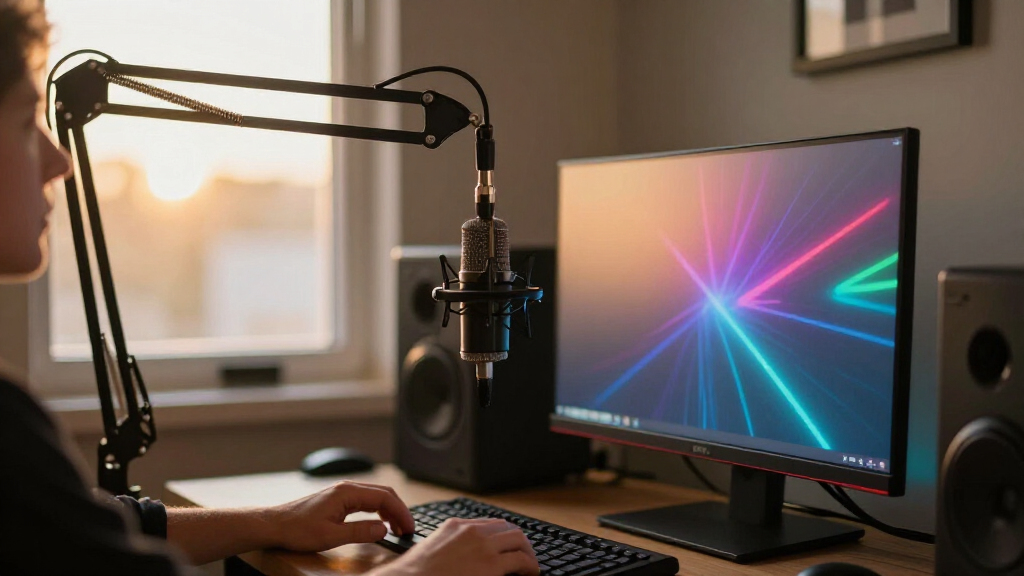

Choosing the right boom arm for your streaming setup depends heavily on your specific needs, workspace constraints, and microphone type. The RØDE PSA1+ stands out for its professional broadcast style and silent operation, making it ideal for high-quality content creation. The Adjustable Overhead Boom offers exceptional height flexibility and overhead positioning, great for multi-mic setups or complex desk layouts. Meanwhile, the Aokeo AK-58i provides a sleek low-profile design with robust support for heavier microphones, suited for streamers who want minimal visual clutter. Each of these options offers unique tradeoffs, from size and mounting requirements to weight capacity and price, so understanding these differences is key to picking the best boom arm for your streaming needs.

Play games on Amazon Luna for your game nights, included with Prime
- A rotating selection of games, no download needed
- Play on TV, laptop or phone
- Fast, free delivery for your gear, too
Complete the kit


Key Takeaways
- The RØDE PSA1+ excels in silent, smooth operation with professional-grade features, ideal for broadcasters and podcasters.
- The Adjustable Overhead Boom offers maximum height and overhead placement, perfect for complex setups but requires ample desk space.
- The Aokeo AK-58i provides a low-profile, sturdy option with high weight capacity suitable for heavier mics and minimal visual distraction.
- Tradeoffs include size, mounting requirements, and price—more advanced features often come with a higher cost or installation complexity.
- Your ideal boom arm depends on workspace size, microphone weight, and whether you prioritize aesthetics or functionality.
| RØDE PSA1+ Professional Studio Microphone Boom Arm, Black |  | Best Overall for Professional-Grade Streaming and Podcasting | Color: Black | Rotation: 360 degrees | Microphone Weight Capacity: 94 g to 1.2 kg | VIEW LATEST PRICE | See Our Full Breakdown |
| Adjustable Overhead Microphone Boom Arm with 31.5-Inch Extension Riser |  | Best for Overhead Placement and Flexible Positioning | Riser Height: 31.5 in (80 cm) | Maximum Desktop Thickness: 4.2 in (106 mm) | Material: Heavy-duty steel | VIEW LATEST PRICE | See Our Full Breakdown |
| Aokeo AK-58i Low Profile Microphone Boom Arm Stand |  | Best Low-Profile Support for Minimal Distraction | Max Load Capacity: 2KG | Arm Rotation: 360° | Vertical Swing: 180° | VIEW LATEST PRICE | See Our Full Breakdown |
| FIFINE BM88W Low-Profile Microphone Boom Arm |  | Best Budget-Friendly Low-Profile Support | Maximum Extension: 29 inches | Vertical Adjustment: 220° | Horizontal Rotation: 360° | VIEW LATEST PRICE | See Our Full Breakdown |
| boom arms for streaming microphone | Material | Included Adapters |
|---|---|---|
| RØDE PSA1+ Professional Studio | — | — |
| Adjustable Overhead Microphone | Heavy-duty steel | 3/8 in–5/8 in and 1/4 in–3/8 in |
| Aokeo AK-58i Low Profile Micro | Forged steel | 3/8" to 1/4", 3/8" to 5/8" |
| FIFINE BM88W Low-Profile Micro | — | — |
More Details on Our Top Picks
RØDE PSA1+ Professional Studio Microphone Boom Arm, Black
The RØDE PSA1+ is designed for those who need a reliable, silent, and smooth mic positioning experience. Its damped parallelogram spring system ensures quiet operation, which is crucial during live recordings or streams where noise can be distracting. Unlike simpler arms, it isolates the microphone from desk noise effectively, making it suitable for busy setups. Compared with the Aokeo AK-58i, it offers more seamless movement and better noise insulation but is more expensive and requires a sturdy desk mount. Its integrated cable management supports both USB and XLR microphones, making it versatile for professional and hobbyist setups alike.
Pros:- Silent, smooth microphone positioning
- Helps isolate keyboard, mouse, and desk noise
- Integrated management for USB and XLR cables
- Compatible with a wide range of microphones and shock mounts
Cons:- Limited to microphones weighing between 94 g and 1.2 kg
- Requires a sturdy desk mount
Best for: Professional broadcasters, podcasters, or streamers seeking reliable, high-quality operation.
Not ideal for: Streamers on a tight budget or those with very limited desk space, due to its size and mounting requirements.
- Color:Black
- Rotation:360 degrees
- Microphone Weight Capacity:94 g to 1.2 kg
- Threading:Standard microphone thread
- Cable Compatibility:USB and XLR
- Spring Design:Fully damped parallelogram
Our verdict“This pick makes the most sense for professional-quality streams where noise isolation and smooth operation are priorities.”
Adjustable Overhead Microphone Boom Arm with 31.5-Inch Extension Riser
This Overhead Boom Arm is perfect if your setup benefits from placing microphones above monitors or in a high, unobstructed position. Its 31.5-inch steel riser provides extensive height, making it ideal for multi-mic setups or streaming environments where space is limited on the desk surface. Its reinforced clamp and heavy-duty steel construction support stable positioning, but the large overhead profile might be too bulky for smaller workspaces. It’s best suited for streamers who want maximum flexibility and don’t mind the installation complexity or size.
Pros:- Tall riser clears monitors and saves desk space
- Heavy-duty steel construction and reinforced clamp
- Wide range of tool-free adjustments
- Includes adapters for popular microphones
Cons:- Requires a suitable desktop edge for clamp mounting
- Large overhead design may not fit small desks
Best for: Streamers and content creators with spacious desks seeking overhead mic placement.
Not ideal for: Users with limited desk space or those seeking a compact, minimalist arm.
- Riser Height:31.5 in (80 cm)
- Maximum Desktop Thickness:4.2 in (106 mm)
- Material:Heavy-duty steel
- Mounting Type:Desktop edge clamp
- Adjustment:Tool-free height, angle, and swivel
- Included Adapters:3/8 in–5/8 in and 1/4 in–3/8 in
Our verdict“This arm is best for those who need overhead positioning and ample height, accepting a larger footprint.”
Aokeo AK-58i Low Profile Microphone Boom Arm Stand
The Aokeo AK-58i offers a sleek, low-profile design that keeps your workspace uncluttered. Its forged steel arms rotate 360° and swing 180°, providing flexible positioning for most standard microphones up to 2KG. It’s a solid choice for streamers who want a supportive yet discreet arm that doesn’t dominate their desk. Compared with bulkier overhead options, it keeps your mic below eye level, ideal for streamers with limited space or those who prioritize aesthetics. However, it’s limited to desks thinner than 7cm and does not include a microphone, requiring additional purchase.
Pros:- Low-profile design reduces visual clutter
- Supports microphones up to 2KG
- Built-in cable management
- Sturdy steel construction
Cons:- Microphone not included
- Limited to desks thinner than 7cm
Best for: Streamers and podcasters who want a low-profile, stable arm with high weight support.
Not ideal for: Users with very thick desks or those needing overhead positioning.
- Max Load Capacity:2KG
- Arm Rotation:360°
- Vertical Swing:180°
- Max Desk Thickness:7cm
- Included Adapters:3/8″ to 1/4″, 3/8″ to 5/8″
- Material:Forged steel
Our verdict“This is a strong choice for those seeking minimal workspace disruption with high weight capacity support.”
FIFINE BM88W Low-Profile Microphone Boom Arm
The FIFINE BM88W balances affordability with a functional, low-profile design. Its 29-inch extension and 220-degree vertical adjustment help position your microphone without cluttering your workspace. The sturdy metal build and integrated cable management make it a practical choice for casual streamers or those just starting out. While it doesn’t support the heaviest microphones or have extensive height options, it offers enough flexibility for most standard podcasting and streaming microphones. Its main tradeoff is the fixed section near the clamp that cannot be vertically adjusted, which could limit placement options in tighter setups.
Pros:- Low-profile design helps keep workspace tidy
- Sturdy metal construction
- Wide adjustment range for flexible positioning
- Built-in cable management
Cons:- Section near clamp cannot be vertically adjusted
- Microphone not included
- Color of ball-head selected randomly
Best for: Budget-conscious streamers and podcasters needing a simple, stable mic support.
Not ideal for: Users with very thick desks or those requiring overhead placement.
- Maximum Extension:29 inches
- Vertical Adjustment:220°
- Horizontal Rotation:360°
- Compatible Desktop Thickness:0.8 to 2.4 inches
- Cable Management:Built-in
- Included Components:Boom arm stand, desk clamp, rotatable ball head, Allen wrench, user manual
Our verdict“This arm offers a practical, affordable solution for general streaming needs with minimal setup fuss.”
How We Picked
Our selection process focused on key factors like build quality, adjustability, noise isolation, compatibility, and overall value. We prioritized professional-grade features such as silent spring mechanisms, flexible positioning, and cable management, all while considering user feedback and common use cases for streamers and content creators. We aimed to include a range of options—from premium models to budget-friendly picks—so that streamers at different experience levels and workspace sizes can find a suitable solution. Each product was evaluated against its role, strengths, and tradeoffs to ensure a balanced, real-world perspective.
| boom arms for streaming microphone | Material |
|---|---|
| RØDE PSA1+ Professional Studio | — |
| Adjustable Overhead Microphone | Heavy-duty steel |
| Aokeo AK-58i Low Profile Micro | Forged steel |
| FIFINE BM88W Low-Profile Micro | — |
Factors to Consider When Choosing Best Boom Arms For Streaming Microphones
Selecting the best boom arm for streaming microphones involves balancing build quality, flexibility, workspace constraints, and microphone weight. Whether you need a sturdy professional-grade arm, an overhead model for complex setups, or a low-profile support to keep your workspace clean, understanding key features will help you make an informed choice.Types of Boom Arms
There are mainly three types: desk-mounted arms, overhead ceiling mounts, and low-profile supports. Desk-mounted arms like the RØDE PSA1+ provide stability and silent operation, ideal for professional environments. Overhead models, such as the adjustable steel riser, maximize space and allow for overhead placement, perfect for multi-mic setups. Low-profile arms like the Aokeo AK-58i prioritize minimal visual clutter and support heavier microphones, suited for modern streaming aesthetics and limited desks.
Key Features to Consider
Look for quiet, damped spring systems for smooth, noise-free movement. Compatibility with your microphone weight is critical—overloading can damage the arm or reduce stability. Adjustability, both in height and angle, enhances versatility. Cable management keeps your setup tidy, and mounting type (clamp or stand) affects installation flexibility. Consider your space: larger overhead arms require more room, while low-profile supports fit smaller desks.
Mounting and Compatibility
Most boom arms are desk-mounted, with clamps suited for standard thickness desks. Ensure your desk can accommodate the clamp size or consider a ceiling mount if space is tight. Check microphone thread compatibility—most support standard 5/8″-27 or 3/8″-16 threads—and whether additional adapters are needed. Heavy microphones require arms with higher weight capacity, so verify specifications before purchase.
Frequently Asked Questions
What is the main difference between a desk-mounted and overhead boom arm?
Desk-mounted boom arms attach directly to the edge of your desk, offering stability and easy access, but they require sufficient space on the desk edge. Overhead boom arms, like the adjustable steel riser, hang above your workspace, providing more flexibility in positioning and freeing up desk space, but they need a larger area and suitable mounting points.
How do I know if a boom arm can support my microphone?
Check the maximum load capacity specified by the manufacturer, which indicates the heaviest microphone the arm can handle safely. For heavier mics like the Shure SM7B or Elgato Wave, look for arms supporting at least 1.5 to 2 kg. If you’re unsure, opt for a model with a higher weight capacity to avoid strain or damage.
Are silent spring mechanisms really necessary?
Yes, silent or damped spring systems significantly reduce noise during mic adjustments, which is especially important for professional streaming or recording environments where background noise can be distracting. Arms without damped mechanisms might produce creaks or squeaks that interrupt your audio quality.
Can I use a boom arm for a Blue Yeti or other USB microphones?
Absolutely. Most boom arms support standard microphone threads compatible with popular USB mics like the Blue Yeti, Snowball, or HyperX QuadCast. Just ensure the arm’s weight capacity can handle your specific microphone, and use the appropriate adapters if necessary.
What are the main tradeoffs when choosing a high-end versus budget boom arm?
High-end arms often feature quieter operation, smoother adjustment, and better build quality, but come at a higher price and may require more complex mounting. Budget options are usually more affordable and simpler but might lack noise isolation, have less precise movement, or support fewer microphone weights. Your choice depends on your priorities—professional quality or budget-friendly simplicity.
Fall Picks
fall essentials
As an affiliate, we earn on qualifying purchases.