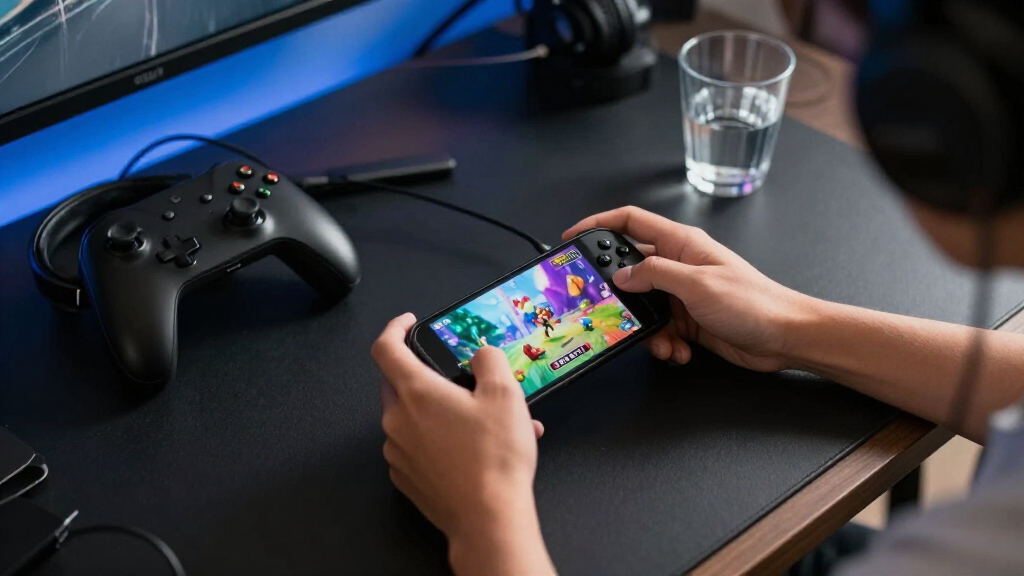
The best gaming smartphone overall in this lineup is the Xiaomi Poco F8 Ultra, a gaming-focused pick with 12GB of RAM and a clear performance-first identity. The Poco X8 Pro Max stands out for its large 6.83-inch AMOLED screen, while the Samsung Galaxy S25 Ultra suits players who also want a premium all-purpose phone and generous storage. The main tradeoff is between gaming-oriented hardware and a more balanced daily-use experience, with display size, memory, battery capacity, and software support all shaping the decision. Older or renewed models may make sense for lighter play, but can involve compromises in longevity and headroom for demanding games. Read on for the full breakdown and a guide to matching a phone to the way you play.

Play games on Amazon Luna for your game nights, included with Prime
- A rotating selection of games, no download needed
- Play on TV, laptop or phone
- Fast, free delivery for your gear, too
Complete the kit

Key Takeaways
- The Poco F8 Ultra takes the gaming-first lead: Its 12GB of RAM and purpose-driven positioning make it the strongest fit for buyers prioritizing demanding mobile play.
- The Poco X8 Pro Max prioritizes screen space: Its 6.83-inch AMOLED display gives games more room, but buyers should weigh that size against one-handed comfort.
- Storage varies even among premium choices: The Galaxy S25 Ultra offers 1TB, while several gaming-oriented options list 256GB; large game libraries make that difference meaningful.
- Not every capable phone is a dedicated gaming pick: The Galaxy S26+, Nothing Phone (3), and Motorola Edge (2024) serve buyers balancing play with everyday use.
- Older and renewed models need a different calculation: The Galaxy S21 5G may suit casual play, but age, software support, battery condition, and remaining performance headroom matter more than its original flagship status.
| Xiaomi POCO F8 Pro 5G 256GB, 12GB RAM, Dual SIM, Black |  | Best Overall | Processor: Qualcomm Snapdragon 8 Elite, 3nm | Display: 6.59-inch AMOLED, 2510 × 1156, up to 120Hz | Memory and storage: 12GB RAM, 256GB storage | VIEW LATEST PRICE | See Our Full Breakdown |
| Xiaomi Poco X8 Pro Max 5G Smartphone, 256GB, 12GB RAM, 6.83-inch AMOLED Display, Dual SIM, Unlocked, White |  | Best for Long Gaming Sessions | Processor: MediaTek Dimensity 9500s | Display: 6.83-inch 1.5K AMOLED, 2772 × 1280, up to 120Hz | Memory and storage: 12GB RAM, 256GB storage | VIEW LATEST PRICE | See Our Full Breakdown |
| Samsung Galaxy S26+ Unlocked Smartphone, 512GB, Black |  | Best Premium Everyday Gaming Phone | Model: Samsung Galaxy S26+ | Operating system: Android | Storage: 512GB | VIEW LATEST PRICE | See Our Full Breakdown |
| Nothing Phone (3) 5G Unlocked Smartphone, 512GB, Black |  | Best for Gaming and Creative Use | Processor: Snapdragon 8s Gen 4, 4nm, up to 3.2GHz | Display: 6.67-inch FHD+ 1.5K AMOLED, adaptive refresh rate up to 120Hz | Memory and storage: 24GB LPDDR5X RAM, 512GB UFS 4.0 storage | VIEW LATEST PRICE | See Our Full Breakdown |
| Xiaomi POCO F8 Pro 5G, 512GB, 12GB RAM, Titanium Silver |  | Best for Large Game Libraries | Processor: Qualcomm Snapdragon 8 Elite, 3nm | Display: 6.59-inch AMOLED, 2510 × 1156, up to 120Hz | Memory and storage: 12GB RAM, 512GB storage | VIEW LATEST PRICE | See Our Full Breakdown |
| Xiaomi POCO X8 Pro 5G Unlocked Smartphone, 256GB, 8GB RAM, 6.59-Inch AMOLED Display, Black |  | Best for Battery Life | Processor: MediaTek Dimensity 8500-Ultra, octa-core up to 3.4GHz | Display: 6.59-inch 1.5K AMOLED, up to 120Hz | RAM: 8GB | VIEW LATEST PRICE | See Our Full Breakdown |
| Samsung Galaxy S21 5G, 128GB, Phantom White (Renewed) |  | Best Compact Gaming Pick | Processor: Snapdragon 888, octa-core up to 2.8GHz | Display: 6.2-inch Dynamic AMOLED 2X, 1080 x 2400, 120Hz | RAM: 12GB | VIEW LATEST PRICE | See Our Full Breakdown |
| Nothing Phone (4a) Pro Unlocked Android Smartphone, 6.83-Inch 144Hz AMOLED Display, Triple Camera, 5,080mAh Battery, Dual SIM, 12GB RAM, 256GB Storage |  | Best for High-Refresh-Rate Play | Processor: Qualcomm Snapdragon 7 Gen 4 | Display: 6.83-inch 1.5K AMOLED, adaptive 144Hz, stated peak brightness up to 5,000 nits | Memory: Up to 12GB LPDDR5X RAM | VIEW LATEST PRICE | See Our Full Breakdown |
| Motorola Edge (2024) Unlocked Smartphone, 8GB RAM, 256GB Storage, Midnight Blue |  | Best for Everyday Gaming and Durability | Processor: Snapdragon 7s Gen 2 | Display: 6.6-inch pOLED | Memory: 8GB RAM | VIEW LATEST PRICE | See Our Full Breakdown |
| Samsung Galaxy S25 Ultra, 1TB, Unlocked Android Smartphone, Titanium Whitesilver |  | Best Premium Gaming Phone | Processor: Snapdragon 8 Elite for Galaxy, 3nm | Display: 6.9-inch Dynamic AMOLED 2X QHD+, adaptive 1–120Hz | Memory: 12GB RAM | VIEW LATEST PRICE | See Our Full Breakdown |
| Xiaomi Poco F8 Ultra 5G, 256GB, 12GB RAM, Black |  | Best for Big-Screen Gaming | Display: 6.85-inch AMOLED, 2608 × 1200, up to 120Hz | Processor: Snapdragon 8 Elite Gen 5, 3nm | Memory and storage: 12GB RAM, 256GB storage; no microSD slot | VIEW LATEST PRICE | See Our Full Breakdown |
| gaming smartphone | Display | Processor | Battery | Charging |
|---|---|---|---|---|
| Xiaomi POCO F8 Pro 5G 256GB | 6.59-inch AMOLED, 2510 × 1156, up to 120Hz | Qualcomm Snapdragon 8 Elite, 3nm | 6,210mAh typical | 100W wired HyperCharge; up to 22.5W wired reverse charging |
| Xiaomi Poco X8 Pro Max 5G Smar | 6.83-inch 1.5K AMOLED, 2772 × 1280, up to 120Hz | MediaTek Dimensity 9500s | 8,500mAh typical | 100W wired; up to 27W reverse charging |
| Samsung Galaxy S26+ Unlocked S | Ultra-vivid display; size and refresh rate not specified in supplied product data | — | — | — |
| Nothing Phone | 6.67-inch FHD+ 1.5K AMOLED, adaptive refresh rate up to 120Hz | Snapdragon 8s Gen 4, 4nm, up to 3.2GHz | 5,150mAh | — |
| Xiaomi POCO F8 Pro 5G | 6.59-inch AMOLED, 2510 × 1156, up to 120Hz | Qualcomm Snapdragon 8 Elite, 3nm | 6,210mAh typical | 100W wired HyperCharge; up to 22.5W wired reverse charging |
| Xiaomi POCO X8 Pro 5G Unlocked | 6.59-inch 1.5K AMOLED, up to 120Hz | MediaTek Dimensity 8500-Ultra, octa-core up to 3.4GHz | 6,500mAh typical | 100W wired; up to 27W reverse charging |
| Samsung Galaxy S21 5G | 6.2-inch Dynamic AMOLED 2X, 1080 x 2400, 120Hz | Snapdragon 888, octa-core up to 2.8GHz | 4,000mAh | — |
| Nothing Phone | 6.83-inch 1.5K AMOLED, adaptive 144Hz, stated peak brightness up to 5,000 nits | Qualcomm Snapdragon 7 Gen 4 | — | — |
| Motorola Edge | 6.6-inch pOLED | Snapdragon 7s Gen 2 | — | 68W TurboPower; stated performance requires a 68W charger |
| Samsung Galaxy S25 Ultra | 6.9-inch Dynamic AMOLED 2X QHD+, adaptive 1–120Hz | Snapdragon 8 Elite for Galaxy, 3nm | 5,000mAh | 45W wired; wireless and reverse wireless charging listed |
| Xiaomi Poco F8 Ultra 5G | 6.85-inch AMOLED, 2608 × 1200, up to 120Hz | Snapdragon 8 Elite Gen 5, 3nm | 6,500mAh typical | 100W wired, 50W wireless, up to 22.5W reverse charging |
More Details on Our Top Picks
Xiaomi POCO F8 Pro 5G 256GB, 12GB RAM, Dual SIM, Black
The POCO F8 Pro is the strongest all-round gaming pick here: its Snapdragon 8 Elite pairs with a 120Hz AMOLED display, giving demanding games capable hardware and smooth motion without the oversized footprint of the POCO X8 Pro Max. Its 6.59-inch screen is easier to handle for longer sessions, while Bose-tuned stereo speakers add useful spatial cues when you play without a headset. The 6,210mAh battery and 100W charging help keep downtime short, and the telephoto camera makes this more versatile away from games than the X8 Pro Max’s simpler two-camera setup. The tradeoffs are a lack of microSD expansion and limited US carrier support: it is listed for T-Mobile and related networks, not broad carrier compatibility. The included power adapter may also vary.
Pros:- Snapdragon 8 Elite and a 120Hz AMOLED display suit demanding games and fast motion.
- 6,210mAh battery with 100W wired charging supports long play sessions and quick top-ups.
- Dedicated telephoto camera adds versatility beyond the POCO X8 Pro Max’s listed camera system.
- Bose-tuned stereo speakers and dual-SIM support broaden its everyday usefulness.
Cons:- No microSD slot, so storage cannot be expanded with a card.
- US carrier support is limited to T-Mobile and compatible network partners.
- Power adapter availability in the box may vary.
Best for: Players who want flagship-class gaming performance, a manageable screen size, fast charging, and a capable camera system in one phone.
Not ideal for: People who need broad US carrier compatibility, microSD storage expansion, or a phone supplied consistently with a power adapter.
- Processor:Qualcomm Snapdragon 8 Elite, 3nm
- Display:6.59-inch AMOLED, 2510 × 1156, up to 120Hz
- Memory and storage:12GB RAM, 256GB storage
- Battery:6,210mAh typical
- Charging:100W wired HyperCharge; up to 22.5W wired reverse charging
- Rear cameras:50MP main with OIS, 50MP telephoto, 8MP ultra-wide
- Audio:Symmetrical stereo speakers tuned by Bose
- SIM and carrier support:Dual SIM; US support listed for T-Mobile, Mint, Tello, and compatible networks
Our verdict“Choose the POCO F8 Pro 256GB for a balanced gaming phone with powerful hardware, fast charging, and a more manageable display than the POCO X8 Pro Max.”
Xiaomi Poco X8 Pro Max 5G Smartphone, 256GB, 12GB RAM, 6.83-inch AMOLED Display, Dual SIM, Unlocked, White
The POCO X8 Pro Max makes the most sense for players who value screen space and endurance over easy one-handed handling. Its 6.83-inch 120Hz AMOLED display gives games a broad canvas, while the 8,500mAh battery has more stated capacity than the POCO F8 Pro’s 6,210mAh cell—an advantage for extended sessions away from a charger. The Dimensity 9500s and 100W wired charging round out a gaming-focused setup, and Wi-Fi 7 is a newer connectivity feature than the F8 Pro’s Wi-Fi 6. But the larger body may feel cumbersome during handheld play, and the available product information does not establish that it outperforms the F8 Pro in every game. Its camera system is also less flexible, with no telephoto lens, and there is no microSD slot.
Pros:- Large 6.83-inch AMOLED display with refresh rates up to 120Hz gives games more screen area.
- 8,500mAh battery offers the largest stated capacity among these five phones.
- 100W wired charging and up to 27W reverse charging add flexibility.
- Wi-Fi 7, dual SIM, and a 50MP main camera with OIS round out the feature set.
Cons:- The large display and battery make it less suited to players who want a compact handset.
- No telephoto camera, unlike the POCO F8 Pro’s triple rear camera system.
- No microSD support, and US carrier compatibility is limited to T-Mobile-based networks.
Best for: Mobile gamers who prefer a large display and high battery capacity for long sessions, especially when frequent charging is inconvenient.
Not ideal for: Players who favor compact, one-handed gaming, need a telephoto camera, or want expandable storage or wider US carrier options.
- Processor:MediaTek Dimensity 9500s
- Display:6.83-inch 1.5K AMOLED, 2772 × 1280, up to 120Hz
- Memory and storage:12GB RAM, 256GB storage
- Battery:8,500mAh typical
- Charging:100W wired; up to 27W reverse charging
- Rear cameras:50MP main with OIS and 8MP ultra-wide
- Connectivity:5G, Wi-Fi 7, Bluetooth 6.0, NFC
- SIM and carrier support:Dual SIM; US support listed for T-Mobile, Mint, Tello, and compatible networks
Our verdict“Pick the POCO X8 Pro Max if a large 120Hz screen and high battery capacity matter more to your gaming than compact handling or camera range.”
Samsung Galaxy S26+ Unlocked Smartphone, 512GB, Black
The Galaxy S26+ is the premium everyday choice for buyers who game but also want a roomy storage allowance and Samsung’s connected-device features. Its 512GB storage is double the capacity of either 256GB POCO F8 Pro in this roundup, leaving more room for a large game library without relying on removable storage. Samsung describes the display as ultra-vivid, but the supplied specifications do not list its size, refresh rate, or processor, so I can’t place it ahead of the F8 Pro on gaming hardware alone. Its clearest distinction is Galaxy AI for photo editing and creative tasks, alongside Samsung Wallet. Those features are not gaming advantages, and some require an internet connection, a Samsung account, or compatible accessories. Choose it for a broader premium phone experience, not for the most clearly documented gaming-focused spec sheet.
Pros:- 512GB storage provides more room for games and media than the 256GB POCO F8 Pro models.
- Ultra-vivid display is positioned to show color and detail clearly.
- Galaxy AI tools support photo editing, creative content, and smart suggestions.
- Unlocked status and Samsung Wallet add everyday flexibility beyond gaming.
Cons:- The supplied product data does not specify the processor, display size, or refresh rate, limiting direct gaming comparisons.
- Some AI features require an internet connection and Samsung account, and availability can vary.
- Hi-Res Audio and hands-free translations require compatible Galaxy Buds4 Pro.
Best for: Samsung users who want substantial built-in storage, an vivid-looking display, and AI and Wallet features alongside casual or regular gaming.
Not ideal for: Competitive mobile gamers choosing primarily on documented processor and refresh-rate specifications, or buyers who want every advertised AI feature without account and compatibility requirements.
- Model:Samsung Galaxy S26+
- Operating system:Android
- Storage:512GB
- Display:Ultra-vivid display; size and refresh rate not specified in supplied product data
- AI features:Photo Assist, Creative Studio, Now Nudge
- Front camera:Wider front camera
- Network status:Unlocked
- Wallet support:Samsung Wallet
Our verdict“Choose the Galaxy S26+ for a premium Samsung phone with generous storage and useful everyday features, rather than for a gaming-first specification advantage.”
Nothing Phone (3) 5G Unlocked Smartphone, 512GB, Black
The Nothing Phone (3) suits buyers who want gaming hardware without giving up a distinctive design and extensive camera options. Its 120Hz adaptive AMOLED display and Snapdragon 8s Gen 4 provide a solid foundation for responsive play, while 24GB of listed LPDDR5X memory and 512GB of UFS 4.0 storage make the configuration stand out against the 12GB RAM, 256GB POCO F8 Pro. That specification difference does not by itself prove higher frame rates, though, and the available details do not make the Phone (3) the clearest performance leader. Its four 50MP cameras, Glyph Interface, Essential Key, and IP68 rating give it broader appeal beyond games. The 5,150mAh battery is smaller than either POCO’s, and Verizon service may require IMEI whitelisting.
Pros:- 120Hz adaptive AMOLED display supports smooth gameplay.
- 24GB LPDDR5X memory and 512GB UFS 4.0 storage exceed the listed memory and storage of the POCO F8 Pro models.
- Four 50MP cameras include main, periscope, ultra-wide, and front cameras.
- IP68 rating, Glyph Interface, and dedicated Essential Key add practical and design distinctions.
Cons:- Its 5,150mAh battery has less stated capacity than the POCO F8 Pro and POCO X8 Pro Max.
- Verizon use may require IMEI whitelisting.
- The supplied specifications do not establish that its processor delivers higher gaming performance than the Snapdragon 8 Elite in the POCO F8 Pro.
Best for: Players who also care about creative photography, a distinctive phone interface, high listed memory, and IP68-rated protection.
Not ideal for: Gamers prioritizing the largest stated battery or a clearly documented flagship processor over design and camera versatility.
- Processor:Snapdragon 8s Gen 4, 4nm, up to 3.2GHz
- Display:6.67-inch FHD+ 1.5K AMOLED, adaptive refresh rate up to 120Hz
- Memory and storage:24GB LPDDR5X RAM, 512GB UFS 4.0 storage
- Battery:5,150mAh
- Cameras:Four 50MP cameras: main, periscope, ultra-wide, and front
- Water and dust resistance:IP68
- Operating system:Android 15
- Network compatibility:Broad AT&T and T-Mobile support; Verizon may require IMEI whitelisting
Our verdict“Pick the Nothing Phone (3) if you want a gaming-capable 120Hz phone with standout camera variety and design, and can accept less battery capacity than the POCO options.”
Xiaomi POCO F8 Pro 5G, 512GB, 12GB RAM, Titanium Silver
This 512GB POCO F8 Pro keeps the same gaming-oriented core as the 256GB version: Snapdragon 8 Elite, a 6.59-inch 120Hz AMOLED screen, a 6,210mAh battery, and 100W wired charging. That makes it a more direct gaming choice than the Galaxy S26+, whose supplied details leave its processor and refresh rate unspecified. The reason to choose this configuration is storage: it doubles the 256GB F8 Pro’s capacity for games and downloads, although neither version accepts microSD cards. It also retains a 50MP telephoto camera and Bose-tuned speakers, features missing from the listed POCO X8 Pro Max camera setup. The compromises remain the same: US support is limited to T-Mobile-based networks, and the power adapter may vary. This is a capacity upgrade, not a faster F8 Pro.
Pros:- 512GB built-in storage offers twice the capacity of the 256GB POCO F8 Pro.
- Snapdragon 8 Elite and a 120Hz AMOLED display suit demanding games.
- 6,210mAh battery and 100W wired charging support extended use and quick charging.
- Triple rear cameras with OIS and telephoto, plus Bose-tuned stereo speakers.
Cons:- No microSD slot for adding storage later.
- US carrier compatibility is limited to T-Mobile, Mint, Tello, and compatible networks.
- The listed gaming hardware is the same as the 256GB F8 Pro, so the extra capacity does not add processing performance.
Best for: Players who want the POCO F8 Pro’s gaming hardware and camera mix but keep a large installed game library or substantial offline media.
Not ideal for: Buyers who want expandable storage, broad US carrier compatibility, or a meaningful performance upgrade over the 256GB POCO F8 Pro.
- Processor:Qualcomm Snapdragon 8 Elite, 3nm
- Display:6.59-inch AMOLED, 2510 × 1156, up to 120Hz
- Memory and storage:12GB RAM, 512GB storage
- Battery:6,210mAh typical
- Charging:100W wired HyperCharge; up to 22.5W wired reverse charging
- Rear cameras:50MP main with OIS, 50MP telephoto, 8MP ultra-wide
- Audio:Symmetrical stereo speakers tuned by Bose
- SIM and carrier support:Dual SIM; US support listed for T-Mobile, Mint, Tello, and compatible networks
Our verdict“Choose this POCO F8 Pro configuration over the 256GB model if your game library needs more space; otherwise, the core gaming experience is listed as the same.”
Xiaomi POCO X8 Pro 5G Unlocked Smartphone, 256GB, 8GB RAM, 6.59-Inch AMOLED Display, Black
The POCO X8 Pro is a strong pick for gaming sessions away from an outlet: its 6,500mAh battery is larger than the Motorola Edge (2024)’s, and 100W wired charging can cut down downtime between matches. Its 120Hz AMOLED screen and Dimensity 8500-Ultra processor give games a fluid display and capable hardware, while the 6.59-inch size is easier to manage than the Nothing Phone (4a) Pro’s 6.83-inch panel. The tradeoff is a modest 8GB of RAM compared with several higher-memory options in this roundup, so it is less compelling for heavy multitasking or buyers seeking maximum headroom. I would also check carrier support before buying: US compatibility is limited to T-Mobile and providers on its network. No microSD slot means storage is fixed at 256GB.
Pros:- 6,500mAh battery supports longer gaming sessions between charges
- 100W wired charging reduces time spent plugged in
- 120Hz 1.5K AMOLED display supports smooth, vivid gameplay
- Dimensity 8500-Ultra processor and 256GB storage provide a capable gaming foundation
Cons:- US carrier support is limited to T-Mobile and its network providers
- 8GB RAM is less headroom than several higher-memory phones in the roundup
- No microSD slot for expanding storage
Best for: Mobile gamers who prioritize long play sessions, quick recharging, and a 120Hz screen, and use a T-Mobile-network carrier in the US
Not ideal for: Gamers on Verizon or AT&T in the US, or players who need expandable storage or more RAM for heavy multitasking
- Processor:MediaTek Dimensity 8500-Ultra, octa-core up to 3.4GHz
- Display:6.59-inch 1.5K AMOLED, up to 120Hz
- RAM:8GB
- Storage:256GB; no microSD slot
- Battery:6,500mAh typical
- Charging:100W wired; up to 27W reverse charging
- Connectivity:5G, Wi-Fi 6, Bluetooth 6.0, NFC
- SIM and US carrier support:Dual SIM; T-Mobile, Mint, Tello, and providers using the T-Mobile network
Our verdict“Choose the POCO X8 Pro if battery endurance and fast charging matter more to you than expandable storage or broader US carrier support.”
Samsung Galaxy S21 5G, 128GB, Phantom White (Renewed)
The renewed Galaxy S21 suits players who want a compact 120Hz AMOLED phone rather than the broad screens of the Nothing Phone (4a) Pro or Galaxy S25 Ultra. Its 6.2-inch display is easier to hold during one-handed play, and the Snapdragon 888 with 12GB RAM gives it a substantial memory allowance for games and background apps. That older processor, however, sits behind newer silicon in the POCO X8 Pro and S25 Ultra, making this a less convincing choice for demanding games at high settings over the long term. The 4,000mAh battery is also smaller than the POCO’s, so extended sessions may call for more frequent charging. Since this is renewed, condition can vary; its 128GB storage and single SIM slot also limit flexibility.
Pros:- Compact 6.2-inch Dynamic AMOLED 2X screen with a 120Hz refresh rate
- 12GB RAM supports multitasking alongside games
- Snapdragon 888 provides capable gaming performance for an older compact phone
- Unlocked for GSM carriers and supports 5G
Cons:- Renewed condition may include signs of prior use
- 4,000mAh battery is smaller than the POCO X8 Pro’s and may limit long sessions
- 128GB storage and a single Nano SIM offer less flexibility
Best for: Players who prefer a smaller Android phone for casual and mid-weight gaming and are comfortable buying a renewed device
Not ideal for: Gamers seeking the latest high-performance hardware, long battery endurance, expandable storage, or a new-device condition
- Processor:Snapdragon 888, octa-core up to 2.8GHz
- Display:6.2-inch Dynamic AMOLED 2X, 1080 x 2400, 120Hz
- RAM:12GB
- Storage:128GB
- Battery:4,000mAh
- Cellular:5G; T-Mobile-branded and unlocked for GSM carriers
- SIM:Single Nano SIM
- Condition:Renewed
Our verdict“Pick the renewed Galaxy S21 for a compact, high-refresh-rate gaming phone, but skip it if battery life or newer gaming hardware is your priority.”
Nothing Phone (4a) Pro Unlocked Android Smartphone, 6.83-Inch 144Hz AMOLED Display, Triple Camera, 5,080mAh Battery, Dual SIM, 12GB RAM, 256GB Storage
The Nothing Phone (4a) Pro targets gamers who value screen smoothness and a large play area. Its adaptive 144Hz AMOLED display refreshes faster than the POCO X8 Pro’s 120Hz panel, and the 6.83-inch size gives on-screen controls more room. The Snapdragon 7 Gen 4 and up to 12GB RAM make it a better fit for juggling games and apps than the Galaxy S21’s older platform, though the listing does not establish that every demanding game will use the full refresh rate. A 5,080mAh battery with 50W charging is respectable, but it lacks the POCO’s larger capacity and quicker wired charging. The aluminum build, IP65 rating, and Glyph Matrix add everyday appeal; camera details conflict within the listing, and carrier-band support varies, with Verizon not recommended.
Pros:- 6.83-inch AMOLED display with adaptive refresh up to 144Hz
- Up to 12GB RAM and Snapdragon 7 Gen 4 support gaming and multitasking
- 5,080mAh battery with 50W wired charging
- IP65-rated aluminum body with customizable Glyph Matrix indicators
Cons:- Carrier-band support varies, and Verizon use is not recommended
- Listing sections conflict on rear camera specifications
- 50W charging and 5,080mAh capacity trail the POCO X8 Pro’s charging speed and battery size
Best for: Players who want a large, fast-refreshing screen for compatible games and value a distinctive Android design alongside gaming
Not ideal for: Gamers who need confirmed Verizon compatibility, consistent camera specifications, or the largest battery and fastest charging in this group
- Processor:Qualcomm Snapdragon 7 Gen 4
- Display:6.83-inch 1.5K AMOLED, adaptive 144Hz, stated peak brightness up to 5,000 nits
- Memory:Up to 12GB LPDDR5X RAM
- Storage:Up to 256GB UFS 3.1
- Battery and charging:5,080mAh; 50W wired charging
- Operating system:Nothing OS 4.1 based on Android 16
- Build and protection:Aluminum unibody, Gorilla Glass 7i, IP65
- SIM and connectivity:Dual SIM; 5G, with carrier-band support varying
Our verdict“Choose the Nothing Phone (4a) Pro for its spacious 144Hz display, provided your carrier is supported and you do not need the POCO X8 Pro’s stronger battery-and-charging combination.”
Motorola Edge (2024) Unlocked Smartphone, 8GB RAM, 256GB Storage, Midnight Blue
The Motorola Edge (2024) is a sensible fit for gamers who also want a durable everyday phone, rather than a handset built around peak gaming specs. Its 6.6-inch pOLED display offers a roomy surface, while 8GB RAM and the Snapdragon 7s Gen 2 suit casual games and less demanding titles. Compared with the POCO X8 Pro, though, the listing provides no high-refresh-rate figure and its processor is a more modest gaming proposition, so competitive players should favor phones with clearer screen and performance advantages. Motorola counters with IP68 water resistance, 256GB storage, and 68W charging. The stated charging speed depends on using a 68W charger, and the phone has no headphone jack. Its vegan leather finish and relatively light 174g weight make it a more everyday-oriented alternative to the larger Nothing Phone (4a) Pro.
Pros:- 6.6-inch pOLED display gives games a generously sized viewing area
- IP68 water resistance adds protection for everyday use
- 256GB storage and 8GB RAM offer room for games and apps
- 68W TurboPower charging and a 174g weight support convenient daily use
Cons:- Listing does not specify a high refresh rate, unlike the POCO X8 Pro and Nothing Phone (4a) Pro
- Snapdragon 7s Gen 2 is a less gaming-focused option than the stronger processors in this roundup
- Full 68W charging performance requires a compatible 68W charger
Best for: Casual gamers who want a lighter daily phone with water resistance, fast charging, and enough storage for a game library
Not ideal for: Competitive players who prioritize a specified high refresh rate or stronger gaming-focused performance over durability and everyday comfort
- Processor:Snapdragon 7s Gen 2
- Display:6.6-inch pOLED
- Memory:8GB RAM
- Storage:256GB
- Battery life:Up to 36 hours, per listing
- Charging:68W TurboPower; stated performance requires a 68W charger
- Protection and finish:IP68 water resistance; vegan leather
- Weight:174g
Our verdict“The Motorola Edge (2024) makes sense for casual gaming paired with a light, water-resistant daily phone, not for players chasing the highest refresh rates or gaming performance.”
Samsung Galaxy S25 Ultra, 1TB, Unlocked Android Smartphone, Titanium Whitesilver
The Galaxy S25 Ultra is the premium choice here for players who want strong hardware alongside a large, high-resolution screen and substantial local storage. Its Snapdragon 8 Elite for Galaxy and 12GB RAM are a more performance-focused combination than the Snapdragon 7-series chips in the Nothing Phone (4a) Pro and Motorola Edge (2024). The adaptive 1–120Hz Dynamic AMOLED 2X panel can scale refresh rate to suit the content, while 1TB of storage leaves room for large games and media without relying on a card slot. S Pen support and the versatile cameras also make it useful beyond gaming. The tradeoff is its large 6.9-inch form, which may be unwieldy during long handheld sessions, plus 45W wired charging that is slower than the POCO X8 Pro’s 100W. The listing also contains conflicting model and form-factor details, so verify the exact device before purchase.
Pros:- Snapdragon 8 Elite for Galaxy and 12GB RAM provide the strongest stated gaming hardware in this batch
- 6.9-inch QHD+ AMOLED display supports adaptive refresh from 1Hz to 120Hz
- 1TB storage accommodates a large library of games and media
- S Pen and optical-zoom camera system add versatility beyond gaming
Cons:- Large 6.9-inch size may be cumbersome for handheld play
- 45W wired charging is slower than the POCO X8 Pro’s 100W charging
- Listing contains conflicting foldable and Galaxy Z Fold references that should be verified
Best for: Players who want a premium Android phone with high-end processing, a large display, ample game storage, and useful non-gaming features
Not ideal for: Buyers who want a compact gaming phone, faster wired charging, or confidence from a listing without conflicting product details
- Processor:Snapdragon 8 Elite for Galaxy, 3nm
- Display:6.9-inch Dynamic AMOLED 2X QHD+, adaptive 1–120Hz
- Memory:12GB RAM
- Storage:1TB UFS 4.0
- Rear cameras:200MP wide, 50MP ultrawide, 50MP periscope telephoto with 5× optical zoom, 10MP telephoto with 3× optical zoom
- Battery:5,000mAh
- Charging:45W wired; wireless and reverse wireless charging listed
- Other features:Unlocked 5G; S Pen support; water resistant
Our verdict“Choose the Galaxy S25 Ultra if you want premium gaming hardware and 1TB of storage in a large all-purpose phone, but verify the listing and accept slower charging.”
Xiaomi Poco F8 Ultra 5G, 256GB, 12GB RAM, Black
The Poco F8 Ultra is the lineup’s big-screen gaming pick: its 6.85-inch AMOLED panel runs at up to 120Hz, giving fast-moving games room to breathe and responsive-looking motion. The Snapdragon 8 Elite Gen 5 and 12GB of RAM make it the performance-focused choice over the more modestly configured Poco X8 Pro 5G, while Bose-tuned stereo audio adds fuller sound when headphones are not in use. Its 6,500mAh battery and 100W wired charging suit long play sessions, with wireless charging as a welcome extra. The tradeoffs are practical: the large screen may be unwieldy for compact-phone fans, US network support is limited to T-Mobile and related carriers, and the 256GB storage cannot be expanded. This makes the most sense for gamers who value display scale and flagship-class processing over carrier flexibility.
Pros:- 6.85-inch AMOLED display with up to a 120Hz refresh rate
- Snapdragon 8 Elite Gen 5 processor and 12GB RAM
- 6,500mAh battery with 100W wired and 50W wireless charging
- Bose-tuned stereo speakers with Dolby Atmos
Cons:- US compatibility is limited to T-Mobile and networks using T-Mobile
- No microSD card slot for expanding the 256GB storage
- Large display may be awkward for one-handed use or smaller pockets
Best for: Mobile gamers who want a large, high-refresh-rate display, powerful processing, and substantial battery capacity for extended sessions.
Not ideal for: Players who need Verizon or AT&T compatibility in the USA, prefer a compact handset, or want expandable storage for a large game library.
- Display:6.85-inch AMOLED, 2608 × 1200, up to 120Hz
- Processor:Snapdragon 8 Elite Gen 5, 3nm
- Memory and storage:12GB RAM, 256GB storage; no microSD slot
- Battery:6,500mAh typical
- Charging:100W wired, 50W wireless, up to 22.5W reverse charging
- Audio:Stereo speakers with independent subwoofer, Sound by Bose, Dolby Atmos
- Rear cameras:50MP main, 50MP periscope telephoto, 50MP ultra-wide
- Wireless and SIM:5G, Wi-Fi 6, Bluetooth 5.4, NFC; dual nano-SIM and/or eSIM
- USA network compatibility:T-Mobile, Mint, Tello, or networks using T-Mobile; activated SIM required
Our verdict“Choose the Poco F8 Ultra if you want a large, fast gaming screen and strong core hardware, and can accept its carrier limits and fixed storage.”

How We Picked
I ranked these phones around the parts of the ownership experience that matter most for gaming: performance headroom, memory and storage, screen size and display type, battery capacity where provided, and practical usability beyond play. I also weighed how clearly each model fits a gaming-first role versus serving as a general-purpose phone. Product details vary in how much they disclose, so I avoid treating unlisted specifications as confirmed advantages.
The Poco F8 Ultra leads because it is the clearest performance-oriented choice in this group, followed by phones whose listed display, memory, or storage make a specific gaming case. Premium all-rounders rank well for buyers who want one device for everything, but not above a more direct gaming fit. Older, renewed, or less gaming-focused models sit lower because their appeal depends more on lighter play and buyer priorities than on gaming advantages alone. I treat storage variants of the same model as closely related choices rather than separate performance tiers.
Factors to Consider When Choosing Best Gaming Smartphones
Specs can narrow the shortlist, but choosing a gaming phone also means matching it to your games, habits, and expectations for long-term ownership. I would use these factors to avoid paying for capacity you will not use or choosing a phone that feels awkward after a long session.
Match Performance Headroom to the Games You Play
Competitive and graphics-heavy games place different demands on a phone than card games or short casual sessions. A model with more memory can give demanding games and background apps more room, but memory alone does not establish how smoothly a particular game will run. Check the game’s supported settings and the phone’s chipset details before relying on a model name or RAM figure. Buyers who play casually can often prioritize comfort and battery over the highest performance tier. For intensive play, leave some headroom rather than buying only for the games you run today. That choice can help the phone stay useful as games grow more demanding.
Choose Screen Size for Comfort, Not Just Immersion
A large display can make controls and game details easier to see, especially in titles with busy interfaces. It can also make a phone heavier or harder to grip, and that matters during extended sessions. A refresh-rate figure is useful only when the game supports it and the phone can sustain the setting. AMOLED technology can offer vivid contrast, but does not by itself prove better gaming performance. Consider how you hold the phone, whether you use a controller, and how often you play away from a desk. If possible, compare dimensions and weight before choosing a large-screen model.
Plan Storage Around Your Game Library
Modern games can occupy substantial storage, and updates, downloaded assets, screenshots, and recordings add to the total. A 256GB configuration may be ample for a small rotation, while a player who keeps many large titles installed may prefer more room. Do not assume a phone has expandable storage unless its specifications confirm it. Also check whether the listed capacity is the exact configuration being sold, since the same model can come in several storage variants. Cloud storage can help with photos and files, but it cannot replace local space needed for installed games. Choosing enough capacity upfront is simpler than repeatedly uninstalling titles.
Treat Battery and Charging as a Session-Length Question
Battery capacity figures are only part of the picture: screen brightness, network conditions, game load, and refresh settings all affect how long a phone lasts. A larger battery can add useful play time, but it may come with a larger handset. Check charging support and the included charger details rather than assuming every phone charges at the same rate. Frequent play near an outlet may make battery life less important than comfort or performance. Players who travel or game during commutes should give battery endurance more weight. Remember that battery health can be uncertain on renewed devices.
Check Software Support and Heat Management
Long-term gaming depends on more than launch-day performance. Software updates can affect security, compatibility, and access to newer features, so compare the manufacturer’s support commitments for the exact model and region. Sustained gaming also creates heat, which can lead to reduced performance or an uncomfortable grip even when short bursts feel smooth. Look for independent sustained-load testing when available; a peak benchmark does not tell the whole story. A case may improve protection but can trap heat, so its effect on your play setup deserves attention. Older or renewed phones call for particular care around update status and battery condition.
Decide Whether Gaming Is the Main Job or One of Many
A gaming-focused phone makes sense when play dominates your usage, but many buyers also need strong cameras, reliable everyday software, and broad connectivity. A premium all-rounder can be a better fit if it handles games well enough while serving as a work and media device. Before buying, check carrier bands, SIM setup, warranty terms, and seller details for an unlocked model. Accessories such as a controller, stand, or cooling fan can improve long sessions, but add cost and reduce portability. Avoid choosing by a gaming label alone if the phone’s everyday tradeoffs do not suit you. The right balance depends on how often and where you play.
Frequently Asked Questions
Is the Poco F8 Ultra a better gaming choice than the Galaxy S25 Ultra?
I would favor the Poco F8 Ultra if gaming is the main reason for buying, since it is the lineup’s clearest performance-first option. The Galaxy S25 Ultra is a stronger match for someone who also values a premium general-purpose phone and wants the listed 1TB storage configuration. Storage capacity does not automatically mean faster game performance, so compare the exact performance and display details for your region before deciding. If you keep a large library of games and media, the Samsung’s extra capacity may be useful. If you want a phone framed around play, the Poco is the more direct fit.
Do I need a 144Hz display to play games well?
No: a high refresh rate can make motion feel smoother, but the game must support it and the phone must sustain it. A 144Hz panel is not a substitute for capable processing, stable heat management, or good controls. Some games cap their frame rate, so the extra display capability may go unused. Higher refresh settings can also increase battery use. I would treat refresh rate as a bonus after checking game compatibility and sustained performance, not as the only reason to choose a phone.
Is a 256GB gaming phone enough for several large games?
It may be enough, but the answer depends on how many titles you keep installed and whether you record gameplay or store other media locally. Game sizes and updates can change, so leave room for system files and future downloads instead of filling the phone immediately. Buyers who frequently switch between a few games can manage storage by removing titles they no longer play. If you want a large permanent library, a higher-capacity configuration such as the Galaxy S25 Ultra’s listed 1TB option offers more breathing room. Confirm the exact storage variant before ordering.
Should I buy the renewed Galaxy S21 5G for gaming?
I would consider it mainly for casual gaming or as a lower-commitment option, rather than assuming an older flagship will match newer phones in demanding games. Its renewed status makes battery condition, warranty coverage, return terms, and seller refurbishment standards especially important. Check the current software support position and whether the apps you use remain compatible. A low purchase cost cannot make up for a battery that needs replacement or performance that no longer suits your games. For longer-term, graphics-heavy play, a newer model in this lineup is the safer direction.
Is a gaming phone worth choosing over a regular flagship?
It is worth choosing a gaming-focused model when long sessions, performance headroom, and a gaming-friendly display matter more than having the broadest all-around feature set. A regular flagship may be the better buy if you care equally about cameras, software features, and everyday polish. Compare sustained gaming results and comfort, not just peak specifications or branding. Also factor in update support, battery behavior, and whether the phone works well with your carrier. The best choice is the one whose strengths match your actual use rather than a gaming label alone.
Conclusion
For the best overall gaming-first choice, I would start with the Xiaomi Poco F8 Ultra. The Poco X8 Pro Max is the pick for players who want a particularly large AMOLED screen, while the Galaxy S25 Ultra makes more sense as a premium all-purpose phone with expansive listed storage. For a more approachable everyday starting point, consider the Poco X8 Pro and compare its 8GB of RAM with the demands of your games. Buyers seeking value should shortlist the Poco models by exact configuration and seller terms rather than assuming every version performs alike. For lighter play, the Motorola Edge (2024) or renewed Galaxy S21 may fit, but I would check support, battery condition, and warranty before choosing. Match the phone to your play style first, then confirm the exact specs and configuration you will receive.
Evergreen bestsellers Picks
bestsellers
As an affiliate, we earn on qualifying purchases.