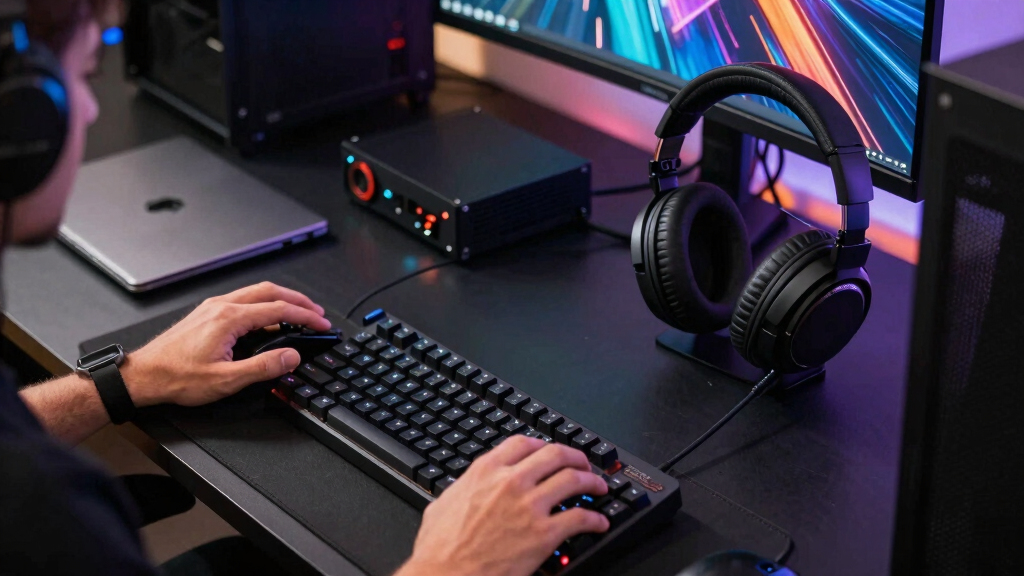

The best audiophile headphones for PC gaming combine wide open-back soundstages with tuning that makes footsteps and reloads easy to place — and the Sennheiser HD 560S is my best overall pick because its neutral tuning and precise imaging beat models costing twice as much for competitive play. If you want maximum treble detail on a tighter budget, the Beyerdynamic DT 990 PRO highlights positional cues aggressively, while the ASUS ROG Kithara is the standout for anyone who needs a built-in microphone. The main tradeoffs in this category come down to amplification needs, tuning philosophy, and whether you can live without a mic. High-impedance models like the 250-ohm DT 990 PRO sound thin and quiet without a dedicated amp, and warm flagships like the HD 650 trade footstep clarity for smoothness. Every pick here is open-back, so expect zero noise isolation and plenty of sound leakage. Keep reading for the full breakdown of all six, ranked by who each one actually suits best.

Play games on Amazon Luna for your game nights, included with Prime
- A rotating selection of games, no download needed
- Play on TV, laptop or phone
- Fast, free delivery for your gear, too
Complete the kit


Key Takeaways
- The Sennheiser HD 560S took first place at one of the lowest prices in the lineup — neutral tuning and sharp imaging mattered more for gaming than premium price tags.
- Three of the six picks (the 250-ohm DT 990 PRO and the 300-ohm HD 650 and HD 660S2) need a dedicated amp, adding $80 to $150 to their real cost; the HD 560S, HD 599, and ROG Kithara run fine off motherboard audio.
- All six finalists are wired and open-back — for desktop gaming, this category has effectively decided that soundstage width and zero latency beat isolation and wireless convenience.
- Only the ASUS ROG Kithara includes a microphone, so five of the six picks require a ModMic or desktop mic before you can talk in Discord.
- Treble tuning drew the clearest dividing line: brighter models suit competitive shooters, while warm models like the HD 650 and HD 599 fit immersive single-player games better.
| Sennheiser HD 660S2 – Audiophile Open-Back Over-Ear Headphones, Black |  | Best Overall | Driver: 42mm dynamic transducer | Frequency Response: 8 Hz – 41,500 Hz | Impedance: 300 Ohm | VIEW LATEST PRICE | See Our Full Breakdown |
| Beyerdynamic DT 990 PRO, 250 Ohm, Open Back, Over Ear Wired Headphones |  | Best for Competitive Play | Impedance: 250 Ohm | Type: Open-back, over-ear, wired | Cable: 3 m, coiled | VIEW LATEST PRICE | See Our Full Breakdown |
| ASUS ROG Kithara Gaming and Audiophile Open-Back Wired Headphones with Mic | 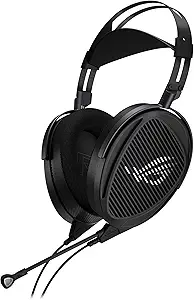 | Best with a Built-In Mic | Driver: 100mm HIFIMAN planar magnetic | Frequency Response: 20 Hz – 20 kHz | Microphone: Full-band MEMS boom | VIEW LATEST PRICE | See Our Full Breakdown |
| Sennheiser HD 560S Open-Back Over-Ear Wired Headphones, Black |  | Best Value | Design: Open-back, over-ear | Connectivity: Wired | Cable: Detachable | VIEW LATEST PRICE | See Our Full Breakdown |
| Sennheiser HD 650 Audiophile Open Back Headphones (Renewed) |  | Best Renewed Deal | Type: Open-back dynamic, over-ear | Frequency Response: 10 – 39,500 Hz | Impedance: Not specified in product data | VIEW LATEST PRICE | See Our Full Breakdown |
| Sennheiser HD 599 Open Back Headphones, Ivory |  | Best for Long Sessions | Brand: Sennheiser | Model: HD 599 (506831) | Design: Open-back, over-ear | VIEW LATEST PRICE | See Our Full Breakdown |
| audiophile headphones for PC gaming | Design | Frequency Response | Impedance | Connectivity |
|---|---|---|---|---|
| Sennheiser HD 660S2 | Open-back, over-ear | 8 Hz – 41,500 Hz | 300 Ohm | Wired |
| Beyerdynamic DT 990 PRO | — | — | 250 Ohm | — |
| ASUS ROG Kithara Gaming and Au | Open-back | 20 Hz – 20 kHz | — | 4.4mm balanced, 3.5mm, 6.3mm, USB-C adapter |
| Sennheiser HD 560S Open-Back O | Open-back, over-ear | 6 Hz – 38,000 Hz | 120 Ohm | Wired |
| Sennheiser HD 650 Audiophile O | Open back | 10 – 39,500 Hz | Not specified in product data | — |
| Sennheiser HD 599 Open Back He | Open-back, over-ear | — | — | Wired, 3.5 mm and 6.3 mm jacks |
More Details on Our Top Picks
Sennheiser HD 660S2 – Audiophile Open-Back Over-Ear Headphones, Black
I rank the Sennheiser HD 660S2 first because it balances immersion and long-session comfort better than anything else here. Its extended bass gives explosions and engines real weight, something the leaner Beyerdynamic DT 990 PRO can’t match, while the open-back stage keeps footsteps and gunfire easy to place. Compared with the HD 650 further down this list, it sounds warmer and fuller, and it’s easier to drive from a decent motherboard or dongle DAC.
The tradeoffs are price — it costs roughly double the Sennheiser HD 560S — and the usual open-back caveats: sound leaks in and out, so it’s a poor fit for shared rooms. There’s also no microphone, so plan on a separate mic for voice chat.
Pros:- Deep, extended bass gives game audio real weight
- Spacious open-back stage with precise positional imaging
- Plush ear cushions suit long sessions
- Refined tuning works for games and music alike
Cons:- Costs roughly double the Sennheiser HD 560S
- No microphone — voice chat needs a separate mic
- Open-back design leaks sound in both directions
Best for: PC gamers who want one refined headphone for immersive single-player games and music, and who already own a separate mic
Not ideal for: Budget buyers and anyone gaming in a shared or noisy room — it’s pricey and leaks sound freely
- Driver:42mm dynamic transducer
- Frequency Response:8 Hz – 41,500 Hz
- Impedance:300 Ohm
- Design:Open-back, over-ear
- Voice Coil:Aluminum
- Ear Pads:Plush cushions
- Connectivity:Wired
- Made In:Germany & Ireland
Our verdict“If you want the best-sounding open-back here for immersive PC gaming and can supply your own mic, this is the one to buy.”
Beyerdynamic DT 990 PRO, 250 Ohm, Open Back, Over Ear Wired Headphones
For competitive shooters, the Beyerdynamic DT 990 PRO is my pick. Its wide, airy soundstage makes positional cues — footsteps, reloads, flanking enemies — easier to localize than on the more intimate-sounding Sennheiser HD 660S2. The velour pads stay comfortable over marathon sessions, and it undercuts the HD 660S2 on price by a wide margin. The catch is the 250-ohm impedance: plugged into a weak motherboard jack it sounds thin and quiet, so budget for an amp or a decent DAC. The treble also runs bright, which some ears find sharp over hours of play. And like every open-back model here, including the Sennheiser HD 560S, it leaks sound freely in both directions.
Pros:- Exceptionally wide soundstage for pinpointing footsteps and gunfire
- Velour ear pads stay comfortable over long sessions
- Replaceable pads extend the headphone’s lifespan
- Strong performance-per-dollar against pricier Sennheisers
Cons:- 250-ohm impedance demands a dedicated amp or DAC
- Bright treble can turn sharp during long sessions
- Open-back build leaks sound and blocks nothing
Best for: Competitive FPS players who prioritize positional accuracy and already own (or will buy) a headphone amp
Not ideal for: Bass fans and treble-sensitive listeners, plus anyone without amplification for the 250-ohm load
- Impedance:250 Ohm
- Type:Open-back, over-ear, wired
- Cable:3 m, coiled
- Ear Pads:Grey velour, replaceable
- Color:Black
- Made In:Germany
Our verdict“The sharpest competitive imaging in this roundup, provided your setup can drive it.”
ASUS ROG Kithara Gaming and Audiophile Open-Back Wired Headphones with Mic
Every other headphone on this list needs a separate microphone for voice chat; the ASUS ROG Kithara solves that with a full-band MEMS boom mic, making it the only true single-headset option here for squad play. Its 100mm HIFIMAN planar magnetic drivers deliver a detailed, natural stage that trades blows with the Sennheiser HD 560S, and the bundled 4.4mm balanced, 3.5mm, 6.3mm and USB-C adapters cover almost any PC setup. The tradeoffs: it’s bulky next to the leaner Sennheisers, planar drivers want a capable DAC or amp to sound their best, and as a newer ROG product it lacks the long track record of Beyerdynamic or Sennheiser. Open-back leakage applies here too, so housemates will hear your matches.
Pros:- Built-in MEMS boom mic — the only pick here with voice chat included
- 100mm HIFIMAN planar drivers deliver detailed, natural sound
- 4.4mm balanced, 3.5mm, 6.3mm and USB-C adapters cover any PC
- Adjustable metal frame feels sturdy
Cons:- Bulky build is less desk- and travel-friendly
- Planar drivers want a capable DAC or amp to perform at their best
- Shorter track record than Sennheiser or Beyerdynamic flagships
Best for: Squad players who want audiophile-grade planar sound and clear voice chat from a single headset
Not ideal for: Minimalists who want a proven, lightweight classic and don’t mind adding a separate microphone
- Driver:100mm HIFIMAN planar magnetic
- Frequency Response:20 Hz – 20 kHz
- Microphone:Full-band MEMS boom
- Connectivity:4.4mm balanced, 3.5mm, 6.3mm, USB-C adapter
- Headband:Adjustable
- Frame:Metal
- Design:Open-back
Our verdict“The only headset here that covers high-end sound and team chat in one box.”
Sennheiser HD 560S Open-Back Over-Ear Wired Headphones, Black
The Sennheiser HD 560S is where I’d send most buyers on a budget. Its neutral, honest tuning presents game audio without hyped bass or piercing treble, and the stage is wide enough for accurate positioning — closer to the HD 660S2 than the price gap suggests. Unlike the 250-ohm Beyerdynamic DT 990 PRO, it runs happily off modest sources like a motherboard jack.
The detachable cable is a practical touch the Beyerdynamic lacks. What you give up: the mostly plastic build feels less premium than the HD 660S2’s, bass impact is polite, and the open-back design still leaks sound in both directions. For competitive play on a tight budget, though, it’s the easiest recommendation in this roundup.
Pros:- Neutral tuning keeps game audio honest and unhyped
- Runs happily off modest sources — no amp required
- Detachable cable with 6.35mm plug and 3.5mm adapter
- Light, comfortable velour fit for long sessions
Cons:- Mostly plastic build feels less premium than price rivals
- Polite bass next to the HD 660S2
- Leaks sound like every open-back here
Best for: Budget-conscious PC gamers who want accurate, unhyped sound straight from a motherboard or cheap dongle DAC
Not ideal for: Listeners chasing heavy bass impact or a premium metal build
- Design:Open-back, over-ear
- Connectivity:Wired
- Cable:Detachable
- Plug:6.35mm with 3.5mm adapter
- Impedance:120 Ohm
- Frequency Response:6 Hz – 38,000 Hz
- Color:Black
Our verdict“The smartest spend in the lineup — most of the HD 660S2’s clarity for a fraction of the price.”
Sennheiser HD 650 Audiophile Open Back Headphones (Renewed)
A decades-old classic, the Sennheiser HD 650 reaches a mid-range price through this renewed listing, and its smooth, refined mids flatter story-driven games and atmospheric soundtracks. It sounds richer than the Sennheiser HD 560S, though its stage is narrower than the Beyerdynamic DT 990 PRO’s, so positional cues feel a touch less precise in shooters. Buying renewed is the real gamble: cosmetic wear is possible, the warranty is shorter than new, and the product data omits impedance — I’d confirm specs with the seller before pairing it with your source, since the HD 650 traditionally wants an amp to shine. If the copy arrives in good shape, you’re getting near-flagship sound for HD 560S money.
Pros:- Smooth, refined mids flatter atmospheric games and music
- Wide 10–39,500 Hz frequency response
- Renewed pricing undercuts new audiophile flagships
- Precision damping keeps distortion low
Cons:- Renewed condition and shorter warranty are a gamble
- Impedance isn’t listed — confirm it matches your amp before buying
- Narrower stage than the DT 990 PRO for competitive cues
Best for: Bargain hunters comfortable with renewed gear who want a classic audiophile sound for story-driven games and music
Not ideal for: Competitive players who need the widest possible stage, or buyers who want a full new-product warranty
- Type:Open-back dynamic, over-ear
- Frequency Response:10 – 39,500 Hz
- Impedance:Not specified in product data
- Connector:3.5mm jack
- Condition:Renewed
- Design:Open back
Our verdict“A legendary headphone at a discount, as long as you accept the renewed-condition risk.”
Sennheiser HD 599 Open Back Headphones, Ivory
The Sennheiser HD 599 is the pair I’d hand to someone who games for hours and cares more about comfort than chasing the last bit of treble detail. Compared with the HD 560S, its tuning is warmer and more relaxed: the 560S reads footsteps with flatter, more analytical precision, while the 599’s softer top end is easier on ears across marathon sessions, and its plush velour pads outlast the clamp of the Beyerdynamic DT 990 PRO. The open-back stage feels wide, which helps with positional cues in shooters, though it leaks sound freely and won’t block a noisy room. There’s also no mic, unlike the ASUS ROG Kithara, so squad players need a separate microphone. The tradeoff here is refinement and ease over raw competitive edge.
Pros:- Warm, relaxed tuning stays easy on ears over long sessions
- Wide open-back soundstage helps with positional awareness in games
- Velour pads and gentle clamp keep comfort high for hours
- Two detachable cables (3 m and 1.2 m) cover desk and shorter-run setups
Cons:- Leaks sound freely and isolates poorly, so it demands a quiet, private space
- No built-in microphone, unlike gaming-focused rivals such as the ASUS ROG Kithara
- Warm tuning softens the treble detail competitive players rely on for footsteps
Best for: PC gamers who play for hours at a stretch in a quiet room and want audiophile-grade sound without ear fatigue
Not ideal for: Competitive players in shared or noisy spaces — the open-back leak disturbs others, and the lack of a mic means buying a separate one for team chat
- Brand:Sennheiser
- Model:HD 599 (506831)
- Design:Open-back, over-ear
- Connectivity:Wired, 3.5 mm and 6.3 mm jacks
- Cables:3 m and 1.2 m detachable cables included
- Ear Pads:Velour
- Finish:Ivory with matte metallic accents
- Warranty:1 year
Our verdict“The HD 599 is my pick for PC gamers who put all-evening comfort and a wide, relaxed sound ahead of tournament-grade treble precision.”
How We Picked
I judged each headphone against the criteria that decide real PC gaming sessions rather than spec-sheet beauty contests. Positional accuracy and imaging carried the most weight, because hearing exactly where a footstep or reload comes from wins more fights than lush mids ever will. Tuning came next — neutral and bright signatures reveal game cues that warm, bass-heavy signatures bury, which is why some expensive models sit below cheaper ones in this order. Drivability mattered too: a headphone that needs a $120 amp to reach its potential is a different value proposition than one that performs from a motherboard jack, and that hidden cost was folded into each ranking. Comfort over long sessions, build quality, cable practicality, and microphone readiness rounded out the scoring.
The ranking reflects gaming performance first, music fidelity second. Models that help you place enemies ranked above models that simply sound beautiful, which is how the mid-priced HD 560S landed above the HD 650 and HD 660S2. Each entry was also weighed by who it suits: a headphone can rank fourth overall and still be the right first choice for a specific buyer, and the individual reviews spell out exactly those cases.
| audiophile headphones for PC gaming | Design | Ear Pads |
|---|---|---|
| Sennheiser HD 660S2 | Open-back, over-ear | Plush cushions |
| Beyerdynamic DT 990 PRO | — | Grey velour, replaceable |
| ASUS ROG Kithara Gaming and Au | Open-back | — |
| Sennheiser HD 560S Open-Back O | Open-back, over-ear | — |
| Sennheiser HD 650 Audiophile O | Open back | — |
| Sennheiser HD 599 Open Back He | Open-back, over-ear | Velour |
Factors to Consider When Choosing Best Audiophile Headphones For PC Gaming
The six headphones in this roundup share a lot of DNA — all wired, all open-back, all from brands with serious audio pedigree — so the buying decision hinges on a handful of factors that spec sheets rarely explain. This guide covers what actually separates a great gaming listen from an expensive disappointment, including the hidden costs most buyers miss.
Open-Back vs Closed-Back: Why Every Pick Here Leaks Sound
Every model in this roundup is open-back, and that is not an accident. Open earcups let air and sound move freely, which produces a wider, more natural soundstage — the sense that audio exists in a room around you rather than inside your skull. For gaming, that width helps you judge whether footsteps are in the hallway or the next building over. The tradeoff is total: open-back headphones block no outside noise and leak everything you hear, so a loud PC fan, a roommate, or traffic outside will intrude on your session, and anyone nearby will hear your game. If you play in a shared or noisy space, no audiophile open-back will fix that — a closed-back model like the Beyerdynamic DT 770 would serve you better. Buyers in quiet, private rooms should treat open-back as a feature; everyone else should treat it as a dealbreaker.
Impedance and Amplification: The Hidden Cost
Half this lineup — the 250-ohm DT 990 PRO and the 300-ohm HD 650 and HD 660S2 — needs more clean power than a typical motherboard jack delivers. Plug them straight into a budget PC and you get quiet, compressed sound with weak dynamics, which is the single most common mistake new audiophile buyers make. A modest USB DAC/amp combo costing $80 to $150 solves the problem, but that money belongs in your budget from the start. The HD 560S, HD 599, and ROG Kithara all run comfortably off onboard audio, which is part of why they rank as the easier recommendations. One more wrinkle: even gaming motherboards that advertise high-impedance support often pick up electrical interference from the GPU and CPU, so a capable onboard jack can still add hiss. If you are not willing to buy an amp, filter your shortlist to low-impedance models and save yourself the frustration.
Imaging vs Soundstage: What Actually Helps You Win
Marketing loves the word soundstage, but for competitive play imaging — the precision of positional cues — matters more than sheer width. A headphone with a modest stage and sharp imaging tells you exactly which direction a reload came from; a wide, blurry stage tells you it came from somewhere on the left. Tuning plays the bigger role: a neutral or bright signature keeps footsteps audible because those cues live in the midrange and treble, while heavy bass can mask them entirely. This is why the HD 560S and DT 990 PRO outrank the warmer HD 650 for shooters, even though the HD 650 costs more renewed than either does new. Software matters too — Windows Spatial Sound, Dolby Atmos for Headphones, and DTS Headphone:X all work with any of these wired models, and a clean stereo signal usually beats gimmicky virtual 7.1 from cheap gaming headsets. Single-player fans can flip the priority: warm, bass-rich tuning adds weight to explosions and scores, where positional precision barely matters.
Solving the Microphone Problem
Only one of these six, the ASUS ROG Kithara, includes a microphone, and that gap catches more buyers off guard than any spec-sheet detail. Audiophile headphones assume you will handle voice separately, so plan on one of three fixes: an attachable boom mic like the Antlion ModMic (around $50 to $130), a desktop USB microphone (from $40 up), or a cheap clip-on lavalier if you only chat casually. The ModMic route keeps headphone quality highest and is what most long-time PC gamers settle on, but it adds a second cable to manage. Desktop mics sound the best to your teammates and double for streaming, though they pick up mechanical keyboard noise unless you position them carefully and use a noise gate. If your squad lives in Discord every night and cable clutter already bothers you, a mic-equipped model is not a compromise — it is the right tool, and you should weight that convenience heavily against a small loss in pure audio refinement.
Where the Diminishing Returns Kick In
For gaming specifically, the performance curve flattens fast above roughly $150 to $250. In that bracket you get accurate imaging, real soundstage width, and comfort good enough for five-hour sessions — everything a competitive player needs. Spending more, as with the HD 660S2, buys refinement you will notice most in music: smoother treble, better-textured bass, more natural vocals. Those gains are real, but they do not help you hear a flanker any sooner. The honest advice is to buy for your dominant use case: if 70% of your listening is ranked Valorant and 30% is Spotify, the cheaper neutral model wins; if those numbers reverse, the premium tier earns its price. Also budget for the full chain — a $180 headphone plus a $120 amp and a $60 mic is a $360 system, and comparing that total against a $250 mic-equipped alternative is the fair fight.
Frequently Asked Questions
Do I need a DAC or amp for audiophile headphones on PC?
It depends on impedance, and this roundup splits cleanly in half. The Sennheiser HD 560S, HD 599, and ASUS ROG Kithara all run fine from a standard PC audio jack, though a cheap USB dongle DAC can still clean up background hiss from motherboard interference. The Beyerdynamic DT 990 PRO (250 ohm), HD 650, and HD 660S2 (both 300 ohm) genuinely need an amplifier — plugged straight in, they will sound quiet and flat no matter how far you push the volume slider. A basic amp/DAC combo from brands like FiiO, iFi, or Schiit costs $80 to $150 and fixes the problem completely. If you do not want that extra box on your desk, choose from the low-impedance half of this list rather than hoping your motherboard is the exception.
Are open-back headphones actually better for gaming than closed-back?
For most PC gamers, yes — with one big condition. Open-back designs produce a wider, more natural soundstage, which makes directional audio easier to parse and long sessions less fatiguing because pressure and heat do not build up around your ears. The condition is your environment: open-back headphones block no noise and leak all of yours, so they only make sense in a quiet, private room. If you game in a shared living room, a noisy apartment, or a dorm, a closed-back audiophile model or a good closed gaming headset will serve you better even if the stage sounds narrower. Every pick in this roundup is open-back because that is where the best gaming sound lives — but that choice assumes silence on your side of the earcups.
How do I talk to teammates in Discord if my headphones have no mic?
You add a separate mic, and it is less painful than it sounds. The most popular fix is an attachable boom mic such as the Antlion ModMic, which sticks onto any of these headphones and plugs in alongside the audio cable; expect to pay $50 to $130 depending on the version. A desktop USB microphone sounds better and starts around $40, but it will pick up keyboard clatter unless you angle it away and enable Discord’s noise gate. Budget buyers can even start with a $15 lavalier clipped to a shirt collar, which still beats most built-in headset mics. If managing two cables or devices sounds annoying from day one, that is your signal to pick the ROG Kithara from this list — it is the only model here with a microphone already attached.
Do more expensive audiophile headphones give you a competitive advantage?
No — and this comparison makes that plain. The top-ranked model for competitive play, the Sennheiser HD 560S, costs less than half what the HD 660S2 does, because positional audio depends on tuning and imaging rather than price. Expensive audiophile headphones earn their premium in texture, naturalness, and musical refinement — qualities you notice in a film score or a favorite album, not in a footstep. Warm, smooth flagships like the HD 650 actually soften the treble region where many game cues live, which can work against you in a shooter. Spend more when your use case leans toward music, movies, and story-driven games where immersion beats information; spend smart, not big, when the goal is ranked ladder points.
Should I buy an audiophile headphone or a gaming headset at the same price?
At the same price, the audiophile headphone almost always sounds better — that is the core argument of this entire roundup. Gaming headsets spend their budget on features: wireless radios, RGB, software suites, bundled mics, while wired audiophile models put nearly everything into driver quality and acoustic design. The headset wins on convenience, though: one purchase gets you a mic, wireless freedom, and console compatibility with no extra boxes. Before choosing, ask yourself two questions: will you actually buy and set up a separate mic within a week, and do you value wireless more than raw sound quality? Honest answers there settle the debate faster than any spec comparison.
Conclusion
After ranking all six through a gaming-first lens, the decision comes down to your budget, your desk setup, and what you play. The best overall pick is the Sennheiser HD 560S — accurate, affordable, and amp-free, it is the pair I’d hand to almost any PC gamer. Competitive players on a budget who own an amp (or will buy one) should grab the Beyerdynamic DT 990 PRO, the best value for pure positional detail, provided its bright treble suits your ears. The Sennheiser HD 660S2 is the best premium choice for players who split their time between gaming and serious music listening, while the renewed HD 650 is the smart buy for single-player fans who want flagship smoothness at a discount — just budget for amplification with both. Beginners who want zero extra gear should start with the comfortable, easy-driving HD 599, and anyone whose squad chat matters as much as their soundstage should pick the ASUS ROG Kithara, the only mic-equipped option here. Whichever route you take, every model on this list out-sounds a same-priced gaming headset — the only question is which tradeoffs fit your setup.
Halloween Picks
halloween
As an affiliate, we earn on qualifying purchases.