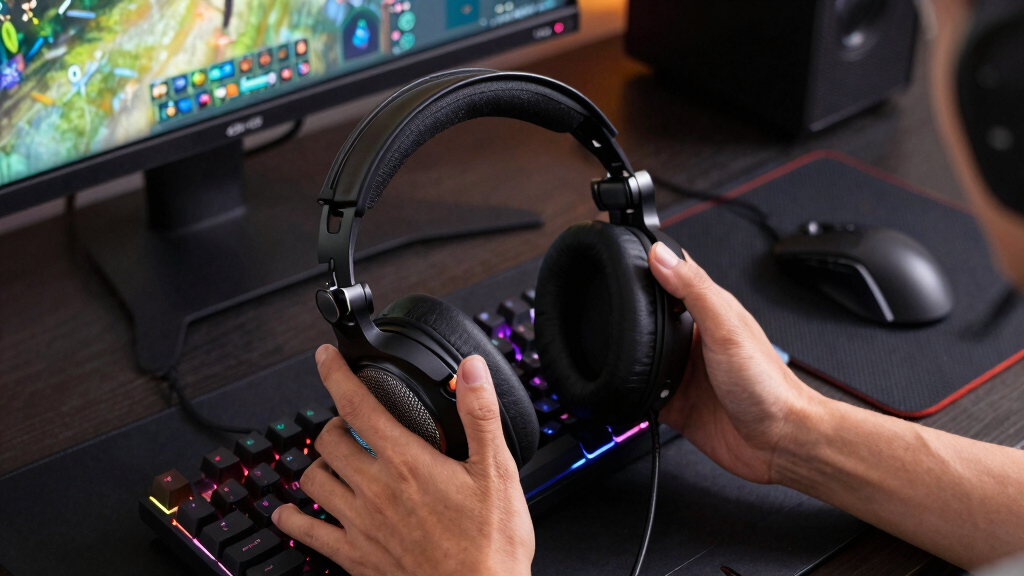

The Beyerdynamic DT 900 PRO X is my best overall choice among the best open back headphones for gaming because it combines precise directional cues, controlled sound, and relatively friendly power requirements. I rank the Sennheiser HD 560S as the stronger value for competitive play, while the Philips Fidelio X2HR is better suited to cinematic single-player games. The main tradeoffs are positional precision versus bass impact, easy device compatibility versus amplifier dependence, and headphone-grade sound versus the convenience of an attached microphone. Open designs also leak sound and provide little isolation, making the room around you part of the buying decision. Continue reading for my full ranking logic, buyer guidance, and recommendations for different gaming setups.

Play games on Amazon Luna for your game nights, included with Prime
- A rotating selection of games, no download needed
- Play on TV, laptop or phone
- Fast, free delivery for your gear, too
Complete the kit


Key Takeaways
- The DT 900 PRO X leads the ranking because its imaging, balanced presentation, replaceable cable, and manageable power needs create the most complete gaming package.
- The HD 560S offers the strongest value for competitive players, trading some of the DT 900 PRO X’s build refinement for clear positional information at a lower typical price.
- The Fidelio X2HR favors immersion over competition; its fuller low end gives action games more weight, but it is less focused than the two leaders when locating subtle movement.
- The ROG Kithara and INZONE H6 reduce microphone friction, while most audiophile models in this roundup require a separate mic and possibly extra cabling.
- Higher price does not guarantee a higher gaming rank: the HD 650 and HD 660S2 are compelling music-first choices, but their cost and presentation provide less gaming-specific value.
| Beyerdynamic DT 900 PRO X |  | Best Overall | Design: Open-back, over-ear | Frequency Range: 5–40,000 Hz | Impedance: 48 ohms | VIEW LATEST PRICE | See Our Full Breakdown |
| Sennheiser HD 560S |  | Best Value Pick | Design: Open-back | Fit: Over-ear | Connectivity: Wired | VIEW LATEST PRICE | See Our Full Breakdown |
| Philips Fidelio X2HR |  | Best for Cinematic Gaming | Design: Open-back, over-ear | Driver Size: 50 mm | Driver Material: Neodymium | VIEW LATEST PRICE | See Our Full Breakdown |
| ASUS ROG Kithara | 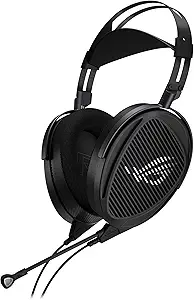 | Best Premium Gaming Headset | Design: Open-back | Driver Type: HIFIMAN planar magnetic | Driver Size: 100 mm | VIEW LATEST PRICE | See Our Full Breakdown |
| Sony INZONE H6 Air |  | Best Lightweight Gaming Headset | Type: Open-back wired gaming headset | Drivers: 40 mm high-definition | Weight: 199 g | VIEW LATEST PRICE | See Our Full Breakdown |
| Beyerdynamic DT 990 PRO, 250 Ohm |  | Best for Positional Detail | Impedance: 250 ohms | Acoustic design: Open-back | Fit: Over-ear | VIEW LATEST PRICE | See Our Full Breakdown |
| Sennheiser HD 650 (Renewed) |  | Best for Story-Driven Games | Condition: Renewed | Frequency response: 10–41,000 Hz | Driver type: Dynamic | VIEW LATEST PRICE | See Our Full Breakdown |
| Sennheiser HD 599 Open Back Headphones |  | Best for Marathon Comfort | Acoustic design: Open-back | Connection: Wired | Cable design: Detachable | VIEW LATEST PRICE | See Our Full Breakdown |
| Sennheiser HD 660S2 |  | Best Premium Immersion | Model number: 700240 | Type: Open-back, over-ear headphones | Connectivity: Wired | VIEW LATEST PRICE | See Our Full Breakdown |
More Details on Our Top Picks
Beyerdynamic DT 900 PRO X
I rank the Beyerdynamic DT 900 PRO X as Best Overall because it balances positional precision, long-session comfort, and repair-friendly construction better than the other options here. Its wide, natural soundstage and detailed spatial imaging help separate footsteps, gunfire, and environmental cues without limiting it to competitive play. Compared with the Sennheiser HD 560S, the locking mini-XLR connection and serviceable parts make this the stronger long-term purchase, while the two supplied cables suit both desk and living-room setups. The tradeoff is a heavier 345-gram build, and the 48-ohm drivers benefit from capable amplification. It also lacks the built-in microphone found on the ASUS ROG Kithara and Sony INZONE H6. I favor it for buyers who prioritize sound accuracy over headset convenience.
Pros:- Detailed spatial imaging supports accurate enemy placement
- Natural sound reproduction works for gaming, music, and editing
- Soft velour pads suit extended desk sessions
- Detachable locking cables and serviceable parts improve longevity
Cons:- No integrated microphone for team communication
- The 345-gram build is relatively heavy
- A capable headphone output or amplifier is preferred for its best performance
Best for: PC and console gamers who want precise directional audio, neutral reproduction, and replaceable components for a permanent desk setup
Not ideal for: Players who need an integrated microphone or frequently game in noisy shared rooms, since the open cups leak sound and provide little isolation
- Design:Open-back, over-ear
- Frequency Range:5–40,000 Hz
- Impedance:48 ohms
- Weight:0.76 lb (345 g)
- Cable Lengths:1.8 m and 3 m
- Cable Connector:Locking mini-XLR
- Audio Connectors:3.5 mm plug with 6.3 mm adapter
Our verdict“I recommend the DT 900 PRO X as the most balanced choice for gamers willing to add a separate microphone.”
Sennheiser HD 560S
The Sennheiser HD 560S is my Best Value Pick for players seeking neutral sound and an expansive presentation without moving into elaborate gaming-headset hardware. Its open construction gives directional effects room to breathe, while the ventilated velour pads support lengthy sessions. Against the Beyerdynamic DT 900 PRO X, this model offers a simpler route to accurate wired listening, though it lacks the Beyerdynamic’s locking mini-XLR cable, serviceable design emphasis, and supplied cable choices. It also omits a microphone, onboard controls, and wireless connectivity, so voice chat requires another device. The detachable cable and included adapter broaden source compatibility, but the 6.35 mm termination is less convenient for controllers until the adapter is fitted. I see the HD 560S as the straightforward accuracy-first choice, provided isolation and portability are not priorities.
Pros:- Neutral presentation keeps positional effects clear and balanced
- Open-back soundstage creates a natural sense of space
- Ventilated velour pads support long gaming sessions
- Detachable cable includes connections for 6.35 mm and 3.5 mm sources
Cons:- No microphone or headset controls
- Open cups leak audio and block little external noise
- Wired design is less convenient for portable and couch use
Best for: Value-focused desktop gamers who want neutral positional audio and already own a separate USB or boom microphone
Not ideal for: Controller-first or portable players who want a short cable, integrated controls, wireless freedom, or isolation from household noise
- Design:Open-back
- Fit:Over-ear
- Connectivity:Wired
- Cable:Detachable
- Audio Connection:6.35 mm plug with 3.5 mm adapter
- Ear Pads:Ventilated velour
- Color:Black
Our verdict“I would choose the HD 560S for accurate, uncomplicated gaming audio when a separate microphone is already available.”
Philips Fidelio X2HR
I give the Philips Fidelio X2HR the Best for Cinematic Gaming role because its 50 mm high-definition drivers and open architecture favor a large, immersive presentation for exploration, racing, and story-led games. Compared with the Sennheiser HD 560S, the Fidelio places more emphasis on substantial driver hardware and plush memory-foam construction than on being a stripped-back neutral listening tool. Replaceable velour pads and the adjustable leather headband also make sense for long campaigns, while the detachable 3.5 mm cable is easier to replace than a fixed lead. This is still a conventional pair of headphones: there is no boom microphone, spatial-processing suite, or mute control like those supplied with the Sony INZONE H6. Its open cups also spill game audio into the room. I prefer it for immersive solo play rather than travel or team-focused competition.
Pros:- Large 50 mm neodymium drivers support high-resolution playback
- Open construction creates an expansive presentation for cinematic games
- Replaceable memory-foam velour pads add long-term comfort
- Detachable 3.5 mm cable is convenient to replace
Cons:- No microphone or gaming controls
- Sound leakage makes it unsuitable for shared quiet spaces
- Wired, open construction limits portable use
Best for: Single-player gamers who want a spacious presentation, large drivers, and breathable over-ear comfort for long campaigns
Not ideal for: Competitive team players who need a boom microphone and quick mute controls, or anyone sharing a quiet room
- Design:Open-back, over-ear
- Driver Size:50 mm
- Driver Material:Neodymium
- Connectivity:Wired
- Cable:Detachable 3.5 mm
- Ear Pads:Replaceable memory-foam velour
- Headband:Adjustable leather
- Included Accessories:Adapter and cable-management clip
Our verdict“I recommend the Fidelio X2HR to solo gamers who value spacious sound and plush comfort more than headset features.”
ASUS ROG Kithara
The ASUS ROG Kithara earns my Best Premium Gaming Headset position by combining 100 mm HIFIMAN planar-magnetic drivers with a full-band MEMS boom microphone. That pairing targets buyers who want audiophile-style hardware and direct team communication in one unit. The Beyerdynamic DT 900 PRO X remains my better all-around recommendation because its lighter demands and studio-oriented serviceability suit more setups, but the Kithara offers the more complete communication package. It also reaches more sources through 4.4 mm balanced, 3.5 mm, 6.3 mm, and USB-C connections. Those capabilities bring added bulk and complexity: an external DAC or amplifier is preferred for the planar drivers, and this is poorly suited to portable use. Open cups leak sound as well. I reserve it for buyers prepared to build a high-end wired gaming station around the headset.
Pros:- Large planar-magnetic drivers provide spacious high-fidelity sound
- Full-band MEMS boom microphone supports clear team communication
- Balanced, analog, and USB-C adapters cover many gaming sources
- Metal frame and adjustable headband suit a permanent premium setup
Cons:- External DAC or amplifier is preferred for its best performance
- Large 100 mm driver structure can feel bulky
- Open-back leakage reduces privacy and isolation
Best for: Enthusiast PC gamers who want planar-magnetic audio, a high-grade boom microphone, and broad DAC or amplifier connectivity
Not ideal for: Casual console or mobile players who want a compact plug-and-play headset without extra audio hardware
- Design:Open-back
- Driver Type:HIFIMAN planar magnetic
- Driver Size:100 mm
- Frequency Response:20 Hz–20 kHz
- Microphone:Full-band MEMS boom microphone
- Connections:4.4 mm balanced, 3.5 mm, 6.3 mm, and USB-C adapter
- Compatibility:DACs, amplifiers, PC, consoles, and mobile devices
- Build:Adjustable headband, metal frame, and metal hinges
Our verdict“I would pick the ROG Kithara for a premium desk system where planar sound and an integrated microphone justify the extra hardware.”
Sony INZONE H6 Air
I select the Sony INZONE H6 Air as the Best Lightweight Gaming Headset because its 199-gram frame combines open-back listening with the practical features competitive players expect. A detachable cardioid microphone, physical volume and mute controls, and support for PC, PS5, and mobile make it easier to deploy than the headphone-only Sennheiser HD 560S. It is also far lighter and less equipment-heavy than the planar-magnetic ASUS ROG Kithara. Sony’s 360 Spatial Sound can aid directional awareness, but it requires the USB-C audio box, which limits where that feature works. The 40 mm drivers are more modest than the Kithara’s 100 mm planar units, and wired connectivity prevents room-to-room freedom. As with every open model here, outside noise remains audible and game sound escapes. I favor it for comfort and communication, not isolation or audiophile expansion.
Pros:- Low 199-gram weight reduces strain during long sessions
- Detachable cardioid microphone supports focused voice communication
- Integrated volume and mute controls simplify mid-game adjustments
- PC, PS5, and mobile compatibility covers common gaming platforms
Cons:- 360 Spatial Sound requires the USB-C audio box
- Wired-only operation restricts movement
- Open cups leak sound and provide little isolation
Best for: PC and PS5 players who need a very light wired headset with detachable voice chat and easy-access controls
Not ideal for: Gamers seeking wireless movement or full spatial processing from any analog source, since 360 Spatial Sound depends on the USB-C audio box
- Type:Open-back wired gaming headset
- Drivers:40 mm high-definition
- Weight:199 g
- Microphone:Detachable cardioid boom microphone
- Sound Technology:360 Spatial Sound and custom equalizer
- Compatibility:PC, PS5, and mobile
- Materials:Premium aluminum
- Controls:Volume and microphone mute
Our verdict“I recommend the INZONE H6 Air for players who prioritize low weight and built-in chat controls across PC and PS5.”
Beyerdynamic DT 990 PRO, 250 Ohm
I rank the Beyerdynamic DT 990 PRO as Best for Positional Detail because its bright, spacious presentation can make footsteps and directional effects easier to separate in competitive matches. Compared with the warmer Sennheiser HD 650, it emphasizes upper-frequency cues and creates a broader-feeling stage, but that same tuning can make gunfire and sharp effects tiring. The 250-ohm load also means I would pair it with a capable desktop interface or headphone amplifier; a weak controller output may sound underpowered. Its soft velour pads suit long sessions, while the coiled cable works better at a desk than across a room. It ranks below easier gaming picks such as the DT 900 PRO X because amplification is a real extra cost, and its open cups leak audio into shared spaces.
Pros:- Bright, spacious sound highlights positional cues
- Soft replaceable velour pads support extended sessions
- Precise presentation works well for competitive games
- Durable German-made construction
Cons:- 250-ohm impedance often calls for additional amplification
- Bright tuning can make sharp effects fatiguing
- Open cups leak sound and provide little isolation
Best for: PC gamers with a capable amplifier or audio interface who prioritize footsteps, directional effects, and a wide-feeling presentation
Not ideal for: Controller users with low-power outputs, treble-sensitive listeners, and anyone gaming near people who could hear the open cups
- Impedance:250 ohms
- Acoustic design:Open-back
- Fit:Over-ear
- Connection:Wired
- Cable:3 m coiled cable
- Plug and adapter:3.5 mm plug with 1/4-inch adapter
- Manufacturing:Handcrafted in Germany
Our verdict“I recommend the DT 990 PRO to competitive PC players who already own suitable amplification and value directional clarity over relaxed tuning.”
Sennheiser HD 650 (Renewed)
I give the Sennheiser HD 650 (Renewed) the Best for Story-Driven Games role because its refined midrange favors voices, orchestral scores, and long, relaxed sessions over exaggerated competitive cues. Against the Beyerdynamic DT 990 PRO, it is less sharp and potentially easier on treble, though its more intimate presentation is not as helpful when I want maximum apparent distance between footsteps. The hand-matched dynamic drivers and low-distortion magnet system support consistent left-right balance, which matters for believable placement. Still, the renewed condition adds uncertainty around cosmetic wear, pad life, and included extras, while open cups provide no privacy. I also place the HD 660S2 above it for buyers seeking deeper bass and a more current premium package. This is a sound-first gaming choice, not a plug-and-play headset with a microphone or wireless freedom.
Pros:- Refined midrange gives dialogue and soundtracks a natural character
- Hand-selected matched drivers support consistent channel performance
- Low-distortion magnet system favors clean, controlled playback
- Relaxed presentation suits long narrative sessions
Cons:- Renewed condition may bring cosmetic wear or reduced pad life
- Less spacious-feeling for competitive positioning than brighter alternatives
- Included accessories are not clearly stated
Best for: Single-player gamers who value natural dialogue, music, and fatigue-resistant listening and are comfortable buying renewed equipment
Not ideal for: Competitive players seeking the broadest positional presentation or shoppers who want predictable condition, included accessories, and built-in voice chat
- Condition:Renewed
- Frequency response:10–41,000 Hz
- Driver type:Dynamic
- Acoustic design:Open-back
- Connector:3.5 mm jack
- Driver matching:Hand-selected matched drivers
- Magnet system:Optimized for minimal distortion and high efficiency
Our verdict“I would choose the renewed HD 650 for narrative gaming and music listening when tonal refinement matters more than competitive positioning or headset conveniences.”
Sennheiser HD 599 Open Back Headphones
I name the Sennheiser HD 599 the Best for Marathon Comfort because its velour pads, padded headband, and manageable 1.2-meter cable make long desk or sofa sessions easier to arrange. The included 3-meter lead also gives it more setup flexibility than the fixed coiled cable on the Beyerdynamic DT 990 PRO. Its spacious, relaxed presentation fits exploration games and cinematic campaigns; I would still choose the DT 990 PRO when sharper directional cues matter more, or the HD 660S2 when bass depth and finer detail justify a larger budget. Detachable cables are a useful ownership advantage, yet this remains a fully wired pair with no integrated chat features. Comfort and connection flexibility drive its ranking, while sound leakage and limited isolation make it a poor match for shared rooms or noisy households.
Pros:- Velour pads and padded headband favor extended gaming sessions
- Two detachable cable lengths accommodate different setups
- Open presentation suits exploration and cinematic games
- Replaceable connections are more practical than a fixed cable
Cons:- Directional cues are less pronounced than on brighter competitive options
- Open construction leaks audio and blocks little outside noise
- Wired design lacks integrated voice-chat features
Best for: Casual desk and sofa gamers who prioritize long-session comfort and need both short 3.5 mm and long 6.3 mm cable options
Not ideal for: Competitive players seeking sharper positional emphasis or people who need wireless movement, built-in chat, or isolation from household noise
- Acoustic design:Open-back
- Connection:Wired
- Cable design:Detachable
- Cable lengths:1.2 m and 3 m
- Connectors:3.5 mm and 6.3 mm
- Ear pads:Velour
- Headband:Padded
- Finish:Matte
- Color:Ivory
Our verdict“I recommend the HD 599 to comfort-focused gamers who want flexible cabling and relaxed sound without paying for the HD 660S2.”
Sennheiser HD 660S2
I assign the Sennheiser HD 660S2 the Best Premium Immersion role because its deeper bass, articulate highs, and open presentation are well matched to cinematic action, environmental ambience, and music-heavy games. Compared with the HD 650, it is the stronger choice when low-frequency effects need more weight; compared with the HD 599, it offers a more refined package but asks for a much larger spend. The 4.4 mm and 6.3 mm cables add value for dedicated desktop gear, and the 3.5 mm adapter broadens compatibility, though none of that replaces a gaming microphone. I rank it behind gaming-specific options such as the ASUS ROG Kithara for players who want integrated voice chat. Its appeal is fidelity rather than convenience: the wired design restricts movement, open cups admit room noise, and the premium price is hard to justify for casual play.
Pros:- Deep bass gives cinematic effects greater weight
- Detailed highs and rich mids serve games and music equally well
- Includes balanced and standard cables for desktop audio systems
- Carry pouch and adapter create a fuller accessory package
Cons:- Premium price is difficult to justify for casual gaming
- No integrated microphone or wireless mode
- Open cups admit noise and leak game audio
Best for: Enthusiast PC gamers with dedicated audio equipment who want rich bass, detailed game audio, and strong music performance from one premium pair
Not ideal for: Budget-conscious or multiplayer-focused gamers who need wireless movement, built-in voice chat, or isolation in a noisy room
- Model number:700240
- Type:Open-back, over-ear headphones
- Connectivity:Wired
- Cable length:1.8 m
- Listed frequency response:27.5 Hz to 45–60 Hz
- Included cables:6.3 mm cable and 4.4 mm cable
- Adapter:6.3 mm to 3.5 mm
- Storage:Carry pouch included
- Warranty:2 years
Our verdict“I would pick the HD 660S2 for premium single-player immersion and music, provided the price and lack of gaming-specific features are acceptable.”
How We Picked
I ranked these headphones through a gaming-specific lens, placing the most weight on directional imaging, separation during busy scenes, tonal balance, and the ability to reveal quiet cues without making gunfire or dialogue unpleasant. I also examined comfort during long sessions, cable practicality, replacement parts, microphone needs, and compatibility with controllers, laptops, and desktop audio gear. A broad soundstage earned credit only when sounds remained easy to place; width without accurate positioning did not score as highly. Build quality and music performance influenced the order, but neither could compensate for weak gaming value. Price was judged against the complete setup, including any likely expense for a microphone or amplifier.
This logic places the DT 900 PRO X first as the most balanced all-rounder, followed by the HD 560S for value-focused competitive play and the Fidelio X2HR for immersive gaming. I put the ROG Kithara fourth because its gaming-oriented microphone setup is useful, while the INZONE H6 follows as the more approachable headset-style choice. The DT 990 PRO sits sixth: its directional presentation remains appealing, but the 250-ohm load, fixed cable, and bright treble narrow its audience. I rank the HD 650 and HD 599 seventh and eighth, favoring the former for relaxed music crossover and the latter for comfort-focused casual play. The HD 660S2 finishes ninth under this specific ranking method because it is the premium music-first option, not because it lacks refinement; its price produces less extra gaming benefit than the leaders.
Factors to Consider When Choosing Best Open Back Headphones For Gaming
I would choose open-back gaming headphones by starting with the room, source device, and games they will serve rather than chasing the most expensive driver. Competitive shooters, cinematic adventures, and mixed gaming-music setups reward different sound profiles. The complete cost may also include a microphone, amplifier, extension cable, or replacement pads. The factors below help separate useful upgrades from specifications that rarely change the result.
Imaging Matters More Than Maximum Soundstage
I separate imaging, which describes how clearly a headphone places sounds, from soundstage, which describes the apparent size of the space. A very wide presentation can make a game feel expansive while leaving footsteps vague or farther away than expected. Competitive players should favor stable left-to-right movement, a convincing center image, and clear separation when several effects overlap. Single-player fans may accept softer placement in exchange for greater scale, bass weight, and atmosphere. I also avoid judging positional ability from music descriptions alone because game audio engines and virtual surround processing can change the presentation. For most buyers, accurate placement beats exaggerated width.
Match Power Requirements to the Gaming Source
I check impedance and sensitivity together because impedance alone does not reveal how loudly a headphone will play from a given source. A desktop interface may handle a demanding model comfortably, while a controller output can sound quiet or lose dynamic impact. Buying a 250-ohm headphone for direct controller use is a common mismatch, especially when party chat and game volume must share limited output power. An amplifier can solve the power problem, but it adds cost, cables, and another volume control to the desk. Models with easier power demands make more sense for laptops, handheld systems, and frequent device switching. I would reserve amplifier-dependent choices for a fixed setup where their sound justifies the added hardware.
Plan the Microphone and Cable Setup
Most audiophile open-back headphones omit a microphone, so I treat voice chat as part of the system rather than an afterthought. A desktop USB mic can sound clear, yet it occupies desk space and may capture keyboard noise or sound leaking from the earcups. An attachable boom mic is tidier, but compatibility depends on the headphone’s connector and whether its cable can be replaced. Headset-style options simplify connection and mute controls, although they may offer fewer opportunities to replace cables or upgrade individual parts. Console players should also check whether a combined headset plug, adapter, or separate USB connection is required. The right choice is the one that gives you reliable chat without cable clutter.
Treat Comfort as a Long-Term Performance Feature
I give clamping force, pad material, weight distribution, and cup depth more attention than cosmetic design. Mild pressure during a short session can become distracting after several hours, while shallow pads may let the driver housing touch the ear. Velour and fabric surfaces often feel cooler than sealed synthetic leather, though they can absorb skin oils and require more frequent cleaning. Replaceable pads extend usable life, but a new pad design can alter bass, treble, and perceived distance. Glasses wearers may also lose comfort or low-frequency consistency when thick frames interrupt the fit. A model that disappears during play can be a better purchase than a more detailed headphone that causes fatigue or pressure points.
Account for Leakage, Room Noise, and Total Cost
Open-back headphones send sound into the room and allow outside noise to reach the listener, so I only recommend them for a quiet, private gaming space. A nearby television, fan, or conversation can mask the same subtle cues that an open design is meant to expose. Leakage may also disturb a partner and can reach a sensitive microphone when volume is high. Buyers in shared rooms may gain more from a closed-back headset than from any soundstage advantage listed here. I calculate value using the headphone, microphone, amplification, adapters, and likely replacement parts rather than the shelf price alone. Spending more makes sense when it improves fit, serviceability, or music crossover, but gaming performance often reaches diminishing returns well before the premium tier.
Frequently Asked Questions
Do I Need an Amplifier for These Open-Back Gaming Headphones?
I would base that decision on the exact headphone and source rather than buying an amplifier automatically. The DT 900 PRO X is generally the easier Beyerdynamic option for controllers and everyday devices, while the 250-ohm DT 990 PRO is more likely to benefit from a capable desktop output. The HD 560S may reach useful volume on many sources, but output quality and available headroom still vary. An amplifier is justified when maximum volume is low, loud scenes sound compressed, or the source produces audible noise. It will not create better imaging if the headphone already receives adequate clean power.
Are Open-Back Headphones Better Than Closed-Back Headsets for Competitive Gaming?
I prefer open-back headphones for competitive play in a quiet room because their airy presentation and natural spatial cues can make layered game audio easier to interpret. They are not automatically more accurate, however, and a poorly matched open model can still blur distance or direction. Closed-back headsets offer stronger isolation, more bass containment, and fewer problems in a shared or noisy space. They also reduce the chance of game sound bleeding into a microphone. I would choose open-back for quiet-room awareness and comfort, but closed-back for isolation and household practicality.
Should I Choose the DT 900 PRO X or the Sennheiser HD 560S?
I would choose the DT 900 PRO X when build quality, a detachable cable, easier device matching, and a more complete all-purpose package justify the higher cost. The HD 560S makes more sense when positional clarity and tonal accuracy matter more than premium construction. Both suit competitive gaming, but their fit and presentation differ enough that comfort may settle a close decision. The Beyerdynamic is my stronger choice for a workstation that mixes gaming, calls, and content work. The Sennheiser remains my value pick for a buyer who wants focused performance without paying for extra refinement.
Which Options Make the Most Sense if I Need an Attached Microphone?
I would start with the ASUS ROG Kithara or Sony INZONE H6 because they address game chat more directly than the traditional audiophile headphones in this roundup. The Kithara is the more specialized gaming-and-audio crossover, while the Sony is aimed at buyers who favor straightforward platform use. A separate microphone paired with the DT 900 PRO X or HD 560S can offer more flexibility, but it increases cost and desk complexity. Check plug types, mute controls, and console support before choosing either route. For frequent multiplayer sessions, microphone convenience can outweigh a small sound-quality advantage.
Is the HD 660S2 Worth Paying More for Gaming?
I see the HD 660S2 as a premium choice for someone who divides time between gaming and attentive music listening. Its price is harder to justify for gaming alone because less expensive models in this ranking already provide excellent positional information. Buyers seeking the widest cinematic presentation may also prefer a different tuning rather than the Sennheiser’s more intimate approach. The upgrade makes more sense when tonal refinement, bass texture, and long-term music use carry substantial weight. For a gaming-first budget, I would put the extra money toward a better microphone, source, or more comfortable setup.
Conclusion
For most buyers, I recommend the DT 900 PRO X as the best overall because it balances positional performance, durability, comfort, and practical power needs. The HD 560S is my best-value choice and the one I would favor for competitive players who can accept lighter construction. Beginners who want simpler chat and platform use should start with the Sony INZONE H6, while the ROG Kithara is the stronger microphone-equipped choice for a gaming-and-audio crossover setup. I would pick the Fidelio X2HR for cinematic adventures, the HD 599 for relaxed comfort, and the DT 990 PRO for a bright studio-style presentation when a suitable amplifier is already available. The renewed HD 650 suits listeners seeking a warmer gaming-and-music balance, provided the seller’s condition and warranty are clear. For buyers placing music refinement above gaming value, the HD 660S2 is the premium option; everyone else will get a more focused gaming purchase from one of the higher-ranked models.
Halloween Picks
halloween
As an affiliate, we earn on qualifying purchases.