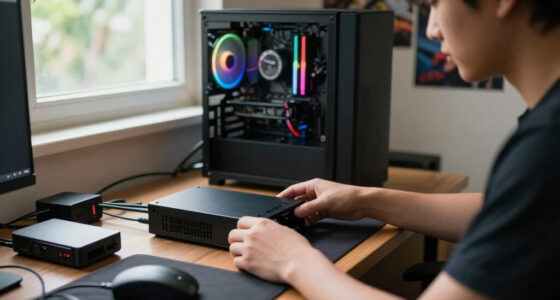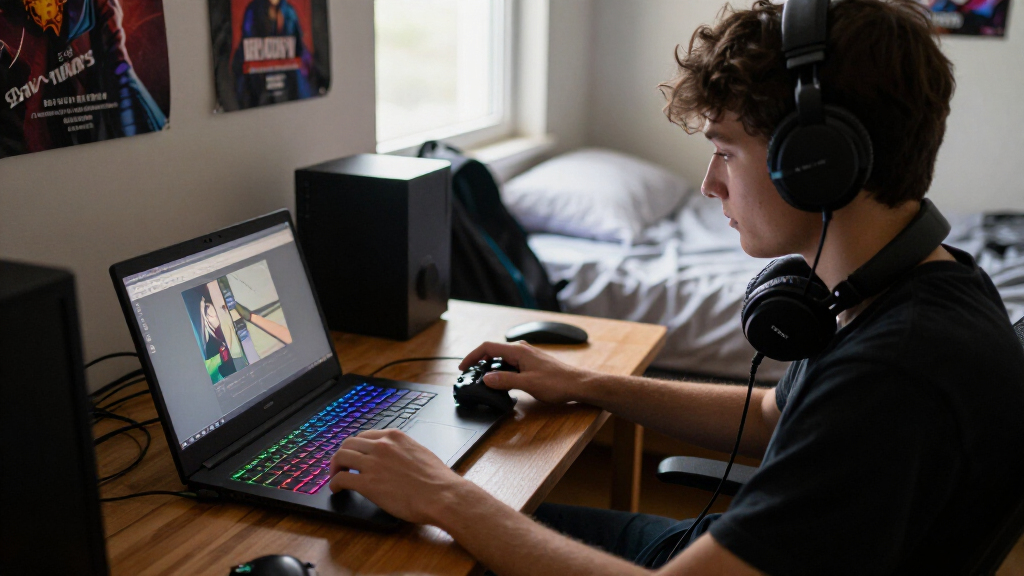

The Lenovo LOQ 15.6-inch is my best overall gaming laptop for students because its RTX 4050 offers credible modern gaming power without pushing into flagship hardware. The NIMO Ryzen 7 8745HS model is my value pick for lighter games, while the ASUS ROG Strix G16 suits buyers willing to pay more for RTX 5060 performance. The main choice is between dedicated graphics for demanding games and a cheaper, potentially easier-to-carry machine for classes and casual play. Screen size, storage, battery expectations, and the clarity of each product listing also separate the stronger choices from the riskier ones. Continue reading for the full breakdown and buyer-specific recommendations.

Play games on Amazon Luna for your game nights, included with Prime
- A rotating selection of games, no download needed
- Play on TV, laptop or phone
- Fast, free delivery for your gear, too
Complete the kit


Key Takeaways
- Dedicated graphics created the clearest dividing line: the Lenovo LOQ, Acer Nitro V 16S, and ASUS ROG Strix G16 are far better suited to demanding games than models without a named discrete GPU.
- The Lenovo LOQ earns first place by pairing an RTX 4050 with a student-friendly 15.6-inch format, giving it a more balanced position than the costlier RTX 5060 machines.
- The Acer and ASUS target different premium buyers: Acer supplies 32GB of RAM and a 180Hz panel, while ASUS combines an RTX 5060 with a Core i7 HX processor and Wi-Fi 7.
- The NIMO Ryzen 7 8745HS is the stronger light–gaming value: it has a newer, faster-class processor than the NIMO Ryzen 5 6600H, though neither listing names dedicated graphics.
- Missing specifications lowered several rankings: the NIAKUN 17.3-inch and generic Windows 11 Pro laptop need processor, GPU, display, and support details confirmed before purchase.


| gaming laptops for student | Processor | Storage | Display | RAM |
|---|---|---|---|---|
| Light Gaming Laptop with AMD R | AMD Ryzen 7 7430U (up to 4.3GHz) | 512GB SSD | FHD thin-bezel | 16GB DDR4 |
| NIMO 15.6-inch AI Creator Lapt | AMD Ryzen 5 6600H, 6 cores, up to 4.5GHz | 512GB PCIe SSD | 15.6-inch FHD IPS (1920 x 1080) | 16GB DDR5 |
| Lenovo LOQ 15.6" Full HD Gamin | AMD Ryzen 5 7235HS | 512GB SSD | 15.6-inch Full HD (1920×1080) | — |
| NIAKUN 17.3-inch Gaming Laptop | Intel Core i5-7Y57 (up to 3.2 GHz) | 512GB SSD | 17.3-inch Full HD IPS | 16GB |
| NIMO Light Gaming Laptop 15.6" | AMD Ryzen 7 8745HS, 8-core, up to 4.9GHz | 2TB PCIe 4.0 SSD | 15.6-inch FHD IPS | 64GB DDR5 |
| Acer Nitro V 16S AI Gaming Lap | AMD Ryzen 7 2600 | 1TB PCIe Gen 4 SSD | 16" WUXGA IPS, 1920 x 1200, 180Hz | 32GB DDR5 5600MHz |
| Gaming Laptop 2026 with Window | Intel Core i7-7600U up to 3.9GHz | 512GB SSD | 15.6-inch FHD (1920 x 1080) | 16GB |
| ASUS ROG Strix G16 | Intel Core i7 14650HX | 1TB PCIe Gen 4 SSD | 16-inch FHD+ 165Hz | — |
More Details on Our Top Picks
Light Gaming Laptop with AMD Ryzen 7 7430U, 16GB RAM, 512GB SSD
For students on a tight budget, this option stands out for covering the fundamentals without charging for hardware you may not need. The Ryzen 7 7430U is a low-power chip, which means better battery efficiency than the H-series processors in the NIMO AI Creator, though raw speed takes a back seat. The integrated Radeon graphics can handle esports titles like Valorant and Rocket League at modest settings — the same ceiling as the NIAKUN 17.3-inch, but with more modern silicon behind it. The tradeoff is real: unlike the Lenovo LOQ, there’s no dedicated GPU, so graphically demanding games are off the table. What you get instead is a genuinely portable, affordable machine that excels at coursework first and light gaming second.
Pros:- Efficient Ryzen 7 processor handles multitasking well
- Lightweight design is easy to carry across campus
- Fast 512GB SSD keeps boot and load times short
- Wi-Fi 6 and Bluetooth 5.2 for modern connectivity
Cons:- Integrated graphics limit modern game settings to low-medium
- No published battery life or refresh rate figures
- Older DDR4 memory rather than DDR5
Best for: Students who need a dependable, budget-friendly laptop for notes, research, and browser-based or esports gaming between classes
Not ideal for: Anyone hoping to play AAA games at high settings — integrated graphics will disappoint compared to the RTX 4050 in the Lenovo LOQ
- Processor:AMD Ryzen 7 7430U (up to 4.3GHz)
- RAM:16GB DDR4
- Storage:512GB SSD
- Graphics:Integrated AMD Radeon (up to 1200MHz)
- Display:FHD thin-bezel
- Connectivity:HDMI, Type-C, USB 3.2, Wi-Fi 6, Bluetooth 5.2
Our verdict“A sensible budget pick for students whose coursework — not gaming — drives the purchase.”
NIMO 15.6-inch AI Creator Laptop, AMD Ryzen 5 6600H, 16GB RAM, 512GB SSD, FHD IPS Display
This model makes the most sense for students who spend 90% of their time studying and want gaming as a bonus. Its Ryzen 5 6600H is a genuinely capable mobile chip, and the jump to 16GB of DDR5 memory gives it a responsiveness advantage over the DDR4-based Light Gaming Laptop above. Compared with its sibling, the NIMO Ryzen 7 8745HS, this is the tamer and cheaper option — half the RAM, smaller SSD, but the same practical fingerprint login, backlit keyboard, and 2-year warranty that make the NIMO line appealing for dorm life. The 53.58Wh battery is modest, so expect to keep the 100W charger handy. The honest tradeoff: Radeon 660M integrated graphics means competitive titles run fine, demanding games do not — the Lenovo LOQ exists for that job.
Pros:- Strong 6-core Ryzen 5 6600H handles heavy multitasking
- DDR5 RAM and PCIe SSD feel fast in daily use
- Comfortable FHD IPS display for long study sessions
- Generous port selection plus 2-year warranty
Cons:- Integrated Radeon 660M limits gaming performance
- 53.58Wh battery won’t last a full day of classes unplugged
- Build quality details are not documented
Best for: Students prioritizing coursework, remote classes, and light creative work who game only casually
Not ideal for: Students who want to run modern AAA games — the integrated graphics fall well short of the LOQ’s RTX 4050
- Processor:AMD Ryzen 5 6600H, 6 cores, up to 4.5GHz
- RAM:16GB DDR5
- Storage:512GB PCIe SSD
- Graphics:Radeon 660M integrated
- Display:15.6-inch FHD IPS (1920 x 1080)
- Battery:53.58Wh, 100W PD charging
- Warranty:2 years
Our verdict“A study-first laptop that rewards buyers who value warranty coverage and everyday speed over gaming muscle.”
Lenovo LOQ 15.6″ Full HD Gaming Laptop, AMD Ryzen 5 7235HS, 16GB Memory, NVIDIA GeForce RTX 4050, 512GB SSD, Luna Grey
If actual gaming performance is the reason you’re reading this roundup, this pick makes the most sense. The NVIDIA GeForce RTX 4050 is the only dedicated GPU in this batch, which means it’s the only machine here that can run modern titles at high settings with smooth frame rates — and DLSS support extends its useful life as games get heavier. Compared with the NIMO Ryzen 7 8745HS, which counters with massive 64GB RAM and a 2TB SSD, the LOQ wins where it counts for a gamer: raw graphics horsepower. That said, dedicated GPUs cost you in battery life and weight, and the 512GB SSD fills up fast once a few big games are installed. It sits below the ASUS ROG Strix G16 in this roundup, but for a student budget it hits the sweet spot between price and capability.
Pros:- RTX 4050 delivers real modern gaming performance with ray tracing and DLSS
- Ryzen 5 7235HS plus 16GB RAM handles streaming while gaming
- Lenovo’s established support network beats lesser-known brands
- Fast 512GB SSD keeps load times short
Cons:- 512GB storage fills quickly with modern game installs
- Dedicated GPU reduces battery life versus integrated options
- Heavier and pricier than the light-gaming picks here
Best for: Students who genuinely game — AAA titles, not just esports — and still need one laptop for everything
Not ideal for: Students mostly writing papers and streaming video; the dedicated GPU adds cost, weight, and battery drain they’ll never use
- Display:15.6-inch Full HD (1920×1080)
- Processor:AMD Ryzen 5 7235HS
- Memory:16GB RAM
- Graphics:NVIDIA GeForce RTX 4050
- Storage:512GB SSD
- Design:Luna Grey
Our verdict“The pick for students who want a laptop that games as well as it studies.”
NIAKUN 17.3-inch Gaming Laptop with 16GB RAM and 512GB SSD
This model is better suited to students who want a desk-first machine with a big screen than to anyone chasing gaming performance. The 17.3-inch FHD IPS panel gives spreadsheets, research papers, and split-screen studying room to breathe — something none of the 15.6-inch options here, including the NIMO AI Creator, can match. But be clear-eyed about the internals: the Intel Core i5-7Y57 is an older, low-power chip, and with no dedicated GPU, the ‘gaming’ in the name applies mostly to older or casual titles. Compared with the Lenovo LOQ, this isn’t a performance rival — it’s a screen-size-per-dollar play. The 6-hour battery rating reinforces that this is a stay-plugged-in laptop, though at 4.3 lbs it’s surprisingly movable for a 17-inch machine. Windows 11 Pro pre-installed adds genuine value for coursework.
Pros:- 17.3-inch FHD IPS display is ideal for multitasking and media
- Windows 11 Pro and Office 365 come pre-loaded
- Lightweight 4.3 lbs for a 17-inch laptop
- Low blue light technology helps long study sessions
Cons:- Older Intel i5-7Y57 processor lags behind every AMD option here
- No dedicated graphics card despite the gaming branding
- Around 6 hours of battery life limits portability
Best for: Students on a budget who want maximum screen space for studying, streaming, and casual gaming at a desk
Not ideal for: Anyone who games seriously — the dated processor and missing dedicated GPU can’t compete with the Lenovo LOQ’s RTX 4050
- Processor:Intel Core i5-7Y57 (up to 3.2 GHz)
- Display:17.3-inch Full HD IPS
- RAM:16GB
- Storage:512GB SSD
- Operating System:Windows 11 Pro
- Weight:4.3 lbs
- Battery:5000mAh, up to 6 hours
Our verdict“Buy it for the big screen and software bundle, not for gaming — students wanting performance should look elsewhere in this lineup.”
NIMO Light Gaming Laptop 15.6″ with AMD Ryzen 7 8745HS
This option stands out as the most future-proofed laptop in this batch, short of stepping up to the ASUS ROG Strix G16. The 64GB of DDR5 RAM and 2TB PCIe 4.0 SSD are overkill for a typical student today — but for anyone in engineering, video editing, or computer science, they eliminate the upgrade anxiety that cheaper machines create. Its Radeon 780M is the strongest integrated GPU here, clearly ahead of the Radeon 660M in the NIMO AI Creator, and capable of respectable 1080p gaming at medium settings — though still a step below the LOQ’s dedicated RTX 4050. The sub-1.7kg metal chassis with USB4 and 100W fast charging makes it the most travel-friendly high-spec option too. The premium price is the obvious tradeoff, and thermals under sustained load remain an open question for such a thin body.
Pros:- 64GB DDR5 and 2TB PCIe 4.0 SSD provide years of headroom
- Radeon 780M is the best integrated graphics in this lineup
- Slim sub-1.7kg metal body with USB4 and 100W fast charging
- 180° lay-flat hinge and fingerprint login add practical polish
Cons:- No dedicated GPU despite the premium price
- Thin chassis raises questions about sustained thermal performance
- Premium specs cost considerably more than the other NIMO options
Best for: Students in demanding majors — engineering, film, CS — who need serious multitasking power and years of headroom
Not ideal for: Students whose priority is maximum gaming performance per dollar; the LOQ delivers a real GPU for less than this spec premium
- Processor:AMD Ryzen 7 8745HS, 8-core, up to 4.9GHz
- Graphics:Radeon 780M RDNA 3 integrated
- RAM:64GB DDR5
- Storage:2TB PCIe 4.0 SSD
- Display:15.6-inch FHD IPS
- Weight:Under 1.7kg, 17.95mm thick
- Charging:100W USB-C PD
- Warranty:2 years
Our verdict“The best choice for students who want one slim, powerful laptop to outlast their entire degree.”
Acer Nitro V 16S AI Gaming Laptop with AMD Ryzen 7 2600, NVIDIA GeForce RTX 5060, 16″ WUXGA IPS 180Hz Display, 32GB DDR5, 1TB SSD
This Acer Nitro V 16S distinguishes itself by combining robust AI capabilities with a vivid display, making it ideal for students who want a machine that handles gaming and creative tasks with ease. Its 32GB DDR5 RAM and NVIDIA GeForce RTX 5060 GPU provide excellent graphics and multitasking power, surpassing the more modest specs of the Gaming Laptop 2026. However, the AMD Ryzen 7 2600 processor is slightly outdated compared to newer Ryzen models, which could impact future-proofing. Its limited upgrade options and high power consumption are tradeoffs for its performance edge. Overall, this model makes the most sense for students who prioritize gaming, AI work, or creative projects without worrying about upgrade flexibility.
Pros:- Excellent AI performance with up to 38 AI TOPS
- Vivid 16″ display with 180Hz refresh rate for smooth visuals
- Large 32GB DDR5 RAM and fast 1TB SSD for multitasking and storage
Cons:- Processor may be outdated compared to newer Ryzen series
- Limited upgrade options with only two RAM slots
- High power consumption could impact portability
Best for: Students seeking a balanced machine for gaming, AI, and multimedia content creation.
Not ideal for: Students needing ultra-lightweight laptops for frequent portability or those on a strict budget, due to its high power draw and potentially higher cost.
- Processor:AMD Ryzen 7 2600
- GPU:NVIDIA GeForce RTX 5060
- Display:16″ WUXGA IPS, 1920 x 1200, 180Hz
- RAM:32GB DDR5 5600MHz
- Storage:1TB PCIe Gen 4 SSD
- Color Coverage:100% sRGB
- Wi-Fi:Wi-Fi 6
Our verdict“This pick is best suited for students who want a high-powered machine for gaming and creative work without frequent upgrades.”
Gaming Laptop 2026 with Windows 11 Pro, 16GB RAM, 512GB SSD
This Gaming Laptop 2026 offers a solid balance of performance and portability, featuring an Intel Core i7-7600U and a 15.6-inch Full HD display. Compared to the ASUS ROG Strix G16, it sacrifices some high-end specs for a thinner, lighter design, weighing only 3.5 lbs. Its 512GB SSD ensures quick access to files, but the older processor may struggle with the most demanding modern games or heavy multitasking. The lack of a dedicated graphics card limits its gaming prowess relative to the ASUS G16, which has a more powerful NVIDIA RTX 5060. This model is best suited for students who need a portable, versatile laptop for casual gaming, work, and media, but not intense gaming or future-proofing.
Pros:- Lightweight and portable design at only 3.5 lbs
- Fast 512GB SSD for quick boot and load times
- Backlit keyboard for comfortable low-light typing
Cons:- Processor is dated and less capable for intensive tasks
- No dedicated graphics card limits gaming performance
- Battery life details are not specified
Best for: Students needing a lightweight, versatile laptop for casual gaming and productivity on the go.
Not ideal for: Hardcore gamers or students seeking long-term gaming performance, due to its weaker processor and lack of dedicated GPU.
- Processor:Intel Core i7-7600U up to 3.9GHz
- RAM:16GB
- Storage:512GB SSD
- Display:15.6-inch FHD (1920 x 1080)
- Battery:5000mAh (38.5Wh)
- Weight:3.5 lbs
- Operating System:Windows 11 Pro
Our verdict“This laptop is ideal for students who want a portable device for everyday use and light gaming, but not for high-end gaming or future-proofing.”
ASUS ROG Strix G16 (2025) Gaming Laptop, 16” FHD+ 165Hz, NVIDIA GeForce RTX 5060, Intel Core i7 14650HX, 16GB DDR5, 1TB SSD, Wi-Fi 7, Windows 11 Home
The ASUS ROG Strix G16 (2025) clearly targets students who want a gaming machine that doubles as a powerful workstation. Its Intel Core i7 14650HX and NVIDIA RTX 5060 GPU deliver high-end gaming capabilities and smooth multitasking, outperforming the Gaming Laptop 2026 with its newer CPU and faster RAM. The 16″ FHD+ display with 165Hz offers fluid visuals ideal for fast-paced games and media. Its premium build and Wi-Fi 7 support add to its appeal for students who need a reliable, future-proof setup. The main tradeoff is its higher price point, which might be prohibitive for some. This model is best for students committed to serious gaming, streaming, or demanding multitasking, willing to invest in a machine that can last through future titles and tasks.
Pros:- Powerful Intel Core i7 14650HX processor
- Fast 16GB DDR5 RAM and 1TB SSD for seamless multitasking
- High-quality 165Hz display for smooth gaming and media
Cons:- Higher price compared to other models in the roundup
- Potentially high power consumption due to high-end specs
- Bulkier design may affect portability
Best for: Students seeking a high-performance gaming laptop capable of multitasking and future-ready connectivity.
Not ideal for: Students on a tight budget or those prioritizing portability over raw performance, due to its premium price and power needs.
- Display:16-inch FHD+ 165Hz
- Processor:Intel Core i7 14650HX
- GPU:NVIDIA GeForce RTX 5060
- Memory:16GB DDR5-5600MHz
- Storage:1TB PCIe Gen 4 SSD
- Operating System:Windows 11 Home
- Connectivity:Wi-Fi 7
Our verdict“This model suits students who want a future-proof, high-end gaming laptop that can handle demanding multitasking and multimedia tasks with ease.”
How We Picked
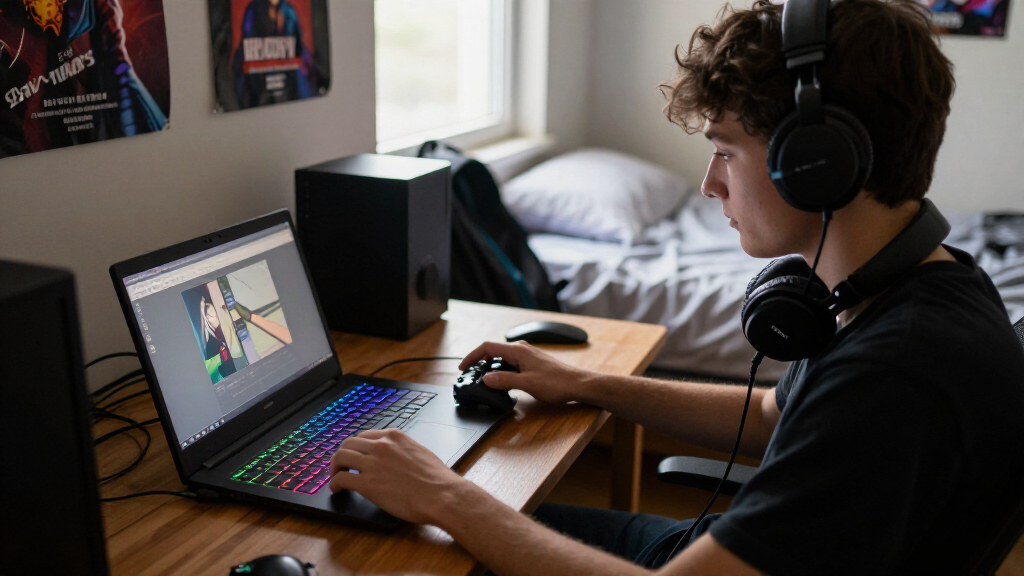
I ranked these laptops around student gaming performance, campus usability, configuration clarity, and value. A named discrete GPU received the most weight because it changes which games and graphics settings a laptop can handle. I then compared processor class, memory, storage, display size, refresh rate, and how practical each format appears for moving between home and class. I treated these as configuration-based recommendations, not claims from hands-on testing, and I did not treat a fast CPU or 16GB of RAM alone as proof of strong gaming speed.
The Lenovo LOQ ranks first for its middle-ground RTX 4050 configuration, followed by the Acer Nitro V 16S and ASUS ROG Strix G16 for buyers seeking RTX 5060 power. The NIMO Ryzen 7 8745HS and Ryzen 5 6600H models come next as light-gaming choices, with the Ryzen 7 version receiving the value role. The Ryzen 7 7430U laptop follows as a study-first portable option, while the NIAKUN takes seventh place because its large screen is appealing but its processor and graphics hardware are unspecified. I place the generic Gaming Laptop 2026 eighth because too many performance details are absent. A large discount could alter the middle positions, but an unclear GPU or weak return policy should outweigh a small saving.
| gaming laptops for student | Graphics |
|---|---|
| Light Gaming Laptop with AMD R | Integrated AMD Radeon (up to 1200MHz) |
| NIMO 15.6-inch AI Creator Lapt | Radeon 660M integrated |
| Lenovo LOQ 15.6" Full HD Gamin | NVIDIA GeForce RTX 4050 |
| NIAKUN 17.3-inch Gaming Laptop | — |
| NIMO Light Gaming Laptop 15.6" | Radeon 780M RDNA 3 integrated |
| Acer Nitro V 16S AI Gaming Lap | — |
| Gaming Laptop 2026 with Window | — |
| ASUS ROG Strix G16 | — |
Factors to Consider When Choosing Gaming Laptops For Students
I would choose a student gaming laptop by matching the hardware to an actual game list and weekly campus routine. Graphics capability and portability pull in opposite directions, while extra memory or a premium processor may offer little value if the GPU remains the bottleneck. The following factors help separate a smart long-term purchase from an attractive specification sheet with hidden compromises.
Choose the Graphics Tier Before the Processor Tier
I start with the GPU because gaming performance depends more heavily on graphics hardware than on labels such as Ryzen 7 or Core i7. An RTX 4050 is a sensible middle tier for 1080p gaming, creative software, and GPU-accelerated coursework. RTX 5060 configurations offer more headroom for demanding games, higher settings, and heavier creator workloads, but that power usually raises the purchase price and cooling demands. By contrast, a laptop with no named dedicated GPU is better treated as a light-gaming machine until the seller confirms otherwise. Such a model may suit esports, older releases, indie games, and cloud gaming, yet it is a poor match for a student expecting high settings in new releases. Before buying, I would check the exact GPU name and its power limit rather than relying on the word gaming in the title.
Match the Screen Size to the Weekly Routine
A 15.6-inch laptop is usually the safest campus compromise because it offers usable gaming space without automatically demanding an oversized bag. A 16-inch 16:10 display provides more vertical room for documents, timelines, and code, which can matter as much as game immersion. A 17.3-inch model makes sense for a student who rarely carries the machine, but its chassis and charger may become frustrating during a full day of classes. Refresh rates of 165Hz or 180Hz mainly benefit fast games when the GPU can produce similarly high frame rates. Resolution also affects workload: FHD and WUXGA are practical matches for midrange mobile graphics, while higher resolutions demand more GPU power. I would verify the laptop’s measured weight, charger weight, dimensions, brightness, and color coverage because screen size alone does not describe daily usability.
Plan Around Battery and Cooling Reality
I would not assume that a gaming laptop can cover a full class day merely because its listing advertises a large battery. RTX graphics, high-refresh displays, and HX-class processors can consume substantial power, while gaming on battery usually cuts speed and runtime. A U-series processor may fit a study-first routine better, though it also brings lower sustained performance than many HS or HX chips. For classroom use, quiet fan behavior and efficient power modes can be more useful than peak benchmark numbers. Serious gaming is best planned around a wall outlet, with the original charger available for full performance. I would check independent battery measurements, fan-noise results, vent placement, and whether USB-C charging can handle lighter schoolwork.
Buy Enough Memory and Storage for Four Years
Sixteen gigabytes of RAM is the practical baseline for gaming alongside browser tabs, office apps, and communication software. Thirty-two gigabytes becomes worthwhile for virtual machines, engineering tools, large creative projects, or heavy multitasking, which gives the Acer configuration an advantage for mixed workloads. A 512GB SSD can feel cramped after Windows, coursework, and several large games share the drive. A 1TB SSD reduces constant file management, though an upgradeable 512GB model may still be the better deal. Capacity and expandability are separate questions, so I would check for spare M.2 slots and replaceable memory rather than judging only the included totals. I would also confirm whether the memory runs in dual-channel mode, since memory configuration can affect integrated-graphics performance.
Treat Listing Clarity as Part of the Value
A product title that omits the exact CPU or GPU leaves too much uncertainty for a gaming purchase. Generic models can appear inexpensive, but unclear component brands, limited firmware support, and difficult warranty service may erase the saving. I lower a laptop’s ranking when core specifications are missing because the buyer cannot reliably predict game compatibility or long-term support. I would compare the total usable cost, including a storage upgrade, extra memory, a larger backpack, adapters, and an extended warranty where appropriate. A strong return window also matters when display quality, fan noise, keyboard feel, and battery behavior are not documented well. Established product lines such as Lenovo LOQ, Acer Nitro, and ASUS ROG generally make support information easier to research than an unnamed configuration.
Frequently Asked Questions
Is an RTX 4050 laptop powerful enough for a student in 2026?
For most students, an RTX 4050 remains a capable 1080p gaming choice and supports many modern games at sensible settings. It also accelerates compatible editing, rendering, and technical applications, which broadens its value beyond entertainment. The Lenovo LOQ is my overall pick because this GPU tier sits between basic integrated graphics and the more expensive RTX 5060 options. Students chasing maximum settings, ray tracing, or very high frame rates may prefer an RTX 5060. I would favor the RTX 4050 when price, coursework, and gaming carry similar weight.
When is an RTX 5060 laptop worth paying more for?
An RTX 5060 makes sense for demanding games and GPU-heavy coursework, particularly when the laptop will replace a desktop. It also gives more performance headroom for a high-refresh display than a lower graphics tier. The Acer is the stronger choice for memory-heavy work because it includes 32GB, while the ASUS pairs its RTX 5060 with a Core i7 HX processor in a premium gaming line. The extra expense is harder to justify for esports, indie games, streaming, or occasional play between assignments. I would pay more only when the planned software can use the added graphics power.
Can a laptop without a listed dedicated GPU handle gaming?
It can handle some gaming, but the missing GPU name should limit expectations. Integrated graphics can be suitable for lighter esports titles, older games, indie releases, emulation, and cloud-streamed games, often with reduced resolution or settings. A Ryzen 7 label does not place a laptop in the same gaming class as an RTX 4050 machine. I would ask the seller for the exact graphics processor and search for results from that specific configuration. If the answer remains vague, I would treat the model as a study laptop with casual gaming ability.
Is a 16-inch or 17.3-inch gaming laptop too large for campus?
A 16-inch model can work well on campus when its bag footprint and charger remain manageable. A 17.3-inch laptop is better suited to dorm or home use because small lecture desks and daily transport can expose its size disadvantage. The larger display may still appeal to a student who wants one screen for gaming, films, and schoolwork without buying a monitor. I would measure the intended backpack and compare the combined laptop-and-charger weight before ordering. For frequent commuting, 15.6 inches remains the safer format among this lineup.
Should a student choose 16GB and 512GB or 32GB and 1TB?
Sixteen gigabytes and 512GB can cover mainstream study and gaming, but storage will probably become the first constraint. The lower configuration is sensible when the SSD or memory can be upgraded later at a fair cost. Thirty-two gigabytes and 1TB suit students running virtual machines, creator tools, engineering applications, or large game libraries. That makes the Acer’s configuration attractive for mixed academic and entertainment workloads, not merely gaming. I would choose 32GB and 1TB for demanding four-year use, while budget-focused buyers should prioritize a dedicated GPU before paying for extra RAM.
Conclusion
The Lenovo LOQ is my best overall recommendation for its balanced RTX 4050 configuration and manageable 15.6-inch format. I give best value to the NIMO Ryzen 7 8745HS for students whose game lists are modest and whose budgets do not support a discrete-GPU system. The ASUS ROG Strix G16 is my premium pick for buyers who want RTX 5060 graphics paired with a Core i7 HX processor. For beginners playing lighter titles, the NIMO Ryzen 5 6600H offers a less aggressive starting point, provided its current price sits well below the Lenovo.
The Acer Nitro V 16S is best for gaming plus heavy multitasking because its RTX 5060, 32GB of RAM, 1TB SSD, and 180Hz display form the strongest listed specification set. The Ryzen 7 7430U light gaming laptop fits a study-first buyer seeking casual play, while the NIAKUN 17.3-inch serves students who value a large screen and rarely commute. I would place the generic Windows 11 Pro model last and buy it only after receiving exact processor, GPU, display, battery, and warranty details. For most readers, the final choice is straightforward: choose Lenovo for balance, NIMO for lighter gaming on a budget, or Acer and ASUS when higher gaming performance justifies the cost.
Evergreen bestsellers Picks
bestsellers
As an affiliate, we earn on qualifying purchases.