
The best gaming headsets with surround sound balance positional audio, comfort, and platform compatibility rather than relying on a surround-sound label alone. I rank the HyperX Cloud III Wired as the best overall pick for its versatile, wired gaming focus, while the Razer BlackShark V3 X HyperSpeed stands out for players who want wireless freedom and the Logitech G PRO X for those seeking a more feature-focused wired option. The main tradeoffs are wired reliability versus wireless convenience, virtual surround processing versus straightforward stereo, and broad compatibility versus platform-specific features. A surround mode may also depend on the device, software, or connection being used. Read on for the full breakdown of all 15 options and how I’d match each one to a different gaming setup.

Play games on Amazon Luna for your game nights, included with Prime
- A rotating selection of games, no download needed
- Play on TV, laptop or phone
- Fast, free delivery for your gear, too
Complete the kit


Key Takeaways
- The HyperX Cloud III Wired leads this lineup because it is the clearest all-round wired choice; the black and black/red listings appear to represent the same headset family, so color alone should not drive the decision.
- Wireless convenience is split across distinct picks: the Razer BlackShark V3 X HyperSpeed and Turtle Beach Stealth 600 target players who want freedom from a cable, while the Ozeino wireless and AOC Captain 300 broaden the set of wireless alternatives.
- Surround-sound claims vary in usefulness. The Ozeino ZW1 and HyperX Cloud II explicitly name virtual surround, but buyers should check platform support and connection requirements before treating that label as proof of better positional audio.
- Wired models make up most of the roundup. The BlackShark V2 X, FIFINE H9, Logitech G432, and BENGOO G9000 offer cable-connected routes, but they differ in brand positioning, stated features, and intended buyer rather than forming one interchangeable tier.
- Platform and fit can matter more than extra modes. Xbox, PlayStation, PC, Switch, and mobile support is not uniform across these 15 listings, so checking the exact model and connection method can prevent buying a headset whose headline features do not work with your setup.
| Razer BlackShark V2 X Wired Gaming Headset, White |  | Best Lightweight Wired Pick | Driver size: 50 mm TriForce | Connectivity: Wired, 3.5 mm jack | Surround sound: 7.1 on Windows 10 64-bit | VIEW LATEST PRICE | See Our Full Breakdown |
| FIFINE H9 Wired Gaming Headset with Microphone |  | Best Value for Flexible Connections | Driver size: 50 mm | Connectivity: USB and 3.5 mm | Surround sound: 7.1 | VIEW LATEST PRICE | See Our Full Breakdown |
| Logitech G432 Wired Gaming Headset |  | Best for Software-Based Positional Audio | Driver size: 50 mm | Surround sound: DTS Headphone:X 2.0 | Connectivity: USB DAC and 3.5 mm cable | VIEW LATEST PRICE | See Our Full Breakdown |
| HyperX Cloud III Wired Gaming Headset, Black |  | Best for Long Wired Sessions | Driver size: 53 mm angled drivers | Connectivity: Wired; USB-C, USB-A, and 3.5 mm | Microphone: Detachable 10 mm noise-cancelling microphone | VIEW LATEST PRICE | See Our Full Breakdown |
| Razer BlackShark V3 X HyperSpeed Wireless PC Gaming Headset, Black | 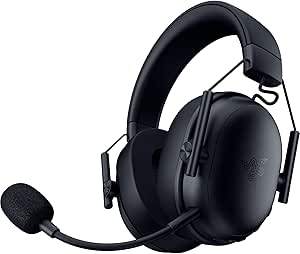 | Best Wireless Surround Pick | Drivers: 50 mm TriForce Gen-2 | Surround sound: 7.1 | Connectivity: 2.4 GHz wireless, Bluetooth, USB | VIEW LATEST PRICE | See Our Full Breakdown |
| BENGOO G9000 Stereo Gaming Headset | 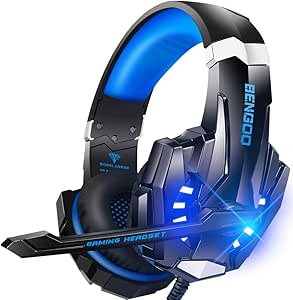 | Best Multi-Device Wired Pick | Type: Over-ear stereo gaming headset | Driver size: 40 mm | Connectivity: USB cable | VIEW LATEST PRICE | See Our Full Breakdown |
| Ozeino Wireless Gaming Headset for PS5, PC, Switch – Lossless Audio, 40h Battery |  | Best Wireless Flexibility | Model number: OW810 | Driver size: 50 mm | Connectivity: 2.4 GHz USB dongle, Bluetooth, and 3.5 mm aux | VIEW LATEST PRICE | See Our Full Breakdown |
| Ozeino ZW1 Wired Gaming Headset with 7.1 Surround Sound and Noise-Canceling Microphone |  | Best Budget-Style Surround Feature Set | Fit: Over-ear | Audio: 7.1 surround sound | Connectivity: 3.5 mm jack | VIEW LATEST PRICE | See Our Full Breakdown |
| HyperX Cloud III Wired Gaming Headset, Black/Red |  | Best for Long Wired Sessions | Type: Wired gaming headset | Design: Over-ear | Driver size: 53 mm | VIEW LATEST PRICE | See Our Full Breakdown |
| Turtle Beach Stealth 600 Wireless Gaming Headset for Xbox, PS5, PC, Mobile |  | Best Premium Spatial-Audio Feature Set | Driver size: 50 mm Nanoclear | Wireless technology: Low-latency 2.4 GHz and Bluetooth 5.4 | Battery life: Up to 80 hours; quick charge supported | VIEW LATEST PRICE | See Our Full Breakdown |
| AOC Captain 300 Wireless Gaming Headset, White |  | Best for Flexible Connections | Connections: 2.4 GHz USB dongle, Bluetooth 6.0, 3.5 mm wired | Latency: ≤20 ms | Driver size: 50 mm | VIEW LATEST PRICE | See Our Full Breakdown |
| Logitech G PRO X Wired Gaming Headset, Black | 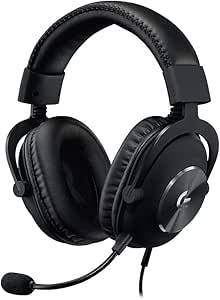 | Best for Windows Surround and Voice Tools | Connection: Wired | Driver size: 50 mm PRO-G | Impedance: 35 ohms | VIEW LATEST PRICE | See Our Full Breakdown |
| Razer BlackShark V2 X Wired Gaming Headset |  | Best Lightweight 3.5 mm Pick | Connection: 3.5 mm audio jack | Driver size: 50 mm | Weight: 240 g | VIEW LATEST PRICE | See Our Full Breakdown |
| Valorise UG-08S Wireless Gaming Headset |  | Best for Long Wireless Sessions | Audio: 7.1 surround sound | Wireless connections: 2.4 GHz and Bluetooth 5.4 | Wired connection: 3.5 mm | VIEW LATEST PRICE | See Our Full Breakdown |
| HyperX Cloud II Wired Gaming Headset with 7.1 Virtual Surround Sound, Red | 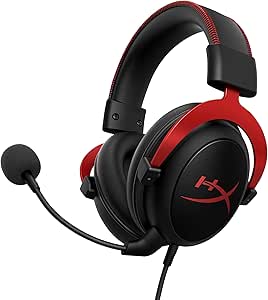 | Best for Comfort with PC Surround | Type: Wired, over-ear gaming headset | Driver size: 53 mm | Frequency response: 15–25 kHz | VIEW LATEST PRICE | See Our Full Breakdown |
| gaming headsets with surround sound | Microphone | Driver size | Compatibility | Warranty |
|---|---|---|---|---|
| Razer BlackShark V2 X Wired Ga | Bendable HyperClear cardioid | 50 mm TriForce | PC, Mac, PS4, Xbox One, Nintendo Switch | 2 years |
| FIFINE H9 Wired Gaming Headset | Detachable boom mic, -42 dB sensitivity | 50 mm | — | 1 year |
| Logitech G432 Wired Gaming Hea | 6 mm flip-to-mute boom mic | 50 mm | PC, Mac, mobile devices, PlayStation 5, PlayStation 4, Nintendo Switch | — |
| HyperX Cloud III Wired Gaming | Detachable 10 mm noise-cancelling microphone | 53 mm angled drivers | PC, PS5, Xbox Series X|S, Xbox One, Nintendo Switch, Mac, mobile | 2 years |
| Razer BlackShark V3 X HyperSpe | Detachable HyperClear cardioid, 9.9 mm | — | — | 2 years |
| BENGOO G9000 Stereo Gaming Hea | Flexible, omnidirectional, noise-isolating | 40 mm | PS4, PS5, Xbox, Xbox Series X|S, Xbox One, PC, Nintendo 3DS, laptops, tablets, and mobile phones | 2 years |
| Ozeino Wireless Gaming Headset | — | 50 mm | — | 3 years |
| Ozeino ZW1 Wired Gaming Headse | Rotatable, noise-canceling | — | PC, PS5, PS4, Xbox One, Xbox Series X/S, Nintendo Switch, laptops, and mobile phones with 3.5 mm jack | 3 years |
| HyperX Cloud III Wired Gaming | Detachable, noise-cancelling 10 mm microphone with LED mute indicator | 53 mm | PC, PS5, Xbox Series X|S, Xbox One, Nintendo Switch, Mac, and mobile | — |
| Turtle Beach Stealth 600 Wirel | Flip-to-mute with AI noise reduction | 50 mm Nanoclear | — | — |
| AOC Captain 300 Wireless Gamin | Detachable, omnidirectional, noise-canceling | 50 mm | PS5, PS4, PC, Mac, Switch; Bluetooth for phones and tablets; Xbox via 3.5 mm | — |
| Logitech G PRO X Wired Gaming | Detachable with Blue VO!CE | 50 mm PRO-G | — | — |
| Razer BlackShark V2 X Wired Ga | Razer HyperClear cardioid | 50 mm | PC, Mac, PS4, Xbox One, Nintendo Switch | 2 years |
| Valorise UG-08S Wireless Gamin | Retractable 360° omnidirectional ENC noise-canceling | — | PS5, PS4, PC, Mac, phones, tablets, Nintendo Switch; Xbox wireless unsupported | — |
| HyperX Cloud II Wired Gaming H | Detachable, noise-canceling | 53 mm | — | 2 years |
More Details on Our Top Picks
Razer BlackShark V2 X Wired Gaming Headset, White
The BlackShark V2 X is a strong fit for players who want surround-style positioning without adding much weight: at 240 g, it is lighter than the HyperX Cloud III listed here. Its 50 mm TriForce drivers and passive noise-isolating earcups suit focused play, while the 3.5 mm connection keeps setup simple across PC, consoles, and Switch. The key caveat is that 7.1 surround sound is limited to Windows 10 64-bit; on other platforms, buyers should not expect that feature to carry over. Unlike the USB-capable FIFINE H9, this model relies on one analog connection and lacks inline control features. I’d choose it for a light, straightforward headset, but skip it if surround processing across multiple platforms is the priority.
Pros:- Light 240 g design with memory foam ear cushions
- Passive noise-isolating earcups help reduce surrounding distractions
- 3.5 mm connection works with PC, Mac, PlayStation, Xbox, and Nintendo Switch
- Bendable cardioid microphone can be positioned for voice chat
Cons:- 7.1 surround sound is limited to Windows 10 64-bit
- Uses a 3.5 mm connection rather than USB controls or wireless
- An Xbox One stereo adapter may be needed and is sold separately
Best for: PC and console players who value a lightweight wired headset and primarily use Windows 10 64-bit for 7.1 surround sound.
Not ideal for: Players who need surround processing on consoles or newer Windows setups, or Xbox One users without a compatible stereo adapter.
- Driver size:50 mm TriForce
- Connectivity:Wired, 3.5 mm jack
- Surround sound:7.1 on Windows 10 64-bit
- Weight:240 g
- Microphone:Bendable HyperClear cardioid
- Compatibility:PC, Mac, PS4, Xbox One, Nintendo Switch
- Color:White
- Warranty:2 years
Our verdict“Choose the BlackShark V2 X for low-weight wired gaming and Windows 10 surround, but not for platform-spanning 7.1.”
FIFINE H9 Wired Gaming Headset with Microphone
The FIFINE H9 earns its place for players who want a choice between USB and 3.5 mm, plus a listed 7.1 surround mode. Its 10-foot cable gives more room to sit back than the Razer BlackShark V2 X’s simpler analog setup, and the detachable mic is handy when voice chat is not needed. The inline USB box puts volume and mute controls within reach, but those features depend on using USB; switching to 3.5 mm can mean giving up some control functions. That makes the H9 more adaptable at a desk than the Logitech G432, whose surround format is DTS Headphone:X 2.0 and requires Logitech G HUB software. I’d pick the FIFINE for connection flexibility, while buyers seeking clearly specified surround software and platform behavior should check those details before relying on it.
Pros:- USB and 3.5 mm connections offer flexible device setup
- Listed 7.1 surround sound adds a positional-audio option
- Detachable boom microphone can be removed when not chatting
- Inline USB box provides headphone and microphone volume controls plus mute
Cons:- Inline control-box functions require a USB connection
- The 3.5 mm connection may not support the same controls as USB
- One-year warranty is shorter than the two-year coverage listed for several alternatives
Best for: Desk-based players who want USB controls, a detachable mic, and the option to connect over 3.5 mm to other devices.
Not ideal for: Players who need the inline control box to work over 3.5 mm or want detailed platform-specific surround support spelled out.
- Driver size:50 mm
- Connectivity:USB and 3.5 mm
- Surround sound:7.1
- Microphone:Detachable boom mic, -42 dB sensitivity
- Cable length:10 ft
- Controls:Inline USB headphone and microphone volume controls, plus mute switch
- Design:Wired, over-ear
- Warranty:1 year
Our verdict“Pick the H9 if USB controls and connection flexibility matter more than consistent control access on every connection.”
Logitech G432 Wired Gaming Headset
The Logitech G432 suits PC players who want a named virtual-surround format rather than a generic 7.1 claim: it supports DTS Headphone:X 2.0 through Logitech G HUB. That software dependency is the main dividing line between it and the FIFINE H9, which lists 7.1 but does not specify comparable software requirements. The G432 also gives buyers USB DAC and 3.5 mm options, and its flip-to-mute boom makes muting a quick physical action. Its rotating leatherette ear cups can help with fit and storage, though the materials and wired construction are less suited to players seeking a wireless or detachable-mic setup like the Razer BlackShark V3 X. I’d shortlist it for PC gaming where software-enabled positional audio is welcome; console buyers should check which connection and audio features their platform supports.
Pros:- DTS Headphone:X 2.0 provides a defined positional-audio format
- USB DAC and 3.5 mm cable support different connection setups
- Flip-up boom microphone mutes when raised
- Ear cups rotate up to 90 degrees for easier positioning and storage
Cons:- DTS Headphone:X 2.0 requires Logitech G HUB software
- Wired design limits movement compared with the wireless Razer BlackShark V3 X
- Leatherette ear cups may be less appealing to buyers seeking fabric cushions
Best for: PC players comfortable installing Logitech G HUB who want DTS virtual surround and a quick flip-to-mute microphone.
Not ideal for: Players who want surround features without companion software, wireless freedom, or a detachable microphone.
- Driver size:50 mm
- Surround sound:DTS Headphone:X 2.0
- Connectivity:USB DAC and 3.5 mm cable
- Microphone:6 mm flip-to-mute boom mic
- Ear placement:Over-ear
- Compatibility:PC, Mac, mobile devices, PlayStation 5, PlayStation 4, Nintendo Switch
- Ear cup rotation:Up to 90 degrees
- Color:Black
Our verdict“Choose the G432 for PC-based DTS positional audio and convenient flip-to-mute control, provided G HUB fits your setup.”
HyperX Cloud III Wired Gaming Headset, Black
The HyperX Cloud III prioritizes comfort and a sturdy frame over wireless convenience. Its memory foam cushions and headband, plus a flexible aluminum frame, make it the more comfort-focused choice beside the lighter 240 g Razer BlackShark V2 X, though the Cloud III weighs 308 g. Angled 53 mm drivers are tuned for gaming audio, but the supplied details do not name a specific surround format, so buyers seeking clearly defined virtual 7.1 or DTS processing may prefer the FIFINE H9 or Logitech G432. The Cloud III’s detachable noise-cancelling microphone, LED mute indicator, and on-earcup controls make chat management more direct than on the simpler Razer wired model. Its tradeoff is straightforward: it is wired, and no wireless mode is listed. I’d favor it for comfort, build, and broad device compatibility rather than surround-format flexibility.
Pros:- Memory foam cushions and headband are designed for extended wear
- Flexible aluminum frame supports a durable wired build
- Detachable noise-cancelling microphone has an LED mute indicator
- USB-C, USB-A, and 3.5 mm connections support a broad range of devices
Cons:- At 308 g, it is heavier than the Razer BlackShark V2 X
- No wireless connectivity is listed
- The provided product details do not specify a surround-sound format
Best for: Players who spend long sessions on a wired setup and want memory foam comfort, a durable frame, and a detachable noise-cancelling mic.
Not ideal for: Buyers who want wireless play or need a specifically named 7.1 or DTS surround mode before choosing.
- Driver size:53 mm angled drivers
- Connectivity:Wired; USB-C, USB-A, and 3.5 mm
- Microphone:Detachable 10 mm noise-cancelling microphone
- Frame:Aluminum
- Cushion and headband material:Memory foam
- Weight:308 g
- Compatibility:PC, PS5, Xbox Series X|S, Xbox One, Nintendo Switch, Mac, mobile
- Warranty:2 years
Our verdict“Choose the Cloud III for a comfortable, sturdy wired headset, but look elsewhere if a named surround mode is your deciding feature.”
Razer BlackShark V3 X HyperSpeed Wireless PC Gaming Headset, Black
The BlackShark V3 X HyperSpeed is the lineup’s wireless-first choice: it combines listed 7.1 surround sound with 2.4 GHz wireless, Bluetooth, and USB connectivity. That range of connections sets it apart from the wired Logitech G432 and HyperX Cloud III, making it better suited to players who want to move between compatible setups without being tethered by an analog cable. Its 270 g weight and detachable cardioid mic also support a lighter, cleaner everyday setup than the Cloud III’s heavier wired build. The product description positions surround sound for precise cues, but does not state which platforms receive 7.1 processing, so buyers should verify compatibility for their device. There is also no active noise cancellation, and battery life is not specified. I’d choose it for wireless flexibility, not for isolation or predictable battery planning.
Pros:- 2.4 GHz wireless, Bluetooth, and USB provide three connection options
- Listed 7.1 surround sound targets positional gaming cues
- 270 g weight is lighter than the HyperX Cloud III
- Detachable cardioid microphone is designed to reduce background voice noise
Cons:- No active noise cancellation for blocking ambient sound
- Battery life is not specified in the provided product details
- The supported platforms for 7.1 surround sound are not stated
Best for: PC gamers who want wireless positional audio, Bluetooth as an additional connection option, and a detachable microphone.
Not ideal for: Players who need active noise cancellation, a stated battery-life figure, or confirmed 7.1 support across specific console platforms.
- Drivers:50 mm TriForce Gen-2
- Surround sound:7.1
- Connectivity:2.4 GHz wireless, Bluetooth, USB
- Microphone:Detachable HyperClear cardioid, 9.9 mm
- Weight:270 g
- Model number:RZ04-05420100-R3U1
- Warranty:2 years
Our verdict“Pick the BlackShark V3 X for wireless flexibility and listed 7.1 surround, after confirming the audio features match your platform.”
BENGOO G9000 Stereo Gaming Headset
The BENGOO G9000 suits buyers who want one wired headset for several platforms without relying on wireless features. Its 40 mm drivers deliver stereo audio, so it lacks the explicit surround-sound positioning offered by the Ozeino ZW1 or the spatial-audio feature set of the Turtle Beach Stealth 600. That distinction matters if locating footsteps by direction is your main goal; the G9000 is better framed as a broadly compatible, straightforward headset than a surround specialist.
Its flexible noise-isolating microphone, inline volume and mute controls, and braided 49-inch USB cable make everyday play and chat simple. Padded, breathable earcups add comfort, while LED lighting is decorative rather than an audio feature. The cable and platform support are useful, but older Xbox One controllers need a separate Microsoft adapter, and USB connection can limit which devices work conveniently.
Pros:- Supports a broad range of consoles and personal devices
- Flexible microphone includes a noise-isolating feature
- Padded over-ear design uses breathable material
- Braided 49-inch cable has volume and microphone-mute controls
Cons:- Stereo audio does not provide the listed 7.1 surround feature of the Ozeino ZW1
- Older Xbox One controllers require a separate Microsoft adapter
- USB connection may limit use with some devices
Best for: Players who switch among supported consoles, computers, and mobile devices and prefer a simple wired stereo headset with accessible chat controls.
Not ideal for: Gamers prioritizing clearly specified virtual surround or wireless freedom; the G9000 is stereo and its USB cable may restrict device compatibility.
- Type:Over-ear stereo gaming headset
- Driver size:40 mm
- Connectivity:USB cable
- Cable length:49 inches
- Microphone:Flexible, omnidirectional, noise-isolating
- Controls:Volume control and microphone mute
- Compatibility:PS4, PS5, Xbox, Xbox Series X|S, Xbox One, PC, Nintendo 3DS, laptops, tablets, and mobile phones
- Warranty:2 years
Our verdict“Choose the G9000 for broad wired-device compatibility and simple controls, not for surround-focused positional audio.”
Ozeino Wireless Gaming Headset for PS5, PC, Switch – Lossless Audio, 40h Battery
The Ozeino OW810 is the wireless choice here for players who want low-latency game audio without staying tethered to a console or computer. Its 2.4 GHz USB dongle is specified for less than 30 ms delay, while Bluetooth and 3.5 mm aux add ways to connect beyond a gaming setup. Compared with the wired HyperX Cloud III, that flexibility favors moving between devices, though the Cloud III avoids battery management and offers a detachable microphone.
Up to 40 hours of battery life helps limit charging interruptions, and on-headset controls cover volume, mute, and lighting. The product description does not specify surround sound, so I would not rank it above the Ozeino ZW1 for buyers focused specifically on surround features. Bluetooth also needs an extra adapter for PC, Mac, and PlayStation use, making the 2.4 GHz dongle the more direct gaming connection. The listed 3.5 mm option provides a wired alternative.
Pros:- 2.4 GHz connection is specified for less than 30 ms delay
- Battery life is rated for up to 40 hours
- Offers 2.4 GHz, Bluetooth, and 3.5 mm connectivity
- On-headset controls cover volume, mute, and lighting
Cons:- Surround-sound support is not specified in the supplied product details
- Bluetooth requires an extra adapter for PC, Mac, and PlayStation
- Wireless play requires managing battery charge
Best for: Console and PC players who value a low-latency wireless connection, long battery life, and the option to use Bluetooth or a 3.5 mm cable.
Not ideal for: Surround-first shoppers or buyers who want direct Bluetooth pairing with PS5, PS4, PC, or Mac without an additional adapter.
- Model number:OW810
- Driver size:50 mm
- Connectivity:2.4 GHz USB dongle, Bluetooth, and 3.5 mm aux
- Bluetooth adapter note:Adapter required for PC, Mac, and PlayStation
- Battery life:Up to 40 hours
- Charging time:2.98 hours
- Controls:On-headset volume, mute, and lighting controls
- Warranty:3 years
Our verdict“Pick the OW810 if wireless connection options and long battery life matter more than an explicitly specified surround mode.”
Ozeino ZW1 Wired Gaming Headset with 7.1 Surround Sound and Noise-Canceling Microphone
The Ozeino ZW1 earns its place in this roundup by explicitly listing 7.1 surround sound, unlike the stereo BENGOO G9000 and the Ozeino OW810, whose supplied details do not specify a surround mode. For players seeking directional audio through a straightforward wired connection, that makes the ZW1 the clearest match among those entry-level-style options. The 3.5 mm jack also supports a wide range of devices with a compatible audio port.
A rotatable noise-canceling microphone, breathable over-ear pads, and included splitter and extension cables make it more ready for varied setups than a bare headset. Its USB connector powers the colorful lights only; it does not replace the 3.5 mm audio connection. That setup may be less convenient than the HyperX Cloud III’s included USB-to-3.5 mm cable and USB-C adapter, and the ZW1 remains wired. Older Xbox One controllers may need a separate Microsoft adapter.
Pros:- Explicitly lists 7.1 surround sound
- 3.5 mm connection supports many consoles and devices with a compatible jack
- Rotatable microphone is described as noise-canceling
- Includes an audio splitter and extension cord
Cons:- USB connector powers lighting only, not headset audio
- Wired connection restricts movement compared with the Ozeino OW810
- Older Xbox One controllers may require a separate Microsoft adapter
Best for: Players seeking a wired headset that explicitly lists 7.1 surround sound, uses a 3.5 mm connection, and includes accessories for PC setup.
Not ideal for: Gamers wanting wireless play, or buyers who expect the USB connector to carry audio rather than power the lighting.
- Fit:Over-ear
- Audio:7.1 surround sound
- Connectivity:3.5 mm jack
- Microphone:Rotatable, noise-canceling
- Lighting:Colorful LED; USB connector for lighting only
- Compatibility:PC, PS5, PS4, Xbox One, Xbox Series X/S, Nintendo Switch, laptops, and mobile phones with 3.5 mm jack
- Included accessories:1-to-2 3.5 mm audio splitter cable, 1.55 m extension cord, and user manual
- Warranty:3 years
Our verdict“Choose the ZW1 if an explicitly listed 7.1 surround feature and a versatile wired connection are your main priorities.”
HyperX Cloud III Wired Gaming Headset, Black/Red
The HyperX Cloud III is the comfort-led wired pick for players who want a more substantial headset and a detachable microphone. Its memory foam cushions and flexible aluminum frame are aimed at extended sessions, while angled 53 mm drivers are tuned for gaming audio. The supplied details do not specify a surround format, so buyers seeking an explicit 7.1 label should look at the Ozeino ZW1 instead. The Cloud III’s case is stronger for comfort, build materials, and connection flexibility than for a stated surround mode.
A detachable noise-cancelling microphone with an LED mute indicator helps make chat status visible, and the included USB-to-3.5 mm cable and USB-C adapter broaden setup options. Compared with the BENGOO G9000, it offers a larger driver size and more detailed connection accessories, but it is still wired and does not provide the OW810’s wireless freedom. Its microphone and comfort focus may matter more than RGB lighting or battery life to the right buyer.
Pros:- Memory foam cushions support comfort during extended play
- Flexible aluminum frame
- Detachable noise-cancelling microphone has an LED mute indicator
- Includes USB-to-3.5 mm cable and USB-C adapter
Cons:- Wired connection limits movement compared with the Turtle Beach Stealth 600
- Supplied product details do not specify a surround-sound format
- Requires charging-free but cable-connected play
Best for: Players who spend long sessions at a desk and want memory foam comfort, an aluminum frame, and a detachable microphone across several platforms.
Not ideal for: Wireless-first buyers or shoppers who require an explicitly specified 7.1 surround mode.
- Type:Wired gaming headset
- Design:Over-ear
- Driver size:53 mm
- Microphone:Detachable, noise-cancelling 10 mm microphone with LED mute indicator
- Frame:Aluminum
- Cushions:Memory foam
- Controls:Volume control and microphone mute
- Compatibility:PC, PS5, Xbox Series X|S, Xbox One, Nintendo Switch, Mac, and mobile
- Included items:Headset, USB-to-3.5 mm cable, and USB-C adapter
Our verdict“Choose the Cloud III for a comfortable, sturdily framed wired headset with a detachable mic, rather than for a specifically stated surround mode.”
Turtle Beach Stealth 600 Wireless Gaming Headset for Xbox, PS5, PC, Mobile
The Turtle Beach Stealth 600 is the feature-rich wireless pick for players who want spatial audio alongside extensive sound adjustment. Its 50 mm Nanoclear drivers, built-in EQ modes, Superhuman Hearing, and 10-band app control give it more ways to shape game audio than the wired HyperX Cloud III, whose supplied details focus more on comfort and microphone design. The product description names immersive spatial audio rather than a specific 7.1 format, so the Ozeino ZW1 remains the clearer choice for shoppers seeking that exact label.
Low-latency 2.4 GHz wireless pairs with Bluetooth 5.4, while the 80-hour battery rating reduces how often charging interrupts play. Memory foam cushions are described as glasses-friendly, and the flip-to-mute microphone includes AI noise reduction. Those extras bring more setup and battery considerations than the simpler wired BENGOO G9000, and there is no wired connection for play without relying on wireless or battery power. Battery life can also vary with use.
Pros:- Low-latency 2.4 GHz wireless and Bluetooth 5.4
- Up to 80 hours of battery life with quick-charge support
- Built-in EQ modes, Superhuman Hearing, and 10-band app control
- Glasses-friendly memory foam cushions and AI noise-reduction mic
Cons:- No wired connection option
- Battery performance can vary with usage
- Lists spatial audio rather than a specific 7.1 surround format
Best for: Wireless players who want spatial-audio features, extensive EQ adjustment, Bluetooth for mobile devices, and cushions designed to accommodate glasses.
Not ideal for: Buyers who need a wired fallback or specifically want an explicitly listed 7.1 surround mode.
- Driver size:50 mm Nanoclear
- Wireless technology:Low-latency 2.4 GHz and Bluetooth 5.4
- Battery life:Up to 80 hours; quick charge supported
- Cushions:Memory foam, glasses-friendly design
- Microphone:Flip-to-mute with AI noise reduction
- Audio features:Spatial audio, built-in EQ modes, and Superhuman Hearing
- App:Swarm II Desktop and Mobile with 10-band sound customization
Our verdict“Choose the Stealth 600 for wireless spatial audio and deep EQ control if you do not need a wired fallback.”
AOC Captain 300 Wireless Gaming Headset, White
The AOC Captain 300 suits players who want surround-ready gaming flexibility alongside a headset for everyday Bluetooth listening. Its 2.4 GHz dongle connection and stated latency of 20 ms or less are the relevant options for gaming, while Bluetooth and 3.5 mm add ways to connect beyond a console or PC. Compared with the wired Logitech G PRO X, the Captain 300 avoids a tether and lasts up to 45 hours with RGB off; however, the Logitech has a specified 7.1 surround setup through its USB sound card and Windows software, while the AOC listing does not specify a surround-sound format. That makes the AOC a less direct pick for buyers focused on directional audio. Check the connection limits, too: PlayStation Bluetooth audio is unsupported, and Xbox needs a wired connection. RGB cuts battery life to 20 hours.
Pros:- Offers 2.4 GHz, Bluetooth 6.0, and 3.5 mm connection options
- Up to 45 hours of battery life with RGB lighting off
- Detachable omnidirectional microphone with noise-canceling features
- Memory-protein ear cushions and an adjustable headband
Cons:- The product details do not specify a surround-sound format
- Bluetooth audio is unsupported on PS5 and PS4, while Xbox requires a wired connection
- Battery life falls to 20 hours with RGB lighting enabled
Best for: Players who want one headset for 2.4 GHz gaming, Bluetooth listening on a phone or tablet, and wired Xbox use, and who value long battery life over a specified surround format.
Not ideal for: Buyers whose main priority is documented virtual surround sound, or Xbox players who want a wireless connection.
- Connections:2.4 GHz USB dongle, Bluetooth 6.0, 3.5 mm wired
- Latency:≤20 ms
- Driver size:50 mm
- Microphone:Detachable, omnidirectional, noise-canceling
- Battery life:Up to 45 hours; 20 hours with RGB lighting
- Charge time:3 hours
- Compatibility:PS5, PS4, PC, Mac, Switch; Bluetooth for phones and tablets; Xbox via 3.5 mm
Our verdict“Choose the Captain 300 for multi-device wireless convenience and long battery life, not if a clearly specified surround-sound feature is your deciding factor.”
Logitech G PRO X Wired Gaming Headset, Black
The Logitech G PRO X is the most clearly specified PC surround pick in this group: its 7.1 audio and Blue VO!CE microphone processing work with the included USB sound card and Logitech G HUB on Windows. That software dependence matters. Plugged into a console or used through its mobile cable, it remains a wired headset, but the listed surround and voice-processing features are not the same plug-and-play package. Compared with the HyperX Cloud II, the G PRO X offers Blue VO!CE processing and steel-and-aluminum construction, while the HyperX provides virtual 7.1 on PC and Mac and a detachable noise-canceling mic. The Logitech’s included case and mobile cable make it more adaptable to carrying and non-PC listening, but neither option removes the cable. I would skip it if wireless freedom or uncomplicated surround across platforms matters more than Windows control.
Pros:- 7.1 surround sound available through the included USB sound card and Logitech G HUB on Windows
- Detachable microphone with Blue VO!CE features
- Steel and aluminum construction
- Includes a protective case and a mobile cable with inline microphone
Cons:- Surround sound and Blue VO!CE features depend on Windows software and the USB sound card
- Wired design limits movement compared with wireless picks such as the AOC Captain 300
- The listing gives conflicting warranty information
Best for: Windows PC players who want configurable 7.1 surround, software-based microphone processing, and a durable wired headset with a carrying case.
Not ideal for: Console-first or wireless players, and anyone who wants the listed surround and Blue VO!CE features without a Windows PC, USB sound card, and G HUB.
- Connection:Wired
- Driver size:50 mm PRO-G
- Impedance:35 ohms
- Surround sound:7.1 via included USB sound card and Logitech G HUB on Windows
- Microphone:Detachable with Blue VO!CE
- Included cables:1.5 m mobile cable and 2 m PC cable
- Included accessories:USB external sound card, protective case, Y splitter, user manual
- Ear placement:Over-ear
Our verdict“Pick the G PRO X if you want Windows-based 7.1 and microphone controls in a sturdy wired headset, and can accept software and platform limits.”
Razer BlackShark V2 X Wired Gaming Headset
At 240 g, the BlackShark V2 X is a strong fit for players who want a lightweight wired headset and a straightforward 3.5 mm connection. Its software-enabled 7.1 surround is limited to 64-bit Windows 10, so console users should treat this as a stereo headset on a simple analog connection, not expect the PC surround feature everywhere. That distinction separates it from the Logitech G PRO X, whose 7.1 setup also needs Windows software but uses an included USB sound card. The Razer’s closed earcups provide passive isolation, while breathable foam cushions and low weight favor longer sessions without adding wireless batteries or dongles. The tradeoff is fewer built-in connection options and no listed detachable microphone. Choose it for lightweight, cross-platform wired use; skip it if you need wireless play or surround sound across consoles.
Pros:- Lightweight design at 240 g
- Closed earcups offer passive noise isolation
- 3.5 mm connection supports several listed platforms
- Software-enabled 7.1 surround sound on 64-bit Windows 10
Cons:- 7.1 surround is limited to compatible Windows 10 PCs
- Xbox One may require a separately purchased stereo adapter
- The microphone is not listed as detachable
Best for: PC and console players who prefer a lightweight 3.5 mm headset, with access to software-enabled 7.1 on a compatible Windows 10 PC.
Not ideal for: Buyers seeking wireless connectivity, surround sound on consoles, or a detachable microphone.
- Connection:3.5 mm audio jack
- Driver size:50 mm
- Weight:240 g
- Microphone:Razer HyperClear cardioid
- Surround sound:Software-enabled 7.1 on Windows 10 64-bit
- Compatibility:PC, Mac, PS4, Xbox One, Nintendo Switch
- Ear placement:Over-ear
- Warranty:2 years
Our verdict“Choose the BlackShark V2 X for lightweight analog gaming across platforms, provided you accept stereo sound outside compatible Windows 10.”
Valorise UG-08S Wireless Gaming Headset
The Valorise UG-08S stands out for its claimed up to 100 hours of Bluetooth battery life, but that figure comes with conditions: RGB lighting and the microphone must be off. For 2.4 GHz use with both on, the listing gives up to 45 hours. It combines 2.4 GHz, Bluetooth 5.4, and 3.5 mm connections, plus a retractable microphone and stated 7.1 surround sound. Compared with the AOC Captain 300, it advertises surround sound and a longer maximum Bluetooth runtime, while the AOC specifies a latency of 20 ms or less. The Valorise also has more connection caveats: Xbox wireless is unsupported, PS5 wireless requires the dongle, and the microphone has a stated limitation in Nintendo Switch 2-in-1 dongle mode. Its surround-sound platform details are not specified, so PC and console buyers should verify how that feature works on their setup.
Pros:- Supports 2.4 GHz, Bluetooth 5.4, and 3.5 mm connections
- Up to 100 hours of Bluetooth battery life under the stated conditions
- Retractable microphone with noise-canceling features and one-touch mute
- Memory foam cushions with breathable fabric
Cons:- Xbox wireless is unsupported
- PS5 wireless requires the 2.4 GHz dongle
- The 100-hour figure requires RGB and microphone off; Nintendo Switch microphone support is limited in 2-in-1 dongle mode
Best for: Players who want several connection modes and long Bluetooth listening between charges, and who can work within the headset’s platform-specific wireless limits.
Not ideal for: Xbox Series players seeking wireless audio, or buyers who need clear confirmation that 7.1 surround works on their exact platform.
- Audio:7.1 surround sound
- Wireless connections:2.4 GHz and Bluetooth 5.4
- Wired connection:3.5 mm
- Battery life:Up to 100 hours via Bluetooth with RGB and microphone off; up to 45 hours via 2.4 GHz with both on
- Charge time:2–3 hours
- Wireless range:Up to 40 feet
- Microphone:Retractable 360° omnidirectional ENC noise-canceling
- Compatibility:PS5, PS4, PC, Mac, phones, tablets, Nintendo Switch; Xbox wireless unsupported
Our verdict“Choose the UG-08S for connection variety and extended Bluetooth use, but confirm its surround and microphone behavior for your platform before buying.”
HyperX Cloud II Wired Gaming Headset with 7.1 Virtual Surround Sound, Red
The Cloud II pairs virtual 7.1 surround on PC and Mac with memory foam cushions and an aluminum frame, making it a comfort-and-durability choice rather than a headset with surround on every platform. On PS4, Xbox One, Switch, and mobile, the listed audio is stereo. That puts it close to the Logitech G PRO X in being a wired PC surround option, but the Logitech’s listed 7.1 and Blue VO!CE features rely on its USB sound card and G HUB on Windows; the Cloud II’s product details specify PC and Mac surround without naming the same software setup. Its detachable noise-canceling microphone is practical if you sometimes want a simpler listening setup. The main compromise is platform dependence: console players won’t get the advertised virtual surround, and Xbox One may need a separate headset adapter.
Pros:- Virtual 7.1 surround sound on PC and Mac
- Memory foam ear cushions and padded headband
- Durable aluminum frame
- Detachable noise-canceling microphone
Cons:- Listed surround sound is limited to PC and Mac; consoles and mobile use stereo
- Xbox One may require a Microsoft headset adapter
- Wired connection offers less freedom than wireless alternatives such as the Valorise UG-08S
Best for: PC and Mac players who prioritize virtual surround, cushioned over-ear comfort, and a detachable microphone in a wired headset.
Not ideal for: Console-first buyers who expect 7.1 surround on PS4, Xbox One, or Switch, or players who need wireless freedom.
- Type:Wired, over-ear gaming headset
- Driver size:53 mm
- Frequency response:15–25 kHz
- Audio:Virtual 7.1 on PC and Mac; stereo on PS4, Xbox One, Nintendo Switch, and mobile
- Microphone:Detachable, noise-canceling
- Frame:Aluminum
- Ear cushions:Memory foam
- Warranty:2 years
Our verdict“Choose the Cloud II for cushioned wired comfort and PC or Mac virtual surround, not for surround sound across console platforms.”
How We Picked
I ranked these headsets around the promise in the search: a gaming headset that can provide useful positional audio. My criteria were the clarity of the surround or spatial-audio claim, connection type, stated platform coverage, microphone and control features, comfort-related design information, and how flexible the headset appears for everyday gaming. I treated named virtual-surround support as a feature to verify, not a guarantee of improved performance, because processing can depend on the platform, software, and connection.
The order reflects how confidently each model fits a broad gaming setup, then how well it serves a more specific need such as wireless play, an explicitly advertised surround mode, or a simpler wired connection. I gave more weight to clear use cases and practical versatility than to feature lists alone. Several listings are close relatives or alternate colors—most notably the two HyperX Cloud III entries and the two Razer BlackShark V2 X entries—so I do not treat a color variation as a meaningful performance upgrade. Product details and compatibility can vary by exact version, so I would confirm the listing and platform requirements before choosing.
Factors to Consider When Choosing Gaming Headsets With Surround Sound
Surround sound is only one part of the decision. I’d start with the device you play on and the connection you can use, then weigh audio processing against comfort, microphone needs, and how much freedom you want from a cable.
Check Where Surround Processing Comes From
A headset described as surround-capable may use software, console settings, or processing built into a device rather than dedicated physical speaker channels. That difference affects whether the feature works on your platform and whether you need an app or account setup. Before buying, check if the surround mode is supported on the specific console or computer you own and through the connection you plan to use. A mode available on PC may not carry over to a console or mobile device. If you often switch between platforms, prioritize a headset that remains useful in stereo when its surround feature is unavailable. Do not choose based only on a “7.1” label; the practical value depends on compatible processing and your preference for how positional cues sound.
Match the Connection to Your Play Habits
Wired headsets avoid battery management and can be a straightforward choice for a desk or controller setup, but cable length and connector compatibility still matter. Wireless models reduce cable clutter and make it easier to move around, though they add charging, battery aging, and possible connection limitations. Check whether a wireless headset connects by a USB transmitter, Bluetooth, or both; those methods are not interchangeable across every console. A multi-platform product name does not automatically mean every feature works on every listed device. If you play long sessions without a convenient charging break, battery details deserve more attention than an extra audio mode. If you stay at one desk, a cable may be the simpler compromise.
Prioritize Fit Before Extra Audio Features
Headset comfort depends on clamp force, ear-cup space, weight, padding, glasses fit, and how warm the materials feel over time. Product specifications rarely answer all of those questions, so use stated dimensions and construction details where available and check the return policy if fit is uncertain. A surround mode cannot compensate for ear cups that press uncomfortably or shift during play. Players who wear glasses should pay particular attention to pressure around the temples, while people with larger ears may need deeper or roomier cups. Consider whether the headset will be used for short competitive sessions or long multiplayer nights; the latter makes fit a primary buying criterion. Avoid assuming that a familiar product family guarantees identical comfort across versions.
Decide How Much Microphone Control You Need
For solo play, a basic microphone may be enough; frequent team chat, streaming, or calls can make voice clarity and mute controls more important. Look for practical details such as a detachable or flip-to-mute boom, mic monitoring, and accessible controls, then confirm which features work on your platform. Noise reduction claims describe a design goal, not a promise that every background sound will disappear. A headset with more microphone processing can also require software or platform support. If you use a separate microphone, you may prefer to prioritize comfort and audio routing instead. Avoid paying attention to microphone labels alone without checking whether the controls suit your everyday use.
Choose Platform Compatibility Over Feature Count
Compatibility can change with the exact console generation, controller jack, USB port, transmitter, or software version. Check the manufacturer’s platform list for the precise model and confirm whether wireless and surround functions are included for your device, not just basic audio. This matters most for Xbox owners, because a headset that works with PC or PlayStation may not offer the same connection path on Xbox. Switch and mobile use can also vary depending on whether you need voice chat through the headset or only game audio. If you play across multiple systems, map each device to the headset’s connection options before comparing other features. A shorter feature list with dependable support for your platforms can be a better fit than a more elaborate model with gaps.
Spend More Only for a Need You Can Name
A higher-end headset makes sense when its added comfort, wireless flexibility, controls, or software support solves a problem you actually have. It is harder to justify paying extra for surround branding alone, since the experience can depend as much on platform processing and game audio as on the headset. For a first gaming headset, a simpler wired model can keep setup and charging straightforward. For frequent travel or play across rooms, wireless convenience may earn its place. If your current headset already fits well and works on your system, identify the specific limitation you want to fix before replacing it. That keeps the choice focused on useful differences rather than a longer specification list.
Frequently Asked Questions
Does a headset labeled 7.1 surround sound work the same way on every console?
No. A 7.1 label often refers to virtual processing, and the feature may rely on PC software, console audio settings, or a particular connection. The same headset can provide different options on PC, PlayStation, Xbox, Switch, or mobile. Check the exact model’s platform support and whether surround processing works on the device you plan to use. If you switch systems, confirm that the headset still provides comfortable, usable stereo audio when its surround feature is unavailable.
Should I choose a wired headset or a wireless one for positional gaming?
Neither connection automatically produces better positional audio; connection type mainly changes convenience and setup. Wired models avoid charging and suit players who stay close to a console or PC, while wireless headsets reduce cable clutter and allow more movement. Wireless choices add battery upkeep, and their connection method may limit which platforms or features work. Compare the connection options for your devices first, then choose based on whether cable-free play is worth the extra charging routine.
Is the HyperX Cloud III black/red model different from the black model?
The two listings in this roundup are presented as color variants of the HyperX Cloud III Wired, not as distinct performance tiers. I would compare the exact product listing for any differences in included accessories, connector, or model number rather than paying more for a color assumption. Their shared model name suggests the main choice is appearance, but retailers can group versions differently. Confirm the specifications and compatibility on the listing before placing an order.
Will virtual surround help me hear enemies more accurately?
It can make directional cues feel more spatial for some players, but results depend on the game mix, processing implementation, platform, and personal preference. Virtual surround is not a guarantee of more accurate footsteps, and some players prefer stereo because it sounds more direct. Check whether the game already provides spatial audio and avoid stacking multiple processing modes without testing the result. If competitive positioning is your priority, prioritize a comfortable fit and clear, consistent audio as well as the surround feature.
What should I check before buying a wireless headset for more than one platform?
List every device you plan to use, then check the headset’s connection method for each one. A USB transmitter, Bluetooth connection, and wired backup can offer different compatibility, and a product’s platform list may not mean every mode works everywhere. Verify whether microphone chat, audio controls, and surround processing carry across those devices. Also review battery life information and charging needs if you expect long sessions. In this roundup, the Razer BlackShark V3 X HyperSpeed, Turtle Beach Stealth 600, and Ozeino wireless models are possible starting points, but the exact version’s support should decide the fit.
Conclusion
For most players, I’d start with the HyperX Cloud III Wired as the best overall pick: it gives this roundup a strong, straightforward wired anchor without making wireless features the deciding factor. The best value depends on the listing and platform fit, but the Razer BlackShark V2 X and Logitech G432 are sensible wired options to compare when you want a simpler setup. For a best premium-style feature set, consider the Logitech G PRO X if its feature and software needs match your system; choose the Razer BlackShark V3 X HyperSpeed instead if wireless play is the main priority. Beginners may find a basic wired pick such as the FIFINE H9 easier to set up than a headset that depends on extra software or charging. For explicit virtual-surround labeling, compare the Ozeino ZW1 and HyperX Cloud II, but verify compatibility first. The best choice is the one whose connection, fit, and surround support align with the platform you actually use.
Fall Picks
fall essentials
As an affiliate, we earn on qualifying purchases.