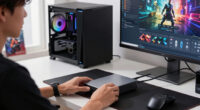
The best external hard drive for most Steam libraries is the Samsung T7 Portable SSD 1TB because its fast loading, compact size, and simple USB connection suit everyday gaming. The WD_BLACK 8TB D10 Game Drive is a stronger choice for a huge desktop collection, while the WD 4TB Elements Portable offers the best balance of capacity and price. Buyers mainly have to choose between SSD speed and HDD storage value, then decide whether portability matters more than maximum capacity. Connection type, available space, and dependence on an external power supply can also change which drive fits a setup. Read on for my full breakdown of the nine options and the tradeoffs separating them.

Play games on Amazon Luna for your game nights, included with Prime
- A rotating selection of games, no download needed
- Play on TV, laptop or phone
- Fast, free delivery for your gear, too
Complete the kit


Key Takeaways
- The Samsung T7 1TB ranks first because SSD responsiveness benefits frequently played games more than excess capacity benefits most buyers, though large-library owners may outgrow it quickly.
- The WD 4TB Elements Portable offers the strongest value balance, providing twice the space of the 2TB HDDs without the desk-bound design of the 8TB D10.
- The WD_BLACK D10 8TB is the capacity leader, but its external power requirement makes it better for a permanent desktop setup than a laptop or travel kit.
- The SanDisk Extreme Portable SSD is the rugged premium pick, pairing 2TB of space with fast transfers and IP65 protection, although its old-model status makes seller and warranty checks especially relevant.
- The 5TB and 6TB portable HDDs occupy the middle ground: they hold far more than the SSDs and avoid a power brick, but they cannot match SSD loading speeds.
| WD_BLACK 8TB D10 Game Drive |  | Best High-Capacity Pick | Capacity: 8TB | Drive Type: External hard disk drive | Spindle Speed: 7200 RPM | VIEW LATEST PRICE | See Our Full Breakdown |
| WD 4TB Elements Portable External Hard Drive | 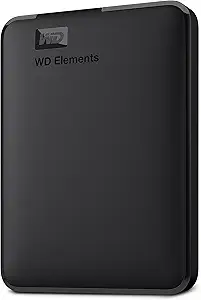 | Best Portable Capacity Balance | Capacity: 4TB | Drive Type: Portable external hard disk drive | Interface: USB 3.2 Gen 1 | VIEW LATEST PRICE | See Our Full Breakdown |
| Samsung T7 Portable SSD 1TB |  | Best for Fast Loading | Capacity: 1TB | Drive Type: Portable solid state drive | Maximum Read Speed: 1,050 MB/s | VIEW LATEST PRICE | See Our Full Breakdown |
| Seagate Portable 2TB External Hard Drive HDD |  | Best Starter Drive | Storage Capacity: 2TB | Drive Type: Portable external hard disk drive | Connection: USB 3.0 | VIEW LATEST PRICE | See Our Full Breakdown |
| SanDisk 2TB Extreme Portable SSD |  | Best Rugged SSD | Capacity: 2TB | Drive Type: Portable NVMe solid state drive | Maximum Read Speed: 1,050 MB/s | VIEW LATEST PRICE | See Our Full Breakdown |
| Western Digital 5TB Elements Portable External Hard Drive | | Best Portable Capacity Value | Capacity: 5TB | Drive type: Portable external hard drive | Form factor: 2.5 inches | VIEW LATEST PRICE | See Our Full Breakdown |
| WD 5TB My Passport Portable External Hard Drive |  | Best for Secure Steam Storage | Capacity: 5TB | Drive type: Portable external hard drive | Interface compatibility: USB 3.1 and USB 3.0 | VIEW LATEST PRICE | See Our Full Breakdown |
| WD_BLACK 6TB P10 Game Drive |  | Best High-Capacity Game Drive | Capacity: 6TB | Estimated game storage: Approximately 150 games | Drive type: Portable external hard drive | VIEW LATEST PRICE | See Our Full Breakdown |
| WD 2TB Elements Portable External Hard Drive |  | Best Budget Starter Drive | Capacity: 2TB | Drive type: Portable external hard drive | Interface: USB 3.2 Gen 1 | VIEW LATEST PRICE | See Our Full Breakdown |
| external hard drives for Steam librarie | Drive Type | Capacity |
|---|---|---|
| WD_BLACK 8TB D10 Game Drive | External hard disk drive | 8TB |
| WD 4TB Elements Portable Exter | Portable external hard disk drive | 4TB |
| Samsung T7 Portable SSD 1TB | Portable solid state drive | 1TB |
| Seagate Portable 2TB External | Portable external hard disk drive | — |
| SanDisk 2TB Extreme Portable S | Portable NVMe solid state drive | 2TB |
| Western Digital 5TB Elements P | Portable external hard drive | 5TB |
| WD 5TB My Passport Portable Ex | Portable external hard drive | 5TB |
| WD_BLACK 6TB P10 Game Drive | Portable external hard drive | 6TB |
| WD 2TB Elements Portable Exter | Portable external hard drive | 2TB |
More Details on Our Top Picks
WD_BLACK 8TB D10 Game Drive
The WD_BLACK 8TB D10 Game Drive earns its place through capacity: it can hold a broad Steam library without forcing frequent uninstall decisions. I rank it above the WD_BLACK 6TB P10 for buyers who prioritize two extra terabytes and faster 7200 RPM performance, while active cooling suits long download and file-transfer sessions. Its two charging ports also reduce competition for USB power at a desktop setup. The compromise is portability. This is a desk-oriented, USB-tethered HDD, not a small drive I would carry between systems. It also cannot approach the loading and transfer speeds of the Samsung T7 Portable SSD. I see it as a library vault for large collections, especially when capacity matters more than SSD responsiveness.
Pros:- 8TB capacity accommodates a large Steam library and game captures
- Up to 250 MB/s transfers are quick for a mechanical external drive
- Active cooling supports sustained desktop use
- Two 7.5W USB Type-A ports can charge gaming accessories
Cons:- Far slower than the Samsung T7 and SanDisk Extreme SSDs
- Desk-oriented construction is less convenient for travel
- Requires a USB connection and does not operate as a standalone power source
Best for: Desktop PC gamers with large Steam collections who want one high-capacity drive for installed games, captures, and backups
Not ideal for: Frequent travelers or players seeking SSD-class loading speeds, since the cooled 7200 RPM design is better suited to a fixed setup
- Capacity:8TB
- Drive Type:External hard disk drive
- Spindle Speed:7200 RPM
- Maximum Transfer Speed:Up to 250 MB/s
- Cooling:Active cooling
- Accessory Ports:2 USB Type-A charging ports
- Charging Output:7.5W per USB Type-A port
Our verdict“I recommend the D10 to desktop gamers who will trade SSD speed and easy portability for the largest capacity in this batch.”
WD 4TB Elements Portable External Hard Drive
The WD 4TB Elements Portable occupies the middle ground I find most practical for mainstream Steam libraries: twice the capacity of the Seagate Portable 2TB, yet still compact and lightweight. Its plug-and-play USB setup keeps installation simple, and 4TB leaves room for many large games without the desk-bound bulk of the WD_BLACK D10. Compared with the Western Digital 5TB Elements, though, this model gives up a terabyte, so buyers with fast-growing collections may prefer the larger version. Mechanical-drive performance is the other limit; the Samsung T7 will handle transfers and game loading much faster. I would choose this drive for affordable, portable library expansion, not for cutting load times. The lack of bundled backup software also makes it a straightforward storage device rather than a managed backup package.
Pros:- 4TB offers a useful balance between library capacity and portability
- Compact, lightweight housing is easier to carry than the WD_BLACK D10
- Plug-and-play operation requires little setup
- USB 3.2 Gen 1 supports broadly compatible transfers
Cons:- Mechanical storage is much slower than the Samsung T7 SSD
- One terabyte smaller than the 5TB Elements alternative
- No bundled backup software
Best for: PC gamers who carry a sizable Steam library between desks and want more room than a basic 2TB portable HDD provides
Not ideal for: Players focused on short loading times or those likely to outgrow 4TB, since an SSD or the 5TB Elements is a better fit
- Capacity:4TB
- Drive Type:Portable external hard disk drive
- Interface:USB 3.2 Gen 1
- USB Compatibility:USB 3.0
- Computer Compatibility:Windows and Mac
- Setup:Plug-and-play
- Design:Compact and lightweight
Our verdict“I recommend this 4TB Elements model to gamers who want portable bulk storage without moving up to a desk-sized 8TB drive.”
Samsung T7 Portable SSD 1TB
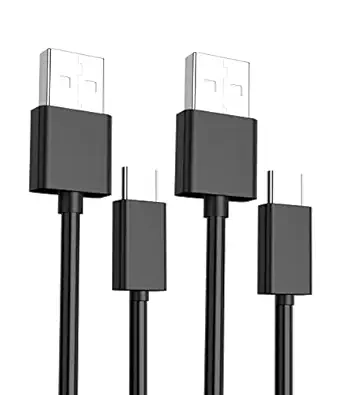
The Samsung T7 Portable SSD is my speed-focused choice for a smaller rotation of frequently played Steam games. Its 1,050 MB/s read and 1,000 MB/s write ratings put it far ahead of the WD 4TB Elements and Seagate Portable 2TB, which means quicker library transfers and less waiting when storage performance affects loading. It is also compact, works across several device types, and includes both Type-C and Type-A cables. Capacity is the deciding drawback: 1TB fills quickly once modern games exceed 100GB, while the SanDisk Extreme offers 2TB with similar headline speeds. The T7 also needs a USB 3.2 Gen 2 host to reach its rated pace. I rank it as the better fit for speed over archive space, especially for players who keep only an active selection installed.
Pros:- Up to 1,050 MB/s read speed supports rapid game transfers
- Shock-resistant housing withstands drops up to 6 feet
- Broad compatibility covers PC, Mac, Android, and gaming consoles
- Includes both USB Type-C-to-C and Type-C-to-A cables
Cons:- 1TB capacity is restrictive for a large modern Steam library
- Maximum performance requires USB 3.2 Gen 2 support
- Costs more per terabyte than portable mechanical drives
Best for: PC gamers who maintain a curated 1TB rotation and want much faster transfers and loading than a portable HDD can provide
Not ideal for: Collectors storing many large games or users limited to slower USB ports, since capacity and host bandwidth restrict its value
- Capacity:1TB
- Drive Type:Portable solid state drive
- Maximum Read Speed:1,050 MB/s
- Maximum Write Speed:1,000 MB/s
- Connection:USB 3.2 Gen 2
- Drop Resistance:Up to 6 feet
- Compatibility:PC, Mac, Android, and gaming consoles
- Included Cables:USB Type-C-to-C and Type-C-to-A
Our verdict“I recommend the Samsung T7 to players who value SSD responsiveness more than keeping an entire multi-terabyte library connected.”
Seagate Portable 2TB External Hard Drive HDD
The Seagate Portable 2TB HDD makes sense as a first external Steam drive for players who need modest expansion without extra software or setup steps. Its USB 3.0 plug-and-play design supports simple drag-and-drop management, and compatibility with PC, Mac, PlayStation, and Xbox gives it a useful life beyond one computer. I place it below the WD 4TB Elements for expanding libraries because Seagate provides only half the capacity; a handful of very large games can consume 2TB sooner than expected. It is also a mechanical drive, so the Samsung T7 offers much faster transfers and loading in a smaller-capacity SSD format. Still, Seagate’s model remains a sensible basic library overflow drive. I would pick it for a selective collection, while buyers archiving dozens of major releases should choose 4TB or more.
Pros:- Plug-and-play USB 3.0 connection keeps setup simple
- Works with PC, Mac, PlayStation, and Xbox
- Portable design suits storage moved between systems
- Included 18-inch cable is ready for desktop or console use
Cons:- 2TB provides half the capacity of the WD 4TB Elements
- Mechanical-drive speeds lag well behind portable SSDs
- No included backup or library-management software
Best for: New PC gamers and light library users who need straightforward 2TB expansion that can also move between computers and consoles
Not ideal for: Players collecting many 100GB-plus games or seeking faster loading, because 2TB and mechanical-drive performance become limiting
- Storage Capacity:2TB
- Drive Type:Portable external hard disk drive
- Connection:USB 3.0
- Computer Compatibility:Windows PC and Mac
- Console Compatibility:PlayStation and Xbox
- Included Cable:18-inch USB 3.0 cable
- Setup:Plug-and-play with drag-and-drop transfers
Our verdict“I recommend this Seagate drive as uncomplicated starter storage for a selective Steam library, not a long-term home for a huge collection.”
SanDisk 2TB Extreme Portable SSD
The SanDisk 2TB Extreme Portable SSD is the strongest travel-oriented choice here, combining fast NVMe storage with IP65 water and dust resistance and protection from drops up to three meters. Compared with the Samsung T7, it doubles capacity while matching the listed 1,050 MB/s read and 1,000 MB/s write ceilings, making it better suited to a larger active Steam rotation. The carabiner loop adds practical security in transit, while 256-bit AES hardware encryption serves buyers who also carry personal files. Those advantages come with caveats: this is an old model, its full speed depends on USB 3.2 Gen 2 support, and HDDs such as the WD 4TB Elements supply more capacity per dollar. I rank it highest for portable protection and SSD speed, rather than maximum library size.
Pros:- 2TB capacity holds twice as much as the Samsung T7 in this batch
- Up to 1,050 MB/s reads and 1,000 MB/s writes support fast transfers
- IP65 resistance and three-meter drop protection suit travel
- 256-bit AES hardware encryption protects sensitive files
Cons:- Old-model status may make newer alternatives more appealing
- Maximum speeds depend on a USB 3.2 Gen 2 host
- Lower capacity per dollar than portable HDDs
Best for: Laptop gamers and frequent travelers who carry a 2TB active Steam library and need protection from drops, dust, and water
Not ideal for: Desk-bound collectors seeking the most terabytes for their budget or buyers who prefer a current-generation model
- Capacity:2TB
- Drive Type:Portable NVMe solid state drive
- Maximum Read Speed:1,050 MB/s
- Maximum Write Speed:1,000 MB/s
- Connectivity:USB-C, USB 3.2 Gen 2
- Water and Dust Resistance:IP65
- Drop Protection:Up to 3 meters
- Encryption:256-bit AES hardware encryption
- Carry Feature:Integrated carabiner loop
Our verdict“I recommend the SanDisk Extreme to mobile gamers who want a roomier, tougher SSD and accept paying more per terabyte than an HDD.”
Western Digital 5TB Elements Portable External Hard Drive
I rank the WD 5TB Elements as the capacity-value choice for Steam players who want ample space without paying for gaming branding or SSD speed. Its 5TB capacity gives a large library room to grow, while the 2.5-inch format is easier to carry between PCs than the WD_BLACK 8TB D10. Compared with the WD_BLACK 6TB P10, this model gives up one terabyte and has a much lower listed read speed of 50MB/s, so moving installations and loading large games may take longer. The plain feature set also lacks the encryption tools included with the WD My Passport. I would choose it for inexpensive library expansion, but skip it when shorter loading screens, security features, or a clearly documented long warranty matter more than storage per dollar.
Pros:- 5TB provides substantial room for large Steam libraries
- Compact 2.5-inch format travels more easily than larger desktop drives
- USB 3.2 Gen 1 connectivity works with common desktop and laptop ports
- Windows and Mac compatibility adds flexibility between computers
Cons:- Listed 50MB/s read speed trails the WD_BLACK P10 and portable SSDs
- No stated encryption or ransomware-protection features
- Only a 30-day return policy is supplied instead of a clear multiyear warranty
Best for: PC gamers who want a large, portable Steam archive and care more about capacity than transfer speed or security software
Not ideal for: Players who frequently move huge installations or want SSD-like loading performance, since the listed 50MB/s read speed is modest
- Capacity:5TB
- Drive type:Portable external hard drive
- Form factor:2.5 inches
- Interface:USB 2.0/3.0; USB 3.2 Gen 1 stated
- Listed read speed:50MB/s
- Compatibility:Windows and Mac
- Color:Black
- Return policy:30 days
Our verdict“This is my pick for buyers seeking lots of portable Steam storage at a practical level, provided slower HDD transfers are acceptable.”
WD 5TB My Passport Portable External Hard Drive
The WD 5TB My Passport earns its place through security rather than raw gaming speed. I see it as the stronger choice for a shared laptop or travel setup because hardware encryption, password security, and ransomware protection add safeguards absent from both WD Elements models. Capacity matches the 5TB Elements, yet the included protection features make this drive better suited to buyers who also store personal files beside their Steam library. Its three-year warranty is another advantage over the limited return coverage listed for the WD_BLACK P10. The compromise is performance: no read-speed figure is supplied, and a mechanical drive will not match the Samsung T7 or SanDisk Extreme SSD for loading responsiveness. I would also avoid paying a large premium if the drive will remain beside one trusted desktop.
Pros:- 5TB capacity accommodates a sizable Steam library
- Hardware encryption and password security protect mixed-use storage
- Ransomware-protection features distinguish it from the Elements models
- Three-year warranty is the strongest stated coverage in this batch
Cons:- No read-speed figure is provided for judging game and transfer performance
- Mechanical storage cannot match the responsiveness of the Samsung T7 or SanDisk Extreme SSD
- Security extras may add little value on a stationary, single-user gaming PC
Best for: Laptop gamers who carry a Steam library alongside personal files and want password protection plus hardware encryption
Not ideal for: Performance-focused players who prioritize fast game loading over security tools, or desktop users who do not need protected portable storage
- Capacity:5TB
- Drive type:Portable external hard drive
- Interface compatibility:USB 3.1 and USB 3.0
- Security:Password protection
- Encryption:Hardware encryption
- Protection software:Backup and ransomware protection
- Color:Black
- Warranty:3 years
Our verdict“I recommend this model when a portable Steam library needs stronger file protection, not when loading speed is the main priority.”
WD_BLACK 6TB P10 Game Drive
I place the WD_BLACK 6TB P10 highest among these four for buyers building a large, actively played Steam library. Its combination of 6TB capacity and speeds up to 130MB/s makes it roomier and much faster on paper than the 5TB Elements, while the metal 2.5-inch enclosure remains portable. The estimated space for about 150 games is useful shorthand, though actual totals will vary sharply when modern releases exceed 100GB. Compared with the WD_BLACK 8TB D10, the P10 sacrifices two terabytes for a smaller travel-friendly format; against the Samsung T7, it wins on capacity but loses badly on responsiveness. That distinction shapes my ranking: this is the best HDD here for keeping many games installed, but not the answer for SSD-class loading times. Limited warranty information also weakens its premium gaming pitch.
Pros:- 6TB is the largest capacity among the four products reviewed in this batch
- Up to 130MB/s listed speed is stronger than the 5TB Elements figure
- Metal 2.5-inch enclosure balances durability with portability
- PC, Mac, and console support suits buyers with several gaming systems
Cons:- Still far slower than the Samsung T7 and SanDisk Extreme portable SSDs
- USB connection is required whenever games or files are accessed
- Supplied warranty information mentions only a 30-day return policy
Best for: Steam collectors who want six terabytes in a portable enclosure and need better listed HDD speed than the basic Elements drives
Not ideal for: Competitive or loading-time-sensitive players who would benefit more from the much faster Samsung T7 or SanDisk Extreme SSD
- Capacity:6TB
- Estimated game storage:Approximately 150 games
- Drive type:Portable external hard drive
- Form factor:2.5 inches
- Interface:USB 3.0
- Listed speed:Up to 130MB/s
- Compatibility:PC, Mac, PlayStation 5, and Xbox Series X|S
- Enclosure:Metal
- Color:Black
Our verdict“This is my choice for a large portable Steam collection when capacity matters more than SSD-level loading speed.”
WD 2TB Elements Portable External Hard Drive
The WD 2TB Elements is my starter recommendation for someone moving a modest Steam library off a crowded laptop. It offers plug-and-play USB 3.2 Gen 1 connectivity in a compact format, without charging for encryption tools or gaming-focused styling. Against the Seagate Portable 2TB, its clearest supplied advantage is a stated two-year warranty; compared with the 5TB Elements, it is easier to justify for a smaller collection but provides far less room for future releases. That capacity gap matters because a handful of very large games can consume 2TB quickly. There is also no included backup software, and mechanical-drive performance will trail the Samsung T7. I would buy this for affordable overflow storage or archived games, while frequent players with a growing library should spend more for 5TB or 6TB capacity.
Pros:- 2TB capacity suits smaller libraries without paying for unused space
- Compact and lightweight design is convenient for laptop users
- Plug-and-play USB 3.2 Gen 1 setup keeps installation simple
- Two-year warranty provides clearer coverage than the listed P10 policy
Cons:- 2TB capacity offers limited growth room for large modern games
- No backup software is included
- HDD loading and transfer performance trails portable SSD alternatives
Best for: Budget-minded laptop gamers with a small Steam collection who need simple portable overflow storage
Not ideal for: Collectors installing many modern AAA games, since 2TB can fill quickly and leaves less expansion room than the 5TB and 6TB picks
- Capacity:2TB
- Drive type:Portable external hard drive
- Interface:USB 3.2 Gen 1
- Setup:Plug-and-play
- Compatibility:Windows 10 and Mac
- Design:Compact and lightweight
- Included backup software:None
- Warranty:2 years
Our verdict“I would choose this as an inexpensive first Steam drive for a modest library, but larger collections merit a higher-capacity model.”
How We Picked
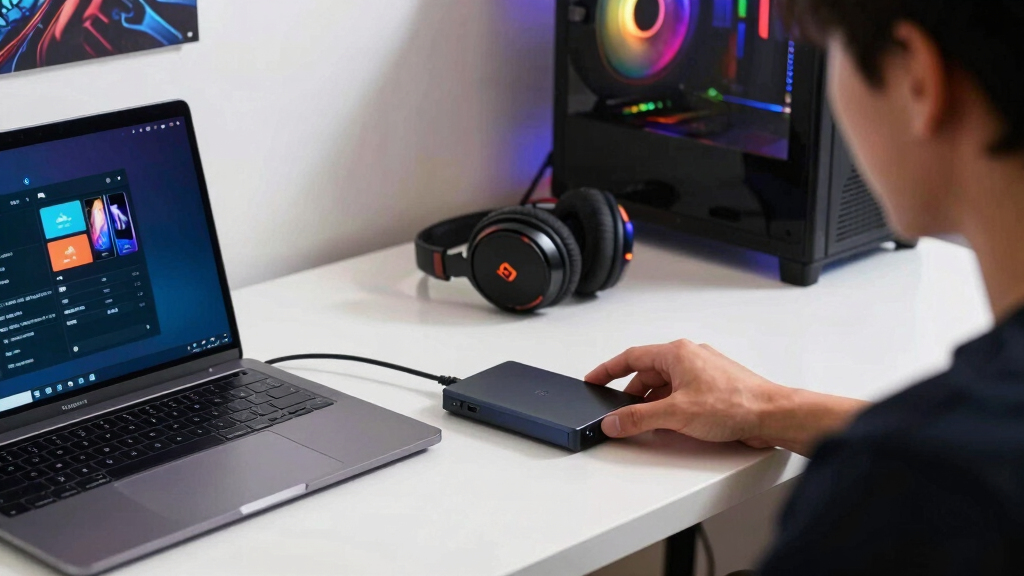
I ranked these drives around the needs of a working Steam game library, giving the most weight to loading performance, usable capacity, price per terabyte, and connection convenience. I also compared whether each model is bus-powered or desk-bound, since a power brick changes how practical a drive is for laptop owners. Durability, physical size, platform compatibility, and the ease of moving large installations also shaped the order. Rather than rewarding the largest capacity alone, I favored the best balance of speed and everyday usability.
That logic puts the Samsung T7 ahead of the HDDs for most players, while the WD 4TB Elements Portable rises on storage value. The WD_BLACK D10 earns its place through unmatched capacity in this lineup, but its fixed-desk format limits its audience. The SanDisk Extreme commands a premium for speed and environmental protection, while the P10 and 5TB Western Digital models serve buyers who want portable bulk storage. I placed the 2TB HDDs lower because they sacrifice SSD speed without delivering the larger capacity that makes an HDD especially compelling. Each recommendation has a distinct role rather than receiving equal praise for different specifications.
| external hard drives for Steam librarie | Drive Type |
|---|---|
| WD_BLACK 8TB D10 Game Drive | External hard disk drive |
| WD 4TB Elements Portable Exter | Portable external hard disk drive |
| Samsung T7 Portable SSD 1TB | Portable solid state drive |
| Seagate Portable 2TB External | Portable external hard disk drive |
| SanDisk 2TB Extreme Portable S | Portable NVMe solid state drive |
| Western Digital 5TB Elements P | Portable external hard drive |
| WD 5TB My Passport Portable Ex | Portable external hard drive |
| WD_BLACK 6TB P10 Game Drive | Portable external hard drive |
| WD 2TB Elements Portable Exter | Portable external hard drive |
Factors to Consider When Choosing Best External Hard Drives For Steam Libraries
I would start by deciding whether the drive will hold a few regularly played games or act as an archive for most of a Steam collection. That single choice usually reveals whether speed, capacity, or portability deserves the largest share of the budget. The factors below help narrow the remaining choices without repeating the individual product comparisons.
Choose SSD Speed or HDD Capacity
An external SSD shortens loading and file-transfer waits, which matters most in games that frequently load large environments or many assets. It does not normally raise average frame rates, so paying more for an SSD will not fix a weak graphics card or processor. A mechanical HDD gives far more storage per dollar and works well for older games, turn-based titles, and installations kept between play sessions. Modern open-world games may expose an HDD through longer loads, delayed textures, or pauses during asset streaming. I favor an SSD for a smaller active library and an HDD for a large archive where cost per terabyte matters more than responsiveness. A useful compromise is to keep current games on an SSD and move less-played releases to a high-capacity HDD.
Plan for Real Capacity, Not the Box Number
A drive’s formatted capacity appears lower in Windows than the number printed on its packaging, so a nominal 2TB model will not provide a full 2TB of displayed space. Large releases can occupy well over 100GB, and downloadable content, shader caches, and workshop files add to that footprint. Steam updates may also need temporary working space, making a nearly full drive harder to manage. I would leave roughly 10% to 20% free rather than planning around every advertised gigabyte. A 1TB SSD suits a focused rotation, while 4TB to 6TB fits a broad mixed library and 8TB makes sense for collectors who dislike uninstalling games. Buying far beyond the expected library size can waste money, especially when faster storage would improve daily use more than unused capacity.
Match the Connection to the Gaming PC
USB labels can be confusing, but the practical question is whether the computer and drive share a port fast enough for the drive’s maximum performance. A hard drive rarely saturates a standard USB 3 connection, while a fast portable SSD benefits more from a higher-bandwidth USB port. Plugging an SSD into an older USB port can make a premium model perform like a much cheaper drive. Connector shape is separate from speed: USB-C does not automatically mean faster transfers, and USB-A can still support capable connections. I recommend checking the PC’s port specifications and the supplied cable before paying for high advertised SSD speeds. A direct motherboard connection is preferable to an overloaded hub, which can create bandwidth or disconnect problems.
Decide Whether the Drive Will Travel
A bus-powered portable drive takes power from USB, reducing cable clutter and making it easy to move between a desktop, laptop, and secondary PC. Desktop-class drives usually offer greater capacity but need an outlet and occupy more permanent desk space. Mechanical portable drives also contain moving parts, so drops during operation pose a greater risk than they do with SSDs. Rugged casing and water or dust resistance are useful for commuting, but they add little value when a drive never leaves the desk. I would choose a compact SSD for frequent travel, a portable HDD for occasional movement, and a powered desktop drive for a fixed archive. Paying for mobility that will never be used is a common mistake, just as choosing a desk-bound drive for a laptop kit creates daily friction.
Build the Steam Library Around Reliable Paths
Steam can create library folders on external storage and move installed games without downloading them again. On Windows, changing drive letters can make an existing library appear missing, so assigning a stable letter helps keep paths consistent. The drive should remain connected while Steam is open and while games are updating; unplugging it during a write can damage files. Moving one drive between computers may still trigger sign-in checks, redistributable installation, or file verification. I treat an external game drive as replaceable installation storage, not as the only copy of saves, screenshots, or personal files. Steam Cloud helps with supported games, but separate save backups remain sensible because cloud support varies and an external library is not a complete backup plan.
Frequently Asked Questions
Can I Run Steam Games Directly From an External HDD?
Yes, Steam games can run directly from an external HDD library without being copied back to the internal drive. Loading screens and installation updates will usually take longer than they would on an SSD. Most games will not lose frame rate once their assets are loaded, although streaming-heavy titles can show stutter or delayed textures on a slow disk. I would use an HDD for older games, smaller titles, and a large archive, then reserve faster storage for demanding current releases. A stable USB 3 connection and sufficient free space matter more than gaming-themed branding.
Is an External SSD Worth Paying More for?
An external SSD is worth the premium when shorter loading times and portability matter more than storing the largest possible collection. It is especially appealing for a laptop, a compact desk, or a rotation of games played every week. The extra cost is harder to justify for archived titles that are opened only occasionally. I would compare the price of a 1TB or 2TB SSD with a 4TB or 5TB HDD and decide whether capacity lost is acceptable. The Samsung T7 and SanDisk Extreme make sense for active libraries, while the larger HDDs deliver better bulk storage value.
How Much External Storage Do I Need for a Steam Library?
I see 1TB as a focused-library size rather than a long-term answer for collectors of large releases. A 2TB drive offers more breathing room, but frequent buyers may still reach its limit quickly once expansions and workshop content accumulate. Four to 6TB is a better range for players who want dozens of substantial games installed at once. Eight terabytes suits a large archive, though it may be excessive if most games are routinely uninstalled after completion. I would estimate the current library, add expected purchases, and preserve 10% to 20% free space for updates and file management.
Can I Move One External Steam Library Between Two PCs?
Yes, but moving a Steam library between PCs is smoother when both systems use a compatible file system and stable drive path. Steam may need the library folder added through its storage settings before installed games appear. Some titles will run a file check or reinstall supporting components on the second computer. Games with separate launchers, anti-cheat tools, or machine-specific settings may require extra setup. I would not expect one external library to move seamlessly between Windows and macOS because file systems and game builds differ.
Does Storing Steam Games Externally Also Back Up My Save Files?
Not always, because many games store saves in the Windows user folders rather than beside their installation files. Steam Cloud can synchronize saves for supported titles, but coverage and behavior vary by game. A failed external drive may be easy to repopulate with downloaded game files while local saves remain irreplaceable. I recommend checking where favorite games store their progress and copying those folders to a separate backup destination. Treat the external Steam drive as library expansion rather than save protection.
Conclusion
For most buyers, I recommend the Samsung T7 1TB as the best overall because it combines fast loading, quiet operation, and easy portability, provided a 1TB ceiling is workable. The WD 4TB Elements Portable is my best-value choice for players who would rather store more games than trim loading screens. Premium buyers who travel should choose the SanDisk Extreme 2TB for SSD speed and IP65 protection, while beginners get a simple, low-commitment starting point from the Seagate Portable 2TB. For specific needs, the WD_BLACK D10 8TB is the strongest fixed-desk archive, the WD_BLACK P10 6TB supplies gaming-focused portable capacity, and the WD 5TB Elements avoids the D10’s power brick. The WD 5TB My Passport better suits buyers combining games with personal-file tools, while the WD 2TB Elements works as a low-cost secondary library. My final choice comes down to one divide: buy an SSD for the games played most often, or buy a larger HDD when library size matters more than loading speed.
Halloween Picks
halloween
As an affiliate, we earn on qualifying purchases.