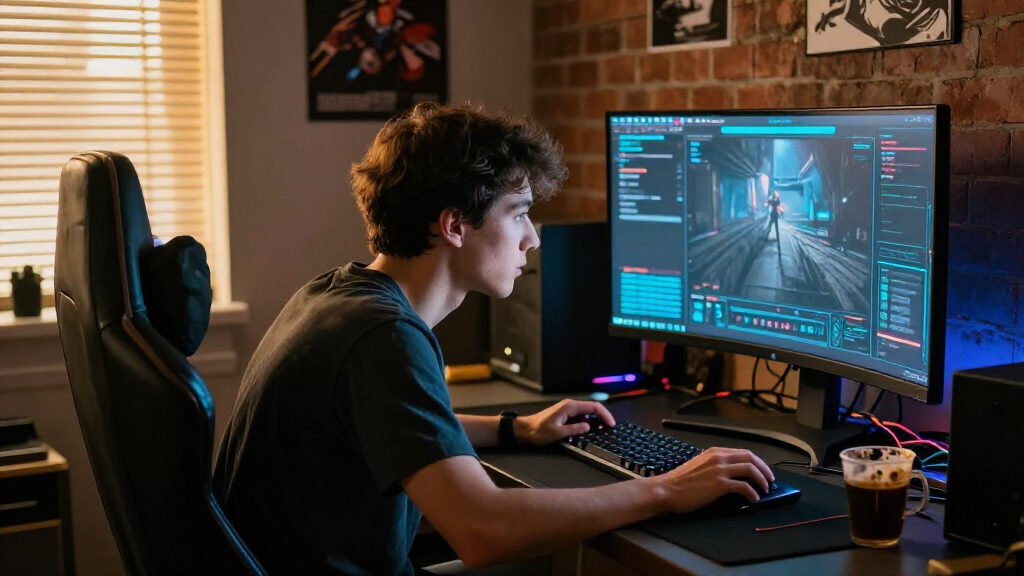
For most PC gamers, I’d start with the ASUS TUF Gaming VG27AQ3A: its 27-inch QHD Fast IPS panel and 180Hz refresh rate balance sharp detail with responsive play. The Acer Nitro KG271U is another strong QHD option, while the Dell SE2426HG suits players who favor a compact 24-inch Full HD screen and 240Hz refresh rate. Across these 15 monitors, the main tradeoffs are resolution versus refresh rate, flat versus curved screens, and larger displays versus desk space and GPU demands. A high refresh rate alone does not guarantee the best fit if your PC cannot produce enough frames or your games benefit more from added resolution. Read on for the full breakdown and guidance on matching a monitor to your setup.

Play games on Amazon Luna for your game nights, included with Prime
- A rotating selection of games, no download needed
- Play on TV, laptop or phone
- Fast, free delivery for your gear, too
Complete the kit

Key Takeaways
- The ASUS TUF VG27AQ3A stands out as the most balanced pick: 27-inch QHD and 180Hz Fast IPS make it a strong middle ground between sharpness and speed.
- QHD appears across several 27- and 32-inch picks, but the larger screen size does not automatically make a better choice; check desk distance and your GPU’s ability to drive that resolution.
- 240Hz Full HD models prioritize speed over detail: the Dell SE2426HG and SANSUI options fit competitive play better than gamers seeking a crisp, high-resolution image.
- Curved screens serve different needs across the lineup: the 30-inch Sceptre ultrawide expands horizontal space, while the 32-inch curved QHD models emphasize a larger, more immersive view.
- Entry-level and compact options trade gaming headroom for accessibility: the 22-inch Sceptre and 27-inch Sceptre E275W-FW100T offer more modest refresh rates than the faster gaming-focused picks.
| SANSUI 32-Inch Curved 240Hz FHD Gaming Monitor |  | Best for Large-Screen Competitive Play | Screen size: 32 inches | Resolution: 1920 × 1080 (FHD) | Refresh rate: 240 Hz | VIEW LATEST PRICE | See Our Full Breakdown |
| Acer Nitro KG271U 27-Inch QHD IPS Gaming Monitor | 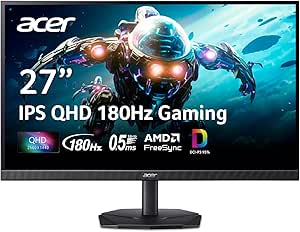 | Best for Balanced Resolution and Speed | Screen size: 27 inches | Panel type: IPS | Resolution: 2560 × 1440 (QHD) | VIEW LATEST PRICE | See Our Full Breakdown |
| Samsung Odyssey G55C 32-Inch QHD 1000R Curved Gaming Monitor |  | Best for Immersive QHD Gaming | Screen size: 32 inches | Resolution: 2560 × 1440 (QHD) | Curvature: 1000R | VIEW LATEST PRICE | See Our Full Breakdown |
| Samsung 27-Inch Odyssey G3 (G30D) FHD Gaming Monitor |  | Best for Adjustable Ergonomics | Screen size: 27 inches | Resolution: 1920 × 1080 (FHD) | Refresh rate: 180 Hz | VIEW LATEST PRICE | See Our Full Breakdown |
| Dell SE2426HG 24-Inch FHD 240Hz Gaming Monitor |  | Best Compact High-Refresh Pick | Screen size: 23.8 inches | Panel type: IPS | Resolution: 1920 × 1080 (FHD) | VIEW LATEST PRICE | See Our Full Breakdown |
| SANSUI 27-Inch Curved FHD 240Hz Gaming Monitor |  | Best for Budget-Conscious Competitive Play | Screen size and resolution: 27 inches; 1920 × 1080 (FHD) | Refresh rate: 240 Hz | Response time: 1 ms | VIEW LATEST PRICE | See Our Full Breakdown |
| ASUS TUF Gaming VG27AQ3A 27-Inch QHD 180Hz Fast IPS Gaming Monitor |  | Best Overall for Balanced PC Gaming | Screen size and resolution: 27 inches; 2560 × 1440 (QHD) | Panel type: Fast IPS | Refresh rate and response time: 180 Hz; 1 ms | VIEW LATEST PRICE | See Our Full Breakdown |
| Sceptre 30-Inch Curved Ultrawide Gaming Monitor, 2560 × 1080, up to 200 Hz, FreeSync, Built-In Speakers |  | Best Ultrawide for Immersive Play | Screen size and resolution: 30 inches; 2560 × 1080 | Aspect ratio: 21:9 | Refresh rate: Up to 200Hz via DisplayPort; up to 120Hz via HDMI 2.0 | VIEW LATEST PRICE | See Our Full Breakdown |
| Samsung Odyssey G5 G50F 32-Inch QHD Gaming Monitor |  | Best for a Large QHD IPS Screen | Screen size and resolution: 32 inches; 2560 × 1440 (QHD) | Panel type: Fast IPS | Refresh rate and response time: 180 Hz; 1 ms GtG | VIEW LATEST PRICE | See Our Full Breakdown |
| Samsung 32-Inch Odyssey G5 (G51F) QHD 180Hz Gaming Monitor |  | Best for High-Contrast 32-Inch Gaming | Screen size and resolution: 32 inches; 2560 × 1440 (QHD) | Panel type and contrast: VA; 3000:1 | Refresh rate and response time: 180 Hz; 1 ms MPRT | VIEW LATEST PRICE | See Our Full Breakdown |
| LG UltraGear 32GS60QC-B 32-Inch QHD Curved Gaming Monitor |  | Best for Large-Screen QHD Gaming | Screen size: 32 inches | Resolution: 2560 × 1440 (QHD) | Refresh rate: 180Hz | VIEW LATEST PRICE | See Our Full Breakdown |
| Sceptre 22-Inch FHD 144Hz Gaming Monitor with Built-In Speakers |  | Best Compact High-Refresh Pick | Screen size: 22 inches | Resolution: 1920 × 1080 (FHD) | Refresh rate: Up to 144Hz | VIEW LATEST PRICE | See Our Full Breakdown |
| Sceptre E275W-FW100T 27-Inch Full HD 100Hz Gaming Monitor |  | Best for Everyday 1080p Gaming | Screen size: 27 inches | Resolution: 1920 × 1080 (Full HD) | Refresh rate: 100Hz | VIEW LATEST PRICE | See Our Full Breakdown |
| Sceptre 27-Inch Curved Full HD Gaming Monitor, 180Hz, 1ms, 1500R, Built-In Speakers |  | Best Curved Full HD High-Refresh Pick | Screen size: 27 inches | Resolution: 1920 × 1080 (Full HD) | Panel: VA | VIEW LATEST PRICE | See Our Full Breakdown |
| Sceptre C248W-1920RN 24-Inch Curved 1080p LED Monitor |  | Best Entry-Level Curved Option | Screen size: 24 inches | Resolution: 1920 × 1080 (Full HD) | Panel: VA | VIEW LATEST PRICE | See Our Full Breakdown |
| gaming monitors for PC gaming | Adaptive sync | Refresh rate | Response time | Screen size |
|---|---|---|---|---|
| SANSUI 32-Inch Curved 240Hz FH | FreeSync | 240 Hz | 1 ms MPRT | 32 inches |
| Acer Nitro KG271U 27-Inch QHD | AMD FreeSync | Up to 180 Hz | Up to 0.5 ms GTG | 27 inches |
| Samsung Odyssey G55C 32-Inch Q | AMD Radeon FreeSync | 165 Hz | 1 ms MPRT | 32 inches |
| Samsung 27-Inch Odyssey G3 | AMD FreeSync | 180 Hz | 1 ms MPRT | 27 inches |
| Dell SE2426HG 24-Inch FHD 240H | AMD FreeSync Premium | 240 Hz | 0.5 ms advertised; 5 ms also listed | 23.8 inches |
| SANSUI 27-Inch Curved FHD 240H | FreeSync | 240 Hz | 1 ms | — |
| ASUS TUF Gaming VG27AQ3A 27-In | FreeSync Premium, G-SYNC Compatible, VESA AdaptiveSync | — | — | — |
| Sceptre 30-Inch Curved Ultrawi | AMD FreeSync | Up to 200Hz via DisplayPort; up to 120Hz via HDMI 2.0 | 5ms GTG | — |
| Samsung Odyssey G5 G50F 32-Inc | FreeSync; G-SYNC compatible | — | — | — |
| Samsung 32-Inch Odyssey G5 | — | — | — | — |
| LG UltraGear 32GS60QC-B 32-Inc | AMD FreeSync | 180Hz | 1ms GtG | 32 inches |
| Sceptre 22-Inch FHD 144Hz Gami | FreeSync | Up to 144Hz | 1ms | 22 inches |
| Sceptre E275W-FW100T 27-Inch F | AMD FreeSync | 100Hz | 1ms | 27 inches |
| Sceptre 27-Inch Curved Full HD | — | 180Hz | 1ms blur reduction | 27 inches |
| Sceptre C248W-1920RN 24-Inch C | FreeSync | 75Hz | — | 24 inches |
More Details on Our Top Picks
SANSUI 32-Inch Curved 240Hz FHD Gaming Monitor
The SANSUI pairs a 32-inch 1500R curve with a 240Hz refresh rate, making it a fit for PC players who want a broad, enveloping view and fast motion without stepping up to a higher-resolution graphics load. Compared with the Dell SE2426HG, it offers a much larger screen and a deeper curve, while both target high-refresh-rate play. The tradeoff is pixel density: Full HD spread across 32 inches looks less sharp than the Dell’s smaller FHD panel, and the Acer Nitro KG271U delivers more detail with QHD resolution. FreeSync and tilt adjustment add practical value, but there are no built-in speakers, and the stand offers less positioning range than some alternatives. Choose it for scale and speed, not fine image detail.
Pros:- 240Hz refresh rate supports fluid motion in fast-paced PC games.
- Large 32-inch screen with a 1500R curve creates an enveloping view.
- FreeSync helps reduce tearing with compatible systems.
- Matte finish and VESA mounting support flexible setup options.
Cons:- Full HD resolution looks less detailed on a 32-inch panel than QHD alternatives.
- No built-in speakers are included.
- Stand adjustment is limited to tilt.
Best for: PC gamers who prioritize a large curved screen and high refresh rate for fast-paced games, and whose systems are suited to Full HD.
Not ideal for: Players who sit close to the screen, want crisp QHD detail, or need a monitor with built-in speakers.
- Screen size:32 inches
- Resolution:1920 × 1080 (FHD)
- Refresh rate:240 Hz
- Response time:1 ms MPRT
- Curvature:1500R
- Adaptive sync:FreeSync
- Ports:1 HDMI, DisplayPort 1.4, 3.5 mm headphone jack
- Mounting:100 × 100 mm VESA
Our verdict“Pick the SANSUI if you want a large, curved 240Hz screen and can accept lower pixel sharpness for its size.”
Acer Nitro KG271U 27-Inch QHD IPS Gaming Monitor
The Acer Nitro KG271U is the lineup’s balanced choice for PC gamers who want a clearer image than Full HD without giving up a high refresh rate. Its 27-inch QHD IPS panel gives games and desktop text more detail than the Samsung Odyssey G3, while its refresh rate reaches 180Hz for responsive motion. The IPS panel and DCI-P3 95% coverage also suit players who care about broad viewing angles and richer color, not just frame rates. Compared with the curved, larger Samsung Odyssey G55C, the Acer uses a flat, smaller screen but offers a faster refresh ceiling. Its 250 cd/m² brightness is modest, and HDR10 support should not be mistaken for a bright HDR experience. Built-in speakers are handy, though the connectivity is limited to HDMI and DisplayPort.
Pros:- QHD resolution provides more detail than the FHD monitors in this group.
- Up to 180Hz refresh rate supports responsive gameplay.
- IPS panel and DCI-P3 95% coverage support wide viewing angles and rich color.
- FreeSync and built-in speakers add useful gaming and setup features.
Cons:- 250 cd/m² brightness may feel limited in bright rooms.
- HDR10 support is paired with modest listed brightness.
- Connectivity is limited to HDMI and DisplayPort.
Best for: PC gamers seeking a sharp 27-inch QHD image, high refresh rate, and IPS viewing angles for both gaming and everyday desktop use.
Not ideal for: Players who need high brightness for a sunlit room, a curved large-format screen, or a broader selection of connections.
- Screen size:27 inches
- Panel type:IPS
- Resolution:2560 × 1440 (QHD)
- Refresh rate:Up to 180 Hz
- Response time:Up to 0.5 ms GTG
- Adaptive sync:AMD FreeSync
- Color coverage:DCI-P3 95%
- Brightness:250 cd/m²
- Connectivity:DisplayPort, HDMI
Our verdict“Choose the Acer for a strong QHD-and-speed balance on a 27-inch IPS screen rather than a larger curved display.”
Samsung Odyssey G55C 32-Inch QHD 1000R Curved Gaming Monitor
The Odyssey G55C brings together the lineup’s strongest combination of large-screen QHD detail and an aggressive 1000R curve. That makes it better suited to immersive single-player games than the flat Acer Nitro KG271U, while its 165Hz refresh rate still supports smooth PC gameplay. The Acer refreshes faster at up to 180Hz, so it is the stronger fit for players chasing competitive motion; the Samsung instead offers a larger curved canvas and more resolution than the 32-inch SANSUI, which is limited to Full HD. FreeSync helps reduce tearing, and Eye Saver Mode and flicker reduction add useful comfort options. The glossy finish can reflect room lighting, and the listed connectivity includes only one HDMI port, so check that it fits your PC and other devices.
Pros:- QHD resolution gives a 32-inch display more detail than the SANSUI’s FHD panel.
- 1000R curve supports an enveloping view for games.
- 165Hz refresh rate and FreeSync support smooth, tear-reduced play.
- Eye Saver Mode and flicker reduction provide comfort-focused options.
Cons:- Glossy screen finish may reflect windows and room lights.
- 165Hz is below the refresh rate offered by the Acer and 240Hz models.
- Only one HDMI port is listed.
Best for: PC gamers who want a large, curved QHD screen for immersive games and still value a high refresh rate.
Not ideal for: Competitive players who prioritize the highest refresh rate, or anyone gaming in a room with strong reflections or needing multiple HDMI connections.
- Screen size:32 inches
- Resolution:2560 × 1440 (QHD)
- Curvature:1000R
- Refresh rate:165 Hz
- Response time:1 ms MPRT
- Adaptive sync:AMD Radeon FreeSync
- HDR:HDR10
- Screen finish:Glossy
- HDMI ports:1
Our verdict“Choose the G55C for curved, large-format QHD immersion, not for the highest refresh rate or a reflection-prone setup.”
Samsung 27-Inch Odyssey G3 (G30D) FHD Gaming Monitor
The Odyssey G3 stands apart from the other FHD picks through its fully adjustable stand: height, swivel, tilt, and pivot make it easier to set a comfortable position than the tilt-only Dell SE2426HG or SANSUI. Its 180Hz refresh rate and FreeSync make it a sensible match for fast PC games, while Black Equalizer and Virtual Aim Point add gaming-specific display tools. It is a more flexible desk companion than the 32-inch SANSUI, but its 27-inch FHD screen will not look as detailed as the Acer Nitro KG271U’s QHD panel. The listed brightness is 250 cd/m², and the glossy finish can pick up reflections, so it is less suited to bright rooms. This is the practical choice when screen positioning matters more than resolution.
Pros:- Stand adjusts for height, swivel, tilt, and pivot.
- 180Hz refresh rate and FreeSync support smooth gameplay.
- Black Equalizer and Virtual Aim Point add gaming-focused controls.
- Three-sided borderless design suits multi-monitor setups.
Cons:- FHD resolution offers less detail than the Acer’s QHD display.
- Glossy finish can reflect ambient light.
- 250 cd/m² brightness may be limiting in bright spaces.
Best for: PC gamers who need a height-, swivel-, tilt-, and pivot-adjustable monitor for a flexible desk setup.
Not ideal for: Players who want QHD sharpness, high brightness, or a matte screen for a room with strong ambient light.
- Screen size:27 inches
- Resolution:1920 × 1080 (FHD)
- Refresh rate:180 Hz
- Response time:1 ms MPRT
- Adaptive sync:AMD FreeSync
- Brightness:250 cd/m²
- Connectivity:DisplayPort, HDMI
- Stand adjustments:Height, swivel, tilt, pivot
- Screen finish:Glossy
Our verdict“Pick the Odyssey G3 if stand flexibility and gaming tools matter more to you than QHD resolution.”
Dell SE2426HG 24-Inch FHD 240Hz Gaming Monitor
The Dell SE2426HG is the compact high-refresh option for PC players who want 240Hz motion on a desk-friendly 23.8-inch screen. Its IPS panel, matte finish, and 99% sRGB coverage also make it a more versatile everyday display than the larger curved SANSUI, while AMD FreeSync Premium supports smoother play with compatible systems. Compared with the Acer Nitro KG271U, the Dell trades QHD detail for a higher refresh rate and a smaller footprint; that can make sense for competitive games, but less so for visually rich titles or detailed desktop work. The response-time information lists both 0.5 ms advertised and 5 ms, so buyers should not treat the lowest figure as a guaranteed result. Tilt is the only listed stand adjustment, and the resolution remains Full HD.
Pros:- 240Hz refresh rate targets fluid motion in competitive games.
- IPS panel and 99% sRGB coverage support broad viewing angles and everyday color use.
- Matte finish and TÜV Rheinland 3-star eye comfort certification suit extended sessions.
- FreeSync Premium and two HDMI ports add useful flexibility.
Cons:- FHD resolution has less detail than the Acer Nitro KG271U’s QHD panel.
- Stand adjustment is limited to tilt.
- Response-time data lists both 0.5 ms advertised and 5 ms.
Best for: Competitive PC gamers with limited desk space who prefer a compact IPS screen and a 240Hz refresh rate.
Not ideal for: Players who want QHD detail, a larger immersive display, or ergonomic adjustments beyond tilt.
- Screen size:23.8 inches
- Panel type:IPS
- Resolution:1920 × 1080 (FHD)
- Refresh rate:240 Hz
- Response time:0.5 ms advertised; 5 ms also listed
- Adaptive sync:AMD FreeSync Premium
- Color gamut:99% sRGB
- Ports:2 × HDMI, DisplayPort 1.4
- Stand adjustment:Tilt
Our verdict“Choose the Dell for compact 240Hz gaming with an IPS matte screen, provided Full HD and tilt-only adjustment suit your setup.”
SANSUI 27-Inch Curved FHD 240Hz Gaming Monitor
The SANSUI’s case is straightforward: 240Hz refresh and a 1ms response time prioritize quick motion in shooters and other fast PC games. FreeSync can help reduce tearing, while the 1500R curve adds a wraparound feel without taking up ultrawide desk space. Compared with the ASUS TUF VG27AQ3A, this model trades QHD detail for a higher refresh ceiling; its 27-inch FHD image is less crisp, especially for desktop text and detailed game environments. The 4000:1 listed contrast ratio and wide color-gamut claims add appeal, but HDR support should not be the main reason to choose it. I’d pick it for high-frame-rate gaming on a capable PC, not for a versatile high-resolution display. It also has no built-in speakers, so plan on headphones or external audio.
Pros:- 240Hz refresh rate and 1ms response time target fast-paced games.
- 1500R curve and FreeSync support add immersion and help limit tearing.
- Metal stand includes tilt adjustment, with 100 × 100 mm VESA mounting available.
- DisplayPort 1.4 and HDMI provide common PC connections.
Cons:- FHD resolution looks less detailed on a 27-inch screen than the ASUS TUF VG27AQ3A’s QHD panel.
- No built-in speakers.
- HDR support is listed, but the 300 cd/m² brightness gives limited headroom for HDR effects.
Best for: Competitive PC players who value a 240Hz refresh rate and a curved screen more than QHD sharpness.
Not ideal for: Players who want detailed 27-inch visuals, a built-in audio option, or a monitor suited to both gaming and high-resolution desktop work.
- Screen size and resolution:27 inches; 1920 × 1080 (FHD)
- Refresh rate:240 Hz
- Response time:1 ms
- Panel curve:1500R
- Adaptive sync:FreeSync
- Brightness and contrast:300 cd/m²; 4000:1
- Ports:1 HDMI, DisplayPort 1.4, 3.5 mm audio jack
- Mounting and stand:100 × 100 mm VESA; tilt from -5° to 15°
Our verdict“Choose the SANSUI if you want a curved 240Hz display for competitive play and can accept FHD detail and separate audio.”
ASUS TUF Gaming VG27AQ3A 27-Inch QHD 180Hz Fast IPS Gaming Monitor
The ASUS makes the strongest all-round case in this group by pairing QHD resolution with a 180Hz Fast IPS panel. That combination gives PC games more detail than the FHD SANSUI 27-inch while keeping motion responsive for competitive play. FreeSync Premium, G-SYNC compatibility, AdaptiveSync, and ELMB Sync offer several tools for reducing tearing and blur, though the payoff depends on the game and graphics card. Its 130% sRGB gamut favors vivid color, while HDR10 is a basic HDR feature rather than a reason to expect dramatic highlights. Compared with the larger Samsung Odyssey G5 G50F, the ASUS is easier to fit on a desk and adds built-in speakers, but gives up screen size and a fully adjustable stand. I’d choose it as the most balanced option, with modest speakers and limited HDR as the tradeoffs.
Pros:- QHD resolution and 180Hz refresh balance image detail with fluid gameplay.
- Fast IPS panel, 1ms response time, and ELMB Sync support clear motion.
- FreeSync Premium, G-SYNC compatibility, and AdaptiveSync offer flexible tear reduction.
- Built-in speakers and HDMI, DisplayPort, and 3.5 mm audio connectivity add setup convenience.
Cons:- HDR10 support is limited compared with displays designed for high-impact HDR.
- The 1000:1 contrast ratio is modest, particularly for dark-room gaming.
- Its compact stand setup is less adjustable than the Samsung Odyssey G5 G50F’s height, pivot, tilt, and swivel options.
Best for: PC gamers who want a sharp 27-inch QHD image, high refresh, and broad adaptive-sync support in one monitor.
Not ideal for: Buyers who want a 32-inch screen, stronger HDR performance, or height-adjustable ergonomics without a separate monitor arm.
- Screen size and resolution:27 inches; 2560 × 1440 (QHD)
- Panel type:Fast IPS
- Refresh rate and response time:180 Hz; 1 ms
- Adaptive sync:FreeSync Premium, G-SYNC Compatible, VESA AdaptiveSync
- Motion feature:ELMB Sync
- Color and HDR:130% sRGB; HDR10
- Connectivity:HDMI, DisplayPort, 3.5 mm audio
- Mounting:100 × 100 mm
Our verdict“Pick the ASUS for a well-rounded 27-inch QHD gaming setup that prioritizes sharpness and speed over premium HDR or advanced stand adjustment.”
Sceptre 30-Inch Curved Ultrawide Gaming Monitor, 2560 × 1080, up to 200 Hz, FreeSync, Built-In Speakers
The Sceptre’s 21:9 ultrawide format gives compatible games more horizontal view than the standard 16:9 ASUS TUF VG27AQ3A, making it a distinctive pick for racing, exploration, and multitasking. Its 30-inch curved screen keeps the extra width within a relatively compact display height, and DisplayPort supports refresh rates up to 200Hz. That ceiling comes with a catch: HDMI is limited to 120Hz, so PC connection choice matters. The listed 5ms GTG response time is also slower than the 1ms figures on the ASUS and SANSUI models, making this less compelling for players who put competitive motion clarity first. FreeSync, built-in speakers, and anti-flicker features round out a convenient setup, but 2560 × 1080 spreads its pixels across a wide panel. I’d favor it for immersion over fine image detail.
Pros:- 21:9 curved screen creates a wider view than standard 16:9 monitors.
- DisplayPort supports refresh rates up to 200Hz.
- FreeSync helps reduce tearing and stutter in supported games.
- Built-in speakers, three HDMI ports, and VESA mounting add setup flexibility.
Cons:- 5ms GTG response time is slower than the 1ms listings for the ASUS and SANSUI monitors.
- HDMI refresh rate tops out at 120Hz, below the DisplayPort limit.
- 2560 × 1080 resolution offers less vertical detail and pixel density than QHD options.
Best for: PC gamers who play ultrawide-friendly games, especially racing and exploration titles, and can connect over DisplayPort.
Not ideal for: Competitive players who prioritize the fastest listed response time, or anyone who needs a sharp, high-resolution image across a wide screen.
- Screen size and resolution:30 inches; 2560 × 1080
- Aspect ratio:21:9
- Refresh rate:Up to 200Hz via DisplayPort; up to 120Hz via HDMI 2.0
- Response time:5ms GTG
- Adaptive sync:AMD FreeSync
- Brightness and contrast:350 lux; 3000:1
- Ports:3 HDMI, 1 DisplayPort
- Mounting and audio:VESA supported; built-in speakers
Our verdict“Choose this Sceptre for a wider, curved gaming view if you will use DisplayPort and value immersion over the quickest listed response time.”
Samsung Odyssey G5 G50F 32-Inch QHD Gaming Monitor
The Odyssey G5 G50F suits players who want a 32-inch QHD canvas without stepping up to 4K. Its Fast IPS panel combines a 180Hz refresh rate with a listed 1ms GtG response time, giving it a more speed-focused spec profile than a conventional large-screen display. Compared with the 27-inch ASUS TUF VG27AQ3A, the Samsung gives games more physical screen area, but both share QHD resolution and 180Hz refresh; the smaller ASUS will look denser at a typical desk distance. FreeSync and G-SYNC compatibility support variable refresh, and the stand’s height, pivot, tilt, and swivel adjustments make placement easier than the ASUS’s simpler mounting setup. The 1000:1 contrast ratio and HDR10 support are ordinary rather than cinematic, and the listing’s weight value appears unreliable. This is a screen-size-first choice, not an HDR upgrade.
Pros:- 32-inch QHD Fast IPS display offers a larger gaming image than the 27-inch ASUS TUF VG27AQ3A.
- 180Hz refresh and 1ms GtG response time suit fast gameplay.
- FreeSync and G-SYNC compatibility support adaptive refresh.
- Stand adjusts for height, pivot, tilt, and swivel.
Cons:- QHD resolution is spread across 32 inches, so the image is less dense than on a 27-inch QHD monitor.
- 1000:1 contrast and HDR10 support do not make it a strong pick for pronounced HDR effects.
- The listed weight of 10.8 g appears potentially inaccurate, making planning around the stand or mount less certain.
Best for: Players seeking a large 32-inch QHD IPS monitor with high refresh and a stand that adjusts in several directions.
Not ideal for: Buyers who want finer pixel density, stronger dark-room contrast, or a listing with clear, dependable weight information.
- Screen size and resolution:32 inches; 2560 × 1440 (QHD)
- Panel type:Fast IPS
- Refresh rate and response time:180 Hz; 1 ms GtG
- Adaptive sync:FreeSync; G-SYNC compatible
- Brightness and contrast:300 cd/m²; 1000:1
- HDR:HDR10
- Connectivity:DisplayPort, HDMI
- Stand adjustments:Height, pivot, tilt, and swivel
Our verdict“Choose the G50F if a large adjustable IPS screen matters more to you than the sharper pixel density of a 27-inch QHD monitor.”
Samsung 32-Inch Odyssey G5 (G51F) QHD 180Hz Gaming Monitor
This Odyssey G5 takes a different route to a large gaming image than the IPS G50F: its VA panel has a listed 3000:1 contrast ratio, which can make dark scenes look deeper than the G50F’s 1000:1 IPS specification. Both Samsung monitors pair 32-inch QHD resolution with 180Hz refresh, but this G51F lists a 1ms MPRT response time rather than the G50F’s 1ms GtG figure; those measurement types are not directly interchangeable. FreeSync and tools such as Black Equalizer and Virtual Aim Point give it a gamer-focused feature set, while Auto Source Switch+ can simplify connecting devices. The tradeoff is a flat screen and a stand with only height and tilt adjustment, compared with the G50F’s pivot and swivel options. HDR10 is included, but the 300 cd/m² brightness is modest for HDR impact.
Pros:- 3000:1 listed contrast offers a stronger contrast specification than the IPS Odyssey G5 G50F.
- QHD resolution and 180Hz refresh pair a large image with fluid gameplay.
- Black Equalizer and Virtual Aim Point add game-focused visibility and aiming options.
- Height and tilt adjustments, plus Auto Source Switch+, support a flexible setup.
Cons:- Flat screen lacks the curved presentation found on other large gaming monitors in the roundup.
- Stand does not offer the pivot and swivel adjustments listed for the Odyssey G5 G50F.
- 1ms MPRT is a different response-time measurement from the G50F’s 1ms GtG listing, limiting direct comparison.
Best for: PC gamers who want a 32-inch QHD VA screen with stronger listed contrast and built-in visibility and aiming tools.
Not ideal for: Players who want a curved display, a fully adjustable stand, or a response-time specification directly comparable to a GtG rating.
- Screen size and resolution:32 inches; 2560 × 1440 (QHD)
- Panel type and contrast:VA; 3000:1
- Refresh rate and response time:180 Hz; 1 ms MPRT
- Brightness:300 cd/m²
- Adaptive sync and HDR:AMD FreeSync; HDR10
- Gaming features:Black Equalizer, Virtual Aim Point, Auto Source Switch+
- Ports:1 HDMI, 1 DisplayPort
- Stand adjustments:Height and tilt
Our verdict“Pick the G51F if you want a high-contrast 32-inch VA gaming screen and prefer its in-game visibility tools over a curve or broader stand adjustment.”
LG UltraGear 32GS60QC-B 32-Inch QHD Curved Gaming Monitor
The LG UltraGear 32GS60QC-B pairs a roomy 32-inch screen with QHD resolution and 180Hz refresh, making it a stronger fit for detailed, fast PC games than the Full HD Sceptre models in this group. Its 1000R curve wraps the image around the player, while the VA panel’s listed 3000:1 contrast can give darker scenes more depth. AMD FreeSync helps smooth frame-rate fluctuations, and Black Stabilizer and Dynamic Action Sync add gaming-focused controls. The tradeoff is the desk space this size requires, plus tilt-only stand adjustment; buyers wanting more ergonomic flexibility should compare it with other options in the roundup. HDR10 is included, but the listed brightness is 300 with no unit supplied, so I would not choose it primarily for HDR impact.
Pros:- QHD resolution offers more detail than the Full HD Sceptre monitors listed here.
- Up to 180Hz refresh supports fluid motion in fast PC games.
- 1000R curve and VA contrast suit immersive play and darker scenes.
- FreeSync, Black Stabilizer, and Dynamic Action Sync provide gaming-focused features.
Cons:- The 32-inch screen takes more desk space than compact 22- or 24-inch options.
- Stand adjustment is limited to tilt.
- Brightness is listed as 300 without a unit, making HDR performance difficult to judge from the supplied data.
Best for: PC gamers who want a large curved QHD display for immersive single-player games and high-refresh play.
Not ideal for: Players with a shallow desk or a stand setup that needs height, swivel, or pivot adjustment.
- Screen size:32 inches
- Resolution:2560 × 1440 (QHD)
- Refresh rate:180Hz
- Panel:VA LED
- Curvature:1000R
- Response time:1ms GtG
- Adaptive sync:AMD FreeSync
- Ports:2 × HDMI, DisplayPort
Our verdict“Choose the LG if you want a large, curved QHD screen with high refresh, but skip it if desk space or stand flexibility is a priority.”
Sceptre 22-Inch FHD 144Hz Gaming Monitor with Built-In Speakers
For a tight desk or a secondary PC setup, the 22-inch Sceptre E225W-FW144G keeps the footprint small while still offering 144Hz refresh and a 1ms response time. That makes it a more motion-focused compact choice than the 27-inch Sceptre E275W-FW100T, which tops out at 100Hz. The tradeoff is its 1920 × 1080 resolution: it suits a small screen and can be easier to drive at high frame rates, but gives less desktop and image detail than the LG UltraGear’s QHD panel. Built-in speakers can handle basic audio without extra desk gear, and Blue-Light Shift adds a comfort option. With just one HDMI port, it is less convenient for buyers who regularly switch between several HDMI-connected devices.
Pros:- 144Hz refresh is faster than the 100Hz Sceptre E275W-FW100T.
- Compact 22-inch size fits smaller desks and multi-monitor arrangements.
- Built-in speakers reduce the need for separate basic audio equipment.
- FreeSync and Blue-Light Shift add adaptive-sync and eye-care features.
Cons:- Full HD resolution provides less image detail and desktop space than QHD models such as the LG UltraGear.
- Only one HDMI port is provided.
- A 22-inch screen may feel cramped for players who prefer a larger view.
Best for: Competitive players with limited desk space who want a compact 1080p screen and a refresh rate above 100Hz.
Not ideal for: Gamers who want a large, detailed QHD image or need multiple HDMI connections for a PC and consoles.
- Screen size:22 inches
- Resolution:1920 × 1080 (FHD)
- Refresh rate:Up to 144Hz
- Response time:1ms
- Display type:LED
- Adaptive sync:FreeSync
- Ports:1 HDMI, DisplayPort
- Audio and comfort:Built-in speakers, Blue-Light Shift
Our verdict“Pick this Sceptre for a small desk and 144Hz 1080p play; choose a larger model if screen space matters more than compactness.”
Sceptre E275W-FW100T 27-Inch Full HD 100Hz Gaming Monitor
The Sceptre E275W-FW100T favors a larger 27-inch view and practical connections over the higher refresh rates of the other gaming-focused picks here. Its 100Hz refresh and AMD FreeSync offer a step up from standard 60Hz play, while the 100% sRGB coverage is a useful fit for mixed gaming and everyday desktop use. Compared with the 22-inch Sceptre E225W-FW144G, this model gives you more screen area and two HDMI ports, but its 100Hz ceiling is lower than that monitor’s 144Hz. The Full HD resolution on a 27-inch panel also means less pixel density than the LG UltraGear’s QHD screen. Built-in speakers, a headphone jack, blue-light reduction, and VESA compatibility make setup flexible, though the supplied data does not specify stand ergonomics.
Pros:- 27-inch screen provides more viewing area than the 22-inch Sceptre E225W-FW144G.
- 100Hz refresh and FreeSync support smoother gameplay than a basic 60Hz display.
- Two HDMI ports and one DisplayPort simplify connecting multiple devices.
- 100% sRGB coverage, built-in speakers, and VESA mounting suit mixed-use setups.
Cons:- 100Hz refresh is below the 144Hz Sceptre E225W-FW144G and 180Hz models in this group.
- Full HD resolution is less detailed than QHD options, particularly across a 27-inch screen.
- The supplied specifications do not describe stand adjustment.
Best for: PC users who want a spacious 27-inch 1080p display for casual gaming, general computing, and wall-mounted setups.
Not ideal for: Competitive players prioritizing very high refresh rates or buyers seeking crisp QHD detail on a 27-inch screen.
- Screen size:27 inches
- Resolution:1920 × 1080 (Full HD)
- Refresh rate:100Hz
- Response time:1ms
- Color gamut:100% sRGB
- Adaptive sync:AMD FreeSync
- Ports:2 × HDMI, 1 × DisplayPort
- Audio and mounting:Built-in speakers, headphone jack, VESA compatible
Our verdict“Choose this model for a larger, flexible 1080p everyday screen, not for the highest refresh or sharpest gaming image.”
Sceptre 27-Inch Curved Full HD Gaming Monitor, 180Hz, 1ms, 1500R, Built-In Speakers
This 27-inch Sceptre combines a 1500R curve with 180Hz refresh, giving Full HD players a more enveloping view without giving up the high refresh found on the LG UltraGear 32GS60QC-B. It is the more compact, lower-resolution alternative to that LG: the Sceptre is easier to match with a PC targeting 1080p, while the LG supplies sharper QHD detail on a larger 32-inch screen. Adaptive-Sync helps reduce tearing, and the two HDMI ports plus two DisplayPort inputs make it practical when several devices share a desk. Built-in speakers and an audio-out jack add convenience, but do not replace a dedicated sound setup. The main compromise is resolution: 1080p is less crisp than QHD, and the supplied product details do not specify the VESA mounting pattern.
Pros:- 180Hz refresh and 1ms blur-reduction response target fast-moving games.
- 1500R curvature adds immersion compared with flat Full HD models such as the Sceptre E275W-FW100T.
- Two HDMI and two DisplayPort inputs support multiple connected devices.
- Includes Adaptive-Sync, built-in speakers, audio-out, and Blue-Light Shift.
Cons:- Full HD resolution is less detailed than the QHD LG UltraGear 32GS60QC-B.
- The supplied details do not identify the VESA mounting pattern.
- Built-in speakers may not suit players seeking richer game audio.
Best for: 1080p PC gamers who want a curved 27-inch display, high refresh, and several connection options.
Not ideal for: Players who want QHD detail or need confirmed VESA pattern information before choosing a monitor arm.
- Screen size:27 inches
- Resolution:1920 × 1080 (Full HD)
- Panel:VA
- Curvature:1500R
- Refresh rate:180Hz
- Response time:1ms blur reduction
- Color gamut:100% sRGB
- Connectivity:2 HDMI, 2 DisplayPort, audio-out
Our verdict“Pick this Sceptre for curved, high-refresh 1080p gaming and flexible inputs, but choose a QHD option if image detail is the priority.”
Sceptre C248W-1920RN 24-Inch Curved 1080p LED Monitor
The Sceptre C248W-1920RN is the slowest gaming-focused option in this set, with a 75Hz refresh rate, but its 24-inch curved VA panel offers a compact, more immersive alternative for casual PC play. FreeSync can help limit tearing when frame rates vary, and the 3000:1 listed contrast gives dark scenes more separation than the 2000:1 figures on the Sceptre E275W-FW100T and E225W-FW144G. It also includes two HDMI ports, VGA, PC audio input, built-in speakers, and VESA compatibility. Those features make it adaptable as an everyday monitor, but competitive players will get smoother motion from the 144Hz E225W-FW144G or the 180Hz curved Sceptre. Its listed 220 cd/m² brightness is another reason to avoid bright-room or HDR-focused use.
Pros:- 24-inch curved VA screen offers an immersive format in a compact footprint.
- FreeSync supports smoother play when frame rates fluctuate.
- Two HDMI ports, VGA, and PC audio input offer varied connection options.
- VESA compatibility and built-in speakers make flexible, simple setups easier.
Cons:- 75Hz refresh is substantially lower than the 144Hz and 180Hz Sceptre gaming options.
- 220 cd/m² brightness may be limiting in bright rooms.
- Full HD resolution offers less detail than QHD alternatives such as the LG UltraGear.
Best for: Casual PC gamers seeking a compact curved 1080p display for mixed gaming and everyday use.
Not ideal for: Competitive players who want high-refresh motion, or users who need a bright display for a sunlit room.
- Screen size:24 inches
- Resolution:1920 × 1080 (Full HD)
- Panel:VA
- Curvature:1800R
- Refresh rate:75Hz
- Brightness:220 cd/m²
- Adaptive sync:FreeSync
- Ports:2 HDMI, VGA, PC audio input
Our verdict“Choose this Sceptre for casual gaming and a compact curved screen, but spend your attention on a higher-refresh model for competitive play.”
How We Picked
I compared the 15 monitors on the features that change the day-to-day PC gaming experience: resolution, refresh rate, screen size, panel type, and screen shape. I also weighed whether a monitor’s combination makes sense for its likely buyer—for example, whether a high-refresh Full HD display prioritizes competitive responsiveness or whether a larger QHD screen calls for a more capable graphics card. Ergonomic details, built-in speakers, and connectivity can affect convenience, but they do not outweigh core display fit.
The ranking favors balanced performance and versatility first, then options with a clear strength for a specific need, such as high-refresh play, ultrawide viewing, or a compact setup. Models with lower refresh rates or Full HD resolution rank lower for gaming headroom, though they may still suit casual play, smaller desks, or limited PC hardware. I did not treat curved designs, larger screens, or a faster refresh-rate figure as automatic upgrades; each has to suit the buyer’s games, space, and system.
| gaming monitors for PC gaming | Adaptive sync |
|---|---|
| SANSUI 32-Inch Curved 240Hz FH | FreeSync |
| Acer Nitro KG271U 27-Inch QHD | AMD FreeSync |
| Samsung Odyssey G55C 32-Inch Q | AMD Radeon FreeSync |
| Samsung 27-Inch Odyssey G3 | AMD FreeSync |
| Dell SE2426HG 24-Inch FHD 240H | AMD FreeSync Premium |
| SANSUI 27-Inch Curved FHD 240H | FreeSync |
| ASUS TUF Gaming VG27AQ3A 27-In | FreeSync Premium, G-SYNC Compatible, VESA AdaptiveSync |
| Sceptre 30-Inch Curved Ultrawi | AMD FreeSync |
| Samsung Odyssey G5 G50F 32-Inc | FreeSync; G-SYNC compatible |
| Samsung 32-Inch Odyssey G5 | — |
| LG UltraGear 32GS60QC-B 32-Inc | AMD FreeSync |
| Sceptre 22-Inch FHD 144Hz Gami | FreeSync |
| Sceptre E275W-FW100T 27-Inch F | AMD FreeSync |
| Sceptre 27-Inch Curved Full HD | — |
| Sceptre C248W-1920RN 24-Inch C | FreeSync |
Factors to Consider When Choosing Gaming Monitors For PC Gaming
Before choosing a model, match the monitor to the games you play, the PC you own, and the space where you play. These broader tradeoffs can matter more than picking the biggest screen or the highest refresh-rate number.
Choose Resolution With Your Graphics Card in Mind
QHD gives a sharper image than Full HD, especially on a 27- or 32-inch screen, but it also asks more of your graphics card. If your PC struggles to render your games at QHD, a high-resolution monitor may leave you lowering settings or accepting fewer frames. Full HD can be a sensible pairing for competitive players who want high frame rates, or for a system that cannot comfortably drive more pixels. Screen size affects the tradeoff: Full HD tends to look less sharp as the display grows, while QHD’s extra detail is easier to appreciate on larger panels. Check the games and graphics settings you actually use rather than choosing based on a future upgrade you may not make.
Treat Refresh Rate as a Match for Your Games
A 240Hz display can show more frequent updates than a 144Hz or 180Hz screen, but that advantage matters most when your PC can render high frame rates and your games reward quick reactions. In slower-paced or visually rich games, the jump may matter less than resolution, contrast, or a larger viewing area. Do not assume that a monitor’s maximum refresh rate is what you will get in every game; performance depends on your PC and settings. Also check the connection and system support needed to run the display at its advertised resolution and refresh rate. For a mixed-use setup, a balanced QHD refresh rate may be a better fit than paying the performance cost of chasing the highest number.
Pick Screen Size and Shape for Your Desk
A larger screen can make games feel more absorbing, but it takes up more desk space and can be uncomfortable if you sit close. Curved panels can bring the sides of a wide display into your field of view, yet the effect is less useful on a small screen or when you sit off-center. Ultrawide displays add horizontal space for games that support the format, but some titles may show borders, crop the image, or need settings adjustments. Measure your desk and estimate your normal viewing distance before choosing a 30- or 32-inch model. If you play competitive games, a compact screen may help keep the whole action within a comfortable glance.
Understand Panel Type and Motion Claims
Panel type affects more than a spec sheet: IPS panels are often chosen for viewing angles and color consistency, while curved designs are commonly paired with VA panels that can offer a different contrast experience. Actual motion clarity and image quality vary by model, so a listed response time should not be treated as a guarantee of blur-free gameplay. Look for independent information about ghosting, overshoot, and performance at the refresh rate you plan to use. If you play fast shooters, motion handling deserves close attention; for story-driven games, contrast and image character may carry more weight. When the listing leaves these details unclear, avoid assuming that a marketing label settles the comparison.
Check Adaptive Sync, Ports, and Setup Needs
Adaptive sync can reduce visible tearing when frame rates vary, but support depends on the monitor, graphics card, connection, and settings. Check that the ports support your intended resolution and refresh rate, especially if you plan to connect more than one PC or console. A monitor with built-in speakers may be handy for basic audio, but it is not a substitute for dedicated headphones or speakers if sound quality matters to you. Stand adjustment also affects comfort: verify whether you can set the height and tilt you need, or whether a compatible mount is required. Checking these details before buying can prevent a good-looking spec match from becoming an awkward desk setup.
Decide When a Premium Screen Is Worth It
Paying more in this category makes sense when the upgrade addresses a real limitation in your current setup: cramped screen space, insufficient resolution, or a refresh rate that falls short for your games. It is a weaker choice when your PC cannot use the added resolution or when you primarily play titles that do not benefit from very high refresh rates. A larger curved screen can be a meaningful upgrade for immersive single-player play, but it may be a poor match for a shallow desk or a player who prefers compact displays. Avoid buying extra features simply because they sound future-proof; the best upgrade is one you can use with your hardware and habits now. If you are unsure, prioritize a suitable resolution and comfortable size before chasing a top-end refresh rate.
Frequently Asked Questions
Should I choose a 240Hz Full HD monitor or a 180Hz QHD monitor for competitive PC games?
Choose 240Hz Full HD if your main priority is fast competitive play and your PC can produce high frame rates at that resolution. The Dell SE2426HG and SANSUI 240Hz models fit that direction, while the ASUS TUF VG27AQ3A and Acer Nitro KG271U offer QHD detail with a lower maximum refresh rate. Your graphics card and the games you play matter: a 240Hz panel is less useful if your PC rarely reaches those frame rates. If you split your time between shooters and visually detailed games, QHD may provide a more flexible image-quality balance. Favor the option that matches your actual frame rates, not just the highest number on the box.
Is QHD worth choosing over Full HD for a 32-inch gaming monitor?
QHD is generally the more suitable resolution for a 32-inch gaming screen if you want text and game details to look sharper at a typical desk distance. The lineup includes several 32-inch QHD options, including flat and curved models, so you can choose based on the viewing style you prefer. Full HD can still make sense if your PC has limited graphics performance or you want to maximize frame rates in demanding games. Also think about how close you sit: a large Full HD screen viewed nearby makes pixel structure easier to notice. Match the resolution to both your graphics card and your comfort with image sharpness.
Will an ultrawide gaming monitor work well with every PC game?
No. Many PC games support ultrawide resolutions well, but some may show black bars, stretch the image, or limit the visible field of view. The Sceptre 30-inch ultrawide can offer extra horizontal space, but that format is a better fit if your favorite games support it and your graphics card can drive the added pixels. Check game-specific support for titles you play often before choosing an ultrawide over a standard 16:9 display. Ultrawide can also affect streaming, capture, and shared-screen setups. If broad compatibility matters more than extra width, a conventional monitor is the safer pick.
Does a curved gaming monitor make sense for a small desk?
It can, but screen size and viewing distance matter more than curvature alone. A compact curved model may fit a small setup, while a 30- or 32-inch screen can feel crowded if you sit close or have limited desk depth. Curvature is most useful when you sit centered and want a wider display to feel more even across your field of view. It offers less benefit if you often view from the side or use the monitor for tasks where straight lines and uniform positioning matter. Measure the available space and check the stand footprint before choosing a curved screen.
What should I check before buying a high-refresh monitor for my current PC?
Check whether your graphics card can reach the monitor’s resolution and refresh rate in the games you play, then confirm that the monitor’s ports support that combination. A 240Hz display does not make a PC render 240 frames per second; it can only show frames the system supplies. Review adaptive-sync compatibility with your graphics card and verify which connection and settings enable it. Also confirm that the screen size and resolution suit your desk, since high refresh cannot compensate for a cramped or blurry viewing experience. If your PC falls short, a balanced model with a lower refresh rate or resolution may deliver a better day-to-day result.
Conclusion
For the best overall balance, I recommend the ASUS TUF Gaming VG27AQ3A, pairing QHD detail with a fast 180Hz IPS panel. The best value direction is the Acer Nitro KG271U for buyers who want 27-inch QHD without prioritizing the highest refresh rate in the lineup. For a premium, larger-screen experience, look at the Samsung Odyssey G5 G50F or G51F, and choose based on the exact refresh-rate and feature set that fits your setup. Beginners or casual players with a modest PC can start with the Sceptre E275W-FW100T, while a compact desk and competitive focus point toward the Dell SE2426HG. For specific needs, choose the Sceptre ultrawide for supported games that benefit from extra width, or a 32-inch curved QHD model for a more immersive view; skip either if desk space or GPU performance is limited.