TL;DR
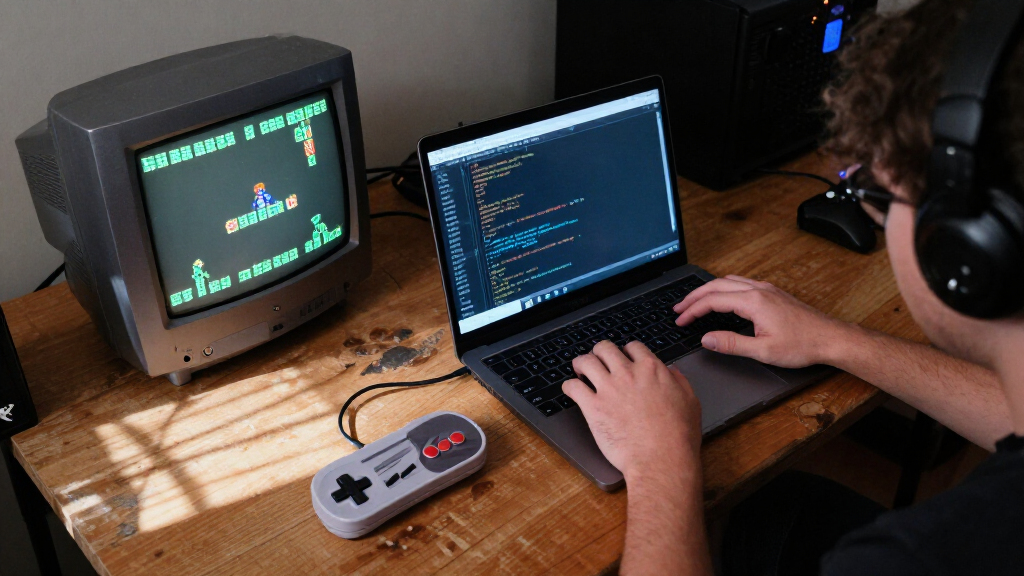
An independent developer has shared lucyNES, a Nintendo Entertainment System emulator written in Odin, after about seven months of intermittent work beginning in June 2024. The project supports several cartridge mapper types, save states, controller input and a debugger, and its creator says it runs Battletoads and hundreds of other games; development paused in January 2025, with sound and some accuracy issues unresolved.
A hobbyist developer has shared lucyNES, a Nintendo Entertainment System emulator written in the Odin programming language, after roughly seven months of part-time work. The developer says it can run Battletoads and hundreds of other games, but development was paused in January 2025 and the emulator still has incomplete sound and accuracy work.

Play games on Amazon Luna for your game nights, included with Prime
- A rotating selection of games, no download needed
- Play on TV, laptop or phone
- Fast, free delivery for your gear, too
The developer began the project in late June 2024, working on it intermittently before pausing it in January 2025 to focus on other things. The project includes a debugger view, a menu, save states, controller support and a toggle for a partially implemented CRT shader. It also supports sound, though the creator says its audio quality remains poor for many games.
lucyNES supports six cartridge mapper types: NROM, MMC1, UXROM, CNROM, MMC3, GxROM and AxROM. The developer says the emulator runs Battletoads and hundreds of other titles perfectly, while also acknowledging that some mapper implementations remain incomplete or incorrect and can prevent certain games from working. Those compatibility descriptions come from the creator; no independent testing results are provided in the post.
The developer describes accuracy as the largest challenge. The NES processor and picture processing unit operate in parallel, and games may rely on precise timing between them. Cartridge hardware also varies: mappers can provide additional memory or other functions, so an emulator must reproduce the behavior required by each game. The creator says initial compatibility can come relatively quickly, while the remaining work to handle hardware-specific cases can take much longer.
A NES Emulator Written In Odin Inside lucyNES
An independent developer built a NES emulator in Odin as a part-time project. Its features are broad, while accuracy and audio remain unfinished.
What lucyNES includes
The project combines core emulator tools with support for several cartridge types.
Debug and save
It includes a debugger view, save states and controller input.
Partial CRT effect
A toggle is available for a partially implemented CRT shader.
Seven mapper types
Listed types include NROM, MMC1, UXROM, CNROM, MMC3, GxROM and AxROM.
Compatibility comes with caveats
The game support claims come from the developer; the post provides no independent test results.
- Runs Battletoads and hundreds of other games.
- Some games work with sound.
- No complete compatibility list or verified game count.
- Some mapper implementations are incomplete or incorrect.
Why accuracy takes time
Emulating the NES means reproducing hardware behavior that games may depend on.
The processor and picture processing unit run in parallel, and precise timing can matter.
Different mappers add memory or other functions that games may require.
Test ROMs and community resources help diagnose behavior that basic game support may miss.
Why NES Timing Still Matters
lucyNES offers a practical example of how a small emulator project can combine low-level programming with the preservation of software designed for specific hardware. Its stated support for multiple mapper types and hundreds of games suggests a substantial project, but the developer’s caveats show why a title launching is not the same as accurate emulation across a library.
For readers interested in Odin, the project is also a case study in using the language for systems-oriented work. The developer says Odin’s strongly typed, C-like design and control over memory suited the emulator. That is a personal assessment, not a comparative benchmark. The project also illustrates the value of specialist documentation, test ROMs and community feedback when reproducing hardware behavior.
Popular right now

Bose QuietComfort Wireless Noise-Cancelling Headphones, Cypress Green

Breville Barista Express Espresso Machine with Built-In Grinder, Brushed Stainless Steel

Hisense 43-Inch E6 Cinema Series Hi-QLED 4K UHD Smart Fire TV (43E6QF)
As an affiliate, we earn on qualifying purchases.
Seven Months of Emulator Work
The developer characterizes the work as a part-time project rather than a finished product or ongoing release. Their account says that a basic emulator capable of starting some games may be achievable quickly, but broader compatibility requires attention to timing details and cartridge-specific behavior. No release date or further development schedule is given.
To learn about the NES and diagnose problems, the creator cites the NESdev Wiki, its Discord community, a NES tutorial series by Javidx and an article about the console’s PPU. They also used test ROMs, which target particular emulator behaviors and can help identify accuracy problems. The developer credits those resources and community members with helping the project progress.
Odin’s manual memory management shaped the implementation, according to the creator. They describe using a temporary allocator cleared each frame, a global heap allocator for long-lived data and a NES-session arena for data tied to an emulation session. They also discuss using a CBOR library to serialize save-state data, including custom handling for types the library could not serialize directly.
“It took me 7 months to get my emulator to how it is now.”
— The lucyNES developer, in the project write-up
Compatibility and Audio Gaps
The post does not provide an independently verified compatibility list, test results or a precise count of supported games. The statement that lucyNES runs Battletoads and hundreds of other games is the developer’s description. It is also unclear which titles fail because of mapper issues, how much of the library has been tested, or what level of accuracy the emulator reaches across different hardware behaviors.
Audio remains a stated weakness: the creator says some games sound fine but most do not. The post also identifies mapper implementations that are still flawed. It does not set out a plan to address these issues or say whether the project will resume after the January 2025 pause. The supplied material refers readers to the project’s GitHub README, but does not give a version number, release status or current maintenance details.
No Return Date Announced
The developer says the project was paused to focus on other work, and the post gives no restart date or next release milestone. The immediate next step for readers seeking implementation details is the project’s GitHub README, which the creator identifies as the source for further information. Any future progress on sound, mapper accuracy or compatibility remains uncertain unless the developer resumes work and publishes an update.
Key Questions
What is lucyNES?
lucyNES is an NES emulator written in Odin, developed as a spare-time project that began in June 2024.
Which games can it run?
The developer says it runs Battletoads and hundreds of other games. The post does not include independent test results or a complete compatibility list.
What features and mapper types does it support?
Features include a debugger view, save states, controller support, sound and a partial CRT shader toggle. The developer lists support for NROM, MMC1, UXROM, CNROM, MMC3, GxROM and AxROM, while noting that some mapper implementations need work.
Is development still active?
The creator says development was paused in January 2025 to focus on other things. The post does not say whether work has since resumed or give a return date.
What is still incomplete?
The developer says audio quality is poor in many games and that some mapper implementations can cause compatibility problems. The post does not specify a timeline for addressing either issue.
Source: Hacker News