
TL;DR

Play games on Amazon Luna for your game nights, included with Prime
- A rotating selection of games, no download needed
- Play on TV, laptop or phone
- Fast, free delivery for your gear, too
ReactOS has demonstrated the ability to run the classic game Half-Life with 3D acceleration on real hardware. This marks a significant step in its quest for Windows binary compatibility, though full functionality remains to be tested.
ReactOS, the open-source operating system aiming for binary compatibility with Windows, has successfully run the game Half-Life with 3D acceleration on real hardware for the first time, according to reports on Hacker News. This development signifies a major milestone in ReactOS’s ongoing effort to emulate Windows at a functional level that supports complex applications and games.
Developers and users on Hacker News reported that ReactOS, after 28 years of development, now can run the Windows version of Half-Life with hardware-accelerated 3D graphics. The test was conducted on a Dell OptiPlex system equipped with a Core i5 2400 Sandy Bridge processor and an NVIDIA GeForce 8400GS graphics card, with the game reportedly reaching in-game play.
While previous reports indicated that Half-Life could at least initialize under ReactOS, this is the first confirmed instance of the game running fully in-game with 3D acceleration enabled. The achievement was noted by a user named “Zombiedeth,” who shared the successful setup and gameplay experience. The development marks a significant step forward, as running modern 3D games on ReactOS has historically been challenging due to compatibility issues.
Implications for Windows Compatibility and Gaming
This milestone demonstrates ReactOS’s progress toward achieving practical Windows binary compatibility, especially for complex applications like games that depend heavily on hardware acceleration. If sustained, this could open doors for more Windows applications and games to run natively on ReactOS, offering an open-source alternative to proprietary Windows environments. It also highlights the potential for ReactOS to serve as a platform for legacy software and gaming preservation, especially on hardware that may not support current Windows versions.
NVIDIA GeForce 8400GS graphics card
As an affiliate, we earn on qualifying purchases.
As an affiliate, we earn on qualifying purchases.
ReactOS Development and Past Milestones
ReactOS has been in development for nearly three decades, with the goal of creating a free, open-source operating system compatible with Windows. Over the years, it has achieved incremental milestones, such as driver support and basic application compatibility. However, full hardware acceleration and complex software support have remained challenging due to the complexity of Windows’s proprietary architecture. The recent successful run of Half-Life with 3D acceleration marks a notable step forward, showing tangible progress in this long-term project.
“This is the first time I’ve seen Half-Life actually run with full 3D acceleration on real hardware in ReactOS.”
— an anonymous hacker on Hacker News
Windows compatibility driver for ReactOS
As an affiliate, we earn on qualifying purchases.
As an affiliate, we earn on qualifying purchases.
Remaining Challenges in ReactOS Hardware Support
While running Half-Life with 3D acceleration on real hardware is a significant breakthrough, it is not yet clear how stable or consistent this performance will be across different hardware configurations. Full compatibility with modern GPUs, drivers, and a broader range of applications remains unconfirmed. It is also uncertain whether this success can be reliably replicated in everyday use or on different systems.
As an affiliate, we earn on qualifying purchases.
Next Steps for ReactOS Development and Testing
Developers are expected to continue testing the stability and compatibility of hardware-accelerated applications on ReactOS. Efforts will likely focus on improving driver support, expanding hardware compatibility, and testing other Windows applications and games. Community feedback and further technical milestones will determine how close ReactOS can come to practical, everyday use as a Windows alternative.
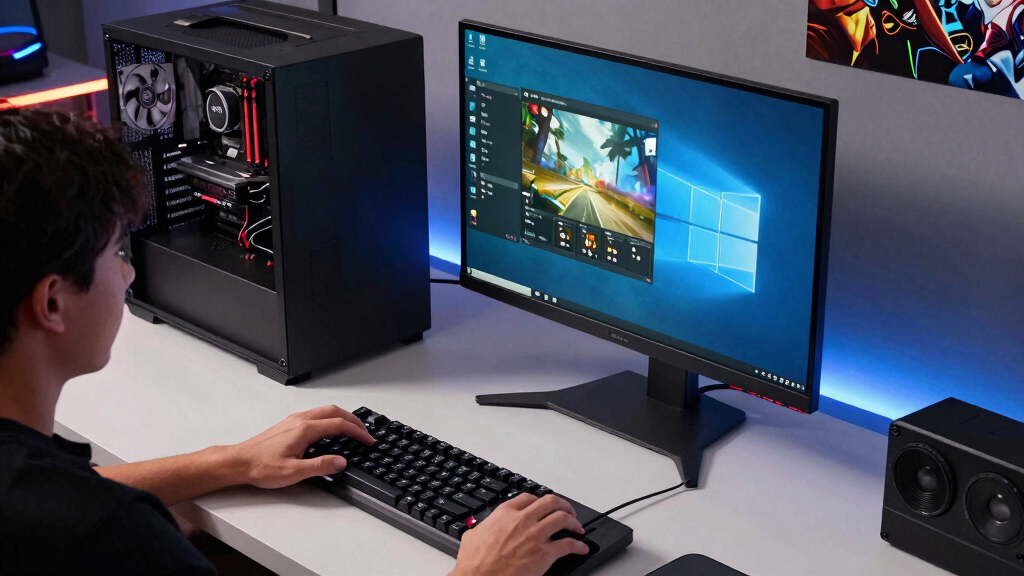
hardware acceleration gaming setup
As an affiliate, we earn on qualifying purchases.
As an affiliate, we earn on qualifying purchases.
Key Questions
Can ReactOS run other modern games with 3D acceleration?
It is currently unconfirmed. The recent success with Half-Life is a milestone, but broader support for modern games remains in development and testing stages.
Will ReactOS be a viable alternative to Windows for gaming?
While progress is promising, ReactOS still faces significant challenges before it can reliably support a wide range of modern games and applications. Full compatibility is not yet achieved.
What hardware is required to run ReactOS with 3D acceleration?
The reported setup used a Dell OptiPlex with a Core i5 2400 processor and NVIDIA GeForce 8400GS graphics card. Compatibility with newer hardware is still under testing.
Is this development officially supported or experimental?
This is an experimental milestone reported by community members; official support and widespread stability are still in progress.
When might ReactOS reach full Windows compatibility?
There is no specific timeline. Development is ongoing, and achieving full compatibility, especially with modern hardware and software, remains a long-term goal.
Source: Hacker News
Halloween Picks
halloween
As an affiliate, we earn on qualifying purchases.