TL;DR
Retro Song Bird is a device designed to read Game Boy and Game Boy Color cartridges and play their soundtracks through register-level sound emulation. Its website lists support for more than 1,900 games, along with features for saving ROMs and save files, exporting audio, and sending individual sound channels to music software. Pricing, availability and independently tested compatibility details are not provided in the supplied material.
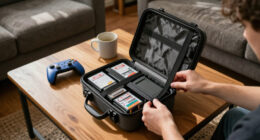
Retro Song Bird is presenting a device that reads Game Boy and Game Boy Color cartridges and plays their music, with the project saying it supports more than 1,900 games. The product is aimed at people who want to listen to game soundtracks from original cartridges, as well as musicians and collectors seeking tools to work with or preserve their carts.

Play games on Amazon Luna for your game nights, included with Prime
- A rotating selection of games, no download needed
- Play on TV, laptop or phone
- Fast, free delivery for your gear, too
The company describes a simple process: insert a cartridge, and the device reads relevant parts of its ROM before running what it calls register-accurate emulation of the Game Boy sound engine. The resulting audio includes music and sound effects. The site lists next-track, previous-track and volume controls, plus stereo line output for connecting to a hi-fi system. Retro Song Bird also says the device can play soundtracks from homebrew games made with GB Studio.
Beyond playback, the feature list includes tools to back up and restore save files, back up ROMs, flash writable cartridges and export soundtracks as WAV files. For music production, each of the Game Boy’s four sound channels—two square-wave channels, wave and noise—can be sent as a separate USB audio stream to a digital audio workstation, according to the product description. The site also says users can play saved LSDj songs from a cartridge and sync two devices over MIDI for a DJ set.
Other listed functions extend beyond music. A Game Boy Camera cartridge can be used as a USB webcam, with the site specifying 128-by-112-pixel images and roughly five frames per second. It also advertises an alarm mode, browser-based play with Game Genie and GameShark codes, mixtape creation, a history of inserted cartridges and an API for reading, flashing and backing up carts. The website says over-the-air updates can add features and cartridge support.
A Cartridge-Based Studio for Game Music
The project brings several uses for Game Boy cartridges together in one device: listening to their soundtracks, extracting audio for production and managing some cartridge data. For chiptune musicians, separate USB streams for the four sound channels could make it possible to work with the components of a game’s sound rather than only recording its finished output. WAV export and MIDI synchronization are also presented as ways to use the hardware in music-making workflows.
For collectors, the pitch is that an existing physical cartridge can serve as the source for playback and, where supported, backups. That could be useful to people who want to hear music without relying on a console and a separate capture setup. But the site’s feature list does not establish how well each function works across different cartridges, nor does it describe the safeguards or limitations that apply to copying and flashing ROMs. The practical value will depend on real-world compatibility, the device’s availability and how its software handles the varied behavior of games.
Popular right now

De'Longhi La Specialista Touch Semi-Automatic Espresso Machine with Grinder

Ninja Foodi 7-Qt MegaZone FlexBasket Air Fryer, 6-in-1, Black, DZ071

TCL 55-Inch T7 Series 4K QLED Smart Google TV, 55T7
As an affiliate, we earn on qualifying purchases.
How the Cartridge Playback Works
Retro Song Bird says it uses a map covering more than 1,900 cartridges to identify which parts of a ROM to read. It then emulates the relevant sound-engine registers to produce audio, rather than presenting the device as a conventional music player with a soundtrack library built in. The cartridge is therefore central to the product’s stated approach: users plug in the game whose music they want to hear.
The website frames the device as more than a soundtrack player, grouping audio playback with archiving, music production and experimental extras such as using a Game Boy Camera as a webcam. It also names GBAlbum, a tool that turns an album into a ROM intended to play on real hardware and Retro Song Bird. The supplied product information does not give a release schedule, price, ordering details or independent test results.
“Supports 1,900+ games.”
— Retro Song Bird
Compatibility and Release Details
The supplied information comes from Retro Song Bird’s own website. It does not state price, release date, ordering status or shipping plans, and it provides no independent review or hands-on assessment. The project says it supports more than 1,900 games, but does not give a compatibility list or explain how the figure was counted, which cartridge revisions are covered, or how unsupported and unusual carts are handled.
It is also unclear what hardware is included, which operating systems or DAWs are supported for USB audio, and whether backup and flashing features have limits. The site mentions over-the-air updates but does not specify how frequently they will arrive or whether the stated support depends on future updates. No legal or technical terms for ROM backups and writable-cart use are included in the supplied material.
Awaiting Availability and Testing
The next concrete developments to watch for are pricing, launch timing and ordering information, none of which appears in the provided product description. A public compatibility list and detailed setup documentation would help buyers understand whether their specific cartridges, computers and audio workflows are supported.
Independent testing would also clarify playback accuracy, performance across the stated game library, and how reliably the archival and USB audio tools work. Until those details are available, the confirmed development is the project’s announced feature set and its claim of support for more than 1,900 Game Boy and Game Boy Color games—not a verified assessment of performance across that library.
Key Questions
What does Retro Song Bird do?
It is a device described as reading Game Boy and Game Boy Color cartridges and playing their music and sound effects through emulation of the console’s sound engine.
How many games does it support?
Retro Song Bird says it supports more than 1,900 games. The supplied information does not include an independently checked compatibility list.
Can it be used to make or record music?
The website lists WAV soundtrack export and separate USB audio streams for the Game Boy’s four sound channels, intended for use with a digital audio workstation. It also describes MIDI synchronization between two devices.
When will Retro Song Bird be released, and how much will it cost?
The supplied product information does not state a release date or price, or say whether orders are open.
Does it work with every Game Boy cartridge?
The project describes support for more than 1,900 games and says it accepts Game Boy and Game Boy Color cartridges. Which specific cartridges and revisions are supported is not established by the supplied material.
Source: retrosongbird.com