
TL;DR

Play games on Amazon Luna for your game nights, included with Prime
- A rotating selection of games, no download needed
- Play on TV, laptop or phone
- Fast, free delivery for your gear, too
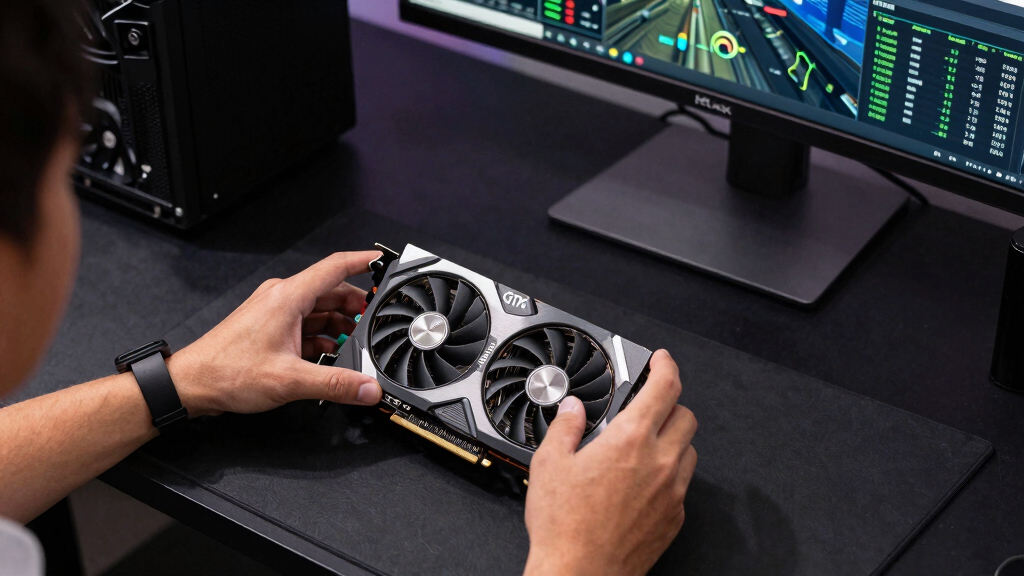
Recent tests show the GTX 1080 still performs well in modern games, maintaining its status as a gaming legend. Its longevity and performance continue to impress gamers and experts alike.
Recent performance tests confirm that the GTX 1080 continues to deliver solid gaming performance, maintaining its reputation as a gaming legend. Despite being released in 2016, the GTX 1080 remains relevant for gamers, with its performance still competitive in many modern titles, according to recent evaluations on hardware testing platforms and expert analyses.
Multiple independent tests, including those shared on platforms like Hacker News, have demonstrated that the GTX 1080 can handle current AAA titles at 1080p and even 1440p resolutions with satisfactory frame rates. The GPU’s architecture, based on Pascal technology, continues to hold up against some newer mid-range cards, especially in terms of power efficiency and cost-to-performance ratio.
Experts note that while the GTX 1080 does not match the raw power of the latest RTX series, it remains a viable option for gamers seeking high-quality performance without the premium price of newer models. Its availability on secondhand markets and continued support from driver updates contribute to its longevity.
Some benchmarks show that in certain titles, the GTX 1080 still outperforms or matches newer mid-tier cards, emphasizing its enduring capability. However, it is also acknowledged that in very demanding or ray-traced games, the GTX 1080 may struggle compared to newer GPUs with dedicated RT cores.
Impact of the GTX 1080’s Longevity on Gaming Hardware Choices
The continued performance of the GTX 1080 influences both consumer purchasing decisions and the secondary market for GPUs. Its reputation as a reliable, high-performance card from 2016 has cemented its status as a ‘legend’ among gamers and collectors. This longevity challenges the typical lifecycle of gaming GPUs, showing that older hardware can still be relevant and capable, especially for budget-conscious gamers or those not prioritizing ray tracing.
For the industry, the GTX 1080’s sustained performance underscores the importance of architecture and efficiency, suggesting that not all newer hardware necessarily offers a significant leap forward in all use cases. It also raises questions about the pace of innovation and the lifecycle of high-end gaming hardware.
As an affiliate, we earn on qualifying purchases.
Historical Performance and the GTX 1080’s Role in Gaming
The GTX 1080 was launched in 2016 as part of NVIDIA’s Pascal lineup, quickly becoming popular for its combination of performance and efficiency. It was praised for its high frame rates and solid 4K gaming capabilities, establishing itself as a go-to card for enthusiasts.
Over the years, newer generations like the RTX series introduced features such as ray tracing and DLSS, but the GTX 1080 remained relevant due to its strong performance and affordability on the secondhand market. Its architecture set a benchmark for mid-range gaming GPUs for several years.
Recent testing revisits the GTX 1080’s capabilities, revealing that it still holds its own in many scenarios, challenging assumptions that only the latest hardware can deliver optimal gaming experiences.
“The GTX 1080 still offers competitive performance in many modern titles, especially at 1080p and 1440p resolutions.”
— an anonymous researcher
As an affiliate, we earn on qualifying purchases.
Remaining Questions About Long-Term Relevance
It is not yet clear how the GTX 1080 will perform with future game releases that heavily rely on ray tracing or other advanced features. Additionally, driver support and power efficiency in the coming years remain uncertain, especially as newer architectures are optimized for newer hardware.
As an affiliate, we earn on qualifying purchases.
Future Testing and Market Trends for Older GPUs
Further testing is expected as more games incorporate ray tracing and AI features, which may expose limitations of the GTX 1080. Market trends suggest that demand for secondhand GTX 1080 cards could persist, especially among budget-conscious gamers. Industry analysts will continue to monitor how long the GTX 1080 can remain viable in an evolving gaming landscape.
As an affiliate, we earn on qualifying purchases.
Key Questions
Can the GTX 1080 handle modern AAA games?
Yes, in many cases, the GTX 1080 can run modern AAA titles at 1080p and 1440p with acceptable frame rates, though it may struggle with ray-traced features or the most demanding games.
Is the GTX 1080 still a good buy today?
For budget-conscious gamers or those who do not prioritize ray tracing, the GTX 1080 remains a capable and affordable option, especially on the secondhand market.
How does the GTX 1080 compare to newer mid-range GPUs?
While newer mid-range GPUs offer features like ray tracing and DLSS, the GTX 1080 often provides comparable rasterization performance at a lower price point, making it still relevant for many users.
Will the GTX 1080 receive future driver updates?
Support for the GTX 1080 via driver updates is expected to continue for some time, but as newer architectures are developed, support may gradually diminish.
Source: Hacker News
Halloween Picks
halloween
As an affiliate, we earn on qualifying purchases.