
TL;DR

Play games on Amazon Luna for your game nights, included with Prime
- A rotating selection of games, no download needed
- Play on TV, laptop or phone
- Fast, free delivery for your gear, too
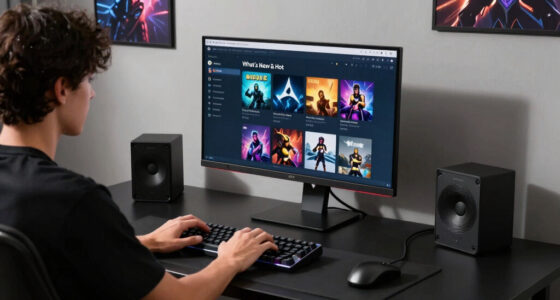
What’s New & Hot on Steam — 2026-08-11 includes 12 reported new releases priced from free to $34.99 and five reported top sellers ranging from $14.99 to $1,049. Because a reliable August snapshot requires live Steam storefront data, these rankings, prices, review scores, and compatibility claims remain unconfirmed until checked on the publication date.
Twelve new listings, two free entries, and a reported $1,049 top seller make today’s Steam chart look less like a tidy game shelf and more like a neon-lit flea market. You have tiny experiments, a creator tool, multiplayer names, and hardware-like listings competing for the same glance. That variety is exciting, but it also makes a quick ranking easy to misread.
This guide gives you a clear map of What’s New & Hot on Steam — 2026-08-11, using Skeldrift’s chart briefing while marking volatile details as unconfirmed. You will see the reported prices, the names drawing storefront attention, and the practical checks that matter before you buy. You will also learn why store placement is not the same as popularity, quality, or a large active audience.
A reliable August 11, 2026 snapshot requires live Steam storefront data, so specific rankings, review scores, player counts, discounts, and release details cannot be verified from a static briefing alone [1]. Think of this article as a time-stamped watchlist, not a permanent scoreboard. Steam can alter prices, labels, regional availability, and Steam Deck status while you are still deciding what to play.
Treat every August 11 ranking, price, review score, player count, and compatibility label as unconfirmed until you check the live Steam page.
Separate native Linux support from Proton compatibility and Valve’s current Steam Deck Verified status; the labels do not mean the same thing.
Compare review volume, recent technical complaints, monetization, and platform fit before using a low launch price as your buying signal.
Give the reported $1,049 Steam Machine listing hardware-level scrutiny because revenue-based charts do not compare it fairly with $15 games.
Build a three-item watchlist: one low-risk experiment, one game suited to your group or setup, and one listing waiting for stronger evidence.
- FishFishFishFishFish — $3.99
- Home4Us — Free
- 方块骑士Square Knight — Free
- Arcade Survivors — $4.49
- Succulent Break — $1.79
- DreamEcho — $10.79
- Rooster Booster 3D — $2.99
- Wicked Little Witch 小小坏女巫 — $3.59
- CutBench: AI Gameplay Clip Maker — $34.99
- Vivid Intrusion — $4.79 ● Linux/Deck
- Widle — $1.99
- The Sculptor — $3.99
- Big Walk — $14.99
- Steam Machine — $1049.00 ● Linux/Deck
- Big Walk and PEAK — $17.08
- IRON NEST: Heavy Turret Simulator — $14.99
- MARVEL Tōkon: Fighting Souls — $59.99
Data via the Steam store (US), as of 2026-08-11.
What You Can Trust in Today’s Steam Snapshot
What’s New & Hot on Steam — 2026-08-11 is best treated as a discovery snapshot: it records what Skeldrift’s briefing reported, while every changing storefront detail still needs a live check. That includes rank order, price, reviews, release status, regional availability, and Steam Deck compatibility.
Steam’s labels answer different questions. New & Trending highlights recent games receiving attention, while Top Sellers reflects revenue rather than unit sales or player satisfaction [2]. A $59.99 game can climb with far fewer purchases than a $3.99 game, just as one heavy gold bar can outweigh a pocket full of bright arcade tokens.
For instance, MARVEL Tōkon: Fighting Souls appears at a reported $59.99, while Big Walk appears at $14.99. Their chart positions alone cannot tell you which has more buyers, stronger reviews, smoother online play, or better long-term value. The storefront shows movement; it does not show the whole engine underneath.
Storefront visibility is a lead, not a verdict. A game can receive prominent placement before it has enough reviews, performance reports, or player history to support a confident recommendation.
The same caution applies to phrases such as hot on Steam. A title may be climbing because of streamer coverage, a launch discount, a free weekend, a major patch, or simple front-page placement. Without live review counts and concurrent-player trends, the reason behind that heat remains unconfirmed.
You should also check the age rating and content warnings on each store page. The supplied briefing does not provide ratings, so a colorful title or playful thumbnail does not establish that a game suits children. That missing detail matters when you are buying for a shared family PC—and the prices create another surprise in the next section.
As an affiliate, we earn on qualifying purchases.
12 New Releases That Give You the Widest Choice
The reported new-release list gives you 12 choices, from two free entries to a $34.99 creator tool. Most listings sit below $11, making this a low-cost discovery day, but their genres, review histories, launch quality, and exact release status still require live Steam checks.
- FishFishFishFishFish — $3.99: The repeated name makes it easy to remember, but the briefing does not establish its genre, modes, or review score. Check the trailer and user tags before treating the title as a promise of aquatic chaos.
- Home4Us — Free: Zero price lowers the barrier, yet you should still inspect account requirements, in-game purchases, and data permissions. A free download can cost you time, storage, or patience.
- 方块骑士Square Knight — Free: Verify available languages, controller support, and whether the store description matches the language you plan to use. Localization can shape the whole experience when tutorials rely on precise instructions.
- Arcade Survivors — $4.49: Its name suggests a familiar arcade-survival lane, but that genre reading is an inference, not a verified feature list. The store page should settle whether it supports solo play, co-op, or controller input.
- Succulent Break — $1.79: This is the lowest reported paid price in the group. At less than the cost of a café espresso, it may tempt an impulse purchase, though playtime and polish remain unknown.
- DreamEcho — $10.79: This is the highest reported game price among the new releases. Check screenshots, reviews, and expected playtime before deciding whether the extra cost brings a deeper experience.
- Rooster Booster 3D — $2.99: The playful name may earn a click, but only live footage can show whether its movement feels crisp or slippery. Watch for controller reports if you plan to play from a sofa.
- Wicked Little Witch 小小坏女巫 — $3.59: The bilingual title makes localization worth checking closely. Look at interface languages, subtitle support, and age-rating information rather than guessing from the illustrated theme.
- CutBench: AI Gameplay Clip Maker — $34.99: This appears to be a creator utility rather than a conventional game. Verify export formats, processing requirements, privacy terms, and whether it needs online services before feeding it a folder of large recordings.
- Vivid Intrusion — $4.79: The briefing reports native Linux and Steam Deck support. Native Linux availability does not automatically mean Valve has awarded a current Deck Verified badge, so inspect the live compatibility panel.
- Widle — $1.99: The price invites experimentation, but the briefing supplies no details about its systems or length. Ten minutes with a trailer and review search could save you from buying solely because the thumbnail glows.
- The Sculptor — $3.99: Check whether the title describes a puzzle, simulation, narrative game, or something else entirely. A memorable name works like a shop window; it gets you to the glass but does not reveal how the controls feel.
Suppose you have $10 and one free evening. You could try both free entries and still buy FishFishFishFishFish plus Succulent Break, but four unexplored downloads may give you less joy than one carefully checked purchase. Price opens the door; fit decides whether you stay. The reported top sellers make that difference even clearer.
As an affiliate, we earn on qualifying purchases.
How the Five Reported Top Sellers Compare Before You Buy
What’s New & Hot on Steam — 2026-08-11 reports five top sellers with a $1,034.01 gap between the cheapest and most expensive entries. The list mixes games, a bundle-like listing, and an apparent hardware product, so rank position cannot serve as a direct quality comparison.
| Reported rank | Listing | Reported price | What you should verify |
|---|---|---|---|
| 1 | Big Walk | $14.99 | Modes, review volume, server quality, and controller support |
| 2 | Steam Machine | $1,049.00 | Whether this is hardware, regional availability, specifications, warranty, and Linux support |
| 3 | Big Walk and PEAK | $17.08 | Bundle contents, ownership discount, and the unusual linked app listing |
| 4 | IRON NEST: Heavy Turret Simulator | $14.99 | Control scheme, hardware demands, play modes, and launch performance |
| 5 | MARVEL Tōkon: Fighting Souls | $59.99 | Online population, netcode, roster, editions, and third-party account needs |
Big Walk leads the supplied ranking at $14.99, with the reported Big Walk and PEAK package at $17.08. That $2.09 difference could look attractive if the package truly includes both products, but bundle pricing often changes based on what you own. Open the live page and check the checkout total before calling it a bargain.
The reported Steam Machine entry deserves extra caution. A $1,049 product behaves very differently from a $15 game in a revenue-based chart, and the briefing’s native Linux or Steam Deck claim does not establish exact specifications or Valve verification. You would check the processor, graphics hardware, storage, return policy, warranty, shipping region, and seller details before spending four figures.
Then there is MARVEL Tōkon: Fighting Souls at a reported $59.99. For a fighting game, a busy online community, stable netcode, input options, and regional matchmaking can matter more than a polished character-select screen. Imagine paying full price on Friday, only to find long queues in your region on Sunday; live player and server reports help you avoid that cold, silent lobby.
All five rankings remain unconfirmed until publication-day verification. The comparison still reveals something useful: these are different purchase decisions, not five interchangeable boxes on a shelf. One asks for a casual-game budget, another asks for hardware-level scrutiny, and the next question is whether any of them belongs on your Deck.
As an affiliate, we earn on qualifying purchases.
What Steam Deck and Linux Players Should Check First
What’s New & Hot on Steam — 2026-08-11 gives Linux and Steam Deck players two reported leads: Vivid Intrusion and Steam Machine. Treat both compatibility claims as unconfirmed, because native Linux support, Proton compatibility, and Valve’s Deck Verified rating describe different things.
A native Linux build means the developer provides a Linux version. A game running through Proton uses Valve’s compatibility layer, while a Deck Verified badge reflects a separate review of controls, text readability, display behavior, and system support. Those paths can overlap, but one label never guarantees the others.
For example, a game may launch natively yet show tiny silver text that looks like dust on the Deck’s screen. Another may run through Proton at a steady frame rate but require a touchscreen tap to dismiss a launcher. You care about the whole handheld experience, not only whether an executable opens.
- Open the live compatibility panel. Look for Valve’s current Verified, Playable, Unsupported, or Unknown label and read the details beneath it.
- Confirm the selected operating system. Check whether Steam offers a native Linux download or expects Proton to handle the Windows version.
- Read recent Deck-specific reports. Search for battery drain, frame pacing, crashes after suspend, unreadable text, and launcher problems.
- Check controller and resolution support. A game designed around a mouse can feel like threading a needle while riding a bus.
- Test within Steam’s current refund rules. Verify those rules on Steam before buying, then use your early playtime to test sleep mode, controls, and performance.
Performance claims also need a named platform and version. Saying a game “runs well” means little unless you know whether the test used a Steam Deck LCD, Steam Deck OLED, desktop Linux machine, or Windows PC, plus the patch and graphics settings. Steam Deck verified status changes, so yesterday’s green badge or old community report may not match today’s build.
Age ratings matter here as well, especially when a handheld travels between family members. None are supplied for these listings, and names such as Wicked Little Witch or Rooster Booster 3D cannot establish suitable content. Verify store warnings before handing the Deck across the back seat; then check value with the same care.
As an affiliate, we earn on qualifying purchases.
Use This Five-Minute Check to Avoid a Bad Launch-Day Buy
You can judge a new Steam listing in five focused minutes by checking status, reviews, technical reports, price, and platform support in that order. This quick routine separates a promising release from a shiny store tile with thin evidence, especially when snapshot details cannot be verified.
- Confirm what the product is. Check whether it is a full release, Early Access build, demo, utility, bundle, DLC, or hardware listing. CutBench: AI Gameplay Clip Maker, for instance, calls for software-workflow questions rather than game-length questions.
- Read the review count before the percentage. A glowing rating based on 12 reviews carries less weight than the same rating backed by thousands. Read recent negative reviews for repeated complaints about crashes, servers, lost saves, or missing features.
- Scan the latest announcements. Look for hotfixes, known-issue posts, roadmap changes, and developer replies. A patch arriving every few days feels very different from a silent page after a rough launch.
- Calculate the real price. Check regional cost, discount expiry, editions, DLC, subscriptions, and in-game purchases. A $4.49 entry can grow expensive if major modes or progression sit behind extra payments.
- Match the game to your setup. Compare system requirements with your CPU, GPU, storage, operating system, controller, and display. Deck owners should add battery use, text size, suspend behavior, and current compatibility status.
Imagine choosing between DreamEcho at $10.79 and three cheaper releases. If DreamEcho has stable recent reviews, two evenings of play, and controls that match your setup, it could provide better value than a pile of $2 downloads you never reopen. Cheap and worthwhile are different measurements.
Online games need one extra pass. For Big Walk or a fighting game such as MARVEL Tōkon: Fighting Souls, look for server regions, party size, cross-play, anti-cheat behavior, and third-party account requirements. The hiss of a loading screen becomes irritating when your group spends 20 minutes reconnecting instead of playing.
This method also protects you from false precision. A reliable August snapshot requires live checks, so specific rankings and review scores should carry a date and time. Once you have checked the facts, you can stop chasing the whole chart and focus on the listings with the strongest personal fit.
Which Listings Deserve Your Attention Rather Than an Instant Purchase
What’s New & Hot on Steam — 2026-08-11 offers three useful watch groups: low-cost experiments, higher-stakes purchases, and products that need extra verification. Your safest move is to shortlist by risk, then buy only after live reviews and technical reports answer the questions that matter to your setup.
For low-cost experimentation, Home4Us and 方块骑士Square Knight lead with reported free access, while Succulent Break and Widle sit below $2. That does not make them automatic recommendations. Free products may contain optional purchases, account gates, or unfinished systems, while a $1.79 game can still waste an evening if its controls grate like a shopping cart with a broken wheel.
Vivid Intrusion deserves attention from Linux and handheld players because the briefing reports native Linux and Steam Deck support. The sensible scenario is simple: open its current Steam page, read the compatibility panel, inspect two or three recent Deck reports, and confirm the price before downloading. If the reports mention stable suspend behavior and readable text, the $4.79 entry becomes easier to judge.
CutBench requires a different test because its reported $34.99 price buys a workflow tool. A creator recording six hours of gameplay may value automatic clip detection, but only if exports retain quality and processing does not send private footage somewhere unexpected. Check supported formats, resolution limits, watermarks, service dependencies, licensing, and refund conditions.
The reported top sellers carry bigger unknowns. Steam Machine at $1,049 needs full hardware due diligence, while MARVEL Tōkon: Fighting Souls needs verified roster, online, and technical information before a $59.99 purchase. Big Walk and PEAK needs a live bundle check because the listed app link and reported package description may not tell the complete story.
Your watchlist should stay short: choose one low-risk curiosity, one game that fits your group, and one product awaiting better evidence. For instance, you might try Home4Us, track Big Walk for co-op reports, and wait for Vivid Intrusion Deck tests. Three clear questions beat twelve half-remembered thumbnails—and they make the final decision pleasantly simple.
Frequently Asked Questions
What are the best new games on Steam on August 11, 2026?
The supplied briefing reports 12 new releases, but it does not provide enough verified review, performance, or player data to name a definitive best game. Start with Vivid Intrusion if Linux or Steam Deck support interests you, then verify its live compatibility status and recent reviews before buying.
Are these Steam rankings and prices confirmed?
No. The rankings and prices are a Skeldrift briefing snapshot and remain unconfirmed without publication-day Steam storefront data. Regional pricing, discounts, bundle totals, and chart positions can change quickly.
Which reported new Steam releases are free?
Home4Us and 方块骑士Square Knight are listed as free in the briefing. Check their live pages for optional purchases, account requirements, online dependencies, and age information before installing them.
Which listed games support Linux or Steam Deck?
The briefing reports native Linux and Steam Deck support for Vivid Intrusion, and it attaches a similar claim to the Steam Machine listing. Verify each live page because native Linux support does not automatically equal a current Steam Deck Verified rating.
Why can a $1,049 product appear beside $15 games in Top Sellers?
Steam’s Top Sellers category reflects revenue rather than a simple count of copies sold [2]. A $1,049 product can generate the same gross revenue as roughly 70 purchases of a $14.99 game with a single sale, before regional pricing and other factors.
Should you buy a new Steam release immediately or wait?
Buy immediately only when the current features, technical condition, and price already satisfy you. Wait when reviews mention repeated crashes, weak servers, unclear monetization, missing roadmap features, or poor Deck behavior; a week of patches can turn a rattling launch into a much smoother ride.
Conclusion
The crisp takeaway is this: use the August 11 chart to find candidates, then let live evidence make the purchase. Check the current store page for release status, review volume, technical complaints, full price, age information, and platform support. For Deck play, confirm the exact badge and recent reports instead of relying on a broad Linux claim.
Pick three listings, spend five minutes checking each, and leave the rest for another day. Steam’s front page will keep flashing and rearranging like an arcade wall at midnight, but your library does not need every glowing cabinet. It needs the game you will still want to open after the launch-day noise fades.
Fall Picks
fall essentials
As an affiliate, we earn on qualifying purchases.