If you’re looking for the best graphics cards for Steam games in 2026, you’re likely balancing performance, price, and future-proofing. The ASUS TUF Gaming GeForce RTX 5080 16GB stands out as the top overall choice, offering cutting-edge performance for demanding titles. For those on a budget, the ASUS Dual NVIDIA GeForce RTX 3050 6GB delivers solid gaming at a more accessible price, though with some compromises in high-end performance. Meanwhile, the GIGABYTE Radeon RX 9060 XT Gaming OC 16G offers excellent value for AMD fans. These options highlight the core tradeoffs: higher performance comes with higher costs, while more affordable cards may struggle with the latest, most demanding Steam titles. Keep reading for a detailed breakdown of each option and how to choose the best fit for your gaming setup.

Play games on Amazon Luna for your game nights, included with Prime
- A rotating selection of games, no download needed
- Play on TV, laptop or phone
- Fast, free delivery for your gear, too
Key Takeaways
- High-end models like the ASUS TUF RTX 5080 deliver top performance but come at a premium price.
- Mid-range options such as the GIGABYTE RX 9060 XT strike a balance between cost and gaming capability.
- VRAM size is critical for future-proofing, with 12GB or more being preferable for 2026 titles.
- Connectivity options like HDMI 2.1 and DisplayPort 2.1 ensure compatibility with the latest monitors.
- Price-to-performance ratios vary widely; buyers should prioritize their specific gaming needs over raw specs.
| ASUS Dual NVIDIA GeForce RTX 5060 Ti 16GB GDDR7 OC Edition Graphics Card |  | Best Overall for High-Resolution Gaming | Graphics Coprocessor: NVIDIA GeForce RTX 5060 Ti | Memory: 16 GB GDDR7 | GPU Clock Speed: 2632 MHz | VIEW LATEST PRICE | See Our Full Breakdown |
| ASUS Prime NVIDIA GeForce RTX 5070 Graphics Card (12GB GDDR7, PCIe 5.0, HDMI 2.1, DP 2.1, 2.5-Slot, Axial-tech Fans, Dual BIOS, 3-Year Warranty) |  | Best for High-Performance, Future-Proof Gaming | Graphics Coprocessor: NVIDIA GeForce RTX 5070 | Memory: 12 GB GDDR7 | GPU Clock Speed: 2542 MHz | VIEW LATEST PRICE | See Our Full Breakdown |
| GIGABYTE Radeon RX 9060 XT Gaming OC 16G Graphics Card |  | Best for Aesthetic and Cooling Performance | Model: GV-R9060XTGAMING OC-16GD | Memory: 16GB GDDR6 | Interface: PCIe 5.0 | VIEW LATEST PRICE | See Our Full Breakdown |
| ASUS Dual NVIDIA GeForce RTX 3050 6GB GDDR6 OC Edition Gaming Graphics Card |  | Best Budget-Friendly for Entry-Level Gaming | GPU Model: NVIDIA GeForce RTX 3050 | Video Memory: 6GB GDDR6 | Architecture: Ampere | VIEW LATEST PRICE | See Our Full Breakdown |
| ASRock Radeon RX 9070 XT Challenger 16GB OC Graphics Card |  | Best for High-End AMD Gaming and Content Creation | Architecture: RDNA 4 | Compute Units: 64 | Ray Tracing: 3rd Gen | VIEW LATEST PRICE | See Our Full Breakdown |
| GIGABYTE Radeon RX 9070 XT Gaming OC 16G Graphics Card |  | Best High-End for Ultra-Res Gaming | Graphics Coprocessor: AMD Radeon RX 9070 XT | RAM: 16 GB | GPU Clock Speed: 3060 MHz | VIEW LATEST PRICE | See Our Full Breakdown |
| ASUS Dual NVIDIA GeForce RTX 5060 8GB GDDR7 OC Edition Graphics Card |  | Best Compact Performance for High-Res Gaming | Graphics Coprocessor: NVIDIA GeForce RTX 5060 | Memory: 8 GB GDDR7 | GPU Clock Speed: 2535 MHz | VIEW LATEST PRICE | See Our Full Breakdown |
| ASUS TUF Gaming GeForce RTX 5080 16GB GDDR7 OC Edition Graphics Card |  | Best for Durability and Heavy-Duty Gaming | GPU Architecture: NVIDIA Blackwell | Memory: 16GB GDDR7 | Design: 3.6-slot with fin array | VIEW LATEST PRICE | See Our Full Breakdown |
| GIGABYTE GeForce RTX 3060 Gaming OC 12G (REV2.0) Graphics Card |  | Best for Mid-Range 4K Gaming & Creative Work | Graphics Coprocessor: NVIDIA GeForce RTX 3060 | RAM: 12 GB | GPU Clock Speed: 1837 MHz | VIEW LATEST PRICE | See Our Full Breakdown |
| GIGABYTE GeForce RTX 5070 Gaming OC 12G Graphics Card |  | Best for Cutting-Edge Gaming and Creative Power | Graphics Coprocessor: NVIDIA GeForce RTX 5070 | Memory: 12 GB GDDR7 | GPU Clock Speed: 2600 MHz | VIEW LATEST PRICE | See Our Full Breakdown |
More Details on Our Top Picks
ASUS Dual NVIDIA GeForce RTX 5060 Ti 16GB GDDR7 OC Edition Graphics Card
This model stands out for its impressive 16GB GDDR7 memory, making it a top choice for gamers who want to enjoy demanding Steam titles at ultra settings or 4K resolutions. Compared with the RTX 5050 models, the RTX 5060 Ti offers a notable performance leap, especially in frame-heavy scenarios. Its dual Axial-tech fans and compact 2.5-slot design make it suitable for smaller builds without sacrificing high-end visuals. However, it comes at a higher price and requires a PCIe 5.0 slot, limiting compatibility with older motherboards. The limited detailed review info means potential buyers should consider availability and support considerations before purchasing.
Pros:- High-performance 16GB GDDR7 memory for demanding applications
- Advanced cooling with dual Axial-tech fans for efficient airflow
- Compact 2.5-slot design fits in smaller builds
Cons:- May be expensive for budget-conscious users
- Requires a PCIe 5.0 slot, which may not be compatible with older motherboards
Best for: Gamers with high-end monitors and demanding settings in small to medium-sized cases
Not ideal for: Budget-conscious users or those with older motherboards lacking PCIe 5.0 support
- Graphics Coprocessor:NVIDIA GeForce RTX 5060 Ti
- Memory:16 GB GDDR7
- GPU Clock Speed:2632 MHz
- Video Output Interface:DisplayPort 2.1b x3, HDMI 2.1b
- Memory Clock Speed:2602 MHz
- Maximum Resolution:7680×4320
- Item Dimensions:9″L x 4.7″W
- Interface:PCI-Express x16
- Warranty:3 Year
Bottom line: This card makes the most sense for gamers who prioritize high resolution and small-form-factor compatibility without compromising on performance.
ASUS Prime NVIDIA GeForce RTX 5070 Graphics Card (12GB GDDR7, PCIe 5.0, HDMI 2.1, DP 2.1, 2.5-Slot, Axial-tech Fans, Dual BIOS, 3-Year Warranty)
The ASUS Prime RTX 5070 is a robust choice for gamers seeking top-tier performance and future compatibility. Its NVIDIA Blackwell architecture and 12GB GDDR7 memory deliver a solid upgrade over the RTX 5060 Ti, especially for those who want to push higher resolutions or frame rates. The three axial-tech fans and thermal pads ensure reliable cooling during extended gaming sessions, and its PCIe 5.0 support guarantees future-proof bandwidth. Compared to the RTX 3050, it offers significantly better performance for demanding titles. Its larger size and high power draw mean that it might not fit in compact cases or work with weaker power supplies.
Pros:- Powerful NVIDIA Blackwell architecture with 12GB GDDR7
- Effective cooling with three axial-tech fans and thermal pads
- Supports high resolutions up to 7680×4320
Cons:- Large size may not fit all cases
- High power consumption requiring a robust PSU
Best for: Enthusiasts wanting a long-term upgrade path and high-performance 4K gaming
Not ideal for: Users with small cases or limited power supplies, due to its size and power needs
- Graphics Coprocessor:NVIDIA GeForce RTX 5070
- Memory:12 GB GDDR7
- GPU Clock Speed:2542 MHz
- Video Output Interface:HDCP support, DisplayPort 2.1b, HDMI 2.1b
- Memory Clock Speed:4000 MHz
- Maximum Resolution:7680×4320
- Item Dimensions:12″ L x 5″ W
- Interface:PCI-Express x16
- Warranty:3 years
Bottom line: This card is ideal for serious gamers aiming for longevity and high-end performance at high resolutions.
GIGABYTE Radeon RX 9060 XT Gaming OC 16G Graphics Card
The GIGABYTE Radeon RX 9060 XT Gaming OC offers a solid blend of performance and visual appeal with its 16GB GDDR6 memory and RGB lighting. It features PCIe 5.0 support and the WINDFORCE cooling system, making it suitable for gamers who want reliable thermal management and customization. Compared to AMD’s previous generation, it provides a notable boost in gaming performance, especially at higher resolutions. Its RGB lighting enhances aesthetics, but the limited detailed specs and potential high power draw may be concerns for some users. This card is best suited to those who prioritize both performance and visual flair.
Pros:- High-performance 16GB GDDR6 memory
- Effective WINDFORCE cooling system
- RGB lighting for aesthetic customization
Cons:- Limited detailed specifications available
- Potentially high power consumption
Best for: Gamers who want high performance with visual customization and effective cooling
Not ideal for: Budget builders or users with limited case airflow, due to potentially high power needs
- Model:GV-R9060XTGAMING OC-16GD
- Memory:16GB GDDR6
- Interface:PCIe 5.0
- Cooling System:WINDFORCE
- Lighting:RGB
Bottom line: Ideal for gamers seeking a blend of performance, cooling, and aesthetic customization in mid-sized builds.
ASUS Dual NVIDIA GeForce RTX 3050 6GB GDDR6 OC Edition Gaming Graphics Card
The ASUS Dual RTX 3050 OC Edition provides a capable entry point into ray-traced gaming, powered by NVIDIA’s Ampere architecture. Its 6GB GDDR6 VRAM makes it suitable for gamers who mainly play less demanding Steam titles or at 1080p. Its efficient axial-tech fan design and compact 2-slot form factor make it ideal for small builds. Compared with higher-end cards like the RTX 5060 Ti, it sacrifices raw power but offers excellent value for budget-conscious gamers. The 6GB VRAM may limit performance at higher resolutions or with future AAA titles, and overclocking could increase power requirements unexpectedly.
Pros:- Excellent ray-tracing and AI capabilities for the price
- Efficient axial-tech fan design for effective cooling
- Compact 2-slot form factor fits small cases
Cons:- Limited to 6GB VRAM, restricting high-resolution gaming
- OC edition may require additional power considerations
Best for: Casual gamers or those with smaller cases and limited budgets
Not ideal for: High-end gamers or players seeking 1440p/4K performance, due to VRAM limitations
- GPU Model:NVIDIA GeForce RTX 3050
- Video Memory:6GB GDDR6
- Architecture:Ampere
- RT Cores:2nd Generation
- Tensor Cores:3rd Generation
- Fan Design:Axial-tech
- Connectivity:HDMI 2.1, DisplayPort 1.4a
- Warranty:3 years
Bottom line: Best suited for entry-level gaming setups or casual Steam players prioritizing affordability.
ASRock Radeon RX 9070 XT Challenger 16GB OC Graphics Card
The ASRock RX 9070 XT Challenger emphasizes raw performance with a boost clock up to 2970 MHz and 16GB GDDR6 memory, making it well-suited for ultra settings or 4K gaming in Steam titles. Its triple-fan cooling and PCIe 5.0 support ensure robust thermal and bandwidth performance, comparable to the NVIDIA counterparts like the RTX 5070. However, it demands a high-wattage power supply (750W+) and may not fit all chassis sizes. While lacking software-controlled lighting, its physical switch controls are straightforward. This card caters to users who want high performance with a focus on AMD’s latest architecture.
Pros:- High boost clock for excellent gaming performance
- Triple fan cooling system for thermal efficiency
- Supports PCIe 5.0 for maximum bandwidth
Cons:- Requires a 750W+ power supply
- May not fit in smaller or mid-sized chassis
Best for: High-end AMD gamers and content creators seeking maximum performance
Not ideal for: Users with smaller cases or weaker power supplies, due to size and wattage demands
- Architecture:RDNA 4
- Compute Units:64
- Ray Tracing:3rd Gen
- Boost Clock:2970 MHz
- Memory:16GB GDDR6
- Memory Bus:256-bit
- Connectivity:3x DisplayPort 2.1a, 1x HDMI 2.1b
- Cooling System:Triple fan with Striped Axial Fan
- Power Requirement:750W+
Bottom line: This card is perfect for AMD enthusiasts demanding top-tier gaming and content creation capabilities at 4K resolutions.
GIGABYTE Radeon RX 9070 XT Gaming OC 16G Graphics Card
This model stands out for its impressive 16GB GDDR6 memory and support for 7680×4320 resolution, making it ideal for gamers who want to push high settings at ultra-high resolutions. Compared with the GIGABYTE GeForce RTX 3060 Gaming OC, it offers significantly more VRAM and future-proof PCIe 5.0 support, though it comes with a higher power draw and size that might challenge smaller cases. Its advanced cooling system ensures stable operation during extended gaming sessions, but the premium price reflects its high-end positioning. This card is perfect for enthusiasts seeking top-tier performance for 4K and professional workloads, willing to accommodate its size and power needs.
Pros:- High-performance 16GB GDDR6 memory suitable for demanding titles
- Supports ultra-high resolutions up to 7680×4320 for immersive visuals
- Advanced cooling system for stable, long gaming sessions
- PCIe 5.0 support for future compatibility
Cons:- Potentially high power consumption requiring robust PSU
- Large size may not fit in smaller cases
- Premium price tag
Best for: High-end gamers and professionals who need ultra-high resolutions and future-proof connectivity
Not ideal for: Budget-conscious gamers or those with small case setups, due to its size and cost
- Graphics Coprocessor:AMD Radeon RX 9070 XT
- RAM:16 GB
- GPU Clock Speed:3060 MHz
- Video Output Interface:DisplayPort
- Graphics RAM Type:GDDR6
- Maximum Resolution:7680 x 4320
- Interface:PCI-Express x16
- Item Dimensions:11.34″ L x 5.2″ W
Bottom line: This card is ideal for enthusiasts who prioritize ultimate resolution and future-proof features over size and budget.
ASUS Dual NVIDIA GeForce RTX 5060 8GB GDDR7 OC Edition Graphics Card
This pick makes the most sense for gamers with smaller builds who still want high-quality performance, thanks to its compact 2.5-slot design and support for up to 7680×4320 resolution. Compared with the GIGABYTE GeForce RTX 3060 Gaming OC, it offers newer GDDR7 memory, which can deliver faster data rates, but it’s limited by the need for PCIe 5.0 compatibility—potentially a hurdle for some systems. Its dual Axial-tech fans keep temperatures manageable, though the smaller size may limit overclocking headroom. This card fits well into small to medium cases that prioritize high-resolution gaming without sacrificing too much performance.
Pros:- Compact 2.5-slot design fits in smaller cases
- Supports high resolutions up to 7680×4320
- Advanced cooling with dual Axial-tech fans
- Uses fast GDDR7 memory for better performance
Cons:- Requires PCIe 5.0 compatibility, limiting older systems
- Potentially high power consumption
- Limited detailed review data available
Best for: Gamers with smaller cases seeking high-resolution gaming and efficient cooling
Not ideal for: Users with larger, more spacious cases looking for maximum overclocking potential or VRAM
- Graphics Coprocessor:NVIDIA GeForce RTX 5060
- Memory:8 GB GDDR7
- GPU Clock Speed:2535 MHz
- Video Output Interface:DisplayPort 2.1b x3, HDMI 2.1b
- Interface:PCI-Express x16
- Item Dimensions:9″L x 4.8″W
Bottom line: This card is best for gamers in space-constrained builds who want high-res capabilities with newer memory technology.
ASUS TUF Gaming GeForce RTX 5080 16GB GDDR7 OC Edition Graphics Card
This card excels in durability and sustained performance, thanks to its NVIDIA Blackwell architecture and military-grade components. Compared with the GIGABYTE Radeon RX 9070 XT Gaming OC, it emphasizes longevity and thermal management, making it suitable for long gaming sessions or professional workloads. Its three Axial-tech fans and phase-change thermal pads enable efficient cooling, but the larger 3.6-slot design requires a spacious case and high-capacity power supply. For gamers who prioritize stability, durability, and high-end performance, this card delivers impressive results, albeit at a size and cost premium.
Pros:- NVIDIA Blackwell architecture for top-tier performance
- Military-grade, durable components for longevity
- Effective cooling with three fans and thermal pads
- Protective PCB coating boosts reliability
Cons:- Large 3.6-slot design may not fit in smaller cases
- High power consumption requires a robust PSU
- Premium price reflects its high durability and performance
Best for: Hardcore gamers and professionals needing durable hardware under continuous load
Not ideal for: Casual gamers or those with limited case space due to its size and power needs
- GPU Architecture:NVIDIA Blackwell
- Memory:16GB GDDR7
- Design:3.6-slot with fin array
- Cooling:Three Axial-tech fans
- Features:Protective PCB coating
- Item Dimensions:12.87″ L x 5.2″ W
Bottom line: This card is suited for users demanding long-term durability and high performance in a spacious case environment.
GIGABYTE GeForce RTX 3060 Gaming OC 12G (REV2.0) Graphics Card
This card makes a compelling choice for gamers seeking strong 4K performance without stepping into the highest price tiers. Its NVIDIA Ampere architecture provides solid RT and Tensor Cores, while 12GB of GDDR6 memory supports demanding titles and creative applications. Compared with the ASUS Dual NVIDIA GeForce RTX 5060, it offers a more established cooling system and broader availability, although it might lag slightly behind in cutting-edge memory tech. Its WINDFORCE 3X cooling and high maximum resolution support make it well-suited for 8K-capable monitors, but it may require a capable power supply and spacious case. It balances performance and price for gamers who want dependable 4K gameplay.
Pros:- NVIDIA Ampere architecture with enhanced RT and Tensor Cores
- 12GB GDDR6 memory supports demanding titles and creative apps
- Effective WINDFORCE 3X cooling system
- Supports high resolutions up to 8K
Cons:- May be expensive for budget gamers
- Requires sufficient power supply and case space
- Limited to desktop use
Best for: Mid-range gamers and creative professionals aiming for 4K gaming and editing
Not ideal for: Budget shoppers or those seeking ultra-high VRAM for future-proofing in demanding tasks
- Graphics Coprocessor:NVIDIA GeForce RTX 3060
- RAM:12 GB
- GPU Clock Speed:1837 MHz
- Video Output Interface:DisplayPort, HDMI
- Graphics RAM Type:GDDR6
- Maximum Resolution:7680 x 4320
- Interface:PCI-Express x16
- Number of Fans:3
Bottom line: This card offers a balanced mix of performance and value for gamers who want solid 4K and creative work capabilities without premium prices.
GIGABYTE GeForce RTX 5070 Gaming OC 12G Graphics Card
This model leverages NVIDIA’s latest RTX 50 series architecture with 12GB GDDR7 memory, providing a substantial leap in performance and AI acceleration. Compared with the ASUS TUF RTX 5080, it offers a more accessible size while still supporting ultra-high resolutions and demanding workloads. Its three-fan WINDFORCE cooling system ensures thermal stability under heavy loads, though its size and power needs are still considerable. Perfect for gamers and creators who want high-end performance without the size of larger flagship cards, it strikes a good balance between cutting-edge tech and practical compatibility.
Pros:- Latest RTX 50 series architecture for top-tier performance
- 12GB GDDR7 memory for demanding tasks
- Effective WINDFORCE cooling with three fans
- Supports ultra-high resolutions up to 7680×4320
Cons:- Large size may require spacious case
- High power consumption needs robust PSU
- Premium price point
Best for: Power users who demand high resolutions and AI features but need a more manageable size
Not ideal for: Very small cases or users with limited power capacity, due to size and power consumption
- Graphics Coprocessor:NVIDIA GeForce RTX 5070
- Memory:12 GB GDDR7
- GPU Clock Speed:2600 MHz
- Video Output Interface:DisplayPort, HDMI
- Graphics RAM Type:GDDR7
- Maximum Resolution:7680 x 4320
- Item Dimensions:12.87″ L x 5.2″ W
- Number of Fans:3
Bottom line: This card is suited for enthusiasts who want current-generation RTX features in a size that fits most mid to large cases.
How We Picked
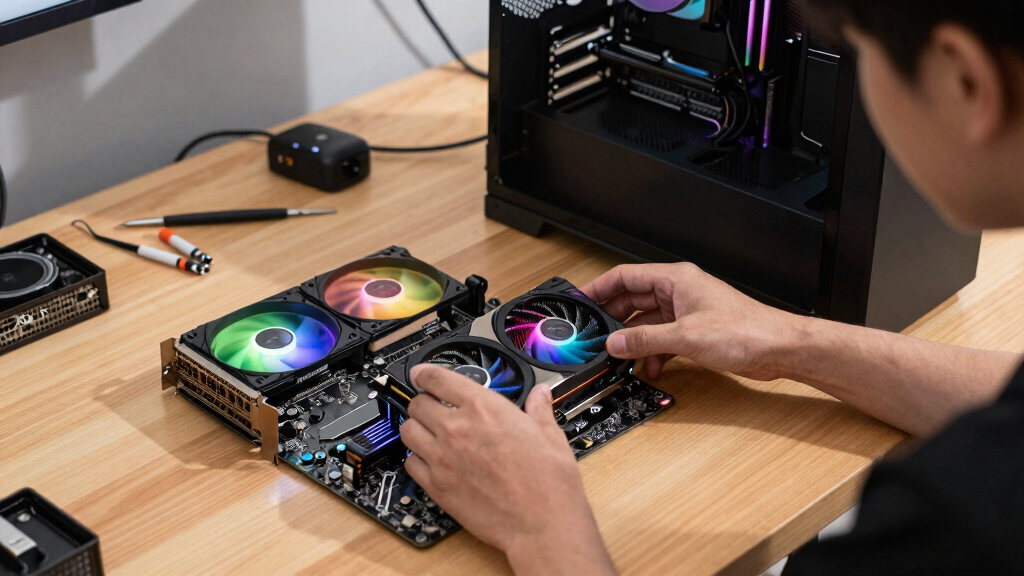
The selection process focused on performance benchmarks relevant to Steam gaming, considering real-world frame rates at common resolutions like 1080p and 1440p. We evaluated build quality, thermal performance, and noise levels to ensure durability and quiet operation. Value was a key factor, so the cards were compared based on cost per frame and features offered for the price. Compatibility with current and upcoming hardware standards, such as PCIe 5.0 and HDMI 2.1, was also important. The ranking reflects a balance between raw power, reliability, future-proofing, and affordability, ensuring a range of options for different types of gamers.Factors to Consider When Choosing Best Graphics Cards For Steam Games
Choosing the right graphics card for Steam games involves several considerations beyond raw specifications. Understanding your gaming resolution, performance expectations, and budget can help narrow down options. Additionally, compatibility with your existing system and future-proofing features matter more than just GPU model numbers. Here are key factors to keep in mind when selecting a graphics card:Performance and Resolution
The primary purpose of your graphics card is to deliver smooth gameplay at your preferred resolution. For 1080p gaming, mid-range cards like the RTX 3050 can suffice, but for 1440p or 4K, you’ll want higher-tier options like the RTX 5080 or RX 9060 XT. Pay attention to benchmark scores in titles you play most often, as real-world performance varies. Investing in a more powerful card may seem costly upfront but can extend the lifespan of your gaming setup by handling future, more demanding titles more comfortably.
VRAM and Future-Proofing
VRAM (video memory) directly impacts your ability to run newer games smoothly and handle higher resolutions or settings. For Steam games in 2026, a minimum of 8GB is advisable, but 12GB or more offers better longevity. Cards with ample VRAM are better equipped for future titles that demand more graphical memory, reducing the need for an upgrade in the near term. Skimping on VRAM might save money initially but can bottleneck performance as game requirements increase.
Connectivity and Compatibility
Modern gaming monitors often feature HDMI 2.1 or DisplayPort 2.1, which support higher refresh rates and resolutions. Ensuring your graphics card includes these ports can prevent bottlenecks and open up options for gaming at 144Hz or higher. Compatibility with PCIe 4.0 or 5.0 slots is also worth considering if you’re building a new system or plan to upgrade soon. These standards support faster data transfer, which can contribute to overall system responsiveness and gaming performance.
Price-to-Performance Ratio
Not all expensive cards deliver proportionally better gaming experiences. It’s essential to compare what each GPU offers relative to its cost. Sometimes, mid-range options like the GIGABYTE RX 9060 XT provide excellent value, especially if you’re gaming at 1080p or 1440p. High-end cards may be overkill if your monitor limits you to lower resolutions, so prioritize features and performance that match your actual gaming setup. Avoid paying a premium for features you won’t use or need.
Power Supply and Size Constraints
Power requirements and physical dimensions can influence your choice significantly. High-performance cards like the RTX 5080 require robust power supplies and may be larger than standard models. If your case is compact or your power supply is limited, you might need to consider smaller or less power-hungry options. Failing to account for these factors can lead to installation issues or system instability, so measure your space and power capacity before committing.
Frequently Asked Questions
Is it better to buy a more expensive graphics card for Steam gaming?
Generally, spending more on a graphics card yields better performance and longer relevance, especially for demanding titles or higher resolutions. However, the most expensive model isn’t always necessary if your gaming needs are modest or you’re gaming at 1080p. Consider your target resolution, desired frame rates, and budget. Sometimes, a mid-range card offers the best balance of price and performance, especially if you’re not pushing for ultra settings or 4K gaming.
Should I prioritize VRAM over raw performance?
VRAM is vital for handling high-resolution textures and future game demands. For Steam titles in 2026, a card with at least 8GB is the minimum, but 12GB or more provides better future-proofing. Raw performance in terms of frame rates at your resolution is also crucial, but without sufficient VRAM, performance can bottleneck, causing stuttering or crashes. Aim for a balanced approach that offers enough VRAM for your resolution and settings, along with strong GPU power.
Are high-end graphics cards worth it for 1080p gaming?
For 1080p gaming, high-end cards like the RTX 5080 may be overkill unless you aim for ultra-high frame rates or want to future-proof for upcoming titles. Mid-range options like the RTX 3050 or GIGABYTE RX 9060 XT often deliver excellent performance at this resolution for a lower cost. Investing in a high-end GPU for 1080p might not be cost-effective unless you plan to upgrade your monitor or seek maximum settings and frame rates consistently.
How important are connectivity options like HDMI 2.1 and DisplayPort 2.1?
These ports are increasingly important as high-refresh-rate, high-resolution monitors become more common. HDMI 2.1 and DisplayPort 2.1 support higher bandwidth, enabling smoother gaming experiences at 144Hz or higher at 4K. If you already own or plan to buy a monitor with these features, choosing a GPU with compatible ports ensures you won’t be limited by outdated connectivity. This also helps future-proof your setup for upcoming hardware standards.
Should I consider thermal and noise performance when choosing a GPU?
Yes, thermal management and noise levels impact your overall gaming experience and system longevity. Overheating can throttle performance and reduce the lifespan of the GPU, while noisy fans can be distracting during long gaming sessions. Look for models with good cooling solutions and reviews mentioning quiet operation. If your case has limited airflow, choosing a card with efficient cooling becomes even more important to maintain stable performance over time.
Conclusion
For most gamers, the ASUS TUF Gaming GeForce RTX 5080 offers the best blend of performance and future-proofing, making it the ideal choice for enthusiasts and high-resolution players. Budget-conscious buyers will find the ASUS Dual NVIDIA GeForce RTX 3050 provides solid gaming at 1080p without breaking the bank. Those seeking excellent value should consider the GIGABYTE Radeon RX 9060 XT, which balances cost and capability. Beginners or casual players can start with mid-range options, while power users aiming for 4K or high-refresh-rate gaming should prioritize premium picks like the RTX 5080. Ultimately, your choice depends on your resolution, performance needs, and budget, but this guide ensures you pick the right GPU for your Steam gaming setup in 2026.
Fall Picks
fall essentials
As an affiliate, we earn on qualifying purchases.