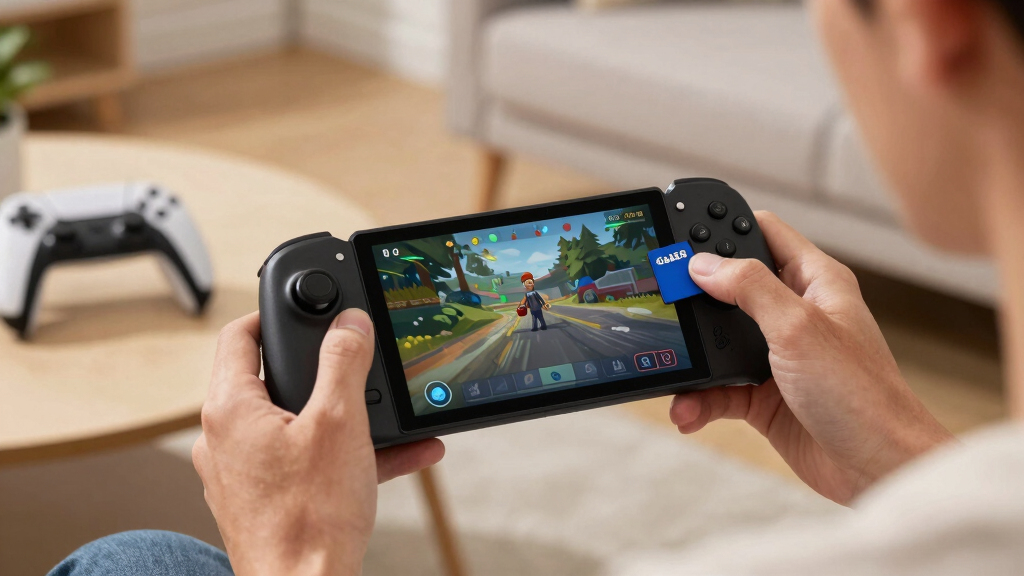

The best microSD card for handheld gaming PCs in this lineup is the Lexar 512GB Professional Silver Plus, because it balances fast UHS-I performance, stronger capacity, and better long-term value than the smaller 128GB picks. For players who want maximum space, the SanDisk 1TB GamePlay is the standout high-capacity option, while the Samsung P9 Express 256GB is the premium pick for newer devices that can use microSD Express speeds. The main tradeoff is whether to prioritize capacity, device compatibility, or headline speed, since not every handheld gaming PC can benefit from the fastest cards here. I rank these cards by how well they fit real handheld gaming needs, from large Steam libraries to budget expansion. Keep reading for the full breakdown of which card makes the most sense for each type of buyer.
Key Takeaways
- The Lexar 512GB Professional Silver Plus earns the top spot because 512GB is the most practical middle ground for handheld gaming PCs, giving more room than 128GB or 256GB cards without jumping to 1TB pricing.
- The two Samsung microSD Express cards are the speed leaders on paper, but they only make sense if the handheld can use microSD Express; many current gaming handhelds still treat UHS-I cards as the safer buy.
- The SanDisk 1TB GamePlay is the best capacity-first option, but it asks buyers to pay for storage depth rather than the best price per casual library.
- The SanDisk 256GB Nintendo Switch card and SanDisk 256GB Ultra are friendlier starter picks, but they are less convincing for large PC game libraries than the 512GB and 1TB cards.
- The 128GB cards are better for light users, indie games, or emulator libraries; for modern handheld PC gaming, I would treat 256GB as the floor and 512GB as the smarter default.
| SanDisk 128GB microSD Card for Gaming |  | Best Budget Speed Pick | Capacity: 128GB | Read Speed: Up to 190MB/s | Write Speed: Up to 90MB/s | VIEW LATEST PRICE | See Our Full Breakdown |
| SanDisk 256GB microSDXC Card, Licensed for Nintendo Switch |  | Best Simple Switch Carryover | Capacity: 256GB | Flash Type: microSDXC | Read Speed: Up to 100MB/s | VIEW LATEST PRICE | See Our Full Breakdown |
| SanDisk 128GB Extreme microSDXC UHS-I Memory Card with Adapter |  | Best Durable 128GB Pick | Capacity: 128GB | Card Type: microSDXC UHS-I | Read Speed: Up to 160MB/s | VIEW LATEST PRICE | See Our Full Breakdown |
| Samsung P9 Express microSDXC Card 256GB |  | Best Premium Speed Pick | Capacity: 256GB | Card Type: microSDXC Express | Read Speed: Up to 800MB/s | VIEW LATEST PRICE | See Our Full Breakdown |
| SanDisk 128GB Extreme microSDXC UHS-I Memory Card with Adapter |  | Best Fast UHS-I 128GB Pick | Capacity: 128GB | Card Type: microSDXC UHS-I | Read Speed: Up to 190MB/s | VIEW LATEST PRICE | See Our Full Breakdown |
| Samsung 256GB microSD Express Card for Nintendo Switch 2 |  | Best for Nintendo Switch 2 | Brand: Samsung | Model Name: 123685 | Model Number: BEEASD01B | VIEW LATEST PRICE | See Our Full Breakdown |
| Lexar 512GB Professional Silver Plus microSDXC UHS-I Card |  | Best Performance Value | Capacity: 512GB | Flash Type: microSDXC | Read Speed: Up to 205MB/s | VIEW LATEST PRICE | See Our Full Breakdown |
| SanDisk 1TB microSD GamePlay Memory Card for Mobile Gaming |  | Best High-Capacity Pick | Capacity: 1TB | Flash Type: Micro SD | Compatible Devices: Handheld gaming console | VIEW LATEST PRICE | See Our Full Breakdown |
| Lexar 256GB microSDXC UHS-I Memory Card with SD Adapter |  | Best Budget Performance Pick | Capacity: 256GB | Flash Type: microSDXC | Read Speed: Up to 160MB/s | VIEW LATEST PRICE | See Our Full Breakdown |
| SanDisk 256GB Ultra microSDXC UHS-I Memory Card with Adapter |  | Best Basic Expansion Card | Capacity: 256GB | Flash Type: microSDXC | Read Speed: Up to 150MB/s | VIEW LATEST PRICE | See Our Full Breakdown |
More Details on Our Top Picks
SanDisk 128GB microSD Card for Gaming
I rank the SanDisk 128GB microSD Card for Gaming as the budget speed pick because it brings a strong 190MB/s read rating to a smaller, lower-commitment capacity. Compared with the SanDisk 256GB microSDXC Card Licensed for Nintendo Switch, it gives up library space and official Switch branding, but it has a faster quoted read speed and an A2 rating that suits handheld PC game launchers and app-heavy use. The catch is capacity: 128GB fills quickly once larger PC ports enter the mix, so this is better as a secondary card or indie-game library than a main archive. I also would not buy it for Switch 2 planning, since the listing points to older Switch compatibility only.
Pros:- Fast quoted read speed for quicker transfers and load access
- A2 app rating helps with launcher and app-heavy handheld use
- Good fit for smaller game libraries or secondary storage
- Lower-capacity choice can keep the buy-in price down
Cons:- 128GB is tight for large PC games and DLC-heavy libraries
- Not listed for Nintendo Switch 2 compatibility
- Peak speeds depend on the handheld, reader, and file workload
Best for: Handheld PC players who want a low-cost card for indies, emulation, launchers, and a rotating set of smaller games
Not ideal for: Buyers building one large Steam Deck or ROG Ally library, since 128GB can disappear fast with modern PC game installs
- Capacity:128GB
- Read Speed:Up to 190MB/s
- Write Speed:Up to 90MB/s
- Application Performance:A2
- Read IOPS:4000
- Write IOPS:2000
- Listed Compatibility:Nintendo Switch, not Switch 2
- Video Support:4K UHD recording support with compatible devices
Bottom line: This is the card I would choose for speed on a small budget, not for storing an entire handheld PC library.
SanDisk 256GB microSDXC Card, Licensed for Nintendo Switch
The SanDisk 256GB microSDXC Card Licensed for Nintendo Switch earns its place for buyers who value easy compatibility over chasing the highest speed number. Its 256GB capacity is more comfortable than the 128GB SanDisk gaming card, and the official Switch license makes it a tidy pick for anyone moving between a Switch, Switch Lite, OLED model, and a handheld gaming PC that still accepts UHS-I cards. Compared with the Samsung P9 Express 256GB, though, it is much slower on paper, so it is not the forward-looking choice for Switch 2 or microSD Express performance. I see it as a dependable middle ground: enough room for a practical library, good write speed for captures, but not the card for buyers who want the fastest future-ready option.
Pros:- 256GB capacity is more practical than 128GB cards for mixed game libraries
- Officially licensed for Nintendo Switch, OLED, and Lite systems
- 90MB/s write rating is useful for captures and transfers
- Water, temperature, and X-ray protection add travel durability
Cons:- 100MB/s read speed trails faster cards in this lineup
- Not listed for Nintendo Switch 2 compatibility
- Warranty length may vary by region
Best for: Switch owners who also use a handheld gaming PC and want a familiar 256GB UHS-I card for mixed libraries
Not ideal for: Switch 2 buyers or speed-focused handheld PC users who want microSD Express-class performance
- Capacity:256GB
- Flash Type:microSDXC
- Read Speed:Up to 100MB/s
- Write Speed:Up to 90MB/s
- Speed Class:Class 10
- Compatibility:Nintendo Switch, Nintendo OLED, Nintendo Switch Lite
- Protection:Temperature proof, water proof, X-ray proof
- Weight:0.2 ounces
- Dimensions:0.43 in L x 0.59 in W
Bottom line: This is the sensible 256GB pick for older Switch carryover, but speed-first handheld PC buyers should aim higher.
SanDisk 128GB Extreme microSDXC UHS-I Memory Card with Adapter
I place the SanDisk 128GB Extreme microSDXC UHS-I here for buyers who want a small card with tougher all-around specs than a basic gaming-branded model. Its U3, V30, and A2 ratings make it better suited to handhelds that double as capture, media, or Android gaming devices, while the included adapter helps when moving files through a laptop. Compared with the newer SanDisk 128GB Extreme B09X7BK27V, this older 160MB/s version loses the headline read-speed race, but it still has the same 90MB/s write rating and broad durability claims. The tradeoff is value: if both cards are priced close, I would pick the 190MB/s version; if this one is cheaper, it remains a sturdy 128GB buy.
Pros:- U3 and V30 ratings suit 4K recording and steady media work
- A2 app rating supports smoother app and launcher behavior
- Rugged protection claims make it a better travel card
- SD adapter adds flexibility for laptop transfers
Cons:- 160MB/s read rating is behind newer SanDisk Extreme models
- 128GB capacity is modest for PC game libraries
- Needs compatible hardware to reach its best speeds
Best for: Players who want a compact, durable card for handheld gaming plus screenshots, video clips, and file shuttling
Not ideal for: Buyers who can get the newer 190MB/s SanDisk Extreme at a similar price or need more than 128GB
- Capacity:128GB
- Card Type:microSDXC UHS-I
- Read Speed:Up to 160MB/s
- Write Speed:Up to 90MB/s
- UHS Speed Class:U3
- Video Speed Class:V30
- Application Performance:A2
- Durability:Temperature proof, water proof, shock proof, X-ray proof
- Adapter:SD adapter included
Bottom line: This is the durable 128GB choice I would pick when the newer Extreme card costs more than it should.
Samsung P9 Express microSDXC Card 256GB
The Samsung P9 Express microSDXC Card 256GB is the clear premium speed play in this batch because its 800MB/s read rating sits in a different class from UHS-I cards like the SanDisk 256GB Licensed for Nintendo Switch. For handheld gaming PCs and Switch 2 owners with microSD Express support, that speed headroom can mean faster large-game transfers and less waiting when moving a library around. The tradeoff is compatibility: in regular microSD UHS-I devices, the card cannot behave like a full-speed Express card, so the extra cost may be wasted in older handhelds. It also stays at 256GB, while larger cards in the wider roundup, such as the SanDisk 1TB GamePlay card, make more sense for big installed libraries.
Pros:- Very high 800MB/s read rating for compatible hardware
- Listed for Nintendo Switch 2 use
- 256GB is enough for a focused library of favorites
- 6-proof protection and 3-year warranty add confidence for travel
Cons:- Express-level speed needs compatible hardware
- 256GB may feel small for modern PC game collections
- Likely costs more than standard UHS-I cards with the same capacity
Best for: Switch 2 owners and handheld PC buyers with microSD Express support who care more about speed than maximum capacity
Not ideal for: Older UHS-I handheld owners who would pay for Express speed their device cannot fully use
- Capacity:256GB
- Card Type:microSDXC Express
- Read Speed:Up to 800MB/s
- Compatibility:Nintendo Switch 2, microSD UHS-I devices
- Protection:6-proof protection
- Warranty:3 years
Bottom line: This is the card I would buy for Switch 2 or microSD Express-ready handhelds, but not for older devices that cannot use its speed.
SanDisk 128GB Extreme microSDXC UHS-I Memory Card with Adapter
The SanDisk 128GB Extreme B09X7BK27V is my faster UHS-I 128GB pick because it combines a 190MB/s read rating, 90MB/s writes, U3, V30, and A2 in one small card. Compared with the older SanDisk Extreme B07FCMKK5X, it offers the same broad use case but a higher quoted read ceiling, making it more appealing for handheld PC owners who often move games, ROM sets, or media between devices. Against the Samsung P9 Express, though, this is still a conventional UHS-I card, so it is not the speed leader for Switch 2-era hardware. The capacity is also the main constraint: 128GB suits a curated portable library, not a no-delete PC game collection.
Pros:- 190MB/s read rating is strong for a UHS-I card
- U3 and V30 ratings support 4K and 5K video workloads
- A2 rating helps app and launcher responsiveness
- SD adapter makes transfers easier on full-size card readers
Cons:- Not listed for Nintendo Switch 2 compatibility
- 128GB is limited for large handheld PC libraries
- Real-world speed varies by device and reader support
Best for: Handheld PC players who want a fast UHS-I card for a curated library, emulation, and media capture
Not ideal for: Buyers preparing for Switch 2 or anyone who wants a single card for many large AAA installs
- Capacity:128GB
- Card Type:microSDXC UHS-I
- Read Speed:Up to 190MB/s
- Write Speed:Up to 90MB/s
- UHS Speed Class:U3
- Video Speed Class:V30
- Application Performance:A2
- Compatible Devices:Nintendo Switch, action cameras, drones; not Switch 2
- Adapter:SD adapter included
Bottom line: This is the fast 128GB UHS-I card I would choose when capacity is secondary to responsive everyday handling.
Samsung 256GB microSD Express Card for Nintendo Switch 2
Samsung’s 256GB microSD Express Card earns a narrow but useful role: I would treat it as the Switch 2 pick, not the broad handheld PC pick. Its microSD Express standard is the reason it belongs here, since Nintendo Switch 2 requires that newer format rather than the UHS-I cards used by models like the SanDisk 256GB Ultra or Lexar 512GB Professional Silver Plus. The tradeoff is reach. For Steam Deck, ROG Ally, Legion Go, and older Switch owners, this card is either the wrong match or far less appealing than a cheaper UHS-I option. The 256GB capacity also fills quickly with modern game installs, and the 1-year warranty is short next to Lexar and SanDisk alternatives.
Pros:- Uses the microSD Express standard required by Nintendo Switch 2
- 256GB capacity is enough for a focused rotation of games
- Purpose-built compatibility reduces guesswork for Switch 2 buyers
Cons:- Limited usefulness outside Nintendo Switch 2
- 256GB can feel tight for large modern game libraries
- 1-year warranty is short compared with SanDisk and Lexar options
Best for: Nintendo Switch 2 owners who need a compatible microSD Express card for a smaller curated game library
Not ideal for: Steam Deck, ROG Ally, Legion Go, or original Nintendo Switch owners, since this card is built around Switch 2 microSD Express compatibility
- Brand:Samsung
- Model Name:123685
- Model Number:BEEASD01B
- Storage Capacity:256GB
- Compatibility:Nintendo Switch 2
- Standard:microSD Express
- Warranty:1 Year
Bottom line: This is the cleanest pick here for Switch 2 buyers, but most handheld PC owners should choose a UHS-I card instead.
Lexar 512GB Professional Silver Plus microSDXC UHS-I Card
Lexar’s 512GB Professional Silver Plus sits in the sweet spot I like for handheld gaming PCs: more room than 256GB cards, stronger write speed than budget models, and a price profile that usually makes more sense than jumping straight to 1TB. Compared with the SanDisk 1TB GamePlay, this card trades raw capacity for a balanced 205MB/s read and 150MB/s write rating, which helps when moving large installs or recording clips on compatible devices. It also outclasses the SanDisk 256GB Ultra on speed class, write rating, and durability claims. The catch is platform fit. It is not for Nintendo Switch 2, and some handhelds will not reach its peak speeds without the right reader or host support.
Pros:- 512GB capacity is a practical middle ground for handheld PC libraries
- Up to 205MB/s read and 150MB/s write speeds are strong for file transfers
- V30, U3, and Class 10 ratings suit game storage and 4K capture workflows
- Lifetime limited warranty adds long-term reassurance
Cons:- Not compatible with Nintendo Switch 2
- Peak speeds depend on host device and reader support
- Lower capacity than 1TB cards for large AAA libraries
Best for: Handheld PC players who want a strong mix of capacity, speed, and durability without paying for a 1TB card
Not ideal for: Nintendo Switch 2 owners or buyers whose device cannot take advantage of faster UHS-I transfer ratings
- Capacity:512GB
- Flash Type:microSDXC
- Read Speed:Up to 205MB/s
- Write Speed:Up to 150MB/s
- Video Speed Class:V30
- Speed Class:Class 10, U3
- Compatibility:Camera, gaming console, smartphone, tablet
- Durability:Waterproof, drop-proof, magnetic-proof, vibration-proof, X-ray-proof, wearproof
- Warranty:Lifetime Limited Warranty
Bottom line: This is my value-performance pick for handheld PC players who want speed and space without moving into premium-capacity pricing.
SanDisk 1TB microSD GamePlay Memory Card for Mobile Gaming
SanDisk’s 1TB GamePlay card is the one I would point to when storage space matters more than shaving a few dollars off the purchase. For handheld gaming PCs, 1TB capacity changes the buying decision: it leaves room for several large installs instead of forcing constant deletions, which is where it separates itself from the Lexar 512GB Professional Silver Plus and both 256GB cards in this batch. Its up to 190MB/s read and 130MB/s write speeds are also strong enough for fast transfers on compatible devices. The hesitation is compatibility and condition. It is not meant for Nintendo Switch 2, performance depends on the handheld, and the renewed-product note makes warranty and long-term confidence less clean than Lexar’s lifetime-backed option.
Pros:- 1TB capacity holds far more games than 256GB and 512GB options
- Up to 190MB/s read speed supports faster loading and transfers on compatible devices
- Up to 130MB/s write speed is useful for downloads, captures, and file movement
- Drop-proof, temperature-proof, vibration-proof, and waterproof design
Cons:- Not compatible with Nintendo Switch 2
- Renewed status may mean less predictable warranty or reliability
- Actual performance varies by handheld and card reader support
Best for: Handheld PC players who install large AAA games and want to carry more of their library offline
Not ideal for: Buyers who want the strongest warranty story or need guaranteed Nintendo Switch 2 compatibility
- Capacity:1TB
- Flash Type:Micro SD
- Compatible Devices:Handheld gaming console
- Read Speed:Up to 190MB/s
- Write Speed:Up to 130MB/s
- Video Support:4K UHD recording
- Durability:Drop proof, temperature proof, vibration proof, water proof
Bottom line: This is the capacity-first choice for handheld PC players who would rather store more games than micromanage installs.
Lexar 256GB microSDXC UHS-I Memory Card with SD Adapter
Lexar’s 256GB microSDXC UHS-I card makes the most sense when I want a lower-cost card that still has gaming-relevant speed ratings. Compared with the SanDisk 256GB Ultra, the draw is its U3, V30, and A2 profile, which is better suited to heavier app and media workloads than a basic U1 card. It cannot match the Lexar 512GB Professional Silver Plus for capacity or peak write speed, but it gives budget-focused handheld owners a stronger spec floor than many entry cards. The limits are easy to see: 256GB is modest for big PC games, peak read speed needs compatible hardware, and the listed 30MB/s media speed sits well below faster premium options.
Pros:- U3, V30, and A2 ratings are strong for a 256GB value card
- Up to 160MB/s read speed helps with transfers on compatible hardware
- Includes an SD adapter for easier file management
- 10-year warranty and data recovery support add buyer confidence
Cons:- 256GB capacity is limited for modern handheld PC game libraries
- Peak speeds require a compatible reader and host device
- Lower media speed than premium cards in this lineup
Best for: Budget-minded handheld PC owners who play smaller games, indies, emulation libraries, or keep only a few large titles installed
Not ideal for: Players who want to store many 60GB-plus games at once or need the fastest sustained transfer speeds
- Capacity:256GB
- Flash Type:microSDXC
- Read Speed:Up to 160MB/s
- Media Speed:30MB/s
- Video Speed Class:V30
- Speed Class:Class 10, U3
- Compatibility:Action cameras, cameras, drones, smartphones, tablets
- Warranty:10 years
Bottom line: This is the budget performance card I would pick when speed ratings matter but 512GB or 1TB pricing does not fit.
SanDisk 256GB Ultra microSDXC UHS-I Memory Card with Adapter
SanDisk’s 256GB Ultra is the simple expansion pick, and I would choose it for lighter handheld use rather than maximum performance. It has a broad compatibility list that includes Nintendo Switch, Android devices, Chromebooks, and Windows laptops, so it is more flexible than the Switch 2-only Samsung 256GB microSD Express Card. Against the Lexar 256GB microSDXC UHS-I, though, it gives up U3 and V30 ratings, which makes it less appealing for demanding capture or faster sustained writes. The 150MB/s read speed is fine for everyday transfers, and A1 app performance helps with app loading, but this is not the card I would pick for a large Steam Deck library or heavy write workloads.
Pros:- Broad compatibility across Nintendo Switch, Android devices, Chromebooks, and Windows laptops
- Up to 150MB/s read speed is solid for basic transfers
- A1 rating supports faster app loading than non-rated basic cards
- 10-year warranty is strong for an entry-level option
Cons:- Not compatible with Nintendo Switch 2
- U1 rating is weaker than U3 and V30 cards for sustained writes
- 256GB fills quickly with larger handheld PC games
Best for: Casual handheld players who need affordable 256GB storage for older games, indies, emulation, or a Nintendo Switch library
Not ideal for: Power users with large PC game libraries, heavy capture needs, or Nintendo Switch 2 systems
- Capacity:256GB
- Flash Type:microSDXC
- Read Speed:Up to 150MB/s
- Compatibility:Nintendo Switch, Android devices, Chromebooks, Windows laptops
- Speed Class:C10, U1
- App Performance:A1
- Adapter:Included
- Warranty:10 years
Bottom line: This is the easy, low-friction card for basic expansion, but performance-focused handheld PC players should move up to Lexar’s faster U3 options.
How We Picked
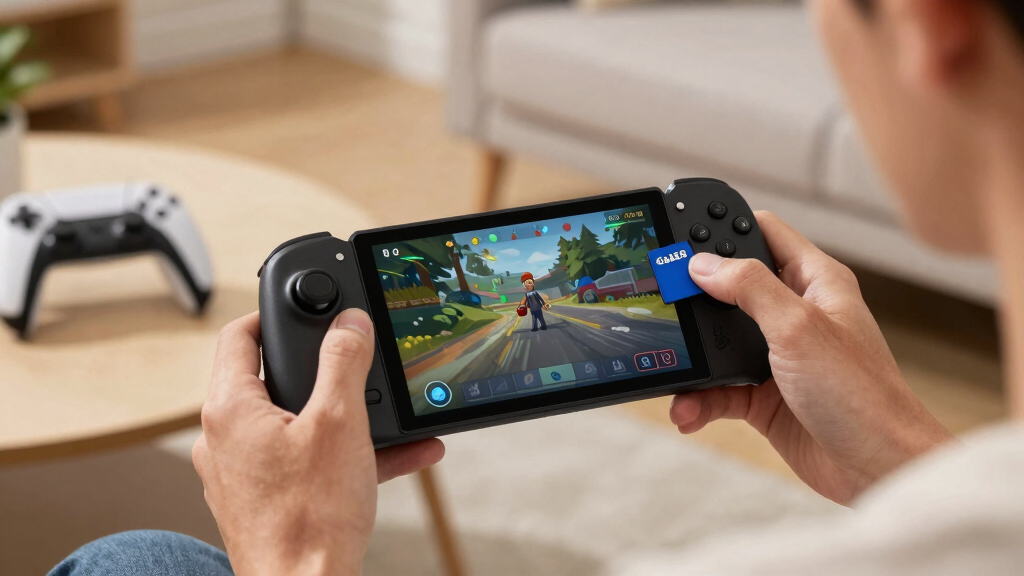
I ranked these cards around the way handheld gaming PCs actually use storage: game install size, load-time expectations, app performance ratings, capacity, price logic, and compatibility. UHS-I cards with A2, U3, and V30 ratings scored well when they paired practical speed with enough space for modern PC games, while microSD Express cards moved up only when their extra speed had a clear device fit. I also weighted capacity tiers heavily, because a fast 128GB card can still feel cramped after only a few large installs.
The final order favors cards that reduce buyer regret. A 512GB UHS-I card sits above smaller SanDisk models because it better matches Steam Deck, ROG Ally, Legion Go, and similar use cases. The Samsung Express cards rank highly for premium and future-facing setups, but I would not place them above the best all-around UHS-I pick for every buyer because compatibility matters as much as speed. Budget-friendly 256GB models stay in the mix for beginners, while 128GB cards land lower because they solve a narrower problem.
Factors to Consider When Choosing Best MicroSD Cards For Handheld Gaming PCs
Choosing among the best microSD cards for handheld gaming PCs is less about picking the biggest number on the package and more about matching the card to your device, library, and patience for moving games around. I focus on the tradeoffs that affect everyday use: how many games fit, whether faster specs will matter, and when paying more actually changes the experience.
Capacity Matters More Than Most Speed Claims
For handheld gaming PCs, capacity is often the first bottleneck. A 128GB card can work for indie games, retro libraries, screenshots, and a few smaller PC titles, but it fills quickly once large games enter the mix. A 256GB card is a friendlier starting point, especially for buyers who rotate games often or use internal SSD storage for the heaviest titles. The 512GB tier is where the category starts to feel more relaxed, because it can hold a broader library without constant cleanup. A 1TB card is best for players who travel often, keep multiple big games installed, or dislike managing downloads. I would avoid buying less capacity just because the card has a high speed rating unless the library is genuinely small.
Check Whether Your Handheld Supports microSD Express
The Samsung P9 Express and Samsung 256GB microSD Express stand apart because their rated speeds are far beyond typical UHS-I cards. That does not automatically make them the right choice for every handheld gaming PC. If a device only supports UHS-I microSD speeds, a microSD Express card may behave closer to a standard card or fail to justify its price. Newer hardware may benefit more, especially if game transfers and install movement are common. For a Steam Deck-style use case, a strong UHS-I A2 card may be the cleaner purchase. I would pay for microSD Express only when the handheld’s spec sheet clearly supports it and the price gap feels reasonable.
A2 Ratings Are Useful, But They Are Not Magic
An A2 app performance rating can help with the small random reads and writes that matter when launching software or handling game data. That is why cards like the Lexar 512GB Professional Silver Plus and SanDisk Extreme models look more gaming-friendly than basic storage cards. Still, A2 does not turn a microSD card into an internal SSD. Large open-world games, shader compilation, installs, and updates can still feel slower on removable storage than on built-in NVMe storage. I see A2 as a useful filter, not a guarantee of console-like smoothness. The smarter move is to place demanding games on internal storage and use the card for secondary libraries, smaller titles, and games with less aggressive streaming.
Read Speed Gets Attention, Write Speed Changes Daily Use
Read speed affects loading and moving through stored data, but write speed shapes installs, downloads, updates, and file transfers. A card with strong read claims but weaker write behavior can still feel slow when copying a large game library. That is where the Lexar 512GB Professional Silver Plus has an advantage over more basic options, since its speed profile is better suited to frequent library management. The SanDisk Ultra is easier to recommend for light expansion than for users who constantly shuffle big games. If most games are downloaded once and left alone, peak write speed matters less. If the handheld doubles as a portable PC with frequent installs, patches, and transfers, I would lean toward the faster U3/V30/A2 options.
Licensed Gaming Branding Does Not Always Mean Better PC Value
Cards like the SanDisk 256GB Nintendo Switch model are appealing because they feel purpose-built for gaming. For handheld gaming PCs, that branding is less persuasive than the actual speed rating, capacity, and price. A licensed card can still be a good beginner choice, especially when pricing is close to a standard model. The issue is that buyers may pay more for branding while getting less capacity than a better-value card in the same budget range. Compared with the Lexar 512GB option, a 256GB licensed card is easier to outgrow. I would treat gaming branding as a tie-breaker, not the main reason to buy.
Frequently Asked Questions
Is 256GB Enough For A Handheld Gaming PC?
256GB can be enough if the handheld’s internal SSD handles the largest games and the microSD card is used for smaller titles, emulation, screenshots, or a rotating library. It is less ideal for buyers who want several modern PC games installed at once, because individual games can take up a large share of that space. In this roundup, the SanDisk 256GB Nintendo Switch card, Samsung 256GB microSD Express card, Lexar 256GB card, and SanDisk 256GB Ultra all fit different versions of the starter-buyer role. I would pick 256GB for budget control or light use. For fewer compromises, 512GB is the better default.
Should I Buy microSD Express For A Steam Deck, ROG Ally, Or Legion Go?
microSD Express only makes sense when the handheld can use that interface. If the device is limited to UHS-I microSD performance, the Samsung P9 Express and Samsung 256GB microSD Express cards may not deliver the advantage their packaging suggests. That is why I rank them as premium and future-facing picks rather than universal winners. A strong UHS-I card like the Lexar 512GB Professional Silver Plus is the safer all-around choice for many current handheld gaming PCs. I would check the device’s storage spec before paying extra for Express speeds.
Is A 1TB microSD Card Worth It For Handheld Gaming?
A 1TB card is worth it for players who keep many large games installed, travel often, or dislike deleting and redownloading titles. The SanDisk 1TB GamePlay stands out because it solves the capacity problem more completely than any 128GB, 256GB, or 512GB option here. The tradeoff is cost, and some buyers may get better value by pairing a 512GB card with internal SSD upgrades or cloud saves. It is also smart to reserve the fastest internal storage for the most demanding games. I would choose 1TB for convenience, not because every handheld owner needs that much removable storage.
Are The 128GB SanDisk Cards Still Worth Buying?
The 128GB SanDisk cards still have a place, but that place is narrow. They work best for lighter game libraries, retro collections, media, screenshots, or as a low-cost backup card. The SanDisk Extreme versions are more performance-oriented than a basic card, yet their small capacity limits their appeal for modern handheld PC gaming. Compared with the Lexar 512GB card or SanDisk 1TB GamePlay, they require more frequent storage management. I would only buy 128GB if the price is very low or the use case is clearly modest.
Which Card Is Best If I Want The Least Complicated Choice?
For the least complicated choice, I would point most buyers to the Lexar 512GB Professional Silver Plus. It has enough room to feel useful on a handheld gaming PC, strong UHS-I gaming-friendly ratings, and a better capacity balance than the 128GB and 256GB cards. It also avoids the compatibility question that comes with microSD Express cards. Beginners who want to spend less can step down to the SanDisk 256GB Ultra or SanDisk 256GB Nintendo Switch card. If the goal is one card that works for many handheld setups without overthinking it, 512GB UHS-I is the cleanest target.
Conclusion
My best overall pick is the Lexar 512GB Professional Silver Plus, because it hits the strongest balance of capacity, speed ratings, and practical handheld gaming value. The best value choice is the Lexar 256GB microSDXC UHS-I if the price is right, while the best beginner option is the SanDisk 256GB Ultra for simple, low-friction storage expansion. For buyers who want the most space, the SanDisk 1TB GamePlay is the card I would choose. For premium or newer handhelds with microSD Express support, the Samsung P9 Express 256GB is the speed-focused pick. Light users can still choose one of the 128GB SanDisk cards, but most handheld gaming PC buyers will be happier starting at 256GB and aiming for 512GB when the budget allows.