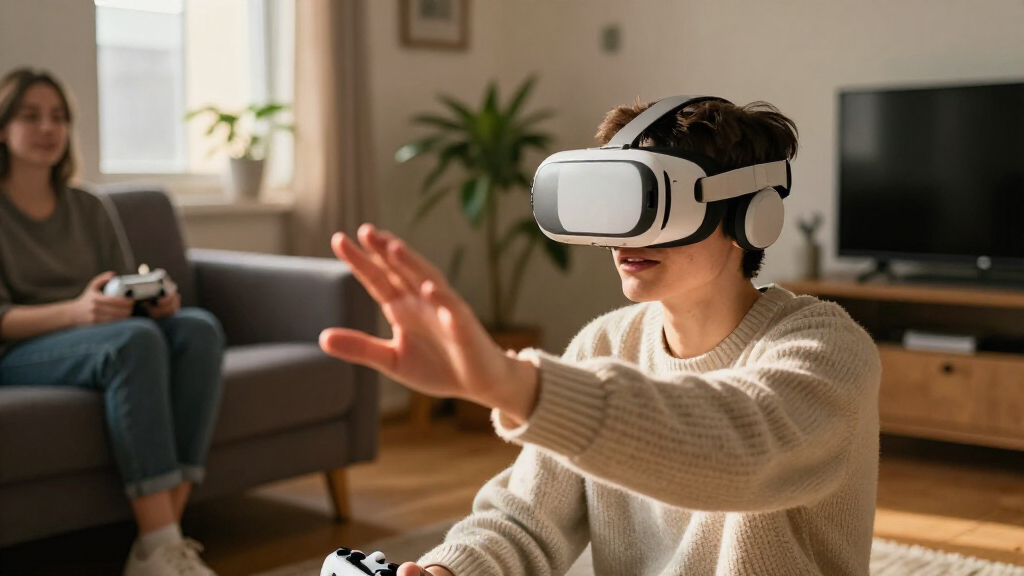

For most players, I’d start with the Meta Quest 3 512GB: its standalone design and access to PC VR give it more ways to play than the other picks. The PlayStation VR2 makes more sense for PS5 owners who want console-focused games, while the Pimax Crystal Super targets PC players who put visual detail and a wide field of view first. The main tradeoffs are simple: standalone convenience versus PC or console performance, and easy setup versus more demanding hardware and fit requirements. Storage, compatibility, and whether a model is renewed or bundled also change the value of a particular listing. Read on for the full comparison and guidance on which headset fits your gaming setup.

Play games on Amazon Luna for your game nights, included with Prime
- A rotating selection of games, no download needed
- Play on TV, laptop or phone
- Fast, free delivery for your gear, too
Complete the kit

Key Takeaways
- The Meta Quest 3 is the most flexible gaming choice here: it can run games on the headset and connect to a gaming PC, unlike the PlayStation-only PS VR2 or PC-tethered Pimax models.
- PlayStation VR2 is the focused console pick: it suits PS5 owners, but buyers should not treat it as a standalone headset or assume it replaces a Quest.
- The Pimax models trade simplicity for PC-focused visuals: Crystal Super emphasizes resolution and field of view, while Crystal Light offers a more direct PC VR route.
- Quest 3S and Quest 2 listings put access and bundle contents ahead of the Quest 3’s broader feature set: compare what is included, device condition, and storage rather than relying on a game bundle name alone.
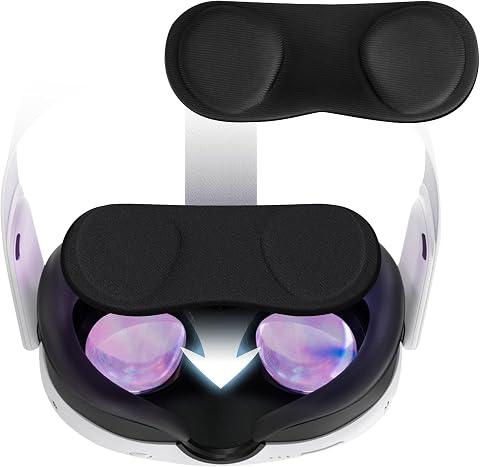
- Renewed and accessory bundles need extra scrutiny: check the seller’s condition terms, included controllers and cables, storage, and whether the advertised game or add-on is usable in your region.
| Sony PlayStation VR Marvel’s Iron Man Bundle |  | Best for PlayStation Iron Man Fans | Compatible platforms: PlayStation 4, PlayStation 5 | Display: OLED | Resolution: 1920 × 1080 | VIEW LATEST PRICE | See Our Full Breakdown |
| Pimax Crystal Super VR Headset, 3840 × 3840 per Eye, 140° FOV, Eye Tracking, PC DisplayPort |  | Best for High-Detail PC Simulation | Resolution: 3840 × 3840 per eye | Pixel density: 50 PPD | Field of view: 140 degrees | VIEW LATEST PRICE | See Our Full Breakdown |
| Meta Quest 2 128GB All-in-One VR Headset with Silicone Cover and Knuckle Straps |  | Best for Entry-Level Standalone Gaming | Storage: 128GB | Display resolution: 1832 × 1920 pixels per eye | Controllers: Two Touch controllers | VIEW LATEST PRICE | See Our Full Breakdown |
| Meta Quest 3S 128GB VR Headset (Renewed Premium) |  | Best for Newer Standalone Gaming on a Budget | Condition: Renewed Premium | Storage: 128GB | Processor: Snapdragon XR2 Gen 2 | VIEW LATEST PRICE | See Our Full Breakdown |
| Meta Quest 3 512GB VR Headset (Renewed) |  | Best for Standalone Gaming and Large Libraries | Condition: Renewed | Storage: 512GB | Processor: Snapdragon XR2 Gen 2 | VIEW LATEST PRICE | See Our Full Breakdown |
| PlayStation VR2 Horizon Call of the Mountain Bundle |  | Best for PS5 Exclusives | Platform: PlayStation 5 | Included game: Horizon Call of the Mountain | Display: OLED | VIEW LATEST PRICE | See Our Full Breakdown |
| Meta Quest 3S 128GB VR Headset with Gorilla Tag Bundle |  | Best for Wireless First-Timers | Platform: Standalone Meta Quest | Storage: 128 GB | Processor: Snapdragon XR2 Gen 2 | VIEW LATEST PRICE | See Our Full Breakdown |
| Meta Quest Pro 256GB VR Headset with Optima Academy Online Field Trips |  | Best for Mixed-Reality Gaming | Storage: 256 GB | RAM: 12 GB | Sensors: 10 VR/MR sensors | VIEW LATEST PRICE | See Our Full Breakdown |
| Meta Quest 2 All-in-One VR Headset, 256 GB (Renewed) |  | Best for Lower-Commitment Standalone Play | Condition: Renewed | Platform: Standalone | Storage: 256 GB | VIEW LATEST PRICE | See Our Full Breakdown |
| Pimax Crystal Light PC VR Headset |  | Best for High-Resolution PC VR | Resolution: 2880 × 2880 per eye | Display: QLED with local dimming and HDR | Pixel count: 16.6 million | VIEW LATEST PRICE | See Our Full Breakdown |
| HTC VIVE Focus Vision Mixed Reality and PC VR Headset with Controllers |  | Best for Flexible PC VR and Standalone Play | Resolution: 2448 × 2448 pixels per eye | Field of view: Up to 120° | Refresh rate: 90 Hz | VIEW LATEST PRICE | See Our Full Breakdown |
| Meta Quest 3 512GB VR Headset with Gorilla Tag Monkenaut Bundle |  | Best Standalone Gaming Bundle | Storage: 512 GB | Memory: 8 GB RAM | Processor: Snapdragon XR2 Gen 2 | VIEW LATEST PRICE | See Our Full Breakdown |
| VR headsets for gaming | Field of view | Refresh rate | Storage | Display |
|---|---|---|---|---|
| Sony PlayStation VR Marvel’s I | 110 degrees | 90 Hz | — | OLED |
| Pimax Crystal Super VR Headset | 140 degrees | Up to 90 Hz and beyond | — | QLED with Mini-LED local dimming |
| Meta Quest 2 128GB All-in-One | — | — | 128GB | — |
| Meta Quest 3S 128GB VR Headset | 96 degrees | 90 Hz | 128GB | — |
| Meta Quest 3 512GB VR Headset | 110 degrees | 120 Hz | 512GB | — |
| PlayStation VR2 Horizon Call o | 110 degrees | 120 Hz | — | OLED |
| Meta Quest 3S 128GB VR Headset | 110 degrees | — | 128 GB | LCD |
| Meta Quest Pro 256GB VR Headse | — | — | 256 GB | — |
| Meta Quest 2 All-in-One VR Hea | 90 degrees | 90 Hz | 256 GB | LCD |
| Pimax Crystal Light PC VR Head | — | Up to 120 Hz | — | QLED with local dimming and HDR |
| HTC VIVE Focus Vision Mixed Re | Up to 120° | 90 Hz | 128 GB; expandable up to 2 TB with MicroSD | — |
| Meta Quest 3 512GB VR Headset | 360 degrees | Up to 120 Hz | 512 GB | LCD; 2064 × 2208 pixels per eye |
More Details on Our Top Picks
Sony PlayStation VR Marvel’s Iron Man Bundle
I’d choose this bundle for a PlayStation owner who wants a game-led VR entry point rather than a headset built around broad PC compatibility. It includes the headset, camera, two Move controllers, and Marvel’s Iron Man VR, so the included game is ready for motion-controlled flying and combat. That makes it a more complete out-of-box gaming package than the Pimax Crystal Super, which requires a DisplayPort-equipped PC and leaves game selection to the buyer. The tradeoff is platform dependence: this is an older PlayStation VR system, not a standalone headset, and its 1920 × 1080 OLED display is modest beside newer high-resolution options such as the Meta Quest 3. I’d skip it if you want wireless play or a headset you can use without a compatible console.
Pros:- Includes the headset, PlayStation Camera, two Move controllers, and Marvel’s Iron Man VR
- Move controllers support flying and combat interactions in the included game
- OLED display and 110-degree field of view
- Compatible with PlayStation 4 and PlayStation 5
Cons:- Requires a compatible PlayStation console and camera setup
- Wired connection limits freedom of movement compared with standalone Quest headsets
- 1920 × 1080 resolution is lower than newer options such as Meta Quest 3
Best for: PlayStation 4 or PlayStation 5 owners who specifically want motion-controlled superhero gameplay and a bundle with the camera, controllers, and game included.
Not ideal for: PC gamers, wireless-first buyers, or players seeking newer high-resolution visuals and a headset that works without a PlayStation console.
- Compatible platforms:PlayStation 4, PlayStation 5
- Display:OLED
- Resolution:1920 × 1080
- Field of view:110 degrees
- Refresh rate:90 Hz
- Included controllers:2 PlayStation Move motion controllers
- Included game:Marvel’s Iron Man VR
- Connectivity:HDMI, USB
Our verdict“Choose this bundle if you already own a compatible PlayStation and want Iron Man VR included; skip it if you want wireless play or a newer display.”
Pimax Crystal Super VR Headset, 3840 × 3840 per Eye, 140° FOV, Eye Tracking, PC DisplayPort
For PC gamers who put cockpit detail and a broad view ahead of convenience, the Pimax Crystal Super’s 3840 × 3840 resolution per eye and 140-degree field of view give it a distinct role. Those specs are especially relevant in flight and driving sims, where clear instruments and more peripheral scenery can support longer sessions. Compared with the Meta Quest 3, this is the specialist choice: it connects by DisplayPort to a PC rather than offering standalone, untethered play. Its QLED and Mini-LED display with local dimming also targets contrast and image detail, while inside-out tracking avoids the need for a separate tracking setup. The compromises are the PC requirement and cable connection, plus limited supplied information about system compatibility and headset weight. I’d pass if you want a simple plug-in-and-play wireless gaming setup.
Pros:- 3840 × 3840 resolution per eye with 50 PPD for detailed PC visuals
- 140-degree field of view provides a broad view in sims and games
- QLED and Mini-LED display with local dimming
- Inside-out tracking and integrated spatial audio simplify setup compared with external tracking systems
Cons:- Requires a PC and DisplayPort connection, unlike standalone Meta Quest 3
- Cable-connected play is less convenient for room-scale movement
- The supplied product information does not specify headset weight or detailed PC compatibility requirements
Best for: PC simulation players with a DisplayPort-equipped gaming computer who prioritize fine visual detail and a wide field of view.
Not ideal for: Console or standalone gamers, and buyers who want wireless freedom or clear published compatibility and weight information before choosing.
- Resolution:3840 × 3840 per eye
- Pixel density:50 PPD
- Field of view:140 degrees
- Display:QLED with Mini-LED local dimming
- Refresh rate:Up to 90 Hz and beyond
- Tracking:Inside-out tracking
- Connection:DisplayPort to PC
- Audio:Integrated 3D spatial audio and noise-canceling microphone
Our verdict“Pick the Crystal Super for demanding PC sims where resolution and field of view lead your priorities, not for wireless or console gaming.”
Meta Quest 2 128GB All-in-One VR Headset with Silicone Cover and Knuckle Straps
I’d put this Quest 2 bundle forward for buyers who want standalone VR gaming and useful controller accessories without committing to a PC or console. The headset includes two Touch controllers, a silicone cover, and adjustable knuckle straps; those straps help keep controllers secure during active games, while the cover is easier to wipe down after shared use. Compared with the Meta Quest 3S, this model has an older platform and a lower listed per-eye resolution, so it is less appealing if you want newer hardware for mixed-reality gaming. Its 128GB storage also means a large game library may require more management than on the 512GB Quest 3. The supplied details do not list battery life or refresh rate, so I would not choose it on those expectations. It suits basics-first players, not buyers chasing the latest visuals.
Pros:- Standalone headset does not require a gaming PC or console
- Includes two Touch controllers plus adjustable knuckle straps
- Silicone cover helps protect the headset from sweat, dust, and scratches
- Hand tracking is supported
Cons:- 128GB storage offers less room for a large game library than the 512GB Meta Quest 3
- Older hardware and 1832 × 1920 resolution per eye trail the newer Meta Quest 3S
- Supplied product details do not state battery life or refresh rate
Best for: First-time VR gamers who want a standalone headset with included Touch controllers and added grip accessories for active play.
Not ideal for: Players seeking newer mixed-reality features, the larger storage capacity of Meta Quest 3, or published battery and refresh-rate specifications.
- Storage:128GB
- Display resolution:1832 × 1920 pixels per eye
- Controllers:Two Touch controllers
- Hand tracking:Supported
- Included accessories:Silicone cover and adjustable knuckle straps
- Glasses accessory:Glasses spacer
- Power accessories:Charging cable, power adapter, and two AA batteries
Our verdict“Choose this bundle for accessible standalone gaming and secure controller grips, but look to the Quest 3S or Quest 3 for newer hardware.”
Meta Quest 3S 128GB VR Headset (Renewed Premium)
The Quest 3S makes the most sense for players who want a newer standalone platform and mixed-reality gaming, but do not need the higher storage and wider listed field of view of the Meta Quest 3 512GB. Its Snapdragon XR2 Gen 2 processor and 8GB RAM support current Quest experiences, while dual RGB passthrough cameras bring color mixed reality into the room. Since this is a Renewed Premium unit, its condition is part of the decision: buyers who prefer a new headset should choose another listing. The 128GB capacity can constrain a library of installed games, and the stated battery life is only a few hours, so long sessions may call for charging breaks. At 515g, it is also a substantial device to wear. Compared with the older Quest 2, it offers newer processing and mixed-reality hardware; compared with Quest 3, it gives up storage and a broader field of view.
Pros:- Standalone wireless gaming with Snapdragon XR2 Gen 2 and 8GB RAM
- Dual RGB passthrough cameras support color mixed-reality experiences
- Supports hand tracking and Touch controllers
- 90 Hz refresh rate
Cons:- Renewed Premium condition may not suit buyers who want a new headset
- 128GB storage is less than the 512GB Meta Quest 3
- Battery life is limited to a few hours, and the headset weighs 515g
Best for: Standalone players who want Quest 3-generation processing and color mixed reality in a 128GB renewed headset.
Not ideal for: Buyers who require a new unit, want room for many installed games, or expect extended sessions without recharging.
- Condition:Renewed Premium
- Storage:128GB
- Processor:Snapdragon XR2 Gen 2
- Memory:8GB RAM
- Display resolution:2064 × 2208 pixels
- Refresh rate:90 Hz
- Field of view:96 degrees
- Battery life:2+ hours; item information also lists 3 hours average
- Weight:515g
Our verdict“Choose the renewed Quest 3S for newer standalone gaming and mixed reality if its 128GB capacity, short battery life, and renewed condition fit your needs.”
Meta Quest 3 512GB VR Headset (Renewed)
Among the standalone options here, I’d favor the 512GB Meta Quest 3 for players who want room for a broad game library and wireless play without a PC. Its Snapdragon XR2 Gen 2 processor and 8GB RAM match the Quest 3S, while the larger storage capacity makes it easier to keep more games installed. The listed 110-degree field of view and 120 Hz refresh rate also give it a stronger spec case for immersion and smooth motion than the Quest 3S, whose listed field of view is 96 degrees and refresh rate is 90 Hz. Dual RGB passthrough cameras add color mixed-reality play. The main compromise is its renewed condition, alongside battery life of about 2.2 hours. I’d choose the Pimax Crystal Super instead only for PC simulation and its much higher per-eye resolution.
Pros:- 512GB storage gives more room for installed games than the 128GB Quest 3S
- Standalone Wi-Fi play does not require a PC or console
- Snapdragon XR2 Gen 2 processor and 8GB RAM
- 120 Hz refresh rate, 110-degree field of view, and dual RGB passthrough cameras
Cons:- Renewed condition may not suit buyers who want a new headset
- Battery life is about 2.2 hours, limiting long untethered sessions
- Not designed for the DisplayPort-connected PC simulation use case of the Pimax Crystal Super
Best for: Wireless-first players who want a large installed game library, newer Quest processing, and color mixed-reality features.
Not ideal for: Buyers who want a new unit, extended untethered sessions without charging, or the high-resolution PC simulation focus of the Pimax Crystal Super.
- Condition:Renewed
- Storage:512GB
- Processor:Snapdragon XR2 Gen 2
- Memory:8GB RAM
- Display resolution:4K+
- Refresh rate:120 Hz
- Field of view:110 degrees
- Battery life:2.2 hours
- Connectivity:Wi-Fi
Our verdict“Choose the renewed Quest 3 if you want a spacious wireless game library and mixed reality, and accept its refurbished condition and short battery life.”
PlayStation VR2 Horizon Call of the Mountain Bundle
I’d put this bundle near the top for PS5 owners who want a game built to show off what a dedicated console headset can do. OLED displays, eye tracking, headset haptics, and adaptive triggers add visual depth and tactile feedback that a standalone option like the Meta Quest 3S does not get from the same PlayStation game ecosystem. The included Horizon Call of the Mountain also gives buyers a ready-made starting point rather than requiring a separate game choice.
The tradeoff is platform commitment: this headset requires a PlayStation 5, while the Quest 3S can play wirelessly without a console or PC. Its listed weight of 2.36 kg is another concern for long sessions, so I’d choose it for PS5-focused gaming rather than casual, untethered play.
Pros:- Includes Horizon Call of the Mountain
- OLED display with a refresh rate of up to 120 Hz
- Eye tracking and headset haptics add game-focused feedback
- Adaptive triggers and 3D audio support more immersive play
Cons:- Requires a PlayStation 5 to play
- Listed weight of 2.36 kg may be tiring during extended sessions
Best for: PS5 owners who want immersive console gaming, tactile controller features, and an included VR adventure.
Not ideal for: Players without a PlayStation 5 or anyone prioritizing wireless play and a lighter-feeling headset.
- Platform:PlayStation 5
- Included game:Horizon Call of the Mountain
- Display:OLED
- Resolution per eye:1920 × 1080
- Refresh rate:120 Hz
- Field of view:110 degrees
- Connectivity:USB Type-C
- Sensors and feedback:Eye tracking, headset haptics, spatial audio, adaptive triggers, finger-touch detection
- Weight:2.36 kg
Our verdict“Choose this bundle if you own a PS5 and want a feature-rich headset with a VR game included, but skip it for standalone freedom.”
Meta Quest 3S 128GB VR Headset with Gorilla Tag Bundle
For gaming without a console or PC, I’d choose this Quest 3S bundle over the PlayStation VR2, which is tied to PS5, or the Pimax Crystal Light, which needs a PC VR setup. Its standalone wireless design makes it easier to move between rooms, and color passthrough lets players see their surroundings without taking the headset off. The Snapdragon XR2 Gen 2 and 8GB of RAM make this a capable entry point for a broad mix of standalone games.
The included Gorilla Tag bonus items suit players already interested in that game, but they are less compelling if they are not part of your plans. I’d also plan around the listed battery life of up to 2.5 hours; unlike a tethered PC headset, play time depends on charging. The 128GB capacity may call for more frequent game-library management than the 256GB Quest 2.
Pros:- Standalone wireless play needs no console or PC
- Color passthrough helps players stay aware of their room
- Snapdragon XR2 Gen 2 processor and 8GB of RAM
- Includes Gorilla Tag suit, helmet, and Shiny Rocks
Cons:- Battery life is listed at up to 2.5 hours
- 128GB storage offers less room than the renewed 256GB Meta Quest 2
- Game catalog trial eligibility and auto-renewal terms apply
Best for: New VR players and families who want a wireless gaming headset with no console or gaming PC requirement.
Not ideal for: Players who want long sessions without charging, a large installed game library, or high-end PC VR visuals.
- Platform:Standalone Meta Quest
- Storage:128 GB
- Processor:Snapdragon XR2 Gen 2
- RAM:8 GB
- Display:LCD
- Resolution per eye:1832 × 1920 pixels
- Field of view:110 degrees
- Battery life:Up to 2.5 hours
- Bundle items:Gorilla Space Program Suit and Helmet, 2,000 Shiny Rocks
Our verdict“Pick this bundle for accessible wireless gaming and Gorilla Tag extras, but choose a higher-capacity option if you plan to keep many games installed.”
Meta Quest Pro 256GB VR Headset with Optima Academy Online Field Trips
I’d pick the Quest Pro for players who want gaming alongside mixed-reality experiences, rather than a headset focused only on conventional VR. Its full-color passthrough blends digital content with the room, while the Touch Pro controllers add self-tracking and advanced haptics. Compared with the more straightforward standalone Quest 3S, this bundle leans into richer controller capabilities and a higher-spec hardware package, including 12GB of RAM and 256GB of storage.
That feature set is less clearly aimed at buyers who simply want the broadest low-fuss route into VR gaming. The Optima Academy field-trip subscription lasts only one month, so I would treat it as a temporary extra, not a reason to buy. The supplied details also omit battery life and headset weight, leaving key comfort and session-planning questions unanswered. This is a specialized pick, not the simplest gaming choice.
Pros:- Full-color passthrough supports mixed-reality play
- Touch Pro controllers feature self-tracking and advanced haptics
- 256GB storage and 12GB of RAM
- Spatial audio is included
Cons:- The included Optima Academy subscription lasts one month
- Battery life and headset weight are not provided in the product details
- Its mixed-reality features may be unnecessary for buyers focused only on conventional VR games
Best for: VR players who want mixed-reality games, full-color room passthrough, and advanced self-tracking controllers.
Not ideal for: Buyers seeking a simple, gaming-first standalone headset or those who need clear battery-life and weight details before choosing.
- Storage:256 GB
- RAM:12 GB
- Sensors:10 VR/MR sensors
- Audio:Spatial audio
- Controllers:Meta Quest Touch Pro controllers with self-tracking cameras and advanced haptics
- Display features:Pancake lenses, local dimming, and quantum dot technology
- Passthrough:Full-color mixed reality
- Included subscription:One month of Optima Academy Online VR field trips
Our verdict“Choose the Quest Pro for mixed-reality gaming and advanced controllers, not for a straightforward headset purchase centered only on VR games.”
Meta Quest 2 All-in-One VR Headset, 256 GB (Renewed)
The renewed Quest 2 is a practical route into standalone gaming for buyers who value 256GB of storage and do not need the newest listed hardware. Its 90 Hz refresh rate and 1832 × 1920 resolution per eye provide concrete gaming specs, while included knuckle straps and silicone grip covers help keep controllers secure during active play. Against the Quest 3S bundle, this option offers more storage, but it lacks the newer model’s Snapdragon XR2 Gen 2 processor and color passthrough details.
The main compromise is condition: this is a renewed headset, not a new unit, and its warranty is limited to 90 days. I’d only choose it if that uncertainty is acceptable. It also trails the Pimax Crystal Light for resolution and PC VR ambitions, though the Quest 2 avoids requiring a gaming PC.
Pros:- Standalone platform does not require a gaming PC
- 256GB storage gives room for a larger installed library
- 1832 × 1920 resolution per eye and a 90 Hz refresh rate
- Includes silicone grip covers and adjustable knuckle straps
Cons:- Renewed condition may not suit buyers who want new hardware
- Limited 90-day warranty
- 90-degree field of view is narrower than the 110-degree options listed for PS VR2 and Quest 3S
Best for: Budget-conscious VR newcomers who want standalone play and room for a larger game library, and are comfortable buying renewed hardware.
Not ideal for: Buyers who require a new headset, a longer warranty, newer-generation hardware, or higher-end PC VR visuals.
- Condition:Renewed
- Platform:Standalone
- Storage:256 GB
- Resolution per eye:1832 × 1920 pixels
- Refresh rate:90 Hz
- Field of view:90 degrees
- Display:LCD
- Included items:Headset, controllers, knuckle straps
- Warranty:90-day limited
Our verdict“Choose this renewed Quest 2 if you want standalone gaming and 256GB of storage at a lower-commitment hardware tier, and can accept its short warranty.”
Pimax Crystal Light PC VR Headset
For players building around a gaming PC, the Pimax Crystal Light is the resolution-first choice in this group. Its 2880 × 2880 resolution per eye, QLED display with local dimming and HDR, and glass aspheric lenses target detailed visuals in PC VR games. Compared with PlayStation VR2, it offers a much higher stated per-eye resolution, but it gives up the PS5’s console-based simplicity. SteamVR compatibility also makes it a stronger fit for PC libraries than standalone headsets such as the Quest 3S.
That visual ambition comes with practical demands: a PC VR setup is required, and the approximately 815 g headset may feel heavy during extended sessions. Its refresh rate reaches up to 120 Hz, but buyers still need suitable PC hardware to support demanding games. I’d choose it for visual detail over portability or easy setup.
Pros:- 2880 × 2880 resolution per eye
- QLED display with local dimming and HDR
- Refresh rate of up to 120 Hz
- SteamVR compatibility and inside-out tracking
Cons:- Requires a PC VR setup
- Approximately 815 g may feel heavy during extended sessions
- High-resolution PC VR gaming depends on suitable computer hardware
Best for: PC VR players with capable gaming hardware who prioritize high per-eye resolution, HDR, and SteamVR compatibility.
Not ideal for: Console and standalone players, or anyone who wants a lightweight headset for long sessions without a PC setup.
- Resolution:2880 × 2880 per eye
- Display:QLED with local dimming and HDR
- Pixel count:16.6 million
- Lenses:Glass aspheric
- Refresh rate:Up to 120 Hz
- Tracking:Inside-out camera tracking
- Compatibility:SteamVR; Valve Index Knuckles and HTC VIVE controllers
- Weight:Approximately 815 g (28 oz)
- Foveated rendering:Fixed 2.0
Our verdict“Choose the Crystal Light for detailed SteamVR gaming with a capable PC, but pick a standalone or console headset for easier setup and portability.”
HTC VIVE Focus Vision Mixed Reality and PC VR Headset with Controllers
I’d choose the VIVE Focus Vision when one headset needs to cover standalone games and a more demanding PC VR setup. Its 2448 × 2448 resolution per eye and up-to-120° field of view give it a more expansive presentation than the Meta Quest 3, while DisplayPort provides a wired PC connection alongside Wi-Fi streaming. That flexibility suits players who want to move between untethered play and PC VR without buying separate headsets.
The tradeoff is a more involved setup: PC streaming requires the PC to connect directly to the Wi-Fi router by Ethernet, and some tracking features need separately sold accessories. Its 90 Hz refresh rate also falls short of the Quest 3’s up-to-120 Hz mode. I’d pick this for PC VR versatility, not the simplest plug-and-play gaming experience.
Pros:- Supports both standalone mixed reality and PC VR through DisplayPort or Wi-Fi
- High 2448 × 2448 resolution per eye and a field of view up to 120°
- Built-in eye and hand tracking
- Expandable storage and a hot-swappable battery
Cons:- PC VR streaming requires a direct Ethernet connection from the PC to the Wi-Fi router
- Some tracking features require separately sold accessories
- 90 Hz refresh rate is lower than the Meta Quest 3’s maximum of 120 Hz
Best for: PC VR players who also want standalone mixed reality, eye and hand tracking, and expandable game storage in one headset.
Not ideal for: Players who want straightforward wireless PC streaming, the highest listed refresh rate, or all tracking features included without separately sold accessories.
- Resolution:2448 × 2448 pixels per eye
- Field of view:Up to 120°
- Refresh rate:90 Hz
- Storage:128 GB; expandable up to 2 TB with MicroSD
- Memory:12 GB RAM
- Connectivity:DisplayPort, USB, Wi-Fi
- Tracking:Built-in eye and hand tracking
- Display and audio:LCD; 3D spatial audio and 3.5 mm audio jack
- Battery:Hot-swappable battery with reserve front battery
Our verdict“Choose the VIVE Focus Vision if you want one headset for standalone play and flexible PC VR, and can accommodate its wired network setup.”
Meta Quest 3 512GB VR Headset with Gorilla Tag Monkenaut Bundle
For a gaming-first headset that doesn’t depend on a PC or console, I’d put the Meta Quest 3 ahead of the more PC-oriented VIVE Focus Vision. It combines wireless standalone play with full-color passthrough, so mixed reality games can blend into the room rather than replacing the view with a monochrome feed. The 512 GB capacity also leaves room for a larger installed library, and the bundle adds Gorilla Tag bonus items plus a three-month Meta Horizon+ trial with access to a catalog of over 100 games.
Its up-to-120 Hz refresh rate exceeds the VIVE’s 90 Hz ceiling, but the Quest 3’s battery lasts approximately 2.2 hours, which can cut longer sessions short. This is a cleaner pick for accessible wireless gaming; choose the VIVE instead if DisplayPort PC VR and built-in eye tracking matter more than ease of setup.
Pros:- Standalone wireless VR and mixed reality without requiring a PC or console
- Full-color passthrough with dual RGB cameras
- Up-to-120 Hz refresh rate and 2064 × 2208 resolution per eye
- 512 GB storage plus Gorilla Tag bonus items and a three-month Meta Horizon+ trial
Cons:- Approximately 2.2 hours of battery life limits uninterrupted sessions
- Does not list DisplayPort connectivity for a direct PC VR connection
Best for: Players seeking a standalone wireless headset with room for a sizable game library, full-color mixed reality, and bundled gaming extras.
Not ideal for: PC VR players who need a DisplayPort connection, or gamers who want to play for long stretches without pausing to recharge.
- Storage:512 GB
- Memory:8 GB RAM
- Processor:Snapdragon XR2 Gen 2
- Display:LCD; 2064 × 2208 pixels per eye
- Refresh rate:Up to 120 Hz
- Field of view:360 degrees
- Battery life:Approximately 2.2 hours
- Connectivity:Bluetooth, USB Type-C
- Platform:Standalone; Meta Horizon OS
Our verdict“Choose the Quest 3 bundle for flexible standalone gaming and mixed reality, unless long sessions or direct DisplayPort PC VR are priorities.”
How We Picked
I ranked these headsets by how well they serve gaming buyers in real setups: game access, ease of getting into a session, compatibility with the hardware a player already owns, and the practical value of the listed configuration. Standalone Quest models score well for convenience, while PS VR2 is a stronger match for PS5 owners and Pimax models make more sense for players with capable gaming PCs who prioritize visual performance. I also factored in storage, comfort-related design considerations, and whether an item is sold renewed or with a bundle that may not matter to every buyer.
The order reflects usefulness across a broad range of gaming situations, not a claim that one headset has the best specifications in every category. The Quest 3 leads for flexibility; specialist PC and console models rank highly for buyers whose setups fit them, but lower as universal recommendations. Older, renewed, or bundle-led Quest listings sit behind newer standalone options when their condition, capacity, or included extras create more uncertainty. Before buying, I’d confirm current platform support and listing details, since bundles and renewed terms can vary.
| VR headsets for gaming | Display |
|---|---|
| Sony PlayStation VR Marvel’s I | OLED |
| Pimax Crystal Super VR Headset | QLED with Mini-LED local dimming |
| Meta Quest 2 128GB All-in-One | — |
| Meta Quest 3S 128GB VR Headset | — |
| Meta Quest 3 512GB VR Headset | — |
| PlayStation VR2 Horizon Call o | OLED |
| Meta Quest 3S 128GB VR Headset | LCD |
| Meta Quest Pro 256GB VR Headse | — |
| Meta Quest 2 All-in-One VR Hea | LCD |
| Pimax Crystal Light PC VR Head | QLED with local dimming and HDR |
| HTC VIVE Focus Vision Mixed Re | — |
| Meta Quest 3 512GB VR Headset | LCD; 2064 × 2208 pixels per eye |
Factors to Consider When Choosing VR Headsets For Gaming
Choosing a gaming headset starts with the games and hardware you already have, not the largest spec on the box. I’d work through these factors before deciding whether standalone convenience, console integration, or PC-focused performance is worth the tradeoff.
Match the Headset to Your Gaming Platform
Check platform compatibility before comparing resolution or bundle contents. Quest headsets can play supported titles on their own, and some can connect to a gaming PC for PC VR; that flexibility does not mean every PC game is available natively on the headset. PS VR2 is built around PS5 gaming, while Pimax Crystal models are intended for PC setups. A headset that cannot access the games you want is a poor fit no matter how strong its hardware looks. Check the specific game’s platform listing and any PC or console requirements before ordering. If you might change platforms later, a more flexible headset can be worth choosing over a specialized one.
Decide How Much Setup You Want
Standalone headsets avoid the need to keep a console or gaming PC connected during every session, which can make casual play easier to start. PC VR can offer access to demanding games, but it adds setup steps and makes your computer’s graphics hardware part of the buying decision. Console VR is a more bounded choice: it can be straightforward for an existing PS5 owner, but it does not offer the same platform range as a Quest. A common mistake is buying a PC-focused headset before checking whether the PC meets the game’s requirements. Think about who will configure updates, connections, and play space, especially if several people will share the headset. Less setup can mean more regular play, even when another system offers stronger specialist features.
Treat Visual Specifications as Part of the Whole System
Resolution and field of view can affect how clear and expansive a game looks, but they do not tell the whole story. Your PC must render the image, the headset must fit your face well, and the lenses must suit your eyesight for those specifications to matter in practice. A high-resolution PC headset may be a poor choice if the computer struggles to drive it smoothly. Console and standalone systems can be easier to pair with a known platform, though their game libraries and graphics options differ. Look beyond a headline number and check the full hardware requirements, available adjustment, and the kinds of games you play. If you mainly play fast or social titles, easy fit and stable performance may matter more than chasing the largest field of view.
Choose Storage for Your Game Habits
Storage capacity affects how many games and apps you can keep installed, but the right amount depends on how often you remove titles after finishing them. Larger libraries and frequent switching favor more built-in space; players who keep only a few games installed may manage with less. Do not assume that a bundle’s included game changes the headset’s storage capacity or gives access to every title in a series. Download sizes and updates can also take space, so leave room for the software you use regularly. Check whether the listing is for 128GB or 256GB, or another capacity, rather than relying on the product family name. Paying for storage you will not use is less helpful than choosing a model that fits your actual library.
Evaluate Renewed Listings and Bundles Carefully
Renewed models can make a headset accessible, but the listing condition and seller terms matter as much as the model name. Confirm what is included, especially controllers, charging equipment, facial interface parts, and cables needed for your preferred setup. For a bundle, check whether the game is a digital entitlement, whether it is already redeemed, and which account or region can use it. An accessory such as a silicone cover or grip strap may improve a shared headset’s practicality, but it should not outweigh compatibility or device condition. Avoid comparing a renewed headset directly with a new one without accounting for warranty, return terms, and included components. A clear listing with the right accessories is more useful than a bundle label that sounds appealing but leaves key details uncertain.
Prioritize Fit and Play-Space Practicalities
Comfort affects how long a gaming session feels enjoyable, and headset weight alone does not predict fit for every face. If possible, check the adjustment range, facial interface options, and whether glasses fit before buying. Room-scale games need enough clear floor space and safe boundaries; seated games may suit a smaller area but can still need room for controller movement. Shared households should account for quick fit adjustments and hygiene, particularly when several people use the same device. Remember that a headset with more advanced tracking or mixed-reality features may need extra setup without improving the games you actually play. Choose around your room, session length, and users rather than assuming the most feature-rich model will suit everyone.
Frequently Asked Questions
Should I buy a Quest 3 or PS VR2 for gaming?
I’d choose the Quest 3 if you want standalone play, a broad mix of experiences, and the option to connect to a gaming PC for supported PC VR. PS VR2 is the more direct match if you already own a PS5 and want to play games designed for that console headset. They are not interchangeable: PS VR2 does not operate as a standalone Quest-style device, and Quest games do not automatically run on PS VR2. Compare the games you want and the hardware you own before weighing display features. If you do not already own a compatible PS5, include that platform requirement in your decision.
Is a PC VR headset worth it if I do not own a gaming PC?
Usually, not if the PC VR headset depends on a computer to run its games. Models such as the Pimax Crystal Super and Crystal Light are aimed at PC play, so the headset is only part of the setup. Check the required graphics hardware, connections, and game compatibility before buying; a general-purpose or older computer may not be suitable. If you want to play without investing in a capable PC, a standalone Quest model is a more straightforward starting point. You can revisit PC VR later if your gaming setup grows to support it.
Does more headset storage make a noticeable difference for gaming?
It matters most if you keep many games installed or switch between large titles often. A smaller capacity can work well for a player who installs a few games at a time and removes ones they no longer play. Storage does not improve image quality or make a game run faster, so it should not be the only reason to choose a headset. Check the exact capacity on the listing, since several Quest options in this roundup come in different configurations. Also leave room for updates and apps rather than planning to use every gigabyte for game files.
What should I verify before buying a renewed VR headset?
Read the condition description and return or warranty terms, then confirm which parts are included. Controllers, cables, chargers, and facial interface components can affect whether the headset is ready for your setup. Check that the storage capacity and model match what you intend to buy, and do not assume a bundled game code remains unused. If the device is meant for PC or console play, verify the connections and compatibility requirements as well. A renewed listing can be a sensible option when those details are clear, but a vague bundle can leave you needing extra equipment.
Can a Quest 3S or Quest 2 be a better buy than a Quest 3?
Yes, if your priority is getting into supported standalone VR games and you prefer the listing or bundle available on the lower-tier model. The Quest 3 is the stronger all-round recommendation in this group because it offers a more flexible feature set, but that may not matter to someone focused on a smaller set of games. Compare the exact model, storage, condition, and included accessories rather than treating a Gorilla Tag bundle as a different headset generation. A renewed Quest 2 also calls for closer checks of condition and seller terms. Choose the Quest 3 when its added capabilities fit your plans, not just because it is the newest name in the lineup.
Conclusion
For the broadest mix of standalone and PC-connected gaming, I recommend the Meta Quest 3 512GB as the best overall pick. The Quest 3S is the best value direction for players who want standalone access and are willing to accept a simpler feature set; I’d compare its exact listing and bundle before buying. For beginners, a Quest model is the easiest place to start if they want to avoid a dedicated gaming PC, while PS VR2 is a strong first headset for someone already settled into PS5 gaming. For premium PC visuals, the Pimax Crystal Super is the specialist choice, with Crystal Light as another PC-focused option. Choose PS VR2 for PlayStation exclusives, a Quest for flexibility, or a Pimax headset only when your PC and priorities match its demands.
Halloween Picks
halloween
As an affiliate, we earn on qualifying purchases.