
The best action camera for most people in 2026 is the GoPro HERO13 Black, thanks to its 5.3K60 video, class-leading stabilization, interchangeable lens mods, and the deepest mount ecosystem in the category. If you want to shoot first and frame later, the Insta360 X5 is the standout 360 option with 8K capture and a far more polished reframing workflow, while the DJI Osmo Action 5 Pro beats both on battery life and low-light footage for less money. The core tradeoff in this category is simple: traditional action cameras deliver sharper, ready-to-share clips, while 360 models trade per-frame detail for total creative flexibility. Budget cameras under $100 now shoot real 4K, but they give most of that value back in weak stabilization and clunky apps. Below, I break down all 15 picks, what each one does best, and who should skip it.
Open a free Amazon Business account
Business pricing, bulk buying and tax-exempt orders.
Create a free accountAs an affiliate, we earn on qualifying purchases.
Complete the kit


Key Takeaways
- GoPro HERO13 Black earns the top spot on the strength of its lens-mod system and mount ecosystem rather than raw specs — on paper, DJI and Insta360 match or beat its resolution and price.
- The 15 cameras split into two camps: nine traditional single-lens models and six 360 cameras, and the 360 picks (led by the Insta360 X5) win on framing flexibility while losing on per-frame sharpness and battery life.
- Sensor size, not resolution, separated the top picks — the 1/1.1-inch sensor in the DJI Osmo Action 6 and the 1/1.3-inch sensor in the Action 5 Pro deliver the cleanest low-light footage in the lineup.
- DJI now squeezes GoPro from both sides: the Osmo Action 4 undercuts the HERO13 on price while the newer Osmo 360 makes the aging GoPro MAX look dated with 8K hardware.
- Every sub-$100 AKASO bundle includes mounts and spare batteries that GoPro and DJI charge extra for — the real budget compromise is stabilization quality and app reliability, not accessories.
| Insta360 X5 Waterproof 8K 360° Action Camera |  | Best Overall | Video Resolution: 8K30fps | Sensors: Dual 1/1.28-inch | Battery Life: Up to 3 hours | VIEW LATEST PRICE | See Our Full Breakdown |
| DJI Osmo 360 Standard Combo, 360 Action Camera with 8K Video and 120MP Photos |  | Best 360 Camera for Travel and Vlogging | Video Resolution: 8K/30fps | Photo Resolution: 120MP | Storage: 105GB built-in | VIEW LATEST PRICE | See Our Full Breakdown |
| DJI Osmo Action 6 8K Waterproof Action Camera Bundle with Accessories |  | Best Value Bundle | Sensor: 1/1.1-inch square | Video Resolution: 8K | Storage: 50GB built-in | VIEW LATEST PRICE | See Our Full Breakdown |
| DJI Osmo Action 6 Enhanced Combo 8K Waterproof Action Camera |  | Best Premium Action Camera | Sensor: 1/1.1-inch square | Video Resolution: 8K | Aperture: Variable f/2.0–f/4.0 | VIEW LATEST PRICE | See Our Full Breakdown |
| Insta360 X3 360 Action Camera with 5.7K Video and 2.29-inch Touchscreen | 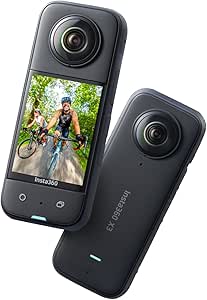 | Best Budget 360 Camera | Video Resolution: 5.7K HDR | Field of View: 170° MaxView | Frame Rates: 4K30fps, 2.7K60fps | VIEW LATEST PRICE | See Our Full Breakdown |
| GoPro HERO13 Black Waterproof Action Camera |  | Best Overall | Video Resolution: 5.3K at 60fps | Photo Resolution: 27MP | Waterproof Depth: 33 ft (10 m) | VIEW LATEST PRICE | See Our Full Breakdown |
| DJI Osmo Action 5 Pro Waterproof Action Camera Bundle |  | Best for Vlogging | Sensor: 1/1.3-inch | Video Resolution: 4K at 120fps | Displays: Dual OLED touchscreens | VIEW LATEST PRICE | See Our Full Breakdown |
| DJI Osmo Action 4 Standard Combo 4K/120fps Waterproof Action Camera |  | Best Value | Sensor: 1/1.3-inch | Video Resolution: 4K at 120fps | Field of View: 155° ultra-wide | VIEW LATEST PRICE | See Our Full Breakdown |
| GoPro MAX Waterproof 360 + Traditional Action Camera |  | Best 360 Camera | Video Resolution: 5.6K30 spherical; 1080p/1440p standard | Photo Resolution: 16.6MP | Shooting Modes: 360, standard, and time lapse | VIEW LATEST PRICE | See Our Full Breakdown |
| AKASO Brave 4 Action Camera 4K 30fps Bundle |  | Best Budget Pick | Video Resolution: 4K at 30fps | Photo Resolution: 20MP | View Angles: 170°, 140°, 110°, 70° | VIEW LATEST PRICE | See Our Full Breakdown |
| DJI Osmo Action 5 Pro Essential Combo |  | Best Overall | Sensor: 1/1.3 inch | Video Resolution: 4K/120fps | Built-in Storage: 47GB | VIEW LATEST PRICE | See Our Full Breakdown |
| Insta360 Ace Pro 2 Dual Battery Bundle |  | Best Premium Image Quality | Sensor: 1/1.3 inch 8K | Lens: Leica Summarit | Video Resolution: 8K30fps, 4K60fps with Active HDR | VIEW LATEST PRICE | See Our Full Breakdown |
| Insta360 X5 Essentials Bundle |  | Best 360 Camera | Video Resolution: 8K30fps, 360 degrees | Sensors: Dual 1/1.28 inch | Waterproof Depth: 49 ft (15 m) | VIEW LATEST PRICE | See Our Full Breakdown |
| AKASO EK7000 Pro 4K Action Camera |  | Best Value Touchscreen Pick | Video Resolution: 4K/30fps, 1080P/60fps | Photo Resolution: 20MP | Waterproof Depth: 131 feet with case | VIEW LATEST PRICE | See Our Full Breakdown |
| AKASO EK7000 4K Action Camera with WiFi |  | Best for Beginners | Video Resolution: 4K30FPS, 2.7K30FPS | Photo Resolution: 20MP | Waterproof Depth: 131 ft with case | VIEW LATEST PRICE | See Our Full Breakdown |
| action camera | Video Resolution | Waterproof Depth | Stabilization |
|---|---|---|---|
| Insta360 X5 Waterproof 8K 360° | 8K30fps | — | FlowState stabilization |
| DJI Osmo 360 Standard Combo | 8K/30fps | — | — |
| DJI Osmo Action 6 8K Waterproo | 8K | 20 meters | — |
| DJI Osmo Action 6 Enhanced Com | 8K | 20 meters | HorizonSteady, RockSteady 3.0 |
| Insta360 X3 360 Action Camera | 5.7K HDR | — | FlowState stabilization |
| GoPro HERO13 Black Waterproof | 5.3K at 60fps | 33 ft (10 m) | Advanced HyperSmooth |
| DJI Osmo Action 5 Pro Waterpro | 4K at 120fps | — | — |
| DJI Osmo Action 4 Standard Com | 4K at 120fps | 18 m without housing | — |
| GoPro MAX Waterproof 360 + Tra | 5.6K30 spherical; 1080p/1440p standard | — | HyperSmooth with horizon lock |
| AKASO Brave 4 Action Camera 4K | 4K at 30fps | 131 ft with case | — |
| DJI Osmo Action 5 Pro Essentia | 4K/120fps | — | 360° HorizonSteady |
| Insta360 Ace Pro 2 Dual Batter | 8K30fps, 4K60fps with Active HDR | 39 ft (12 m) | — |
| Insta360 X5 Essentials Bundle | 8K30fps, 360 degrees | 49 ft (15 m) | — |
| AKASO EK7000 Pro 4K Action Cam | 4K/30fps, 1080P/60fps | 131 feet with case | Electronic image stabilization |
| AKASO EK7000 4K Action Camera | 4K30FPS, 2.7K30FPS | 131 ft with case | Electronic image stabilization |
More Details on Our Top Picks
Insta360 X5 Waterproof 8K 360° Action Camera
The Insta360 X5 earns the top spot because it fixes the two weaknesses that held 360 cameras back: soft detail and dark scenes. Its 8K30fps capture across dual 1/1.28-inch sensors means reframed flat footage still looks sharp, and the triple AI chip design keeps low-light noise under control where the older Insta360 X3 starts to fall apart. Against the DJI Osmo 360, I’d call image quality a near tie, but the X5’s replaceable lenses matter more than they sound — a scratched lens on a 360 camera is usually fatal, and here it’s a cheap fix. The tradeoffs are real: the feature stack has a learning curve, battery drains faster during heavy 8K sessions, and the price sits at the premium end. I see it as the safest recommendation for most buyers.
Pros:- Sharp 8K 360° video that survives reframing with detail intact
- Strong low-light performance and noise reduction from triple AI chips
- FlowState stabilization and horizon lock deliver smooth, level footage
- Replaceable, scratch-resistant lenses extend the camera’s working life
Cons:- Dense feature set demands real time to learn
- Battery life drops off during intensive 8K recording
- Premium pricing puts it out of casual-purchase territory
Best for: Action shooters and vloggers who want the sharpest 360 footage available and the safety net of replaceable lenses
Not ideal for: Casual users on a budget — the premium price and dense feature set are more camera than occasional vacation clips need
- Video Resolution:8K30fps
- Sensors:Dual 1/1.28-inch
- Battery Life:Up to 3 hours
- Lens:Replaceable, scratch-resistant
- Stabilization:FlowState stabilization
- Horizon Lock:Yes
- Processing:Triple AI chip design
- Audio:4-mic array with Wind Guard
Our verdict“The best all-around 360 action camera for buyers who want top image quality and long-term durability in one body.”
DJI Osmo 360 Standard Combo, 360 Action Camera with 8K Video and 120MP Photos
The DJI Osmo 360 matches the Insta360 X5 on headline resolution with 8K/30fps video, but it wins my recommendation for travelers on two practical points: 105GB of built-in storage and a 1.2m invisible selfie stick included in the box. That storage means fewer cards to juggle mid-trip, and the stick disappears from footage for clean third-person shots without extra purchases. Its 1-inch imaging and 120MP photo mode give it a slight edge over the X5 for stills. The downsides deserve attention: app setup can be annoying, since Google Play compatibility issues may send you to DJI’s website to get started, and the body feels bulkier than rivals in a jacket pocket. For vloggers and one-bag travelers shooting 360, it’s the more convenient package.
Pros:- 8K video and 120MP photos with strong 1-inch low-light imaging
- 105GB of built-in storage covers long shooting days without cards
- Invisible 1.2m selfie stick included for versatile angles
- Four-microphone array with OsmoAudio support
Cons:- Google Play compatibility issues can complicate app setup
- Bulkier body than most 360 rivals
- No clear price information available at listing time
Best for: Travel vloggers who want an all-in-one 360 kit with generous built-in storage and no accessory shopping
Not ideal for: Buyers who want the smallest possible camera or rely entirely on the Google Play Store for apps
- Video Resolution:8K/30fps
- Photo Resolution:120MP
- Storage:105GB built-in
- Battery Life:Up to 190 minutes
- Selfie Stick:1.2m, invisible in footage
- Audio:Four microphones with OsmoAudio support
Our verdict“The pick for travelers and vloggers who value built-in storage and a complete kit over the Insta360 X5’s replaceable lenses.”
DJI Osmo Action 6 8K Waterproof Action Camera Bundle with Accessories
If you don’t need 360 reframing, the DJI Osmo Action 6 bundle is where I’d tell most people to start. The 1/1.1-inch square sensor shoots 8K with vivid color, and the square format lets you crop vertical or horizontal from the same clip — a genuine time-saver for anyone posting to multiple platforms. Compared with the Enhanced Combo version of the same camera, this kit trades the variable aperture and extension rod for a 58-piece accessory kit, extra batteries, and a 64GB card, which is simply more useful for a first setup. Stabilization is excellent, and 20m waterproofing without a case beats what many rivals manage. The catches: 50GB of internal storage fills quickly at 8K, and the stack of stabilization modes takes some learning before it feels natural.
Pros:- 8K video with vibrant color from a large square sensor
- 58-piece accessory kit plus 64GB card removes add-on costs
- Waterproof to 20 meters with no housing required
- Extra batteries in the box extend shooting time
Cons:- 50GB of built-in storage runs out fast at 8K
- Multiple stabilization modes create a learning curve
- No variable aperture, so low-light footage lags the Enhanced Combo
Best for: First-time action camera buyers who want everything — mounts, batteries, card — in one purchase
Not ideal for: Low-light specialists, who are better served by the Enhanced Combo’s variable aperture
- Sensor:1/1.1-inch square
- Video Resolution:8K
- Storage:50GB built-in
- Waterproof Depth:20 meters
- Battery:Extra batteries included
- Accessories:58-piece kit plus 64GB microSDXC card
Our verdict“The smartest starting point for most buyers — a full 8K action camera kit without the accessory tax.”
DJI Osmo Action 6 Enhanced Combo 8K Waterproof Action Camera
The Enhanced Combo Osmo Action 6 is the same core camera as the standard bundle, built for shooters who put image quality first. The variable f/2.0–f/4.0 aperture is the difference-maker: wide open, it pulls in more light than the fixed-lens DJI Osmo Action 6 bundle, so evening rides and dim trails keep color instead of turning to mush. Battery life stretches to four hours, roughly double what many rivals manage, and gesture plus voice control means you can start recording with gloves on. Against the Insta360 X5, you give up 360 reframing but gain simpler operation and better straight-out-of-camera clips. The tradeoffs are a premium price that casual users won’t recoup, 50GB of internal storage that still demands cards, and a feature set deep enough to overwhelm beginners.
Pros:- Variable f/2.0–f/4.0 aperture delivers excellent low-light footage
- Up to 4 hours of battery life per charge
- Gesture and voice control for true hands-free shooting
- Waterproof to 20 meters, with dual microphone support
Cons:- Premium pricing is hard to justify for occasional use
- 50GB of internal storage still requires extra cards
- Feature depth can overwhelm newcomers
Best for: Serious sports shooters and vloggers who film in mixed or low light and want hands-free control
Not ideal for: Casual or first-time buyers — the standard Action 6 bundle covers the basics for less money
- Sensor:1/1.1-inch square
- Video Resolution:8K
- Aperture:Variable f/2.0–f/4.0
- Waterproof Depth:20 meters
- Battery Life:Up to 4 hours
- Storage:50GB built-in
- Stabilization:HorizonSteady, RockSteady 3.0
- Accessories:2 batteries, 1.5m extension rod, multifunctional battery case
Our verdict“The right upgrade for experienced shooters who need low-light performance and all-day battery from a traditional action camera.”
Insta360 X3 360 Action Camera with 5.7K Video and 2.29-inch Touchscreen
The Insta360 X3 is the previous generation, and that’s exactly why it’s on this list: it delivers most of the 360 experience for well below the X5’s price. Its 5.7K HDR video still reframes cleanly for social clips, FlowState stabilization keeps bike and ski footage smooth, and the 2.29-inch touchscreen makes framing approachable for newcomers. Compared with the X5, you give up 8K detail, the replaceable lenses, and a chunk of low-light performance — dim scenes get noisy faster here. The DJI Osmo 360 also outresolves it badly on stills, at 120MP versus standard photos. What remains is a capable, waterproof 360 camera that covers the fundamentals well. For anyone curious about 360 shooting without a flagship budget, this is the sensible entry point.
Pros:- Much cheaper than flagship 360 cameras while keeping the core experience
- 5.7K HDR video reframes well for social content
- FlowState stabilization keeps action footage smooth
- Large 2.29-inch touchscreen simplifies framing and playback
Cons:- 5.7K resolution can’t match the X5’s 8K detail after reframing
- Weak low-light performance compared with newer rivals
- Battery life figures aren’t clearly specified
Best for: Budget-conscious beginners who want to try 360 shooting for rides, ski trips, and casual vlogs
Not ideal for: Low-light shooters and detail perfectionists — save up for the X5 instead
- Video Resolution:5.7K HDR
- Field of View:170° MaxView
- Frame Rates:4K30fps, 2.7K60fps
- Screen:2.29-inch touchscreen
- Waterproof:Yes
- Stabilization:FlowState stabilization
- Included:Charge cable, protective pouch, lens cloth, user guide
Our verdict“The affordable way into 360 shooting for beginners who can live without 8K detail and strong low-light performance.”
GoPro HERO13 Black Waterproof Action Camera
If I had to point one camera at the widest range of shooters, it would be the GoPro HERO13 Black. Its 5.3K60 video resolves more detail than the DJI Osmo Action 5 Pro’s 4K ceiling, which matters when you crop or stabilize aggressively in editing, and the 27MP stills give real flexibility for thumbnails and prints. What separates it from the Action 5 Pro is the HB-Series lens system: snap on an anamorphic or ultra-wide mod and the camera detects it automatically. The tradeoff is cost and depth. Lenses are sold separately, so the full setup gets expensive fast, and its 33-foot waterproof rating trails DJI’s 20-meter rating for divers. Compared with the cheaper DJI Osmo Action 4, you’re paying more for resolution and expandability rather than battery life. For most buyers, that exchange makes sense.
Pros:- Sharpest video in this lineup at 5.3K60, with headroom for cropping in post
- HB-Series lens system with automatic detection adds real creative range
- 27MP photos double as genuinely usable stills
- Rugged build with Enduro battery and mounts included
Cons:- 33-foot waterproof depth trails both DJI models without a housing
- Lenses are sold separately, so the full setup gets expensive quickly
- Costs more than the DJI Osmo Action 4 without a clear battery-life advantage
Best for: Outdoor athletes and content creators who want the sharpest footage available and the option to expand later with swappable HB-Series lenses
Not ideal for: Divers and frequent snorkelers — its 33-foot waterproof rating is the weakest of the DJI and GoPro options here without buying a separate housing
- Video Resolution:5.3K at 60fps
- Photo Resolution:27MP
- Waterproof Depth:33 ft (10 m)
- Lens System:HB-Series lenses with auto detection
- Stabilization:Advanced HyperSmooth
- Battery:Enduro battery included
- In the Box:Mounting accessories and USB-C cable
Our verdict“The default choice for most buyers: the sharpest video here with a lens ecosystem that grows with you, as long as your adventures stay within 33 feet of the surface.”
DJI Osmo Action 5 Pro Waterproof Action Camera Bundle
The DJI Osmo Action 5 Pro is the pick I’d hand to anyone who films themselves as often as the trail ahead. Its dual OLED touchscreens are brighter and easier to frame on than the GoPro HERO13 Black’s front display, and 47GB of built-in storage means a forgotten microSD card won’t kill a shoot day. The 1/1.3-inch sensor matches the cheaper Osmo Action 4, so image quality alone doesn’t justify the price gap — what you’re buying is the bigger 1950mAh battery, better screens, voice control, and a 58-piece bundle with two spare batteries and a 64GB card. The tradeoffs: video tops out at 4K where the HERO13 reaches 5.3K, and 47GB fills quickly at 4K/120fps. For talk-to-camera creators, though, no other camera here is as ready to work straight out of the box.
Pros:- Dual OLED touchscreens make selfie framing far easier than rivals
- 47GB of built-in storage rescues a shoot when you forget a card
- Large 1950mAh battery plus two spares and a 64GB card in the box
- 20-meter waterproofing beats the GoPro HERO13 Black without a housing
Cons:- 4K ceiling — no 5.3K-class resolution for heavy cropping
- Built-in 47GB fills fast when recording at 4K/120fps
- Premium bundle pricing sits well above the Osmo Action 4 for the same sensor
Best for: Vloggers and solo creators who film themselves daily and want a complete kit — spare batteries, card, and mounts — in a single purchase
Not ideal for: Resolution-first shooters who crop heavily in post — the GoPro HERO13 Black’s 5.3K footage gives more room to reframe
- Sensor:1/1.3-inch
- Video Resolution:4K at 120fps
- Displays:Dual OLED touchscreens
- Built-in Storage:47GB
- Battery Capacity:1950mAh
- Waterproof Rating:IP68, down to 20 m
- Controls:Touchscreen and voice control
- Included Accessories:58-piece kit, 2 extra batteries, 64GB microSD card
Our verdict“If you vlog as much as you ride, this bundle’s screens, storage, and spare batteries make it the most shoot-ready camera in the group.”
DJI Osmo Action 4 Standard Combo 4K/120fps Waterproof Action Camera
The DJI Osmo Action 4 shares its 1/1.3-inch sensor with the pricier Osmo Action 5 Pro, which is exactly why it’s my value pick: low-light and underwater footage that embarrasses anything near its price, including the AKASO Brave 4. You get 4K/120fps, a 150-minute battery, and an 18-meter waterproof rating that beats the GoPro HERO13 Black’s 33 feet without a housing. What you give up versus the Action 5 Pro is built-in storage, OLED screens, and the newest processing — noticeable conveniences rather than image-quality breakthroughs. The magnetic quick-release mount also makes swapping between helmet, chest, and handlebar faster than GoPro’s finger mounts. Skip it if you want maximum resolution for cropping, because 4K is the ceiling. Otherwise, this is where the price-to-footage ratio peaks in this lineup.
Pros:- Same 1/1.3-inch sensor as the pricier Osmo Action 5 Pro
- 4K/120fps with excellent low-light and underwater performance
- 150-minute battery life suits long days outside
- Magnetic quick-release mounting speeds up setup changes
Cons:- No built-in storage — a microSD card is mandatory
- Older non-OLED screens feel dated next to the Action 5 Pro
- Lacks the newest processing and stabilization refinements of DJI’s latest models
Best for: Budget-conscious adventurers who still demand strong low-light and underwater footage for dusk rides, fishing, or reef dives
Not ideal for: Buyers who want the newest screens and built-in storage — the Osmo Action 5 Pro covers that for more money
- Sensor:1/1.3-inch
- Video Resolution:4K at 120fps
- Field of View:155° ultra-wide
- Battery Capacity:1770 mAh
- Max Recording Time:150 minutes
- Waterproof Depth:18 m without housing
- Temperature Range:Down to -20°C
- Mounting:Magnetic quick-release
Our verdict“Buy this if you want near-flagship footage at a mid-range price and can live without built-in storage and OLED screens.”
GoPro MAX Waterproof 360 + Traditional Action Camera
The GoPro MAX plays a different game from everything else here: it records 5.6K spherical video, so you frame the shot after the fact in the Quik app instead of aiming in the moment. For solo riders and skiers who can’t watch a screen, that workflow is liberating. I’d still weigh it against the Insta360 X5, which shoots sharper 8K 360 footage — the MAX is the older design, and its 16.6MP stills look soft next to the HERO13 Black’s 27MP. Its advantage is flexibility: flip into standard mode and it behaves like a regular GoPro, with HyperSmooth stabilization and horizon lock keeping footage level through rolls. Expect a learning curve, shorter battery life in 360 mode, and heavy reliance on the app. If reframing-first shooting suits your style, nothing else at this price does it better.
Pros:- Shoots 5.6K 360 video so you can reframe after the fact
- Doubles as a standard action camera with HyperSmooth and horizon lock
- Waterproof and rugged without an extra case
- Quik app makes 360 editing approachable for newcomers
Cons:- 16.6MP stills and 5.6K video trail the Insta360 X5’s 8K sharpness
- Battery drains quickly during extended 360 recording
- Steeper learning curve and an app-dependent editing workflow
Best for: Solo skiers, riders, and travelers who can’t aim a camera mid-action and prefer to reframe footage afterward
Not ideal for: Beginners wanting simple point-and-shoot operation, and anyone chasing the sharpest 360 image — the Insta360 X5 records in 8K
- Video Resolution:5.6K30 spherical; 1080p/1440p standard
- Photo Resolution:16.6MP
- Shooting Modes:360, standard, and time lapse
- Stabilization:HyperSmooth with horizon lock
- Waterproof:Yes, without housing
- Editing:GoPro Quik app reframing
- In the Box:Enduro battery, mounts, and cables
Our verdict“Choose the MAX if you’d rather capture everything around you and frame it later than miss the moment trying to aim.”
AKASO Brave 4 Action Camera 4K 30fps Bundle
The AKASO Brave 4 costs a fraction of the DJI Osmo Action 4, and while the gap in polish shows, I’d argue the gap in price shows even more. For casual snorkelers, family beach trips, or a first camera for a teenager, 4K30 video and 20MP stills are genuinely serviceable, and the 131-foot waterproof case goes deeper than any bare GoPro or DJI here. Two batteries in the box and four adjustable view angles add real everyday value. The compromises are honest ones: electronic stabilization can’t match DJI’s RockSteady or GoPro’s HyperSmooth on rough terrain, colors and low-light footage fall well behind the Action 4, and the Wi-Fi taps out at 10 meters. The wristband remote isn’t waterproof either. Buy it to learn the ropes and get wet; upgrade later if footage quality starts to matter more than savings.
Pros:- Lowest price in this roundup with 4K30 video and 20MP stills
- 131-foot waterproof case included for real underwater use
- Two batteries and mounting accessories in the box
- Four adjustable view angles from 170° down to 70°
Cons:- Stabilization and color sit well behind DJI and GoPro
- Wi-Fi range is limited to 10 meters
- Remote wristband isn’t waterproof
Best for: First-time buyers, teens, and vacation snorkelers who want usable 4K footage and deep waterproofing at the lowest price in this roundup
Not ideal for: Mountain bikers and moto vloggers who need top-tier stabilization and color — the DJI Osmo Action 4 is worth the extra spend
- Video Resolution:4K at 30fps
- Photo Resolution:20MP
- View Angles:170°, 140°, 110°, 70°
- Waterproof Depth:131 ft with case
- Battery Life:Up to 90 minutes per battery
- Batteries Included:2
- Screens:2-inch rear, 0.96-inch front
- Wi-Fi Range:10 meters
Our verdict“The right first action camera when budget rules the decision and your adventures stay casual.”
DJI Osmo Action 5 Pro Essential Combo
The DJI Osmo Action 5 Pro makes the strongest case for most buyers because it refuses to be bad at anything. Its 4K/120fps recording doubles as silky slow motion — a spec the AKASO EK7000 Pro’s 4K/30fps ceiling can’t touch — while 360° HorizonSteady stabilization keeps horizon lines level even when the camera rotates mid-trick. Where the Insta360 Ace Pro 2 counters with 8K resolution, DJI answers with better practicality: up to four hours of battery life, 47GB of built-in storage that rescues a shoot when the microSD card fills, and dual OLED touchscreens for framing from either side. The drawbacks are real: no 8K for heavy cropping, the Essential Combo omits a curved adhesive base for helmet mounting, and the price sits firmly in flagship territory. For riders, skiers, and vloggers who value reliability over headline resolution, this option stands out as the safest bet.
Pros:- 4K/120fps enables true slow-motion footage that budget 4K/30 cameras can’t replicate
- Up to four hours of battery life outlasts most rivals on this list
- 47GB of built-in storage acts as a safety net when a memory card fills up
- Dual OLED touchscreens make framing easy from front or back
Cons:- No 8K recording, so heavy cropping in post isn’t an option
- Essential Combo skips the curved adhesive base needed for many helmet mounts
- Flagship pricing puts it well above the AKASO options
Best for: Riders, skiers, and travel vloggers who want one camera that handles fast motion, long days, and rough weather without fuss
Not ideal for: Resolution-first shooters who crop heavily in post — the 8K Insta360 Ace Pro 2 gives them more to work with — and anyone shopping on a strict budget
- Sensor:1/1.3 inch
- Video Resolution:4K/120fps
- Built-in Storage:47GB
- Battery:1950mAh, up to 4 hours
- Waterproof Rating:IP68, 20m underwater
- Displays:Dual OLED touchscreens
- Stabilization:360° HorizonSteady
- Audio:Wireless connectivity with DJI Mic support
Our verdict“For most people buying an action camera today, the DJI Osmo Action 5 Pro is the one I’d point to first.”
Insta360 Ace Pro 2 Dual Battery Bundle
The Insta360 Ace Pro 2 earns its premium spot with an 8K sensor co-engineered with Leica, delivering sharper detail and cleaner low-light footage than the 4K-only DJI Osmo Action 5 Pro. Its dual AI chips handle noise reduction in dim conditions, which translates to usable clips from sunset rides and campfire scenes that cheaper cameras like the AKASO EK7000 Pro would turn to grain. The 2.5-inch flip touchscreen is a genuine win for vloggers who frame themselves, and the bundle’s second battery extends long shooting days. The tradeoffs: waterproofing stops at 39 feet versus the DJI’s 66-foot rating, the deep feature menu carries a learning curve, and 8K files devour storage fast. Buyers torn between this and the Insta360 X5 should know this is a traditional single-lens camera — better raw quality per frame, but no 360-degree reframing after the fact.
Pros:- Leica co-engineered 8K optics produce the sharpest stills and video here
- Dual AI chips keep low-light footage clean where rivals get noisy
- Flip touchscreen simplifies self-framing for vlogging
- Two batteries included in the bundle for all-day shoots
Cons:- Waterproof only to 39 feet, well short of the DJI Osmo Action 5 Pro’s 20m rating
- Advanced feature set takes time for newcomers to learn
- 8K footage consumes storage quickly, adding memory card costs
Best for: Vloggers and image-quality purists who shoot in mixed or low lighting and want the sharpest footage in the category
Not ideal for: Scuba divers and budget shoppers — 39 feet is the ceiling without extra housing, and the price sits far above the AKASO pair
- Sensor:1/1.3 inch 8K
- Lens:Leica Summarit
- Video Resolution:8K30fps, 4K60fps with Active HDR
- Waterproof Depth:39 ft (12 m)
- Display:2.5-inch flip touchscreen
- Field of View:157° MegaView
- Cold Resistance:Operates down to -4°F (-20°C)
- Battery:Two batteries included, USB-C charging
Our verdict“The Ace Pro 2 is the premium choice for creators who rank image quality above waterproof depth and price.”
Insta360 X5 Essentials Bundle
The Insta360 X5 plays a different game than every other camera here: it records 8K 360-degree video, so framing decisions happen after the shoot, not during it. Mount it on the included invisible selfie stick and ski, surf, or ride without aiming — the stick vanishes from footage, and AI editing pulls flat clips from the sphere later. Compared with the DJI Osmo Action 5 Pro, individual frames look softer since similar resolution stretches across a full sphere, but no single-lens camera can match the creative flexibility. The replaceable, scratch-resistant lenses fix the old 360-camera weakness of exposed glass, and 208 minutes of battery with 20-minute fast charging beats most of this list. The costs: a microSD card isn’t included, the reframing workflow demands patience newcomers may not expect, and anyone wanting simple point-and-shoot 4K is better served by the Insta360 Ace Pro 2.
Pros:- 8K 360 capture means shooting first and choosing angles later
- Invisible selfie stick creates impossible-looking third-person shots
- Replaceable lenses solve the durability problem of earlier 360 cameras
- 208-minute battery with 80% charge in 20 minutes
Cons:- MicroSD card sold separately, adding to the real cost
- Reframing 360 footage adds editing time to every clip
- Per-frame sharpness trails single-lens rivals like the Ace Pro 2
Best for: Skiers, motorcyclists, and solo creators who can’t aim a camera mid-action and want drone-like third-person shots of themselves
Not ideal for: Point-and-shoot traditionalists who’d rather skip the editing app — a conventional camera like the DJI Osmo Action 5 Pro is less work
- Video Resolution:8K30fps, 360 degrees
- Sensors:Dual 1/1.28 inch
- Waterproof Depth:49 ft (15 m)
- Battery Life:208 minutes
- Fast Charging:80% in 20 minutes
- Lens:Replaceable, scratch-resistant
- Audio:4-mic array with Wind Guard
- Bundle Contents:Selfie stick, battery, carry case, lens guards
Our verdict“The X5 is the pick for anyone whose best shots happen when they’re too busy to frame them.”
AKASO EK7000 Pro 4K Action Camera
The AKASO EK7000 Pro stands out for giving budget buyers two things the cheaper AKASO EK7000 lacks: a 2-inch touch screen and 1080p at 60fps. That touchscreen matters more than it sounds — framing a shot on the beach without fumbling through button menus is the difference between getting the clip and missing it. Video tops out at 4K/30fps, which looks fine in daylight but can’t match the 4K/120fps slow motion of the DJI Osmo Action 5 Pro, and its electronic stabilization is visibly weaker once you start running or riding. The included two 1350mAh batteries soften that blow by stretching a full day of shooting. Compared with the Insta360 Ace Pro 2, low-light footage is grainier and audio thinner, but at a fraction of the price, that tradeoff is one most casual adventurers can live with.
Pros:- Touch screen at a price where rivals still rely on buttons
- Waterproof to 131 feet with the included case
- Two 1350mAh batteries extend shooting time
- Solid 4K/30fps video and 20MP photos in good light
Cons:- Electronic stabilization struggles with fast, bumpy motion
- 4K capped at 30fps, so no slow motion at top resolution
- Low-light video turns grainy compared with premium rivals
Best for: Casual adventurers and vacation snorkelers who want a touch screen without paying DJI or Insta360 prices
Not ideal for: Action sports shooters who need rock-steady stabilization or slow-motion 4K — the DJI Osmo Action 5 Pro serves them far better
- Video Resolution:4K/30fps, 1080P/60fps
- Photo Resolution:20MP
- Waterproof Depth:131 feet with case
- Screen:2-inch IPS touch screen
- Battery:2 x 1350mAh, up to 140 minutes each
- Stabilization:Electronic image stabilization
Our verdict“The EK7000 Pro is the pick for buyers who want a modern touchscreen experience on a strict budget and can accept mid-tier stabilization.”
AKASO EK7000 4K Action Camera with WiFi
The AKASO EK7000 is the cheapest way into this roundup, and it knows its job: give first-time buyers 4K/30fps video, 20MP stills, and a waterproof case rated to 131 feet without a scary price tag. The wireless wrist remote is genuinely handy for starting recordings while the camera sits on a helmet or surfboard, though the remote itself isn’t waterproof — an odd gap for a camera pitched at water sports. Against its sibling, the AKASO EK7000 Pro, this model loses the touch screen and 1080p/60fps, so menu hopping relies entirely on buttons. Stacked against the DJI Osmo Action 5 Pro, stabilization and low-light performance sit clearly a tier below. Buyers also need to budget for a microSD card, which isn’t included. For kids, gifts, and low-stakes vacations where a lost or broken camera wouldn’t sting, it fills the entry-level slot well.
Pros:- Lowest entry price in the roundup for genuine 4K video
- Waterproof case rated to 131 feet included in the box
- Wireless wrist remote starts and stops recording from a distance
- Built-in Wi-Fi for quick transfers and sharing
Cons:- No touch screen — settings require button-driven menu hopping
- Remote control isn’t waterproof despite the water-sports positioning
- MicroSD card not included, adding to the true cost
Best for: First-time buyers, teens, and gift-givers who want real 4K and full waterproofing for the price of a nice dinner
Not ideal for: Anyone planning to shoot fast action or low light regularly — stepping up to the EK7000 Pro or DJI Osmo Action 5 Pro pays off quickly
- Video Resolution:4K30FPS, 2.7K30FPS
- Photo Resolution:20MP
- Waterproof Depth:131 ft with case
- Remote Control:Wireless wrist remote (not waterproof)
- Wi-Fi:Yes, up to 10 meters
- Stabilization:Electronic image stabilization
- MicroSD Card:Not included
Our verdict“The EK7000 is the sensible starter camera for cautious budgets, as long as expectations match the price.”
How We Picked
I ranked these 15 cameras on the factors that decide whether footage actually looks good when you get home: video quality (resolution, frame rates, sensor size, and low-light performance), stabilization, battery life, ruggedness and waterproof depth, and the editing workflow each app pushes you into. Price mattered, but only relative to what the money buys — a $450 camera that replaces a $300 camera plus accessories ranks higher than the sticker suggests. For 360 models, I weighed reframing flexibility and stitching quality the same way traditional cameras get weighed on sharpness.
The ranking logic is simple: image quality and stabilization carry the most weight, because no accessory fixes soft or shaky footage. Usability came next — dual touchscreens, voice control, and reliable apps separate cameras you grab daily from ones that live in a drawer. Value acted as the tiebreaker, which is why the GoPro HERO13 Black leads on ecosystem strength while the DJI Osmo Action 4 punches above its price, and why the cheapest AKASO models sit near the bottom despite respectable spec sheets.
Factors to Consider When Choosing Best Action Cameras
Spec sheets make every action camera look identical: 4K, waterproof, stabilized. The differences that actually shape your footage sit elsewhere — in sensor size, heat management, app quality, and the ecosystem you buy into. These are the factors I’d weigh before spending anything, including the mistakes buyers in this category make most often.
Decide Between Traditional and 360 First
The biggest fork in this category has nothing to do with specs: traditional action cameras record what you point at, while 360 cameras record everything and let you choose the framing afterward. That difference changes how you shoot. A skier or moto vlogger who can’t aim a lens mid-run gets real value from a 360 model like the Insta360 X5 or DJI Osmo 360, since the framing happens later in the app. A surfer or mountain biker who just wants a chest-mount POV will get sharper, ready-to-share clips from a single-lens camera with none of the editing overhead. The mistake I see buyers make most often is paying the 360 premium for the resolution number, then never touching the reframing tools that justify it. 360 footage also costs you in storage, battery, and per-frame detail, because those 8K pixels wrap around a full sphere instead of filling one frame. If you already know you want simple point-and-shoot clips, a traditional camera is the better buy at every price.
Sensor Size Beats Resolution in Real Light
Resolution is the number on the box, but sensor size decides how footage looks at dusk, in the woods, or underwater. The 1/1.1-inch sensor in the DJI Osmo Action 6 and the 1/1.3-inch sensors in the Action 5 Pro and Insta360 Ace Pro 2 pull in more light per pixel than the smaller sensors in older models, and the gap shows up as cleaner shadows and less smeared motion. Meanwhile, 8K on a 360 camera sounds dramatic but works out to roughly 4K of detail per extracted frame, since those pixels cover a full sphere. For a traditional camera, 4K at 60 or 120fps is the sweet spot — the higher frame rate buys you smooth slow motion, which flatters action footage far more than extra pixels. The common trap is paying for 8K you can’t edit: files balloon in size, and an aging laptop will choke on them. Buy for the light you actually shoot in, not the resolution printed on the sticker.
Stabilization Is the Spec You Can’t Fix Later
Every flagship here ships with excellent electronic stabilization — GoPro’s HyperSmooth, DJI’s RockSteady, and Insta360’s FlowState all deliver gimbal-like results in good light. The real separation happens at the budget end, where cheap electronic stabilization crops the frame hard and falls apart after sunset. That matters because stabilization is the one weakness no accessory or editing trick can fully repair; shaky footage stays shaky. If you plan to mount the camera on a chest harness, handlebars, or a helmet — the mounts that make action cameras worth owning — treat stabilization quality as a make-or-break criterion rather than a nice extra. Horizon lock is the related feature worth checking: the best versions keep the horizon level through full 360-degree rotation, which saves ski and bike footage that would otherwise look seasick. Budget models from AKASO include a stabilization mode, but expect a visible crop and softer edges when it’s active.
Battery Life, Heat, and Storage Shape Your Day
Action cameras live hard lives in cold water and direct sun, and both extremes punish batteries. Real-world recording time usually runs 30 to 40 percent below the lab rating, and high frame rates or 8K recording shorten it further while generating heat that can force a shutdown mid-clip. This is where the DJI Osmo Action 5 Pro’s long endurance and 47GB of built-in storage stop being spec-sheet trivia and start being the difference between getting the shot and watching a dead screen. Swappable batteries matter more than any single capacity number — a pocket of spares beats one big cell every time. Budget cameras compound the problem with smaller cells and slower charging, though their bundles usually include a spare. My rule of thumb: if your typical day involves hours of intermittent recording, weight battery life and heat management as heavily as image quality.
The Ecosystem Tax: Mounts, Mods, and Subscriptions
The camera body is only the down payment. GoPro’s decade-deep mount ecosystem and HERO13 lens mods mean you can attach the camera to almost anything and adapt it to macro, ultra-wide, or anamorphic looks — a genuine reason to pay the GoPro premium if you’ll use it. DJI’s magnetic quick-release system is faster to swap but younger, so third-party support is thinner. Budget brands like AKASO flip the equation by bundling mounts, cases, and spare batteries in the box, which narrows the real price gap more than sticker prices suggest; the catch is that bundled mounts flex and slip more than name-brand hardware. Software carries its own cost: GoPro’s best cloud features sit behind a subscription, while Insta360 and DJI lean on free apps with aggressive in-app upsells. Price the whole kit you actually need — camera, two batteries, and the mounts for your sport — before comparing any two cameras on body price alone.
Frequently Asked Questions
Is a 360 camera better than a regular action camera?
Neither is better outright — they solve different problems. A 360 camera like the Insta360 X5 or DJI Osmo 360 records everything around you, so you never miss a shot because the lens was aimed wrong; you pick the angle later in the app. That freedom costs you per-frame sharpness, battery life, and editing time, since every clip passes through a reframing step. A traditional camera like the GoPro HERO13 Black or DJI Osmo Action 5 Pro produces sharper single frames that are ready to share straight away. My advice: solo creators, skiers, and moto riders who can’t aim a lens mid-action benefit most from 360, while anyone who wants simple POV clips should stick with a traditional body and pocket the savings.
Should I buy a GoPro or a DJI action camera in 2026?
Both brands now make excellent hardware, so the honest answer depends on what you already own and how you shoot. GoPro’s case rests on ecosystem depth: the HERO13 Black works with a decade of mounts plus swappable lens mods, and its subscription adds cloud backup and damage coverage some users find worthwhile. DJI counters with better battery life, brighter dual touchscreens, and lower prices across the Osmo Action 4, 5 Pro, and 6 — and the Action 6’s larger sensor gives it a low-light edge. Stabilization is effectively a tie at the top. If you’re starting from zero and money matters, DJI gives you more camera per dollar; if you’re invested in GoPro mounts or want the lens-mod system, the HERO13 Black justifies its price.
Are cheap action cameras like AKASO actually good enough?
For the right buyer, yes — and for the wrong buyer, they’re a false economy. Models like the AKASO Brave 4 and EK7000 Pro record genuine 4K and include bundles of mounts, cases, and spare batteries that would cost over $100 extra from GoPro or DJI. The compromises hide in stabilization, which crops heavily and struggles in dim light, and in companion apps that owners consistently find clunky and unreliable. For a kid’s first camera, a snorkeling trip, or a setup where you’d shrug if it broke, they’re a sensible buy. If you plan to shoot fast action in mixed light or use the footage anywhere it matters, the $200-300 tier — led by the DJI Osmo Action 4 — pays for itself in footage you’d actually keep.
Do I need 8K video on an action camera?
Probably not, unless you’re buying a 360 camera. On 360 models like the Insta360 X5, the extra pixels genuinely matter because reframing crops into the footage — 8K across the full sphere yields roughly 4K of detail in your final frame. On a traditional single-lens camera, 8K buys you cropping headroom few people use, while costing you in file size, battery drain, and editing strain; 4K at 60 or 120fps is the more useful spec for action footage. There’s also the storage bill: 8K clips chew through microSD cards at a punishing rate. Put the money toward a better sensor, longer battery life, or spare batteries instead — all three improve far more of your footage than resolution past 4K ever will.
How much should I spend on an action camera?
The market splits into four honest tiers. Under $100 gets you a working camera — the AKASO range — with real 4K but budget stabilization and apps. The $200-300 band is the value sweet spot, where last-generation flagships like the DJI Osmo Action 4 and Insta360 X3 deliver around 90 percent of the current models’ performance. Spend $350-500 and you reach the current flagships: GoPro HERO13 Black, DJI Osmo Action 5 Pro or 6, and the Insta360 Ace Pro 2, where you’re paying for larger sensors, better battery life, and stronger stabilization. Above $450 sits 360 territory with the Insta360 X5 and DJI Osmo 360, worth it only if you’ll use the reframe-later workflow. The pattern most buyers miss: a discounted last-gen flagship almost always beats a brand-new budget camera.
Conclusion
If I had to hand out one recommendation per buyer type, it would look like this. Best overall: the GoPro HERO13 Black — its stabilization, lens mods, and mount ecosystem make it the camera that adapts to the most situations, even where rivals beat it on individual specs. Best value: the DJI Osmo Action 4, which delivers near-flagship footage at a mid-range price now that it’s a generation old. Best premium: the DJI Osmo Action 6, whose 1/1.1-inch sensor produces the cleanest low-light footage in this lineup. Best for beginners: the Insta360 X3 — discounted, forgiving to shoot with, and its AI editing does the hard part for you. And for specific needs: the Insta360 X5 if you want 360 reframing, the DJI Osmo Action 5 Pro if battery life tops your list, and the AKASO Brave 4 if you’re buying for a kid or a trip where loss is likely. Pick the row that matches how you actually shoot, not the spec sheet that impresses you most — that’s the whole decision.
Labor Day sales Picks
labor day deals
As an affiliate, we earn on qualifying purchases.