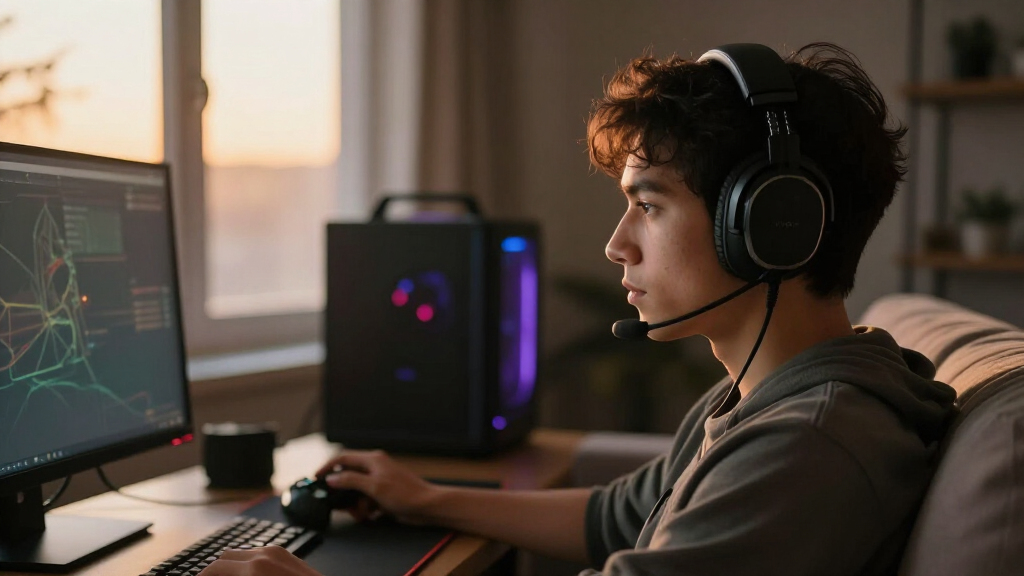

Surround sound in a gaming headset means hearing footsteps behind you, pinpointing gunfire direction, and losing a little less often — but not every headset that claims 7.1 surround actually delivers it well. After comparing 15 leading options across positional accuracy, microphone quality, comfort, and platform flexibility, the HyperX Cloud III stands out as the best overall pick for its convincing spatial audio and comfortable long-session build. The Logitech G PRO X makes more sense for competitive players who want tournament-grade voice clarity, while the BENGOO G9000 is the value play if you want surround-style audio without spending much. The main tradeoffs you will face here are wired versus wireless, true hardware surround versus software-emulated 7.1, and premium microphone quality versus budget pricing. Keep reading for the full breakdown of which headset fits your platform, budget, and gaming style.

Get games and gaming gear delivered free — and shop member deals
- Fast, free delivery on millions of items
- Access to Prime Big Deal Days deals on October 6–7
- Prime Video, Amazon Music and more included
Complete the kit


Key Takeaways
- The HyperX Cloud III earned the top spot because its spatial audio works convincingly across both USB and analog connections, while most rivals lock surround processing to a single connection type.
- Several budget models advertise 7.1 surround that is software-emulated rather than true positional processing — acceptable for casual play, but competitive shooters expose the difference quickly.
- Wireless options like the Turtle Beach Stealth 600 and the 100-hour battery generic model trade a slight latency and fidelity edge for freedom of movement, which suits couch and console players more than desk-based competitors.
- Two versions of the HyperX Cloud III (Black and Black/Red) made the list because color is the only difference — buyers should just pick whichever is cheaper at purchase time.
- Microphone quality varied more than audio quality in this lineup: the Logitech G PRO X and HyperX models pull far ahead of sub-$50 options, which matters if you play team-based games regularly.
| Ozeino Gaming Headset for PC, PS4, PS5, Xbox with 7.1 Surround Sound and Noise Canceling Mic |  | Best Budget RGB Pick | Compatibility: PC, PS4, PS5, Xbox One, Xbox Series X/S, Switch, Mobile | Sound Technology: 7.1 Surround Sound | Microphone: Noise-canceling, 360° rotatable | VIEW LATEST PRICE | See Our Full Breakdown |
| BENGOO G9000 Stereo Gaming Headset for PS4, PC, Xbox One, PS5, and More | 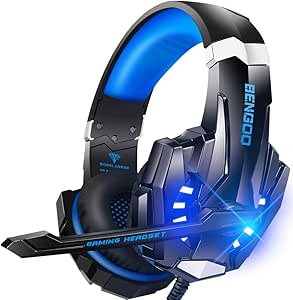 | Best Value All-Rounder | Compatibility: PS4, PS5, Xbox, Xbox Series X|S, Xbox One, PC, Nintendo 3DS, Laptop, PSP, Tablet, iPad, Mobile Phone | Sound: 7.1 Surround Sound, 40mm magnetic neodymium driver | Microphone: Omni-directional, noise-isolating | VIEW LATEST PRICE | See Our Full Breakdown |
| Logitech G PRO X Wired Gaming Headset – Black | 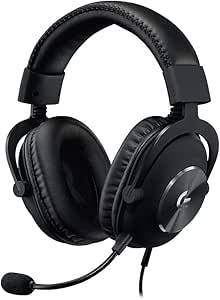 | Best Premium for Competitive Play | Microphone: Detachable pro-grade with Blue Voice technology | Sound Technology: Next-gen 7.1 surround sound, object-based surround | Drivers: 50mm PRO-G | VIEW LATEST PRICE | See Our Full Breakdown |
| Logitech G432 Wired Gaming Headset – Black |  | Best Mid-Range Surround | Audio Drivers: 50mm | Surround Sound: DTS Headphone:X 2.0 | Microphone: 6mm boom mic | VIEW LATEST PRICE | See Our Full Breakdown |
| HyperX Cloud III Wired Gaming Headset for PC, PS5, Xbox Series X|S, with Angled 53mm Drivers, Spatial Audio, Memory Foam, Durable Frame, Ultra-Clear 10mm Mic, USB-C, USB-A, 3.5mm – Black |  | Best Overall | Driver Size: 53mm angled | Microphone: Detachable, 10mm, noise-cancelling | Connectivity: USB-C, USB-A, 3.5mm | VIEW LATEST PRICE | See Our Full Breakdown |
| Turtle Beach Stealth 600 Wireless Gaming Headset for Xbox, PS5, PC, Mobile |  | Best for Long Sessions | Connectivity: 2.4GHz wireless and Bluetooth 5.2 | Drivers: 50mm Nanoclear | Battery life: Up to 80 hours | VIEW LATEST PRICE | See Our Full Breakdown |
| Ozeino Wireless Gaming Headset for PS5, PC, Switch, Lossless Audio, 40H Battery |  | Best for Multi-Device Value | Connection: 2.4GHz USB and Bluetooth | Drivers: 50mm | Battery life: Up to 40 hours | VIEW LATEST PRICE | See Our Full Breakdown |
| Corsair HS65 Surround Wired 3.5mm Gaming Headset – Black |  | Best for Platform Spatial Audio | Connectivity: Wired 3.5mm | Audio drivers: 50mm neodymium | Weight: 282g | VIEW LATEST PRICE | See Our Full Breakdown |
| 2.4GHz Wireless Gaming Headset for PS5/PS4/Switch with 7.1 Surround Sound, RGB Lighting, Noise Cancelling, 40mm Drivers, Bluetooth 5.4, 45H Playtime |  | Best for Connection Variety | Connection methods: 2.4GHz, USB, Bluetooth, and 3.5mm wired | Drivers: 40mm dynamic | Battery life: 35–40 hours | VIEW LATEST PRICE | See Our Full Breakdown |
| Razer BlackShark V2 X Gaming Headset with 7.1 Surround Sound and 50mm Drivers |  | Best Lightweight Wired Pick | Sound technology: 7.1 surround sound | Drivers: 50mm | Connectivity: 3.5mm | VIEW LATEST PRICE | See Our Full Breakdown |
| HyperX Cloud III Wired Gaming Headset |  | Best Overall | Drivers: 53mm angled | Microphone: 10mm noise-cancelling with mesh filter | Connectivity: USB-C, USB-A, 3.5mm | VIEW LATEST PRICE | See Our Full Breakdown |
| FIFINE H9 Wired Gaming Headset |  | Best Value | Drivers: 50mm | Surround Sound: 7.1 | Connectivity: Wired (USB and 3.5mm) | VIEW LATEST PRICE | See Our Full Breakdown |
| Wireless Gaming Headset with 7.1 Surround Sound and 100-Hour Battery |  | Best Battery Life | Surround Sound: 7.1 | Battery Life: 45-100 hours | Recharge Time: 2-3 hours | VIEW LATEST PRICE | See Our Full Breakdown |
| Razer Kraken V3 X Wired USB Gaming Headset |  | Best for PC Gamers | Weight: 285g | Drivers: 40mm TRIFORCE | Surround Sound: 7.1 on Windows 10 | VIEW LATEST PRICE | See Our Full Breakdown |
| HyperX Cloud II Gaming Headset |  | Best Classic 7.1 Pick | Drivers: 53mm | Surround Sound: 7.1 Virtual | Frequency Response: 15Hz-25kHz | VIEW LATEST PRICE | See Our Full Breakdown |
| gaming headsets with surround sound | Microphone | Compatibility | Drivers |
|---|---|---|---|
| Ozeino Gaming Headset for PC | Noise-canceling, 360° rotatable | PC, PS4, PS5, Xbox One, Xbox Series X/S, Switch, Mobile | — |
| BENGOO G9000 Stereo Gaming Hea | Omni-directional, noise-isolating | PS4, PS5, Xbox, Xbox Series X|S, Xbox One, PC, Nintendo 3DS, Laptop, PSP, Tablet, iPad, Mobile Phone | — |
| Logitech G PRO X Wired Gaming | Detachable pro-grade with Blue Voice technology | — | 50mm PRO-G |
| Logitech G432 Wired Gaming Hea | 6mm boom mic | PC, Mac, PlayStation 4/5, Nintendo Switch, mobile devices | — |
| HyperX Cloud III Wired Gaming | Detachable, 10mm, noise-cancelling | PC, PS5, Xbox Series X|S, Xbox One, Nintendo Switch, Mac, Mobile | — |
| Turtle Beach Stealth 600 Wirel | Flip-to-mute with AI noise reduction | — | 50mm Nanoclear |
| Ozeino Wireless Gaming Headset | — | PS5, PS4, PC, Mac, Switch, and laptop | 50mm |
| Corsair HS65 Surround Wired 3. | Flip-to-mute | — | — |
| 2.4GHz Wireless Gaming Headset | Noise-cancelling | PS5, PS4, Switch, Xbox One, PC, Mac, and mobile devices | 40mm dynamic |
| Razer BlackShark V2 X Gaming H | HyperClear cardioid | PC, Mac, PS4, Xbox One, and Switch | 50mm |
| HyperX Cloud III Wired Gaming | 10mm noise-cancelling with mesh filter | PC, PS5, Xbox Series X|S, Xbox One, Switch, Mac, Mobile | 53mm angled |
| FIFINE H9 Wired Gaming Headset | Detachable, -42dB sensitivity | — | 50mm |
| Wireless Gaming Headset with 7 | Retractable omnidirectional noise-canceling | PS5, PS4, PC, Mac, Switch, Mobile | — |
| Razer Kraken V3 X Wired USB Ga | Hyperclear cardioid | Wired USB-A, Windows PCs | 40mm TRIFORCE |
| HyperX Cloud II Gaming Headset | Detachable, noise-cancelling | PC, Mac, PS4, Xbox One, Switch, Mobile | 53mm |
More Details on Our Top Picks
Ozeino Gaming Headset for PC, PS4, PS5, Xbox with 7.1 Surround Sound and Noise Canceling Mic
For shoppers who want the full gaming aesthetic without spending much, this Ozeino headset covers the basics: 7.1 surround sound, a noise-canceling boom mic, and RGB earcup lighting. Compared with the BENGOO G9000, it trades away the braided cable and rotary volume dial in exchange for a longer three-year warranty, which suggests the manufacturer stands behind the build. The surround sound stage is serviceable for casual shooters and RPGs, though it lacks the positional precision of the Logitech G PRO X. Comfort holds up thanks to breathable over-ear pads, but the 1.55-meter cable is on the short side for living-room console setups. Note that PC users will need a splitter cable, and the USB plug only powers the LEDs — it doesn’t carry audio.
Pros:- 7.1 surround sound at a budget-friendly price point
- Broad compatibility from PC and consoles to Switch and mobile
- Breathable over-ear pads suitable for longer sessions
- Three-year warranty offers peace of mind for a budget buy
Cons:- Short 1.55m cable limits living-room console setups
- Requires a splitter cable for PC and adapters for some devices
- Microphone sensitivity can be inconsistent
Best for: Budget-conscious casual gamers who want surround sound and RGB flair across multiple platforms
Not ideal for: Competitive players who need precise positional audio — the surround imaging here is entry-level compared to the Logitech G PRO X
- Compatibility:PC, PS4, PS5, Xbox One, Xbox Series X/S, Switch, Mobile
- Sound Technology:7.1 Surround Sound
- Microphone:Noise-canceling, 360° rotatable
- Lighting:RGB LED lights (USB powered)
- Cable Length:1.55 meters
- Warranty:3 years
Our verdict“A sensible entry point for gamers who prioritize looks and multi-platform support over audio refinement.”
BENGOO G9000 Stereo Gaming Headset for PS4, PC, Xbox One, PS5, and More
The BENGOO G9000 has become a default budget recommendation for good reason: it bundles 7.1 surround sound, memory foam cushions, a braided cable, and onboard volume plus mute controls into one inexpensive package. Against the Ozeino, its dial-based volume control and braided USB cable make it feel more durable day to day, and its compatibility list stretches all the way to tablets and handhelds. The 40mm neodymium drivers deliver punchy, fun sound rather than analytical precision — fine for single-player campaigns, less ideal if you’re counting footsteps against opponents in the Logitech G PRO X’s league. The mic is flexible and noise-isolating, but it isn’t retractable, and the LED lighting is always-on with no toggle.
Pros:- Works with nearly every platform including consoles, PC, tablets, and phones
- Braided cable and rotary volume control feel premium for the price
- Memory foam ear cushions and adjustable headband suit long sessions
- Convenient inline mute button and volume dial
Cons:- Extra Microsoft Adapter required for older Xbox controllers (not included)
- LED earcup lights cannot be switched off
- Microphone is flexible but not retractable
Best for: First-time headset buyers and multi-device households wanting one headset for everything
Not ideal for: Older Xbox controller owners — the required Microsoft adapter isn’t included, adding hidden cost
- Compatibility:PS4, PS5, Xbox, Xbox Series X|S, Xbox One, PC, Nintendo 3DS, Laptop, PSP, Tablet, iPad, Mobile Phone
- Sound:7.1 Surround Sound, 40mm magnetic neodymium driver
- Microphone:Omni-directional, noise-isolating
- Cable:Braided USB, 49 inches
- Controls:Rotary volume control, microphone mute button
- Lighting:LED lights on earcups
- Padding:Memory foam ear cushions, skin-friendly leather
- Design:Multi-point headbeam, adjustable mic
Our verdict“The safest cheap pick if you want broad compatibility and convenience controls in one box.”
Logitech G PRO X Wired Gaming Headset – Black
This is the communication-focused flagship of the budget-heavy lineup. What separates the G PRO X from the HyperX Cloud III and Razer options is the detachable pro-grade mic with Blue Voice technology, which filters noise and shapes your voice in real time — a genuine advantage if you play on a team or stream. The 50mm PRO-G drivers paired with object-based 7.1 surround deliver the most accurate positional cues in this batch, and both leatherette and velour ear pads come included so you can tune comfort. The tradeoff is complexity: it relies on the external USB sound card and G HUB software to unlock its full feature set, so plug-and-play console gamers get less benefit. The steel-and-aluminum build and carrying bag round out the tournament-ready package.
Pros:- Blue Voice mic technology delivers pro-grade voice clarity
- 50mm PRO-G drivers with accurate positional imaging for competitive play
- Includes both leatherette and velour memory foam ear pads
- Durable steel and aluminum build with a carrying bag
Cons:- Requires the external USB sound card and software setup for full functionality
- Wired-only design limits mobility
- Setup process is more involved than plug-and-play rivals
Best for: Competitive and esports-minded players, plus streamers who need broadcast-quality voice chat
Not ideal for: Console-first players who want zero setup — the surround and mic features depend on the USB sound card and PC software
- Microphone:Detachable pro-grade with Blue Voice technology
- Sound Technology:Next-gen 7.1 surround sound, object-based surround
- Drivers:50mm PRO-G
- Ear Pads:Memory foam with leatherette or velour options
- Impedance:35 Ohm
- Connectivity:Wired, includes USB external sound card
- Additional Features:Onboard EQ profiles, steel and aluminum construction, mobile cable with inline mic, carrying bag
- Warranty:2-year limited hardware
Our verdict“The pick for players who treat clear comms and precise audio as competitive tools, not extras.”
Logitech G432 Wired Gaming Headset – Black
The G432 sits in the awkward middle between budget headsets like the BENGOO G9000 and premium models like the G PRO X, and it earns its spot with DTS Headphone:X 2.0 surround — a more sophisticated spatial engine than the generic 7.1 processing on cheaper rivals. For competitive gaming, that translates to clearer directional cues at a mid-range price. The 50mm drivers and lightweight leatherette cups with 90-degree rotation keep it comfortable, and its compatibility spans PC, Mac, PlayStation, Switch, and mobile. The catch: DTS only activates through the Logitech G HUB software on a computer, so console players are essentially buying a stereo headset with nice hardware. If your gaming happens mainly on a PlayStation or Xbox, the HyperX Cloud III’s plug-and-play flexibility makes more sense.
Pros:- DTS Headphone:X 2.0 provides genuinely competitive positional audio
- Lightweight design with rotating, adjustable ear cups
- 50mm drivers deliver fuller sound than budget rivals
- Broad compatibility across PC, Mac, PlayStation, Switch, and mobile
Cons:- Surround sound only available via G HUB software on PC
- Wired connection limits mobility
- Audio quality varies noticeably depending on platform and software
Best for: PC and Mac gamers who want serious DTS spatial audio without flagship pricing
Not ideal for: Console-only players — the headline surround feature requires Logitech G HUB on a computer and won’t work on PlayStation or Switch
- Audio Drivers:50mm
- Surround Sound:DTS Headphone:X 2.0
- Microphone:6mm boom mic
- Compatibility:PC, Mac, PlayStation 4/5, Nintendo Switch, mobile devices
- Material:Leatherette
- Ear Cup Rotation:90 degrees
Our verdict“A smart middle-ground buy for PC gamers who want DTS spatial audio, provided their gaming actually happens at a desk.”
HyperX Cloud III Wired Gaming Headset for PC, PS5, Xbox Series X|S, with Angled 53mm Drivers, Spatial Audio, Memory Foam, Durable Frame, Ultra-Clear 10mm Mic, USB-C, USB-A, 3.5mm – Black
The Cloud III is the most balanced headset in this roundup, and that’s why it leads the list. Its angled 53mm drivers — the largest here — produce a wide, immersive soundstage that handles explosions and footsteps with equal confidence, and unlike the Logitech G432, its spatial audio works without wrestling with platform-specific software. The triple-connector approach (USB-C, USB-A, and 3.5mm) means one headset genuinely covers PC, PS5, Xbox, Switch, and mobile, putting it ahead of the G PRO X for console gamers who shouldn’t need a manual. Add the detachable 10mm noise-cancelling mic, plush memory foam, and an aluminum frame built for travel, and the tradeoffs shrink to two: it’s wired, and the cups run a bit large for small heads. For most buyers, that’s an easy compromise.
Pros:- Angled 53mm drivers deliver the widest and most immersive soundstage in this batch
- USB-C, USB-A, and 3.5mm connectivity covers every modern platform
- Aluminum frame and plush memory foam balance durability with long-session comfort
- Detachable 10mm noise-cancelling mic rivals pricier rivals’ clarity
Cons:- Wired connection limits mobility during gameplay
- Bulky ear cups may overwhelm users with smaller heads
Best for: Multi-platform gamers who want one durable, great-sounding headset that works everywhere with no software fuss
Not ideal for: Anyone determined to cut the cord — this is wired-only, unlike the Turtle Beach Stealth 600 elsewhere in this guide
- Driver Size:53mm angled
- Microphone:Detachable, 10mm, noise-cancelling
- Connectivity:USB-C, USB-A, 3.5mm
- Compatibility:PC, PS5, Xbox Series X|S, Xbox One, Nintendo Switch, Mac, Mobile
- Frame Material:Aluminum
- Headphone Type:Wired
- Warranty:2 years
Our verdict“If you want a single headset that sounds great, travels well, and works on everything you own, this is the one to buy.”
Turtle Beach Stealth 600 Wireless Gaming Headset for Xbox, PS5, PC, Mobile
The Stealth 600 is my pick for players who want wireless surround-style immersion across long sessions without frequent charging. Its 50mm drivers, customizable EQ, and Superhuman Hearing give you ways to tune game cues, while the 80-hour battery and Bluetooth switching make it more flexible than the wired Corsair HS65 Surround. That flexibility comes with more setup: deeper audio and mic adjustments run through the Swarm II app, so it suits players willing to tune settings. Its glasses-friendly fit also favors marathon play. Skip it if you want a simple plug-in headset or depend on a specific surround format; the supplied details describe customizable audio, not a named virtual surround standard.
Pros:- 80-hour battery supports long stretches between charges
- 2.4GHz wireless and Bluetooth switching suit gaming and mobile use
- Swarm II offers customizable audio and microphone settings
- Adjustable glasses-friendly design supports extended wear
Cons:- Advanced customization adds setup complexity and depends on the app
- The provided specs do not identify a specific virtual surround format
Best for: Wireless console and PC players who game for long stretches and want Bluetooth plus detailed EQ controls.
Not ideal for: Buyers who want straightforward plug-and-play surround audio or do not want to use a companion app for advanced settings.
- Connectivity:2.4GHz wireless and Bluetooth 5.2
- Drivers:50mm Nanoclear
- Battery life:Up to 80 hours
- Microphone:Flip-to-mute with AI noise reduction
- Design:Lay-flat, adjustable, glasses-friendly
- App:Swarm II desktop and mobile app
- Audio features:Superhuman Hearing and multiple EQ presets
Our verdict“Choose the Stealth 600 if battery life and wireless flexibility matter more than simple setup or a clearly specified surround format.”
Ozeino Wireless Gaming Headset for PS5, PC, Switch, Lossless Audio, 40H Battery
The Ozeino is a practical choice for players who want wireless game audio on several systems and a wired fallback. Its 2.4GHz USB connection is intended for low-latency play, while Bluetooth and a 3.5mm wired mode add options the wired Razer BlackShark V2 X does not offer. The tradeoff is that its Bluetooth support has meaningful limits: the supplied details say it does not work directly with Mac, PS5, PS4, or PC without an adapter, and it is not compatible with every Xbox console. Its 40-hour battery is shorter than the Turtle Beach Stealth 600, and the product data does not name a surround format. I would choose it for connection flexibility, not when explicit surround features are the priority.
Pros:- 2.4GHz USB connection is suited to low-latency gameplay
- Bluetooth and 3.5mm wired modes add connection flexibility
- 50mm drivers are specified for game audio
- Up to 40-hour battery life limits charging interruptions
Cons:- Bluetooth requires an adapter for direct use with several listed platforms
- Not compatible with all Xbox consoles
- The supplied product data does not specify a surround sound format
Best for: PS5, PC, and Switch players who want a low-latency USB connection, with Bluetooth and wired options for other uses.
Not ideal for: Buyers who need direct Bluetooth support across their listed devices, broad Xbox compatibility, or a specified surround audio mode.
- Connection:2.4GHz USB and Bluetooth
- Drivers:50mm
- Battery life:Up to 40 hours
- Wired mode:3.5mm audio
- Compatibility:PS5, PS4, PC, Mac, Switch, and laptop
- Wireless feature:Low-latency 2.4GHz connection
Our verdict“Pick the Ozeino for multi-mode connectivity on supported devices, but look elsewhere if named surround processing is central to your choice.”
Corsair HS65 Surround Wired 3.5mm Gaming Headset – Black
The HS65 Surround earns its place for players who prefer a wired headset and want spatial audio support tied to their platform. It supports Dolby Atmos and PS5 Tempest 3D Audio, giving it a clearer surround-focused pitch than the Ozeino Wireless Gaming Headset, whose supplied specs do not name a surround format. Compared with the Turtle Beach Stealth 600, the Corsair gives up wireless mobility and battery-free convenience, but avoids charging and Bluetooth setup. Its 282g weight, memory foam ear cups, and flip-to-mute mic suit longer play, while the 3.5mm cable can restrict movement and depends on a compatible jack. This is a focused spatial-audio option for stationary setups, rather than a flexible headset for moving between devices.
Pros:- Supports Dolby Atmos and PS5 Tempest 3D Audio
- 3.5mm wired connection avoids battery charging
- 282g lightweight build and memory foam ear cups support extended wear
- Flip-to-mute microphone makes muting straightforward
Cons:- Wired connection restricts movement compared with wireless picks
- 3.5mm-only connectivity offers fewer device connection options
Best for: PS5 and PC players who want wired spatial audio support and do not need wireless movement.
Not ideal for: Players who need Bluetooth, wireless console play, or a headset they can use while moving around.
- Connectivity:Wired 3.5mm
- Audio drivers:50mm neodymium
- Weight:282g
- Spatial audio:Dolby Atmos and PS5 Tempest 3D Audio support
- Microphone:Flip-to-mute
- Sound customization:SonarWorks SoundID
- Color:Black
Our verdict“Choose the HS65 if platform spatial audio and a simple wired setup matter more than wireless freedom.”
2.4GHz Wireless Gaming Headset for PS5/PS4/Switch with 7.1 Surround Sound, RGB Lighting, Noise Cancelling, 40mm Drivers, Bluetooth 5.4, 45H Playtime
This headset makes the most sense for buyers who want several ways to connect and a stated virtual surround mode. It combines 2.4GHz, USB, Bluetooth, and 3.5mm wired connections with virtual 7.1 sound, giving it broader connection choices than the wired Corsair HS65 Surround. Its 40mm drivers are smaller than the 50mm units in the Corsair and Razer BlackShark V2 X, though driver size alone does not determine positional clarity. The listed 35–40-hour battery range is useful, but RGB lighting and mode switching add settings to manage. The product description claims noise cancellation, while the detailed specs identify a noise-cancelling microphone; I would treat that as a chat feature rather than assume it cancels surrounding room noise for the listener.
Pros:- Virtual 7.1 surround sound is explicitly listed
- Four connection methods cover wireless, Bluetooth, USB, and wired use
- 35–40-hour battery life supports extended wireless play
- 276g weight and memory foam ear cups support comfortable wear
Cons:- Changing connection modes may require setup and familiarization
- RGB lighting may reduce battery life
- Noise cancellation is specified for the microphone, not clearly for listener isolation
Best for: Players who switch among consoles, computers, and mobile devices and want virtual 7.1 audio with multiple connection modes.
Not ideal for: Buyers who prioritize a straightforward setup, larger specified drivers, or noise isolation for their own listening.
- Connection methods:2.4GHz, USB, Bluetooth, and 3.5mm wired
- Drivers:40mm dynamic
- Battery life:35–40 hours
- Recharge time:2 hours
- Weight:276g
- Surround sound:Virtual 7.1
- Microphone:Noise-cancelling
- Compatibility:PS5, PS4, Switch, Xbox One, PC, Mac, and mobile devices
Our verdict“Choose this model for its combination of virtual 7.1 audio and connection options if you are comfortable managing its modes and lighting.”
Razer BlackShark V2 X Gaming Headset with 7.1 Surround Sound and 50mm Drivers
The BlackShark V2 X is a strong fit for players who want a light wired headset with a defined surround feature. At 240g, it is lighter than the Corsair HS65 Surround and the multi-connection wireless model in this lineup, which can make long sessions easier to tolerate. Its 50mm drivers, passive noise isolation, and Windows 10 software-enabled 7.1 sound target PC players looking for positional cues. The limitation is platform dependence: the supplied specs restrict software surround to Windows 10 64-bit, so console users should not assume the same 7.1 processing. Compared with the Corsair, it trades Dolby Atmos and Tempest 3D Audio support for a lighter build and simpler 3.5mm connection. The mic may also be less consistent than buyers seeking a strong chat-first headset would want.
Pros:- 240g weight is the lightest specified in this group
- 50mm drivers and software-enabled 7.1 target positional PC audio
- Passive noise cancellation helps reduce outside sound
- 3.5mm connection supports several listed platforms
Cons:- Software-enabled surround is limited to Windows 10 64-bit
- Xbox One may require a stereo adapter
- Microphone quality may vary
Best for: PC players seeking a lightweight wired headset with software-enabled 7.1 surround and passive noise isolation.
Not ideal for: Console-first buyers who expect software 7.1 on every platform, or players who prioritize microphone consistency and wireless use.
- Sound technology:7.1 surround sound
- Drivers:50mm
- Connectivity:3.5mm
- Weight:240g
- Noise cancellation:Passive
- Microphone:HyperClear cardioid
- Compatibility:PC, Mac, PS4, Xbox One, and Switch
- Surround software:Windows 10 64-bit
Our verdict“Pick the BlackShark V2 X for lightweight wired PC play with 7.1 processing, but choose a platform-spatial option if you mainly game on PS5.”
HyperX Cloud III Wired Gaming Headset
HyperX Cloud III earns the top spot because it gets the fundamentals right where cheaper rivals cut corners. The retuned 53mm drivers with spatial audio deliver a wider, more accurate soundstage than the FIFINE H9, and the aluminum frame with memory foam outlasts the mostly plastic builds at the budget end of this lineup. Unlike the Razer Kraken V3 X, which is locked to Windows PCs, this model spans PC, PlayStation, Xbox, Switch, and mobile through USB-C, USB-A, and 3.5mm. The tradeoff is that spatial audio is more subtle than dedicated 7.1 processing — the Cloud II’s surround is more aggressive for positional cues in shooters. Buyers wanting true wireless freedom should look at the 100-hour battery pick instead.
Pros:- Retuned 53mm drivers produce a wide, detailed soundstage
- Durable aluminum frame survives travel and daily wear
- Connects to virtually every platform via USB-C, USB-A, and 3.5mm
- 10mm noise-cancelling mic with a clear mute indicator
Cons:- Spatial audio is less pronounced than dedicated 7.1 virtual surround
- Wired design limits movement during play
- Bulky silhouette may overwhelm smaller heads
Best for: Multi-platform gamers who want one durable, comfortable headset for every console and PC without sacrificing audio quality
Not ideal for: Players who prioritize aggressive positional 7.1 audio in competitive shooters or hate being tethered by a cable
- Drivers:53mm angled
- Microphone:10mm noise-cancelling with mesh filter
- Connectivity:USB-C, USB-A, 3.5mm
- Compatibility:PC, PS5, Xbox Series X|S, Xbox One, Switch, Mac, Mobile
- Build:Memory foam, aluminum frame
- Warranty:2 years
Our verdict“If you want a single, buy-it-once headset that works everywhere and lasts years, this is the safest pick in the roundup.”
FIFINE H9 Wired Gaming Headset
The FIFINE H9 proves you don’t need to spend much to get genuine 7.1 surround sound. Compared with the BENGOO G9000, which relies on stereo drivers, the H9’s 7.1 processing with its 50mm drivers gives a real edge in locating footsteps and reloads. The USB control box is a nice touch at this price — volume and mute sit at your fingertips instead of buried in system menus, something even the pricier HyperX Cloud II doesn’t offer. The 10-foot cable is generous for couch play, but the sound signature leans thin on bass, and surround quality varies depending on the device driving it. It’s heavier and less refined than the Cloud III, but the price gap buys a lot of forgiveness.
Pros:- Genuine 7.1 surround sound at a budget-friendly price
- Works with PS4, PS5, Switch, Xbox, PC, and mobile via USB and 3.5mm
- Handy USB control box for on-the-fly volume and mute
- Detachable mic lets you use it as regular headphones
Cons:- Surround performance depends heavily on device compatibility
- Bass response is thin compared with 53mm-driver rivals
- Bulky, plasticky build feels less premium than the HyperX options
Best for: Budget-conscious gamers who want true 7.1 surround and multi-device compatibility without paying premium prices
Not ideal for: Audiophiles or competitive players who demand rich bass response and consistent sound quality across all devices
- Drivers:50mm
- Surround Sound:7.1
- Connectivity:Wired (USB and 3.5mm)
- Microphone:Detachable, -42dB sensitivity
- Cable Length:10 ft
- Weight:329 g
- Warranty:1 year
Our verdict“The smart choice for gamers who want surround sound’s competitive advantage on a tight budget.”
Wireless Gaming Headset with 7.1 Surround Sound and 100-Hour Battery
This unnamed-brand wireless headset leads the lineup on raw endurance: 45–100 hours per charge means you can game for a week of sessions without touching a cable, something neither the Turtle Beach Stealth 600 nor the Ozeino wireless can match. The 7.1 surround plus tri-mode connectivity (2.4GHz dongle, Bluetooth 5.4, and 3.5mm wired backup) gives it unusual flexibility for the price. Compared with the HyperX Cloud III, you gain total freedom of movement but lose build refinement — this is a budget wireless design, not an aluminum-framed tank. The catches are real: no Xbox wireless support, and PS5 only works through the dongle, not Bluetooth. The retractable omnidirectional mic is convenient but picks up more room noise than a cardioid design like Razer’s.
Pros:- Outstanding 45-100 hour battery life with 2-3 hour recharge
- Three connection modes: 2.4GHz dongle, Bluetooth 5.4, and 3.5mm wired
- Customizable ambient lighting adds personality without extra cost
- Breathable fabric cushions keep long sessions comfortable
Cons:- No wireless compatibility with Xbox Series consoles
- PS5 only supports the 2.4GHz dongle mode, not Bluetooth
- Omnidirectional mic captures more background noise than cardioid alternatives
Best for: PS5, PC, and Switch gamers who hate charging cables and want maximum battery life on a budget
Not ideal for: Xbox Series X|S owners, who get no wireless support, or streamers who need a tightly focused mic
- Surround Sound:7.1
- Battery Life:45-100 hours
- Recharge Time:2-3 hours
- Wireless Technology:2.4GHz, Bluetooth 5.4
- Microphone:Retractable omnidirectional noise-canceling
- Connection Options:USB adapter, Type-C dongle, 3.5mm cable
- Compatibility:PS5, PS4, PC, Mac, Switch, Mobile
- Extras:Ambient light modes, passive noise cancellation
Our verdict“For non-Xbox gamers who want to charge weekly instead of nightly, the battery life alone justifies this pick.”
Razer Kraken V3 X Wired USB Gaming Headset
The Kraken V3 X is unapologetically a PC-only headset, and that focus pays off. Its TRIFORCE 40mm drivers split bass, mids, and highs for cleaner separation than single-tuned drivers like the FIFINE H9’s 50mm units, and Synapse software lets you tune the 7.1 surround precisely on Windows 10. At 285g, it’s one of the lightest picks here — noticeably lighter than the 329g H9 — which matters during marathon sessions. The Razer Chroma RGB ties into a lighting ecosystem no rival in this roundup matches. But the platform lock is a hard wall: no consoles, no mobile, and surround sound simply doesn’t work outside Windows 10. If your gaming life spans a PS5 too, the HyperX Cloud III covers far more ground.
Pros:- TRIFORCE 40mm drivers deliver clean separation across frequencies
- Featherlight 285g build is among the most comfortable here
- Chroma RGB syncs with the broader Razer ecosystem
- Hyperclear cardioid mic focuses on your voice, not room noise
Cons:- Incompatible with consoles and mobile devices entirely
- 7.1 surround only functions on Windows 10
- Wired USB connection restricts movement
Best for: Dedicated Windows PC gamers who want deep software customization, RGB sync, and all-day lightweight comfort
Not ideal for: Console or multi-platform households — USB-A only, no 3.5mm, and surround limited to Windows 10
- Weight:285g
- Drivers:40mm TRIFORCE
- Surround Sound:7.1 on Windows 10
- Microphone:Hyperclear cardioid
- Lighting:Razer Chroma RGB
- Compatibility:Wired USB-A, Windows PCs
Our verdict“A focused, lightweight choice for PC-only players invested in the Razer ecosystem — everyone else should skip it.”
HyperX Cloud II Gaming Headset
The HyperX Cloud II remains the benchmark for traditional virtual 7.1 surround — its processing is more pronounced and directionally aggressive than the newer Cloud III’s subtler spatial audio, which matters when pinpointing enemy footsteps. The detachable noise-cancelling mic and aluminum frame give it the same durability pedigree as its successor, while the 15Hz–25kHz frequency range reaches deeper bass than the FIFINE H9. The age shows in its compatibility fine print: USB surround only activates on PC, Mac, and PS4, leaving PS5 and Xbox owners with plain stereo — a real limitation next to the Cloud III’s broader support. Still, for PC and PS4 holdouts who want the strongest, most battle-tested surround effect in this price tier, it holds its ground against the Corsair HS65 Surround.
Pros:- Aggressive, well-tuned 7.1 virtual surround excels at positional audio
- Wide 15Hz-25kHz frequency response with deep bass extension
- Tank-like aluminum frame has proven longevity over years
- Detachable mic converts it into everyday headphones
Cons:- USB 7.1 surround only works on PC, Mac, and PS4
- Newer consoles and mobile only get stereo output
- Requires a proper ear seal to hear the surround effect at its best
Best for: PC and Mac gamers who want the most pronounced, proven 7.1 surround effect for competitive positional audio
Not ideal for: PS5 and Xbox Series owners, since USB surround doesn’t work on those consoles and they’d only get stereo
- Drivers:53mm
- Surround Sound:7.1 Virtual
- Frequency Response:15Hz-25kHz
- Microphone:Detachable, noise-cancelling
- Compatibility:PC, Mac, PS4, Xbox One, Switch, Mobile
- Frame Material:Aluminum
- Fit Type:Over-ear
Our verdict“Still one of the strongest 7.1 experiences for PC and PS4 gamers, but newer-console owners should step up to the Cloud III.”

How We Picked
I ranked these headsets on four factors, weighted in this order: surround sound quality, comfort over long sessions, microphone clarity, and platform versatility. Surround performance was judged by how accurately each headset communicated directional cues — whether the effect came from hardware processing, bundled software, or emulation. A headset with weaker specs but convincing positional audio ranked above one with flashy marketing and muddy imaging.
Comfort and build factored in heavily because surround sound only helps if you can wear the headset for hours without fatigue — memory foam, clamp pressure, and frame durability all separated the mid-tier from the budget tier. Microphone quality was next, since surround headsets are usually bought for team play. Finally, I rewarded multi-platform flexibility: models offering USB and 3.5mm connectivity or both wireless modes and wired backup scored higher than single-connection options. The ranking reflects which headset delivers the best total package at its tier, not raw specs alone.
Factors to Consider When Choosing Gaming Headsets With Surround Sound
Before picking from the list above, it helps to understand what actually drives performance differences in surround headsets — and where buyers commonly overspend or get fooled.Software Surround vs. Hardware Surround
Most 7.1 surround headsets use software to simulate directional audio from stereo drivers, not eight physical speakers per earcup. That is not automatically bad — modern simulation from brands like HyperX, Razer, and Logitech can be extremely convincing — but cheap headsets with generic 7.1 software often produce a hollow, echoey effect that hurts more than it helps. A common mistake is paying extra for a ‘7.1’ badge on an otherwise weak headset; the driver quality and tuning matter more than the surround label. Competitive players should prioritize headsets with well-regarded spatial implementations like HyperX spatial audio or Razer 7.1, even if the surround is virtual. Casual single-player gamers can safely treat surround as a nice bonus rather than a requirement. If a headset offers a free trial of its surround software, test it before assuming the marketing claims hold up.
Wired vs. Wireless: The Real Tradeoff
Wireless headsets shine for console couch gaming and multi-device switching, but they introduce tradeoffs that wired models avoid: charging routines, potential latency, and usually a higher price for comparable sound. Modern 2.4GHz dongles have largely closed the latency gap, but a 3.5mm or USB wired connection still delivers the most consistent signal at the lowest cost. Buyers who game at a desk within cable reach almost always get better value going wired — the same money buys noticeably better drivers and microphones. Wireless makes sense when you play from a couch, swap between console and handheld mode, or simply hate cable management. Battery claims deserve skepticism too: a headset advertising 45 or 100 hours usually measures that at moderate volume with lighting disabled. If you go wireless, check whether it also supports a wired fallback for when the battery dies mid-session.
Platform Compatibility Traps
Compatibility is where surround headsets catch the most buyers off guard. A headset’s surround feature often works on PC only, even when the headset itself works on PlayStation, Xbox, or Switch in stereo. Xbox is the strictest platform — many wireless headsets need an Xbox-specific version with the proper dongle protocol, and the Turtle Beach Stealth 600 follows this pattern. USB connectivity usually unlocks the full software feature set, while 3.5mm analog connections typically bypass surround processing entirely on most models. Before buying, check the connection your console actually supports and whether the surround mode follows it. Multi-connector headsets like the HyperX Cloud III, which includes USB-C, USB-A, and 3.5mm, sidestep most of these headaches and are the safer pick for households with several platforms.
Driver Size, Fit, and Long-Session Comfort
Driver size gets heavily marketed — 50mm versus 53mm versus 40mm — but it predicts sound quality less reliably than tuning and enclosure design do. The 53mm angled drivers in the HyperX Cloud III sound great because of their positioning and tuning, not just their diameter. Fit matters more for most buyers: memory foam earpads and a reasonable clamping force determine whether a headset stays comfortable through a four-hour session or becomes a headache machine. Overweight headsets with rigid suspension bands suit some head shapes and punish others, so check the weight if you have a smaller head or wear glasses. Glasses wearers in particular benefit from softer, plusher pads that seal around frames instead of pressing them into the temple. If a headset offers replaceable earpads, that is a genuine longevity advantage, since pads are usually the first component to degrade.
Microphone Quality for Team Play
If you play multiplayer games with friends or in ranked ladders, microphone clarity may matter more than any surround feature. The gap between a tuned mic like the one on the Logitech G PRO X and a generic budget mic is immediately audible to teammates — background hum, muffled speech, and keyboard clatter all leak through cheap capsules. Look for noise-cancelling boom mics that can be muted by flipping or removing the arm, which is faster than hunting for an inline control. Detachable mics are a plus if you also want to use the headset for music or calls without a boom in your face. One common mistake is buying a headset purely for audio and discovering teammates constantly ask you to repeat yourself. Software mic processing (like blue-voice style EQ) can rescue a mediocre capsule, but it cannot fix a genuinely bad one.
When to Pay More — and When Not To
The honest price-performance curve in this category flattens hard above the mid-tier. Moving from a $30 headset to an $80 one buys real improvements in drivers, pads, and mic quality; moving from $80 to $160 buys smaller refinements like better build materials and more mature surround software. Pay more when you game daily, play competitive shooters where audio cues decide fights, or stream and need broadcast-grade voice. Skip the premium tier if you game a few hours a week in single-player titles — the budget options like the BENGOO G9000 or FIFINE H9 will serve you fine, and the money saved can go toward games. Generic-brand wireless headsets with big battery claims can be reasonable gambles for casual use, but their longevity and support are less predictable than established brands. Match the spend to how often the headset will actually be on your head.
Frequently Asked Questions
Is 7.1 surround in gaming headsets real or just marketing?
Mostly it is simulation — virtually all consumer gaming headsets use two stereo drivers with software processing to create a surround effect, rather than multiple physical speakers per ear. That does not mean it is fake in a harmful way: well-implemented virtual surround from HyperX, Razer, or Logitech genuinely improves your ability to judge direction and distance in games. The problem is that budget brands sometimes ship generic, poorly tuned surround software that adds echo or muddies positional cues, making the label worthless. Your best protection is to choose headsets whose surround implementations have a strong reputation, and to test the effect in a game you know well. If turning surround on does not make footsteps easier to locate, turn it off — stereo done well can beat surround done badly.
Do surround features work on consoles, or only on PC?
It depends entirely on the connection type, and this is one of the most common surprises for buyers. Surround processing typically runs through USB or a wireless dongle with companion software, which usually means full functionality on PC and partial or automatic functionality on PlayStation. On a 3.5mm analog connection, most headsets fall back to plain stereo regardless of their marketing. Xbox is stricter still — many wireless headsets need an Xbox-specific variant to connect at all. Consoles do provide their own spatial audio (like Tempest 3D on PS5), which works with any headset and can rival vendor software. Check the product’s platform-specific feature notes before buying if surround on console is your main goal.
Should I choose the HyperX Cloud III or the Logitech G PRO X?
They serve different priorities. The HyperX Cloud III is the better all-rounder: plusher memory foam, a durable aluminum-influenced frame, flexible connectivity (USB-C, USB-A, and 3.5mm), and spatial audio that works across platforms, which makes it ideal for someone splitting time between PC and console. The Logitech G PRO X leans competitive: slightly tighter tuning for positional cues and a genuinely excellent microphone with software voice processing that teammates will notice. If you play ranked shooters and communicate constantly, the PRO X’s mic justifies it. If you want one headset for everything from single-player campaigns to cross-platform sessions, the Cloud III fits more scenarios. Comfort-sensitive buyers should also lean Cloud III — its pads are among the best in this price class.
Are cheap surround headsets like the BENGOO G9000 actually worth buying?
For casual gaming, yes — with realistic expectations. The BENGOO G9000 and similar budget models deliver loud, fun stereo sound with a functional boom mic, which covers the basics for story-driven games, co-op with friends, and occasional multiplayer. What you give up is refinement: bass can be boomy, mids recessed, the mic passable rather than clear, and the advertised surround effect is basic emulation rather than precise positioning. Competitive shooter players will hit a ceiling quickly, since subtle directional cues get lost in the tuning. But if you game a few hours a week and want a working headset without a big spend, these options do the job. The mistake would be expecting premium-tier spatial accuracy at an entry-level price.
How much battery life do I realistically need in a wireless headset?
Real-world battery life usually lands 20–30% below advertised figures, because manufacturers test at moderate volume with RGB lighting and surround processing disabled. A headset claiming 40 hours often delivers 25–30 in typical use — still plenty for a week of evening sessions, but worth knowing. What matters more than the headline number is charging behavior: a headset that fast-charges over USB-C while you take a break is more convenient than one with a huge battery but slow charging. Frequent console gamers should target at least 20 real hours to avoid charging anxiety; casual players can accept less. Also check whether the headset works passively over a cable, which effectively removes battery life as a concern for long sessions.
Conclusion
The right pick here depends less on specs and more on how you play. For the best overall choice, the HyperX Cloud III wins with convincing spatial audio, superb comfort, and connectivity that covers PC, PlayStation, and Xbox without adapters. For best value, the BENGOO G9000 delivers the essentials at a budget price, while the Ozeino wired headset adds 7.1 software and a noise-cancelling mic for only a little more. For the premium competitive player, the Logitech G PRO X stands out for its microphone and tight positional tuning — worth the spend if ranked play and team communication define your sessions. For beginners, the Logitech G432 or FIFINE H9 offer simple plug-and-play setups with low risk. For wireless-focused buyers, the Turtle Beach Stealth 600 is the polished console option, while the 100-hour battery wireless model suits marathon players who hate charging. And if you want a proven classic, the HyperX Cloud II remains a safe, comfortable all-rounder years after its release. Match the pick to your platform and play habits, and you will not go wrong.
Fall Picks
fall essentials
As an affiliate, we earn on qualifying purchases.