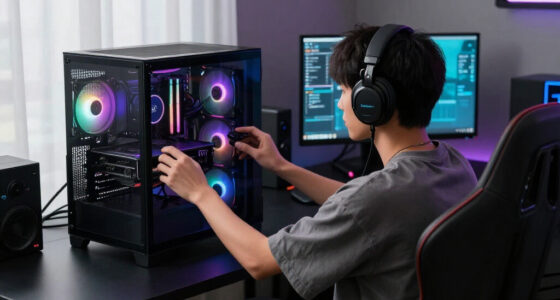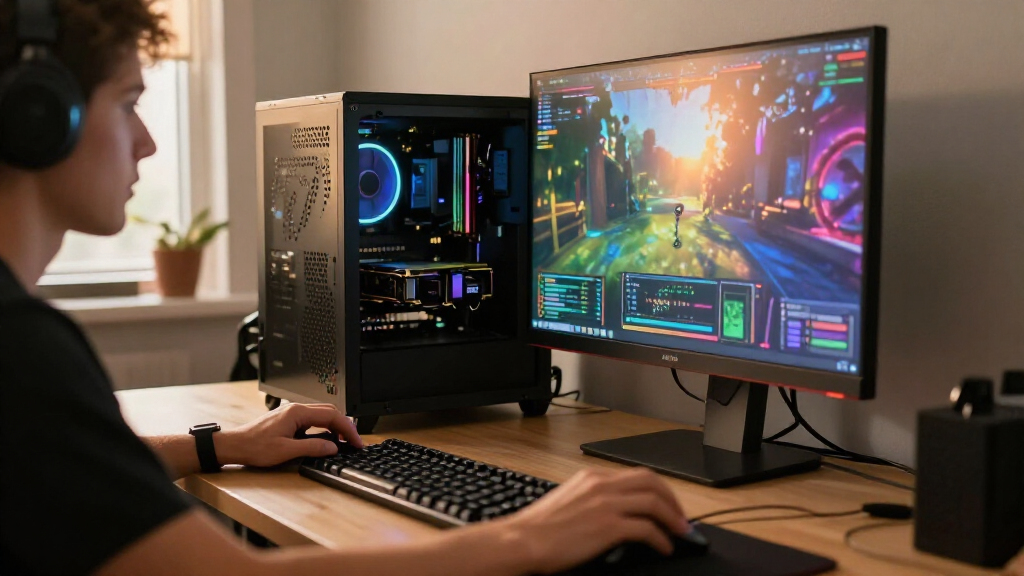

The best GPUs and RAM depend on whether you need graphics performance, a memory upgrade, or both; these products are different kinds of PC components, not interchangeable alternatives. As a graphics pick, the ASUS Prime Radeon RX 9070 EVO OC 16GB is a strong all-around choice for buyers seeking a modern 16GB card, while the ASUS Prime GeForce RTX 5080 suits premium builds and the ASUS Dual GeForce RTX 5060 Ti 16GB offers a more restrained Nvidia option. For memory, the G.SKILL Trident Z5 Neo RGB 64GB DDR5-6000 CL30 stands apart for capacity and its AMD-oriented EXPO positioning; the Corsair 32GB kits are more modest alternatives. The key tradeoffs are GPU performance, memory capacity, platform compatibility, power and case fit, and whether you are building or upgrading. Read on for the full breakdown and a guide to choosing parts that work together.

Play games on Amazon Luna for your game nights, included with Prime
- A rotating selection of games, no download needed
- Play on TV, laptop or phone
- Fast, free delivery for your gear, too
Complete the kit

Key Takeaways
- GPU and RAM picks serve different jobs: the roundup includes 11 graphics cards, three desktop DDR5 kits, and one mini workstation, so compare products within their category before planning a build.
- 16GB of graphics memory is a recurring feature across several newer cards, including the RX 9060 XT and RTX 5060 Ti options; choose among them by platform features, card dimensions, and intended workload rather than capacity alone.
- The RTX 5080 models are the premium tier in this selection, while the RTX 5060 Ti and RX 9060 XT cards offer more restrained routes to 16GB of VRAM.
- Memory capacity separates the listed kits: G.SKILL supplies 64GB with CL30 timing, while both Corsair options provide 32GB at 6000MHz; motherboard support and workload needs should guide the choice.
- The MINISFORUM MS-S1 MAX is a different kind of purchase: it is a mini AI workstation PC, not a standalone GPU or RAM kit, so it makes sense for buyers considering a compact system rather than a component swap.
| G.SKILL Trident Z5 Neo RGB 64GB (2 x 32GB) DDR5-6000 Desktop Memory, CL30, Matte Black |  | Best High-Capacity RAM Kit | Capacity: 64GB (2 x 32GB) | Memory type: DDR5 | Form factor: 288-pin U-DIMM | VIEW LATEST PRICE | See Our Full Breakdown |
| ASRock Radeon RX 7600 Challenger Pro OC 8GB GDDR6 Graphics Card |  | Best for 1080p Gaming | GPU: AMD Radeon RX 7600 | Architecture: RDNA 3 | Memory: 8GB GDDR6 | VIEW LATEST PRICE | See Our Full Breakdown |
| ASUS Dual GeForce RTX 5060 Ti 16GB GDDR7 OC Edition Graphics Card |  | Best Compact 16GB GPU | GPU: NVIDIA GeForce RTX 5060 Ti | Architecture: NVIDIA Blackwell | Memory: 16GB GDDR7 | VIEW LATEST PRICE | See Our Full Breakdown |
| ASUS Prime Radeon RX 9070 EVO OC 16GB GDDR6 Graphics Card |  | Best Radeon for Flexible Cooling | GPU: AMD Radeon RX 9070 | Memory: 16GB GDDR6 | Boost clock: Up to 2610 MHz OC mode; up to 2590 MHz default mode | VIEW LATEST PRICE | See Our Full Breakdown |
| MSI GeForce RTX 5080 16G Inspire 3X OC Black Graphics Card |  | Best Premium GPU for Creative Workloads | GPU: NVIDIA GeForce RTX 5080 | Memory: 16GB GDDR7 | Memory speed: 30 Gbps | VIEW LATEST PRICE | See Our Full Breakdown |
| XFX Swift AMD Radeon RX 9060 XT OC Triple Fan Graphics Card, 16GB GDDR6 |  | Best for Cooling Headroom | GPU: AMD Radeon RX 9060 XT | Memory: 16GB GDDR6 | Boost clock: Up to 3320 MHz | VIEW LATEST PRICE | See Our Full Breakdown |
| PNY NVIDIA GeForce RTX 5060 Ti 16GB OC Dual-Fan Graphics Card |  | Best Compact NVIDIA Pick | GPU: NVIDIA GeForce RTX 5060 Ti | Memory: 16GB GDDR7 | Memory bandwidth: 448 GB/s | VIEW LATEST PRICE | See Our Full Breakdown |
| ASUS Prime GeForce RTX 5080 16GB GDDR7 Graphics Card |  | Best Premium GPU | GPU: NVIDIA GeForce RTX 5080 | Memory: 16GB GDDR7 | Boost clock: 2617 MHz default; 2640 MHz OC mode | VIEW LATEST PRICE | See Our Full Breakdown |
| MINISFORUM MS-S1 MAX Mini AI Workstation PC |  | Best Integrated Graphics and Unified Memory Workstation | Processor: AMD Ryzen AI Max+ 395, 16 cores / 32 threads, Zen 5 | Graphics: Integrated AMD RDNA 3.5 GPU | NPU and total system performance: 50 TOPS NPU; 126 TOPS total system performance | VIEW LATEST PRICE | See Our Full Breakdown |
| ASUS Dual Radeon RX 9060 XT 16GB GDDR6 Graphics Card |  | Best Compact AMD Pick | GPU: AMD Radeon RX 9060 XT | Memory: 16GB GDDR6 | Boost clock: Up to 3250 MHz OC mode; up to 3230 MHz default mode | VIEW LATEST PRICE | See Our Full Breakdown |
| ASUS Dual GeForce RTX 3060 V2 12GB GDDR6 OC Edition Gaming Graphics Card |  | Best for Compact Builds | GPU: NVIDIA GeForce RTX 3060 | Memory: 12GB GDDR6 | Boost clock: 1867 MHz (OC mode) | VIEW LATEST PRICE | See Our Full Breakdown |
| Corsair Vengeance RGB RS DDR5 32GB (2 x 16GB) 6000MHz Desktop Memory |  | Best RGB RAM for Flexible Platforms | Capacity: 32GB (2 × 16GB) | Memory type: DDR5 | CAS latency: CL36 | VIEW LATEST PRICE | See Our Full Breakdown |
| ASRock Radeon RX 9060 XT Challenger 16GB OC Graphics Card |  | Best for VRAM-Heavy Gaming | GPU and architecture: AMD Radeon RX 9060 XT, RDNA 4 | Compute units: 32 | Game/boost clock: 2700 MHz / up to 3290 MHz | VIEW LATEST PRICE | See Our Full Breakdown |
| CORSAIR Vengeance RGB DDR5 32GB (2 × 16GB) 6000MHz Desktop Memory, Gray |  | Best Low-Latency RGB RAM | Capacity: 32GB (2 × 16GB) | Memory technology: DDR5 | Timings: CL30-36-36-76 | VIEW LATEST PRICE | See Our Full Breakdown |
| ASUS Prime GeForce RTX 5070 OC 12GB GDDR7 Graphics Card |  | Best Premium GPU Pick | GPU: NVIDIA GeForce RTX 5070 | Memory: 12GB GDDR7 | Boost clock: 2587 MHz (OC mode); 2557 MHz (default mode) | VIEW LATEST PRICE | See Our Full Breakdown |
| GPUs and RAM | Memory | Interface | GPU | Boost clock |
|---|---|---|---|---|
| G.SKILL Trident Z5 Neo RGB 64G | — | — | — | — |
| ASRock Radeon RX 7600 Challeng | 8GB GDDR6 | PCIe 4.0 x8 | AMD Radeon RX 7600 | 2695 MHz |
| ASUS Dual GeForce RTX 5060 Ti | 16GB GDDR7 | PCIe 5.0 x16 | NVIDIA GeForce RTX 5060 Ti | — |
| ASUS Prime Radeon RX 9070 EVO | 16GB GDDR6 | PCIe 5.0 x16 | AMD Radeon RX 9070 | Up to 2610 MHz OC mode; up to 2590 MHz default mode |
| MSI GeForce RTX 5080 16G Inspi | 16GB GDDR7 | PCIe 5.0 | NVIDIA GeForce RTX 5080 | — |
| XFX Swift AMD Radeon RX 9060 X | 16GB GDDR6 | PCI Express x16 | AMD Radeon RX 9060 XT | Up to 3320 MHz |
| PNY NVIDIA GeForce RTX 5060 Ti | 16GB GDDR7 | PCI Express x8, PCIe 5.0 | NVIDIA GeForce RTX 5060 Ti | 2692 MHz |
| ASUS Prime GeForce RTX 5080 16 | 16GB GDDR7 | PCI Express x16 | NVIDIA GeForce RTX 5080 | 2617 MHz default; 2640 MHz OC mode |
| MINISFORUM MS-S1 MAX Mini AI W | 128GB unified LPDDR5x-8000MT/s | — | — | — |
| ASUS Dual Radeon RX 9060 XT 16 | 16GB GDDR6 | PCIe 5.0, PCI Express x16 | AMD Radeon RX 9060 XT | Up to 3250 MHz OC mode; up to 3230 MHz default mode |
| ASUS Dual GeForce RTX 3060 V2 | 12GB GDDR6 | PCI-Express x16 | NVIDIA GeForce RTX 3060 | 1867 MHz (OC mode) |
| Corsair Vengeance RGB RS DDR5 | — | — | — | — |
| ASRock Radeon RX 9060 XT Chall | 16GB GDDR6, 20 Gbps | PCIe 5.0, PCI-Express x16 | — | — |
| CORSAIR Vengeance RGB DDR5 32G | — | — | — | — |
| ASUS Prime GeForce RTX 5070 OC | 12GB GDDR7 | PCI Express x16, PCIe 5.0 | NVIDIA GeForce RTX 5070 | 2587 MHz (OC mode); 2557 MHz (default mode) |
More Details on Our Top Picks
G.SKILL Trident Z5 Neo RGB 64GB (2 x 32GB) DDR5-6000 Desktop Memory, CL30, Matte Black
I’d choose this kit when 64GB capacity matters as much as memory speed. Its two matched 32GB modules give demanding games, creative applications, and heavy multitasking more room than a 32GB kit, while DDR5-6000 and CL30 timings make it a well-balanced performance option for a compatible AMD desktop. The AMD EXPO profile can simplify memory setup, though reaching the rated speed depends on the processor, motherboard, and BIOS settings. Compared with the Corsair Vengeance RGB RS 32GB kit in this roundup, this G.SKILL set offers twice the capacity but uses two larger modules, so it is the better fit for workloads that need headroom rather than a basic gaming build. Its tradeoffs are the need to check system compatibility and the risk of instability if you mix it with another kit.
Pros:- 64GB capacity across two matched 32GB modules
- DDR5-6000 speed with CL30 timings when supported
- AMD EXPO profile alongside JEDEC default support
- Limited lifetime manufacturer warranty
Cons:- Rated speed may require compatible hardware and BIOS adjustments
- Combining it with another memory kit can cause instability
- Non-ECC memory does not provide error correction
Best for: AMD desktop builders running memory-heavy games, content creation software, or multiple demanding applications who want 64GB in a matched two-module kit.
Not ideal for: Budget-conscious gaming builds that need only 32GB, or systems where the owner cannot verify DDR5 and EXPO compatibility.
- Capacity:64GB (2 x 32GB)
- Memory type:DDR5
- Form factor:288-pin U-DIMM
- Speed:Up to 6000 MT/s
- CAS latency:CL30
- Timings:30-40-40-96
- Voltage:1.40 V
- Memory profile:AMD EXPO
Our verdict“Choose this G.SKILL kit for an AMD desktop that needs 64GB of fast DDR5, but pick a 32GB kit if your workload does not need the extra capacity.”
ASRock Radeon RX 7600 Challenger Pro OC 8GB GDDR6 Graphics Card
This ASRock card makes the most sense for a 1080p-focused gaming PC where triple-fan cooling and current display connections matter more than a large memory pool. Its 8GB of GDDR6 and 128-bit interface suit mainstream settings, but leave less room for high-resolution textures than the 16GB ASUS Dual GeForce RTX 5060 Ti. RDNA 3 brings ray tracing and AI acceleration support, although this card’s narrower memory setup makes it a less convincing choice for pushing demanding games at 1440p. The triple-fan cooler, 0dB low-load mode, and metal backplate are useful build details, not a substitute for stronger hardware. I’d also check case clearance: at 303 mm long and 2.5 slots, it is less compact than its 8GB capacity might suggest.
Pros:- Triple-fan cooling with 0dB mode at low loads
- RDNA 3 support for ray tracing and AI acceleration
- Metal backplate adds structural rigidity
- Three DisplayPort 1.4a outputs and one HDMI 2.1 port
Cons:- 8GB memory and a 128-bit interface limit headroom for demanding textures
- 303 mm length and 2.5-slot thickness can restrict case fit
- PCIe 4.0 x8 interface is narrower than an x16 connection
Best for: 1080p gamers assembling a desktop with room for a 303 mm card who want a triple-fan cooler and modern AMD features.
Not ideal for: 1440p gamers who use high-resolution textures, or small-case builders without 2.5-slot clearance.
- GPU:AMD Radeon RX 7600
- Architecture:RDNA 3
- Memory:8GB GDDR6
- Memory interface:128-bit
- Boost clock:2695 MHz
- Interface:PCIe 4.0 x8
- Cooling:Triple fan with 0dB silent mode
- Dimensions:303 x 131 x 45 mm
Our verdict“Pick the RX 7600 Challenger Pro for 1080p gaming and a roomy case, but favor a 16GB card such as the ASUS Dual RTX 5060 Ti for heavier texture loads.”
ASUS Dual GeForce RTX 5060 Ti 16GB GDDR7 OC Edition Graphics Card
The ASUS Dual RTX 5060 Ti pairs 16GB of GDDR7 with a comparatively compact 2.5-slot design, making it a practical choice for builders who want more memory headroom without stepping up to a larger triple-fan card. Against the ASRock RX 7600 Challenger Pro, its 16GB buffer is better suited to games and creative tasks that load larger assets; the tradeoff is that this is still a two-fan card, not a cooling-focused replacement for a bigger model. DLSS 4 and Blackwell are the headline platform features, while the Quiet and Performance BIOS profiles let buyers choose between a quieter setup and the default performance mode. Its size is relative, though: a 2.5-slot card still needs clearance, and the listed specifications do not provide a recommended power supply figure.
Pros:- 16GB of GDDR7 memory
- 2.5-slot form factor with two fans
- Quiet and Performance BIOS profiles
- Three DisplayPort 2.1b outputs and HDMI 2.1b
Cons:- Still requires clearance for a 2.5-slot graphics card
- Two-fan cooling offers less hardware than the triple-fan ASUS Prime RX 9070
- The listed specifications do not state a recommended power supply
Best for: Small-form-factor and mid-tower builders who want a 16GB NVIDIA card with newer display outputs and selectable BIOS profiles.
Not ideal for: Builders seeking a truly single-slot or low-profile GPU, or buyers who prioritize a larger multi-fan cooling assembly.
- GPU:NVIDIA GeForce RTX 5060 Ti
- Architecture:NVIDIA Blackwell
- Memory:16GB GDDR7
- AI performance:767 AI TOPS
- GPU clock:2632 MHz OC mode; 2602 MHz default mode
- Interface:PCIe 5.0 x16
- Form factor:2.5-slot
- Video outputs:3 x DisplayPort 2.1b; 1 x HDMI 2.1b
Our verdict“Choose this ASUS for a compact build that needs 16GB of NVIDIA GPU memory, but look to a larger cooler if fan capacity is your priority.”
ASUS Prime Radeon RX 9070 EVO OC 16GB GDDR6 Graphics Card
I’d shortlist the ASUS Prime RX 9070 for builders who want 16GB of GDDR6 and a triple-fan cooler, but do not want to move up to a four-slot card. Its 2.5-slot design is less demanding on case space than a particularly bulky GPU, while the phase-change thermal pad, 0dB fan mode, and dual BIOS offer useful choices for noise and cooling behavior. Compared with the ASRock RX 7600 Challenger Pro, it is the more ambitious 16GB option for a system with heavier gaming or graphics workloads; the RX 7600 is the simpler fit for 1080p-focused builds. The main compromise is the card’s 12-inch length, which still needs careful case measurement. Advanced thermal and performance adjustments also rely on ASUS GPU Tweak III software.
Pros:- 16GB of GDDR6 memory
- Triple Axial-tech fans with 0dB operation
- Phase-change GPU thermal pad and dual BIOS
- Five display outputs: two HDMI 2.1b and three DisplayPort 2.1a
Cons:- 12-inch length can rule out shorter cases
- Still occupies 2.5 slots
- Advanced performance and thermal adjustments require GPU Tweak III
Best for: PC builders seeking a 16GB Radeon with triple-fan cooling, configurable BIOS modes, and a mid-width 2.5-slot layout.
Not ideal for: Compact-case owners who cannot fit a 12-inch card, or users who prefer not to rely on vendor software for advanced tuning.
- GPU:AMD Radeon RX 9070
- Memory:16GB GDDR6
- Boost clock:Up to 2610 MHz OC mode; up to 2590 MHz default mode
- Game clock:Up to 2140 MHz OC mode; up to 2120 MHz default mode
- Interface:PCIe 5.0 x16
- Cooling:Triple Axial-tech fans with phase-change GPU thermal pad
- Slot design:2.5-slot
- Dimensions:12 x 5 inches
Our verdict“Pick the Prime RX 9070 if you want a 16GB Radeon with flexible cooling profiles, provided your case can accommodate its 12-inch length.”
MSI GeForce RTX 5080 16G Inspire 3X OC Black Graphics Card
This MSI RTX 5080 is the premium pick here for buyers who need a powerful GPU platform for demanding gaming and creative work, rather than a modest card for a compact system. Its 16GB of GDDR7 on a 256-bit interface, factory overclock, and 30 Gbps memory speed distinguish it from the ASUS Dual RTX 5060 Ti, which has the same listed memory capacity but targets a more compact build. MSI’s triple-fan cooler, nickel-plated copper baseplate, heat pipes, and ZERO FROZR mode address cooling and low-load fan noise. The costs are practical: this card calls for an 850W minimum power supply, and its triple-fan design is aimed at desktop systems with the space and airflow to support it. The listed data does not include card dimensions, so check fit before buying.
Pros:- 16GB GDDR7 memory with a 256-bit interface
- Factory overclocked with a 2640 MHz boost clock
- Triple-fan cooling with ZERO FROZR mode
- HDMI 2.1b and DisplayPort 2.1b outputs
Cons:- Requires a power supply rated for at least 850W
- Triple-fan desktop design may not fit compact cases
- Listed specifications do not provide card dimensions
Best for: Enthusiast desktop builders and creators who need a high-end NVIDIA GPU, 16GB of GDDR7, and have an 850W-or-greater power supply.
Not ideal for: Small-form-factor builders, systems with a lower-wattage power supply, or buyers whose workloads do not need a premium-class GPU.
- GPU:NVIDIA GeForce RTX 5080
- Memory:16GB GDDR7
- Memory speed:30 Gbps
- Memory interface:256-bit
- GPU boost clock:2640 MHz
- Interface:PCIe 5.0
- Cooling:Triple fan with ZERO FROZR mode
- Recommended power supply:850W minimum
Our verdict“Choose the MSI RTX 5080 for demanding desktop gaming or creative workloads if your power supply and case can handle a premium triple-fan GPU.”
XFX Swift AMD Radeon RX 9060 XT OC Triple Fan Graphics Card, 16GB GDDR6
The XFX Swift pairs the Radeon RX 9060 XT with 16GB of GDDR6 and a triple-fan cooler, making it a sensible fit for a gaming build that favors a substantial cooling assembly over a smaller footprint. Its listed boost clock reaches 3320 MHz, higher than the ASUS Dual RX 9060 XT’s listed maximum of 3250 MHz in OC mode, though clock figures alone do not establish a dependable performance gap. Compared with ASUS’s 2.5-slot, two-fan card, XFX puts more emphasis on airflow through three fans; the tradeoff is that case clearance deserves extra attention. HDMI and two DisplayPort connections cover common multi-monitor setups, and 4K UHD output is supported. I’d choose it over the ASUS when the case has room for a larger cooler, not simply for the clock figure.
Pros:- 16GB of GDDR6 memory
- Triple-fan cooling design
- HDMI and two DisplayPort outputs
- Supports resolutions up to 3840 × 2160
Cons:- Triple-fan cooler may be harder to fit than the ASUS Dual RX 9060 XT’s 2.5-slot design
- Requires a desktop PC with a PCI Express x16 interface
Best for: Desktop builders choosing an RX 9060 XT who have room for a triple-fan card and want 16GB of graphics memory.
Not ideal for: Small-case builders or anyone without a desktop PCI Express x16 slot who needs a compact or externally connected graphics solution.
- GPU:AMD Radeon RX 9060 XT
- Memory:16GB GDDR6
- Boost clock:Up to 3320 MHz
- Base clock:1900 MHz
- Cooling:Triple fan
- Video outputs:1 × HDMI, 2 × DisplayPort
- Interface:PCI Express x16
- Maximum resolution:3840 × 2160 (4K UHD)
- Warranty:3 years
Our verdict“Choose the XFX Swift if you want an RX 9060 XT with 16GB of memory and a triple-fan cooler, and have case space to spare.”
PNY NVIDIA GeForce RTX 5060 Ti 16GB OC Dual-Fan Graphics Card
PNY’s RTX 5060 Ti makes a strong case for a compact dual-slot build: it combines 16GB of GDDR7 with a 9.65-inch card and a single 8-pin power connector. That form is easier to accommodate than the ASUS Prime RTX 5080, which is 12 inches long and calls for an 850W supply with a 16-pin connector. The PNY’s 448 GB/s memory bandwidth and VelocityX tuning software suit buyers who want to adjust fan curves and save profiles, while its 16GB capacity also gives creative and local AI workloads room to use memory. The tradeoff is a 600W recommended system power supply, and the compact cooler is not the same kind of cooling setup as a larger triple-fan card. I’d pick it for fit and flexibility, not as a substitute for a higher-tier GPU.
Pros:- 16GB of GDDR7 memory with 448 GB/s bandwidth
- Compact dual-slot design listed as SFF-ready
- Single 8-pin power connector
- VelocityX supports tuning, monitoring, and saved profiles
Cons:- Calls for a 600W recommended system power supply
- Dual-fan cooling offers less cooling hardware than the triple-fan XFX RX 9060 XT
- PCI Express x8 interface rather than x16
Best for: Small-form-factor PC builders who want an NVIDIA card with 16GB of GDDR7 for gaming, creative work, or local AI tasks.
Not ideal for: Buyers seeking a higher-tier GPU or using a system with a power supply below the 600W recommendation.
- GPU:NVIDIA GeForce RTX 5060 Ti
- Memory:16GB GDDR7
- Memory bandwidth:448 GB/s
- Boost clock:2692 MHz
- Interface:PCI Express x8, PCIe 5.0
- Cooling and form factor:Dual-fan, dual-slot, SFF-ready
- Power:Single 8-pin connector; 600W recommended system power
- Dimensions:9.65 × 4.72 inches
- Maximum resolution:7680 × 4320
Our verdict“Pick the PNY RTX 5060 Ti for a compact NVIDIA build with 16GB of GDDR7, provided your power supply meets its recommendation.”
ASUS Prime GeForce RTX 5080 16GB GDDR7 Graphics Card
The ASUS Prime RTX 5080 is the premium performance choice in this batch, with a GeForce RTX 5080, 16GB of GDDR7, and three Axial-tech fans backed by a vapor chamber. Its 2.5-slot thickness is comparatively restrained for this class, but the 12-inch length still calls for a careful case-clearance check. The dual BIOS gives buyers a choice between Quiet and Performance profiles, while 0dB operation can keep the fans off during lighter use. Against the PNY RTX 5060 Ti, this card targets a higher GPU tier and adds a more elaborate cooling system; it also asks much more of the rest of the build. A minimum 850W supply and 16-pin connector are required, so this is a poor fit for modest or older systems. I’d shortlist it for a premium build with room and power to match.
Pros:- GeForce RTX 5080 with 16GB of GDDR7
- Three fans and vapor-chamber cooling
- Dual BIOS offers Quiet and Performance profiles
- 0dB technology supports fan-stop operation during light use
Cons:- Requires a minimum 850W power supply with a 16-pin connector
- 306 mm length and 2.5-slot thickness need case-clearance checks
- At 3 lb, the card is relatively heavy
Best for: Enthusiasts building a premium desktop who want an RTX 5080, 16GB of GDDR7, and selectable quiet or performance profiles.
Not ideal for: Owners of compact cases without 306 mm of card clearance, or systems lacking an 850W supply and 16-pin power connector.
- GPU:NVIDIA GeForce RTX 5080
- Memory:16GB GDDR7
- Boost clock:2617 MHz default; 2640 MHz OC mode
- Cooling:Three Axial-tech fans, vapor chamber, and phase-change GPU thermal pad
- Dimensions and slot thickness:306 mm (12 in) long; 2.5 slots
- Power requirement:Minimum 850W supply with 16-pin 12V-2×6 (12VHPWR) connector
- Video outputs:3 × DisplayPort 2.1a, 2 × HDMI 2.1b
- Interface:PCI Express x16
- Maximum resolution:7680 × 4320
Our verdict“Choose the ASUS Prime RTX 5080 for a premium, well-cooled GPU build only if your case and power supply can accommodate it.”
MINISFORUM MS-S1 MAX Mini AI Workstation PC
The MS-S1 MAX is not a standalone GPU or a desktop RAM kit; it is a complete AI workstation built around integrated RDNA 3.5 graphics and 128GB of unified LPDDR5x memory. That makes it a distinct choice from the discrete cards here: instead of fitting a GPU and separate memory into a desktop, buyers get a Ryzen AI Max+ 395 system with a 50 TOPS NPU and stated total system performance of 126 TOPS. The unified memory is especially relevant for local LLM work and heavy multitasking, while the 2TB SSD and dual M.2 slots provide a useful starting point for storage expansion. Unlike the PNY RTX 5060 Ti, it does not offer a conventional discrete GPU configuration out of the box; its PCIe x16 slot provides expansion, but the system’s focus is integrated compute. I’d choose it for workstation tasks, not as a direct gaming-card replacement.
Pros:- 128GB of unified LPDDR5x-8000 memory
- Ryzen AI Max+ 395 combines 16 CPU cores with integrated RDNA 3.5 graphics
- 50 TOPS NPU and stated 126 TOPS total system performance
- PCIe x16 expansion, USB4 V2, and dual 10GbE LAN
Cons:- Integrated graphics are not a direct substitute for a standalone GPU such as the PNY RTX 5060 Ti
- 320W internal power supply may draw more power than a basic desktop setup
- Multi-unit cluster configurations can require complex setup
Best for: AI developers and workstation users who want a compact system with 128GB of unified memory for local LLM inference, rendering, and multitasking.
Not ideal for: Gamers shopping for a standalone graphics card, or desktop builders who want a conventional discrete GPU and separately upgradeable RAM.
- Processor:AMD Ryzen AI Max+ 395, 16 cores / 32 threads, Zen 5
- Graphics:Integrated AMD RDNA 3.5 GPU
- NPU and total system performance:50 TOPS NPU; 126 TOPS total system performance
- Memory:128GB unified LPDDR5x-8000MT/s
- Storage:2TB PCIe 4.0 SSD; dual M.2 slots, up to 16TB RAID
- Expansion and connectivity:PCIe x16 slot, USB4 V2 (80Gbps), dual 10GbE LAN, Wi-Fi 7
- Video output:HDMI 2.1, up to 8K60
- Power supply:320W internal PSU
- Dimensions:12.6 × 4.92 × 9.65 inches
Our verdict“Choose the MS-S1 MAX for a compact AI workstation where unified memory and onboard compute matter more than a discrete gaming GPU.”
ASUS Dual Radeon RX 9060 XT 16GB GDDR6 Graphics Card
ASUS’s Dual RX 9060 XT offers the same GPU and 16GB GDDR6 capacity as the XFX Swift, but packages them in an 8-inch, 2.5-slot card with two Axial-tech fans. That makes it the more appealing RX 9060 XT for a build where length and fan count matter more than the XFX’s triple-fan cooler. Its Dual BIOS switch provides Quiet and Performance profiles, and 0dB technology can stop the fans during light use. The listed OC-mode boost reaches 3250 MHz, below the XFX’s stated maximum of 3320 MHz; those figures alone do not settle real-world performance, but they underline that this ASUS is the compact, configurable option rather than the higher-clocked listing. Its 2.5-slot thickness still needs room, and it requires a desktop PCIe x16 slot. I’d favor it for tighter cases that can fit its width.
Pros:- Compact 8-inch length with a 2.5-slot form factor
- 16GB of GDDR6 memory
- Dual BIOS offers Quiet and Performance profiles
- 0dB technology and two Axial-tech fans
Cons:- 2.5-slot thickness can limit fit in narrow cases
- Two fans rather than the XFX Swift’s triple-fan cooling design
- Requires a desktop PCI Express x16 interface
Best for: Desktop builders who want an RX 9060 XT with 16GB of memory in a shorter card and value quiet and performance BIOS profiles.
Not ideal for: Builders whose cases cannot accommodate a 2.5-slot card, or buyers prioritizing a triple-fan cooler and the XFX Swift’s higher listed boost clock.
- GPU:AMD Radeon RX 9060 XT
- Memory:16GB GDDR6
- Boost clock:Up to 3250 MHz OC mode; up to 3230 MHz default mode
- Game clock:Up to 2640 MHz OC mode; up to 2620 MHz default mode
- Interface:PCIe 5.0, PCI Express x16
- Cooling and BIOS:Two Axial-tech fans, 0dB technology, Dual BIOS
- Form factor and dimensions:2.5-slot; 8 × 4.7 inches
- Video outputs:2 × DisplayPort 2.1a, HDMI 2.1b
- Warranty:3 years
Our verdict“Choose the ASUS Dual RX 9060 XT if you want 16GB of AMD graphics memory in a shorter card with quiet and performance modes.”
ASUS Dual GeForce RTX 3060 V2 12GB GDDR6 OC Edition Gaming Graphics Card
I’d choose this card for a compact gaming PC where 12GB of VRAM matters more than having the newest architecture. Its two-slot design and 7.87-inch length make case fit easier than with the 12-inch ASUS Prime RTX 5070, while 0dB mode can keep fan noise down during light use. The 12GB buffer gives games and creative workloads more room for high-resolution textures than an 8GB card, though it does not make this older GPU equivalent to newer models. The tradeoff is performance headroom: compared with the RTX 5070, this RTX 3060 is the more restrained choice for demanding settings and newer features. Its OC-mode clock increase is modest, so I’d buy it for fit and memory capacity, not for a meaningful overclock advantage.
Pros:- 12GB of GDDR6 memory accommodates higher-resolution textures and memory-heavy workloads.
- Compact two-slot card measures 7.87 inches long.
- 0dB technology can stop the fans during light loads.
- Dual Axial-tech fans provide active cooling under load.
Cons:- Older RTX 3060 performance offers less headroom than the RTX 5070.
- OC-mode boost clock is only marginally above standard gaming mode.
- PCIe 4.0 is listed as necessary for maximum theoretical interface bandwidth.
Best for: Builders fitting a capable, 12GB graphics card into a short or space-constrained PC case, and gamers focused on moderate settings.
Not ideal for: Buyers targeting demanding 4K gaming or the strongest current-generation performance; the RTX 5070 is the more capable choice if the case and build budget allow it.
- GPU:NVIDIA GeForce RTX 3060
- Memory:12GB GDDR6
- Boost clock:1867 MHz (OC mode)
- Interface:PCI-Express x16
- Video outputs:HDMI 2.1, DisplayPort 1.4a
- Cooling:Dual Axial-tech fans, 0dB technology
- Form factor:Two slots
- Dimensions:7.87 × 4.84 inches
Our verdict“Choose this RTX 3060 when compact fit and 12GB of VRAM matter more than the newer performance of the RTX 5070.”
Corsair Vengeance RGB RS DDR5 32GB (2 x 16GB) 6000MHz Desktop Memory
This kit suits builders who want 32GB of DDR5, addressable lighting, and profiles for either AMD or Intel systems. Its 6000 MT/s rating and CL36 timings make it a balanced capacity-and-speed option for a general gaming build, while iCUE provides lighting customization beyond what a plain memory kit offers. Compared with the gray Corsair Vengeance RGB DDR5 kit listed here, the RGB RS has looser CL36 timings rather than CL30, so the gray kit is the stronger pick for buyers prioritizing latency. The RS counters with AMD EXPO and Intel XMP 3.0 support, giving it broad platform flexibility. Rated speed may require BIOS changes and depends on the CPU and motherboard, so I wouldn’t treat 6000 MT/s as automatic plug-and-play performance.
Pros:- Two 16GB modules provide 32GB capacity for gaming and everyday multitasking.
- Supports both AMD EXPO and Intel XMP 3.0 profiles.
- Individually addressable RGB can be customized through CORSAIR iCUE.
- Onboard voltage regulation supports high-frequency operation.
Cons:- CL36 timings are looser than the CL30 timings on the gray Corsair Vengeance RGB kit.
- Reaching the rated speed may require BIOS adjustments.
- Achievable speed depends on the motherboard and CPU.
Best for: Gaming PC builders who want 32GB of DDR5 with customizable RGB and a memory profile suited to either a compatible AMD or Intel platform.
Not ideal for: Latency-focused builders who prefer the CL30 gray Corsair Vengeance RGB kit, or anyone unwilling to adjust BIOS settings to reach the rated speed.
- Capacity:32GB (2 × 16GB)
- Memory type:DDR5
- CAS latency:CL36
- Timings:36-44-44-96
- Voltage:1.35V
- Memory profiles:AMD EXPO, Intel XMP 3.0
- Compatibility:AMD 600/800 Series and Intel 700/800 Series motherboards
Our verdict“Pick the Vengeance RGB RS for 32GB, dual-platform profile support, and customizable lighting; choose the gray Corsair kit if CL30 matters more.”
ASRock Radeon RX 9060 XT Challenger 16GB OC Graphics Card
I’d put the ASRock RX 9060 XT Challenger on the shortlist for players who want 16GB of graphics memory without moving to a larger triple-fan card. Its dual-fan, two-slot layout keeps the card relatively compact, while a 550W recommended power supply and one 8-pin connector give builders clear power requirements. Against the ASUS Dual RTX 3060, the Challenger offers a newer RDNA 4 design and 16GB rather than 12GB of GDDR6; against the ASUS Prime RTX 5070, it gives more memory but lacks the NVIDIA model’s GDDR7. DisplayPort 2.1a and HDMI 2.1b support newer display connections, and 0dB mode can quiet light use. The tradeoffs are its 249mm length and the need to check case clearance and PSU capacity before buying.
Pros:- 16GB of GDDR6 provides more memory capacity than the RTX 3060’s 12GB.
- Dual-fan cooling, two-slot width, and 0dB silent mode.
- DisplayPort 2.1a and HDMI 2.1b outputs.
- Uses one 8-pin power connector.
Cons:- Requires 249mm of chassis length clearance.
- Calls for a recommended 550W power supply.
- Its 128-bit memory bus is narrower than the 256-bit bus on some higher-tier graphics cards.
Best for: Gamers and creators who want a two-slot card with 16GB of VRAM, newer display outputs, and a conventional 8-pin power connection.
Not ideal for: Small-case builders with less than 249mm of GPU clearance, or buyers whose power supply falls short of the 550W recommendation.
- GPU and architecture:AMD Radeon RX 9060 XT, RDNA 4
- Compute units:32
- Game/boost clock:2700 MHz / up to 3290 MHz
- Memory:16GB GDDR6, 20 Gbps
- Memory bus:128-bit
- Interface:PCIe 5.0, PCI-Express x16
- Power:One 8-pin connector; 550W recommended PSU
- Dimensions and slot width:249 × 132 × 41mm; two slots
Our verdict“Choose the Challenger if 16GB of VRAM and two-slot fit are priorities, provided your case and 550W-class power supply can accommodate it.”
CORSAIR Vengeance RGB DDR5 32GB (2 × 16GB) 6000MHz Desktop Memory, Gray
For a DDR5 gaming build where response and lighting both matter, this gray Vengeance kit stands out for its 6000MHz rating and CL30 timings. That tighter latency separates it from Corsair’s RGB RS kit in this roundup, which is also 32GB and rated at 6000 MT/s but uses CL36 timings. The modules include ten-zone RGB lighting and support both AMD EXPO and Intel XMP, so buyers can tailor the look without giving up broad platform profile support. Onboard voltage regulation adds control for fine-tuning, but the rated speed may require BIOS adjustments and depends on the CPU and motherboard. Its 1.4V operating voltage is also a system-setting consideration; I’d confirm platform compatibility rather than assume the kit will run at its advertised profile automatically.
Pros:- CL30 timings are tighter than the CL36 timings on Corsair’s RGB RS kit.
- Ten individually addressable RGB zones per module.
- Supports AMD EXPO and Intel XMP profiles.
- Onboard voltage regulation allows fine-tuned overclocking.
Cons:- Rated speed may require BIOS adjustments or overclocking.
- Actual speed and performance depend on the motherboard and CPU.
- Uses 1.4V, higher than the 1.35V Vengeance RGB RS kit.
Best for: DDR5 gaming builders who want 32GB, tighter CL30 timings, customizable RGB, and profile support for a compatible AMD or Intel system.
Not ideal for: Builders who want memory that reaches its rated speed without BIOS setup, or those who prefer a lower-voltage kit such as the Vengeance RGB RS.
- Capacity:32GB (2 × 16GB)
- Memory technology:DDR5
- Timings:CL30-36-36-76
- Voltage:1.4V
- Form factor:DIMM, 288-pin
- Memory profiles:AMD EXPO and Intel XMP
- Lighting and color:Ten-zone RGB; gray
Our verdict“Choose this kit over the RGB RS when tighter CL30 timings are worth checking platform settings and accommodating its 1.4V rating.”
ASUS Prime GeForce RTX 5070 OC 12GB GDDR7 Graphics Card
Among these five products, I’d choose the ASUS Prime RTX 5070 for a higher-performance gaming build that can use its 12GB of GDDR7 and modern display interface. Compared with the RTX 3060, it pairs newer-generation graphics hardware with GDDR7 and PCIe 5.0; the RTX 3060, in turn, is shorter and uses a two-slot design. The Prime card’s three Axial-tech fans, phase-change thermal pad, and dual BIOS give builders more cooling and noise-profile options, including a Quiet mode and 0dB operation during light use. The tradeoff is physical fit: at 12 inches long and 2.5 slots wide, it demands more room than the compact RTX 3060. The OC clock is also a small step above default, so I’d value the cooling and GPU tier more than the factory overclock alone.
Pros:- 12GB of GDDR7 memory and a PCIe 5.0 interface.
- Three Axial-tech fans and a phase-change GPU thermal pad support heat management.
- Dual BIOS offers Quiet and Performance profiles, with 0dB operation during light use.
- GPU Tweak III provides performance tuning, thermal control, and monitoring.
Cons:- 12-inch length and 2.5-slot width can rule it out of compact cases.
- OC-mode boost clock is 2587 MHz, compared with 2557 MHz in default mode.
- Its 12GB capacity is lower than the 16GB on the ASRock RX 9060 XT Challenger.
Best for: Gamers building a higher-tier PC for up to 4K output who have room for a 12-inch, 2.5-slot graphics card and want selectable quiet or performance BIOS profiles.
Not ideal for: Small-form-factor builders with limited GPU length or slot clearance, and buyers who prioritize a compact card over newer-generation GPU features.
- GPU:NVIDIA GeForce RTX 5070
- Memory:12GB GDDR7
- Boost clock:2587 MHz (OC mode); 2557 MHz (default mode)
- AI performance:1005 AI TOPS
- Interface:PCI Express x16, PCIe 5.0
- Cooling:Three Axial-tech fans; phase-change GPU thermal pad
- Slot design and dimensions:2.5 slots; 12 × 5 inches
- BIOS:Dual BIOS with Quiet and Performance profiles
Our verdict“Pick the RTX 5070 for a newer-generation, cooling-focused GPU when its 12-inch length and 2.5-slot fit work for your case.”
How We Picked
I grouped the products by what they actually are: graphics cards, desktop memory kits, and a complete mini workstation. That distinction matters because comparing a RAM kit directly with a GPU would not help a buyer choose parts. For graphics cards, I weighed the stated VRAM, memory generation, cooler configuration, and model positioning, then considered how card size and system requirements affect a real build. For RAM, I focused on capacity, speed, timings where listed, and platform fit. I ranked options by how clearly they serve a buyer need, not by assuming that the biggest model is automatically the best choice.
The lineup includes multiple models with the same GPU family, so differences in cooler design, brand implementation, and fit can matter more than the name on the chip. I treated the RTX 5080 cards as premium candidates, while the RTX 5060 Ti and RX 9060 XT cards offer more moderate entry points into 16GB graphics memory. The 64GB G.SKILL kit earns a distinct role for capacity and CL30 timing; the Corsair kits are simpler 32GB alternatives. Since no single product can suit every budget, workload, case, or platform, the ranking logic favors clear use cases and calls out the checks buyers should make before ordering.
Factors to Consider When Choosing Best GPUs And RAM
Use this guide to turn a shortlist into a compatible build. The most common mistake is choosing a GPU or RAM kit by its headline specs without checking the rest of the system. I would settle the platform, workload, and physical constraints first, then compare component features against those needs.
Decide Whether You Need a GPU, RAM, or a Complete System
These listings cover three different purchase types: graphics cards, desktop memory kits, and a mini workstation. A GPU upgrade changes graphics capability, while a RAM upgrade supports workloads that need more system memory; one does not replace the other. If you need a ready-made compact computer, the MINISFORUM system belongs in a different comparison from a standalone card. Check whether your existing PC has a compatible expansion slot and enough power before shopping for a GPU. For a memory upgrade, first identify the motherboard and supported DDR generation. This simple sorting step prevents comparing parts that cannot solve the same problem.
Match GPU Capability to Your Workload
Think about the games, creative applications, or compute tasks you actually run, along with your monitor resolution and refresh rate. A premium card such as an RTX 5080 can be excessive if your current display and workload do not make use of its capability. A 16GB VRAM specification may help with memory-heavy games or projects, but it does not by itself determine overall performance. Nvidia and AMD models can differ in software support and feature sets, so check the applications you rely on rather than choosing by brand habit. Do not assume two cards with the same GPU family will fit or behave identically: cooler size and factory tuning can differ. Your workload and system limits should set the tier before model details break a tie.
Check Card Clearance, Power, and Cooling Before Buying
GPU fit is a case-level question, not just a graphics-chip question. Compare the card’s listed dimensions with the available space in your case, including room for front fans, radiators, and cable bends. Check the manufacturer’s power-supply guidance and the card’s power connectors against your existing system. A triple-fan cooler may suit a roomy case, while a shorter dual-fan design can be easier to place in a compact build; neither is automatically quieter or cooler in every case. Also consider airflow around the card, since a crowded case can limit cooling. Confirm these physical details before ordering, especially when replacing a card in a prebuilt PC.
Choose RAM Capacity Before Chasing Speed
Start with the applications you run and the capacity your system needs, then compare speed and timings. The 64GB G.SKILL kit is a different proposition from the 32GB Corsair kits: extra capacity can help with demanding multitasking and large projects, but unused memory will not make every task faster. DDR5-6000 appears across these listed kits, yet the G.SKILL option also specifies CL30 timing. Confirm that your motherboard supports DDR5 and check its memory compatibility information before choosing a kit. For a two-module kit, use the recommended motherboard slots so the memory can operate in the intended configuration. Avoid mixing separate kits unless you have checked compatibility and are prepared to adjust settings.
Confirm Platform Support and Memory Profiles
Rated memory speed may depend on enabling a supported profile in firmware, and the profile names and support can vary by platform. The G.SKILL Trident Z5 Neo line is positioned for AMD EXPO use, so verify the motherboard and processor support the profile you plan to use. Corsair kit specifications should also be checked against the motherboard’s compatibility list and firmware guidance. A kit can physically fit while running at a lower default speed if its profile is not enabled or supported. Stability matters more than a small specification difference, especially for a work machine. If you prefer a straightforward setup, prioritize confirmed compatibility over chasing the highest advertised memory setting.
Spend More Only When the Rest of the Build Can Keep Up
A higher-tier GPU makes the most sense when the rest of the computer can feed it and the workload can use it. Pairing a premium graphics card with an older processor, a low-resolution display, or an undersized power supply may leave some of its capability unused. Likewise, a 64GB kit is a sensible step for memory-heavy tasks, but it is not automatically a better fit for a system that only needs 32GB. Budget for the supporting parts, including a suitable power supply, case airflow, and a monitor that matches the intended graphics tier. For a balanced build, allocate resources around the component that limits your actual tasks. Choose the upgrade that removes your current bottleneck rather than paying for a headline specification in isolation.
Frequently Asked Questions
Can I compare these GPUs and RAM kits as alternatives to one another?
No. A GPU handles graphics processing, while RAM provides working memory for the computer, so they solve different needs and often belong in the same build. First decide whether your bottleneck is graphics performance, system memory capacity, or both. The mini workstation is another category: it is a complete system rather than a component that competes directly with a graphics card or memory kit. If you are upgrading, check which part is limiting your workload before buying. A balanced build may call for both a GPU and RAM, but the two purchases need separate compatibility checks.
Is 16GB of VRAM enough, or should I choose an RTX 5080?
That depends on the games, applications, resolution, and visual settings you use. Several cards in this roundup offer 16GB, including models from the RTX 5060 Ti and RX 9060 XT families, but VRAM capacity alone does not establish which card is faster for a particular task. The RTX 5080 models occupy the premium end of this selection and make more sense when your workload can use their higher tier. Check application requirements and independent benchmarks for your specific games or software before deciding. Also confirm that your power supply and case can support the card you choose.
Should I buy the 64GB G.SKILL kit or one of the 32GB Corsair kits?
Choose based on the memory demands of your workload and the platform in your PC. The G.SKILL kit provides 64GB and lists CL30 timing, making it the more capacity-focused option; the Corsair kits provide 32GB at 6000MHz. Large creative projects, virtual machines, and heavy multitasking can benefit from more capacity, while many everyday and gaming setups may not need it. Verify DDR5 support, motherboard compatibility, and the memory profile before ordering. Do not buy extra capacity solely on the assumption that it will improve every application.
Can I put one of these graphics cards in a prebuilt or compact PC?
Possibly, but the model name alone cannot confirm fit. Compare the card’s length, height, and thickness with the available space, and check whether the case leaves room for power cables and adequate airflow. Your power supply also needs the required connectors and sufficient capacity for the card. Compact or proprietary prebuilts may use limited clearances or nonstandard power supplies, which can rule out otherwise suitable cards. Check the PC maker’s specifications before buying, and do not assume that a dual-fan card will fit every small case.
Does DDR5-6000 RAM run at 6000MHz automatically?
Not always. A memory kit may start at a lower default setting, with its advertised profile requiring a compatible motherboard, processor, and a firmware setting to be enabled. Check the motherboard memory support list and follow its instructions for the relevant profile. The G.SKILL kit’s AMD-oriented EXPO positioning makes platform support especially relevant, while Corsair kit compatibility should also be confirmed for your system. If the profile is unavailable or unstable, the memory may run at a lower speed. A supported, stable configuration is a better goal than a headline speed your system cannot maintain.
Conclusion
For an all-around graphics choice in this lineup, I would start with the ASUS Prime Radeon RX 9070 EVO OC 16GB, while checking current workload benchmarks and case fit before buying. For a value-minded GPU shortlist, compare the ASUS Dual RTX 5060 Ti 16GB and the RX 9060 XT 16GB models against the games and software you use. The RTX 5080 cards are the premium picks for buyers whose system and workload can make use of that tier. Beginners upgrading a standard desktop may find a 32GB Corsair kit easier to plan around than a larger memory purchase, provided the motherboard supports DDR5; the product names alone do not establish a beginner-friendly installation. For memory-heavy work, the 64GB G.SKILL kit is the clearest fit, while buyers seeking a compact AI system should evaluate the MINISFORUM MS-S1 MAX as a complete PC. In every case, confirm platform support, power, and physical clearance before choosing.