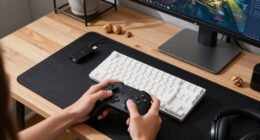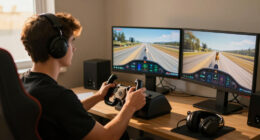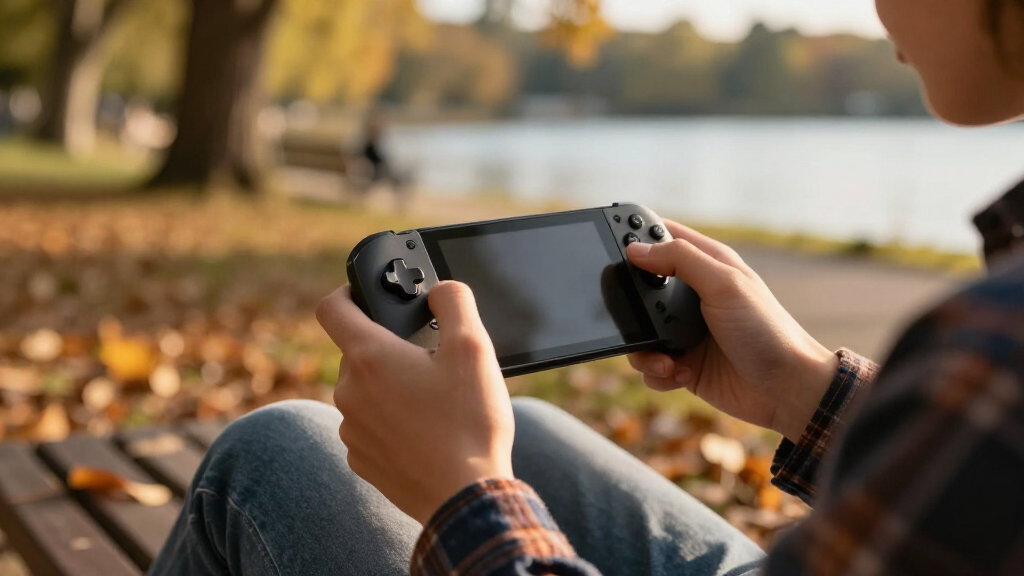
Handheld gaming consoles have split into distinct camps in 2026, and picking the right one depends entirely on what you want to play. The Steam Deck OLED 1TB earns my best overall pick thanks to its massive game library, superb OLED screen, and unmatched software polish. The Nintendo Switch 2 stands out for exclusive first-party games and effortless pick-up-and-play simplicity, while budget retro handhelds like the Boltz Retro console prove you can enjoy thousands of classic titles without spending much at all. The core tradeoff you’ll face is power versus portability versus price: full Windows handhelds like the ASUS ROG Xbox Ally deliver desktop-class gaming but with shorter battery life and steeper learning curves, while compact retro devices are cheap and light but limited to older emulated games. Keep reading for the full breakdown of all 15 consoles and which one fits your gaming style.

Play games on Amazon Luna for your game nights, included with Prime
- A rotating selection of games, no download needed
- Play on TV, laptop or phone
- Fast, free delivery for your gear, too
Complete the kit


Key Takeaways
- The Steam Deck OLED won best overall because no competitor matches its combination of library access, comfort, and refined software — even against more powerful Windows rivals.
- Raw performance doesn’t equal a better handheld: the MSI Claw A8 and ROG Xbox Ally out-spec the Steam Deck on paper, but battery drain, weight, and Windows friction make them better suited to enthusiasts than everyday players.
- The sub-$50 retro handheld category showed the widest quality spread — the RG56PRO and Boltz models justify their price, while the 3-inch mini consoles are best treated as nostalgic gifts rather than primary gaming devices.
- Cloud-only handhelds like the abxylute One Pro only make sense if you already own a strong game library and have reliable high-speed internet; without both, a standalone console serves you better.
- Screen quality was the single biggest predictor of long-term satisfaction across every price tier — IPS panels with good brightness consistently outperformed spec sheets in daily use.
| RG56PRO Retro Handheld Game Console with EVA Hard Case (Black, 128GB) |  | Best for Serious Retro Enthusiasts | Storage: 128GB TF card included | Preloaded Games: 31,000+ | Processor: Rockchip RK3562 quad-core, up to 2.0GHz | VIEW LATEST PRICE | See Our Full Breakdown |
| RG52MINI Retro Handheld Game Console, 5.5 Inch IPS Screen, 64GB, Black |  | Best Value Retro Handheld | Screen: 5.5-inch IPS, 720×1280, fully laminated, anti-glare | Processor: Rockchip RK3562 quad-core Cortex-A53 2.0GHz | RAM: 2+4GB | VIEW LATEST PRICE | See Our Full Breakdown |
| Nintendo Switch 2 System |  | Best for Modern Gaming | Screen: 7.9-inch LCD touch screen, 1080p HDR, up to 120 fps | Max TV Output: 4K up to 60 fps | Storage: 256GB internal, expandable via microSD Express (sold separately) | VIEW LATEST PRICE | See Our Full Breakdown |
| P30S Handheld Game Console for Kids – 220 Preloaded Retro Games, 3.0″ LCD Screen, Rechargeable, Portable Mini Arcade (Blue) | 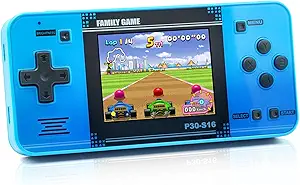 | Best for Young Kids | Screen: 3.0-inch LCD | Preloaded Games: 220 | Battery: 860mAh rechargeable lithium-ion | VIEW LATEST PRICE | See Our Full Breakdown |
| Mini Handheld Game Console with 3.0 Inch IPS Screen, 400 Built-in Games, Rechargeable, Gray |  | Best Budget Pocket Pick | Screen: 3.0-inch IPS | Built-in Games: 400 classics | Battery: 1020mAh rechargeable | VIEW LATEST PRICE | See Our Full Breakdown |
| MSI Claw A8 PC Gaming Handheld (White, BZ2EM-070US) |  | Best Premium Powerhouse | Processor: AMD Ryzen Z2 Extreme | Display: 8-inch FHD+ 120Hz (1920 x 1200) | RAM: 24GB LPDDR5x | VIEW LATEST PRICE | See Our Full Breakdown |
| MANGMI AIR X Android Handheld Game Console, 5.5-Inch FHD IPS, 4GB RAM, 64GB Storage, Black |  | Best for Cloud Gaming | Processor: Qualcomm Snapdragon 662 octa-core, up to 2.1 GHz | Display: 5.5-inch FHD IPS touchscreen, 1920 x 1080, 400 nits | Memory: 4GB RAM | VIEW LATEST PRICE | See Our Full Breakdown |
| Valve Steam Deck OLED 1TB Handheld Gaming Console |  | Best Overall | Display: 7.4-inch HDR OLED, 1280 x 800, anti-glare etched glass | Refresh Rate: Up to 90Hz | Storage: 1TB NVMe SSD | VIEW LATEST PRICE | See Our Full Breakdown |
| ZWYING X6 Handheld Game Console, 4.3 Inch Screen, 8GB, Dual Rockers, TV Output (Black) |  | Best Budget Retro Pick | Screen: 4.3 inches | Storage: 8GB, expandable via microSD | Battery: 1500mAh lithium polymer, rechargeable via USB | VIEW LATEST PRICE | See Our Full Breakdown |
| Boltz Retro Handheld Game Console with 20,503 Built-In Games and 3.75-Inch IPS Display |  | Best for Instant Game Library | Built-in Games: 20,503 | Processor: RK3326 quad-core Cortex-A35 | Operating System: Linux | VIEW LATEST PRICE | See Our Full Breakdown |
| abxylute One Pro Cloud Handheld Gaming Console |  | Best for Cloud Gaming | Platform: Android | Display: 7-inch 1080P touchscreen | Chipset: MediaTek Genio 510 | VIEW LATEST PRICE | See Our Full Breakdown |
| RG43V Pro Retro Handheld Game Console |  | Best Retro Handheld for Multiplayer | Processor: RK3562, 2.0 GHz | Display: 4.3-inch IPS, 1024 × 768 | Storage: 64 GB built-in | VIEW LATEST PRICE | See Our Full Breakdown |
| DREAMHAX X7 Plus Handheld Game Console |  | Best Budget Party Console | Model: X7 Plus | Display: 4.3-inch color TFT LCD, 16:9 | Built-in Games: 10,000 | VIEW LATEST PRICE | See Our Full Breakdown |
| ASUS ROG Xbox Ally Gaming Handheld |  | Best Premium PC Handheld | Platform: Windows 11 Home | Display: 7-inch IPS touchscreen, 1920 × 1080, 120Hz | Processor: AMD Ryzen Z2 A with RDNA 2 graphics | VIEW LATEST PRICE | See Our Full Breakdown |
| Retro Handheld Game Console with 3.5 Inch IPS Screen |  | Best Pocket-Size Retro Pick | Display: 3.5-inch IPS, OCA full-fit, 640 × 480 | Processor: Quad-core ARM Cortex-A53 | RAM: 1 GB LPDDR4 | VIEW LATEST PRICE | See Our Full Breakdown |
| handheld gaming console | Storage | Battery | Display | Processor |
|---|---|---|---|---|
| RG56PRO Retro Handheld Game Co | 128GB TF card included | 5000mAh, up to 8 hours | 5.5-inch IPS, 1280×720, fully laminated, anti-glare | Rockchip RK3562 quad-core, up to 2.0GHz |
| RG52MINI Retro Handheld Game C | 64GB built-in, expandable to 1TB via TF card | 5000mAh, up to 8 hours, USB-C fast charging | — | Rockchip RK3562 quad-core Cortex-A53 2.0GHz |
| Nintendo Switch 2 System | 256GB internal, expandable via microSD Express (sold separately) | — | — | — |
| P30S Handheld Game Console for | — | 860mAh rechargeable lithium-ion | — | — |
| Mini Handheld Game Console wit | — | 1020mAh rechargeable | — | — |
| MSI Claw A8 PC Gaming Handheld | 1TB NVMe SSD | — | 8-inch FHD+ 120Hz (1920 x 1200) | AMD Ryzen Z2 Extreme |
| MANGMI AIR X Android Handheld | 64GB, expandable via microSD | 5000mAh; up to 8 hours of gameplay | 5.5-inch FHD IPS touchscreen, 1920 x 1080, 400 nits | Qualcomm Snapdragon 662 octa-core, up to 2.1 GHz |
| Valve Steam Deck OLED 1TB Hand | 1TB NVMe SSD | 50Wh; 3-12 hours, content-dependent | 7.4-inch HDR OLED, 1280 x 800, anti-glare etched glass | — |
| ZWYING X6 Handheld Game Consol | 8GB, expandable via microSD | 1500mAh lithium polymer, rechargeable via USB | — | — |
| Boltz Retro Handheld Game Cons | — | 3500mAh; up to 5 hours | 3.75-inch IPS, 720 x 720 | RK3326 quad-core Cortex-A35 |
| abxylute One Pro Cloud Handhel | 64 GB, expandable via microSD | — | 7-inch 1080P touchscreen | — |
| RG43V Pro Retro Handheld Game | 64 GB built-in | 4000mAh, 6–8 hours | 4.3-inch IPS, 1024 × 768 | RK3562, 2.0 GHz |
| DREAMHAX X7 Plus Handheld Game | — | — | 4.3-inch color TFT LCD, 16:9 | — |
| ASUS ROG Xbox Ally Gaming Hand | 512GB SSD | 60Wh with fast charging | 7-inch IPS touchscreen, 1920 × 1080, 120Hz | AMD Ryzen Z2 A with RDNA 2 graphics |
| Retro Handheld Game Console wi | 64 GB TF card included | 3200mAh lithium-polymer, 5–7 hours | 3.5-inch IPS, OCA full-fit, 640 × 480 | Quad-core ARM Cortex-A53 |
More Details on Our Top Picks
RG56PRO Retro Handheld Game Console with EVA Hard Case (Black, 128GB)
The RG56PRO stands out as the most enthusiast-oriented retro handheld in this lineup. Compared with the RG52MINI, it doubles the included storage to 128GB and ships with over 31,000 games already installed, so buyers skip the setup work entirely. The fully laminated 5.5-inch 720p display keeps pixels crisp, and hall-effect triggers plus dual 3D joysticks give it a control feel closer to a premium device like the Steam Deck OLED than a typical budget emulator box. Active cooling is a real differentiator — it sustains performance during long sessions where passively cooled rivals throttle. The tradeoffs are real: battery life sags when RGB lighting and Wi-Fi are running, and the strict 5V/2A charging requirement means grabby random USB chargers won’t work reliably.
Pros:- 31,000+ games preloaded on the included 128GB card
- Hall-effect triggers and dual 3D joysticks for precise input
- HDMI output plus Wi-Fi two-player support for couch gaming
- Active cooling sustains performance in long sessions
Cons:- Real-world battery life drops noticeably with brightness, RGB, and Wi-Fi in use
- Strict 5V/2A charging requirement limits which chargers work
Best for: Retro collectors and emulator enthusiasts who want a huge preloaded library and precision controls without building their own setup
Not ideal for: Players who want modern AAA titles or game streaming — the RK3562 chip is built for classic and light 3D emulation, not demanding PC ports
- Storage:128GB TF card included
- Preloaded Games:31,000+
- Processor:Rockchip RK3562 quad-core, up to 2.0GHz
- Display:5.5-inch IPS, 1280×720, fully laminated, anti-glare
- Battery:5000mAh, up to 8 hours
- Connectivity:Wi-Fi, HDMI output
- Operating System:Open-source Linux
- Extras:RGB lighting, vibration motor, EVA hard case
Our verdict“If you want the most complete retro package out of the box with enthusiast-grade controls, this is the retro pick to beat.”
RG52MINI Retro Handheld Game Console, 5.5 Inch IPS Screen, 64GB, Black
Sitting below the RG56PRO in the same family, the RG52MINI trades a smaller included library for a lower barrier to entry, and it compensates with Wi-Fi access to 22,000+ additional retro titles through the RGBOX app. The fully laminated 5.5-inch IPS display matches its pricier sibling for clarity, while USB-C fast charging and storage expansion up to 1TB give it a longevity edge — you can grow this device over years rather than outgrow it. Compared with basic 3-inch consoles like the P30S, the dual 3D joysticks and Hall linear triggers put full 3D-console emulation within reach, not just 8-bit classics. The compromise is the mid-range RK3562 chip: fifth-generation 3D games can struggle, and the compact controls take adjustment if you’re coming from a larger handheld.
Pros:- Vibrant fully laminated IPS display with anti-glare finish
- Storage expandable up to 1TB for long-term growth
- 22,000+ additional games accessible over Wi-Fi
- HDMI output and versatile USB-C/OTG connectivity
Cons:- Mid-range chip makes fifth-generation 3D performance inconsistent
- Compact controls require adjustment for users of larger handhelds
Best for: Budget-conscious retro fans who want a big-screen experience and room to expand storage and library over time
Not ideal for: Players prioritizing fifth-generation 3D titles like N64 or PlayStation-era games at full speed — the chip can falter there
- Screen:5.5-inch IPS, 720×1280, fully laminated, anti-glare
- Processor:Rockchip RK3562 quad-core Cortex-A53 2.0GHz
- RAM:2+4GB
- Storage:64GB built-in, expandable to 1TB via TF card
- Games:5,000+ preloaded; 22,000+ via RGBOX; 30+ emulators
- Battery:5000mAh, up to 8 hours, USB-C fast charging
- Connectivity:2.4G Wi-Fi, HDMI output, Type-C OTG, 3.5mm jack
- Controls:Dual 3D joysticks, Hall linear triggers, vibration motors
Our verdict“The smart middle path for retro gaming — modern hardware comforts with an expandable library at an accessible level.”
Nintendo Switch 2 System
The Nintendo Switch 2 plays a completely different game than everything else here. Where the RG56PRO and Steam Deck OLED chase retro or PC libraries, this is the only option with exclusive first-party titles like Mario Kart World — games you literally cannot play anywhere else. The 7.9-inch HDR screen at up to 120 fps dwarfs every retro handheld in this roundup, and the dock’s 4K TV output turns it into a living-room console in seconds. Backward compatibility with original Switch games softens the upgrade cost for existing owners. The tradeoffs: 4K is capped at 60 fps and needs a compatible TV, GameChat locks behind a paid online membership, and storage expansion uses pricier microSD Express cards. Compared with the ASUS ROG Xbox Ally, it trades raw power for Nintendo’s unmatched exclusive catalog and simpler pick-up-and-play design.
Pros:- Exclusive access to first-party titles like Mario Kart World
- Large 7.9-inch HDR screen with up to 120 fps
- Backward compatible with original Switch games
- Magnetic Joy-Con 2 controllers double as mice for new play styles
Cons:- Online features and GameChat require a paid subscription
- 4K output capped at 60 fps and dependent on game and TV support
Best for: Families and Nintendo fans who want current-gen exclusives, multiplayer, and seamless TV-to-handheld switching
Not ideal for: Buyers seeking maximum performance per dollar or free online features — extras like storage cards and online membership add up
- Screen:7.9-inch LCD touch screen, 1080p HDR, up to 120 fps
- Max TV Output:4K up to 60 fps
- Storage:256GB internal, expandable via microSD Express (sold separately)
- Play Modes:TV, tabletop, handheld
- Controllers:Joy-Con 2 (L/R) with magnetic attachment and mouse controls
- Backward Compatibility:Plays physical and digital Switch games (some exceptions)
- In the Box:Console, Joy-Con 2 pair, dock, AC adapter, HDMI cable, grip, straps
Our verdict“The only pick here for brand-new blockbuster games — buy it for the exclusives, not the specs sheet.”
P30S Handheld Game Console for Kids – 220 Preloaded Retro Games, 3.0″ LCD Screen, Rechargeable, Portable Mini Arcade (Blue)
The P30S is the easiest entry point in the entire roundup for small hands. Unlike the enthusiast-focused RG56PRO or the PC-class Steam Deck OLED, this needs zero configuration, zero accounts, and zero adult supervision after unboxing — 220 games are ready the moment it’s charged. The ergonomic shell is genuinely sized for children, which matters when most handhelds assume adult hand spans. Its rechargeable 860mAh battery eliminates the endless AA replacement cycle of older toy consoles. Compared with the similar Mini Handheld with 400 games, it offers fewer titles but leans into simplicity and a kid-friendly color and shape. The limitations are obvious: only simple retro games, no downloads or modern titles, and the small 3.0-inch screen won’t wow anyone who has seen a Switch.
Pros:- 220 games preloaded with no setup or extra purchases
- Ergonomic design sized for children’s hands
- Rechargeable battery replaces disposable batteries
- Simple games that build hand-eye coordination
Cons:- Retro-only library with no modern titles or expansions
- Small 3.0-inch screen limits detail and long-session comfort
Best for: Parents buying a first gaming device for young children who want something safe, cheap, and instantly playable
Not ideal for: Kids over roughly 10 years old or anyone who has played a Switch — the simple games and small screen lose appeal fast
- Screen:3.0-inch LCD
- Preloaded Games:220
- Battery:860mAh rechargeable lithium-ion
- Design:Ergonomic, lightweight, kid-sized
- Color:Blue
Our verdict“A low-risk first console for young kids — buy it as a toy, not as a gaming investment.”
Mini Handheld Game Console with 3.0 Inch IPS Screen, 400 Built-in Games, Rechargeable, Gray
This gray mini console occupies the sweet spot between the P30S and the full-featured retro handhelds. It nearly doubles the P30S’s library with 400 built-in games, and its IPS panel delivers noticeably better color and viewing angles than the LCD screens on kid-focused rivals. The 1020mAh battery runs about 5 hours, enough for a full travel day, and the pocket-sized shell slips into a bag far more easily than a 5.5-inch device like the RG52MINI. True plug-and-play operation means no menus to configure, no Wi-Fi needed, no learning curve. Be honest about expectations, though: the games are decades old by design, and marathon sessions on a 3.0-inch screen can fatigue the eyes. This is a nostalgia snack, not a primary console.
Pros:- 400 games built in with zero setup
- IPS screen with better color than typical budget LCDs
- Genuinely pocket-sized and travel-friendly
- 5-hour battery life per charge
Cons:- Dated game library with no way to add modern titles
- Small 3.0-inch screen causes eye strain in long sessions
Best for: Commuters and travelers who want a zero-fuss nostalgia device that fits in a jacket pocket
Not ideal for: Anyone expecting depth — no downloads, no multiplayer, and a dated game library make it a secondary device at best
- Screen:3.0-inch IPS
- Built-in Games:400 classics
- Battery:1020mAh rechargeable
- Battery Life:Up to 5 hours per charge
- Design:Pocket-sized, plug-and-play
- Color:Gray
Our verdict“The best cheap pocket filler for spare moments — just don’t mistake it for a main gaming device.”
MSI Claw A8 PC Gaming Handheld (White, BZ2EM-070US)
The MSI Claw A8 stakes its claim on raw Windows 11 gaming muscle, pairing an AMD Ryzen Z2 Extreme with 24GB of RAM and a 1TB NVMe SSD — a spec sheet that outguns the ASUS ROG Xbox Ally’s 16GB/512GB configuration by a comfortable margin. That extra RAM matters more than it sounds: demanding titles and multitasking between game launchers, browsers, and overlays choke lesser handhelds. Compared with the Valve Steam Deck OLED, the Claw trades a glossier screen for a 120Hz refresh rate and full Windows flexibility, meaning any PC game runs without compatibility caveats. The 8-inch display also gives it more real estate than most rivals. The tradeoffs are quieter but real — Windows 11 Home rather than Pro limits power users, and MSI’s long-term software support roadmap is unclear, which gives the Steam Deck’s tightly integrated OS an advantage in day-to-day reliability.
Pros:- AMD Ryzen Z2 Extreme handles demanding AAA titles better than most handhelds
- 24GB RAM plus 1TB NVMe SSD is generous headroom for a Windows handheld
- 8-inch 120Hz display delivers smooth, vibrant gameplay
- Best-in-class battery capacity outlasts most Windows competitors
Cons:- Ships with Windows 11 Home rather than Pro, limiting advanced users
- Long-term software update support is not clearly documented
Best for: PC gamers who want a full Windows desktop experience in handheld form and won’t compromise on horsepower or storage
Not ideal for: Buyers who want a plug-and-play console — Windows handhelds demand tinkering, driver updates, and per-game settings tuning
- Processor:AMD Ryzen Z2 Extreme
- Display:8-inch FHD+ 120Hz (1920 x 1200)
- RAM:24GB LPDDR5x
- Storage:1TB NVMe SSD
- Operating System:Windows 11 Home
- Connectivity:Bluetooth, Wi-Fi, Thunderbolt 4
- Expansion:SD card reader
Our verdict“This pick makes the most sense for enthusiasts who want maximum handheld performance and are comfortable managing a Windows PC on the go.”
MANGMI AIR X Android Handheld Game Console, 5.5-Inch FHD IPS, 4GB RAM, 64GB Storage, Black
The MANGMI AIR X takes a different path from the MSI Claw A8: instead of running games locally, it leans on cloud streaming and Android 14 to keep hardware demands — and cost — down. Its 5.5-inch FHD IPS touchscreen at 400 nits is sharper on paper than the Steam Deck OLED’s 1280 x 800 panel, which pays off when streaming graphically rich PC titles remotely. The Hall-effect joysticks and triggers are a genuine surprise at this tier, matching the control quality pricier handhelds advertise, and the single-fan active cooling helps sustain performance. Where it falls short is local power: the Snapdragon 662 is several generations old, so demanding native Android games will stutter where the Claw or Steam Deck wouldn’t break a sweat. Battery life is stated at up to 8 hours, but streaming over Wi-Fi will drain it faster.
Pros:- FHD touchscreen with 400-nit brightness and 100% sRGB coverage
- Supports handheld play, cloud streaming, and TV screen mirroring
- Hall-effect joysticks and linear triggers feel premium for the category
- microSD expansion adds cheap storage headroom
Cons:- Snapdragon 662 is dated and limits demanding local gameplay
- Stated 8-hour battery life drops noticeably when streaming
Best for: Streamers with solid Wi-Fi who want to play PC game libraries via cloud services without buying a full Windows handheld
Not ideal for: Players who want strong local performance — the Snapdragon 662 struggles with demanding native titles
- Processor:Qualcomm Snapdragon 662 octa-core, up to 2.1 GHz
- Display:5.5-inch FHD IPS touchscreen, 1920 x 1080, 400 nits
- Memory:4GB RAM
- Storage:64GB, expandable via microSD
- Operating System:Android 14
- Battery:5000mAh; up to 8 hours of gameplay
- Cooling:Single-fan active cooling
Our verdict“This model is better suited to cloud-first gamers with reliable internet than anyone expecting a self-contained powerhouse.”
Valve Steam Deck OLED 1TB Handheld Gaming Console
The Steam Deck OLED earns the top spot because it solves the handheld PC problem most elegantly: Valve’s SteamOS handles compatibility, performance profiles, and updates automatically, where the MSI Claw A8 makes you manage Windows yourself. The 7.4-inch HDR OLED display with etched anti-glare glass is arguably the nicest screen in this roundup for contrast and outdoor readability, and the 90Hz refresh rate keeps motion fluid in supported titles. With 1TB of NVMe storage and Wi-Fi 6E for fast downloads and streaming, it covers the practical bases too — and unlike nearly every rival here, it ships with a carrying case. The honest weakness is battery spread: 3 to 12 hours depending on the game means demanding titles can cut sessions short. Compared with the MANGMI AIR X, it costs more but delivers a cohesive, console-like experience with far fewer compromises.
Pros:- HDR OLED display with anti-glare etched glass and up to 90Hz
- SteamOS provides automatic compatibility and update management
- 1TB NVMe storage plus Wi-Fi 6E for fast downloads
- Carrying case with removable liner included
Cons:- Battery life swings from 3 to 12 hours depending on the game
- Native resolution of 1280 x 800 trails sharper rivals like the MANGMI AIR X
Best for: Steam library owners who want a polished, console-like handheld that just works out of the box
Not ideal for: Gamers whose libraries live outside Steam or who need Windows for anti-cheat titles and other launchers
- Display:7.4-inch HDR OLED, 1280 x 800, anti-glare etched glass
- Refresh Rate:Up to 90Hz
- Storage:1TB NVMe SSD
- Wireless:Wi-Fi 6E
- Battery:50Wh; 3-12 hours, content-dependent
- Included Accessories:Carrying case with removable liner
Our verdict“If you own games on Steam and want the most hassle-free handheld PC experience available, this is the one to buy.”
ZWYING X6 Handheld Game Console, 4.3 Inch Screen, 8GB, Dual Rockers, TV Output (Black)
The ZWYING X6 plays a completely different game from the Steam Deck OLED or MSI Claw A8 — this is a cheap, no-frills retro emulation box aimed at nostalgia rather than performance. Its 4.3-inch screen and 8GB of storage put it below the RG52MINI’s 5.5-inch IPS panel and 64GB capacity, but the pitch is simplicity: classic GBA, GBC, SFC, FC, and SEGA titles arrive preloaded, and new games can be added or removed over USB. Unlike single-purpose retro handhelds, it moonlights as an MP3/MP4 player, e-book reader, and camera, which stretches its value for kids or travelers. The quirks are real, though — a power-switch protection design means it only powers on while charging, and the motherboard can be damaged by anything other than a 5V 500mA charger. Treat it as a light-duty novelty and it delivers; expect daily-driver reliability and it will frustrate.
Pros:- Preloaded classic games across GBA, GBC, GB, SFC, FC, SEGA, and SMC formats
- Doubles as a music player, video player, and e-book reader
- Games can be added or removed easily via USB connection to a computer
- TV output lets you play retro titles on a bigger screen
Cons:- Only powers on while charging due to a power switch protection design
- Requires a specific 5V 500mA charger; higher voltage can damage the motherboard
- 8GB of storage is far less than retro rivals like the RG52MINI
Best for: Casual players and gift-buyers who want preloaded retro classics and media features without spending much
Not ideal for: Anyone who wants dependable standalone use — the charging quirks and charger sensitivity make it finicky
- Screen:4.3 inches
- Storage:8GB, expandable via microSD
- Battery:1500mAh lithium polymer, rechargeable via USB
- Game Formats:GBA, GBC, GB, SFC, FC, SEGA, SMC
- Platform:Linux
- Output:TV output via USB connectivity
Our verdict“This option stands out for low-cost nostalgia and media versatility, provided you accept its fussy power behavior.”
Boltz Retro Handheld Game Console with 20,503 Built-In Games and 3.75-Inch IPS Display
The Boltz Retro makes its case with sheer volume: 20,503 built-in games from the moment it’s switched on, which beats the ZWYING X6’s approach of requiring USB file management to build a library. Its square 3.75-inch IPS display at 720 x 720 is crisper than you’d expect at this size, and the dual analog joysticks plus shoulder triggers give it a control layout closer to a modern handheld than the simpler retro boxes in this roundup. The RK3326 processor is a known quantity in the retro emulation world — dependable for 16-bit and much of the 32-bit era, but nothing like the Steam Deck OLED’s capability. My main hesitation is transparency: no game titles or supported emulator systems are specified, so buyers can’t verify what they’re actually getting. Battery life tops out at five hours, a step behind larger retro units. For pick-up-and-play variety with zero setup, though, it’s hard to beat the convenience.
Pros:- 20,503 built-in games with zero setup required
- Crisp 3.75-inch IPS display at 720 x 720 resolution
- Dual joysticks, d-pad, and shoulder triggers offer flexible control
- Compact, rechargeable design with USB-C charging
Cons:- Battery life tops out at five hours
- No game titles or supported emulator systems are specified
- RK3326 performance caps out around lighter retro systems
Best for: Retro fans who want a huge, ready-to-play library out of the box with modern-feeling controls
Not ideal for: Buyers who care about knowing exactly what they own — the unspecified game list and emulator support make the library a gamble
- Built-in Games:20,503
- Processor:RK3326 quad-core Cortex-A35
- Operating System:Linux
- Display:3.75-inch IPS, 720 x 720
- Battery:3500mAh; up to 5 hours
- Controls:Dual analog joysticks, d-pad, shoulder triggers, action buttons
- Audio:Built-in speakers and 3.5mm headphone jack
Our verdict“This pick makes the most sense for anyone who values instant variety over curated quality in a pocket-size retro console.”
abxylute One Pro Cloud Handheld Gaming Console
Most handhelds try to do everything on-device; the abxylute One Pro flips that logic by treating fast Wi-Fi as its real processor. This option stands out for streaming — Xbox Cloud Gaming, GeForce NOW, and PlayStation Remote Play all run from one lightweight 430g body, and the 2T2R MU-MIMO Wi-Fi is specifically there to keep streams stable. Compared with the ASUS ROG Xbox Ally, it trades local processing power for portability and battery life, which makes sense if your games already live in the cloud. Compared with retro-focused picks like the RG43V Pro, its emulation ceiling is lower — think GameCube and lighter PS2, not demanding systems. The switchable digital joysticks are a genuine differentiator for precision, though everything hinges on having broadband of at least 5Mbps and paid subscriptions for the services you want.
Pros:- Cloud gaming, remote play, emulation, and Android games in one device
- Featherweight 430g build with 8+ hours of battery life
- Switchable digital joysticks with 0.2% precision tracking
- 4K video output to a TV with full controller support
Cons:- Cloud and remote play require separate paid subscriptions
- Needs broadband Wi-Fi of at least 5Mbps to function as intended
- Emulation tops out at lighter systems like PS2 and GameCube
Best for: Gamers with fast home Wi-Fi who already subscribe to cloud services like Game Pass or GeForce NOW
Not ideal for: Anyone without reliable broadband or paid cloud subscriptions — the hardware is nearly useless offline beyond light emulation
- Platform:Android
- Display:7-inch 1080P touchscreen
- Chipset:MediaTek Genio 510
- Storage:64 GB, expandable via microSD
- Battery Life:8+ hours
- Weight:430g
- Cloud Services:Xbox Cloud Gaming, GeForce NOW, Amazon Luna, PS Plus Premium, Boosteroid
Our verdict“This pick makes the most sense for cloud-first gamers who want the lightest possible device for streaming their existing subscriptions.”
RG43V Pro Retro Handheld Game Console
Where the DREAMHAX X7 Plus keeps things simple with preloaded classics, the RG43V Pro leans into flexibility. Its dual EmuELEC and RGBOX systems support over 22,000 classic games across a wide range of formats, and the hardware punches above its price class: Hall effect linear triggers, mechanical buttons, and dual 3D joysticks that most budget retro handhelds skip entirely. The 4.3-inch IPS panel at 1024 × 768 is noticeably sharper than the screens on smaller retro picks like the 3.5-inch Linux handheld in this guide. What holds it back is friction — game library access runs through the RGBOX app and depends on Wi-Fi, so it’s less of an instant-on device than the Boltz or DREAMHAX options. For buyers who want TV output and online multiplayer in a retro package, though, nothing else at this size comes close.
Pros:- Dual-system design with support for over 22,000 classic games
- Hall effect triggers and mechanical buttons rare at this size
- HDMI output plus Wi-Fi multiplayer for couch or online play
- 6–8 hours of gameplay on a 4000mAh battery
Cons:- Game library access and downloads depend on the RGBOX app and Wi-Fi
- RK3562 processor limits it to lighter classic systems
Best for: Retro enthusiasts who want online multiplayer, HDMI TV output, and modern controller hardware in one handheld
Not ideal for: Buyers who want games playable straight out of the box — library access depends on the RGBOX app and a Wi-Fi connection
- Processor:RK3562, 2.0 GHz
- Display:4.3-inch IPS, 1024 × 768
- Storage:64 GB built-in
- Game Library:Over 22,000 classic games
- Connectivity:2.4 GHz Wi-Fi, HDMI output, Type-C OTG
- Battery:4000mAh, 6–8 hours
Our verdict“The strongest choice for retro fans who care about multiplayer and controller quality more than instant simplicity.”
DREAMHAX X7 Plus Handheld Game Console
The DREAMHAX X7 Plus is the easiest sell in this lineup: 10,000 built-in games, HDMI output for two-player gaming, and a grab-and-go 4.3-inch screen. Unlike the RG43V Pro, there’s no app, no downloading, no setup — it works the moment it’s charged, which makes it a natural fit for kids or casual family play. It also moonlights as a mini media device with music, video, e-book, and recording functions, something no other handheld here attempts. The tradeoffs are real, though. The TFT LCD panel is a step behind the IPS screens on the RG43V Pro and the 3.5-inch retro handheld, colors look flatter and viewing angles are narrower. Charging is capped at 5V 1A, so refills are slow, and not every preloaded game surfaces on the main menu, which means some hunting through folders.
Pros:- 10,000 classic games preloaded with no setup required
- HDMI output supports two-player gaming on a TV
- Save and load features preserve progress across sessions
- Doubles as a music, video, e-book, and recording device
Cons:- TFT LCD screen lags behind the IPS panels on rivals
- Charging limited to 5V 1A makes for slow refills
- Not all games appear on the main menu
Best for: Families and casual players who want thousands of games ready instantly, plus two-player fun on the TV
Not ideal for: Display purists or anyone who fast-charges everything — the basic TFT screen and 5V 1A charging limit feel dated
- Model:X7 Plus
- Display:4.3-inch color TFT LCD, 16:9
- Built-in Games:10,000
- Connectivity:HDMI output; USB to PC
- Players:Two-player supported
- Charging:5V 1A maximum
Our verdict“A zero-friction party console for casual households — just don’t expect premium screen quality or fast charging.”
ASUS ROG Xbox Ally Gaming Handheld
The ROG Xbox Ally sits at the opposite end of this roundup from retro boxes like the DREAMHAX X7 Plus — it’s a full Windows 11 PC in your hands. That means Xbox Game Pass, Steam, and Epic Games libraries all run natively, no subscriptions-as-a-lifeline like the abxylute One Pro requires. The 7-inch 120Hz touchscreen with FreeSync Premium makes motion smoother than the 60Hz panels on most rivals, including the standard Steam Deck OLED, and fast charging to 50% in 30 minutes addresses the classic handheld pain point. Compared with the MSI Claw A8, the contoured grips give it an ergonomics edge for long sessions. The honest tradeoff: 512GB fills up fast when modern PC games routinely exceed 100GB, and Windows on a handheld still involves more tinkering than a console-like experience. You’re paying for power and flexibility, not simplicity.
Pros:- Native access to Xbox Game Pass, Steam, Epic, and other PC stores
- 120Hz touchscreen with FreeSync Premium for tear-free motion
- Fast charging reaches 50% in 30 minutes
- Contoured grips designed for extended play sessions
Cons:- 512GB SSD limits how many large modern games fit at once
- Windows 11 adds setup and maintenance overhead compared to console-style handhelds
Best for: PC gamers who want their full Steam, Game Pass, and Epic libraries playable anywhere at high frame rates
Not ideal for: Buyers who want a simple console experience — Windows 11 means updates, drivers, and occasional fiddling
- Platform:Windows 11 Home
- Display:7-inch IPS touchscreen, 1920 × 1080, 120Hz
- Processor:AMD Ryzen Z2 A with RDNA 2 graphics
- Memory:16GB LPDDR5X 6400MHz
- Storage:512GB SSD
- Wireless:Wi-Fi 6E, Bluetooth 5.4
- Battery:60Wh with fast charging
Our verdict“The most capable all-in-one handheld here for serious PC gamers, provided they accept storage and software-management tradeoffs.”
Retro Handheld Game Console with 3.5 Inch IPS Screen
Sometimes the best handheld is the one that actually fits in a jacket pocket, and that’s where this 3.5-inch retro console wins. At roughly 13 cm wide with a transparent green shell, it’s far more portable than the 7-inch abxylute One Pro or the ROG Xbox Ally, yet it still covers the essentials: thousands of preloaded classics on an included 64GB card, 5G Wi-Fi, Bluetooth, and HDMI output for TV multiplayer. The OCA full-fit IPS panel at 640 × 480 looks crisp for retro pixel art, and 5–7 hours of battery with USB-C fast charging keeps sessions going. Compared with the DREAMHAX X7 Plus, you get a better screen and more modern connectivity in a smaller body — but the 1GB of RAM caps it at 8/16-bit and lighter 32-bit systems, and the listing’s inconsistent game counts and conflicting battery specs suggest some quality-control sloppiness worth weighing.
Pros:- Thousands of classic games preloaded on the included 64GB card
- Genuinely pocketable 3.5-inch footprint with a crisp OCA full-fit IPS screen
- HDMI/TV output and gamepad support for multiplayer on the big screen
- 5–7 hour battery with USB Type-C fast charging
Cons:- 1GB of RAM limits performance on more demanding emulated systems
- Inconsistent listed game counts and conflicting battery specs point to sloppy documentation
Best for: Commuters and travelers who want a genuinely pocketable retro console with TV-out for hotel-room multiplayer
Not ideal for: Anyone hoping to emulate demanding systems — 1GB of RAM and an older Cortex-A53 chip rule that out
- Display:3.5-inch IPS, OCA full-fit, 640 × 480
- Processor:Quad-core ARM Cortex-A53
- RAM:1 GB LPDDR4
- Storage:64 GB TF card included
- Connectivity:5G Wi-Fi, Bluetooth, HDMI/TV output
- Battery:3200mAh lithium-polymer, 5–7 hours
- Platform:Linux-based
Our verdict“A compact, connected retro handheld that trades raw power for portability — ideal for classic games on the move.”

How We Picked
I evaluated these 15 handheld gaming consoles against four buyer-centered criteria. Performance and software experience came first: how well a device runs the games it’s designed for, how stable the interface is, and how much fiddling is required before you can actually play. Screen and ergonomics mattered nearly as much, since a handheld lives in your hands — display quality, button feel, weight distribution, and comfort during long sessions separated the genuine contenders from the spec-sheet performers. Library access and versatility determined whether each device could grow with the buyer, from the Steam Deck’s full PC catalog to retro handhelds limited to preloaded classics. Finally, value for the intended audience anchored the ranking: a $40 kids’ console and a premium Windows handheld can both be good purchases, but only when judged against the right expectations.
The ranking order reflects a simple philosophy: the best handheld is the one a real person will keep reaching for. Devices with polished, frustration-free experiences ranked above raw hardware power. Where a product has a clear dealbreaker — poor battery, cloud dependency, tiny screens — I call it out so you can match the tradeoff to your own situation rather than assuming every pick suits everyone.
Factors to Consider When Choosing Handheld Gaming Consoles
Before settling on a specific model, it helps to understand the bigger forces shaping every handheld purchase in 2026. The category now spans four fundamentally different product types, and mixing them up is the most common — and most expensive — mistake buyers make. These are the factors I’d weigh before spending anything.
Know Which Type of Handheld You Actually Want
Handheld gaming consoles in 2026 fall into four categories: full PC handhelds (Steam Deck, ROG Xbox Ally, MSI Claw), hybrid consoles (Switch 2), Android and cloud devices (MANGMI AIR X, abxylute One Pro), and dedicated retro emulation handhelds (everything from the RG series to the Boltz). Each type answers a different question. PC handhelds ask “do you want your entire Steam library on the couch?” Retro handhelds ask “do you just want classic games cheaply?” Buyers frequently overpay for a premium PC handheld only to play 16-bit games they could enjoy on a $60 device — or buy a retro console expecting to run modern releases. Deciding which question you’re answering eliminates most of the lineup immediately.
Operating System and Game Library Access
The software platform determines what you can play and how painful setup will be. SteamOS on the Steam Deck is the most frictionless experience in the category — suspend and resume works like a real console, and updates rarely break anything. Windows-based handhelds like the ROG Xbox Ally and MSI Claw A8 offer maximum compatibility but demand more troubleshooting, driver management, and patience. Android handhelds sit in between, flexible but dependent on individual apps. Retro handhelds are plug-and-play but locked to whatever emulators they ship with. A common mistake is underestimating how much time a fussy OS steals from actual gaming; a less powerful device with clean software often delivers more playtime per hour of ownership.
Screen Size, Resolution, and Why They Matter Differently on Handhelds
On a device held 10 inches from your face, resolution behaves differently than on a TV. A 1080p panel on a 7-inch Windows handheld is genuinely useful for reading desktop text; the same resolution on a retro handheld is wasted, since emulated 16-bit games don’t gain anything beyond a certain pixel density. What matters more universally is panel type and brightness — an IPS or OLED screen with strong brightness makes outdoor and commute gaming viable, while dim panels become frustrating fast. Screen size also drives the size of your hands’ grip: 7-inch devices demand bigger hands or a case with grips, while 3-to-4-inch models can cramp adult hands during long sessions despite their portability.
Battery Life and Realistic Play Sessions
Manufacturer battery claims almost always assume best-case conditions — low brightness, older or lighter games. Demanding 3D titles can cut runtime roughly in half on PC handhelds, and a console rated for long sessions may last far less when pushed. Think about your actual routine: if you game mostly on a couch near an outlet, battery is a minor concern and a powerful device makes sense. If you commute or travel, a hybrid console like the Switch 2 or a lightweight retro handheld will serve you better than a power-hungry Windows machine. Charging behavior matters too — some handhelds can’t charge as fast as they drain under heavy load, meaning you lose battery even while plugged in.
Storage, Expandability, and the Hidden Costs
Storage is where budgets quietly inflate. A 512GB handheld sounds generous until modern games consume 80–150GB each, and microSD card prices add up if you plan a large library. PC handhelds with replaceable SSDs offer a long-term upgrade path that soldered storage doesn’t, which affects how long the device stays viable. On retro handhelds, the preloaded card matters more than internal storage — a 128GB card like the RG56PRO’s holds vastly more emulated titles than a 64GB equivalent. Factor in a carrying case, screen protector, and possibly a dock before comparing prices, because the true cost of a handheld is rarely just the console.
Who’s Actually Going to Use It
A handheld that’s perfect for a 35-year-old emulation enthusiast can be a poor gift for an 8-year-old, and vice versa. Kids’ consoles like the P30S prioritize durability, simplicity, and preloaded content over upgradability — appropriate for that audience, limiting for anyone else. Enthusiast retro handhelds with dual analog sticks, WiFi, and HDMI output assume the buyer wants to tinker with settings and add games themselves. Cloud handhelds assume reliable home internet and existing subscriptions to services like GeForce NOW or Xbox Cloud Gaming. Matching the device to the actual user — including their tolerance for troubleshooting — is the single best predictor of a satisfying purchase, and it’s why my rankings assign specific buyer types rather than declaring one universal winner.
Frequently Asked Questions
Is a retro handheld worth buying if I already own a Steam Deck or modern console?
For many buyers, yes — because the two serve different moments. A retro handheld weighs a fraction of a PC handheld, powers on instantly, and is cheap enough to toss in a bag or glovebox without worry. If your Steam Deck mostly stays docked or you hesitate to bring a $500+ device on trips, a sub-$60 retro handheld like the Boltz or RG52MINI covers that casual gap. On the other hand, if your Steam Deck already travels with you and can handle emulation, a dedicated retro device becomes redundant unless you specifically value pocketability or a second screen for a family member. The overlap between the two is bigger than marketing suggests, so be honest about when and where you’d actually use the second device.
Do cloud gaming handhelds like the abxylute One Pro replace a real console?
Only under specific conditions. Cloud handhelds stream games from remote servers, which means your experience depends almost entirely on internet quality — a fast, stable connection delivers console-quality visuals on cheap hardware, while mediocre broadband produces lag that makes action games unplayable. They also assume you already pay for or own content on services like Xbox Cloud Gaming, GeForce NOW, or PlayStation Remote Play, since the device itself plays almost nothing locally. Where they shine is as lightweight companions to an existing gaming setup: playing your library from bed or on a trip without buying a second full console. If you don’t have both strong internet and an existing library, a standalone handheld will serve you far better.
How much storage do I actually need on a handheld gaming console?
It depends entirely on what you play. Retro and emulated titles are tiny — most fit comfortably in a few megabytes, so a 64GB card holds thousands of classics and upgrades beyond that are mostly future-proofing. Modern games are a different story: current AAA releases commonly demand 80–150GB, meaning a 512GB handheld fills after just a handful of installs. If you’re buying a PC handheld, look for models with replaceable SSDs or a microSD slot so storage can grow cheaply later. Also check how much of the advertised space is actually free — operating systems and preinstalled software can consume a surprising chunk before you install anything.
What’s the real difference between a Steam Deck OLED and a Windows handheld like the ROG Xbox Ally?
The difference is less about power and more about philosophy. Windows handhelds like the ROG Xbox Ally and MSI Claw A8 typically run more demanding games at higher settings, and Windows gives them access to every PC store and launcher without workarounds. The Steam Deck OLED trades that raw power for SteamOS, which behaves like a real console — instant suspend, clean interface, predictable performance per game, and far less troubleshooting. In practice, Steam Deck owners spend more time playing while Windows handheld owners spend more time configuring. Choose Windows if you want maximum capability and don’t mind maintenance; choose the Steam Deck if you want gaming to feel effortless.
Are the cheap handhelds with thousands of preloaded games any good?
Quality varies enormously, and the game count is the least meaningful number on the box. Many budget devices pad their totals with duplicates, homebrew filler, or broken ROMs, so “20,000 built-in games” might mean a few hundred genuinely playable classics. The better budget models in this roundup — the RG56PRO and RG43V Pro, for example — pair decent IPS screens with stable emulators and sensible game curation, which is what actually determines enjoyment. The 3-inch mini consoles are best treated as nostalgic novelty gifts or kids’ first devices rather than primary gaming hardware. If you’re buying for yourself and care at all about screen size and button feel, stepping up even one tier in the retro category pays off noticeably.
Conclusion
After comparing all 15 consoles, the right choice comes down to matching the device to your gaming life. Best overall goes to the Steam Deck OLED 1TB — nothing else combines library access, comfort, and software polish this well. Best value is the Nintendo Switch 2 for players who want modern exclusive games with zero setup hassle, though the Boltz Retro console takes the value crown for pure retro enthusiasts on a tight budget. Best premium pick is the ASUS ROG Xbox Ally, whose 120Hz display and Ryzen Z2 A chip suit buyers who want maximum performance and don’t mind managing Windows. Best for beginners and kids is the P30S, with its preloaded games and simple interface, while the RG52MINI works as a gentle entry into retro emulation for older players. For specific needs: the abxylute One Pro for cloud-centric gamers with strong internet, the MANGMI AIR X for Android flexibility, and the RG56PRO with its hard case for travelers who want protection included. Whatever you choose, buy for the games you’ll actually play — not the specs you’ll never use.
Fall Picks
fall essentials
As an affiliate, we earn on qualifying purchases.