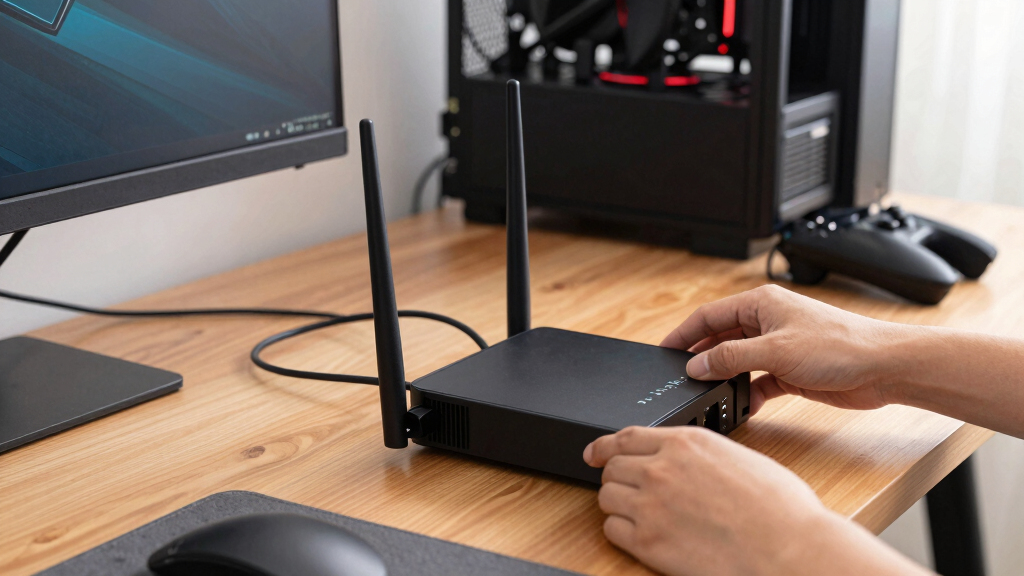

A router UPS should keep the internet connection alive without taking over the room or making battery care unnecessarily difficult. My top choice is the APC 850VA because its 35-minute runtime at 100W gives a router, modem, and a few network devices useful breathing room. The APC 600VA is my value pick for smaller setups, while the wall-mountable APC BE425M fits buyers who care more about compact placement than maximum runtime.

Play games on Amazon Luna for your game nights, included with Prime
- A rotating selection of games, no download needed
- Play on TV, laptop or phone
- Fast, free delivery for your gear, too
The main choice is not simply bigger versus smaller. A high-capacity unit can support more hardware, but it costs more and occupies more space. A compact model is easier to place beside a router, yet offers fewer outlets and less battery headroom. I ranked these four options by how well they fit real router setups, giving extra weight to runtime at practical loads, placement flexibility, outlet layout, and battery maintenance.
Complete the kit


Key Takeaways
- I rank the APC 850VA first because it offers the strongest balance of runtime, outlet capacity, and replaceable-battery ownership.
- The APC 600VA is the better-value choice when a router and modem are the main devices needing backup power.
- The APC BE425M is the easiest model to place discreetly, but its 15-minute runtime at 100W limits its reach.
- The CyberPower CP1500PFCLCD has the most power capability, yet its size and price make it excessive for a router-only setup.
- Runtime depends on total load, so separating network hardware from desktops and monitors can keep the connection running longer.
| APC UPS 850VA/450W Battery Backup & Surge Protector |  | Best Overall | Capacity: 850VA/450W | Runtime at 100W: Up to 35 minutes | Total outlets: 9 | VIEW LATEST PRICE | See Our Full Breakdown |
| APC UPS 600VA/330W Battery Backup, BE600M1 |  | Best Value | Capacity: 600VA/330W | Runtime at 100W: Approximately 23 minutes | Total outlets: 7 | VIEW LATEST PRICE | See Our Full Breakdown |
| APC BE425M 425VA Battery Backup UPS |  | Best Compact | Capacity: 425VA/255W | Input voltage: 120V | Runtime at 100W: Up to 15 minutes | VIEW LATEST PRICE | See Our Full Breakdown |
| CyberPower CP1500PFCLCD PFC Sinewave UPS |  | Best for High-Power Network and Office Setups | Capacity: 1500VA/1000W | Topology: Line-interactive | Output: Sine wave | VIEW LATEST PRICE | See Our Full Breakdown |
| mini UPS units for router | Capacity | Warranty | Runtime at 100W | Total outlets |
|---|---|---|---|---|
| APC UPS 850VA/450W Battery Bac | 850VA/450W | 3 years | Up to 35 minutes | 9 |
| APC UPS 600VA/330W Battery Bac | 600VA/330W | 3 years | Approximately 23 minutes | 7 |
| APC BE425M 425VA Battery Backu | 425VA/255W | 3 years | Up to 15 minutes | 6 |
| CyberPower CP1500PFCLCD PFC Si | 1500VA/1000W | 3 years, including battery | — | — |
More Details on Our Top Picks
APC UPS 850VA/450W Battery Backup & Surge Protector
The APC 850VA takes my first position because it provides the most convincing balance for a router, modem, mesh hub, NAS, and other small network devices. Its stated 35 minutes at a 100W load exceeds the 23 minutes listed for the APC 600VA and the 15 minutes listed for the BE425M. That difference gives short outages time to pass and leaves more margin as the battery ages.
Its nine-outlet layout also separates it from the smaller APC models. Six outlets have battery backup and surge protection, while three are surge-only. I would use the battery side for connection-dependent equipment and reserve the surge-only bank for devices that can shut off immediately. Two USB-A ports add emergency phone charging, although the lack of USB-C makes the arrangement feel less current than the CyberPower unit.
Compared with the CyberPower CP1500PFCLCD, this APC is less powerful and lacks a detailed screen. It is also a more proportionate choice for most home networks: buyers are not paying for 1000W output merely to support low-draw networking hardware. The user-replaceable RBC17 battery supports longer ownership, but replacement is an added future expense. Runtime also falls when a desktop, monitor, or power-hungry NAS joins the load, so this should not be read as a guaranteed 35-minute result for every setup.
Pros:- Longest stated 100W runtime among the three APC models
- Six battery-backed outlets support a complete network chain
- User-replaceable RBC17 battery extends practical service life
- Two USB-A ports can charge small devices during an outage
Cons:- Runtime drops as computers, monitors, or larger NAS devices are added
- Replacement RBC17 battery is sold separately
- No USB-C port or detailed status display
Best for: Buyers powering a router, modem, mesh equipment, and several home-office or network devices from one balanced UPS.
Not ideal for: Buyers needing sine-wave output for demanding workstation hardware or the smallest possible wall-mounted unit.
- Capacity:850VA/450W
- Runtime at 100W:Up to 35 minutes
- Total outlets:9
- Battery-backed outlets:6
- Surge-only outlets:3
- USB ports:2 USB-A, 5V/2.4A
- Battery:User-replaceable RBC17
- Warranty:3 years
Our verdict“My best overall pick pairs useful router-focused runtime with enough outlets and maintenance flexibility for a broader home network.”
APC UPS 600VA/330W Battery Backup, BE600M1
I place the APC BE600M1 second because it covers the needs of a modest router setup without jumping to the size and capacity of the APC 850VA. Its quoted 23-minute runtime at 100W is eight minutes longer than the BE425M figure. For a router and modem drawing well below 100W together, the real runtime may be longer, though equipment load and battery condition will shape the result.
Five battery-backed outlets provide enough room for a router, modem, fiber terminal, mesh hub, and one small accessory. Two extra surge-only outlets handle equipment that does not need to remain active. This arrangement is more versatile than the four battery-backed outlets on the BE425M, while the single 1.5A USB port offers basic phone charging that the smaller model omits. Compared with the APC 850VA, however, this unit gives up runtime, one battery-backed socket, and a second USB port.
The strongest ownership feature is its replaceable internal battery. I favor that over treating the entire UPS as disposable once battery capacity fades. The compromise is that a new battery costs extra, and 330W output leaves less expansion room than the 450W APC or 1000W CyberPower. This pick makes the most sense when value and adequate coverage matter more than supporting a desktop-heavy office.
Pros:- Useful 23-minute stated runtime at a 100W load
- Five battery-backed outlets suit common networking setups
- Replaceable battery lowers long-term waste
- USB charging adds practical outage utility
Cons:- Shorter runtime and lower output than the APC 850VA
- Replacement batteries add to lifetime cost
- Single 1.5A USB port is modest by current charging standards
Best for: Value-focused buyers backing up a router, modem, fiber terminal, and a few low-power accessories.
Not ideal for: Large home-office systems requiring the longest runtime, high wattage, or numerous battery-backed sockets.
- Capacity:600VA/330W
- Runtime at 100W:Approximately 23 minutes
- Total outlets:7
- Battery-backed outlets:5
- Surge-only outlets:2
- USB port:1 USB-A, 1.5A
- Battery:User-replaceable
- Warranty:3 years
Our verdict“The BE600M1 is my value recommendation for buyers who want sensible router protection without paying for office-scale capacity.”
APC BE425M 425VA Battery Backup UPS
The APC BE425M earns the compact role through its wall-mountable design and router-friendly 425VA/255W capacity. A buyer can place it near a structured-media panel, under a desk, or beside wall-mounted network gear more easily than the CyberPower mini tower. Its four battery-backed outlets cover the usual router, modem, fiber terminal, and mesh-node combination without leaving a large box underused.
That space advantage carries the clearest runtime sacrifice in the lineup. APC lists 15 minutes at 100W, compared with 23 minutes for the BE600M1 and 35 minutes for the APC 850VA. Fifteen minutes can bridge a brief outage or provide time for an orderly shutdown, but it is a weak match for locations where outages often last an hour. There are also no USB charging ports, making the BE600M1 more flexible for only a modest step up in capacity.
Audible alarms and LED indicators provide basic event feedback, while surge protection and the supplied voltage-regulation claim address unstable utility power as well as blackouts. Still, buyers wanting detailed load data will find the CyberPower LCD much more informative. I rank this unit third because its small footprint solves a genuine placement problem, not because it matches the endurance or expansion room of the leaders.
Pros:- Compact, wall-mountable body works in tight networking areas
- Four battery-backed outlets cover a basic connection chain
- Audible alarms and LED indicators communicate power events
- Three-year warranty and equipment-protection coverage add reassurance
Cons:- Shortest stated 100W runtime in this comparison
- No USB charging ports
- Low 255W ceiling limits expansion beyond small electronics
Best for: Apartment dwellers and minimalist network setups needing a wall-mountable UPS for a router and a few low-power devices.
Not ideal for: Buyers facing long outages or planning to attach computers, monitors, and higher-draw storage equipment.
- Capacity:425VA/255W
- Input voltage:120V
- Runtime at 100W:Up to 15 minutes
- Total outlets:6
- Battery-backed outlets:4
- Surge-only outlets:2
- Mounting:Wall-mountable
- Warranty:3 years
- Equipment protection:$75,000 coverage
Our verdict“I recommend the BE425M when discreet placement outranks long runtime or room for future hardware.”
CyberPower CP1500PFCLCD PFC Sinewave UPS
The CyberPower CP1500PFCLCD is the performance outlier: its 1500VA/1000W rating is more than double the watt capacity of the first-ranked APC 850VA. It can protect a router and modem alongside a computer, larger NAS, switches, and other office hardware. Its sine-wave output is also better matched to equipment with active power-factor-correction power supplies than the basic router duties served by the smaller APC units.
A color LCD shows load, battery, and power information that the indicator-based APC models cannot match. Twelve outlets and both USB-A and USB-C charging make this the broadest connection hub here, while automatic voltage regulation can correct some voltage fluctuations without repeatedly drawing from the battery. For buyers managing expensive network and workstation gear together, those capabilities may justify its higher position on a general UPS list.
I rank it fourth for this particular roundup because router use rarely requires 1000W. The mini-tower body is still bulky beside the BE425M, and much of its capacity may sit unused in a router-only installation. It also lacks a supplied runtime figure at 100W in the information available for this comparison, so I cannot make a clean endurance claim against the three APC units. Choose it for mixed network and computer protection; skip it when the sole goal is keeping Wi-Fi active with minimal cost and clutter.
Pros:- Highest capacity and watt ceiling in the lineup
- Sine-wave output suits sensitive and active-PFC equipment
- Color LCD provides detailed operating information
- Twelve outlets plus USB-A and USB-C offer broad connectivity
Cons:- Bulky and excessive for most router-only installations
- Likely commands a premium over the smaller APC options
- Battery will eventually require replacement
Best for: Power users protecting networking hardware, a NAS, and workstation equipment from the same battery system.
Not ideal for: Router-only buyers who prioritize a small enclosure, simple placement, and proportionate capacity.
- Capacity:1500VA/1000W
- Topology:Line-interactive
- Output:Sine wave
- Outlets:12 NEMA 5-15R
- USB ports:1 USB-A and 1 USB-C
- Display:Color LCD
- Protection:Surge protection, battery backup, and AVR
- Form factor:Mini tower
- Warranty:3 years, including battery
Our verdict“The CP1500PFCLCD is my high-power pick for a combined network and workstation, but it is oversized for ordinary Wi-Fi backup.”
How We Picked
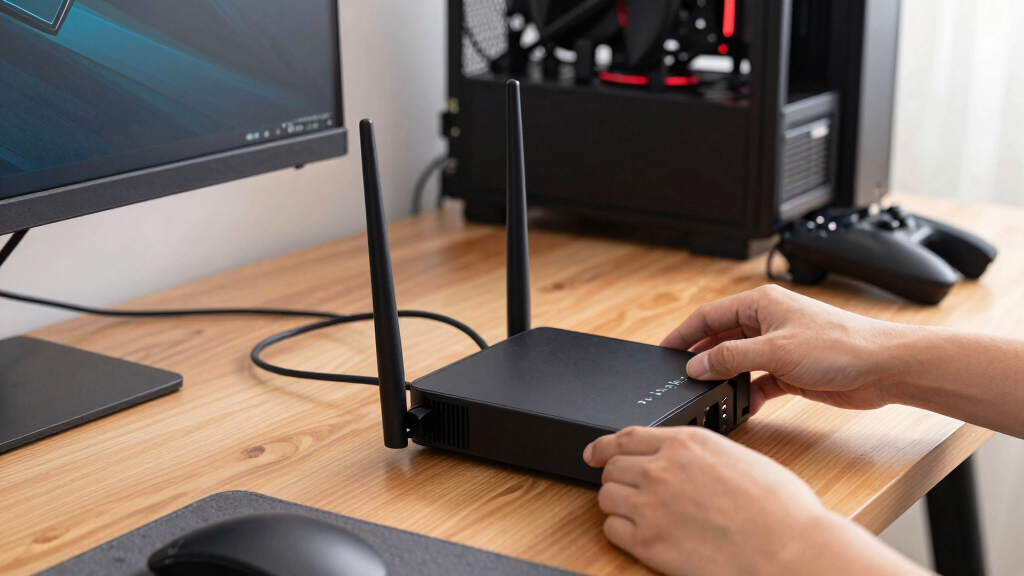
I treated this as a router-focused comparison, not a contest for the highest VA number. My ranking gives priority to useful outage runtime, enough battery-backed outlets for a router-and-modem chain, and a size that makes sense near networking equipment. I also looked at whether batteries can be replaced, since that affects the cost of keeping a UPS beyond its first battery cycle.
I gave the supplied runtime figures more weight than capacity labels whenever both were available. VA and watt ratings reveal how much equipment a unit can support, but they do not tell a buyer exactly how long that equipment will run. I also separated battery-backed outlets from surge-only outlets, since only the former keep devices powered during an outage. USB ports, displays, alarms, mounting options, warranties, and voltage regulation shaped close calls rather than driving the ranking alone.
Each role reflects a different buyer. The first-ranked APC 850VA offers the best middle ground; the APC 600VA trades some endurance for a lower likely entry cost; the BE425M emphasizes compact router placement; and the CyberPower model serves a larger network or workstation. That last unit is technically the most capable, but capability that goes unused carries penalties in size and value.
| mini UPS units for router | Runtime at 100W | Battery |
|---|---|---|
| APC UPS 850VA/450W Battery Bac | Up to 35 minutes | User-replaceable RBC17 |
| APC UPS 600VA/330W Battery Bac | Approximately 23 minutes | User-replaceable |
| APC BE425M 425VA Battery Backu | Up to 15 minutes | — |
| CyberPower CP1500PFCLCD PFC Si | — | — |
Factors to Consider When Choosing Best Mini UPS Units For Routers
I would choose a router UPS by mapping the exact connection chain, estimating its combined watt draw, and deciding how long that chain needs to survive without utility power. The biggest model is not automatically the best fit.Match Runtime to the Outages You Actually Face
Runtime is the most useful dividing line in this group. At a stated 100W load, the APC 850VA offers 35 minutes, the BE600M1 offers 23 minutes, and the BE425M offers 15 minutes. A router and modem may draw much less than 100W, so those figures work best as standardized comparison points rather than promises for every home. I would choose the 850VA model for recurring or longer interruptions and the BE425M for brief flickers.
Count Only the Battery-Backed Outlets
Surge-only sockets stop passing power during a blackout. I would list every device required for internet access, including the router, modem, fiber terminal, mesh controller, and any powered network switch. That list determines the number of battery-backed outlets needed. The APC 850VA supplies six, the BE600M1 supplies five, and the BE425M supplies four. The CyberPower unit offers the most total outlets, which suits a larger office system.
Avoid Loading the UPS with Nonessential Hardware
A monitor, printer, gaming PC, or speaker can consume battery capacity that would otherwise keep the connection alive. For maximum Wi-Fi endurance, I would place only network-dependent devices on the battery-backed bank and move less necessary equipment to surge-only protection. If a desktop or NAS must stay online, the CyberPower 1000W ceiling provides far more load headroom than any APC model here.
Plan for Battery Aging
UPS batteries lose capacity with age, heat, and repeated discharge cycles. A quoted runtime when new will not remain fixed forever. The APC 850VA specifies a user-replaceable RBC17, while the BE600M1 also supports internal battery replacement. I favor replaceable-battery models for buyers who expect to keep the enclosure for several years, though the cost of a genuine replacement belongs in the ownership budget.
Choose a Form Factor That Fits the Network
Placement can settle the decision before capacity does. The wall-mountable BE425M is the best match for a tight cabinet or discreet router corner. The CyberPower model needs more floor or shelf space but repays that demand with higher output, a screen, and more connections. I would leave ventilation around any unit and avoid enclosing its battery in a hot, unventilated cabinet.
Frequently Asked Questions
How long will a mini UPS run a router and modem?
The answer depends on the combined watt draw and battery condition. In this lineup, supplied comparisons at 100W range from 15 minutes for the BE425M to 35 minutes for the APC 850VA. Many router-and-modem pairs draw less than 100W, which may extend runtime, but added mesh nodes, switches, and fiber equipment reduce it. I would total the watt ratings of every connected device and leave spare capacity for battery aging.
Should both the router and modem be connected to battery backup?
Yes, if both devices are required for the internet connection. Keeping only the router powered does little when the modem or fiber terminal has shut down. I would connect the entire network path to battery-backed outlets, then place optional devices on surge-only outlets. In some outages, the internet provider’s local equipment may also lose power, so a UPS cannot guarantee service when the upstream network is offline.
Is a 1500VA UPS excessive for a router?
For a router alone, the CyberPower 1500VA/1000W model is usually more capacity than needed. Its value rises when the same unit must support a modem, NAS, powered switch, computer, and other office hardware. I would choose a smaller APC model for ordinary Wi-Fi backup because it takes less space and better matches the load. The CyberPower becomes the logical pick when router protection is only one part of a larger power plan.
What is the difference between battery-backed and surge-only outlets?
Battery-backed outlets continue supplying power for a limited time after utility electricity fails, while surge-only outlets provide protection during normal operation but switch off during a blackout. I would reserve battery-backed sockets for connection-critical devices. Chargers, lamps, printers, and other equipment that can stop immediately belong on surge-only sockets, reducing battery load and extending network runtime.
How often does a UPS battery need replacement?
Replacement timing varies with temperature, discharge frequency, storage conditions, and battery design. Warning alarms, failed self-checks, swelling, or sharply reduced runtime signal that service is due. I prefer models with user-replaceable batteries, such as the APC 850VA and BE600M1, because the enclosure can remain in service. I would check the unit regularly and follow the maker’s battery and recycling instructions rather than waiting for an outage to reveal a weak battery.
Conclusion
For most buyers, I recommend the APC 850VA: it has the best blend of stated runtime, outlet count, and replaceable-battery ownership. Budget-focused households with a router, modem, and a few small devices should choose the APC BE600M1. If wall mounting and a small footprint matter more than endurance, the APC BE425M is the cleaner fit. I would reserve the CyberPower CP1500PFCLCD for buyers protecting a network, NAS, and computer together, since its power and physical size exceed what a basic router setup normally needs.
Halloween Picks
halloween
As an affiliate, we earn on qualifying purchases.