The AMD Ryzen 7 9800X3D is my best overall pick for the best CPUs for small form factor gaming PCs because its gaming-focused cache gives custom SFF builders the strongest ceiling when paired with a real graphics card. For buyers who want a complete compact system instead of a DIY CPU choice, the GMKtec Gaming Mini PC K8 Plus stands out as the most balanced ready-to-play option, while the GMKtec K11 Mini PC is the premium pick for those who want Ryzen 9-class mobile performance in a tiny box. The main tradeoff is simple: a desktop CPU can deliver more gaming headroom, but it demands more planning around heat, power, motherboard size, and GPU clearance. Mini PCs are easier to place and set up, yet their integrated graphics and limited upgrade paths cap long-term gaming performance. Keep reading for the full breakdown of which pick fits each kind of small form factor gamer.

Get games and gaming gear delivered free — and shop member deals
- Fast, free delivery on millions of items
- Access to Prime Big Deal Days deals on October 6–7
- Prime Video, Amazon Music and more included
Key Takeaways
- The AMD Ryzen 7 9800X3D ranks first because it is the only standalone desktop CPU here with true high-end gaming headroom for a custom SFF build.
- The GMKtec K8 Plus is the strongest complete mini PC choice because its Ryzen 7 8845HS, 32GB DDR5 memory, and 1TB SSD create the best balance of CPU power, memory, and storage.
- The GMKtec K11 is the premium compact pick, but its Ryzen 9 8945HS makes more sense for buyers who also run creator apps or heavy multitasking than for pure gaming alone.
- The GMKtec Nucbox M6 Ultra is the value-friendly route into compact PC gaming, though its Ryzen 5 7640HS and 512GB SSD make it less future-ready than the K8 Plus.
- The GMKtec M2 Pro S falls lower because its older Intel Core i7-1185G7 and DDR4 platform fit light gaming better than modern small form factor gaming expectations.
| AMD Ryzen 7 9800X3D Desktop Processor |  | Best Overall for Custom SFF Gaming Builds | Processor Series: AMD Ryzen 7 | Architecture: Zen 5 with 3D V-Cache | Cores / Threads: 8 cores / 16 threads | VIEW LATEST PRICE | See Our Full Breakdown |
| GMKtec Gaming Mini PC K8 Plus with AMD Ryzen 7 8845HS, 32GB DDR5 RAM, 1TB SSD |  | Best Premium Ready-Made Mini PC | Processor: AMD Ryzen 7 8845HS | Cores / Threads: 8 cores / 16 threads | Max Clock: Up to 5.1 GHz | VIEW LATEST PRICE | See Our Full Breakdown |
| GMKtec Nucbox M6 Ultra Gaming Mini PC with AMD Ryzen 5 7640HS, 16GB DDR5 RAM, 512GB SSD |  | Best Value Mini PC for Light Gaming | Processor: AMD Ryzen 5 7640HS | Architecture: Zen 4 | Threads: 12 threads | VIEW LATEST PRICE | See Our Full Breakdown |
| GMKtec M7 Ultra Gaming Mini PC AMD Ryzen 7 PRO 6850U (4.70GHz) 16 DDR5 RAM +1TB Hard Drive PCle SSD, Dual NIC LAN 2.5G Desktop Computer, Dual USB4, HDMI 2.1, USB-C |  | Best for eGPU Experimenters | Processor: AMD Ryzen 7 PRO 6850U | Cores / Threads: 8 cores / 16 threads | Max Clock: Up to 4.7 GHz | VIEW LATEST PRICE | See Our Full Breakdown |
| GMKtec M2 Pro S Mini PC with Intel Core i7-1185G7, 16GB DDR4, 512GB SSD |  | Best for Casual Gaming and Productivity | Processor: Intel Core i7-1185G7 | Cores / Threads: 4 cores / 8 threads | Max Turbo Clock: Up to 4.8 GHz | VIEW LATEST PRICE | See Our Full Breakdown |
| GMKtec K11 Mini PC with AMD Ryzen 9 8945HS, 32GB DDR5 RAM, 1TB SSD |  | Best eGPU-Ready Mini PC | Processor: AMD Ryzen 9 8945HS, 8 cores/16 threads, up to 5.4GHz | RAM: 32GB DDR5, expandable to 128GB | Storage: 1TB PCIe 4.0 SSD, expandable to 8TB | VIEW LATEST PRICE | See Our Full Breakdown |
More Details on Our Top Picks
AMD Ryzen 7 9800X3D Desktop Processor
I’d rank the AMD Ryzen 7 9800X3D first because it is the strongest pure gaming CPU here for a custom small form factor build. Its 96MB 3D V-Cache helps keep frame rates high without needing as many cores as a workstation chip, which matters when heat and case volume are limited. Compared with the GMKtec K8 Plus, this is less convenient because it is a CPU, not a ready-to-run mini PC, but it gives builders far more control over motherboard, GPU, case, and cooling choices. The catch is real: a 140W TDP is demanding inside compact cases, and the lack of a stock cooler adds cost. This pick makes sense when gaming performance comes before simplicity.
Pros:- 3D V-Cache design is highly suited to CPU-limited gaming
- Strong Zen 5 performance with 8 cores and 16 threads
- AM5 platform gives custom builders broad motherboard and upgrade options
- High boost clock helps keep frame rates responsive
Cons:- 140W TDP can be hard to cool quietly in very compact cases
- No stock cooler included, raising the total build cost
- Requires a full custom build rather than a ready-made mini PC
Best for: SFF builders pairing a compact AM5 motherboard with a discrete GPU and a strong low-profile or liquid cooling setup
Not ideal for: Plug-and-play buyers or very tiny cases with limited cooler clearance, since the CPU needs a separate cooler and careful thermal planning
- Processor Series:AMD Ryzen 7
- Architecture:Zen 5 with 3D V-Cache
- Cores / Threads:8 cores / 16 threads
- Base Clock:4.7 GHz
- Max Boost Clock:5.2 GHz
- Socket:AM5
- L3 Cache:96 MB
- TDP:140 W
Bottom line: This is my first pick for buyers who want the fastest gaming-focused CPU in a self-built SFF rig and can handle the cooling work.
GMKtec Gaming Mini PC K8 Plus with AMD Ryzen 7 8845HS, 32GB DDR5 RAM, 1TB SSD
The GMKtec K8 Plus earns the premium slot because it balances compact size with the most complete ready-made gaming package in this batch. The Ryzen 7 8845HS, 32GB DDR5, 1TB PCIe 4.0 SSD, and Radeon 780M make it stronger for iGPU gaming than the GMKtec M6 Ultra, especially for buyers who want fewer upgrades on day one. I also like the three power modes because small PCs need a way to trade noise for speed depending on the game. Compared with the Ryzen 7 9800X3D, it cannot match a discrete-GPU custom build, and Performance mode can get louder and warmer. It is best treated as a compact gaming desktop for lighter AAA settings, esports, and media-heavy setups.
Pros:- Ryzen 7 8845HS and Radeon 780M make it one of the stronger iGPU gaming options here
- 32GB DDR5 and 1TB PCIe 4.0 SSD reduce the need for immediate upgrades
- Three performance modes help manage heat, fan noise, and speed
- Dual 2.5Gbps LAN and USB4 suit fast networking and docked setups
Cons:- Premium mini PC pricing can overlap with entry-level custom desktops
- Performance mode may raise fan noise under gaming loads
- Integrated graphics still limit high-detail AAA gaming
Best for: Buyers who want a powerful ready-to-run mini PC for esports, lighter AAA gaming, streaming, and multi-display desk setups
Not ideal for: Players expecting desktop-GPU frame rates in demanding AAA games, since the Radeon 780M is still integrated graphics
- Processor:AMD Ryzen 7 8845HS
- Cores / Threads:8 cores / 16 threads
- Max Clock:Up to 5.1 GHz
- Graphics:AMD Radeon 780M, RDNA3
- Memory:32GB DDR5, expandable to 128GB
- Storage:1TB PCIe 4.0 SSD, expandable to 8TB
- Networking:Dual Intel i226V 2.5Gbps LAN, WiFi 6, Bluetooth 5.2
- Power Modes:Silent 35W, Balanced 54W, Performance 65-70W
- Cooling:Dual-fan system with VC heat pipes
Bottom line: This is my pick for buyers who want the strongest ready-made mini PC here without building around a separate CPU.
GMKtec Nucbox M6 Ultra Gaming Mini PC with AMD Ryzen 5 7640HS, 16GB DDR5 RAM, 512GB SSD
The GMKtec Nucbox M6 Ultra is the value choice because it brings a modern Ryzen 5 7640HS, DDR5 memory, USB4, and dual 2.5GbE LAN without moving into the higher-cost tier of the GMKtec K8 Plus. For small form factor gaming, the appeal is efficiency: the Radeon 760M can handle esports, older titles, and tuned-down modern games while keeping the footprint tiny. Against the GMKtec M2 Pro S, this AMD chip is the better gaming fit thanks to newer integrated Radeon graphics and DDR5 support. The compromises are capacity and ceiling: 16GB RAM and a 512GB SSD are workable but modest, and the lack of a dedicated GPU limits demanding games. I’d buy this for price-conscious compact gaming, not max settings.
Pros:- Modern Ryzen 5 7640HS offers strong performance for the size
- Radeon 760M is a better gaming fit than many older mini PC iGPUs
- USB4 and dual 2.5GbE LAN add useful high-speed connectivity
- RAM and storage expansion leave room to grow
Cons:- 512GB SSD can fill quickly with modern game libraries
- No dedicated GPU for demanding AAA performance
- Compact cooling may limit sustained speed under heavy loads
Best for: Budget-focused buyers who mainly play esports, indie games, cloud games, and older PC titles on a compact desk setup
Not ideal for: Gamers who want high settings in recent AAA games, since the Radeon 760M and base 16GB/512GB configuration have limits
- Processor:AMD Ryzen 5 7640HS
- Architecture:Zen 4
- Threads:12 threads
- Max Clock:Up to 5.0 GHz
- Graphics:AMD Radeon 760M, 8 CUs up to 2.6GHz
- Memory:16GB DDR5, expandable to 128GB
- Storage:512GB PCIe SSD, expandable to 8TB via dual M.2 slots
- Networking:Dual 2.5GbE LAN, WiFi 6E, Bluetooth 5.2
- Display Support:Triple displays, including 8K@60Hz via USB4
Bottom line: This is my value pick for buyers who want a small, affordable gaming-capable PC and can accept integrated-graphics limits.
GMKtec M7 Ultra Gaming Mini PC AMD Ryzen 7 PRO 6850U (4.70GHz) 16 DDR5 RAM +1TB Hard Drive PCle SSD, Dual NIC LAN 2.5G Desktop Computer, Dual USB4, HDMI 2.1, USB-C
The GMKtec M7 Ultra sits in the lineup as the tinkerer’s mini PC. Its OCuLink port is the main reason: compared with the GMKtec M6 Ultra, it gives buyers a cleaner path toward external GPU setups, while the Radeon 680M is still capable enough for lighter play before adding one. The Ryzen 7 PRO 6850U is older than the GMKtec K8 Plus processor, so this is not the fastest all-in-one mini PC here. Still, the 1TB SSD, dual USB4, quad-display support, and performance modes make it flexible for gaming desks that also handle work. The downside is that the best version of this setup may require extra eGPU hardware, and the 16GB RAM base feels less premium than its connectivity.
Pros:- OCuLink support gives it a stronger eGPU path than most mini PCs
- Radeon 680M can handle lighter gaming without an external GPU
- 1TB SSD is roomier than the M6 Ultra base storage
- Dual USB4 and quad-display support make it flexible for mixed work and gaming setups
Cons:- Older Ryzen 7 PRO 6850U trails newer 8845HS systems in raw performance
- 16GB RAM is modest for a premium-leaning mini PC
- External GPU use adds cost, cables, and desk clutter
Best for: Compact-PC hobbyists who want integrated gaming now and a practical route to an external GPU later
Not ideal for: Buyers who want the fastest built-in graphics out of the box, since the K8 Plus has a newer Radeon 780M platform
- Processor:AMD Ryzen 7 PRO 6850U
- Cores / Threads:8 cores / 16 threads
- Max Clock:Up to 4.7 GHz
- Graphics:AMD Radeon 680M integrated graphics
- Memory:16GB DDR5 4800MHz, expandable up to 96GB
- Storage:1TB M.2 PCIe SSD, dual-slot expansion up to 4TB
- External GPU Support:OCuLink port with PCIe x4 bandwidth
- Display Output:Dual USB4, HDMI 2.1, DisplayPort; up to quad display
- Performance Modes:Quiet 35W, Balance 50W, Performance 65W-70W
Bottom line: This is my pick for buyers who want a compact mini PC with a credible upgrade path through OCuLink.
GMKtec M2 Pro S Mini PC with Intel Core i7-1185G7, 16GB DDR4, 512GB SSD
The GMKtec M2 Pro S is the lowest gaming priority in this group, but it still has a clear role: a compact productivity PC that can handle casual games. The Core i7-1185G7 and Iris Xe graphics are useful for everyday work, media, and older titles, yet the GMKtec M6 Ultra is the better gaming buy because its Ryzen 5 7640HS and Radeon 760M are newer and better suited to small-PC play. Compared with the GMKtec K8 Plus, this model feels more like a work-first machine with game support on the side. Its 35W power draw helps in tight spaces, but DDR4 memory, four CPU cores, and limited iGPU headroom hold it back. I’d only pick it when Intel compatibility or office use matters more than frame rates.
Pros:- Intel Core i7-1185G7 is capable for daily productivity and light creative tasks
- Iris Xe graphics can handle casual games and older titles
- 35W power profile is easier to manage in a compact chassis
- WiFi 6, USB4, HDMI, DisplayPort, and 2.5G Ethernet cover modern desk needs
Cons:- Four-core CPU is less future-friendly than the Ryzen 7 mini PCs here
- DDR4 memory trails the DDR5 systems in this roundup
- Integrated Iris Xe graphics are weaker for gaming than Radeon 760M, 680M, or 780M options
Best for: Home-office buyers who want a tiny Intel-based PC for work, streaming, emulation, and light gaming
Not ideal for: SFF gaming buyers choosing primarily for frame rate, since newer AMD mini PCs in this lineup offer stronger integrated graphics
- Processor:Intel Core i7-1185G7
- Cores / Threads:4 cores / 8 threads
- Max Turbo Clock:Up to 4.8 GHz
- Graphics:Intel Iris Xe Graphics G7 with 96 EU
- Memory:16GB DDR4, expandable to 64GB
- Storage:512GB NVMe SSD, expandable to 2TB
- Connectivity:WiFi 6, USB4.0, Bluetooth 5.2, DP, HDMI, RJ45 2.5G
- Display Support:3x 4K at 60Hz via HDMI and USB-C
- Power Consumption:35W TDP
Bottom line: This is my choice only for buyers who need a compact Intel work PC that can play lighter games on the side.
GMKtec K11 Mini PC with AMD Ryzen 9 8945HS, 32GB DDR5 RAM, 1TB SSD
I would rank the GMKtec K11 as the roundup’s Best eGPU-ready mini PC because its Ryzen 9 8945HS gives small-form-factor buyers a fast 8-core/16-thread base without jumping to a full desktop chip like the AMD Ryzen 7 9800X3D. Compared with the GMKtec K8 Plus, it leans harder into expansion: Oculink plus dual USB4 makes an external GPU setup more practical, while quad 4K output suits streaming, capture, or desk-heavy multitasking. The catch is that the built-in Radeon 780M is still a clear limiter for high-settings AAA gaming, so the CPU strength can outpace the graphics. It also makes more sense for tinkerers than plug-and-play buyers, since the strongest gaming path depends on extra hardware.
Pros:- High 8-core Ryzen 9 performance in a 0.79 lb mini PC
- Oculink and dual USB4 make eGPU expansion more practical
- 32GB DDR5 RAM and 1TB PCIe 4.0 SSD are strong starting specs
- Dual 2.5GbE LAN and quad 4K display support suit advanced desk setups
Cons:- Integrated Radeon 780M limits modern AAA gaming without an eGPU
- 1-year warranty feels short for a premium mini PC
- Compact chassis narrows upgrade paths versus a socketed desktop build
Best for: I’d point it at small-form-factor gamers who want a powerful mini PC now and plan to add an Oculink eGPU later.
Not ideal for: I would skip it for buyers who want discrete-GPU gaming performance out of the box, since the Radeon 780M sets a firm graphics ceiling.
- Processor:AMD Ryzen 9 8945HS, 8 cores/16 threads, up to 5.4GHz
- RAM:32GB DDR5, expandable to 128GB
- Storage:1TB PCIe 4.0 SSD, expandable to 8TB
- Graphics:AMD Radeon 780M integrated graphics at 2800MHz
- Ports:HDMI 2.1, DisplayPort 2.1, dual USB4, Oculink
- Networking:Dual Intel i226V 2.5GbE LAN, WiFi 6, Bluetooth 5.2
- Cooling:Dual fans with Hyper Ice Chamber 2.0, 35dB quiet mode
- Display Support:Up to four 4K displays at 60Hz
- Weight:0.79 lbs
Bottom line: I would choose the GMKtec K11 for a tiny Ryzen 9 gaming build where eGPU expansion is part of the plan.
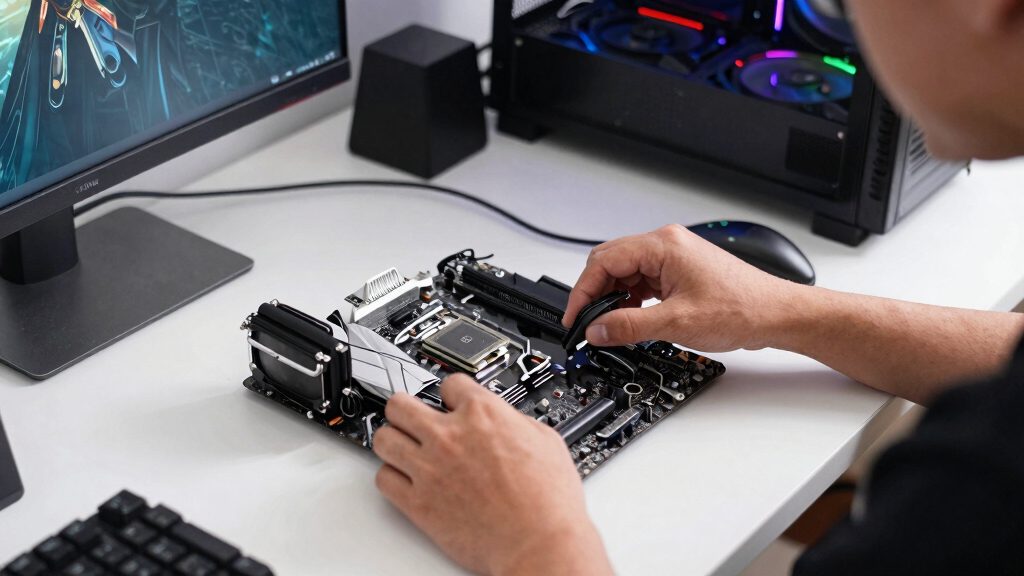
How We Picked
I ranked these options around the real limits of small form factor gaming PCs: heat output, gaming frame-rate ceiling, platform age, memory configuration, storage, upgrade flexibility, and how much build work the buyer has to handle. The AMD Ryzen 7 9800X3D leads because a dedicated SFF gaming build with this CPU can scale far beyond the integrated-graphics mini PCs, especially when paired with a compact discrete GPU.
For the complete mini PCs, I gave extra weight to modern mobile Ryzen chips, 32GB DDR5 configurations, larger SSDs, and ports that make a tiny system more useful on a desk or in a living room. That is why the GMKtec K8 Plus and K11 sit above the M6 Ultra, M7 Ultra, and M2 Pro S: they offer stronger CPU platforms and better out-of-box specs. Lower-ranked models still make sense for lighter games, emulation, streaming, or budget setups, but they carry clearer limits for newer games.
Factors to Consider When Choosing Best CPUs For Small Form Factor Gaming PCs
Choosing a CPU for a small form factor gaming PC is less about chasing the biggest spec sheet and more about matching performance to the space, cooling, and upgrade path you can actually support.Desktop CPU Or Complete Mini PC
The first decision is whether I want a standalone CPU for a custom SFF build or a complete mini PC with the processor already built in. The Ryzen 7 9800X3D is the better route for serious gaming because it can pair with a discrete GPU and a purpose-built cooling setup. The GMKtec models are simpler because they include memory, storage, enclosure, and ports in one package. That convenience matters if desk space, setup time, or living-room placement matters more than maximum frame rates. The tradeoff is that most mini PCs lean on integrated graphics, so demanding AAA games usually require lower settings or resolution scaling. I would choose the desktop CPU path for long-term gaming headroom and a mini PC for compact convenience.
Thermals Matter More In Small Cases
Small cases punish wasteful CPU choices because there is less room for airflow, large coolers, and heat soak. A chip that looks fast on paper can become noisy or inconsistent if the enclosure cannot move heat away fast enough. This is where mobile processors in the GMKtec K8 Plus and K11 have an advantage: they are designed for tighter power envelopes than desktop-class parts. The Ryzen 7 9800X3D can still be excellent in an SFF build, but it needs a case and cooler chosen around it. Buyers often focus on CPU name alone, then discover fan noise is the real daily annoyance. I would rather take a slightly lower sustained wattage with stable clocks than a hotter chip trapped in the wrong chassis.
Integrated Graphics Set The Gaming Ceiling
Mini PCs are appealing because they are tiny, but the graphics side usually decides how enjoyable games feel. A fast mobile CPU like the Ryzen 9 8945HS helps with simulation, emulation, and background tasks, yet it cannot fully replace a dedicated GPU in visually heavy games. That is why the Ryzen 7 9800X3D sits apart from the mini PCs: its value appears when the build includes a capable graphics card. For esports, indie games, cloud gaming, and older titles, integrated graphics can be enough. For new AAA games, higher refresh rates, or 1440p play, I would prioritize a custom SFF build or an external-GPU-friendly setup. The mistake is buying a premium mini PC expecting desktop GPU behavior from a compact integrated platform.
Memory And Storage Shape Longevity
In a compact gaming PC, 16GB RAM can still work, but 32GB DDR5 gives the system more breathing room for newer games, browser tabs, launchers, and streaming tools. This is one reason the GMKtec K8 Plus and K11 feel more future-ready than the M6 Ultra, M7 Ultra, and M2 Pro S. Storage is just as practical: a 512GB SSD fills quickly once a few large games are installed. A 1TB SSD does not make games faster by itself, but it reduces the need for immediate upgrades or constant uninstalling. For custom builds, I would plan storage and memory around the case before buying, since some SFF layouts make later upgrades fiddly. The best small PC is the one that still feels usable after the first month of installs.
Ports Can Decide The Better Mini PC
When two compact systems have similar CPU performance, ports and connectivity can become the deciding factor. Features like USB4, HDMI 2.1, dual LAN, and fast USB-C matter if the PC will connect to docks, external storage, capture gear, or multiple displays. The GMKtec M7 Ultra is weaker as a gaming-first pick than the K8 Plus, but its dual NIC and USB4 setup make it more appealing for network-heavy users. The M2 Pro S is simpler and cheaper-feeling by comparison, which is fine for basic desktop use but less flexible for a gaming station with accessories. I would not pay extra for ports I will never use, but I also would not ignore them in a mini PC. With compact systems, the ports are part of the upgrade path.
Frequently Asked Questions
Should I Buy The Ryzen 7 9800X3D Or A Complete GMKtec Mini PC?
I would pick the Ryzen 7 9800X3D if the goal is the highest gaming ceiling in a custom small form factor build. It makes the most sense when paired with a compact discrete GPU, a quality cooler, and a case that can handle the heat. A GMKtec mini PC is better if I want a finished system that can sit quietly on a desk or near a TV without building from parts. The tradeoff is that the mini PC route is easier but less powerful for modern AAA gaming. For serious frame rates, the desktop CPU path wins; for simplicity, GMKtec is the friendlier choice.
Is The GMKtec K11 Worth Paying More For Than The K8 Plus?
The GMKtec K11 makes sense if I want the stronger Ryzen 9-class mobile chip for multitasking, productivity, and gaming in the same compact machine. For gaming alone, the K8 Plus is the smarter balance because its Ryzen 7 8845HS, 32GB DDR5 RAM, and 1TB SSD already cover the needs of most compact-PC buyers. The K11 may pull ahead in heavier CPU workloads, but integrated graphics still limit game performance compared with a desktop GPU build. I would pay more for the K11 only if the PC will double as a small workstation. For a focused gaming mini PC, the K8 Plus is the cleaner value.
Can A Mini PC Replace A Console For Living-Room Gaming?
A mini PC can replace a console for some buyers, especially if I play indie games, esports titles, emulators, cloud gaming, or older PC games. The GMKtec K8 Plus and K11 are the best fits here because their newer Ryzen chips and 32GB memory give them more room to handle modern launchers and multitasking. The catch is that integrated graphics usually require lower settings in demanding games. A console may still be smoother for plug-and-play AAA gaming at a fixed budget. I would treat a mini PC as a flexible living-room computer first and a high-end gaming box only if it has access to stronger graphics.
Is 16GB RAM Enough For A Small Form Factor Gaming PC In 2026?
16GB RAM is still usable for lighter gaming, esports, and everyday desktop work, which keeps the M6 Ultra, M7 Ultra, and M2 Pro S in the conversation for budget-minded buyers. That said, I prefer 32GB DDR5 for a new compact gaming purchase because small systems are not always pleasant to upgrade later. Newer games, browser tabs, game launchers, voice chat, and streaming apps can crowd 16GB quickly. The K8 Plus and K11 feel more relaxed because they start with 32GB. If the price gap is manageable, 32GB is the safer buy for a PC I plan to keep for years.
Which Pick Is Best If I Mostly Play Esports And Older Games?
For esports, older games, and lighter titles, I would lean toward the GMKtec Nucbox M6 Ultra as the value play or the GMKtec K8 Plus if the budget allows more headroom. The M6 Ultra has a newer Ryzen 5 platform that fits compact everyday gaming better than the older Intel-based M2 Pro S. The K8 Plus costs more but brings stronger specs across the board, especially memory and storage. The Ryzen 7 9800X3D is more than this use case needs unless I also want a discrete GPU build for high-refresh play. For casual compact gaming, spending every extra dollar on CPU power is not always the best move.
Conclusion
My best overall recommendation is the AMD Ryzen 7 9800X3D for builders who want the strongest small form factor gaming PC and are willing to plan around cooling, motherboard size, and a discrete GPU. My best value pick is the GMKtec Nucbox M6 Ultra for buyers who want a compact, modern Ryzen mini PC without paying for higher-end specs they may not use. The GMKtec K8 Plus is my choice for most ready-to-use mini PC gamers because it balances Ryzen 7 performance, 32GB DDR5 memory, and 1TB storage better than the rest. The GMKtec K11 is the best premium option for buyers who want a tiny PC that can handle gaming plus heavier multitasking, while the M7 Ultra fits users who care about USB4 and dual LAN more than pure game performance. For beginners, I would start with the K8 Plus if the budget allows, or the M6 Ultra if price matters most.
Fall Picks
fall essentials
As an affiliate, we earn on qualifying purchases.