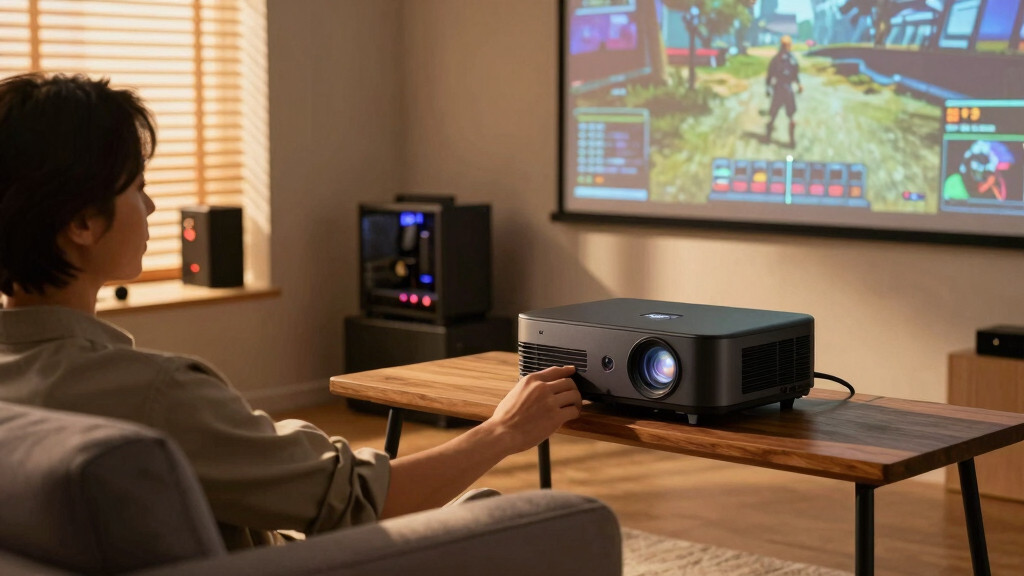

Finding the best 4K projector for PC gaming involves balancing image quality, latency, brightness, and budget. The ViewSonic LX700-4K stands out as the overall top choice, thanks to its bright laser projection and high refresh rate, ideal for fast-paced games. The XGIMI HORIZON offers stunning visuals with its RGB triple laser system, perfect for immersive experiences. Meanwhile, the BenQ TK700 provides excellent value for gamers seeking sharp images without breaking the bank. Every option in this list has tradeoffs, such as price vs. performance or brightness vs. portability. Keep reading to see how these projectors compare and which one suits your gaming setup best.

Play games on Amazon Luna for your game nights, included with Prime
- A rotating selection of games, no download needed
- Play on TV, laptop or phone
- Fast, free delivery for your gear, too
Complete the kit


Key Takeaways
- High refresh rates (240Hz) are crucial for smooth gameplay, especially in fast-paced titles.
- Brightness levels above 3500 lumens help maintain clear images in well-lit rooms, but may increase cost.
- Laser projection systems tend to offer better color accuracy and longevity compared to lamp-based models.
- Input lag varies widely; models with lower latency are better suited for competitive gaming.
- Price often correlates with features like HDR, brightness, and build quality, but some budget options still deliver solid performance.
| ViewSonic LX700-4K 4K UHD Laser Gaming Projector 3500 Lumens 240Hz Xbox |  | Best Overall for High-End Gaming and Flexibility | Resolution: 3840x2160p (4K UHD) | Brightness: 4000 ANSI lumens | Refresh Rate: 240Hz | VIEW ON AMAZON | See Our Full Breakdown |
| Epson Home Cinema 3800 4K PRO-UHD 3-Chip 3LCD Projector with HDR Technology |  | Best for Vivid Colors and Sharp Image Clarity | Resolution: 4K PRO-UHD | Brightness: 3000 Lumens | Contrast Ratio: 100,000:1 | VIEW ON AMAZON | See Our Full Breakdown |
| XGIMI HORIZON 4K RGB Triple Laser Home Projector |  | Best All-in-One for Visuals and Gaming | Laser Type: RGB Triple Laser | Lumens: 3200 ISO | Contrast Ratio: 100,000:1 | VIEW ON AMAZON | See Our Full Breakdown |
| ViewSonic PX749-4K 4K UHD Gaming Projector 4000 Lumens 240Hz Xbox HDR |  | Best for Bright Rooms and Large Screens | Resolution: 3840x2160p (4K UHD) | Brightness: 4000 ANSI lumens | Refresh Rate: 240Hz | VIEW ON AMAZON | See Our Full Breakdown |
| BenQ TK700 4K HDR Home Entertainment Gaming & Movie Projector |  | Best for Low Latency and Home Entertainment | Resolution: 4K HDR | Latency: 4.2ms | Throw Distance: 8.2 ft for 100″ screen | VIEW ON AMAZON | See Our Full Breakdown |
| ONOAYO Outdoor 4K Projector with AI Auto Focus, Dolby Audio, Built-in Apps |  | Best Portable Outdoor 4K Projector for Versatile Gaming and Entertainment | Resolution: 4K | Audio: Dolby Audio, 50W speakers | Smart TV OS: 2.0 | VIEW ON AMAZON | See Our Full Breakdown |
| 4k projectors for pc gaming | Resolution | Brightness | Features |
|---|---|---|---|
| ViewSonic LX700-4K 4K UHD Lase | 3840x2160p (4K UHD) | 4000 ANSI lumens | HDR/HLG support, SuperColor, keystone correction |
| Epson Home Cinema 3800 4K PRO- | 4K PRO-UHD | 3000 Lumens | Lens focus, shift adjustment, active 3D |
| XGIMI HORIZON 4K RGB Triple La | 4K | — | Lens shift, zoom, 2-year warranty |
| ViewSonic PX749-4K 4K UHD Gami | 3840x2160p (4K UHD) | 4000 ANSI lumens | Keystone correction, 1.3x zoom |
| BenQ TK700 4K HDR Home Enterta | 4K HDR | — | — |
| ONOAYO Outdoor 4K Projector wi | 4K | High brightness (lumens not specified) | — |
More Details on Our Top Picks
ViewSonic LX700-4K 4K UHD Laser Gaming Projector 3500 Lumens 240Hz Xbox
The ViewSonic LX700-4K stands out for combining ultra-smooth 240Hz refresh rate with 4K UHD resolution, making it a top choice for gamers seeking both clarity and responsiveness. Its low input lag of 4.2ms and HDR support deliver sharp, vibrant images with minimal delay, outperforming many competitors like the Epson 3800, which offers excellent color but lacks the same refresh rate. The projector’s flexible installation options, including keystone correction and 360-degree projection, cater to complex setups but require specific ceiling mounts, a potential hurdle for casual users. While its high brightness (4000 lumens) ensures visibility in brighter rooms, the premium price tag might deter budget-conscious buyers. This model is best suited for dedicated gaming rooms where performance and image quality take priority.
Pros:- Exceptional 4K resolution with vibrant HDR colors
- Ultra-low input lag perfect for fast-paced gaming
- Flexible installation with auto and manual adjustments
Cons:- Requires specific ceiling mount for optimal setup
- High cost may be prohibitive for casual users
- Limited details on long-term durability
Best for: High-end gaming setups and home theaters where flexibility and top-tier visuals are essential
Not ideal for: Casual gamers or users with limited space who prefer simpler, more portable options
- Resolution:3840x2160p (4K UHD)
- Brightness:4000 ANSI lumens
- Refresh Rate:240Hz
- Input Lag:4.2ms
- Screen Size Range:80 to 150 inches
- Features:HDR/HLG support, SuperColor, keystone correction
Our verdict“This projector is ideal for serious gamers who need crisp visuals and fast response times at a premium price.”
Epson Home Cinema 3800 4K PRO-UHD 3-Chip 3LCD Projector with HDR Technology
The Epson Home Cinema 3800 excels with its 3-chip 3LCD technology, producing vibrant, true-to-life colors that outperform many single-chip projectors like the ViewSonic LX700-4K. Its high brightness (3,000 lumens) combined with impressive contrast ratio of 100,000:1 creates sharp images even in less-than-dark rooms, but it may struggle in brightly lit environments compared to the ViewSonic’s higher lumen output. The projector’s support for full 10-bit HDR and 4K HDR gaming at 60 fps makes it suitable for immersive viewing, although its larger size and weight could be inconvenient for portable use. Setup complexity might challenge beginners, but its image quality makes it worth the effort. It’s best for users prioritizing color accuracy and contrast over ultra-fast gaming responsiveness.
Pros:- Vivid color reproduction with 3LCD technology
- High brightness and contrast for versatile lighting conditions
- Supports full HDR and 4K HDR gaming
Cons:- Heavy and less portable
- Requires dark environment for best quality
- Setup can be complex for beginners
Best for: Home theater enthusiasts who want vivid, accurate colors and bright images in dedicated dark rooms
Not ideal for: Casual gamers or those needing ultra-low latency for fast-paced gaming
- Resolution:4K PRO-UHD
- Brightness:3000 Lumens
- Contrast Ratio:100,000:1
- HDR Support:Full 10-bit HDR
- HDMI Support:18 Gbps HDMI 2.0
- Features:Lens focus, shift adjustment, active 3D
Our verdict“Best suited for viewers seeking vibrant, sharp images with excellent color fidelity in controlled lighting conditions.”
XGIMI HORIZON 4K RGB Triple Laser Home Projector
The XGIMI Horizon combines vivid 4K image quality with a smart platform and premium sound, making it a versatile choice for both gaming and media consumption. Its RGB triple laser technology delivers high contrast and true-to-life colors, outperforming traditional lamp-based projectors like the BenQ TK700 in color accuracy. The built-in Google TV and Harman Kardon speakers add convenience, but the projector’s brightness of 3200 ISO lumens may require a darker room for optimal viewing, unlike the brighter ViewSonic models. The advanced gaming features, including 240Hz refresh rate and VRR, make it suitable for serious gaming, but its higher price and setup complexity could deter casual users. It’s best for those wanting a premium, all-in-one entertainment device with strong gaming capabilities.
Pros:- Vivid 4K images with high contrast and color accuracy
- Built-in Google TV and premium Harman Kardon speakers
- Flexible optics with lens shift and zoom
Cons:- High price point
- Brightness may not suffice in bright environments
- Setup can be complex for some users
Best for: Tech-savvy users who want a sleek, feature-rich projector with excellent image quality and sound
Not ideal for: Budget-conscious buyers or those with bright rooms needing high brightness
- Laser Type:RGB Triple Laser
- Lumens:3200 ISO
- Contrast Ratio:100,000:1
- Resolution:4K
- Smart Platform:Google TV
- Features:Lens shift, zoom, 2-year warranty
Our verdict“Ideal for users seeking a premium, feature-rich projector that excels in visuals and smart functionality, with gaming features to match.”
ViewSonic PX749-4K 4K UHD Gaming Projector 4000 Lumens 240Hz Xbox HDR
The ViewSonic PX749-4K offers a compelling mix of brightness and speed, with 4000 lumens making it suitable for well-lit rooms and large projection sizes up to 300 inches. Its 240Hz refresh rate and low input lag of 4.2ms position it as a top choice for Xbox gaming, surpassing the Epson 3800 in brightness for daytime use. The 1.3x optical zoom and keystone correction simplify setup, but the projector’s weight and size suggest ceiling mounting for best stability. While it’s a solid choice for bright environments, it might lack some of the color richness seen in laser models like the XGIMI Horizon. This projector makes the most sense for gamers who prioritize high lumens and large projection sizes over ultra-compact form factors.
Pros:- High brightness for bright rooms and daylight gaming
- Fast 240Hz refresh rate ideal for Xbox
- Large projection capability up to 300 inches
Cons:- Heavy, may require ceiling mounting
- Limited color richness compared to laser projectors
- Setup can be complex for beginners
Best for: Gamers who need high brightness for daytime gaming and large screen projection
Not ideal for: Users who prefer ultra-compact, portable setups or darker room environments
- Resolution:3840x2160p (4K UHD)
- Brightness:4000 ANSI lumens
- Refresh Rate:240Hz
- Input Lag:4.2ms
- Projection Size:up to 300 inches
- Features:Keystone correction, 1.3x zoom
Our verdict“Best for gamers seeking bright, large-screen projections with high refresh rates in well-lit spaces.”
BenQ TK700 4K HDR Home Entertainment Gaming & Movie Projector
The BenQ TK700 emphasizes low latency, with a 4.2ms response time making it suitable for fast-paced gaming, comparable to the ViewSonic PX749. Its standard throw distance of around 8.2 feet for a 100″ screen makes it a practical choice for medium-sized rooms, but it may not suit very small or very large spaces without adjustment. Although specific brightness and contrast details are limited, its focus on delivering sharp 4K HDR images with quick responsiveness makes it appealing for gamers who want a balance of performance and convenience. Unlike the laser-based models, it relies on traditional lamp technology, which might impact long-term durability. This projector is ideal for users who want a straightforward, low-latency gaming experience in a typical home setting.
Pros:- Low latency of 4.2ms for smooth gameplay
- Sharp 4K HDR images with good color reproduction
- Suitable throw distance for typical living rooms
Cons:- Limited details on brightness and contrast
- Requires larger space for optimal large-screen setup
- Standard lamp technology may affect longevity
Best for: Gamers seeking low latency and good image quality in standard-sized rooms
Not ideal for: Very bright rooms or users seeking the highest brightness levels
- Resolution:4K HDR
- Latency:4.2ms
- Throw Distance:8.2 ft for 100″ screen
Our verdict“Perfect for gamers wanting low input lag and decent 4K HDR performance in typical home environments.”
ONOAYO Outdoor 4K Projector with AI Auto Focus, Dolby Audio, Built-in Apps
The ONOAYO Outdoor 4K Projector stands out for its impressive combination of portability and smart features, making it an excellent choice for gamers who want to enjoy high-resolution visuals both indoors and outside. Unlike the XGIMI HORIZON, which emphasizes RGB laser quality and longer-lasting projection, ONOAYO focuses on ease of setup with auto focus and keystone correction, ideal for quick outdoor gaming sessions. Its built-in streaming apps like Netflix and YouTube provide instant content access, but the absence of specific lumen ratings leaves some uncertainty about performance in bright environments. The Dolby Audio and 50W speakers ensure sound quality complements its vivid visuals, although its durability and long-term reliability remain unverified. This projector is perfect for users who prioritize portability, smart features, and flexible mounting options over raw brightness or laser longevity.
Pros:- 4K resolution with AI image optimization for vibrant visuals
- Built-in streaming apps for instant content access
- Auto focus and keystone correction enable quick, easy setup
- Lightweight, portable design for versatile use
Cons:- Brightness levels are unspecified, which could affect outdoor visibility
- Limited information on long-term durability and build quality
- Price not provided, making cost comparison difficult
Best for: Gamers and families who want a portable 4K projector capable of outdoor and indoor use with integrated streaming and audio.
Not ideal for: Users seeking ultra-bright projectors for daytime outdoor gaming or those needing detailed long-term durability data.
- Resolution:4K
- Audio:Dolby Audio, 50W speakers
- Smart TV OS:2.0
- Connectivity:WiFi 6, Bluetooth, Chromecast
- Brightness:High brightness (lumens not specified)
- Auto Focus:Yes
- Keystone Correction:Yes
- Projection Size Adjustment:50% to 100%
- Portability:2.4 lbs
Our verdict“This pick suits gamers seeking a portable, feature-rich projector that handles both outdoor and indoor entertainment with minimal fuss.”

How We Picked
These projectors were selected based on a combination of performance metrics, usability, build quality, and value for gamers. Priority was given to models with high native resolutions, low input lag, and high refresh rates, all critical for a smooth gaming experience. Brightness and contrast were also key to ensuring visibility in different lighting conditions. We compared each product’s features against their price point, aiming to identify options that deliver the best balance of performance and affordability. The ranking reflects how well each projector meets the specific needs of PC gamers, especially in fast-paced, visually demanding titles.| 4k projectors for pc gaming | Features |
|---|---|
| ViewSonic LX700-4K 4K UHD Lase | HDR/HLG support, SuperColor, keystone correction |
| Epson Home Cinema 3800 4K PRO- | Lens focus, shift adjustment, active 3D |
| XGIMI HORIZON 4K RGB Triple La | Lens shift, zoom, 2-year warranty |
| ViewSonic PX749-4K 4K UHD Gami | Keystone correction, 1.3x zoom |
| BenQ TK700 4K HDR Home Enterta | — |
| ONOAYO Outdoor 4K Projector wi | — |
Factors to Consider When Choosing 8 Best 4k Projectors For Pc Gaming
Choosing the right 4K projector for PC gaming requires understanding several key factors that influence performance and usability. From visual quality to latency, each aspect impacts your overall experience. Being aware of common pitfalls, such as sacrificing refresh rate for resolution or overlooking input lag, helps ensure you invest wisely. This guide breaks down the most important considerations to help you find a projector that balances features with your budget and gaming style.Refresh Rate and Input Lag
For fast-paced gaming, a high refresh rate (at least 120Hz, ideally 240Hz) is essential to prevent motion blur and ensure fluid gameplay. Low input lag, ideally below 20ms, is equally important for responsiveness, especially in competitive titles. Don’t assume that all 4K projectors are optimized for gaming; verify these specs carefully. Sacrificing refresh rate or accepting higher latency can diminish your gaming experience significantly, even if the picture quality is excellent.
Brightness and Room Conditions
Brightness levels above 3500 lumens are recommended if your gaming space is not fully darkened. A brighter projector can maintain clear images in ambient light, but often comes with a higher price. Conversely, if you game in a dark room, you can opt for a lower brightness model that may offer better contrast and color. Consider your typical lighting environment when selecting a projector, as insufficient brightness can wash out images and reduce immersion.
Resolution and Image Quality
While 4K resolution is standard, the quality of the image also depends on contrast ratio, color accuracy, and HDR support. Look for projectors with good HDR performance to enhance visual depth and detail, especially in darker scenes. Keep in mind that native 4K projectors tend to be more expensive, but they deliver sharper images than models that use pixel-shifting technology. Balance resolution with other features to get the best overall picture quality for gaming.
Connectivity and Compatibility
Ensure the projector has the right ports, such as HDMI 2.0 or HDMI 2.1, to support your gaming devices and PC. Some models offer wireless connectivity or built-in apps, which can simplify setup but might introduce latency; evaluate whether these features align with your gaming priorities. Compatibility with your PC’s graphics card and refresh rates is essential to avoid bottlenecks or setup headaches. A flexible connection setup helps future-proof your investment and streamlines your gaming experience.
Portability and Setup
Consider how much space you have and whether you prefer a portable projector or a fixed installation. Portable models are easier to move but might compromise on brightness or image size. Fixed installations often offer better image quality and stability but require more setup effort. Lens shift, keystone correction, and throw distance are additional factors that influence ease of setup and image alignment. Think about your room layout and whether you want a permanent setup or something more flexible.
Frequently Asked Questions
Can I use a 4K projector for competitive gaming?
Yes, but it depends on the projector’s input lag and refresh rate. For competitive gaming, a projector with low input lag (under 20ms) and high refresh rate (at least 120Hz or higher) is necessary to prevent delays and motion blur. Many traditional home theater projectors focus on image quality rather than responsiveness, so it’s important to check these specs before purchasing. The models listed here with 240Hz support and low latency are better suited for fast-paced, competitive play.
Is brightness more important than resolution for gaming?
While resolution determines image sharpness, brightness greatly affects visibility in various lighting conditions. For gaming in a bright room, a projector with at least 3500 lumens is recommended to prevent washed-out images. However, if your space is dark, you can prioritize resolution and contrast over raw brightness. The right balance depends on your typical room lighting and the type of games you play, but neglecting brightness can lead to poor visibility regardless of resolution quality.
Do laser projectors last longer than lamp-based ones?
Generally, laser projectors tend to have a longer lifespan—often around 20,000 to 30,000 hours—compared to traditional lamp models, which may last around 2,000 to 5,000 hours. Laser systems also maintain consistent brightness over their lifespan, reducing the need for replacements and ongoing maintenance costs. This longevity can justify a higher initial investment, especially if you plan to use the projector extensively for gaming and entertainment.
How important is HDR support for PC gaming?
HDR support enhances color and contrast, making game visuals more vibrant and immersive. While HDR is more common in multimedia and movies, many modern games also benefit from it, especially those with darker scenes or high dynamic range. For gaming, HDR can provide a more realistic and detailed picture, but only if the projector’s HDR implementation is good. Check reviews and specifications to ensure the HDR performance is genuine and impactful before making your choice.
Can I connect my gaming PC wirelessly to a projector?
Wireless connectivity is available on some projectors, but it often introduces additional latency compared to wired connections. For casual gaming or watching cutscenes, wireless may be sufficient, but for fast-paced, competitive gaming, a wired HDMI connection remains the most reliable. If wireless options are necessary, look for models with low-latency streaming features and support for the latest Wi-Fi standards to minimize lag and ensure a smooth experience.
Conclusion
For those seeking the best overall performance, the ViewSonic LX700-4K offers a compelling balance of brightness, refresh rate, and image quality. Gamers on a budget will find strong value in the BenQ TK700, which delivers impressive visuals without excessive cost. If you prioritize premium features and stunning visuals, the XGIMI HORIZON stands out with its RGB laser system and excellent color accuracy. Beginners or casual gamers might prefer the portable ONOAYO Outdoor 4K Projector for easy setup and flexibility. Ultimately, choose based on your room conditions, gaming style, and budget to get the ideal projector for your setup.
Fall Picks
fall essentials
As an affiliate, we earn on qualifying purchases.