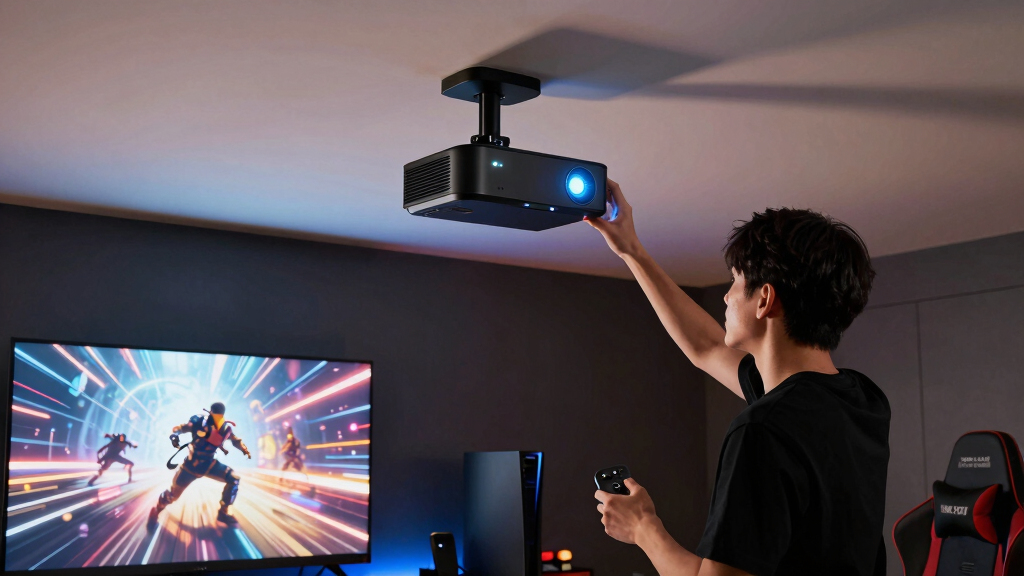

The BenQ TK700 is my best overall pick among the best gaming projectors with low input lag because it pairs 4K detail with gaming-focused response times instead of forcing a choice between speed and sharpness. The BenQ TH575 is the stronger value play for 1080p console gaming, while the BenQ TH671ST makes more sense in smaller rooms thanks to its short-throw setup. The main tradeoff is simple: 4K models look cleaner on big screens, but fast 1080p projectors often cost less and can feel just as responsive at normal console frame rates. Buyers also have to weigh throw distance, brightness, smart features, and lamp versus laser upkeep. Keep reading for the full breakdown of which model fits each gaming setup.

Play games on Amazon Luna for your game nights, included with Prime
- A rotating selection of games, no download needed
- Play on TV, laptop or phone
- Fast, free delivery for your gear, too
Key Takeaways
- The BenQ TK700 leads the lineup because it is the only pick here that balances low-lag gaming with a sharper 4K image for large screens.
- The BenQ TH575 has the cleanest value story: 1080p resolution, high brightness, and a stated 16.7ms latency target without paying for smart TV extras.
- Short-throw buyers should split between the BenQ TH671ST for lower upfront cost and the Optoma GT2400HDR for laser upkeep and HDR-friendly source handling.
- The Epson Home Cinema 2350 is the best hybrid living-room option, but its Android TV convenience matters more to casual players than to competitive players.
- The ViewSonic PX703HD is easy to recommend for a first projector setup, yet it ranks lower because the lineup has stronger gaming-specific models at nearby prices.
| BenQ TH671ST 1080p Short Throw Gaming Projector |  | Best Overall | Resolution: Full HD 1080p | Brightness: 3000 lumens | Projection Size: Up to 300 inches | VIEW LATEST PRICE | See Our Full Breakdown |
| ViewSonic PX703HD 1080p Projector with 3500 Lumens, 3D, and HDMI |  | Best Value Pick | Native Resolution: 1920 x 1080 | Display Type: DLP | Brightness: 3500 lumens | VIEW LATEST PRICE | See Our Full Breakdown |
| Optoma GT2400HDR Full HD 1080p Short Throw Laser Projector |  | Best Laser Projector | Brightness: 4200 ANSI lumens | Native Resolution: 1920 x 1080 | Maximum Input Resolution: 3840 x 2160 | VIEW LATEST PRICE | See Our Full Breakdown |
| Epson Home Cinema 2350 4K PRO-UHD Smart Gaming Projector with Android TV | 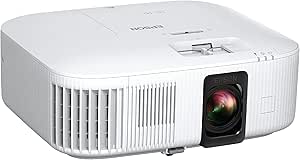 | Best Premium Smart Pick | Resolution: 4K PRO-UHD | Brightness: 2800 lumens | Projection Technology: 3-chip 3LCD | VIEW LATEST PRICE | See Our Full Breakdown |
| BenQ TH575 1080p Indoor Gaming Projector |  | Best for Bright Rooms | Resolution: 1080p Full HD | Brightness: 3800 ANSI lumens | Input Lag: 16 ms at 1080p/60Hz | VIEW LATEST PRICE | See Our Full Breakdown |
| BenQ TK700 4K Gaming Projector with HDMI 2.0 |  | Best 4K Competitive Gaming Pick | Resolution: 4K | Brightness: 3200 lumens | Input lag: 16ms at 4K | VIEW LATEST PRICE | See Our Full Breakdown |
| gaming projectors with low input lag | Brightness | Resolution | Input Lag | Connectivity |
|---|---|---|---|---|
| BenQ TH671ST 1080p Short Throw | 3000 lumens | Full HD 1080p | Ultra-fast for gaming | — |
| ViewSonic PX703HD 1080p Projec | 3500 lumens | — | — | USB, HDMI, and other inputs |
| Optoma GT2400HDR Full HD 1080p | 4200 ANSI lumens | — | — | — |
| Epson Home Cinema 2350 4K PRO- | 2800 lumens | 4K PRO-UHD | Under 20 ms | Bluetooth |
| BenQ TH575 1080p Indoor Gaming | 3800 ANSI lumens | 1080p Full HD | 16 ms at 1080p/60Hz | Dual HDMI |
| BenQ TK700 4K Gaming Projector | 3200 lumens | 4K | 16ms at 4K | — |
More Details on Our Top Picks
BenQ TH671ST 1080p Short Throw Gaming Projector
I rank the BenQ TH671ST highest because it balances the three things that matter most for gaming projection: short-throw placement, bright 1080p output, and low input lag. Compared with the Epson Home Cinema 2350, it gives up 4K PRO-UHD and smart streaming, but it is easier to fit into a smaller gaming room and better suited to players who want a huge image without mounting the projector across the room. Against the ViewSonic PX703HD, the BenQ trades a little brightness for stronger gaming focus and better color coverage at 92% Rec. 709. The main catch is that picture quality still benefits from a darker room, so buyers expecting TV-like punch in daylight should temper expectations.
Pros:- Short throw design creates a large image from limited space
- Low input lag suits fast console and PC games
- 3000 lumens gives it more flexibility than dim home theater models
- 92% Rec. 709 color coverage helps games and movies look more natural
Cons:- Not a 4K projector, unlike the Epson Home Cinema 2350 or BenQ TK700
- Dark-room viewing is still preferred for best contrast
- Short-throw setup can be sensitive to placement
Best for: Console and PC gamers who want a large 1080p screen in a small or medium room without placing the projector far back.
Not ideal for: Bright living rooms used during the day, since its best image quality still depends on controlled lighting.
- Resolution:Full HD 1080p
- Brightness:3000 lumens
- Projection Size:Up to 300 inches
- Throw Distance:From 5 feet
- Color Accuracy:92% Rec. 709
- Input Lag:Ultra-fast for gaming
- Contrast:High native contrast
- Warranty:3 years
Our verdict“This is my top pick for gamers who want low lag, easy big-screen placement, and strong 1080p performance without paying for 4K.”
ViewSonic PX703HD 1080p Projector with 3500 Lumens, 3D, and HDMI
The ViewSonic PX703HD earns its spot as my value pick because it pushes brightness to 3500 lumens while keeping a gaming-friendly 1080p format. Compared with the BenQ TH671ST, it is less specialized as a short-room gaming projector, but it gives buyers more brightness headroom for mixed-use spaces where lights may not always be off. It also makes more sense than the Epson Home Cinema 2350 for shoppers who care more about price and plug-in simplicity than 4K PRO-UHD or Android TV. The tradeoff is setup polish: the product data does not highlight lens shift, audio strength, or advanced correction features, so ceiling mounts and tidy alignments may take more patience. Its 300W draw also makes it less efficient than laser options like the Optoma GT2400HDR.
Pros:- 3500-lumen brightness is strong for the price class
- Low input latency suits gaming and fast sports
- HDMI and USB connectivity work with common gaming and media devices
- 1.3x optical zoom gives more placement flexibility than fixed setups
Cons:- 300W power rating can mean higher energy use
- Limited detail on lens shift and advanced alignment tools
- Audio features are not a clear selling point
Best for: Budget-focused gamers who want a bright Full HD projector for consoles, sports, and casual movie nights.
Not ideal for: Buyers who need refined installation controls or strong built-in audio, since those details are not its clear strengths.
- Native Resolution:1920 x 1080
- Display Type:DLP
- Brightness:3500 lumens
- Connectivity:USB, HDMI, and other inputs
- Form Factor:Portable
- Mounting Type:Ceiling mount
- Zoom:1.3x optical zoom
- Power:300 watts
Our verdict“This is the pick I would steer toward value buyers who want bright 1080p gaming without paying for premium extras.”
Optoma GT2400HDR Full HD 1080p Short Throw Laser Projector
The Optoma GT2400HDR is the most maintenance-friendly gaming choice here because its laser light source is built for long service life and consistent brightness. Compared with the BenQ TH671ST, it is brighter at 4200 ANSI lumens and works from an even tighter throw range, which helps in compact rooms, golf simulator spaces, and multipurpose setups. Compared with the Epson Home Cinema 2350, it accepts 4K HDR input but stays native 1080p, so it is better for brightness and upkeep than pixel detail. I would not frame it as the portable pick despite the compact body, because 9.4 pounds is still fairly hefty. It also carries the same basic projection compromise as the others: darker rooms still bring out better perceived contrast.
Pros:- 4200 ANSI lumens gives it the strongest brightness in this reviewed batch
- Laser light source reduces lamp maintenance
- Short throw range works well in tight spaces
- 4K HDR input support adds flexibility for modern sources
Cons:- Native resolution is 1080p rather than true 4K
- Heavier than many shoppers may expect from a compact projector
- Best contrast still needs controlled room lighting
Best for: Gamers building a short-throw setup in a bright multipurpose room, garage, simulator bay, or media room where low maintenance matters.
Not ideal for: Players who want true 4K sharpness, since it accepts 4K HDR signals but displays at native 1080p.
- Brightness:4200 ANSI lumens
- Native Resolution:1920 x 1080
- Maximum Input Resolution:3840 x 2160
- Display Type:Laser
- Throw Distance:2.6 to 3.7 feet
- Weight:9.4 pounds
- Mounting Options:Tabletop, wall, or floor
- HDR:4K HDR input compatible
Our verdict“This is my choice for gamers who value brightness, short-throw placement, and lower upkeep more than native 4K detail.”
Epson Home Cinema 2350 4K PRO-UHD Smart Gaming Projector with Android TV
The Epson Home Cinema 2350 is the premium all-in-one choice because it pairs 4K PRO-UHD, HDR support, 3LCD color, low latency, and Android TV in one box. Compared with the BenQ TH671ST and ViewSonic PX703HD, it is the better fit for players who split time between gaming and streaming and want a sharper, more theater-like image. The under-20 ms input lag keeps it relevant for console play, though the BenQ TH575 is the stronger pick for buyers chasing a clear 16 ms 1080p gaming spec. The Epson also has quirks: streaming depends on a steady network, and its audio functions are limited around HDMI sources. At 2800 lumens, it is bright, but not as punchy on paper as the Optoma GT2400HDR.
Pros:- 4K PRO-UHD image gives games and movies a sharper look than 1080p models
- Under-20 ms input lag is suitable for mainstream console gaming
- 3LCD technology avoids rainbow effects common to some DLP projectors
- Built-in Android TV reduces the need for a separate streaming stick
Cons:- Not as bright on paper as the Optoma GT2400HDR or BenQ TH575
- Android TV streaming needs at least a 5 Mbps wireless connection
- Audio functions are limited to Android TV content rather than HDMI
Best for: Gaming households that want one projector for console play, streaming apps, HDR movies, and a more polished home theater image.
Not ideal for: Competitive players who care more about the lowest listed 1080p latency than smart features or higher perceived resolution.
- Resolution:4K PRO-UHD
- Brightness:2800 lumens
- Projection Technology:3-chip 3LCD
- HDR Support:HDR10 and HLG
- Input Lag:Under 20 ms
- Streaming:Android TV
- Speaker:10 W
- Connectivity:Bluetooth
Our verdict“This is the smartest buy for players who want gaming performance and streaming convenience in the same premium projector.”
BenQ TH575 1080p Indoor Gaming Projector
The BenQ TH575 stands out as my bright-room gaming pick because it combines 3800 ANSI lumens with a listed 16 ms input lag at 1080p/60Hz. Compared with the BenQ TH671ST, it is less convenient for short-room placement because it needs about 10.8 feet for a 100-inch image, but it gives more brightness and a stated 15,000:1 contrast ratio for players who use their projector in a living room. Against the Epson Home Cinema 2350, it skips smart streaming and 4K PRO-UHD, yet its gaming identity is clearer for 1080p console setups. The standard throw design is the main limitation: buyers with shallow rooms should lean toward the TH671ST or Optoma GT2400HDR instead.
Pros:- 3800 ANSI lumens helps games hold up better with some room light
- 16 ms input lag at 1080p/60Hz is clear and gaming-focused
- Enhanced Game Mode and fast DMD response support smoother play
- Dual HDMI, 3D readiness, and auto vertical keystone add practical flexibility
Cons:- Standard throw needs more room depth than the BenQ TH671ST
- No built-in smart streaming platform like the Epson Home Cinema 2350
- 1080p resolution lacks the added detail of 4K-focused models
Best for: Gamers with a larger room who want a bright 1080p projector for consoles, sports games, shooters, and split-screen sessions.
Not ideal for: Apartment setups or shallow rooms, since the 100-inch image distance is much longer than short-throw rivals.
- Resolution:1080p Full HD
- Brightness:3800 ANSI lumens
- Input Lag:16 ms at 1080p/60Hz
- Contrast Ratio:15,000:1 FOFO
- Throw Type:Standard throw
- Image Size:100 inches from 10.8 feet
- Zoom:1.1x
- Connectivity:Dual HDMI
- Warranty:3 years
Our verdict“This is the one I would choose for bright-room 1080p gaming when there is enough distance for a standard-throw setup.”
BenQ TK700 4K Gaming Projector with HDMI 2.0
The BenQ TK700 earns its place because it pairs 4K resolution with a claimed 16ms input lag at 4K, which makes it sharper than the BenQ TH575 or ViewSonic PX703HD without giving up the fast response gaming buyers are chasing. Compared with the Epson Home Cinema 2350, this model feels more focused on console play than smart streaming convenience, while the 3200-lumen brightness gives it more room-light tolerance than dimmer theater-first picks. The tradeoff is placement: unlike the BenQ TH671ST or Optoma GT2400HDR short-throw models, it needs about 8.2 feet for a 100-inch image. The 5W Dolby Atmos speaker is useful for quick setup, but serious players will still want external audio.
Pros:- 4K resolution gives games a sharper look than 1080p alternatives in the lineup
- 16ms lag at 4K is well matched to responsive console gaming
- 3200 lumens helps the image hold up in rooms with some ambient light
- Auto keystone correction makes setup easier when the projector is not perfectly aligned
Cons:- Standard throw placement is less flexible than short-throw gaming projectors
- Built-in 5W speaker is convenient but limited for cinematic or competitive sound
- Connectivity details beyond HDMI 2.0 are limited in the provided data
Best for: Console gamers who want a sharp 4K image, low 4K lag, and enough brightness for a living room setup.
Not ideal for: Small rooms or desk-based gaming spaces, since the standard throw needs about 8.2 feet for a 100-inch screen.
- Resolution:4K
- Brightness:3200 lumens
- Input lag:16ms at 4K
- Speaker:Dolby Atmos 5W
- Throw type:Standard throw
- Image size:100 inches at 8.2 feet
- Keystone correction:Auto keystone correction
- HDMI:HDMI 2.0
Our verdict“Choose the BenQ TK700 if 4K clarity and low lag matter more than compact placement or built-in smart features.”

How We Picked
I ranked these models around the question a gamer actually faces: which projector keeps controls feeling quick while still making a big screen worth the space and cost? Input lag came first, followed by gaming modes, refresh-rate support, HDMI handling, brightness, contrast, throw distance, and setup flexibility. I gave extra weight to projectors that make sense with modern consoles, since a low-lag 1080p projector and a low-lag 4K projector serve different buyers. I also factored in maintenance, because a cheaper lamp model can become less appealing if it is used for long weekend sessions every week.
The final order favors balanced gaming performance over raw spec-sheet flash. The BenQ TK700 rises to the top because it combines gaming speed with 4K detail, while the BenQ TH575 and BenQ TH671ST sit high because they keep latency, brightness, and price in a tighter balance. The Optoma GT2400HDR earns its place for laser convenience and short-throw placement, but its value depends heavily on whether low-maintenance light output matters more than 4K. The Epson Home Cinema 2350 and ViewSonic PX703HD are useful for broader home-entertainment setups, yet they sit lower because this list rewards gaming-first design.
| gaming projectors with low input lag | Connectivity |
|---|---|
| BenQ TH671ST 1080p Short Throw | — |
| ViewSonic PX703HD 1080p Projec | USB, HDMI, and other inputs |
| Optoma GT2400HDR Full HD 1080p | — |
| Epson Home Cinema 2350 4K PRO- | Bluetooth |
| BenQ TH575 1080p Indoor Gaming | Dual HDMI |
| BenQ TK700 4K Gaming Projector | — |
Factors to Consider When Choosing Best Gaming Projectors With Low Input Lag
When I narrow a gaming projector shortlist, I start with response feel and then work outward to the room, screen size, and long-term cost. A projector can have the right latency number and still be the wrong buy if the throw distance does not fit, the image washes out, or the lamp cost changes the value story.
Input Lag Is Only Half The Speed Story
I treat input lag as the gatekeeper, not the whole answer. Around 16ms at 60Hz feels responsive enough for most console play, while faster 1080p modes can help players who care more about timing than pixel count. The mistake is buying only by the lowest quoted number without checking which resolution and refresh rate produce it. Some projectors hit their best latency only in a specific game mode that can change image processing, color settings, or keystone behavior. If most of your play is story-driven, racing, or sports, a clean 4K image may matter as much as a few milliseconds. For shooters, fighters, and rhythm games, I would give game-mode latency and refresh support more weight than smart features.
4K Detail Versus 1080p Value
The 4K versus 1080p choice changes once the image gets larger than a TV. On a 100-inch screen, 4K can make menus, HUD text, and open-world detail look cleaner, which is why the BenQ TK700 sits above the pure 1080p options for buyers with the budget. The flip side is that 1080p projectors such as the BenQ TH575 can still feel fast and bright for much less money. I would pay more for 4K if the projector will double as a movie display or if the seating distance is close enough to reveal pixel structure. I would stay with fast 1080p if the setup is mainly multiplayer gaming, dorm-room play, or a budget screen under about 100 inches. The goal is to spend on visible image gains, not resolution bragging rights.
Throw Distance Can Decide The Winner
Throw distance is where many projector shortlists fall apart. A standard-throw model like the BenQ TH575 or BenQ TK700 needs more room between lens and screen, which can be awkward in apartments, bedrooms, and shared living rooms. Short-throw models such as the BenQ TH671ST and Optoma GT2400HDR create a large image from closer range, making them easier to place near a console. The tradeoff is that short-throw placement can magnify wall unevenness and focus issues, so a flat screen matters more. I would measure the room before chasing any latency spec, because a fast projector that cannot fill the desired screen size is the wrong match. For renters or players moving between spaces, placement flexibility may matter more than extra resolution.
Brightness And Contrast Need The Room Test
Lumens matter more for gaming projectors than many buyers expect, because games often include dark corners, bright UI elements, and fast scene changes. A bright model helps in a living room with lamps on, but brightness alone does not create rich shadows or convincing HDR. DLP options in this lineup tend to push punchy brightness and fast response, while Epson’s 3LCD approach avoids rainbow artifacts and can feel friendlier for viewers sensitive to single-chip DLP. The mistake is assuming every 3,000-plus-lumen projector will look great on any wall. Screen gain, wall color, ambient light, and projector mode can change the result as much as the spec sheet. I would match brightness to the room first, then use contrast and color to break ties between models.
Maintenance Changes The Real Price
The sticker price rarely tells the whole story, especially for players who use a projector like a main gaming display. Lamp models such as the BenQ TH575, BenQ TH671ST, and ViewSonic PX703HD can be cheaper up front, but lamp replacement and brightness drop should be part of the budget. A laser model like the Optoma GT2400HDR costs more at purchase, yet its low-maintenance light source is easier to justify for frequent use. Smart features can also change value: Epson’s built-in Android TV is convenient if the projector doubles as a streaming hub, but it adds less for buyers already using a console or external streaming device. I would separate gaming value from home-theater convenience before paying extra. That split keeps the purchase tied to how the projector will actually be used.
Inputs, Audio, And Setup Extras Matter Less Than They Seem
I would treat HDMI compatibility, audio, and setup aids as support features, not the main reason to buy. HDMI 2.0 is useful for 4K sources, while dual HDMI ports help if a console and streaming stick stay connected at the same time. Built-in speakers are fine for quick sessions, but projector audio rarely matches even a modest soundbar, especially when the fan sits near the player. Keystone correction and auto setup features make placement easier, yet heavy digital correction can soften the image and may interact with gaming modes. For low-lag play, I prefer a setup where the projector is physically aligned and the console runs through a direct HDMI path. Spend more on clean signal support and physical setup fit before paying for speaker claims.
Frequently Asked Questions
Is 16.7ms Input Lag Good Enough For Gaming On A Projector?
I see 16.7ms input lag as a strong target for most console players because it is roughly one frame at 60Hz. It will not feel like a tournament monitor, but it is fast enough for casual shooters, sports, racing, and action games. Players who chase high-refresh PC play should look for modes that support 120Hz or 240Hz, since those can reduce delay further at lower resolutions. The catch is that the lowest number may apply only in a specific game mode. I would verify the mode tied to the quoted latency before treating it as a buying promise.
Should I Choose 4K Or 1080p For Low-Lag Gaming?
I would choose 4K when the screen is large, the seating is close, or the projector will also be used for movies. The BenQ TK700 makes that path easier because it keeps a gaming-first identity while adding sharper detail. I would choose 1080p when budget, brightness, and response feel matter more than fine texture. Models like the BenQ TH575 and TH671ST make sense for players who want a big responsive image without paying a premium for resolution. The better choice is the one that matches your screen size and game library, not the highest number on the box.
Are Short-Throw Projectors Better For Gaming?
Short-throw projectors are better when the room is small or the console setup sits close to the screen. They reduce cable clutter and make it easier to create a large image without mounting the projector behind the seating area. The BenQ TH671ST is the lower-cost short-throw play here, while the Optoma GT2400HDR adds laser convenience. They are not automatically better for latency, so I would still compare game-mode specs against standard-throw models. They also need a flatter screen surface, since short projection angles can make wall waves more visible.
Is A Laser Gaming Projector Worth Paying More For?
A laser gaming projector is worth the premium if the projector will be used often and brightness stability matters over time. The Optoma GT2400HDR is the clearest example in this group because its laser light source reduces the maintenance worry that comes with lamp-based models. For occasional weekend play, a lamp projector like the BenQ TH575 may still be the smarter value. Laser does not automatically mean lower input lag or better motion, so I would treat it as a durability and upkeep upgrade. Pay for laser when long sessions and low fuss matter more than the lowest initial price.
Which Projector Should I Buy If I Play In A Bright Room?
For a bright room, I would start with lumen output and then check whether the projector still has a usable game mode at that brightness. The BenQ TH575 and ViewSonic PX703HD stand out for bright-room value, while the BenQ TK700 adds 4K detail if the budget allows. Ambient light will still weaken black levels, so a brighter projector is not a full substitute for curtains or a proper screen. If the room is always lit, prioritize brightness, screen gain, and simple placement over smart apps. For night play or controlled lighting, contrast and resolution can move higher on the list.
Conclusion
My final recommendation is straightforward: pick the BenQ TK700 if you want the best overall balance of low-lag gaming, 4K sharpness, and console-ready flexibility. Choose the BenQ TH575 for best value, especially if 1080p is enough and brightness matters more than built-in streaming. The ViewSonic PX703HD is the easiest beginner pick, while the Epson Home Cinema 2350 suits buyers who want a gaming-capable projector that also behaves like a smart living-room display. For small rooms, the BenQ TH671ST is the safer short-throw value choice; for low-maintenance short throw, the Optoma GT2400HDR is the more specialized upgrade. I would spend more only when the extra money solves a real setup problem: 4K detail, laser upkeep, short-throw placement, or smart TV convenience.
Halloween Picks
halloween
As an affiliate, we earn on qualifying purchases.