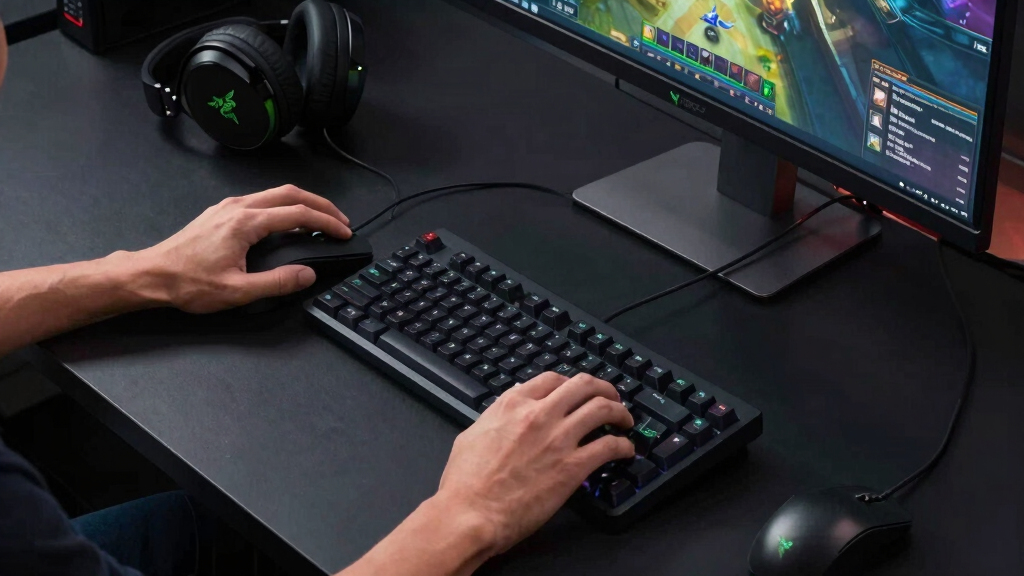

The Razer Basilisk V3 X HyperSpeed is my best overall pick among the best Razer gaming peripherals because it balances wireless freedom, useful controls, and everyday versatility without reaching flagship pricing. Competitive players should favor the Razer Viper V4 Pro for its esports-focused shape and low weight, while MMO players gain more from the Razer Naga V2 Pro and its extensive button layout. The main choice is between broad flexibility and specialization: lighter mice suit rapid aiming, button-heavy models reduce keyboard dependence, and wired options trade mobility for simplicity. Several Basilisk models also overlap, making price, connectivity, and included controls more meaningful than small specification differences. Continue reading for the full breakdown of which model fits each buyer and which upgrades are worth paying for.

Play games on Amazon Luna for your game nights, included with Prime
- A rotating selection of games, no download needed
- Play on TV, laptop or phone
- Fast, free delivery for your gear, too
Complete the kit


Key Takeaways
- The Basilisk V3 X HyperSpeed offers the strongest balance of wireless convenience, programmable input, and approachable pricing, which puts it ahead of more specialized models for most buyers.
- The Viper V4 Pro and Naga V2 Pro sit at opposite ends of the design spectrum: one removes weight and complexity for esports, while the other adds controls for MMO and productivity-heavy play.
- The Basilisk V3 Pro is the premium choice, but its higher price makes sense mainly for buyers who will use its wireless features and expanded customization.
- The DeathAdder Essential remains the clearest value pick because it covers basic gaming needs without charging for wireless hardware, extra buttons, or elaborate lighting.
- The two wired Basilisk V3 listings may overlap heavily, so buyers should compare the exact model number, warranty, seller, and price rather than treating different listing names as separate upgrades.
| Razer Basilisk V3 X HyperSpeed Wireless Gaming Mouse |  | Best Wireless Value | Sensor: Razer 5G Advanced 18K Optical Sensor | Maximum Sensitivity: 18,000 DPI | Controls: 9 programmable controls | VIEW LATEST PRICE | See Our Full Breakdown |
| Razer Tartarus V2 Gaming Keypad |  | Best Dedicated Gaming Keypad | Switch Type: Razer Mecha-Membrane | Key Count: 32 programmable keys | Thumb Control: 8-way directional thumbpad | VIEW LATEST PRICE | See Our Full Breakdown |
| Razer Viper V4 Pro Wireless Esports Gaming Mouse |  | Best for Competitive Esports | Weight: 49g | Sensor: Razer Focus Pro 50K Optical Sensor | Maximum Sensitivity: 50,000 DPI | VIEW LATEST PRICE | See Our Full Breakdown |
| Razer Basilisk V3 Ergonomic Wired Gaming Mouse |  | Best Wired All-Rounder | Programmable Buttons: 10+1 | Switch Type: Razer Optical Mouse Switches Gen-2 | Actuation Speed: 0.2ms | VIEW LATEST PRICE | See Our Full Breakdown |
| Razer Basilisk V3 Customizable Ergonomic Gaming Mouse | | Best for Scroll-Wheel Control | Sensor Resolution: 26,000 DPI | Programmable Buttons: 11 | Scroll Wheel: Razer HyperScroll tilt wheel | VIEW LATEST PRICE | See Our Full Breakdown |
| Razer Basilisk V3 Pro Wireless Gaming Mouse |  | Best All-Round Wireless Mouse | Sensor: 30K DPI optical sensor | Programmable Buttons: 13 | Lighting: 13-zone Chroma RGB with full underglow | VIEW LATEST PRICE | See Our Full Breakdown |
| Razer DeathAdder Essential Gaming Mouse | 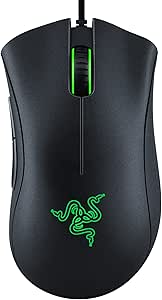 | Best Budget Pick | Sensor Type: Optical | Maximum DPI: 6,400 | Sensitivity Control: On-the-fly adjustment | VIEW LATEST PRICE | See Our Full Breakdown |
| Razer Naga V2 Pro Wireless MMO Gaming Mouse |  | Best for MMO Players | Programmable Buttons: 19+1 | Swappable Side Plates: 3 | Sensor: Focus Pro 30K optical sensor | VIEW LATEST PRICE | See Our Full Breakdown |
| Razer gaming peripheral | Programmable Buttons | Sensor | Switches | Scroll Wheel |
|---|---|---|---|---|
| Razer Basilisk V3 X HyperSpeed | — | Razer 5G Advanced 18K Optical Sensor | Razer Mechanical Mouse Switches Gen-2 | — |
| Razer Tartarus V2 Gaming Keypa | — | — | — | — |
| Razer Viper V4 Pro Wireless Es | — | Razer Focus Pro 50K Optical Sensor | — | — |
| Razer Basilisk V3 Ergonomic Wi | 10+1 | — | — | — |
| Razer Basilisk V3 Customizable | 11 | — | Razer Optical Mouse Switches Gen-2 | Razer HyperScroll tilt wheel |
| Razer Basilisk V3 Pro Wireless | 13 | 30K DPI optical sensor | Gen-3 optical switches, rated for 90 million clicks | HyperScroll tilt wheel |
| Razer DeathAdder Essential Gam | 5 | — | — | Rubberized wheel with tactile bumps |
| Razer Naga V2 Pro Wireless MMO | 19+1 | Focus Pro 30K optical sensor | Gen-3 optical mouse switches | HyperScroll Pro wheel with adjustable tactility |
More Details on Our Top Picks
Razer Basilisk V3 X HyperSpeed Wireless Gaming Mouse
I rank the Razer Basilisk V3 X HyperSpeed as the wireless value pick because it balances an ergonomic shape, nine programmable controls, and exceptional battery life without chasing esports-grade specifications. Its dual wireless connectivity also makes switching between a gaming PC and another device easier. Compared with the Razer Viper V4 Pro, its 18K sensor and heavier, control-focused design favor comfort and versatility over rapid competitive movement. It also offers fewer inputs than the Razer Naga V2 Pro, but its layout is far less crowded for shooters and everyday games. The tradeoffs are meaningful: there is no stated wired operating mode, the single-battery design adds weight, and heavy RGB or high-performance wireless use can shorten runtime. My ranking favors it for buyers wanting dependable wireless freedom without premium esports hardware.
Pros:- Up to 285 hours of HyperSpeed wireless battery life
- Bluetooth extends rated battery life to 535 hours
- Nine programmable controls support gaming and productivity shortcuts
- Ergonomic shape and thumb rest favor longer sessions
Cons:- No stated wired operating mode
- Replaceable-battery construction is less weight-focused than the Viper V4 Pro
- Runtime drops with lighting and performance settings
Best for: Right-handed PC gamers who want long wireless battery life, thumb-accessible controls, and Bluetooth for a second device
Not ideal for: Competitive players seeking a sub-50g mouse or buyers who want a wired fallback when the battery runs out
- Sensor:Razer 5G Advanced 18K Optical Sensor
- Maximum Sensitivity:18,000 DPI
- Controls:9 programmable controls
- Wireless Battery Life:Up to 285 hours
- Bluetooth Battery Life:Up to 535 hours
- Connectivity:HyperSpeed Wireless and Bluetooth
- Switches:Razer Mechanical Mouse Switches Gen-2
- Lighting:Razer Chroma RGB, 16.8 million colors
Our verdict“This is my wireless value choice for players who prioritize comfort, flexible controls, and long runtime over minimum weight.”
Razer Tartarus V2 Gaming Keypad
The Razer Tartarus V2 earns a specialist role because it replaces a keyboard’s gaming side with 32 remappable inputs and an eight-way thumbpad. I see its main appeal in games with dense command sets: macros can place abilities, inventory actions, or movement under one hand, giving it more control depth than the Razer Basilisk V3’s 11 buttons. Unlike the Razer Naga V2 Pro, it keeps those commands off the mouse hand, which may suit players who dislike crowded thumb grids. Its mecha-membrane switches provide tactile feedback, though they lack the sharper feel and perceived longevity many buyers expect from fully mechanical keys. This is also not a typing replacement; it occupies extra desk space and needs Synapse setup before its layout becomes useful. I rank it highly only for buyers with a clear macro-heavy workflow.
Pros:- Thirty-two programmable keys provide extensive command mapping
- Eight-way thumbpad can handle movement or additional actions
- Macro support suits games with large ability sets
- Adjustable Chroma RGB supports profile-based visual cues
Cons:- Mecha-membrane keys lack a fully mechanical switch feel
- Cannot replace a full keyboard for normal typing
- Requires software configuration and additional desk space
Best for: MMO, simulation, and action-RPG players who want a dedicated left-hand command station with extensive macros
Not ideal for: Players wanting one device for both gaming and normal typing, or anyone unwilling to configure custom profiles
- Switch Type:Razer Mecha-Membrane
- Key Count:32 programmable keys
- Thumb Control:8-way directional thumbpad
- Macro Support:Fully programmable macros
- Backlighting:Razer Chroma RGB
- Lighting Colors:16.8 million
- Primary Use:One-handed gaming and command control
Our verdict“This is my specialist pick for macro-heavy players who want more left-hand commands than a conventional keyboard-and-mouse layout provides.”
Razer Viper V4 Pro Wireless Esports Gaming Mouse
I place the Razer Viper V4 Pro at the competitive end of this lineup because its 49g body, 50K sensor, and 8,000Hz polling target fast aim corrections and very low input delay. Compared with the Razer Basilisk V3 X HyperSpeed, it sheds the thumb rest and control-heavy shape in favor of speed and low mass; compared with the DeathAdder Essential, it provides far more advanced tracking and wireless performance. Those advantages make the most sense on a high-refresh-rate system where small latency gains can matter. They are harder to justify for casual play, while 8,000Hz polling places extra load on both battery and processor. The streamlined layout also offers fewer command options than either Basilisk model. My ranking treats this as a specialized premium choice, not the automatic answer for every Razer buyer.
Pros:- 49g construction supports rapid flicks and repeated repositioning
- Focus Pro 50K sensor provides extremely high tracking headroom
- 8,000Hz polling reduces the interval between cursor updates
- Up to 180 hours of battery life at 1,000Hz
Cons:- High polling rates reduce battery life and increase processor demand
- Advanced hardware carries limited benefit for casual or low-refresh-rate setups
- Fewer command inputs than the Basilisk and Naga models
Best for: Competitive FPS players with high-refresh-rate PCs who prioritize minimum weight, rapid polling, and precise tracking
Not ideal for: Casual players, macro-heavy MMO fans, or buyers whose systems and displays cannot benefit from 8,000Hz polling
- Weight:49g
- Sensor:Razer Focus Pro 50K Optical Sensor
- Maximum Sensitivity:50,000 DPI
- Maximum Polling Rate:8,000Hz
- Battery Life:Up to 180 hours at 1,000Hz
- Switch Lifespan:100 million clicks
- Wireless Connection:Razer HyperSpeed Wireless Gen-2
- Wired Connection:USB-C
Our verdict“This is my esports pick for serious FPS players who can benefit from its 49g weight and 8,000Hz polling.”
Razer Basilisk V3 Ergonomic Wired Gaming Mouse
The Razer Basilisk V3 is my wired all-rounder because its ergonomic thumb rest, 11 programmable inputs, and adaptable scroll wheel cover shooters, strategy games, and desktop work without wireless battery management. It provides more direct controls than the Razer Basilisk V3 X HyperSpeed and uses 0.2ms optical switches, while the wired link supplies consistent power and latency. Against the Razer Viper V4 Pro, however, its larger control-focused body is less suited to fast competitive flicks, and its cable limits unrestricted movement. Eleven lighting zones and extensive remapping also add setup complexity that minimalist players may never use. The Razer Naga V2 Pro remains the stronger MMO choice because it offers many more commands. I rank this model as the broadest wired fit for right-handed buyers who value comfort and versatility above portability.
Pros:- Eleven programmable buttons cover gaming and productivity commands
- Optical Gen-2 switches offer fast 0.2ms actuation
- Ergonomic thumb-rest shape supports control-focused play
- Eleven RGB zones allow detailed lighting customization
Cons:- Cable can create drag during broad mouse movements
- Larger ergonomic shape is less agility-focused than the Viper V4 Pro
- Extensive software options may be excessive for minimalist users
Best for: Right-handed gamers who want a comfortable wired mouse with abundant shortcuts for mixed game genres and desktop work
Not ideal for: Low-sensitivity FPS players bothered by cable drag or MMO players who need a full thumb-button grid
- Programmable Buttons:10+1
- Switch Type:Razer Optical Mouse Switches Gen-2
- Actuation Speed:0.2ms
- Switch Lifespan:70 million clicks
- Lighting Zones:11
- Lighting Colors:Over 16.8 million
- Connection:Wired
- Form:Right-handed ergonomic design
Our verdict“This is my wired all-rounder for right-handed players who want plentiful controls, a thumb rest, and no battery upkeep.”
Razer Basilisk V3 Customizable Ergonomic Gaming Mouse
This version of the Razer Basilisk V3 makes the list for buyers drawn to its HyperScroll tilt wheel, which can switch between deliberate stepped scrolling and rapid movement through long pages or inventories. Its 26K sensor and 11 programmable buttons give it greater command flexibility than the Razer Viper V4 Pro, while the thumb-rest design favors supported control over ultralight agility. The closely related Basilisk V3 wired listing shares much of the same hardware, so this entry is best viewed as a purchase path centered on the confirmed 26K sensor and wheel specification rather than a separate performance tier. It still carries familiar drawbacks: the cable restricts movement, the right-handed shape limits fit, and Synapse configuration can feel excessive. I assign it a narrower role because the scroll system is its clearest advantage over simpler Razer mice.
Pros:- HyperScroll tilt wheel supports tactile and rapid scrolling styles
- 26K optical sensor offers high tracking precision
- Eleven programmable buttons accommodate layered game commands
- Thumb rest provides a supported right-handed grip
Cons:- Wired design restricts movement compared with the Basilisk V3 X HyperSpeed
- Right-handed ergonomic shell is unsuitable for left-handed use
- Closely overlaps the other Basilisk V3 wired listing
Best for: Right-handed gamers and power users who frequently switch between precise weapon selection and fast scrolling through long menus or documents
Not ideal for: Left-handed buyers, ultralight FPS players, or shoppers who do not need 11 remappable controls
- Sensor Resolution:26,000 DPI
- Programmable Buttons:11
- Scroll Wheel:Razer HyperScroll tilt wheel
- Switches:Razer Optical Mouse Switches Gen-2
- Lighting:Razer Chroma RGB
- Lighting Colors:16.8 million
- Design:Right-handed ergonomic shell with thumb rest
- Connection:Wired
Our verdict“This is my choice for buyers who value adaptable scrolling and numerous shortcuts more than wireless freedom or ultralight speed.”
Razer Basilisk V3 Pro Wireless Gaming Mouse
I rank the Razer Basilisk V3 Pro as the strongest all-round wireless pick because its 13 programmable buttons, ergonomic shape, and 30K DPI sensor suit shooters, action games, and everyday desktop work. Compared with the Razer Basilisk V3 X HyperSpeed, it offers richer Chroma lighting, more controls, and a more capable HyperScroll tilt wheel, making it better for buyers who want extensive customization. It is also easier to manage than the button-heavy Razer Naga V2 Pro outside MMOs. The tradeoff is cost: this is a premium general-purpose option, and the separately sold dock accessories push the full setup price higher. Battery life reaches 110 hours over HyperSpeed or 150 hours over Bluetooth, so its wireless flexibility has practical value beyond a cleaner desk.
Pros:- 30K DPI optical sensor delivers precise tracking across varied surfaces, including glass
- Thirteen programmable buttons support complex shortcuts without reaching MMO-level clutter
- Up to 150 hours of Bluetooth battery life reduces charging interruptions
- Three connection modes suit gaming desktops, laptops, and wired fallback use
Cons:- Premium price is difficult to justify for players who need only basic mouse controls
- Charging dock accessories must be purchased separately
- Feature-rich ergonomic design is less suited to players seeking an ultralight esports mouse
Best for: Multi-genre PC gamers who want an ergonomic wireless mouse with abundant controls, strong tracking, and extensive RGB customization
Not ideal for: Budget shoppers or lightweight esports players, since the premium feature set costs more and favors versatility over minimal weight
- Sensor:30K DPI optical sensor
- Programmable Buttons:13
- Lighting:13-zone Chroma RGB with full underglow
- Connection Modes:3
- Bluetooth Battery Life:Up to 150 hours
- HyperSpeed Battery Life:Up to 110 hours
- Switches:Gen-3 optical switches, rated for 90 million clicks
- Scroll Wheel:HyperScroll tilt wheel
Our verdict“This is my pick for multi-genre players willing to pay more for a polished balance of wireless performance, comfort, and customization.”
Razer DeathAdder Essential Gaming Mouse
The Razer DeathAdder Essential earns my budget slot by retaining the series’ comfortable ergonomic shape while trimming features that raise the price. Its 6,400 DPI optical sensor and five programmable buttons cover mainstream shooters, strategy games, and casual play without demanding a lengthy setup. Compared with the Razer Basilisk V3 Pro, it gives up wireless connectivity, extra buttons, advanced scrolling, and extensive lighting, but its simpler design is easier to justify for a first gaming setup. The mechanical switches carry a 10-million-click rating, far below the Basilisk V3 Pro’s 90-million-click optical switches, which reveals where the savings appear. Its wired-only connection also limits desk flexibility. I would choose it for affordable comfort, not cutting-edge performance or customization; the low entry price is its main competitive advantage.
Pros:- Ergonomic shape supports comfortable play during longer sessions
- 6,400 DPI sensor provides ample sensitivity for mainstream gaming
- Five programmable buttons offer useful customization without a complex layout
- Rubberized tactile scroll wheel improves grip and controlled scrolling
Cons:- Wired-only operation restricts placement and adds cable drag
- Basic feature set lacks the advanced scrolling and control depth of the Basilisk models
- Ten-million-click switch rating trails Razer’s premium optical switches by a wide margin
Best for: New PC gamers and budget-conscious right-handed players who want a comfortable wired mouse for mainstream games
Not ideal for: Competitive players who want wireless freedom, a higher-end sensor, extensive macros, or longer-rated switches
- Sensor Type:Optical
- Maximum DPI:6,400
- Sensitivity Control:On-the-fly adjustment
- Programmable Buttons:5
- Switch Type:Mechanical
- Switch Lifespan:Up to 10 million clicks
- Scroll Wheel:Rubberized wheel with tactile bumps
- Connection:Wired
Our verdict“This makes the most sense for buyers who value an affordable ergonomic shape more than wireless operation or advanced controls.”
Razer Naga V2 Pro Wireless MMO Gaming Mouse
I reserve the MMO role for the Razer Naga V2 Pro because its three swappable side plates let buyers trade button density for a cleaner layout across different games. At its maximum, 19+1 programmable buttons place far more commands under one hand than the Razer Basilisk V3 Pro, which is valuable for MMO rotations, ability bars, and productivity macros. The adjustable HyperScroll Pro wheel adds another layer of control, while Bluetooth battery life reaches 300 hours. That flexibility comes with a steep learning curve: configuring profiles and remembering dense button assignments takes more effort than using the Basilisk. It is also a costly choice, especially because the charging puck and dock are separate purchases. For shooters or simple action games, the extra controls can become bulk rather than benefit. Its 30K sensor is excellent, but specialized adaptability drives this recommendation.
Pros:- Three swappable side plates adapt the control layout to different game genres
- Up to 20 programmable inputs accommodate MMO rotations and elaborate macros
- Focus Pro 30K optical sensor tracks accurately on varied surfaces, including glass
- Up to 300 hours of Bluetooth battery life supports extended use between charges
Cons:- Dense control options require more setup and memorization than simpler Razer mice
- Premium price is hard to justify outside MMOs and macro-heavy workflows
- Wireless charging puck and dock are sold separately
Best for: Dedicated MMO, MOBA, and macro-heavy PC players who regularly need many commands accessible from the mouse
Not ideal for: Minimalist shooter players or plug-and-play buyers, since the dense controls, setup work, and premium price add little to simpler games
- Programmable Buttons:19+1
- Swappable Side Plates:3
- Sensor:Focus Pro 30K optical sensor
- Maximum DPI:30,000
- Battery Life:Up to 300 hours on Bluetooth
- Connectivity:Wireless, Bluetooth, and wired
- Scroll Wheel:HyperScroll Pro wheel with adjustable tactility
- Switches:Gen-3 optical mouse switches
Our verdict“This is my specialist choice for MMO players who will use its swappable layouts and dense command access enough to justify the cost and setup.”
How We Picked
I ranked these products by how well they serve a clear gaming need, placing the most adaptable options above models built for narrower audiences. My main criteria were control performance, shape and usability, connection type, button access, software dependence, build quality, and price relative to the features a buyer is likely to use. A high sensor rating alone did not earn a high position because comfort, predictable input, and practical controls have more impact on everyday ownership.
The Basilisk V3 X HyperSpeed leads because it asks for fewer compromises across different game genres. The Viper V4 Pro, Basilisk V3 Pro, Naga V2 Pro, and Tartarus V2 rank as focused recommendations whose value rises sharply for the right buyer but falls for everyone else. I treated the wired Basilisk variants cautiously because their naming can hide substantial product overlap, while the DeathAdder Essential earns its place through low-cost simplicity rather than feature depth. This ranking favors a clear fit and sensible spending over collecting the longest specification list.
| Razer gaming peripheral | Switches | Scroll Wheel |
|---|---|---|
| Razer Basilisk V3 X HyperSpeed | Razer Mechanical Mouse Switches Gen-2 | — |
| Razer Tartarus V2 Gaming Keypa | — | — |
| Razer Viper V4 Pro Wireless Es | — | — |
| Razer Basilisk V3 Ergonomic Wi | — | — |
| Razer Basilisk V3 Customizable | Razer Optical Mouse Switches Gen-2 | Razer HyperScroll tilt wheel |
| Razer Basilisk V3 Pro Wireless | Gen-3 optical switches, rated for 90 million clicks | HyperScroll tilt wheel |
| Razer DeathAdder Essential Gam | — | Rubberized wheel with tactile bumps |
| Razer Naga V2 Pro Wireless MMO | Gen-3 optical mouse switches | HyperScroll Pro wheel with adjustable tactility |
Factors to Consider When Choosing Best Razer Gaming Peripherals
Choosing among Razer peripherals starts with identifying the actions that slow you down during play. I would decide on shape, control layout, connection type, and game genre before comparing sensor figures or RGB effects. The right model should solve a recurring input problem without adding buttons, software layers, or charging demands that go unused.
Match the Control Layout to Your Games
Button count changes how a peripheral feels more than many headline specifications. Shooters usually reward a clean layout that keeps the thumb relaxed, while MMOs and complex strategy games can benefit from commands placed directly under the thumb. Extra controls are less helpful when they cause accidental presses or require weeks of profile tuning. I would list the commands used during a normal session and count how many genuinely need faster access. A standard mouse remains the safer choice when that list is short, whereas the Naga V2 Pro or Tartarus V2 can replace awkward keyboard reaches when the list is long. Buying the maximum number of buttons without a specific use often produces a heavier, busier device rather than better control.
Choose Shape Before Sensor Specifications
Grip comfort should guide the shortlist because a technically advanced mouse offers little value if its shape causes fatigue. Wider ergonomic bodies such as the Basilisk and DeathAdder families tend to suit buyers who rest more of the hand on the mouse. A lighter esports shape favors quicker repositioning and lower resistance, but it may feel less supportive during long sessions. Hand size also affects whether side buttons sit naturally under the thumb or require a grip adjustment. I would compare physical dimensions and return policies before paying extra for extreme sensitivity ratings. Modern gaming sensors already exceed the needs of many players, making shape, weight, and button placement better tie-breakers.
Decide Whether Wireless Freedom Earns Its Cost
Wireless models reduce cable drag and keep a desk cleaner, yet they introduce battery management and a higher purchase price. That premium is easier to justify for low-sensitivity players who make broad mouse movements or anyone who moves the same peripheral between systems. A wired mouse remains practical for a fixed desktop setup, especially when predictable power and lower cost matter more than visual neatness. Buyers should also check whether a wireless model supports the connection method they need, since a fast gaming receiver and Bluetooth serve different purposes. Receiver storage, replacement availability, and charging access can affect ownership more than the advertised battery ceiling. I would pay for wireless convenience only when the cable creates a real annoyance or multi-device use is part of the plan.
Know When Premium Features Pay Off
Premium Razer models bundle several upgrades, but few buyers benefit from every one of them. Advanced wireless support, elaborate lighting, interchangeable controls, charging accessories, and extensive onboard profiles can raise the price quickly. The upgrade makes sense when two or more of those features solve regular problems, not merely because the model sits higher in the range. Competitive players may gain more from lower weight and responsive control than from extra buttons, while MMO players may accept greater weight for command access. Casual players can often redirect the price difference toward a better keyboard, headset, or mouse mat. I see the Basilisk V3 Pro and Naga V2 Pro as targeted investments rather than automatic upgrades from cheaper Razer mice.
Check Listing Names and Software Requirements
Razer product listings can use overlapping names, particularly when retailers add phrases such as customizable or ergonomic to the same base model. Buyers should compare model numbers, connection type, included accessories, regional layout, and warranty coverage before assuming one listing represents newer hardware. This matters for the two wired Basilisk V3 entries, where a name change may reflect merchandising rather than a meaningful design difference. Razer Synapse can add remapping, profiles, macros, and lighting control, but those benefits also require setup time and compatible system support. Players who switch between managed computers, consoles, or tournament machines should check which settings remain available without the software running. A lower price from an unfamiliar seller is less appealing if it sacrifices clear model identification or dependable warranty support.
Frequently Asked Questions
Which Razer Peripheral Is the Best Choice for Most PC Gamers?
I would choose the Razer Basilisk V3 X HyperSpeed for most PC gamers because its wireless connection, ergonomic body, and useful control set work across shooters, action games, and everyday desktop tasks. It is less specialized than the Viper V4 Pro and easier to approach than the button-heavy Naga V2 Pro. The main compromise is that players chasing the lowest possible weight may find it less agile than an esports mouse. Buyers who never want to manage batteries may prefer a wired Basilisk instead. For a mixed game library, the V3 X HyperSpeed offers the most balanced purchase.
Is the Razer Viper V4 Pro Worth Paying More for Than a Basilisk?
The Viper V4 Pro makes sense when competitive shooters are the priority and a low-weight design matters more than extra controls or hand support. Its focused layout is better suited to repeated flicks and rapid repositioning than the broader, feature-heavy Basilisk shape. The price is harder to defend for casual play, productivity, or games that benefit from several thumb commands. A Basilisk model gives a mixed-genre player more flexibility for the money. I would pay the Viper premium only for a clear esports-first use case.
Should MMO Players Choose the Naga V2 Pro or Tartarus V2?
The Naga V2 Pro is the cleaner choice when the goal is to place MMO commands on the mouse hand while keeping the normal keyboard setup. The Tartarus V2 changes the left-hand control scheme instead, which can suit players who want movement, modifiers, and macros grouped on a dedicated keypad. Using both can provide many inputs, but it also adds cost, desk space, and a steeper learning curve. I would start with the Naga when thumb control feels natural and choose the Tartarus when keyboard reach is the larger problem. The better option depends on which hand currently handles too much work.
Is the DeathAdder Essential Good Enough for a Beginner?
Yes, the DeathAdder Essential is my value recommendation for beginners who want a familiar wired mouse without paying for features they may not use. Its simpler control layout also makes it easier to learn what grip, sensitivity, and button preferences matter before buying a specialist model. It lacks the wireless convenience and broader command access found higher in this lineup. Buyers with small hands should check the dimensions because the ergonomic body may feel large. As a first gaming mouse, it offers a low-risk starting point and leaves room for a later upgrade based on real preferences.
Are the Two Wired Basilisk V3 Listings Actually Different?
They may be the same core Razer Basilisk V3 presented under different retailer titles, so the listing name alone is not enough to establish a hardware difference. I would compare the exact product number, photographs, button count, cable type, included items, seller, and warranty terms. If those details match, price and seller reliability should decide the purchase. A higher price is justified only when the listing includes different hardware, accessories, or stronger support. Treat phrases such as customizable ergonomic gaming mouse as descriptions until the model details prove otherwise.
Conclusion
For most buyers, I recommend the Razer Basilisk V3 X HyperSpeed as the best overall option because it combines wireless freedom, ergonomic support, and enough controls for a varied game library. The DeathAdder Essential is the best value and a sensible entry point for beginners who want uncomplicated wired performance. Competitive shooter players should choose the Viper V4 Pro, while MMO players gain more from the Naga V2 Pro and its dense command layout. The Basilisk V3 Pro is my premium pick for buyers who want a feature-rich wireless mouse and can justify its higher price. The Tartarus V2 fits players seeking a dedicated left-hand command pad, and a wired Basilisk V3 suits anyone who wants broad customization without battery management. When two Basilisk listings appear nearly identical, I would buy the cheaper verified model from the more dependable seller rather than paying for different wording.
Halloween Picks
halloween
As an affiliate, we earn on qualifying purchases.