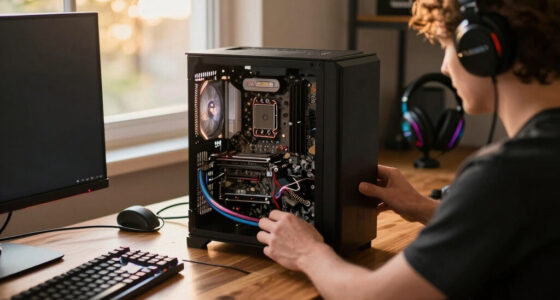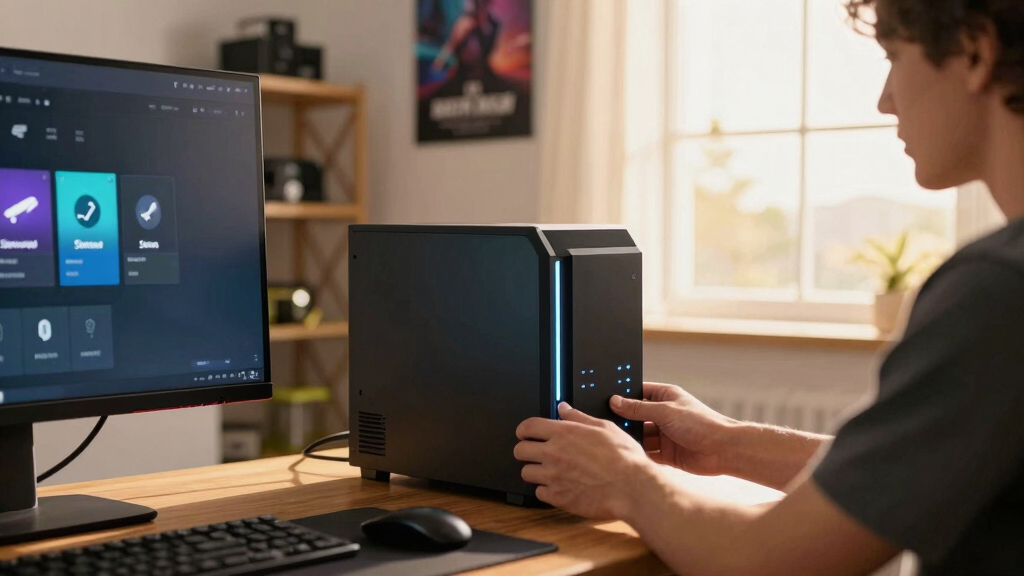
The best network attached storage for Steam libraries is the UGREEN NAS DXP4800 Plus, which I rank first for its balanced mix of four-bay capacity, 10GbE, and expandable hardware. The UGREEN NAS DXP4800 GT is the stronger performance pick for buyers building a high-speed network, while the Asustor Drivestor 2 Gen 2 offers a more accessible route into shared game storage. I see the main choice as whether the NAS will hold an archive for quick transfers or serve games directly over the network. Drive costs, network hardware, software usability, and future expansion can matter more than the NAS enclosure price alone. Continue reading for my full breakdown of where each model fits and which buyers should skip it.

Play games on Amazon Luna for your game nights, included with Prime
- A rotating selection of games, no download needed
- Play on TV, laptop or phone
- Fast, free delivery for your gear, too
Complete the kit


Key Takeaways
- UGREEN’s DXP4800 Plus ranks first because its four bays, 10GbE connection, DDR5 memory, and included system SSD offer the most balanced foundation for a large Steam library.
- The DXP4800 GT leads on network hardware, but dual 10GbE has little value unless the surrounding switch, client computers, and storage array can use that bandwidth.
- Asustor’s Drivestor 2 Gen 2 is the value pick: its two-bay format limits expansion, yet it avoids charging every buyer for workstation-class processing and 10GbE hardware.
- Synology’s DS225+ is the beginner-friendly choice because its software ecosystem reduces management friction, though it gives up the capacity flexibility of the four-bay UGREEN models.
- The 16TB Buffalo TeraStation is the easiest turnkey archive, but its included hard drives favor bulk storage and backup over SSD-like game loading.
| BUFFALO TeraStation Essentials 2025 4-Bay Desktop NAS with 16TB Hard Drives | 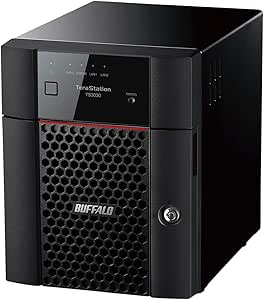 | Best Turnkey Appliance | Raw Capacity: 16TB | Drive Bays: 4 | Included Drives: 4 x 4TB | VIEW LATEST PRICE | See Our Full Breakdown |
| Synology DS225+ Private Cloud Media Server |  | Best Software Experience | Processor: Intel CPU | Drive Bays: 2 | Included Drives: None; diskless | VIEW LATEST PRICE | See Our Full Breakdown |
| UGREEN NAS DXP4800 GT 4-Bay Desktop NAS |  | Best Overall | Processor: AMD Ryzen Embedded R2514, 4 cores, up to 3.70GHz | Memory: 8GB DDR4, expandable to 64GB | Maximum Supported Capacity: 144TB | VIEW LATEST PRICE | See Our Full Breakdown |
| UGREEN NAS DH2300 2-Bay Desktop NAS |  | Best Budget Pick | Maximum Supported Capacity: 64TB | Drive Bays: 2 | Drive Interface: SATA | VIEW LATEST PRICE | See Our Full Breakdown |
| Asustor Drivestor 2 Gen 2 AS1202T 2-Bay NAS Storage |  | Best Entry-Level 2.5GbE Pick | Processor: Realtek RTD1619B quad-core 1.7GHz | Memory: 1GB DDR4 | Network: 2.5GbE Ethernet | VIEW LATEST PRICE | See Our Full Breakdown |
| Synology DS223 2-Bay Diskless NAS Home & Office Backup Hub | 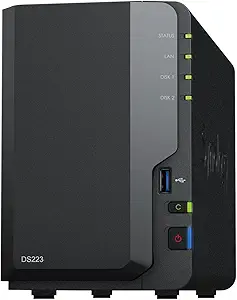 | Best Steam Backup Hub | Storage Bays: 2 | NAS Type: Diskless | Primary Use: Home and office storage | VIEW LATEST PRICE | See Our Full Breakdown |
| UGREEN NAS DXP4800 Plus 4-Bay NAS with Intel Pentium Gold 8505, 8GB DDR5 RAM, 128GB SSD, 10GbE, 4K HDMI, Diskless |  | Best Overall | Processor: Intel Pentium Gold 8505, 5-core | Memory: 8GB DDR5 | Built-in Storage: 128GB SSD | VIEW LATEST PRICE | See Our Full Breakdown |
| UGREEN NAS DXP2800 GT 2-Bay Network Attached Storage, AMD R2514 CPU, 8GB DDR4 RAM, 10GbE, 2 M.2 NVMe Slots, 4K HDMI, Diskless |  | Best Compact Performance | Processor: AMD Ryzen Embedded R2514, 4 cores and 8 threads, up to 3.70GHz | Memory: 8GB DDR4, expandable to 64GB | SATA Bays: 2 | VIEW LATEST PRICE | See Our Full Breakdown |
| network attached storage for Steam librarie | Drive Bays | Included Drives | Processor | Network |
|---|---|---|---|---|
| BUFFALO TeraStation Essentials | 4 | 4 x 4TB | — | 2.5GbE |
| Synology DS225+ Private Cloud | 2 | None; diskless | Intel CPU | — |
| UGREEN NAS DXP4800 GT 4-Bay De | — | None; diskless | AMD Ryzen Embedded R2514, 4 cores, up to 3.70GHz | 2 x 10GbE with link aggregation |
| UGREEN NAS DH2300 2-Bay Deskto | 2 | None; diskless | — | — |
| Asustor Drivestor 2 Gen 2 AS12 | 2 | None; diskless | Realtek RTD1619B quad-core 1.7GHz | 2.5GbE Ethernet |
| Synology DS223 2-Bay Diskless | — | — | — | — |
| UGREEN NAS DXP4800 Plus 4-Bay | 4, diskless | — | Intel Pentium Gold 8505, 5-core | — |
| UGREEN NAS DXP2800 GT 2-Bay Ne | — | — | AMD Ryzen Embedded R2514, 4 cores and 8 threads, up to 3.70GHz | 10GbE |
More Details on Our Top Picks
BUFFALO TeraStation Essentials 2025 4-Bay Desktop NAS with 16TB Hard Drives
I rank the BUFFALO TeraStation Essentials 2025 as the easiest route to a large, protected Steam archive because its four hard drives arrive installed and ready for RAID configuration. That saves buyers from researching compatible disks, unlike the diskless UGREEN NAS DXP4800 GT. Its 2.5GbE connection has enough bandwidth for moving large game folders quickly, while RAID 5 or RAID 6 can preserve data after a drive failure. The catch is that 16TB is raw capacity, so redundancy leaves less space for games, and mechanical drives cannot match NVMe responsiveness. Compared with the UGREEN model’s dual 10GbE and SSD slots, this is slower and less expandable. I favor it for simple deployment and dependable storage, not maximum network performance or extensive app hosting.
Pros:- Four included drives remove a major setup and compatibility hurdle
- 2.5GbE offers faster game transfers than standard Gigabit Ethernet
- RAID 5 and RAID 6 provide flexible capacity and fault-protection choices
- Three-year warranty and 256-bit encryption suit long-term archival use
Cons:- RAID protection reduces the 16TB raw capacity available for games
- Fully populated bays require drive replacement rather than simple drive addition for expansion
- Slower than the UGREEN DXP4800 GT for 10GbE or NVMe-based workflows
Best for: Buyers who want a pre-populated four-bay NAS for storing large Steam libraries without selecting and installing separate drives
Not ideal for: Performance enthusiasts with 10GbE workstations or buyers who want an all-flash library with extensive capacity expansion
- Raw Capacity:16TB
- Drive Bays:4
- Included Drives:4 x 4TB
- RAID Support:RAID 0, RAID 5, RAID 6
- Network:2.5GbE
- Encryption:256-bit
- Warranty:3 years
- Manufacturing and Compliance:Made in Japan; TAA compliant
Our verdict“I recommend this model to buyers who value a ready-to-run, protected Steam repository more than leading transfer speeds.”
Synology DS225+ Private Cloud Media Server
I place the Synology DS225+ ahead of simpler two-bay choices when library management, backups, and snapshots matter as much as raw storage. Its software can schedule protection for game saves and other PC data, while the quoted 282 MB/s transfer ceiling is well matched to a wired multi-gigabit setup. Compared with the Asustor Drivestor 2 Gen 2, Synology offers a broader backup and snapshot toolkit; compared with the UGREEN DXP4800 GT, it has fewer bays, less hardware headroom, and no supplied disks. Two-bay RAID redundancy also cuts usable capacity roughly in half when both drives are mirrored. I see this as a polished private-cloud hub that can hold a moderate Steam collection, but buyers chasing huge libraries, 10GbE transfers, Docker-heavy workloads, or several SSD tiers should choose the four-bay UGREEN instead.
Pros:- Strong backup and snapshot tools help protect saves and installation archives
- Transfer speeds up to 282 MB/s suit multi-gigabit wired networks
- Intel processor supports a wider range of home-server workloads
- Three-year warranty adds reassurance for continuous operation
Cons:- Diskless package raises the complete system cost
- Two bays limit capacity growth and RAID choices
- Broader software suite has a learning curve for first-time NAS owners
Best for: PC households that want a moderate Steam library alongside polished backups, snapshots, media streaming, and private-cloud tools
Not ideal for: Collectors who need four-bay expansion, included drives, or 10GbE performance for frequent multi-hundred-gigabyte transfers
- Processor:Intel CPU
- Drive Bays:2
- Included Drives:None; diskless
- Maximum Transfer Speed:282 MB/s
- Media Support:4K streaming
- Data Protection:RAID redundancy and snapshots
- Surveillance Support:Up to 30 IP cameras
- Warranty:3 years
Our verdict“I recommend the DS225+ when polished storage software matters more than four-bay capacity or 10GbE hardware.”
UGREEN NAS DXP4800 GT 4-Bay Desktop NAS
The UGREEN NAS DXP4800 GT takes my top position because it pairs four SATA bays with two M.2 slots, two U.2 slots, and dual 10GbE networking. That mix lets a buyer keep frequently played games on SSDs and bulk installations on hard drives, while the AMD R2514 and expandable memory leave room for Docker or virtual machines. It is far faster and more configurable than the BUFFALO TeraStation Essentials 2025, which stops at 2.5GbE and arrives with mechanical disks. The flexibility carries real costs: every drive is extra, 8GB of factory memory is non-ECC, and advanced app deployment may demand command-line work. Link aggregation also benefits multiple connections more than one gaming PC. I rank it first for its storage-tier flexibility and upgrade ceiling, not for simplicity or low initial cost.
Pros:- Dual 10GbE ports support very fast transfers and multiple demanding clients
- Four SATA, two U.2, and two M.2 slots allow flexible game-storage tiers
- Ryzen embedded processor and expandable RAM suit server apps and multitasking
- Supports up to 144TB with user-selected drives
Cons:- Drives must be purchased separately, making the finished system expensive
- Factory-installed memory is non-ECC
- Docker-based services and advanced networking can require substantial setup knowledge
Best for: Enthusiasts with a 10GbE gaming PC who want separate SSD and hard-drive tiers for a large, frequently accessed Steam collection
Not ideal for: Buyers seeking a low-cost, pre-populated appliance that can be configured with minimal networking or server knowledge
- Processor:AMD Ryzen Embedded R2514, 4 cores, up to 3.70GHz
- Memory:8GB DDR4, expandable to 64GB
- Maximum Supported Capacity:144TB
- SATA Bays:4
- NVMe Slots:2 U.2 and 2 M.2
- Network:2 x 10GbE with link aggregation
- External Connectivity:USB 3.2, USB-C, 4K HDMI, SD card slot
- Application Support:Docker, virtual machines, Surveillance Center
- Included Drives:None; diskless
Our verdict“I recommend the DXP4800 GT to performance-focused buyers who will pay and configure more for the roundup’s strongest expansion and networking platform.”
UGREEN NAS DH2300 2-Bay Desktop NAS
I chose the UGREEN NAS DH2300 for buyers who need inexpensive bulk space for archived games, installers, and saves rather than workstation-class speed. Its two bays support up to 64TB, and 125 MB/s transfers are adequate for scheduled backups or moving one game at a time over Gigabit Ethernet. The Asustor Drivestor 2 Gen 2 is the better entry-level choice for buyers with 2.5GbE hardware, while the DH2300 favors capacity and approachable personal-storage tools. This model also lacks Docker and virtual-machine support, so it cannot grow into the flexible server offered by the UGREEN DXP4800 GT. A wired connection is mandatory, and mirrored RAID cuts available space. I would treat it as a budget Steam archive, not the first choice for launching large games across the network or serving several gaming PCs at once.
Pros:- Supports up to 64TB across two user-selected drives
- Straightforward personal-storage features suit first-time NAS buyers
- RAID, two-factor authentication, and encryption protect household data
- Works with computers, mobile devices, tablets, and televisions
Cons:- 125 MB/s ceiling is much slower than the 2.5GbE and 10GbE alternatives
- No Docker or virtual-machine support
- Diskless design and wired-only networking add hardware requirements
Best for: Budget-focused players who want a wired two-drive archive for infrequently played Steam games, installers, screenshots, and save backups
Not ideal for: Multi-PC households needing faster-than-Gigabit transfers, Docker services, virtual machines, or business-grade application support
- Maximum Supported Capacity:64TB
- Drive Bays:2
- Drive Interface:SATA
- Drive Form Factor:3.5-inch
- Maximum Transfer Speed:125 MB/s
- Connectivity:Ethernet, HDMI, SATA, USB
- Wireless Networking:No Wi-Fi
- Security:RAID, two-factor authentication, encryption, password protection
- Included Drives:None; diskless
Our verdict“I recommend the DH2300 as a low-cost Steam archive for one household, provided Gigabit speed and basic server functions are enough.”
Asustor Drivestor 2 Gen 2 AS1202T 2-Bay NAS Storage
The Asustor Drivestor 2 Gen 2 AS1202T earns its place by bringing 2.5GbE to a straightforward two-bay design. For Steam storage, that faster connection can shorten large transfers compared with the UGREEN NAS DH2300 and its roughly Gigabit-class 125 MB/s ceiling, assuming the computer and network switch also support 2.5GbE. Tool-free drive installation makes the hardware approachable, and the personal-cloud features cover remote file access and routine backup needs. I would not choose it for a busy home server: the fixed 1GB memory is restrictive for multitasking, no drives are supplied, and two bays offer less growth than the BUFFALO TeraStation or UGREEN DXP4800 GT. My ranking favors it as a focused game-storage appliance for buyers who want faster networking without paying for high-end processors, numerous SSD slots, or 10GbE infrastructure.
Pros:- 2.5GbE networking improves large game transfers over Gigabit models
- Tool-free bays simplify drive installation and replacement
- Quad-core processor is adequate for focused file storage and backups
- Personal-cloud functions provide remote access without a third-party storage subscription
Cons:- Fixed 1GB RAM sharply limits heavier multitasking and app workloads
- Two bays restrict capacity expansion and redundancy choices
- No included drives, so the advertised price is not the complete system cost
Best for: Single-PC gamers with a 2.5GbE network who want faster library transfers from a simple two-bay storage appliance
Not ideal for: Power users planning memory-heavy apps, many simultaneous services, four-drive RAID arrays, or very large SSD and hard-drive tiers
- Processor:Realtek RTD1619B quad-core 1.7GHz
- Memory:1GB DDR4
- Network:2.5GbE Ethernet
- Drive Bays:2
- Included Drives:None; diskless
- Drive Installation:Tool-free
- Cloud Function:Personal cloud with remote access
- Primary Storage Functions:Secure file storage and backup
Our verdict“I recommend the AS1202T to buyers who want affordable 2.5GbE Steam storage and can accept limited memory and two-bay expansion.”
Synology DS223 2-Bay Diskless NAS Home & Office Backup Hub
I rank the Synology DS223 as the best Steam backup hub, not as the fastest place to run games. Its two bays make sense for a mirrored archive that can collect libraries from several PCs, automate backups, and preserve older builds or mod folders. Compared with the UGREEN NAS DXP4800 Plus, it gives up 10GbE, four-bay growth, and virtualization muscle, so large restores may be less ambitious and capacity has a lower ceiling. The payoff is a focused home-and-office feature set built around sharing, version control, and remote access rather than server experimentation. I would choose it for keeping downloadable games off internal SSDs while maintaining a second copy. Diskless pricing hides the drive cost, and first-time NAS owners may face setup friction; buyers expecting a high-speed primary Steam volume should move up the list.
Pros:- Automated backups can protect Steam libraries, saves, mod folders, and other PC data
- Two bays support a simple mirrored storage arrangement
- File sharing and version control serve several household computers
- Remote monitoring and IP-camera support add value beyond game storage
Cons:- Only two bays, limiting long-term capacity growth
- Hard drives must be purchased separately
- New NAS owners may encounter a learning curve during configuration
Best for: Multi-PC households seeking a mirrored Steam archive with automated backups and straightforward file sharing
Not ideal for: Players who want 10GbE transfers, extensive drive expansion, or enough processing headroom for virtual machines
- Storage Bays:2
- NAS Type:Diskless
- Primary Use:Home and office storage
- File Services:Sharing, collaboration, and version control
- Backup Features:Automated multi-device backups
- Surveillance:IP-camera support
- Remote Management:Remote monitoring supported
- Warranty:2 years
Our verdict“My pick for households that want a dependable secondary Steam vault rather than a high-performance game server.”
UGREEN NAS DXP4800 Plus 4-Bay NAS with Intel Pentium Gold 8505, 8GB DDR5 RAM, 128GB SSD, 10GbE, 4K HDMI, Diskless
I place the UGREEN NAS DXP4800 Plus at the top for buyers building a large shared Steam repository. Four bays and a 144TB ceiling leave far more room for expanding libraries than the two-bay UGREEN DXP2800 GT, while 10GbE can cut transfer and restore times when the client PC, switch, and cabling match that speed. The 2.5GbE fallback also makes staged network upgrades practical. Its five-core Pentium Gold 8505, 8GB DDR5, two M.2 slots, and Docker or virtual-machine support suit households that want game storage plus other server jobs. I rank it below the DXP4800 GT for buyers who specifically need dual 10GbE, but its broader balance earns this role. Drives cost extra, wired networking is mandatory, and the headline throughput requires costly 10GbE infrastructure.
Pros:- Four bays and a 144TB maximum capacity suit large, growing game collections
- 10GbE and 2.5GbE ports support both high-speed and staged network builds
- Pentium Gold processor and 8GB DDR5 handle storage alongside Docker or virtual-machine workloads
- Two M.2 NVMe slots provide additional storage and configuration flexibility
Cons:- Hard drives are not included
- Full 10GbE performance requires compatible PCs, switches, and cabling
- Wired Ethernet is the only network connection
Best for: Enthusiast households sharing a large Steam archive across several wired PCs and planning for substantial capacity growth
Not ideal for: Budget buyers without 10GbE hardware or anyone wanting a ready-to-use NAS with hard drives included
- Processor:Intel Pentium Gold 8505, 5-core
- Memory:8GB DDR5
- Built-in Storage:128GB SSD
- Drive Bays:4, diskless
- Maximum Capacity:144TB
- Network Ports:1x 10GbE and 1x 2.5GbE
- M.2 NVMe Slots:2
- Video Output:4K HDMI
- Warranty:2 years
Our verdict“My best overall choice for buyers who want four-bay capacity, fast Steam-library transfers, and enough processing power for added server tasks.”
UGREEN NAS DXP2800 GT 2-Bay Network Attached Storage, AMD R2514 CPU, 8GB DDR4 RAM, 10GbE, 2 M.2 NVMe Slots, 4K HDMI, Diskless
I assign the UGREEN NAS DXP2800 GT the best compact performance role because it puts 10GbE and a four-core, eight-thread Ryzen Embedded chip into a two-bay format. Against the Synology DS223, it is much better equipped for rapid Steam-library transfers, Docker services, virtual machines, and direct 4K display duties. It also offers unusual flash flexibility through two U.2 NVMe and two M.2 slots, while RAM can grow from 8GB to 64GB. That makes it appealing when desk space matters but a basic two-bay NAS feels restrictive. I would still pick the DXP4800 Plus for a large, steadily growing game collection: four SATA bays provide a cleaner capacity path than mixing storage types here. No drives are included, advanced apps need manual setup, and buyers wanting memory protection must replace the supplied non-ECC RAM with a compatible ECC upgrade.
Pros:- 10GbE networking supports fast library transfers on compatible networks
- Ryzen Embedded processor and expandable RAM suit demanding server workloads
- SATA, U.2 NVMe, and M.2 storage support offers broad configuration flexibility
- RAID 1 and modern encryption options help protect stored data
Cons:- Two SATA bays provide less straightforward expansion than a four-bay NAS
- Drives are sold separately and advanced applications require manual setup
- Preinstalled memory is non-ECC, requiring replacement to gain ECC protection
Best for: Power users with limited desk space who want 10GbE Steam transfers, expandable memory, and mixed SATA and NVMe storage
Not ideal for: Buyers seeking simple four-bay expansion or beginners who do not want to configure Docker, virtual machines, and storage pools manually
- Processor:AMD Ryzen Embedded R2514, 4 cores and 8 threads, up to 3.70GHz
- Memory:8GB DDR4, expandable to 64GB
- SATA Bays:2
- U.2 NVMe Support:2 drives
- M.2 SSD Slots:2
- Network:10GbE
- Maximum Capacity:80TB
- Video Output:4K HDMI
- Data Protection:RAID 1, TLS/SSL, RSA, AES, and SHA-512
Our verdict“My compact-performance pick for technically confident buyers who value 10GbE and flash-storage flexibility more than simple four-bay expansion.”
How We Picked
I compared these models through the specific demands of Steam storage rather than treating them as general-purpose backup boxes. I placed the greatest weight on realistic network throughput, followed by drive-bay flexibility, NVMe options, processor and memory resources, and the ability to expand as game libraries grow. A fast port received less credit when the rest of the hardware or a typical home network would struggle to feed it.
I also weighed setup difficulty, operating-system maturity, maintenance, and total ownership cost. Diskless systems were judged with drive purchases in mind, while the populated Buffalo model received credit for convenience but not an automatic advantage for raw capacity. My final order favors models that make sense for more Steam users, with specialized products ranked according to how narrow their ideal audience is. These rankings come from published specifications and platform capabilities, not claimed hands-on testing.
| network attached storage for Steam librarie | Processor |
|---|---|
| BUFFALO TeraStation Essentials | — |
| Synology DS225+ Private Cloud | Intel CPU |
| UGREEN NAS DXP4800 GT 4-Bay De | AMD Ryzen Embedded R2514, 4 cores, up to 3.70GHz |
| UGREEN NAS DH2300 2-Bay Deskto | — |
| Asustor Drivestor 2 Gen 2 AS12 | Realtek RTD1619B quad-core 1.7GHz |
| Synology DS223 2-Bay Diskless | — |
| UGREEN NAS DXP4800 Plus 4-Bay | Intel Pentium Gold 8505, 5-core |
| UGREEN NAS DXP2800 GT 2-Bay Ne | AMD Ryzen Embedded R2514, 4 cores and 8 threads, up to 3.70GHz |
Factors to Consider When Choosing Best Network Attached Storage For Steam Libraries
I would decide how the NAS will fit into the gaming workflow before comparing processors or port counts. A Steam archive used for restoring games has different demands from a network share used for direct play. The sections below explain where extra spending changes the experience and where impressive specifications may sit idle.
Choose Between Direct Play and Library Archiving
I see a NAS as most dependable when it acts as a central game archive from which titles are copied to a local SSD. Direct play from an SMB share can work for some games, but launchers, anti-cheat systems, permissions, and brief network interruptions may create problems. Games containing thousands of small files can also feel slower than headline transfer rates suggest because latency matters alongside bandwidth. Keeping frequently played titles locally and moving inactive games to the NAS provides a cleaner balance. Buyers set on direct network play should test several representative games before moving an entire library. I would not assume that every title will behave properly simply because Steam accepts the storage path.
Match the Network Port to the Whole Network
A 10GbE NAS does not create a 10GbE network by itself. The gaming PC needs a matching adapter, the switch must support the chosen speed, and the cabling must handle the connection reliably. Gigabit Ethernet has a theoretical ceiling of 125 MB/s, while 2.5GbE raises that figure to about 312 MB/s and 10GbE to 1.25 GB/s before overhead. I view 2.5GbE as a practical middle ground for HDD-based two-bay systems, especially when several household devices share the NAS. Ten-gigabit hardware makes more sense with NVMe storage, a capable multi-drive array, or frequent transfers of very large games. Dual 10GbE ports rarely double one computer’s speed without compatible link aggregation or multichannel support.
Plan Usable Capacity, Not Raw Capacity
Game sizes make advertised capacity disappear quickly, and redundancy reduces it further. A pair of equal drives mirrored for protection provides roughly the capacity of one drive, while a four-bay array can offer better capacity efficiency and expansion choices. Four bays also let a buyer start with fewer disks and grow, although supported expansion methods vary by NAS operating system. I would budget from the desired usable capacity after redundancy, formatting, snapshots, and other household data. RAID can keep the library available after a drive failure, but it is not a backup against deletion, malware, enclosure failure, or theft. Save files that are not synchronized elsewhere still need a separate copy.
Treat NVMe Slots and SSD Cache Carefully
NVMe slots sound ideal for gaming, yet their permitted roles differ between manufacturers and software versions. Some systems allow NVMe storage pools, while others restrict the drives to cache or selected applications. Read cache may help repeated access, but it does not automatically turn a hard-drive array into a network gaming SSD. Large sequential transfers often benefit more from extra drive throughput and a faster Ethernet link. I would verify whether a chosen model supports NVMe volumes, cache, or both before buying drives. Buyers planning direct play should favor usable flash storage over cache capacity that the NAS controls automatically.
Account for Software, Drives, and Supporting Hardware
A diskless enclosure price leaves out NAS-grade drives, possible memory upgrades, network adapters, a faster switch, and backup storage. Those additions can make an inexpensive 10GbE model cost more than a populated system. Software also affects daily ownership through share creation, permissions, updates, monitoring, and recovery tools. I would pay more for an approachable interface when the NAS must serve a household rather than a single technical user. A UPS is sensible for arrays that handle frequent writes, since sudden power loss can interrupt transfers or damage active data. The right comparison is complete system cost over several years, including replacement drives, power use, and the time required for maintenance.
Frequently Asked Questions
Can I Run Steam Games Directly From a NAS?
Some Windows setups can run Steam games from a mapped network share or an iSCSI volume, but compatibility varies by game and storage method. Launchers, anti-cheat tools, file permissions, and network interruptions can cause failures that would not occur on a local disk. An iSCSI volume appears more like a local drive, though it is usually tied to one host and requires careful management. I recommend using the NAS as a fast archive for copying games to local SSD storage unless direct play has been verified with the buyer’s actual titles. This approach also keeps gaming available when the network or NAS is offline.
Do I Need 10GbE for a Steam NAS?
I would choose 10GbE when large games are moved frequently and the PC, switch, cabling, and drive array can all sustain higher speeds. A hard-drive mirror may not approach the full capacity of that connection, while NVMe storage or a multi-drive array has a better chance. For occasional restores, 2.5GbE offers a strong cost-to-speed balance. Standard gigabit remains usable for overnight archiving, but restoring a 100GB game can take much longer. Spending on 10GbE makes little sense if the client remains limited to Wi-Fi or gigabit Ethernet.
Is a Two-Bay or Four-Bay NAS Better for a Large Steam Library?
A two-bay NAS suits a modest library, simple mirroring, and buyers who value lower entry cost. Four bays provide more growth paths and better capacity efficiency when redundancy is required. They can also spread reads and writes across more disks, which may help fast network transfers. The tradeoff is higher enclosure cost, added noise, greater power use, and the temptation to buy several drives at once. I favor four bays for multi-terabyte collections that will keep growing, while a two-bay model remains the cleaner choice for archive-first use on a smaller budget.
Will SSD Cache Make Games Load as Fast as From a Local SSD?
SSD cache cannot remove network latency, and it may not contain the files a game needs on its first launch. Its benefit depends on the caching policy, workload, memory available, and whether the same data is read repeatedly. A dedicated NVMe storage pool is more predictable for frequently played games, provided the NAS supports that use. Even then, the network and game engine can limit results before the SSD does. I would treat cache as a system accelerator, not a substitute for a local NVMe game drive.
Would an External SSD Be Better Than a NAS for Steam Storage?
An external SSD is usually faster, simpler, and cheaper when one computer needs extra game capacity. A NAS earns its cost when several computers share the same archive, remote management matters, or the storage also handles backups and media. It also centralizes large installers so each PC does not need to download them again, although copying still takes time. The NAS adds network dependencies, drive management, and ongoing power use that a portable SSD avoids. I would buy the SSD for a single gaming machine and choose a NAS for multi-device storage and long-term expansion.
Conclusion
For most buyers, I recommend the UGREEN NAS DXP4800 Plus as the best overall choice because its four bays, 10GbE port, DDR5 memory, and included system SSD leave room for a growing library. The Asustor Drivestor 2 Gen 2 is my value pick for archive-focused users who do not need workstation-class hardware. Beginners should choose the Synology DS225+ when straightforward management matters more than maximum bay count or network speed.
For premium performance, I would move to the UGREEN DXP4800 GT, especially where dual 10GbE and NVMe storage can be put to work. The DXP2800 GT makes more sense for buyers wanting similar high-speed ideas in a compact two-bay system, while the Buffalo TeraStation suits anyone who wants a populated 16TB archive without selecting drives. I would reserve the Synology DS223 for backup-led households and the UGREEN DH2300 for buyers prioritizing basic two-bay capacity. Whichever model fits, I would keep latency-sensitive games on a local SSD and use the NAS where it performs best: centralizing, protecting, and moving a large Steam collection.
Fall Picks
fall essentials
As an affiliate, we earn on qualifying purchases.