📊 Full opportunity report: 10 Best OLED Gaming Monitors For Faster, Richer Play In 2026 on ThorstenMeyerAI.com — validation score, market gap, and execution plan.

Play games on Amazon Luna for your game nights, included with Prime
- A rotating selection of games, no download needed
- Play on TV, laptop or phone
- Fast, free delivery for your gear, too
TL;DR
In 2026, the market offers a range of OLED gaming monitors with high refresh rates, deep blacks, and vivid HDR. The Alienware AW3425DW leads overall, combining ultrawide immersion with 240Hz speed. Buyers should consider format, refresh rate, and room lighting for optimal performance.
Multiple OLED gaming monitors have been released or updated in 2026, offering gamers high refresh rates, deep black levels, and vibrant HDR. The Alienware AW3425DW stands out as the top overall choice, combining a 34-inch QD-OLED panel with a 240Hz refresh rate. This development reflects ongoing advancements in OLED technology aimed at delivering faster, richer gaming experiences (the original analysis).
The Alienware AW3425DW leads the market due to its combination of ultrawide 34-inch QD-OLED panel and 240Hz refresh rate, providing broad immersion and smooth motion. The Samsung Odyssey OLED G5 offers a more accessible entry point with a 180Hz refresh rate, suitable for most current gaming setups. Meanwhile, the ASUS ROG Swift OLED PG27AQDP is targeted at competitive players, boasting an exceptional 480Hz refresh rate, ideal for esports. Other notable options include the LG 34GX900A-B, with advanced connectivity features, and the INNOCN model, distinguished by its 280Hz operation and built-in speakers.
Market analysis indicates that the best monitors balance resolution, refresh rate, and panel type, with considerations for static-image wear and room lighting. For more on the latest OLED monitor options, see the best OLED gaming monitors for Steam. The choice between 27-inch and 34-inch formats remains crucial, as it impacts immersion and compatibility. Most buyers are recommended to prioritize 240Hz QHD monitors for optimal performance and system demands. To explore top-rated OLED gaming monitors, visit the detailed review.
The 10 picks
- 1
 Samsung 27” Odyssey OLED G5 (G50SF) QHD Gaming Monitor, 180Hz, 0.03ms GtG, G-…View on Amazon →
 - 2
 Samsung 27" Odyssey OLED G6 Gaming Monitor – QD-OLED, QHD, 240Hz, 0.03ms, HDR…View on Amazon →
 - 3
 Alienware 34 240Hz QD-OLED Curved Gaming Monitor – AW3425DWView on Amazon →
 - 4
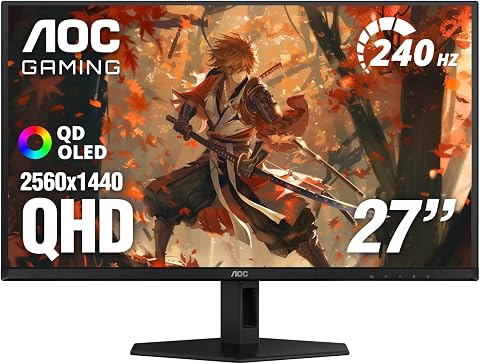 AOC 27" QD OLED Gaming Monitor, QHD 2560×1440, 240Hz, 0.03ms GtG, G-SYNC Comp…View on Amazon →
 - 5
 LG 27GX704A-B 27-inch Ultragear QHD OLED Gaming MonitorView on Amazon →
 - 6
 ASUS ROG Swift OLED 27” 1440P Gaming Monitor (PG27AQDP)View on Amazon →
 - 7
 LG 34GX900A-B 34-Inch Ultragear WQHD OLED Curved Gaming Monitor, 240Hz, 0.03m…View on Amazon →
 - 8
 Acer Predator 26.5" WQHD QD-OLED Gaming Monitor with 240Hz, AMD FreeSync PremiumView on Amazon →
 - 9
 LG 27-inch UltraGear OLED Gaming Monitor QHD 1440p 240HzView on Amazon →
 - 10
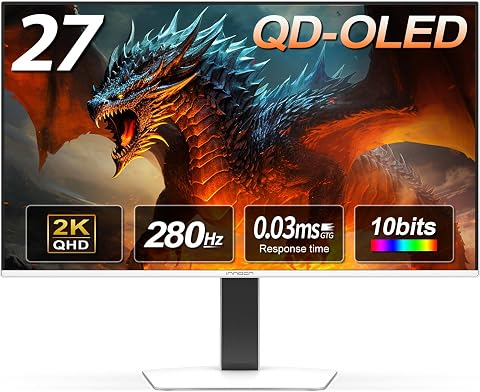 INNOCN 27" QD-OLED Gaming Monitor, 2K QHD 2560×1440, 280Hz, 0.03ms, HDR400, H…View on Amazon →
Why High-Performance OLED Monitors Matter in 2026
These OLED monitors represent a significant upgrade in gaming display technology, offering faster response times, superior contrast, and richer HDR. For gamers, this translates into more immersive experiences, reduced motion blur, and improved competitive edge. As OLED technology becomes more mainstream, understanding the tradeoffs—such as static-image wear and room lighting effects—is essential for making informed purchases. The availability of diverse models ensures that different user needs, from casual to professional esports, can be met effectively.
2026 OLED Monitor Market Developments
Over the past few years, OLED technology has transitioned from premium TV displays to gaming monitors, driven by advances in panel durability and cost reduction. Notable releases include models from Alienware, Samsung, ASUS, and LG, each emphasizing high refresh rates, deep blacks, and HDR quality. The market has shifted toward ultrawide formats and higher refresh rates, with 240Hz and above becoming standard for competitive gaming. Previous models faced challenges with static-image burn-in, but recent panel improvements have mitigated these issues, expanding OLED’s suitability for prolonged gaming sessions.
In early 2026, new models introduced features like HDMI 2.1, USB-C, and adaptive sync, aligning with the latest gaming hardware and console capabilities. The development of QD-OLED panels has further enhanced color richness and brightness, making OLED monitors more attractive for both casual and professional gamers.
“Our AW3425DW offers gamers an ultrawide, high-speed experience that enhances both immersion and responsiveness.”
— Alienware spokesperson
Remaining Questions About OLED Durability and Compatibility
While OLED monitors now feature high refresh rates and improved panel durability, questions remain about long-term static-image wear, especially for users who keep browser tabs or static content on screen for extended periods. Additionally, the compatibility of ultrawide formats with all gaming titles and consoles continues to vary, and real-world performance in different lighting conditions is still being assessed. Market availability and pricing strategies are also evolving, which may influence consumer choices.
Upcoming OLED Monitor Releases and Firmware Updates
In the coming months, expect further releases from major brands, including models with even higher refresh rates and enhanced panel protection. Firmware updates aimed at reducing static-image burn-in and improving HDR performance are anticipated, alongside broader adoption of HDMI 2.1 and USB-C connectivity. Monitoring industry announcements will be key for buyers planning to upgrade or invest in OLED gaming monitors.
Key Questions
Are OLED gaming monitors suitable for long gaming sessions?
Yes, but users should be aware of static-image burn-in risks. Modern OLED panels include features like pixel shifting and logo dimming to mitigate this issue, making them more suitable for extended use.
What is the ideal refresh rate for competitive gaming in 2026?
Most competitive gamers will find 240Hz to be the sweet spot, balancing motion clarity and GPU demands. Some esports professionals may prefer 480Hz models if their hardware supports it.
How does room lighting affect OLED display quality?
Bright ambient light can reduce perceived contrast and make blacks appear less deep, especially on QD-OLED panels. Using matte or anti-glare coatings can help manage reflections and improve visibility.
Are ultrawide OLED monitors compatible with all games and consoles?
Compatibility varies; some older games or consoles may display black bars or not support ultrawide aspect ratios fully. Checking game and console specifications before purchase is recommended.
Source: ThorstenMeyerAI.com
Halloween Picks
halloween
As an affiliate, we earn on qualifying purchases.