
TL;DR

Play games on Amazon Luna for your game nights, included with Prime
- A rotating selection of games, no download needed
- Play on TV, laptop or phone
- Fast, free delivery for your gear, too
Eye tracking on the Steam Frame — Valve’s rumored, still-unconfirmed follow-up to the Index — exists mainly to power foveated rendering and foveated streaming, which cut GPU load and wireless bandwidth. Your gaze data is sensitive in principle, but whether anyone stores or shares it is a policy decision, not a hardware one. The smart move: watch what data policy Valve publishes at launch, not what sensors sit inside the headset.
A camera pointed at your eyeballs sounds like the creepiest feature a VR headset could ship with. It’s also the feature most likely to make Valve’s rumored Steam Frame faster, cheaper, and sharper than anything you’ve strapped to your face before. Both things can be true at once — and understanding why is the whole point of this guide.
Quick reality check first: the Steam Frame, widely tracked under Valve’s internal codename “Deckard,” remains unconfirmed by Valve. What we know comes from SteamVR datamining, patent filings, and trademark activity — real breadcrumbs, but not an announcement. Treat every spec and date here as leak-based until Valve says otherwise.
Here’s what you’ll walk away with: why eye tracking is one of the headset’s most anticipated features, what it genuinely does for your frame rate and your bandwidth, what your gaze could reveal in the wrong hands, and the exact questions Valve still needs to answer before your money leaves your wallet.
Eye tracking’s main jobs on the Steam Frame are foveated rendering and foveated streaming — performance tricks that cut GPU load and Wi-Fi bandwidth, not surve…
The Steam Frame itself is unconfirmed by Valve; everything known comes from datamining, patents, and trademarks, so treat specs and dates as rumor until launch.
Gaze data is genuinely sensitive — it can reveal attention, fatigue, and support biometric ID — but the risk lives in the data pipeline, not the infrared senso…
Apple’s Vision Pro model is the privacy benchmark: on-device processing with apps receiving selection events, never a raw gaze stream.
Valve’s ad-free business model removes the structural motive for gaze-based ad targeting — but wait for the published data policy, because incentive is not a c…
VR Hardware · Explainer · Codename “Deckard”
Eye Tracking on Steam Frame, Explained Without the Privacy Panic
A camera pointed at your eyeballs sounds like the creepiest feature a VR headset could ship with. It’s also the feature most likely to make Valve’s rumored follow-up to the Index faster, cheaper, and sharper than anything you’ve strapped to your face before. Both things can be true at once — the sensor is hardware; what happens to your gaze data is a policy decision.
Reality check — the Steam Frame remains unconfirmed by Valve. Everything known comes from SteamVR datamining, patent filings, and trademarks. Treat specs and dates as rumor until launch.
Section 01 · Function Before Fear
Why a headset watches your eyes at all: five jobs, one sensor
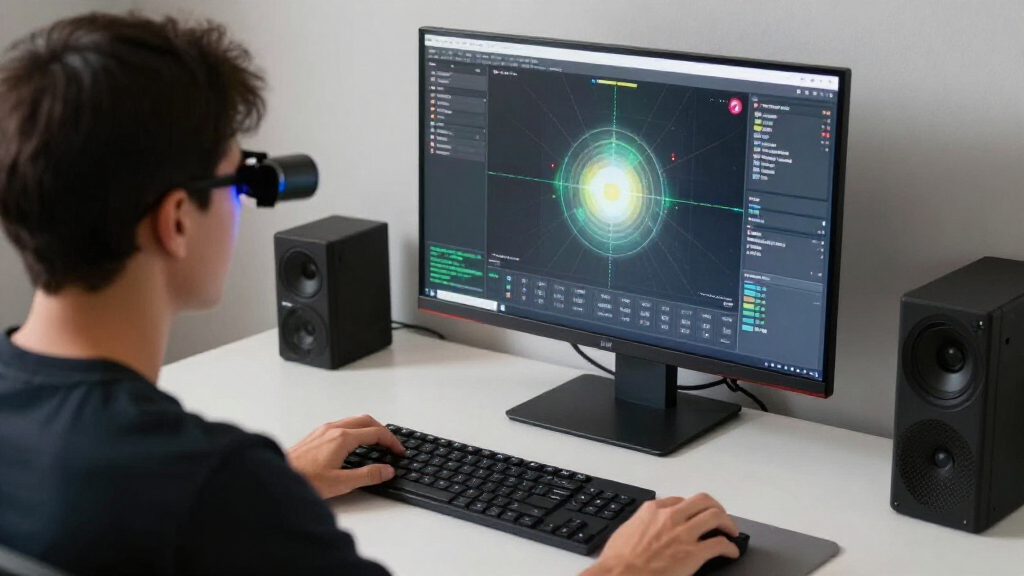
Infrared cameras and tiny illuminators track where your pupils point so the headset can render smarter, stream leaner, and let you interact faster. Think of a stage spotlight that follows the actor — it doesn’t care about the actor’s diary, only where to shine. None of these jobs requires recording or uploading anything.
Foveated Rendering
Full resolution only where your fovea sees sharply — a patch about thumbnail-sized at arm’s length. Everything beyond it is your brain politely upscaling blur, so the GPU stops cooking for empty chairs.
Foveated Streaming
Valve’s patented angle: high-detail video flows only to your gaze region over Wi-Fi, pinching a firehose of VR data down to something home wireless can actually carry.
Gaze + Pinch
Glance at a menu item, tap your fingers, done — two seconds, no laser-sword controller pointing. Popularized by Vision Pro, and it compounds across hundreds of micro-interactions per session.
Social Presence
Avatars whose eyes move like yours. It sounds cosmetic until you’ve spent an evening in VRChat-style communities, where believable eye contact is the whole point of being there.
Auto-IPD Calibration
Lenses and distortion correction tuned to your specific eyes automatically — less eye strain, less fiddling with sliders, better fit for every face that picks the headset up.
Table Stakes
PSVR2 shipped Tobii tracking in 2023, Quest Pro had it, Vision Pro made it central in 2024. A flagship without eye tracking would now be the odd one out — like a phone without a touchscreen.
Section 02 · The Performance Case
The 30-percent trick: how foveation saves your frame rate
Your eye’s sharp zone is tiny. Rendering 4K detail across the entire field of view is a restaurant plating gourmet meals for empty seats. For a headset leaks suggest runs ARM-based mobile silicon and SteamOS, foveation is the difference between “mobile chip struggles” and “mobile chip punches above its weight.”
The privacy-relevant part
LOOK → RENDER → DISCARD → REPEAT
// sub-100ms real-time loop
// never written to disk
// never shipped to a server
Gaze data feeding foveation lives and dies inside a sub-100-millisecond cycle. It is consumed locally, in real time, and evaporates. Foveated rendering and streaming simply do not require your gaze to be stored anywhere — hold onto that fact for the privacy section below.
Section 03 · Valve’s Real Play
Streaming sharp video only where you’re looking
Datamined SteamVR code points to a standalone-capable, wireless-first device paired with new “Roy” controllers. A wireless-first headset lives or dies on bandwidth — and foveated streaming, documented in Valve’s patent filings, is how a raw VR firehose becomes something your router can survive. Sim-racer test: eyes locked on the apex, razor-sharp braking markers; grandstands arrive softer. Your brain never notices. Your router exhales.
Gaming PC
Renders the scene; headset reports gaze coordinates back upstream.
Smart Encode
Gaze region encoded at full detail; periphery compressed hard.
Home Wi-Fi
Dramatically less data crosses the air — no DisplayPort cable needed.
Headset Decode
Steam Frame decodes and reprojects; tracking keeps latency low.
Your Eyes
Sharp exactly where you look. Peripheral softness is invisible to you.
| Device | Year | Eye Tracking | Gaze Data Model |
|---|---|---|---|
| Meta Quest Pro | 2022 | Yes — shipped, later discontinued | ~ Ad-funded parent company keeps the structural incentive question open |
| Sony PSVR2 | 2023 | Tobii — powers foveated rendering | ✓ Performance-first use on console; Tobii publishes privacy frameworks |
| Apple Vision Pro | 2024 | Always-on, central to input | ✓ The benchmark: processed on-device, apps receive selection events — never a raw gaze stream |
| Steam Frame | TBD | Rumored — patents + datamining | ? Unconfirmed. Valve’s ad-free model removes the motive — now wait for the published policy |
Incentive ≠ policy. Valve’s revenue is software sales and the Steam store cut — but the launch-day data policy is the document that matters, not the business model.
Section 04 · The Honest Version
What your gaze could reveal in the wrong hands
The concern is legitimate and deserves better than mockery. Gaze patterns are genuinely sensitive — the risk lives in the data pipeline, not in the infrared sensor. Hardware capability alone tells you nothing about storage, sharing, or retention.
Attention
What you looked at, for how long, and what you ignored — a heatmap of your interest.
Fatigue & Cognitive Load
Pupil behavior and blink patterns can indicate tiredness, stress, and mental effort.
Health Indicators
Certain eye-movement signatures correlate with medical and neurological conditions.
Biometric Identity
Gaze dynamics can support identifying you across sessions — like a fingerprint you can’t change.
“The sensor ≠ the pipeline. Whether anyone stores or shares your gaze is a policy decision, not a hardware one.”
Apple’s model is the reference point: eye data processed on-device; apps receive only a selection confirmation, never a raw gaze stream. Tobii, the dominant supplier, has published anonymization frameworks for years.
Valve’s structural advantage: no advertising business means no built-in motive for gaze-based ad targeting. That’s a fair point — but incentive is not a contract. The published data policy is what you read before your money leaves your wallet.
Section 05 · The Smart Move
Four questions Valve still needs to answer before launch day
Watch what data policy Valve publishes — not what sensors sit inside the headset. These are the exact lines to look for.
On-device or cloud?
Is raw gaze processed locally on the headset/PC, or does any of it touch a server?
Stored — and for how long?
Does anything persist beyond the sub-100ms render loop? Retention windows, in writing.
What do apps receive?
Selection events only (the Apple model), or a raw gaze stream third parties can mine?
Ads, ever?
An explicit, contractual “never used for advertising or sold to data brokers.”
Traceability · How we “know” any of this
Datamining
SteamVR code uncovered by Brad Lynch & others
Patents
Published filings on foveated streaming
Trademarks
Name activity around “Steam Frame”
“Deckard”
Internal codename — still unconfirmed
Launch Policy
The one document that settles the privacy question
Why Does a VR Headset Need to Watch Your Eyes at All?
Eye tracking on the Steam Frame is, at its core, a performance and input technology — not a surveillance feature. Infrared cameras and tiny illuminators watch where your pupils point, and the headset uses that information to render smarter, stream leaner, and let you interact faster. None of these jobs requires recording or uploading anything.
Think of it like a stage spotlight that follows the actor. The light doesn’t care about the actor’s diary — it just needs to know where to shine. Your headset does the same trick with pixels, pushing detail only where you’re actually looking.
The practical jobs break down into five buckets:
- Foveated rendering — full resolution where you look, lower resolution in your peripheral vision
- Foveated streaming — high-detail video sent only to your gaze region over Wi-Fi
- Gaze input — look at a menu item, pinch to confirm, no controller waving required
- Social presence — avatars whose eyes move like yours, which VRChat-style communities genuinely care about
- Auto-IPD calibration — lenses and distortion correction tuned to your specific eyes for comfort
Picture the menu scenario. On most headsets today, selecting a settings option means pointing a controller like a laser pointer and pulling a trigger — a small but constant arm workout. With gaze-plus-pinch, popularized by Apple Vision Pro, you glance at “boundary settings” and tap your fingers together. Two seconds, no laser sword. That difference compounds across hundreds of tiny interactions per session.
And it’s becoming table stakes. PSVR2 shipped Tobii eye tracking in 2023, the Meta Quest Pro had it, and Vision Pro made it central in 2024. A flagship headset in this era without eye tracking would be the odd one out — like a phone without a touchscreen.
Popular right now

Bose QuietComfort True Wireless Earbuds with Active Noise Cancellation, Black

Vitamix 5200 Professional-Grade Blender, 64 oz. Container, Black

Samsung 42-Inch Class OLED S90F 4K Smart TV (2025)
As an affiliate, we earn on qualifying purchases.
The 30-Percent Trick: How Foveated Rendering Saves Your Frame Rate
Eye tracking on the Steam Frame matters most because of foveated rendering — rendering at full resolution only in the small central zone where your fovea sees sharply, and dropping detail everywhere else. This is one of the few proven, large-magnitude performance wins in VR, and PSVR2 and Quest Pro titles have already demonstrated real gains from it.
Here’s the biology that makes it work. Your eye’s sharp vision covers a surprisingly small patch — roughly the size of your thumbnail held at arm’s length. Everything beyond that is your brain politely upscaling blur. So a headset rendering 4K detail across your entire field of view is like a restaurant plating a gourmet meal for a table where only one seat is occupied. Enormous effort, mostly wasted.
With eye tracking, the GPU stops cooking for empty chairs. Shading load in the periphery drops hard, and that freed-up budget goes back into frame rate, resolution, or battery life. For a headset that leaks suggest runs ARM-based hardware and SteamOS in standalone mode — mobile-class silicon, not a desktop monster — this is arguably the single biggest performance lever available. It’s the difference between “mobile chip struggles” and “mobile chip punches above its weight.”
And here’s the privacy-relevant part, so hold onto it: the gaze data feeding this trick lives in a sub-100-millisecond real-time loop. Look, render, discard, repeat. The data does its job and evaporates. It never needs to be written to a disk, let alone shipped to a server.
Valve’s Real Play: Streaming Sharp Video Only Where You’re Looking
Eye tracking on the Steam Frame also enables foveated streaming — Valve’s specific angle, documented in its published patent filings [1]. Instead of just rendering less, the system transmits less: high-detail video flows only to the region you’re gazing at, which slashes the wireless bandwidth needed to stream PC VR content over Wi-Fi instead of a DisplayPort cable.
Why does that matter so much? Datamined SteamVR code — uncovered by dataminer Brad Lynch and others — points toward a standalone-capable, wireless-first device, paired with new controllers codenamed “Roy.” A wireless-first headset lives or dies on bandwidth. A raw, uncompressed high-res VR stream is a firehose of data; foveated streaming pinches that hose down to something your home Wi-Fi can actually carry without stutter or compression smear.
Walk through a scenario. You’re playing a fast sim racer streamed from your gaming PC in the office to the headset in your living room. Your eyes lock onto the apex of the next corner. The stream sends razor-sharp detail there — the braking marker, the curbing texture — while the grandstands in your periphery arrive softer. Your brain never notices, because your peripheral vision can’t tell the difference anyway. Your router, meanwhile, just exhaled.
This is the unglamorous engineering truth behind the feature. Eye tracking is here because radio waves are expensive and GPU cycles are finite — not because anyone needs a diary of your gaze. The fear and the function are running on two different tracks. But the fear deserves its honest moment, so let’s give it one.
What Your Gaze Actually Reveals — the Honest Version
Eye tracking data is genuinely sensitive in principle, and you should know why before dismissing the concern. Gaze patterns can reveal what held your attention, how hard your brain was working, certain health indicators, and — in enough volume — can even support biometric identification, the same way a fingerprint does. The worry is legitimate. Anyone who mocks it hasn’t read the research.
Consider what a sustained gaze record could say about you. How long you lingered on a product placement in a virtual store. Whether your pupils showed fatigue during a late-night session. Which avatar in a social space held your attention a beat too long. Stitched together over months, that’s not telemetry — that’s a psychological sketch, and a reasonably detailed one.
This is why regulators already have teeth here. The GDPR treats this category of data cautiously in Europe, and Illinois’ Biometric Information Privacy Act (BIPA) has produced major settlements over mishandled biometric data [3]. Any large platform shipping eye tracking faces real legal exposure if it gets sloppy — which creates a structural incentive to be careful that has nothing to do with goodwill.
So keep the concern. Just aim it correctly. The sensitive thing is not the infrared camera bolted inside the headset shell — cameras don’t have motives. The sensitive thing is the pipeline: where the data goes, how long it lives, and who gets to read it. That distinction is the hinge this whole article swings on.
The Sensor Isn’t the Spy: Comparing How Platforms Handle Gaze Data
Eye tracking on the Steam Frame will be as private or as invasive as the data policy layered on top of it — the hardware alone tells you almost nothing. The industry already offers a spectrum of real approaches, from Apple’s locked-down model to more permissive ones, and comparing them shows you exactly what to look for when Valve finally publishes its terms.
Apple set the reference standard with Vision Pro: eye data is processed on-device, and apps receive only a selection confirmation — a “yes, they looked at this and tapped” — never a raw gaze stream. Tobii, the dominant eye-tracking supplier (and the one inside PSVR2), has published privacy and anonymization frameworks for years [2]. The tools for doing this responsibly exist and are well documented.
| Headset | Eye tracking | Data-access approach |
|---|---|---|
| Apple Vision Pro (2024) | Always-on, central to input | On-device processing; apps get selection events only, no raw gaze |
| Sony PSVR2 (2023) | Tobii eye tracking, foveated rendering | Feature-focused; standard platform data policies apply |
| Meta Quest Pro (discontinued) | Yes, face and eye tracking | Gaze access gated behind permissions on an ad-funded platform |
| Steam Frame (rumored) | Expected, unconfirmed | No published policy yet — the key open question |
Notice the pattern. The technical sensor stack is nearly identical across all four rows — infrared cameras, corneal reflection tracking. What differs is the policy wrapper: who can ask for the data, and what they receive. Two headsets with the same cameras can sit at opposite ends of the privacy spectrum.
Hardware capability tells you what a headset can see. Data policy tells you what anyone else will see. Confusing the two is how privacy panic starts.
So when the Steam Frame gets official, skip the spec sheet’s sensor count. Go straight to the data policy page. That’s where the real story will be written.
Why Valve’s Incentives Work in Your Favor (Mostly)
The strongest reason for calm about eye tracking on the Steam Frame isn’t technical — it’s structural. Valve’s revenue comes from software sales and the Steam store cut, not advertising. Ad-funded platforms profit from knowing what holds your attention; a store-funded platform profits from selling you games you’ll love. Different engines, different destinations.
Follow the money and the fear shrinks. “Attention advertising” — the nightmare scenario where your gaze lingers become ad-targeting fuel — only exists if someone builds that pipeline and someone else pays for the output. Valve has no ad network to feed. There’s no evidence Valve sells user data, and its ad-free model makes the practice structurally unlikely rather than just pinky-promised away.
Contrast that with how you’d evaluate the same sensor inside a headset from a company whose quarterly earnings depend on ad impressions. Same infrared cameras. Wildly different incentive pointed at them. The sensor is the constant; the business model is the variable.
Now the honest asterisk, because fair beats reassuring. Incentive is not policy. Valve has not yet detailed a data policy for this device — understandable, since the device itself is unconfirmed — and “they probably won’t” is not the same sentence as “their published terms say they can’t.” Confidence is warranted. Complacency is not. Your well-aimed skepticism still has a job to do, and the next section hands it the exact checklist.
6 Questions to Ask Before You Buy a Steam Frame
The right response to eye tracking on the Steam Frame is proportionate, well-aimed skepticism — and skepticism works best as a checklist. When Valve finally publishes details, treat this numbered list as your research brief for launch day [4]. Six answers separate a headset that respects you from one that merely watches you.
- Is raw gaze processed on-device or in the cloud? Apple’s on-device model is the benchmark. Local processing kills most privacy concerns at birth.
- Is gaze data stored, and for how long? Real-time loops that discard data in milliseconds are fine. Retention windows need justification.
- Can apps and games access raw gaze, or only events? “Selection confirmed” is safe. A raw, continuous gaze stream handed to third parties is where your eyebrows should rise.
- Is any of it shared with advertisers or data brokers? The expected answer is no, given Valve’s model — but you want it in writing, not inferred.
- Can you turn eye tracking off? On existing headsets, usually yes — at the cost of losing foveation and gaze input. Ask whether the Steam Frame requires it for basic function.
- Is it required for core features, or optional enhancement? A headset that won’t boot without gaze data is a different product from one that merely gets faster with it.
Run any headset — not just Valve’s — through these six gates, and you’ll know more about its real privacy posture than 95 percent of day-one buyers. The panic merchants and the cheerleaders both skip this step. You won’t.
Sources referenced: [1] Valve patent filings on foveated streaming; [2] Tobii’s published privacy and anonymization frameworks; [3] Illinois BIPA settlement history and GDPR guidance; [4] SteamVR datamining coverage by Brad Lynch. Steam Frame hardware details remain leak-based and unconfirmed by Valve — verify specs, names, and dates against current news before treating them as fact.
Frequently Asked Questions
Can the Steam Frame record everything I look at?
Technically, any eye-tracking sensor captures gaze — that’s its job. But capturing is not recording. Whether gaze data is stored or shared is a software and policy decision, not a hardware capability. For foveated rendering, the data is consumed in real time and discarded within milliseconds.
Is Valve selling my eye data?
There’s no evidence of this, and Valve’s revenue model — game sales and the Steam store cut, not advertising — makes it structurally unlikely. The honest caveat: Valve hasn’t published a data policy for this unconfirmed device yet. Check the official terms at launch rather than assuming either way.
Does eye tracking actually improve performance, or is it a gimmick?
It’s one of the few proven, large-magnitude performance wins in VR. Foveated rendering cuts GPU shading load by rendering at full detail only where your eye sees sharply, and PSVR2 and Quest Pro titles already demonstrated real gains. For a standalone headset on mobile-class silicon, it may be the single biggest lever available.
Is eye tracking safe for my eyes?
The infrared illumination used in current consumer headsets is low-power and within established eye-safety standards. You can’t see it and it doesn’t harm you. PSVR2, Quest Pro, and Vision Pro all use the same fundamental approach, and it has a clean safety record in shipping products.
Will eye tracking work with my glasses?
Modern infrared eye tracking generally works with glasses, though it may need a quick calibration pass first. That said, the Steam Frame is unreleased and untested hardware — treat any glasses-compatibility claims as speculation until reviewers get hands on the final unit.
When is the Steam Frame actually coming out?
Unconfirmed. Everything known about the Steam Frame — including the name, specs, and the “Deckard” codename — comes from SteamVR datamining, patent filings, and trademark activity, not official Valve announcements. Treat every date you see as rumor until Valve publishes real ones.
Conclusion
Here’s the one thing to remember: fear the pipeline, not the pupil tracking. Eye tracking on the Steam Frame exists to make pixels cheaper and streams leaner, and the data feeding those tricks can live and die inside a 100-millisecond loop without ever touching a server. Your skepticism is healthy — just point it at the data policy page, where it can actually do some good.
When Valve finally takes the stage, you’ll be the person in the room asking the six questions that matter while everyone else argues about the spec sheet. That’s not panic. That’s being the smartest person watching the reveal.