
TL;DR

Play games on Amazon Luna for your game nights, included with Prime
- A rotating selection of games, no download needed
- Play on TV, laptop or phone
- Fast, free delivery for your gear, too
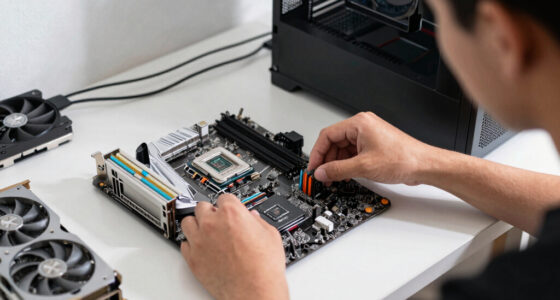
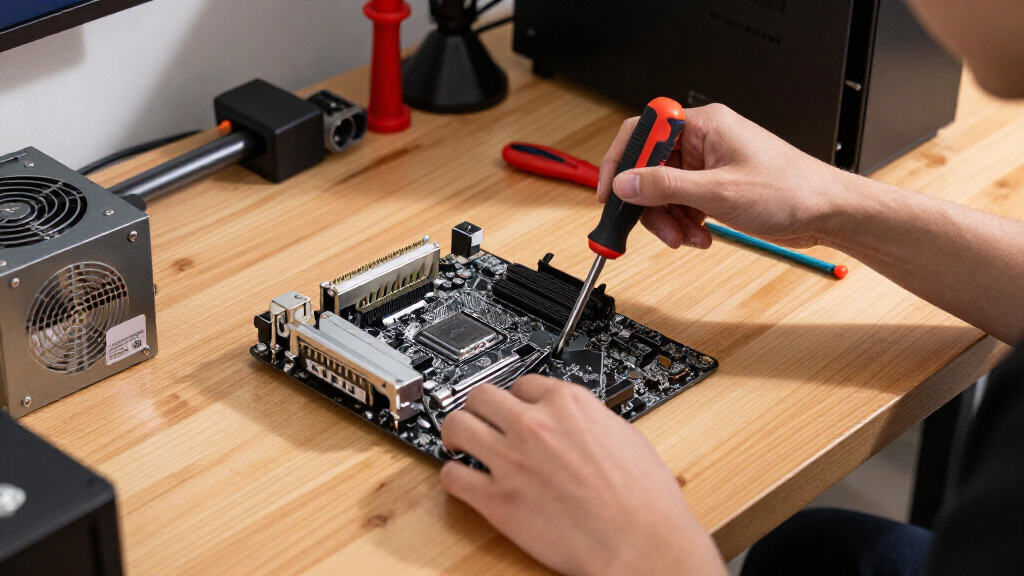
The ASRock BC-250 has emerged as an affordable option for building a gaming Steam machine. This article covers confirmed setup tips, performance optimizations, and why this development matters for budget gamers.
The ASRock BC-250 has gained attention as an affordable hardware platform for building a Steam gaming machine building the budget Steam machine. Recent detailed setup guides highlight its performance potential and customization options, making it a viable choice for budget gamers.
Multiple sources, including a detailed guide on Hacker News, confirm that the BC-250 offers a compelling price-to-performance ratio for gaming projects. Key recommendations include adjusting VRAM allocation to 6GB for better textures, disabling Steam’s precached shader downloads to improve load times, and undervolting or overclocking the CPU to optimize performance.
Additionally, users are advised to disable certain background daemons, such as HHD daemon, to prevent stuttering in games, and to use specific GPU governors like cyan-skillfish-smu for dynamic clock scaling. The guide also details unlocking the GPU’s 40 compute units (CUs), which are typically disabled, for enhanced performance, with some users achieving stable overclocks up to 1850 MHz.
These instructions are based on community testing and user reports, with no official endorsement from ASRock or related hardware manufacturers. The modifications require some technical expertise, including BIOS adjustments, software configuration, and hardware tuning.
Creating an Affordable Gaming Steam Machine with ASRock BC-250
The BC-250 is gaining traction as a low-cost foundation for a compact Steam gaming system. Community guides point to meaningful gains from VRAM allocation, software cleanup, power tuning and experimental GPU unlocking—but none of these modifications carries official ASRock support.
Start with the low-risk wins
Treat the project as a staged optimization exercise. Confirm a stable baseline first, then introduce one change at a time and retain a route back to the previous configuration.
Allocate 6GB of VRAM
Community testing associates a 6GB allocation with improved texture handling. Check total system-memory pressure before treating it as a universal setting.
Disable shader pre-caching
Guides report better loading behavior after disabling Steam’s pre-cached shader downloads. Compare results per game because compilation behavior can vary.
Remove sources of stutter
The HHD daemon is cited as a possible cause of intermittent stuttering. Disable only services you understand, then verify controls and input still operate correctly.
Tune voltage deliberately
CPU undervolting may improve efficiency and thermal headroom. Small increments, repeatable stress tests and temperature monitoring are essential.
Use a dynamic governor
Community instructions recommend cyan-skillfish-smu for dynamic GPU clock scaling. Confirm compatibility with the exact operating-system image and firmware.
Build a conservative fan curve
Sustained gaming matters more than a short benchmark peak. Tune cooling for stable temperatures, tolerable acoustics and repeatable long-session performance.
What to change—and when
Configuration changes range from reversible software adjustments to experimental hardware unlocking. The performance potential rises alongside complexity and risk.
| Modification | Expected value | Difficulty | Community status | Key caution |
|---|---|---|---|---|
| 6GB VRAM allocation | ✓ Texture headroom | Low–moderate | Frequently recommended | Leaves less memory for the operating system |
| Disable shader pre-cache | ✓ Reported load-time benefit | Low | Reversible setting | Results may differ between games |
| Disable HHD daemon | ~ Possible stutter reduction | Moderate | Workaround reported | May affect device-management features |
| CPU undervolt | ~ Thermal efficiency | Moderate–high | Unit-dependent | Instability requires careful validation |
| Unlock 40 GPU CUs | ✓ Highest potential gain | High | Experimental | ✗ Not guaranteed on every unit |
| Overclock toward 1850 MHz | ~ Additional performance | High | Reported by some users | ✗ Heat, crashes and durability risk |
Tune in layers, not leaps
The visual below ranks changes by recommended deployment order—not measured frame-rate gain. Stable software settings belong at the beginning; silicon-dependent modifications belong at the edge.
Recommended order of attention
“The compelling part is not one headline clock speed—it is the ability to turn inexpensive hardware into a tailored gaming system through careful, reversible tuning.”
Editorial synthesis of community reportsA safer route from board to Steam machine
Document every change, test under repeatable conditions and stop when temperatures or stability move outside your chosen limits.
Best suited to
Technically confident budget builders who enjoy Linux-based gaming, iterative tuning and extracting value from unconventional hardware—especially for indie and less demanding titles.
Think twice if
You need manufacturer-backed plug-and-play reliability, guaranteed performance, silent operation without tuning, or a system whose warranty status cannot be placed at risk.
Affordable, capable—and still experimental.
The BC-250 can become a compelling Steam machine when approached methodically. The most defensible gains come from reversible configuration changes; GPU unlocking and aggressive clocks should remain optional experiments for builders prepared to troubleshoot and accept the risk.
Not officially supported
Why the BC-250 Is a Game-Changer for Budget Builds
This development matters because it demonstrates that cost-effective hardware like the ASRock BC-250 can be transformed into a capable gaming platform through targeted software tweaks and hardware modifications. It opens opportunities for gamers to build affordable Steam machines without sacrificing much in performance, especially for indie and less demanding titles.
Furthermore, the ability to unlock extra GPU compute units and optimize power consumption can significantly boost gaming performance, making this a notable option for DIY enthusiasts and budget gamers seeking high value.
As an affiliate, we earn on qualifying purchases.
Background on the ASRock BC-250 and Gaming Builds
The ASRock BC-250 is a mini PC platform originally designed for low-cost, small-form-factor computing. Its hardware includes a Bazzite chip with integrated graphics, which has been largely overlooked for gaming purposes due to perceived limitations. However, recent community experiments and detailed guides reveal that with software tuning, the device can deliver surprisingly good gaming performance.
This shift is part of a broader trend where enthusiasts leverage software hacks and hardware modifications to extend the capabilities of budget hardware, challenging traditional notions of hardware limitations in gaming.
Prior to this, most discussions about the BC-250 focused on basic use cases, with little emphasis on gaming. The recent surge in performance tuning guides marks a new chapter for this platform’s potential.
“Using 6GB VRAM allocation and disabling shader pre-caching significantly improves game load times and texture quality on the BC-250.”
— Hacker News user
As an affiliate, we earn on qualifying purchases.
Performance Stability and Hardware Compatibility Unclear
While many community members report successful modifications, the long-term stability of overclocked or unlocked configurations remains unconfirmed. Variations in individual hardware batches may affect the ability to unlock all 40 CUs or achieve stable overclocks. The official support from ASRock for these modifications is absent, and some users have encountered system crashes or thermal issues.
It is also not yet confirmed whether these modifications impact warranty or durability of the hardware, or if future firmware updates might disable or restrict unlocking features.
As an affiliate, we earn on qualifying purchases.
Monitoring Community Results and Official Support
Next steps involve ongoing community testing to determine the long-term stability of unlocked and overclocked configurations. Hardware enthusiasts will likely share further optimizations and troubleshoot issues. Meanwhile, ASRock has not issued official statements regarding these modifications, leaving the future support status uncertain.
Expect updates from community forums and potential BIOS or firmware revisions that could either facilitate or restrict these hardware tweaks.
As an affiliate, we earn on qualifying purchases.
Key Questions
Can I build a gaming PC using the ASRock BC-250?
Yes, community guides demonstrate that with software tuning and hardware modifications, the BC-250 can be turned into a capable gaming platform for many titles, especially less demanding ones.
What are the main performance improvements achievable?
Unlocking GPU compute units and overclocking can significantly increase gaming performance, with some users reaching GPU clocks of up to 1850 MHz and improving frame rates in certain titles.
Are these modifications safe and warranty-compliant?
These tweaks are community-driven and not officially supported by ASRock. They may void warranties and carry risks of instability or hardware damage if not done carefully.
What software tools are recommended for tuning?
Tools like cyan-skillfish-smu for GPU management and specific BIOS adjustments are used, but users should proceed with caution and ensure proper testing for stability.
Will ASRock release official support for these modifications?
There is currently no official statement from ASRock regarding unlocking or overclocking features on the BC-250. Community efforts are independent of official support.
Source: Hacker News
Evergreen bestsellers Picks
bestsellers
As an affiliate, we earn on qualifying purchases.