
TL;DR

Play games on Amazon Luna for your game nights, included with Prime
- A rotating selection of games, no download needed
- Play on TV, laptop or phone
- Fast, free delivery for your gear, too
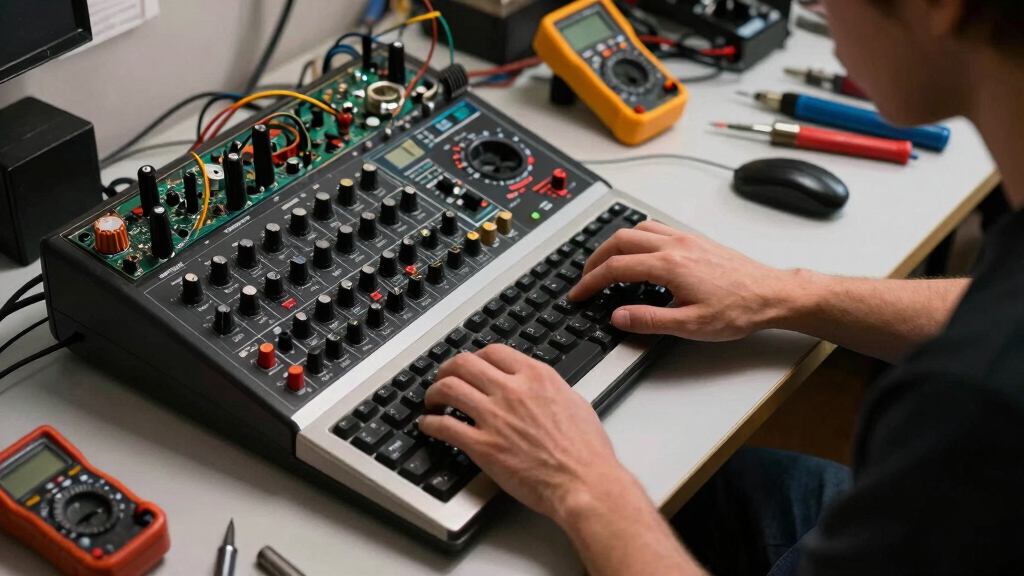
A developer has achieved booting MS-DOS on a Behringer DDX3216 by creating a custom x86 BIOS from scratch. This demonstrates the device’s hardware compatibility with legacy x86 software, opening avenues for DIY firmware projects.
A hobbyist has successfully booted MS-DOS on a Behringer DDX3216 using a self-developed x86 BIOS, marking a significant technical achievement in repurposing the device’s hardware for legacy operating systems.The Behringer DDX3216, a digital mixer, contains an AMD Elan SC300 386SX processor and related hardware components that are compatible with x86 architecture. The developer created a custom BIOS from scratch, programming the reset vector and real-mode startup routines, to enable booting MS-DOS 6.22. This involved detailed reverse engineering of the hardware, writing low-level assembly code, and implementing a minimal BIOS that correctly initializes the CPU and hardware peripherals. The process included developing a reset vector at 0xFFF0, configuring the BIOS to fit within the device’s ROM, and successfully executing the boot sequence to load DOS. The achievement demonstrates the hardware’s potential for running legacy software and opens possibilities for further custom firmware projects on the device.
Potential for DIY Firmware on Audio Hardware
This development highlights the hardware’s compatibility with x86 software, allowing enthusiasts to repurpose the DDX3216 beyond its original scope. It opens pathways for creating custom firmware, running legacy operating systems, or developing new functionalities, which could extend the device’s lifespan and functionality. For the broader community, it exemplifies how legacy hardware can be revived and adapted through reverse engineering and custom firmware development, fostering innovation in embedded systems and audio equipment.
As an affiliate, we earn on qualifying purchases.
Hardware and Software Background of the DDX3216
The DDX3216 contains an AMD Elan SC300 386SX-based SoC, with 16MB RAM, ROM, and various interfaces including serial ports and PCMCIA. Originally designed as a digital mixer, its hardware architecture resembles a typical x86-compatible system, which was confirmed through hardware analysis and reverse engineering. Prior to this project, official BIOS support for the SC300 was limited or unavailable, complicating efforts to run standard x86 software. The developer’s approach involved creating a custom BIOS from scratch, inspired by the architecture of early x86 systems and existing open-source BIOS code. This effort builds on the knowledge of the device’s hardware specifications and the x86 boot process, which involves jumping to a reset vector at 0xFFF0, setting up real mode, and loading an operating system.
“Creating a BIOS from scratch for the SC300 was a complex but rewarding challenge that demonstrated the hardware’s compatibility with legacy x86 software.”
— the developer
As an affiliate, we earn on qualifying purchases.
Remaining Challenges in Fully Booting DOS
It is not yet confirmed whether the custom BIOS can support full hardware initialization required by DOS, such as disk drives and sound hardware. Compatibility with other DOS versions or advanced features remains untested. Further testing is needed to determine stability and usability of a fully functional DOS environment on the device.
As an affiliate, we earn on qualifying purchases.
Next Steps for Complete DOS Functionality
The developer plans to refine the BIOS to support disk drives, sound, and other peripherals. Testing with different DOS versions and expanding hardware support will follow. Additionally, efforts to boot freeDOS and other lightweight operating systems are underway to evaluate stability and performance. Community interest may lead to sharing the BIOS code and development tools for broader experimentation.
embedded system firmware development
As an affiliate, we earn on qualifying purchases.
As an affiliate, we earn on qualifying purchases.
Key Questions
Can the DDX3216 run modern operating systems?
Currently, the device is only confirmed to boot MS-DOS via a custom BIOS. Running modern OSes like Windows or Linux is unlikely without significant hardware modifications.
What hardware features are compatible with DOS?
The hardware, including the CPU, RAM, and basic interfaces, is compatible with x86 DOS environments. Support for disk drives and sound hardware is still under development.
Is this project officially supported by Behringer?
No, this is a hobbyist project based on reverse engineering and custom firmware development, not an official product feature.
Could this approach be applied to other audio equipment?
Potentially, if similar hardware architectures are used, enthusiasts could attempt similar DIY BIOS projects to run legacy systems or custom firmware.
What are the risks of modifying the device’s firmware?
Firmware modifications can risk bricking the device or voiding warranties. Proceeding requires technical expertise and understanding of hardware risks.
Source: Hacker News
Fall Picks
fall essentials
As an affiliate, we earn on qualifying purchases.