TL;DR
A buying guide compares nine handhelds across Windows gaming, Android emulation, retro play and PS5 remote play. It presents the ROG Xbox Ally as a balanced Windows choice, while emphasizing tradeoffs in screen size, battery use, connectivity and price; several product details in the source remain inconsistent or unspecified.
A buying guide compares nine gaming handhelds spanning Windows PCs, Android devices, a compact retro console and a PS5 remote player, as detailed in the original guide, arguing that the best choice depends on how and where a person plays. It names the ASUS ROG Xbox Ally its best overall pick, while the guide’s specifications and product listings leave some details, including prices and several performance comparisons, unclear.

Play games on Amazon Luna for your game nights, included with Prime
- A rotating selection of games, no download needed
- Play on TV, laptop or phone
- Fast, free delivery for your gear, too
The guide’s Windows choices include the ROG Xbox Ally, with a 7-inch 1080p, 120Hz IPS display, Ryzen Z2 A processor, 16GB of memory and 1TB SSD, and the ROG Xbox Ally X, positioned for higher performance with a Ryzen AI Z2 Extreme and 24GB of memory; see also this roundup of gaming handhelds for portable play. It also lists the Lenovo Legion Go S with an 8-inch 120Hz screen and Ryzen Z2 Go, and an MSI Claw configuration with an 8-inch, 1920-by-1200, 120Hz display, 32GB of memory and 512GB SSD.
For Android, the guide compares the AYN Odin 2 Portal, which is listed with a 7-inch 1080p OLED screen at 120Hz, Snapdragon 8 Gen 2, 8GB of memory and 128GB storage, with the Retroid Pocket 5, which has a 5.5-inch 1080p screen, Snapdragon 865 and 8GB of memory; more options appear in this guide to cloud gaming handhelds. The Miyoo Mini Flip is a smaller Linux-based retro option with a 2.8-inch IPS screen and support for more than 20 emulators, according to the supplied material.
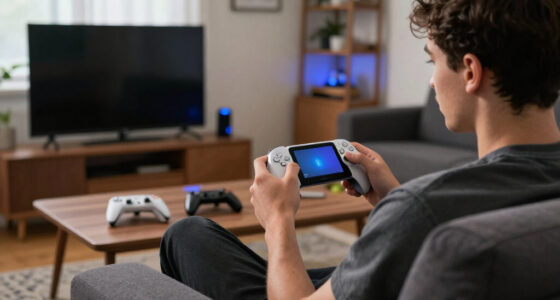
The remaining device, PlayStation Portal, streams games from a PS5 rather than functioning as a standalone PC or Android handheld. The guide lists an 8-inch 1080p LCD and up to 60 frames per second, with performance depending on the game and connection. It says reliable home Wi-Fi is needed for remote play, but gives no latency measurements or connection thresholds.
Choose by how you play Nine handhelds, four platforms
This 2027 buying guide spans Windows gaming, Android and emulation, compact retro play, and PS5 remote play. Its picks serve different needs, with key comparisons and prices left unclear.
Match the device to your games
Platform determines what you can play and how the handheld works.
PC game libraries
ROG Xbox Ally is the guide’s overall pick; Windows models vary in memory, storage, screen and performance.
Mobile and emulation
AYN Odin 2 Portal and Retroid Pocket 5 are presented for Android games and emulation.
Compact retro play
Miyoo Mini Flip is a small retro option listed with support for more than 20 emulators.
PlayStation Portal
Streams games from a PS5 and depends on reliable home Wi-Fi.
Screen size is only one tradeoff
The guide lists varied display sizes and warns that 120Hz screens can drain battery faster, but provides no comparable runtime tests.
- Legion Go S: 8-inch screen
- MSI Claw: 8-inch screen
- PlayStation Portal: 8-inch screen
- Retroid Pocket 5: 5.5-inch screen
- Miyoo Mini Flip: 2.8-inch screen
- Consider battery use and cooling, too
Check the details before buying
The supplied guide leaves important comparisons and product details unresolved.
- Compare current price, stock, warranty and exact configuration.
- Look for battery and performance tests with stated methods.
- Confirm compatibility with the games you want to play.
- For Portal, check your PS5 setup and home network.
Choosing by Game Library and Setting
The comparison matters because these devices serve different gaming needs, despite sharing a handheld form. Windows models offer access to PC game libraries but also bring the operating system’s overhead and a range of screen, memory and storage configurations. Android handhelds are presented as alternatives for emulation and mobile games, while the Miyoo targets compact retro play and Portal depends on access to a PS5 and a network connection.
There are practical tradeoffs within each group. The guide says 120Hz displays can drain battery faster, but does not provide battery test results or comparable runtime figures. A larger screen may suit players who prioritize viewing area, while portability and cooling can matter more during travel or demanding sessions. The guide’s recommendations are useful as categories; they do not establish a universal winner across price, battery life and game performance.
Popular right now

Ninja CREAMi 7-in-1 Ice Cream Maker, NC301

Hisense 65-Inch U8 Series Mini-LED 4K UHD Smart Google TV (65U8QG)

Ninja CREAMi Scoop & Swirl 13-in-1 Ice Cream and Soft Serve Maker, NC701
As an affiliate, we earn on qualifying purchases.
Nine Devices Across Four Platforms
The selection covers Windows 11, Android, Linux and PS5 remote play. That range changes what “handheld gaming” means: some entries run PC games locally, some focus on Android games and emulation, one is a dedicated compact retro device, and Portal streams a console library. Buyers should match the device’s platform to the games they want to play before comparing screen sizes or processor names.
The source presents product labels such as “best overall,” “best Android handheld” and “best compact retro pick” as editorial judgments. It does not supply a testing method, benchmark results, a common battery test, or prices. It also identifies the ROG Xbox Ally as a renewed product in one listing, with a 90-day warranty, while another listing describes a standard Ally configuration. Those entries may refer to different conditions or offers.
Specifications and Testing Gaps
The source contains conflicting Miyoo Mini Flip resolution figures: one listing gives 750 by 680 in the description and 750 by 560 in the title. It does not resolve which figure is correct. The exact configuration and naming of the MSI Claw are also presented inconsistently, and the source does not provide a price for any of the nine devices.
Claims about battery efficiency, emulation value, stick reliability and comparative performance are not accompanied by test data or cited measurements. It is also unclear whether all listed models and configurations are available in every market in 2027, or whether the guide’s prices and warranty details reflect current offers. Readers should verify the specific configuration, condition and retailer terms before buying.
Check Current Listings Before Buying
The guide points readers toward individual product breakdowns and retailer listings, but does not give a dated price table or report planned follow-up testing. The next practical step for buyers is to confirm current price, stock, warranty and configuration for the exact model under consideration, then compare battery tests and game compatibility from sources that specify their methods.
For Portal, check whether the home network and PS5 setup suit remote play. For Android and retro devices, confirm the games and emulator support desired; for Windows handhelds, compare storage, memory and performance in the titles that matter. The guide does not state when its information will next be updated.
Key Questions
Which handheld does the guide recommend overall?
It names the ASUS ROG Xbox Ally as its best overall pick, citing a balance of performance and ergonomic comfort. The source does not include a documented testing method for that ranking.
Which listed device has the largest screen?
The MSI Claw and Lenovo Legion Go S are both listed with 8-inch displays. PlayStation Portal also has an 8-inch screen, though it is a remote player for PS5 games.
Can PlayStation Portal play games on its own?
The supplied guide describes Portal as a PS5 remote player. It says frame rate can reach 60fps depending on the game and connection, and that remote play relies on the network.
What is unclear about the Miyoo Mini Flip display?
The source gives two different resolutions: 750 by 680 in one description and 750 by 560 in a title. It does not explain the discrepancy.
Source: Thorsten Meyer AI