
TL;DR

Play games on Amazon Luna for your game nights, included with Prime
- A rotating selection of games, no download needed
- Play on TV, laptop or phone
- Fast, free delivery for your gear, too
Hall Effect sticks detect joystick position using magnetic sensors instead of physically rubbing contacts, so they wear out far slower and resist the stick drift that kills traditional controllers. They’re rated for millions of cycles versus roughly 500,000–1 million for potentiometer sticks. If you’re spending more than about $50 on a controller in 2024, Hall Effect sticks should be near the top of your spec checklist.
Your controller is dying. You just don’t know it yet. If you’re using a standard gamepad with traditional potentiometer sticks, every hour of play grinds tiny metal contacts against a resistive strip — and eventually, that grinding wins. The result is stick drift: your character creeps forward while you’re not touching anything, and no amount of recalibrating fixes it for good.
Enter Hall Effect sticks. Instead of measuring position through physical contact, they use magnets and magnetic sensors that never touch each other. No contact, no grinding. No grinding, no drift. It’s the same reason high-end keyboard switches and some car throttles went magnetic years ago.
In this guide, you’ll learn how the technology actually works, how it compares to what’s in your current controller, whether it’s worth the price premium, and what to check before you spend money. Short version: this is one of the few controller upgrades that genuinely lives up to the marketing.
Hall Effect sticks sense position magnetically with no physical contact, rated for roughly 5 million cycles versus 500,000–1 million for potentiometer sticks.
Stick drift in traditional controllers is a wear failure, not user error — Hall Effect sticks remove the wearing component entirely.
The typical price premium of $10–30 pays for itself the first time you avoid replacing a drifted controller.
"Anti-drift" marketing copy means nothing; the spec sheet must explicitly say "Hall Effect" or "electromagnetic."
Hall Effect triggers are a separate feature from Hall Effect sticks — check both before comparing prices.
Hall Effect Sticks, Explained for Controller Buyers
Hall Effect sticks detect joystick position using magnetic sensors instead of physically rubbing contacts — so they wear out far slower and resist the stick drift that kills traditional controllers. If you’re spending more than about $50, they belong near the top of your spec checklist.
What Hall Effect Sticks Actually Are — In Plain English
A small magnet sits under the stick, and a sensor chip called a Hall sensor reads how the magnetic field shifts as you move it. Nothing rubs against anything. The name comes from physicist Edwin Hall, who discovered in 1879 that voltage changes when a conductor sits in a magnetic field. Physics that old doesn’t go out of fashion.
You move the stick
A magnet mounted under the stick shaft shifts position with every flick and peek.
The field shifts
The Hall sensor reads the changing magnetic field across a small air gap — no contact, ever.
Voltage converts
Field changes become voltage changes, translated into position data by the controller.
On-screen movement
Clean, consistent input from day one to year five — the sensing path cannot wear out.
Pencil vs. Compass
A traditional stick is a pencil wearing down as you write. A Hall Effect stick is a magnet floating over a compass. One physically degrades with every use. The other just… senses.
Remove the Interface
Most reliability failures happen at interfaces — points where two surfaces meet. Potentiometer sticks have several; Hall Effect sticks effectively have none in the sensing path. Remove the interface, remove the failure class.
Precision Costs Money
Hall sensors and matched magnets demand tighter manufacturing tolerance than carbon tracks — which is why the tech sat in cars and industrial gear for decades before reaching $60 gamepads.
Why Your Current Controller Drifts — And Hall Effect Sticks Don’t
Traditional sticks use spring-loaded wipers sliding across a resistive carbon track thousands of times per session. That contact grinds material away, spreads carbon dust, and eventually the controller thinks the stick is centered when it isn’t. Add dust, skin oils, and ranked-match sweat, and you have a failure machine.
Potentiometer sticks fail through their primary sensing mechanism — a matter of when. Hall Effect sticks, when they fail, tend to fail through secondary components like springs — a matter of if, and usually much later.
Hall Effect vs. Potentiometer Sticks: The Side-by-Side
Hall Effect sticks win on durability and consistency; potentiometers keep one advantage — they’re cheap to manufacture. Note what isn’t in this table: raw performance. A brand-new potentiometer stick and a Hall Effect stick feel nearly identical on day one. What you’re buying is year two through ten.
| Feature | Hall Effect Sticks | Potentiometer Sticks |
|---|---|---|
| Sensing method | Magnetic field, no contact | Physical contact on carbon track |
| Lifespan (cycles) | ✓ ~5 million | ✗ ~500,000–1 million |
| Drift resistance | ✓ Excellent | ✗ Poor — drift is expected eventually |
| Input precision | ✓ Consistent over full lifespan | ~ Degrades as contacts wear |
| Smoothness | ✓ Smoother, no scratchy readings | ~ Can develop jitter over time |
| Cost | ~ Higher (+$10–30) | ✓ Lowest |
| Repairability | ✓ Often modular / swappable | ✗ Usually requires full stick replacement |
The Controller Buyer’s Hall Effect Checklist
This is one of the few controller upgrades that genuinely lives up to the marketing — but only if you read spec sheets carefully. Five things to verify before spending money.
Ignore “Anti-Drift” Marketing Copy
That phrase means nothing on its own. The spec sheet must explicitly say “Hall Effect” or “electromagnetic” — anything else is wording, not hardware.
Check Triggers Separately
Hall Effect triggers are a distinct feature from Hall Effect sticks. Some controllers have one, not both — verify each before comparing prices.
Set a $50 Threshold
If you’re spending more than about $50 on a controller in 2024, Hall Effect sticks should be near the top of your spec checklist — the premium is $10–30.
Look for Modular Designs
Newer Hall Effect controllers are often modular and swappable, so a weakened spring years down the line is a quick fix — not a full replacement.
What Hall Effect Sticks Actually Are (In Plain English)
Hall Effect sticks are joysticks that measure position using magnetic fields instead of physical electrical contacts. A small magnet sits under the stick, and a sensor chip called a Hall sensor reads how that magnetic field shifts as you move the stick. The controller translates those field changes into on-screen movement. Nothing rubs against anything.
The name comes from physicist Edwin Hall, who discovered in 1879 that voltage changes when a conductor sits in a magnetic field. That discovery — the Hall Effect — spent a century hanging out in automotive sensors and industrial equipment before controller makers realized it solved their stick drift problem. Physics that old doesn’t go out of fashion.
Think of it like this: a traditional stick is a pencil wearing down as you write. A Hall Effect stick is a magnet floating over a compass. One of them physically degrades with every use. The other just… senses.
Here’s the practical upshot, restated simply: the sensing mechanism never touches the moving parts, so it can’t wear out the way old sticks do. That single design choice drives every benefit that follows — and it’s worth pausing on why. In engineering, most reliability problems come from interfaces: points where two surfaces meet and interact. Every interface is a failure candidate. Potentiometer sticks have several such interfaces; Hall Effect sticks effectively have none in the sensing path. Remove the interface, and you remove the entire class of failures associated with it.
The tradeoff is cost and complexity. Hall sensors and matched magnets require tighter manufacturing tolerance than carbon tracks — which is why this technology sat in cars and industrial gear for decades before trickling down to $60 gamepads. You’re not paying for exotic physics; you’re paying for precision manufacturing at consumer prices, which has only recently become cheap enough to make sense.
As an affiliate, we earn on qualifying purchases.
Why Your Current Controller Drifts — And Why Hall Effect Sticks Don’t
Traditional controller sticks drift because their potentiometers physically degrade with use. Inside each stick, spring-loaded wipers slide across a resistive carbon track thousands of times per session. That contact grinds material away, spreads carbon dust, and eventually produces uneven readings — the controller thinks the stick is centered when it isn’t. Add dust, skin oils, and the sweat from a tense ranked match, and you’ve got a failure machine.
Hall Effect sticks sidestep this entirely. The magnet and sensor are separated by a small air gap, moving through a magnetic field rather than scraping across a surface. There’s no carbon track to wear down and no contact point to corrode.
The numbers tell the story plainly:
- Potentiometer sticks: rated for roughly 500,000 to 1 million cycles
- Hall Effect sticks: typically rated around 5 million cycles
- Drift reports: common on potentiometer sticks within 6–18 months of heavy play; rare on Hall Effect hardware
Put those cycle ratings in human terms. A serious player might cycle a stick a few thousand times per gaming session — flicks, peeks, centering corrections. At that rate, a 500,000-cycle potentiometer can approach its rated lifespan within a year of heavy play, which is exactly why drift complaints cluster in the 6–18 month window. A 5-million-cycle Hall Effect stick under the same load has roughly a decade of headroom. The cycle numbers aren’t abstract specs; they’re the difference between a controller that’s disposable and one that’s a long-term tool.
To be fair, this isn’t a magic immortality charm. Hall Effect sticks can still fail — springs weaken, magnets can demagnetize slightly over years, and cheap implementations cut corners on sensor quality. The honest framing is this: potentiometer sticks fail through their primary sensing mechanism, which means failure is a matter of when. Hall Effect sticks, when they fail, tend to fail through secondary components like springs — which is a matter of if, and usually much later. A spring wearing out after five years is annoying. Carbon dust killing your aim in month ten is worse.
Stick drift isn’t your fault. It’s a wear-and-tear failure built into how potentiometer sticks work — Hall Effect sticks remove the wear, so they remove the drift.
As an affiliate, we earn on qualifying purchases.
Hall Effect vs. Potentiometer Sticks: The Side-by-Side Comparison
Hall Effect sticks beat potentiometer sticks on durability and consistency, while potentiometers keep one advantage: they’re cheap to manufacture. Here’s the full breakdown across the categories that actually matter for controller buyers.
| Feature | Hall Effect Sticks | Potentiometer Sticks |
|---|---|---|
| Sensing method | Magnetic field, no contact | Physical contact on carbon track |
| Lifespan (cycles) | ~5 million | ~500,000–1 million |
| Drift resistance | Excellent | Poor — drift is expected eventually |
| Input precision | Consistent over full lifespan | Degrades as contacts wear |
| Smoothness | Smoother, no scratchy readings | Can develop jitter over time |
| Cost | Higher (adds roughly $10–30 to controller price) | Lowest |
| Repairability | Often modular/swappable in newer designs | Usually requires full stick replacement |
Notice what isn’t in that table: raw performance. A brand-new potentiometer stick and a Hall Effect stick feel nearly identical on day one. That matters because it changes what you’re actually buying. With Hall Effect, you’re not paying for better aim today — you’re paying for the same aim in year three that you have in week one. If you replace controllers every year anyway, the difference matters less. If you keep one for three or four years of heavy play, the comparison isn’t close.
There’s also a hidden long-term precision benefit worth understanding. As potentiometers wear, your controller’s center point shifts subtly — a drift of one or two percent that your hands gradually compensate for without your brain noticing. That means your muscle memory is quietly calibrating to a moving target. The day you recalibrate or switch controllers, that compensation becomes error. Hall Effect sticks read the same on day 1,000 as day one, which is why many competitive players treat them as an eSports-grade reliability feature, not just a durability perk — the value isn’t only avoiding failure, it’s preserving a stable reference your aim can trust.
The cost row deserves interpretation too. Potentiometers being “cheapest” is precisely why they became the industry default: when you’re shipping millions of controllers, saving a couple of dollars per unit compounds enormously. That economics worked when controllers were seen as disposable accessories. It stops working when buyers start expecting a $70 controller to last — which is exactly the shift the market is in the middle of right now.
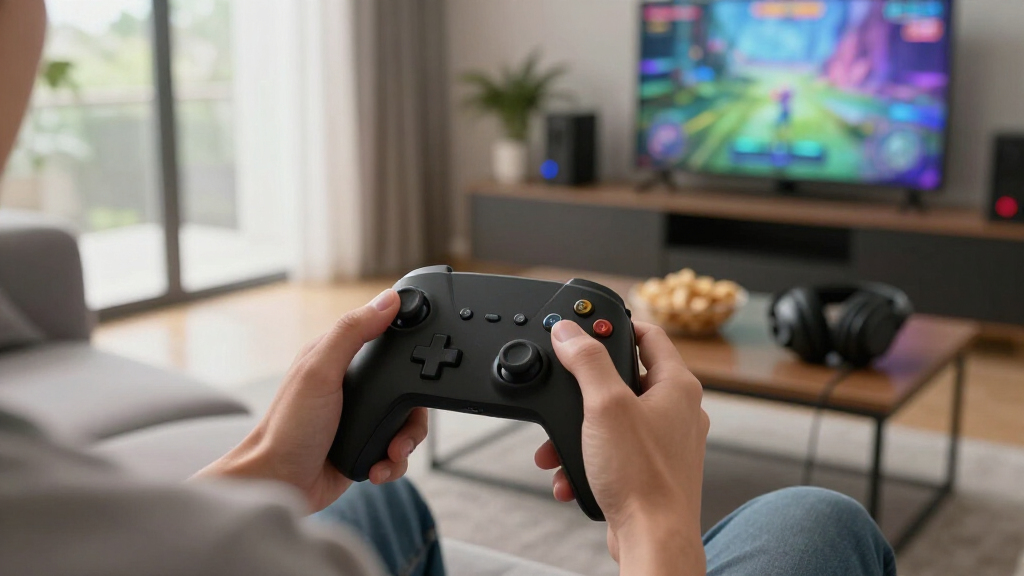
controller with Hall Effect sticks
As an affiliate, we earn on qualifying purchases.
As an affiliate, we earn on qualifying purchases.
Are Hall Effect Sticks Worth the Extra Money? An Honest Answer
Yes for most buyers — with one exception. If you play under five hours a week and replace controllers casually, a potentiometer stick may outlive your interest in the controller. For everyone else, the math favors magnetic.
Consider a real scenario. You buy a $70 controller with potentiometer sticks and play 15 hours a week. Eighteen months later, the left stick starts ghost-forwarding in every shooter. You either live with it, attempt a fiddly repair, or buy another controller. Total cost over three years: $140 plus frustration. A $80–90 controller with Hall Effect sticks very likely survives those three years intact. The $10–30 premium pays for itself the first time you avoid a replacement.
But notice what this math actually assumes: that the premium is small and the failure is certain. Both assumptions hold for heavy players, and both weaken for everyone else. If the price gap widens to $50 because a manufacturer is using Hall Effect sticks as a halo feature to justify an inflated price, the value proposition inverts — at that point you’re paying for marketing, not lifespan. The premium is only “worth it” when it’s proportionate to the replacement cost it helps you avoid. That’s the lens to apply, not a blanket yes or no.
Here’s where the value calculation lands for different player types:
- Competitive and ranked players: Absolutely worth it. Consistent centering and no mid-season drift directly protect your aim — and unlike a failed clutch moment, stick wear is a risk you can eliminate in advance.
- Heavy daily players (10+ hours/week): Worth it. You’re the demographic that hits potentiometer lifespan limits fastest, so your replacement-avoidance savings are near-certain, not probabilistic.
- Moderate players (5–10 hours/week): Usually worth it if the price gap is under $30. You’ll likely reach potentiometer wear within 2–3 years, so the premium is insurance with decent odds.
- Casual players (under 5 hours/week): Nice to have, not necessary. Your sticks may never reach their wear limit before you upgrade for other reasons. Spend the difference on ergonomics or software you’ll actually feel.
One caution: “Hall Effect” on the box doesn’t guarantee quality. Budget manufacturers have adopted the label, and sensor quality, spring tension, and manufacturing tolerance vary. A well-made potentiometer stick from a reputable brand can outperform a shoddily implemented Hall Effect stick. The reason is simple: the physics only eliminates one failure mode, but a controller is a system of mechanical parts, and a careless maker can fail through a dozen other paths. The label matters; the maker matters more.
As an affiliate, we earn on qualifying purchases.
What to Check Before You Buy: A 4-Step Spec Checklist
Verifying Hall Effect sticks before purchase takes about two minutes if you know where to look. Marketing copy buries the detail, and some brands only use Hall sensors on the sticks — not the triggers — so read carefully.
- Search the spec sheet for “Hall Effect” or “electromagnetic” sticks. If the listing only says “anti-drift sticks” without naming the technology, be suspicious — that phrase is marketing, not engineering. The reason is accountability: a concrete, searchable term like “Hall Effect” can be fact-checked and compared across brands, while “anti-drift” can describe anything from better calibration software to a slightly thicker carbon track. Vague claims exist precisely because they’re unfalsifiable.
- Check triggers separately. Hall Effect triggers are a separate feature. Some controllers have magnetic sticks with old-style analog triggers, or vice versa. This matters more than it seems: triggers wear through the same contact mechanism as sticks, and in racing games trigger precision is as central to performance as stick precision is in shooters. Decide which inputs matter for your games before comparing prices.
- Look for modular stick modules. Newer designs let you swap stick modules with a screwdriver instead of soldering. The implication goes beyond the sticks themselves: a modular controller decouples the lifespan of its cheapest-wearing part from the lifespan of the whole device, which changes the economics of ownership. Instead of retiring a $80 controller over a $10 component, you replace the component.
- Confirm platform compatibility and firmware support. A controller with great hardware and dead firmware support is a future paperweight. Check that the maker ships updates for your platform and OS. This is the tradeoff buyers overlook: hardware outlives software support in this industry, and Hall Effect sticks lasting a decade means nothing if the controller stops pairing with your console in year three.
Real example of why this matters: buyers in recent years have been surprised to find premium first-party controllers still shipping with potentiometer sticks while $60 third-party pads included Hall Effect hardware as standard. Price and quality don’t track neatly here — first-party makers move slowly on component changes because they’re locked into massive supply contracts, while agile third parties compete on specs. That asymmetry is your opportunity. The spec sheet, not the price tag, tells you what you’re getting.
If you already own a controller you love, know that upgrade kits exist. Hall Effect stick modules for popular controllers sell for roughly $15–40 and install with moderate soldering skill. If you’ve never held a soldering iron, pay a repair shop instead — the labor cost still undercuts a new controller. The tradeoff to weigh honestly: upgrading a controller whose buttons, bumpers, and battery are also aging means you may be investing in a body with other parts nearing end-of-life. Upgrades make most sense on relatively young controllers with worn sticks, not as a way to resurrect a genuinely tired one.
Where the Technology Is Heading (And Why Prices Keep Falling)
Hall Effect sticks are moving from premium feature to default expectation. Manufacturing costs have dropped enough that mid-range controllers now include them at prices that would have seemed impossible a few years ago, and adoption keeps widening across custom controllers, modular designs, and wireless models. The driving force is scale economics: once enough factories retool for magnetic sensing, per-unit costs fall, which pulls in more buyers, which drives more volume — the same flywheel that made mechanical keyboard switches and SSDs commodities.
Three trends stand out, and each changes the ownership calculus differently. First, modularity: swappable stick and trigger modules mean a single controller chassis can survive multiple component generations. That shifts controllers from disposable peripherals toward long-lived platforms — closer to how enthusiasts treat mechanical keyboards than how they’ve treated gamepads. Second, tension customization: newer Hall Effect designs let you adjust stick stiffness mechanically, tuning feel without swapping parts. This matters because stick feel has always been locked at the factory; magnetic sensing makes position adjustable in software and, increasingly, tension adjustable by hand, handing players control they never had. Third, trigger adoption: Hall Effect triggers use the same contactless sensing to eliminate trigger drift and dead zones, and they’re increasingly bundled with the sticks. Expect “full Hall Effect” — sticks and triggers — to become the shorthand for a serious controller, the way “mechanical switches” became shorthand for a serious keyboard.
The realistic trajectory: within a few years, potentiometer sticks will likely be confined to budget hardware, the way membrane keyboards became the cheap default once mechanical switches got affordable. The implications reach past your wallet — contactless sticks meaningfully reduce e-waste, since a controller that lasts five years instead of eighteen months keeps hardware out of landfills and cuts the raw material demand of the replacement cycle. Fewer warranty claims also means manufacturers can afford the better components in the first place, reinforcing the trend.
For now, treat Hall Effect sticks as a tiebreaker spec, not a sole reason to buy. Ergonomics, button quality, software support, and latency still matter more to your day-to-day experience — a drift-free stick in a controller that hurts your hands is still a bad purchase. But when two controllers are otherwise equal and one has magnetic sticks? The choice makes itself.
Frequently Asked Questions
Are Hall Effect sticks really drift-proof?
They’re drift-resistant, not magic. Because the magnet and sensor never touch, the contact-wear failure that causes most stick drift doesn’t exist in the design. However, springs can weaken and poorly made sensors can behave inconsistently, so buy from reputable manufacturers. In practice, drift reports on quality Hall Effect sticks are rare compared to potentiometer sticks.
Do all expensive controllers have Hall Effect sticks?
No — and this surprises a lot of buyers. Some premium first-party controllers still ship with potentiometer sticks, while $60 third-party pads include Hall Effect hardware as standard. Price doesn’t reliably predict stick type. Always check the written specifications for “Hall Effect” or “electromagnetic” sticks before buying.
Can I upgrade my existing controller to Hall Effect sticks?
Often yes, especially for popular controller models. Replacement Hall Effect stick modules typically cost $15–40, but installation usually requires soldering and disassembly skills. If you’re not comfortable with a soldering iron, a repair shop can do the job for less than the cost of a new controller. Check compatibility for your specific model before ordering parts.
Do Hall Effect sticks improve aim or performance?
On day one, the difference versus new potentiometer sticks is barely noticeable. The performance benefit is consistency: Hall Effect readings stay stable for years, while potentiometer accuracy quietly degrades as contacts wear. For competitive players, that long-term consistency — and never losing a match to sudden drift — is the real performance argument.
What’s the difference between Hall Effect sticks and Hall Effect triggers?
They’re separate features using the same contactless magnetic sensing. Hall Effect sticks apply to the analog joysticks; Hall Effect triggers apply to L2/R2 (or LT/RT). Some controllers include both, some only one. If smooth, drift-free trigger pulls matter to you — especially in racing games — check the specs for triggers specifically.
Conclusion
Here’s the one thing to remember: Hall Effect sticks eliminate the physical wear that causes stick drift, and that single fact makes them worth demanding in any controller you plan to keep longer than a year. Check the spec sheet, verify the sticks and triggers separately, and don’t pay a premium for the label alone — pay it for the engineering behind it.
The next time your character starts ghost-walking across the map mid-firefight, you’ll know exactly what failed and exactly what would have prevented it. Buy magnetic once, and you may never have that conversation with your controller again.
Halloween Picks
halloween
As an affiliate, we earn on qualifying purchases.